
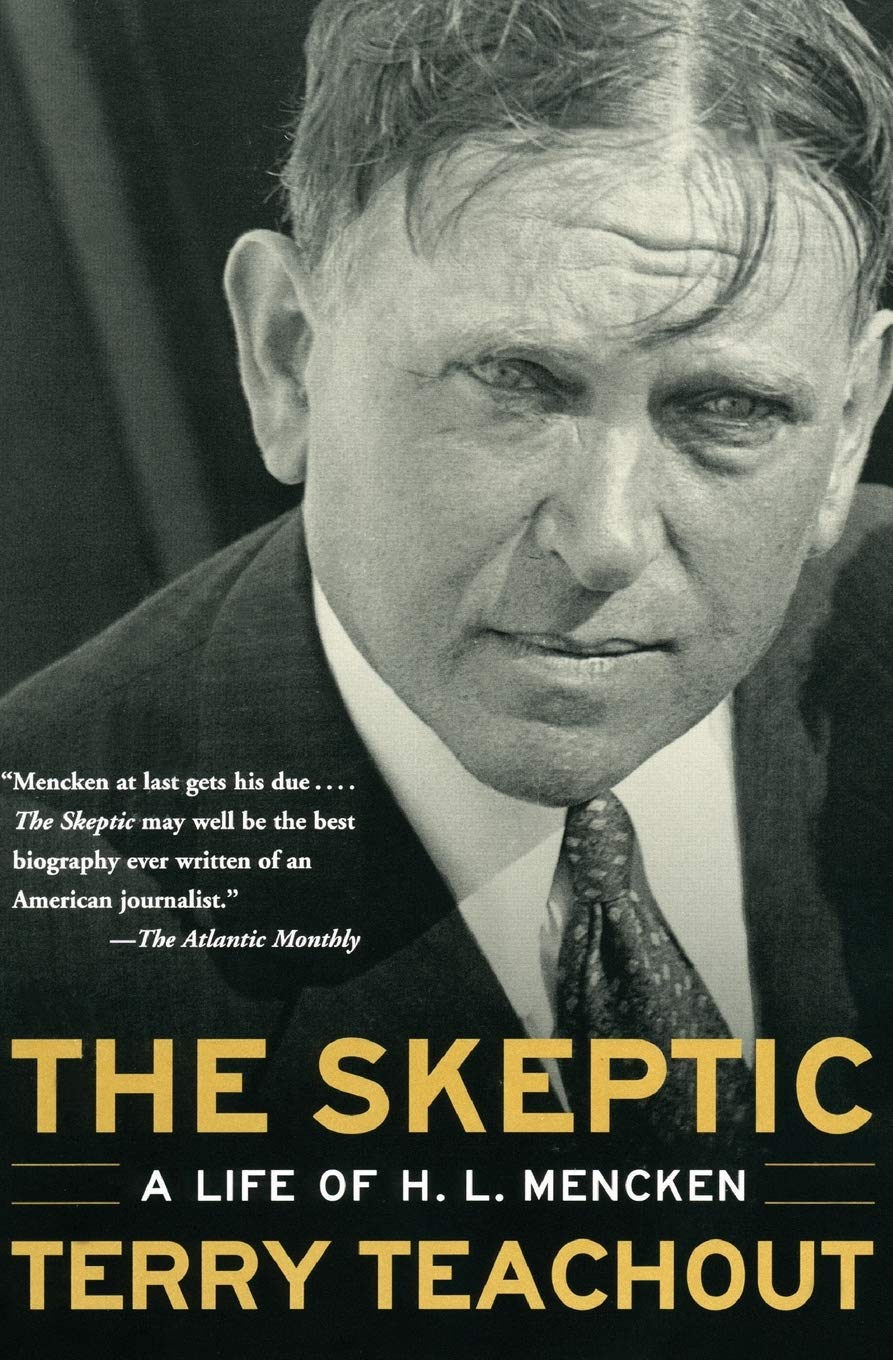
In human history a moral victory is always a disaster, for it debauches and degrades both the victor and the vanquished. The triumph of sin in 1865 would have stimulated and helped to civilize both sides. (“The Calamity of Appomattox,” 1930)
In human history a moral victory is always a disaster, for it debauches and degrades both the victor and the vanquished. The triumph of sin in 1865 would have stimulated and helped to civilize both sides. (“The Calamity of Appomattox,” 1930)
From the Archives: Nicotine Theological Journal (Spring 2022)
All Law, No Gospel
Even before the soldiers of justice activism landed (social justice warriors is so tired), left-of-center Progressives could praise the United States for being on the right (read moral) side of debates and events. In 2013, Aaron Sorkin penned these words for his “Newsroom” (HBO) character, Will McAvoy (played by Michigan’s own Jeff Daniels). Of course, on the grounds by which conservatives calculate American greatness, Sorkin was fashionably negative:
[T]here is absolutely no evidence to support the statement that we’re the greatest country in the world. We’re seventh in literacy, twenty-seventh in math, twenty-second in science, forty-ninth in life expectancy, 178th in infant mortality, third in median household income, number four in labor force, and number four in exports. We lead the world in only three categories: number of incarcerated citizens per capita, number of adults who believe angels are real, and defense spending, where we spend more than the next twenty-six countries combined, twenty-five of whom are allies.
But when it came to America’s proud past, McAvoy sounded a very different note and national wholesomeness was its organizing theme:
We sure used to be [great]. We stood up for what was right! We fought for moral reasons, we passed and struck down laws for moral reasons. We waged wars on poverty, not poor people. We sacrificed, we cared about our neighbors, we put our money where our mouths were, and we never beat our chest. We built great big things, made ungodly technological advances, explored the universe, cured diseases, and cultivated the world’s greatest artists and the world’s greatest economy. We reached for the stars, and we acted like men. We aspired to intelligence; we didn’t belittle it; it didn’t make us feel inferior. We didn’t identify ourselves by who we voted for in the last election, and we didn’t scare so easy. And we were able to be all these things and do all these things because we were informed. By great men, men who were revered. The first step in solving any problem is recognizing there is one—America is not the greatest country in the world anymore.
Lest it miss anyone, this was three years before the Trump presidency and MAGA merch. Sorkin’s script shows that MAGA was not an alien force in national life. It was the norm.
One hundred years before “Newsroom” aired on HBO, H. L. Mencken also noticed that moralism was a defining trait of American culture. It was synonymous with both Calvinism and Puritanism in his Germanophilic mind:
That deep-seated and uncorrupted Puritanism, that conviction of the pervasiveness of sin, of the supreme importance of moral correctness, of the need of savage and inquisitorial laws, has been a dominating force in American life since the very beginning. There has never been any question before the nation, whether political or economic, religious or military, diplomatic or sociological, which did not resolve itself, soon or late, into a purely moral question. .. . The frank theocracy of the New England colonies had scarcely succumbed to the libertarianism of a godless Crown before there came the Great Awakening of 1734, with its orgies of homiletics and its restoration of talmudism to the first place among polite sciences. . . .
Thereafter, down to the outbreak of the Civil War, the country was rocked again and again by furious attacks upon the devil. On the one hand, this great campaign took a purely theological form, with a hundred new and fantastic creeds as its fruits; on the other hand, it crystallized into the hysterical temperance movement of the 30’s and 40’s, which penetrated to the very floor of Congress and put “dry” laws upon the statute-books of ten States; and on the third hand, as it were, it established a prudery in speech and thought from which we are yet but half delivered.
Say what you will about the accuracy of Mencken’s depiction of Puritanism, his diagnosis of American moralism was even prophetic when he described the activism of the Progressive era in terms that make sense of the United States post-Trump, post-George Floyd, post-Lia Thomas:
The new Puritanism is not ascetic, but militant. Its aim is not to lift up saints but to knock down sinners. Its supreme manifestation is the vice crusade, an armed pursuit of helpless outcasts by the whole military and naval forces of the Republic. Its supreme hero is Comstock Himself, with his pious boast that the sinners he jailed during his astounding career, if gathered into one penitential party, would have filled a train of sixty-one coaches, allowing sixty to the coach.

A 2007 estimate of evangelical leaders (read elites):
Since 1976, hundreds of evangelicals. . . have risen to positions of public influence. But they have not done so by chance. The rise of evangelicalism is the result of the efforts of a select group of leaders seeking to implement their vision of moral leadership. They have founded organizations, formed social networks, exercised what I call “convening power,” and drawn upon formal and informal positions of authority to advance the movement. Sociologist Randall Collins has argued that recognition and acclaim are bestowed upon leaders and ideas through structured, status-oriented networks. Over the last three decades, the legitimacy that has come to the evangelical movement has come through the political, corporate, and cultural leaders who were willing publicly associate with it. Evangelicalism, with its history of spanning denominational boundaries is well suited to help evangelicals build connections and important leaders and prestigious institutions. They have formed alliances with diverse groups, giving the movement additional cachet and power in surprising ways. Leaders are often at the vanguard of a movement, and this book shows how evangelicals endowed with public responsibility have been at the forefront of social change over the last thirty years. By building networks of powerful people, they have introduced evangelicalism into the higher circles of American life. The moral leadership they practice certainly grows out of their evangelical convictions, but it also reflects the privilege they enjoy and the power they wield. Indeed, their leadership is an extension of-not a departure from-the elite social worlds they inhabit. (Michael Lindsay, Faith in the Halls of Power, 11-12)
Were Bush-era evangelicals ever set up for a fall?
The lesson here is beware when sociologists praise your movement, that includes you Young, Restless, Reformed, you.

A recent Gallup Poll shows church membership dipping below 50% for the first time in eight decades. The results have provided observers with a chance to take the temperature of religion in the U.S. Some worry about America’s national identity if faith declines. Others regard this as evidence that religious “nones” are almost as numerous as evangelicals and Roman Catholics. Still others notice that the drop has been most significant for Roman Catholics and Democrats who are religious. And among evangelicals, the lesson to learn is either that church membership is necessary and biblical or that Americans are leaving churches because evangelicals are — believe it or not — hypocritical.
What few seem to notice is that evangelicalism, for one, is not a church. It is an impulse or dynamic that turns Presbyterians into Presbyterian evangelicals, or Anglicans into low-church Anglicans. Evangelicalism is not a communion.
For another, the very point of the new birth, as George Whitefield explained it, was to place church membership several rungs below (in importance) a personal relationship with Jesus:
The kingdom of God, or true and undefiled religion, does not consist in being of this or that particular sect or communion. . . . it is certainly a blessing to have the outward government and discipline of the Church exercised; but then, if you place religion merely in being of this or that sect–if you contend to monopolize or confine the grace of God to your particular party–if you rest in that, you place the kingdom of God in something in which it does not consist. (“The Kingdom of God,” 1741)
That stress upon the internal as opposed to the external of religion, on the heart over the head, on experience over liturgical forms, is one reason why evangelicals may not be as troubled by the decline in church membership.
Thomas Kidd, who wrote a biography of Whitefield, applies the logic of the evangelist’s sermon to the recent data:
The overall picture of declining church membership should be of interest, but not special worry to Reformed and evangelical believers. We’re not so much concerned with “mere” church members, but “regenerate” church members. And evangelicals have been at their best—such as during the First and Second Great Awakenings—when they had to work hard at drawing people into church with crystal-clear proclamation of the gospel, and with caring service to the needs of congregations.
Because of this elevation of conversion over church membership, perhaps the evangelicalism in its aggregate character is more like Antifa than the church. Here is how Mark Bray described Antifa last May:
Trump cannot designate “ANTIFA” as a terrorist organization because antifa is not an organization. Rather, it is a politics of revolutionary opposition to the far right. There are antifa groups, such as Rose City Antifa in Portland and NYC Antifa, just as there are feminist groups, such as Code Pink. But neither antifa nor feminism is itself an organization. You cannot subpoena an idea or a movement. That’s not to say that antifa doesn’t exist, of course. Antifa is “very real,” . . .but not in the monolithic, hierarchical way in which he and many other Americans are accustomed to thinking of political associations.
The same applies to evangelicalism. It is an experience, a piety, a sentiment, but not an organization. Fuller Seminary or The Gospel Coalition may be evangelical organizations. But evangelicalism is not monolithic or hierarchical. Evangelicalism does not function like a Christian church.

One more thought about David French’s implicit castigation of Al Mohler for deciding to support Donald Trump. It goes beyond French’s own theology of regeneration and good works to his w-w. If he thinks that faith should inform all he does, if that means especially it should determine his political judgments, why is his godly point of view so similar to journalists who don’t pretend to be Christians? Shouldn’t a Christian understanding of human nature, virtue, governance, society and more mean that a believer’s analysis will look different from a non-Christians? Wasn’t that the point of w-w thinking, integrating faith and intellect?
Take the case of Alabama Republican, Roy Moore. In his exchange with Eric Metaxas, French said “America is better off without Roy Moore.” He didn’t say much more than that but it’s not hard to imagine that again Moore came up short in the character balance sheet.
Anyone who tells you that your choice is limited to pro-abortion Doug Jones or an incompetent, unfit apparent child abuser like Roy Moore is simply lying to you. If you are a faithful conservative, you can write in a different name or stay home. You can reject the choice served up by the plurality of Alabama GOP primary voters and simply say, “If you want my vote, you have to do better.”
…There is no comparison between Moore and men like Patton, Jefferson, and King. Their legacies are complicated by their flaws. Moore’s candidacy is unambiguous. There is no positive political legacy to “complicate.” There is only a sordid, ignorant, and revolting reality.
No party or politician is entitled to your vote. Every man or woman who seeks public office has to earn the public’s trust. Roy Moore has earned nothing but its contempt.
This is not that different from David Graham’s point of view at the Atlantic:
The newest allegations against Moore present Republicans with a choice—not only individual officeholders, but the party as a whole, both nationally and in Alabama. Withdrawing support for Moore, and calling for voters not to support him, would be a bitter pill. It’s too late to replace him on the ticket, and although there’s talk of a Luther Strange write-in campaign, a Moore defeat would probably mean the seat goes to Democrat Doug Jones. And yet if the party’s members can’t bring themselves to set aside narrow partisan interest and condemn a man whom they despise, with a track record of bigotry, and with multiple on-the-record accusations of improper sexual misconduct with underage women, what behavior and which candidate can they possibly rule out in the future?
None of what French and Graham write is untrue, nor is it particularly profound or very political, unless electoral politics is really about finding the most virtuous people.
So what value does French add? As a recognized evangelical writer with a law degree and some history in conservative circles, he seems to add the evangelical perspective. What makes it different from writers at the Atlantic is that French appeals to Jesus for his morality.
That is not political philosophy. As Mark Noll wrote almost 10 years ago:
The merger of Jesus and Jefferson that propelled the New Christian Right was neither made in heaven, as in the eyes of its proponents, nor was it a cynical exercise in hypocritical self-interest, as often portrayed by its opponents. It was rather a historically constructed contingency that, judged from a broad Christian perspective, deserves to be both applauded and denounced….evangelical conservative politics has been a movement without a philosophy. … Yet to deal with such complexities—to bring together solidly grounded conceptions of government, employment, education, capitalism, race, history, world affairs, and even Christianity into practical political action—requires political philosophy of the sort that American evangelicals have never possessed. Theirs is not the tradition of Rerum Novarum, Quadragesimo Anno, or Mater et Magistra. It is instead the tradition of Charles G. Finney, who in the 1830s declared that the problem of slavery could be resolved “in three years’ time” if only slaveholders would recognize that slaveholding was a sin. It is the lineage of Billy Sunday, who in 1919 predicted that Prohibition would empty American prisons and transform the country into a heaven on earth.
The flourishing of conservative evangelical politics in recent American history has done considerable good through the exercise of instinct, anger, energy, and zeal. It would have done much more good, and also drawn nearer to the Christianity by which it is named, if it had manifested comparable wisdom, honesty, self-criticism, and discernment.

It might seem strange to describe something like the Gospel Coalition as confessional when its affect and substance is so much more pietist:
Pietist historians had narrated how much conflict and violence had been begotten by ecclesial differences. And while their hope for the future was to repristinate Christian faith and free it from the old animosities, their reading of the Christian past was one of chagrin and contrition. There were others, far less enthusiastic than they for Jesus, who looked over their shoulders at this same sad history and saw it as Europe’s folly. All those quarrels over the homoousios and homoiousios, Communion from the cup, predestination, apostolic succession, total depravity, infant baptism, and so much else, persuaded this generation that all the bickering had been no more important than the tithing of anise and cumin. . . .
A pietist directly address people who have inherited a confused tradition, and when he or she says that “all property is God’s,” or that “we are all brothers and sisters and call no man teacher,” and that “it is all summed up in love,” the short saying is like a single wink from Alec Guinness near the end of a complex film, a wink that suddenly makes sense of it all to the attentive viewer. But to a patron who walked into the theater in the midst of the final reel the wink might as well be a flirtatious come-on, for it is all the newcomer can see. . . . to someone whose head is so empty as to make confusion impossible, for someone who is starting from an intellectual ground zero, the toss-off could be a quip that becomes the cornerstone of a new and lethally naive Weltanschauung. This ability of the unformed addressee to receive what the pietist intended as a restorative insight, and to mistake it as a freestanding truth instead, and thereby to take in hand terribly less than was handed on, is what has made pietist reforms so powerfully cliched and unstable. (James Burtchaell, The Dying of the Light, 841, 840).

For Lutherans, the question is what do you do?
What precautions should my church take?
Buy large supplies of hand sanitizer and disinfectant wipes. Masks too if you feel like it, but masks are not as essential as disinfectant materials.
Establish a single, controlled point of entry to your church which you can use to force congregants to wash their hands and check for disease symptoms.
Strongly discourage people with any sickness in their household from coming to church; the pastor or deacons can make a house call later.
Eliminate non-essential activities at your church like social groups. Consider suspending church schools or peripheral activities.
Communion is your highest-infection-risk element of the service. Avoid passing a communion plate, intinction, or a common cup. The safest way to take communion is in individual cups and pieces of bread, in small groups, at the altar.
Other personal-touch service elements like peace-passing, offering, or attendance books should also be restructured or suspended.
Put more space between chairs or encourage bigger seating gaps in pews.
However, informal interpersonal contact at church and church fellowship time does not need to be cancelled, provided a few basic precautions are taken, like limiting food to individually-packaged snacks.
It is especially important for church workers to wash their hands fanatically, wear masks, and maintain good personal hygiene.
For New Calvinists, the question is what this disease means for your walk with God:
Why should Christians be concerned about the coronavirus?
There are several reasons Christians should be concerned about the coronavirus, and for those who are suffering from the disease. But the primary reason, as the apostle Paul tells us, is that we should “weep with those who weep” (Rom. 12:15) and that we “comfort those who are in any affliction, with the comfort with which we ourselves are comforted by God” (2 Cor. 1:4).
As a pastor of a church in Wuhan recently said in an open letter to fellow believers, “If you do not feel a responsibility to pray, ask the Lord for a loving soul, an earnestly prayerful heart; if you are not crying, ask the Lord for tears. Because we surely know that only through the hope of the Lord’s mercy will Wuhan be saved.”
Neither set of advice is wrong. But if you want an index to the way that confessional Protestants and pietists think about life in this world — especially about economics and politics — this is a good measure. Notice too the importance of the church and public worship to the Lutheran outlook. Just saying.
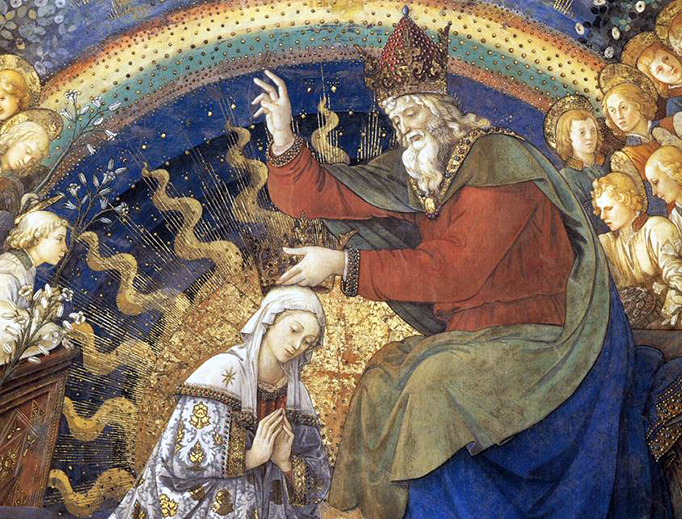
That at least is the claim by Roman Catholics, who last week celebrated the Memorial of the Queenship of the Blessed Virgin Mary:
As was the custom in Israel, Mary was predestined to be the Queen Mother of Jesus. Since Jesus was to be King of all creation, his mother Mary — in dependence on Jesus — was to be his Queen. Since Jesus took his earthly flesh from his mother Mary, it was only fitting that her flesh, too, should have been preserved from the stain of original sin.
Mary was acting in her role of Queen Mother when, at the wedding feast at Cana, she turned to her Son for help — and then when she instructed the steward, “Do whatever He tells you.”
Protestants don’t think so, at least the Scot James Orr took a different view on the wholesomeness of queen mothers in the Old Testament:
It stands to reason that among a people whose rulers are polygamists the mother of the new king or chief at once becomes a person of great consequence. The records of the Books of Kings prove it. The gebhirah, or queen mother, occupied a position of high social and political importance; she took rank almost with the king. When Bath-sheba, the mother of Solomon, desired “to speak unto him for Adonijah,” her son “rose up to meet her, and bowed himself unto her, and sat down on his throne, and caused a throne to be set for the king’s mother; and she sat on his right hand” (1 Ki 2:19). And again, in 2 Ki 24:15, it is expressly stated that Nebuchadnezzar carried away the king’s mother into captivity; Jeremiah calls her gebhirah (29:2). The king was Jehoiachin (Jeconiah, Jer 29:2), and his mother’s name was Nehushta (2 Ki 24:8). This was the royal pair whose impending doom the prophet was told to forecast (Jer 13:18). Here again the queen mother is mentioned with the king, thus emphasizing her exalted position. Now we understand why Asa removed Maacah his (grand?)mother from being queen (queen mother), as we are told in 1 Ki 15:13 (compare 2 Ch 15:16). She had used her powerful influence to further the cause of idolatry. In this connection Athaliah’s coup d’etat may be briefly mentioned. After the violent death of her son Ahaziah (2 Ki 9:27), she usurped the royal power and reigned for some time in her own name (2 Ki 11:3; compare 2 Ch 22:12). This was, of course, a revolutionary undertaking, being a radical departure from the usual traditions.
Not the best model for Mary.
And then we have the perspective of Judaism. In addition to Michal and Bathsheba, perhaps not the best of precedents, we have Ataliah:
The daughter of Ahab and Jezebel (or else of Omri), wife of Jehoram of Judah, and sole reigning queen of Judah. Like her husband, she murdered all familial rivals upon her accession to the throne. Only her grandson Joash escaped her clutches thanks to his aunt Jehosheva (Ataliah’s daughter). Ataliah fostered the idolatrous worship of Baal-Melqart, and her reign was odious to the Judahites. She received condign punishment when her son-in-law, the stalwart high priest Jehoiada, proclaimed her grandson Joash as king in a coronation ceremony in the Temple. The despairing Ataliah tore her clothes and protested the act of treason, then was promptly led off and summarily executed at the horse gate of the royal palace. In the aftermath of Ataliah’s demise, the temple of Baal was destroyed and its priest Mattan slain.
But if you can look at queen mothers in the Old Testament as the institutional model for Mary’s status in the Christian faith, you might have no trouble believing the New York Times about slavery in America.

David Koyzis writes about his experience with social justice in ways that might be encouraging to those who would like the woke Christians to step back from the apocalypse.
It is not always easy to love our fellow Christians. After all, they sometimes say things that we find embarrassing and embrace causes that we find repugnant. Their political opinions are hopelessly atavistic or thoughtlessly progressive. They believe the world will end tomorrow and think they can hasten the coming apocalypse. They think they will save their country and bring godliness to everyone. They make all Christians look foolish by their missteps, and we–their betters surely?–are reluctant to associate with them for fear of losing respectability.
How many of us have experienced this for ourselves? I freely admit that I have, and it’s a side of me that I quite dislike. In my youth I developed a burning passion for social justice, for helping the poor and oppressed and for ending the economic structures that hold them in their grip. This produced in me an anger towards anyone else in the church who was less aware of these issues than I. Of course, this included most of my fellow Christians who were busy making a living, raising families and giving time and financial resources to their church and other communities. At least temporarily, my attitude made it difficult for me to sit in church and to listen to sermons that failed to touch on what I had come to believe was so important to a genuine faith. Had someone attempted openly to correct me and thereby coax even a little humility into me, I doubt I would have listened.
This attitude softened considerably in my mid to late twenties, and by the time I reached thirty, I came to recognize that I had succumbed to an unhealthy pride.
And then you remember that some of the loudest voices on race, Trump, white normativity, and Christian nationalism are middle-aged.

While Thabiti Anyabwile claims Bradly Mason as an authority on systemic racism, he might want to pay attention to the situation in New York City public schools (as explained by Andrew Sullivan):
If I were to put a time capsule in the ground to alert future generations what it was like to live in 2019, I think I’d include two simple documents: a video and transcript of one of Donald J. Trump’s deranged and unnerving rallies, and a chart used by the New York City schools system to train all its administrators, principals, and supervisors. The chart’s title is “White Supremacy Culture” and you can take a look at it here.
Back in the day (about five years ago, actually), if you thought of “white supremacy culture” you might have imagined, say, depictions of brutal slavery, crackpot theories of a master race, photographs of burning crosses on lawns, terrifying images of lynchings, or “whites only” signs, or a video of the Charlottesville neo-fascists. You know what I mean. And I think I’d be glad that public schools were educating employees about America’s original sin.
But that, of course, is not what “white supremacy” has come to mean among woke elites in 2019. And the chart, which is taken from a tome called Dismantling Racism: A Resource Book for Social Change Groups, explains what the term now means. Namely: “being results oriented and diminishing an otherwise-sound process which does not produce measurable results”; “seeing things in terms of good or bad, right or wrong, black or white”; “individualism”; “worship of the written word”; an overemphasis on “politeness”; “perfectionism”; “focusing only on the bottom line.” Now, if I were to give this material every benefit of the doubt, I’d note it’s perfectly reasonable to attempt to mitigate some kinds of obsessive conduct, excessive self-criticism, or distorted perspective among kids. We all know that perfectionism can lead to misery (tell me about it), that short-term thinking can be counterproductive, or that students need to have interpersonal skills as well as mastery of the written material. I’ve no doubt principals and administrators get this. But why on earth is this connected in some way to resisting “whiteness”?
But what this document clearly does is much more than that. It seems to me that it finds some essential features of success in America (or anywhere else, for that matter) as somehow racially problematic. And so a major school system is effectively telling principals and administrators not to expect the very best of their mainly minority students, not to reward individual effort, or mastery of written English, to instruct students that there are no binary choices between right or wrong, and to banish from their minds any notion of objective truth. The problem with objectivity, it seems, is that it “can lead to the belief that there is an ultimate truth, and that alternative viewpoints or emotions are bad. It’s even inherent in ‘the belief that there is an objective truth.’” This is not just bad education, it’s an assault on the very principles that buttress Western civilization.
Worse than this, the ideology equates excellence in objective tests with not just whiteness (whatever that is) but white supremacy. And it does this in a school district with enormous racial diversity. It’s hard not to infer that it is an official endorsement — by the schools chancellor no less — of the damaging canard that studying hard in school, doing your homework, and striving for excellence is “acting white.” And this is despite the fact that the ethnic group that is succeeding the most by traditional standards of excellence in New York City’s schools are Asian-Americans. (They comprise 74 percent of students at Stuyvesant High School, because Stuyvesant doesn’t admit students on any other metric than test scores.) Funny, isn’t it, how “white supremacy culture” ends up empowering nonwhites. I’m not sure real white supremacists would be down with that.
I’m often told that the social-justice left’s assault on individuality, meritocracy, and achievement is a figment of my imagination, or only true in isolated pockets of super-woke academia. But here is one of the largest school systems in the country imposing this ideology on its most important employees, mandating lessons in “whiteness,” allegedly firing women solely because they are white, and indoctrinating an entire generation into associating the virtues of objective truth, academic excellence, and reason with the worst kind of bigotry.
Notice that we have elites in Reformedish evangelical circles, those who want to do for Protestant churches what public school officials are doing in New York’s school systems.
How did it possibly happen that in the microscopic world of conservative Presbyterian and Reformed churches we could have our very own elites?
 Old Life