You Can Take the Curmudgeon out of Presbyterianism . . .

But you can’t take Presbyterianism out of the Curmudgeon.

The best priest we know serves up even more reasons for thinking New Calvinism is a sham:

Drs. Moore and Mohler have also been involved in another SBC fight. They are Calvinists in a denomination that has embraced evangelism and church growth of first of the Second Great Awakening sort (100 verses of “Just As I Am” waiting for one more sinner to be converted or one more backslider rededicate) and then of the church growth/contemporary church sort (rock bands, smoke machines, and preachers sitting on stools). But large number of Southern Baptists have embraced what they call “Calvinism” (How is a credo-baptist really a Calvinist?), or “the doctrines of grace” (“soteriological Calvinism, though one must also ask what kind of soteriological Calvinism denies a means of grace, baptism, to children?). The tension between traditional Baptists and the so-called Calvinistic Baptists is another fault line in the Convention, though a piece of plywood has been put over crack.

To keep it straight, the Gospel Coalition attracts and promotes Calvinists (think Tim Keller and the PCA) who do not minister as Calvinists, that is, Calvinists who look the other way when it comes to worship and the ministry of the word. To be sure, New Calvinists care about ministry, but their concern is for relevance, influence, size (matters). Their concern is not like Calvin’s or Bucer’s or Ursinus’ to make ministry conform to Scripture — Reformed according to the Word.

That is where tranformationalism goes. It sups with practices designed to be strategic, to win a hearing, to sit at the table. And all along, the freedom to minister word and sacrament, follow the regulative principle, administer church discipline is still overwhelmingly available. The problem is that the traditional means of grace and serious worship won’t rise above the hum drum of congregational life to amount to a movement, a following. Shouldn’t New Calvinists trust the God-ordained means of grace? Or do they know something God’s word doesn’t?

It reminds me of Hughes Oliphint Old’s point about contemporary worship:

In our evangelistic zeal we are looking for programs that will attract people. We think we have put honey on the lip of the bitter cup of salvation. It is the story of the wedding of Cana all over again but with this difference. At the crucial moment when the wine failed, we took matters into our own hands and used those five stone jars to mix up a batch of Kool-Aid instead. It seemed like a good solution in terms of our American culture. Unfortunately, all too soon the guests discovered the fraud. Alas! What are we to do now? How can we possible minister to those who thirst for the real thing? There is but one thing to do, as Mary the mother of Jesus, understood so very well. You remember how the story goes. After presenting the problem to Jesus, Mary turned to the servants and said to them, “Do whatever he tells you.” The servants did just that and the water was turned to wine, wine rich and mellow beyond anything they had ever tasted before.


Christians and the Life of the Mind

A popular perception out there is that Tim Keller is a version — maybe the most popular one — of a Protestant intellectual. Back when Nicholas Kristof interviewed Keller in the pages of the New York Times (can you believe it? A CHRISTIAN IN THE PAGES OF THE NEW YORK TIMES!!!!! No, I’ve never heard of Ross Douthat), Scot McKnight wrote a favorable piece about how Keller is defending Christianity against the skeptics and cynics of our times:

Kristof is no H.L. Mencken and Tim Keller is no Willam Lane Craig nor is he a Rob Bell. He’s a conservative, Reformed, Presbyterian pastor with a lot in his noggin’ about how to respond to Manhattan singles and marrieds and wealthy-wannabes and educated. He’s done this well. He just told Nicholas Kristof he will need to join the throng of believers in the resurrection. In a pastorally sensitive way. No doubt Kristof got the message.

Maybe his critics would do themselves a favor by looking in the mirror and asking if they are reaching with the gospel and converting skeptics and cynics and doubters. If not, maybe they could look at Tim Keller and ask Why is he? I know I do.

Maybe.

But can’t we ask if Keller has as much in his noggin’ as the promoters promote? Here’s one reason for asking: the recent piece in ByFaith magazine which indicates what Keller will be doing once he retires from regular preaching. He will be training pastors for ministry in urban settings:

When it comes to the urban environment, ministry here requires also a knowledge of urban life dynamics, urban social systems, cross-cultural communication, non-western Christianity, and many other subjects not covered in ordinary seminary programs. I also want to give more than the usual help on both expository preaching, on developing a life of prayer, on leading the church in an adverse cultural and financial environment, and on reading that provides cultural analysis and insight. The combination of the M.A. (which in two years covers all the academic material, including languages and exegesis) together with the City Ministry Year will provide much more space for these than an ordinary M.Div. can.

For one thing, this was precisely the sort of agenda that William Rainey Harper took to the University of Chicago Divinity School almost 120 years ago — the idea that modern (read urban) times need new ways of doing ministry.

For another, how does someone with at most a D. Min. have enough intellectual chops to discern which books to read on urban life dynamics, urban social systems, cross-cultural communication? And is Keller proposing for pastors what medical specialists endure — 12 years of training (9 beyond the basics of Greek, Hebrew, exegesis, systematics, church history, etc.)?

In other words, the different parts of an urban setting require specialists in academic disciplines that go way beyond the competency of a specialist in the Bible or even a Ph.D. in historical science. To suggest that a person with a D. Min. is competent to adjudicate sociology, political science, urban studies, history, economics, demographics, anthropology and communications is not intellectual but borders on middle brow if not anti-intellectual.

And not to be forgotten, once you’ve mastered planting a church in Manhattan, are you really prepared to minister to the outer boroughs — Trump country?

How to Tell the Difference between Turkey and the U.S.

You don’t read about President Erdogan in the pages of Washington Post, New York Times, or New Yorker:

As Turkey heads toward a constitutional referendum designed to grant its leader Recep Tayyip Erdoğan even greater powers, the polls predict a neck-and-neck race.

That doesn’t mean their chances are equal. While the April vote is likely to be free, whether it will be fair — given rising repression of political dissent and the ongoing state of emergency — is another question.

Take the case of İrfan Değirmenci, a well-known news anchor for Kanal D, who explained his opposition to the proposed changes in a series of tweets earlier this month. “No to the one who views scientists, artists, writers, cartoonists, students, workers, farmers, miners, journalists and all who do not obey as the enemy,” he wrote.

He was promptly fired.

Değirmenci’s dismissal has heightened fears among No campaigners that those who oppose the new constitution will be subject to threats and intimidation ahead of the referendum on April 16.

“A lot of people are risking their careers and their future by openly and publicly campaigning for No,” said İlhan Tanir, a Turkish columnist and analyst based in Washington. “There is nothing fair about this.”

Government supporters face no such risk: While Kanal D claimed Değirmenci had been let go for violating the media group’s neutrality rule, Yes supporters have been free to air their views in the pages of Hürriyet, which belongs to the same group.

Hurriyet itself — a newspaper that positions itself as neutral — has muted critical voices: Its editors last week scrapped an interview with Orhan Pamuk, in which the Nobel Prize-winning Turkish novelist explained his reasons for voting No.

So why do elite journalists cover the Trump administration as if we’re living in the television series, Man in the High Castle. Perhaps because they believe in American innocence as much as Jerry Falwell, Jr.

Every Square Inch is a Demanding Taskmaster

Devin Wax is not so happy with the significance attached in the current cultural climate to ordinary choices like where to eat. He wishes a chicken filet sandwich were merely a chicken filet sandwich:

We’re witnessing a convergence of two developments.

Development #1: Consumerism as a Religion

The first development is the lifting up of our consumer choices to the level of religion.

In American society, we are more and more inclined to define ourselves by what and how we consume. We no longer buy things to meet our needs, but to become something, or to express who we are.

“Brands are the new religion,” says Douglas Atkin, writing about customer loyalty. People express their own identities through what they buy.

With an endless sea of choices, Skye Jethani says, “individuality is the new conformity.” Choice is a powerful factor in a consumer society, because more choices provide more ways for consumers to demonstrate their uniqueness.

Development #2: Politics as Religion

The second development is the lifting up of our political views to the level of religion.

In American society, we are more likely to see political views as non-negotiable aspects of our true selves. This is why recent research shows families having a harder time with a son or daughter who wants to marry someone from an opposing political party than from a different religion!

Tell me how Neo-Calvinism did not add momentum to this. When all of our choices have religious significance, how different is that from the “personal is political” that feminists and other politics of identity advocates taught us? Now Mr. Trax wants a cigar (okay, a bubble gum cigar) to be only a cigar?

If more New Calvinists had read 2kers more than Tim Keller, had understood that religion is different from common life, had been content with Reformed worship instead of transformed cities, had valued church officers more than every membered ministry, they might be able to eat tacos without the least concern for larger significance — political or religious.

The 2k Middle Way

This should eliminate the “R” from R2K with help from the Gospel Allies. Trevin Wax mentions three matters where New Calvinists (posing as neo-Calvinists) can learn from Anabaptists (hint, it’s not how to build a gospel barn). If Mr. Wax had spent a little more time with 2K, he might have posed these theses better.

First, “What happens in the church matters more than anything that happens in the world.

Reply: what have 2kers been saying but only to hear that Christianity must go beyond the church parking lot? And is it not a tad rich to hear about the importance of the church at a website that puts the RA in parachurch? In other words, a high church Calvinism would help Mr. Wax restore the visible church to its proper significance.

Second, “The church changes the world by being the church.”

Reply: don’t go empire building without referring to your Constantinian playbook. Heck, would the church even have a Trinitarian theology to wind up the complementarians without the emperor calling an ecumenical council? Don’t forget either that the conversion of emperors and kings gave a plausibility to Christianity that made the evangelization of medieval Europe more plausible than it would have been with Christianity as a minority and persecuted faith. Do remember as well that the number of Christians spiked in the first half of the fourth century — from 10% of the population in 300 to 50% in 350 — undoubtedly because Christian politicians made the faith respectable and even remunerative.

Meanwhile, as kind as it is to regard Anabaptists as making a difference, overlooking the enormous influence of magisterial Protestants in so many of the aspects of Christian life we take for granted is unfortunate. Whether you like Vacation Bible School, Sunday school, a Bible in every hotel room, or parachurch foreign missionary enterprises, the evangelicals who read and take heart from the Gospel Allies would have a dry and parched religious landscape if they had had to depend on Anabaptists who went before.

Third, “The church is strongest in its witness when it occupies the margins.”

Reply: another kind and generous assertion, but is anyone going to tell me that the OPC has been incredibly strong — compared to Tim Keller, the Gospel Allies, the hipper portions of the PCA, and the behemoth Southern Baptist Convention — because Orthodox Presbyterians have ministered on the margins? Please.

So before anyone tries to buy a farm next to an Amish family, take Mr. Wax’s recommendation of Anabaptism with a grain of salt. If you’re really Reformed, you can chase it with a shot of Rye.

Aesthetic Relativism

If you don’t have standards for beauty, how do you have them for truth and goodness? Father Dwight doesn’t explain:

If you are a convert to the Catholic faith from Lutheranism or Anglicanism or any other form of tasteful religion, then you will have to deal with Catholic kitsch. What are we to do with the trashy trinkets, the horrid holy cards, the sappy statues? How do you put up with the banal hymns, bad preaching and sentimental religiosity? . . .

It’s true Catholics have some awful music and bad hymns. But we also have Palestrina, Elgar, Mozart and Byrd.

Yes, we do have plastic glow in the dark rosaries and those night lights you plug in where the plastic statue of the Blessed Mother lights up. But we also have the Pieta and the Sistine Chapel and Michelangelo and Caravaggio.

It’s true we have brutalist churches that look like a cross between a flying saucer and a parking garage, but we also have Chartres, St. Mark’s in Venice, Sainte-Chapelle, Notre Dame, St. Peter’s and Mont Saint-Michel.

This is the authenticity of the Catholic faith. It is universal. It has room for the peasant and the aristocrat, hoi polloi and high falutin’, the learned and the ignorant, the tasteful and the tacky, the sinner and the saint.

With that kind of tolerance, why would you ever reject Protestantism?

But Father Dwight insists he has standards:

“If I were choosing a church I liked I’d still be an Anglican. I didn’t become a Catholic because I liked the Catholic Church.” I retorted. “I became a Catholic because it’s the true Church.”

How would he know? Because the bishop with all the high end art told him?

You can’t argue this stuff up.

Is Tim Keller Leaving the PCA for the OPC?

His latest post for the Co-Allies suggests he may:

The earliest Christians were widely ridiculed, especially by cultural elites, were excluded from circles of influence and business, and were often persecuted and put to death. Hurtado says Roman authorities were uniquely hostile to them, compared to other religious groups. . . .

The earliest church was seen as too exclusive and a threat to the social order because it would not honor all deities; today Christians are again being seen exclusive and a threat to the social order because we will not honor all identities.

Yet the early church thrived in that situation. Why?

One reason was that Christians were ridiculed as too exclusive and different. And yet many were drawn to Christianity because it was different. If a religion isn’t different from the surrounding culture—if it doesn’t critique and offer an alternative to it—it dies because it’s seen as unnecessary. . . .

The early church surely looked like it was on the “wrong side of history,” but instead it changed history with a dogged adherence to the biblical gospel. That should be our aspiration as well.

When you read those estimates of the early church, do you think more of the PCA or the OPC?

By the way, Keller leaves out one of the biggest factors in the early church’s “success”: the conversion of the emperor. In 300 roughly 10 percent of the empire’s population was Christian. By 350 that number rose to 55 percent.

Now all Pastor Keller needs to do is convert his fellow New Yorker, Mr. Trump. But I’m not sure how appealing a religion ridiculed by cultural elites and that is excluded from circles of influence and business will be. I am not even sure Pastor Keller’s experience proves that kind of Christianity “works.”

Gospel Coalition as Harlem Globe Trotters

One of our many southern correspondents notified me of TGC’s year-end pitch for charitable donations. At the end of Collin Hanson’s post is a link to TGC’s 2016 Annual Report. Curiously absent are the financials. The Allies encourage people to give but those people have to trust TGC staff about funds.

The similarities and differences between the Coalition and a church are striking. Since I serve on the Christian Education Committee of the OPC and am also one of the OPC’s representatives on Great Commission Publication’s board of trustees, I see strong similarities among the OPC, PCA, and TGC at least in the arena of education, curriculum development, and publication. TGC’s report on website hits, best selling books or pamphlets, and plans for 2017 titles is the sort of information I see four times a year as an OPC/GCP officer. But what I don’t see from TGC is any financial spread sheet. Since the church and parachurch both operate in a voluntary world of free-will gifts, support, and self-identification of members, you might think that giving supporters some insight into the Coalition’s funds would be not only wise but honorable.

Chalk up one for the church over the parachurch.

Another note of concern for TGC supporters may be the popularity of Jen Wilkin. According to TGC’s report:

Our all-time bestselling resource on any paid platform is Jen Wilkin’s Sermon on the Mount study with LifeWay, but it may end up topped by her 2016 TGC release, 1 Peter: A Living Hope in Christ.

Jen Wilkin may be a great lady — I’ve never heard of her though she appears to take hairstyle-advice from Ann Voskamp (not Jen Hatmaker) — but do supporters of TGC have no trouble with a non-ordained person teaching the Word of God to Christians? Maybe Ms. Wilkin is ordained. Either way, TGC’s efforts to attract support from conservative Reformed Protestants runs up against church polity that again separates the parachurch from the church (not in a good way, by the way).

But when you look at TGC’s report, you have to come away impressed with all the effort the Allies put into their labors. But what would happen if those same people put their energies into the PCA with Tim Keller or into the Southern Baptist Convention with Ms. Wilkin who goes to The Village Church (is there only one?) or into the Evangelical Free Church with D. A. Carson (does he belong to the EFC?). Where’s the efficiency? Sure, a TGC supporter could argue that the OPC or PCA or SBC are competing with TGC and these other Protestants should join forces with the Allies. But this is always what happens with “unity” projects among Christians. You form one agency to unite everyone and simply add one more organization or church to the landscape. The United Church of Canada did not unite Anglicans, Methodists, and Presbyterians. It added the United Church to the Presbyterian, Methodist, and Anglican churches.

And then there is the question of officers or pastors who hold credentials in the PCA or SBC adding their energy and resources to another Christian organization. If I play football for the Philadelphia Eagles, would the NFL allow me to play for a European football league midweek during the season (or even in the summer)? Or if I am a contributing editor to Atlantic Monthly, do I write regularly for The New Republic? These are obviously apples and oranges — publishing and sports are not ministry (though to hear some neo-Calvinists. . .). But questions about which is the primary outlet for Coalition contributors and officers is a real question that supporters of TGC should question. If I give to TGC, do I want Tim Keller spending a lot of time on committee work for his presbytery?

Chalk up another for the church.

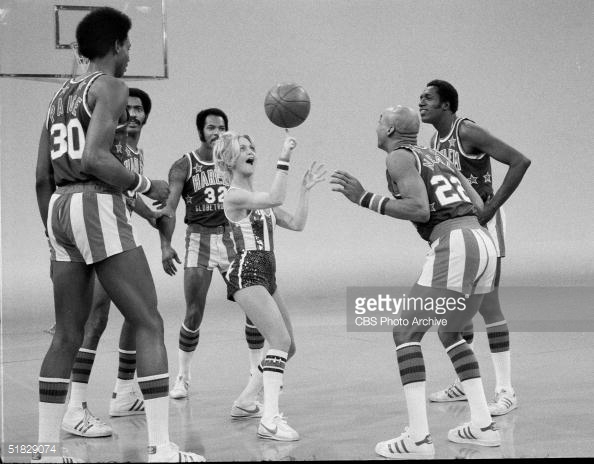
One last observation that makes me think TGC more like an exhibition sports team (Harlem Globe Trotters) than a Major League Protestant Communion: I went to the staff page of TGC and noticed that no one works in a central office. The executive director lives in Austin, Texas (no church mentioned). The executive editor lives in Birmingham, Alabama and is part of a local community church. When it comes to the nuts and bolts of the organization, payroll, accounting, general housekeeping, again staff is scattered. The director of operations lives in Austin (no church listed). The director of program development lives in Cedar Rapids, Iowa (no church listed). The director of advancement lives in Minneapolis, Minnesota (no church listed). The manager of operations lives in Minneapolis (no church listed). The business manager lives in Austin (no church listed). And yet, for full-time staff’s location in places far away from the Big Apple, TGC’s major publishing project for 2017 is a print version of Keller’s New City Catechism. When terrorists band together, we call them non-state actors to distinguish them from the military personnel of nation-states. Nation-states engage use coercive force legitimately (ever since 1648). Terrorist organizations do not. Does that make the Allies spiritual terrorists who have no geographical or ecclesiastical home?

The impression TGC gives overall is doing all the stuff a church does (including solicitation of funds) without many of the rules that give accountability to churches in their work of word and sacrament ministry. The Allies produce conferences and literature and a website presence that provides much of the teaching and encouragement that churches also give. And yet, the Coalition has no mechanism for discipline or oversight or even ecumenical relations. To be in TGC’s orbit is like following an exhibition basketball team instead of the National Basketball Association. I guess, when your home team is the Sixers, the Globetrotters look pretty good. But it’s not real basketball.

Christmas as Old School Presbyterianism’s Coexist Moment

Mustafa Akyol’s column on Christmas in Turkey revealed that paleo-Calvinists share much in common with conservative Muslims and Jews during the holiday season:

Islamists in Turkey, every year, come out on the streets or in their media with the slogan, “Muslims do not do Christmas.” Of course, they have every right to not to celebrate a religious feast that is not a part of their religion. But they not only refrain from Christmas; they also protest it.

In fact, those Islamists of Turkey, and other likeminded Christmas-despisers, often “do not know what they are doing,” to quote the noble words of the very person whose birthday is at question here. They typically condemn Santa Claus costumes and Christmas trees as signs of “Western cultural imperialism.” But Christianity is not merely Western; it is also African, Asian and, in fact, global.

Hmm. Christmas as a global solvent of local Reformed Protestant teachings and practices. Go figure.

Jews — ya think? — have similar problems with Christmas.

Israel, too, seems to have a similar problem.

I read about this in an Al-Jazeera English story titled, “Israeli rabbis launch war on Christmas tree.” It reported how the Jerusalem rabbinate issued a letter warning hotels in the city that “it is ‘forbidden’ by Jewish religious law to erect a tree or stage New Year’s parties.” In Haifa, a rabbi, Elad Dokow, went even further, called the Christmas tree “idolatry,” and warned that it was a “pagan” symbol that violated the kosher status buildings.

At a time when New Calvinists heighten their sensitivity to Muslims and Jews, when will they show a little concern for Old Calvinists?

It

Jeremy Young explains what he explored in his book on the charisma of politicians between the Civil War and World War II:

One of the central questions I had to answer in researching my book on turn-of-the-century charisma was how to determine whether a given leader was actually charismatic. Charisma is an enigmatic quality, both ineffable and deeply subjective; who was I to say that Theodore Roosevelt was more or less charismatic than, say, Woodrow Wilson? Ultimately, I realized that I was asking the wrong question; charisma was not a characteristic of leaders, but a relationship between them and their followers. By observing how Americans described their leaders, then, I could let followers do the work of identifying charisma.

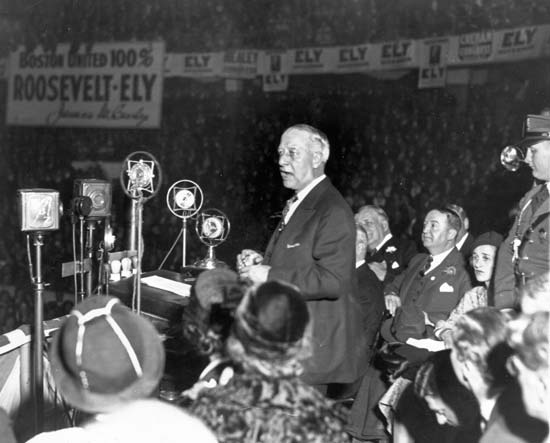
H. L. Mencken had another theory. It was whether or not a politician had “it.” Mencken thought Al Smith did.

There is something about Al’s aspect that the plain people like, not kowing why, and they seem to like it almost as well where cops are curiosities as where cows are curiosities. I have watched them at a dozen country railway stations, crowding up to the observation platform. Maybe the stop is for but two or three minutes; sometimes there is no more than a slowing down. They crane their necks expectantly, waiting for they know not what. Suddenly Al is on view, waving the brown derby, reaching out to shake hands, hauling in the bouquets brought for Mrs. Smith and joshing the local worthies. They regard him quizzically for a moment, and even with a certain hostility, but then, of a sudden, he has landed them, and as the train rolls on they are howling. . . .

The plain fact is that Al’s points are mainly infra-red and ultra-violet. It is impossible to chart or label them. He simply has the thing that the movie folk call IT — and the movie folks discovered long ago that it could not be described with any precision. There are grand and gaudy beauties who lack it altogether, and there are shabby little girls who radiate it at a pressure of a million volts. Al has it as no American politician has had it since Roosevelt. Has more of it, indeed, than Roosevelt, for the popularity of Roosevelt was largely logical: the plain people admired him because he had waded in blood and saved American womanhood from the Spanish Hun. But they know very little about Al, and what little they know, at least in these back reaches of the land, is mainly unfavorable. I don’t think it would be exact to say that they admire him, even after they have seen him. But it is as plain as day that they delight in him. He somehow thrills them and makes them happy. When he casts his magic over them it penetrates to their gizzards. (“Smith Has ‘It'” – 1928)

I suspect that Hillary didn’t have it but Trump did.

Postscript: Machen voted for Al.