Putting the Loco in Logocentric

Rod Dreher reflects on the ways that even while denominational brands among Protestants are in free fall (and have been, I might add, since the Second Not-So-Good Awakening), the differences between Roman Catholics and Eastern Orthodox abide:

And yet, some borders still matter — as Berger notes — at the popular level. When you’re a Protestant and you walk into a Catholic church, you know that something very different is going on there, and vice versa (though given the postconciliar Protestantization of Catholic church architecture and interior design, this is much less obvious in some places than in others). Visit an Orthodox church, and the contrast is even more vivid — perhaps surprisingly so for Catholics, who might reasonably have thought that given the strong Marian piety of Orthodox Christians, the Orthodox church was closer to their own faith than it actually is.

The vibe in a Protestant (especially confessional) church would be different in part because services feature, in contrast to the Roman and Eastern churches, the Bible read and preached.

So when you read Paul’s instruction to Timothy, Paul being an apostle and all and an author of an infallible set of books in Scripture, are you thinking of the atmosphere in a Roman Catholic, Eastern Orthodox, or Protestant service?

14 But as for you, continue in what you have learned and have firmly believed, knowing from whom you learned it 15 and how from childhood you have been acquainted with the sacred writings, which are able to make you wise for salvation through faith in Christ Jesus. 16 All Scripture is breathed out by God and profitable for teaching, for reproof, for correction, and for training in righteousness, 17 that the man of God may be complete, equipped for every good work.

4 I charge you in the presence of God and of Christ Jesus, who is to judge the living and the dead, and by his appearing and his kingdom: 2 preach the word; be ready in season and out of season; reprove, rebuke, and exhort, with complete patience and teaching. 3 For the time is coming when people will not endure sound teaching, but having itching ears they will accumulate for themselves teachers to suit their own passions, 4 and will turn away from listening to the truth and wander off into myths. 5 As for you, always be sober-minded, endure suffering, do the work of an evangelist, fulfill your ministry.

Don’t let them fool you. The model for Protestant ministry is as old as the church in Ephesus that Jesus founded by way of Paul.
How We Could Have Avoided Christendom

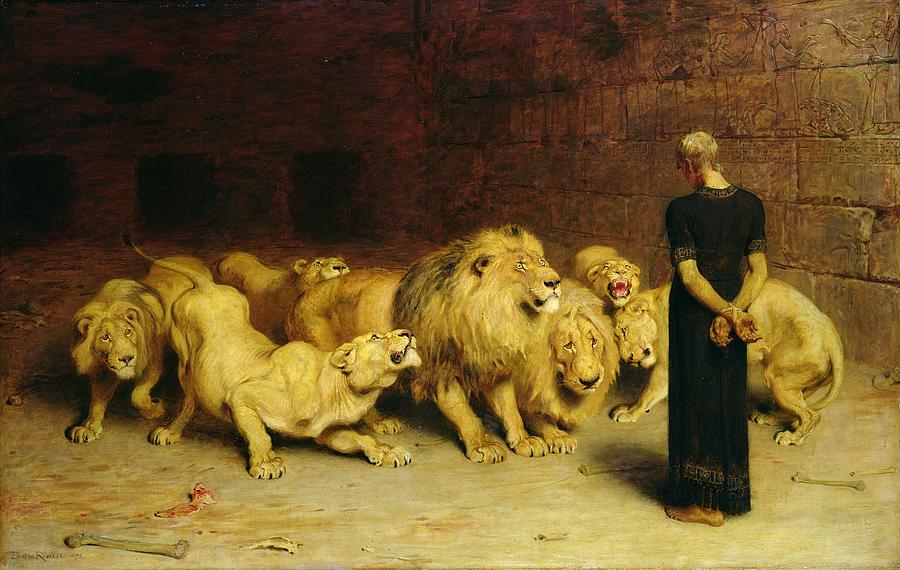
We could have dared to be a Daniel:

Again, Daniel gained the esteem of his irreligious superiors, the Persian king Darius, who determined to make him prime minister of the realm. Members of the Persian royal court were jealous of Daniel, and sought some justification to attack his character—yet none could be found “because he was faithful, and no error or fault was found in him.” Since there was no impugning Daniel’s character, it was again the Jewish religion that became the focal point of the problem. Daniel refused to stop giving thanks to God despite a royal decree that the Persian king must be worshipped. He practiced his religion quietly in the upper chamber of his house to avoid conflict. Still, his detractors discovered him and used his piety as a pretext for destroying him. Despite Darius’s best efforts to reverse his royal edict, Daniel was thrown into the lions’ den. We all know how that turns out.

Thing is, this was not how certain bishops in THE eternal city viewed civil authority:

If princes and magistrates duly elected are filled with the persuasion that they rule, not by their own right, but by the mandate and in the place of the Divine King, they will exercise their authority piously and wisely, and they will make laws and administer them, having in view the common good and also the human dignity of their subjects. The result will be a stable peace and tranquillity, for there will be no longer any cause of discontent. Men will see in their king or in their rulers men like themselves, perhaps unworthy or open to criticism, but they will not on that account refuse obedience if they see reflected in them the authority of Christ God and Man. Peace and harmony, too, will result; for with the spread and the universal extent of the kingdom of Christ men will become more and more conscious of the link that binds them together, and thus many conflicts will be either prevented entirely or at least their bitterness will be diminished.(Pius XI, Quas Primas)

The long history of the papacy up until John XXIII was one of daring to be a prince who could play power politics and maintain Christendom. Work with the Ottomans and dare to be a Daniel? Are you kidding me?

How Did the Laity React to the Council of Nicea?

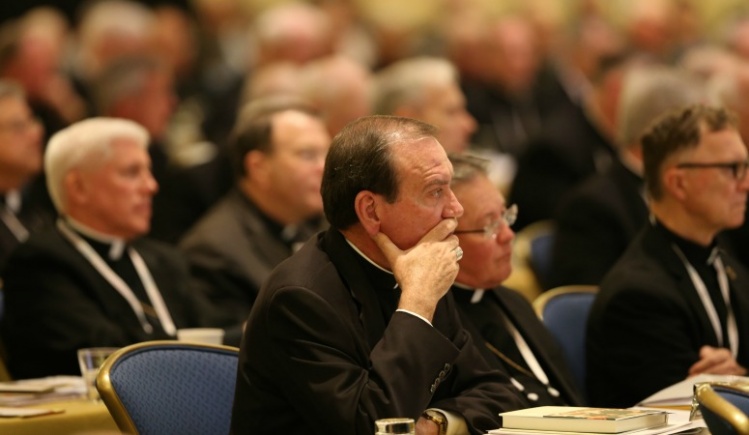
Surrounding the news and criticism of Roman Catholic bishops in their responses to instances of sexual abuse by priests (and other officials) are calls for the bishops to be as holy as they should be and for the laity to be included in some mechanisms of accountability. What is strange about these arguments — especially by Roman Catholic laity — is what questioning of the bishops does to the entire justification for Roman Catholicism. Critics of the bishops seem to assume that in the case of the current scandal, the bishops have behaved badly and acted unwisely. But if bishops can show such deficiency now, couldn’t they also have been unwise, acted out of self-preservation, or outright erred when deliberating about liturgy, the creed, or the beatification of exceptional believers? I mean, once you start to question the bishops’ judgment on this one matter, you can question almost any part of Roman Catholic history going all the way back to the church that Jesus founded (not in Rome but in Jerusalem).

Michael Sean Winters does not seem to be aware of how his reaction to the recent meeting of the U.S. bishops in Baltimore could also be applied to the gathering of bishops at Nicea almost 1800 years ago:

On Nov. 12, Cardinal Daniel DiNardo, the president of the conference, expressed his disappointment when he announced the Vatican’s decision to delay any votes on concrete proposals to confront the clergy sex abuse crisis. At the coffee break, bishops were fuming, complaining that Rome had pulled the rug out from under them. Even those bishops who are most enthusiastic about Pope Francis were distressed, worried that he did not understand the media spotlight under which the bishops were laboring.

But, when the bishops began discussing the proposals on Nov. 13, it quickly became obvious that the proposals were ill-conceived and would have fallen apart on their own, without any help from Rome. Erecting a national oversight commission, at considerable expense and with additional bureaucracy, to monitor 200 bishops, very few of them likely to have broken their vows of celibacy, didn’t seem very practical once they began discussing it. The proposed commission would report allegations to the nuncio but that happens now and no one had bothered to ask the nuncio if he wanted a commission to help him in his work. The Standards of Conduct seemed poorly framed and vague. The whole thing seemed amateurish.

Were the proposals at Nicea ill-conceived? Was the use of Greek philosophical terminology to explain the relations of Father, Son, and Holy Spirit amateurish?

By the way, who is a Michael Sean Winters to judge his bishops? After all, even when Vatican II affirmed the laity as the “people of God” in Lumen Gentium, the bishops were quick to remind readers who remained in charge of the church (Jesus founded):

27. Bishops, as vicars and ambassadors of Christ, govern the particular churches entrusted to them by their counsel, exhortations, example, and even by their authority and sacred power, which indeed they use only for the edification of their flock in truth and holiness, remembering that he who is greater should become as the lesser and he who is the chief become as the servant. This power, which they personally exercise in Christ’s name, is proper, ordinary and immediate, although its exercise is ultimately regulated by the supreme authority of the Church, and can be circumscribed by certain limits, for the advantage of the Church or of the faithful. In virtue of this power, bishops have the sacred right and the duty before the Lord to make laws for their subjects, to pass judgment on them and to moderate everything pertaining to the ordering of worship and the apostolate.

The pastoral office or the habitual and daily care of their sheep is entrusted to them completely; nor are they to be regarded as vicars of the Roman Pontiffs, for they exercise an authority that is proper to them, and are quite correctly called “prelates,” heads of the people whom they govern. Their power, therefore, is not destroyed by the supreme and universal power, but on the contrary it is affirmed, strengthened and vindicated by it, since the Holy Spirit unfailingly preserves the form of government established by Christ the Lord in His Church.

If Winters is within his rights as a church member to take swings at the bishops or if he is right about the lack of discernment by the bishops themselves, the Roman Catholic Church is in a crisis of jaw dropping proportions.

What Brett Kavanaugh Could Learn from the Holy Father

The asymmetry between the press’ coverage of the Roman Catholic church’s scandal and the allegations against Brett Kavanaugh are remarkable. Whistle-blowers in the church receive a level of scrutiny that the judge’s accusers do not.

But not to worry. If the press is as favorably inclined to Pope Francis as it seems, the Vicar of Christ may have just supplied one of his flock with the rationale he needs to defend himself tomorrow:

I take the Pennsylvania report, for example, and we see that the first 70 years there were so many priests that fell into this corruption, then in more recent times it has diminished, because the Church noticed that it needed to fight it in another way. In the old times these things were covered up, they even covered them up at home, when the uncle was molesting the niece, when the dad was molesting his sons, they covered it up because it was a very big disgrace… it was the way of thinking in previous times or of the past time. It is a principle that helps me to interpret history a lot.

A historic event is interpreted with the hermeneutic of the time period in which it took place, not as a hermeneutic of today passed on. For example, the example of indigenous people, that there were so many injustices, so much brutality, but it cannot be interpreted with the hermeneutic of today [now] that we have another conscience. A last example, the death penalty. The Vatican, when it was a State, a pontifical State, had the death penalty. In the end the state decapitations were 1870 more or less, a guy, [sic] but then the moral conscience grew, it is true that always there were loopholes and there were hidden death sentences. You are old, you are an inconvenience, I do not give you the medicine, it went so… it is a condemnation to social death. And about today… I believe with this I have responded.

Boys were boys at Georgetown Prep, and priests were priests in Pennsylvania.

Actually, in the case of Kavanaugh, Francis’ point has merit since movies like Animal House indicate what American society could bear back then about young men’s antics.

But can the pope really be serious that priests’ abuse of children or adolescents was part of the church’s outlook before 2002? Was it even acceptable for men called to celibacy to have sex, consensual or not?

Pope Francis may have said more than even Rod Dreher thinks.

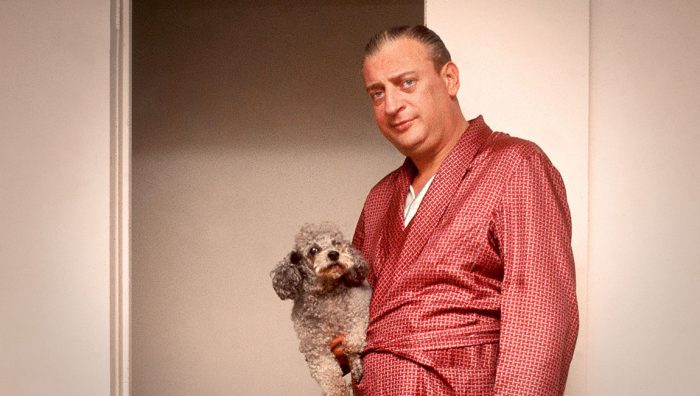
And Yet, Protestantism is Still Rodney Dangerfield

For all of Jonathan V. Last’s important observations about the seriousness of the current crisis in Roman Catholicism, Protestantism still gets no respect. Here are the possible outcomes of the contemporary scandal:

Some conservative Catholics, such as Princeton’s Robert P. George, have suggested that Francis ought to resign—especially if the Viganò letter is corroborated. This is an attractive idea and would align with the cause of justice. Anyone in the church hierarchy who knew, or should have known, about specific abusers in their midst should, at the least, be removed from any position of responsibility. They simply cannot be trusted. If you were to extend this view all the way to the bishop of Rome, there is a certain cleanliness to its logic—a sense that maybe the church could make a clean break and begin to make things right anew.

But it might be a cure worse than the disease.

In the last 600 years, only one pope has abdicated: Benedict XVI, the man who immediately preceded Francis. Two abdications in a millennium are an aberration. But two abdications in a row would have the practical effect of breaking the modern papacy. From here forward, all popes would be expected to resign their office rather than die in harness.

This expectation of resignation would, in turn, create incentives for the pope’s theological adversaries to fight and wound him, in the not-unreasonable hope that if they could make him unpopular, he could be shuffled out of the palace and they could try their luck with a new pontiff. Before you know it, you’d have polling data and opposition research and the papacy would become an expressly political office. No Catholic should yearn for this outcome.

The second option is capitulation. Catholics could shrug and give up. They could let Cardinal Wuerl live his best life and then slink off to a graceful retirement; they could make peace with Cardinal Cupich’s view that the church exists, first and foremost, to deal with global warming, or the minimum wage, or whatever else is trending on Vox.com. They could toe the dirt and accept sacramental same-sex marriages, even if it destroys the theology of the body. After all, times change. Religions change. And if you really trust in the Lord, then no change could come to His church without its being the will of the Father.

The third option is schism. There has been loose talk about schism since the early days of Francis’s pontificate. The conversation became less whimsical at the time of the synod and the dubia. It will become deadly serious if Viganò’s accusations are corroborated and Francis shelters in place. Even so, it remains one of those low-probability, extinction-level events that every Catholic should pray does not come to pass.

The fourth option is resistance. We are only at the current moment because the forces that conspired to elevate Francis refused, for decades, to leave the church, even though their desires were at odds with its teachings.

Finding Jesus in the ministry of Protestant churches is not an option.

No Christianity outside the Roman Catholic Church (Vatican II, the joint statement on justification with Lutherans, and Evangelicals and Catholics Together notwithstanding).

Audacity Gives, Audacity Takes Away

While Bryan and the Jasons are still mulling over the merits of conversion, others are wondering about the state of affairs in the Roman Catholic hierarchy. Jonathan V. Last, at the Weekly Standard, lays out the problems of leaning hard on papal audacity (notice that the link is now dead and the article at Called to Communion has been removed):

The Catholic church is unlike any other earthly institution. It is strictly hierarchical, with its ultimate power derived from the son of God. The head of the church—the successor of Peter—is elected to a lifetime appointment by his peers, and his authority over them is total. He can allow them to carry on sexual affairs in broad daylight, as Francis did with Father Krzysztof Charamsa, a priest who worked for years in the Vatican curia while living openly with his gay lover. Or he can drive them from the church, as Francis did with Father Charamsa after the priest made his situation public in the Italian media in 2015. He can make either of these choices—or any choice in between—for any reason he likes. Or none at all. Such is the supreme power of the vicar of Christ.

Yet the pope’s immediate subordinates—the cardinals and bishops—function like feudal lords in their own right. The bishop can preach in contravention of the teachings of the church, as Cardinal Walter Kasper does on the subject of marriage and infidelity. He can forbid the offering of both species of the Eucharist, as Bishop Michael Burbidge does in Northern Virginia. He can punish and reward priests under his care either because of merit or caprice—because the deacons and priests all swear a vow of obedience to the bishop (or cardinal) himself.

All of which is the long way of saying that there is no mechanism for a man such as Donald Wuerl to be dealt with by his peers. The bishop of Madison can fulminate against Wuerl all he wants to, as Bishop Robert Morlino did in late August. His fellow bishops have no power over him. The only man Wuerl is accountable to is the pope. And the structure of the church has no remedy when a pope is foolish or wicked.

In the weeks after the Viganò letter was published, Francis preached a homily in which he declared, “with people lacking good will, with people who only seek scandal, who seek only division, who seek only destruction” the best response is “silence” and “prayer.” If this sounds like Francis believes the real villains in this mess are Archbishop Viganò and people who want to know what the bishops knew, and when they knew it, well, yes.

In another homily on September 11, Francis went further, saying that not only was Viganò the real villain, but the bishops were the real victims: They were being persecuted by the devil: “In these times, it seems like the Great Accuser has been unchained and is attacking bishops,” Francis preached. And Satan “tries to uncover the sins, so they are visible in order to scandalize the people.” (The Father of Lies—as he is referred to in the Bible—has not traditionally been regarded as the revealer of sins in Catholic thought, but this pope has never been known for having a supple mind.) Francis then offered counsel for his poor, suffering brother bishops: “The Great Accuser, as he himself says to God in the first chapter of the Book of Job, ‘roams the earth looking for someone to accuse.’ A bishop’s strength against the Great Accuser is prayer.”

Roman Catholicism lives and dies with the pope, the cardinals, and the bishops. If Roman Catholics want to claim that their faith represents the truth, the Gospel, Jesus, or the Mass, they don’t have any of those Christian goods without the mediation of the hierarchy.

That is why this is a crisis on the order of 1517. And what did we learn last year during the 500th anniversary of the Reformation? Did anyone notice that the reformers reformed church government so that the ministry of word and sacrament was no longer under control of the Vatican?

Last thinks schism is possible. Only in 2018 are people beginning to understand (only implicitly) what was at stake in 1517.

If Peter Can Deny Our Lord Three Times (dot dot dot)

In the current climate of Roman Catholic discontent about sexually abusive and active priests, bishops, cardinals, and a church structure that made cover-up possible, it may not be the best time to raise questions about sexual infidelity among pastors. But a dinner with old friends and colleagues this summer at General Assembly and now reading about what to do about priests who have fallen has me thinking (always dangerous to do in public).

The thought is this: why is sexual infidelity worse than other sin? As the title of the post indicates, Peter did something that was pretty rotten. He denied his Lord three times. At certain times in church history (persecution in N. Africa in the third century and in Korea in the twentieth century), that kind of infidelity could get you booted from the ministry. But you could add lying and stealing as big deals. How do you trust a pastor who commits those sins? And perhaps not as obviously wicked, but what about idolatry or blasphemy (never mind keeping the Lord’s Day holy)? Why do we zoom in on the seventh commandment to adopt a one-strike and you’re out?

Here is how Robert George put it this week:

In short, what the Church (and by “the Church” I am referring to the lay faithful as well as to the Church’s hierarchical officials) should demand—that is, absolutely insist upon without exception—of its clergy is what the clergy should preach to the people, namely, fidelity. Fidelity, fidelity, fidelity. Priests must believe and preach what the Church holds as true about God and man—and must practice what they preach. Am I advocating a zero-tolerance policy toward grave sexual sins, such as fornication, adultery, and sodomy (even when committed by consenting adults)? Yes, I am. It is not because I think these sins are unforgivable, or even that they are the worst sins. (In fact, they are forgivable and, though grave, they are not the worst sins.) It is because the infidelity expressed by and embodied in these sins, and because the scandal—undermining of the faith (including the faith of the sinning priest and the faith of the person with whom he sins)—they occasion, is simply intolerable. These sins are toxic to the priestly ministry. Priests who cannot or will not avoid them cannot effectively carry out their mission.

So there is the logic from a conservative Roman Catholic:

Sexual infidelity undermines the faith corporately and personally.

Therefore, sexual infidelity is intolerable.

I understand it but the argument is not exactly airtight since you could insert idolatry, lying, and stealing into the premise and come to the same conclusion.

I am not trying to excuse sexual infidelity (or lying and stealing). I am curious though if our revulsion at sexual sin reveals more about those judging the sin than it does about the nature of the sin. I understand that according to our standards, some sins in themselves and by reason of several aggravations are more heinous in the sight of God than others. But that catechetical language gives room for what may only be “like your opinion, man.”

Whiplash

On the one hand, some Roman Catholics have had it with political liberalism and are calling for a return to integralism or the state’s subjection to the church. That would resonate well with Pius X (but not with the Second Vatican Council):

That the State must be separated from the Church is a thesis absolutely false, a most pernicious error. Based, as it is, on the principle that the State must not recognize any religious cult, it is in the first place guilty of a great injustice to God; for the Creator of man is also the Founder of human societies, and preserves their existence as He preserves our own. We owe Him, therefore, not only a private cult, but a public and social worship to honor Him. Besides, this thesis is an obvious negation of the supernatural order. It limits the action of the State to the pursuit of public prosperity during this life only, which is but the proximate object of political societies; and it occupies itself in no fashion (on the plea that this is foreign to it) with their ultimate object which is man’s eternal happiness after this short life shall have run its course. But as the present order of things is temporary and subordinated to the conquest of man’s supreme and absolute welfare, it follows that the civil power must not only place no obstacle in the way of this conquest, but must aid us in effecting it. The same thesis also upsets the order providentially established by God in the world, which demands a harmonious agreement between the two societies. Both of them, the civil and the religious society, although each exercises in its own sphere its authority over them. It follows necessarily that there are many things belonging to them in common in which both societies must have relations with one another. Remove the agreement between Church and State, and the result will be that from these common matters will spring the seeds of disputes which will become acute on both sides; it will become more difficult to see where the truth lies, and great confusion is certain to arise. Finally, this thesis inflicts great injury on society itself, for it cannot either prosper or last long when due place is not left for religion, which is the supreme rule and the sovereign mistress in all questions touching the rights and the duties of men. Hence the Roman Pontiffs have never ceased, as circumstances required, to refute and condemn the doctrine of the separation of Church and State.

But then, in some of the very same outlets where political liberalism has been taking it in the shorts, we see calls for the laity to stand up and be counted when the bishops appear to be so complicit and helpless in the current revelations of sex scandals and cover-ups. The problem here is that the older view of church and state also involved an idea about clergy-laity relations that was not exactly modern. Cue Piux X again:

…the Church is essentially an unequal society, that is, a society comprising two categories of per sons, the Pastors and the flock, those who occupy a rank in the different degrees of the hierarchy and the multitude of the faithful. So distinct are these categories that with the pastoral body only rests the necessary right and authority for promoting the end of the society and directing all its members towards that end; the one duty of the multitude is to allow themselves to be led, and, like a docile flock, to follow the Pastors.

Oops.

Is This 2018 or 1517?

As Yogi Berra said, “this is déjà vu all over again.”

Christendom is dead. The Church is reeling from grave scandal, and Christians are crying out to heaven for reform and purification. It is time to end the Imperial Episcopate.

After the gospel triumphed in the Roman Empire, the Church gradually acquired forms of life borrowed from imperial organization. Many of those forms still serve us well. But over time some of those forms have ceased to make sense and have become impediments to the evangelical freedom of the Church. I believe this is evident in significant aspects of how bishops now live and exercise their Catholic ministry.

Exalted titles and elaborate uniforms, for example, tend to distance bishops from their priests and people, and also subtly nudge them toward self-important and self-referential ways of thinking and acting. As the recent catastrophic scandals demonstrate, too many bishops have proven unable to act as pastors and evangelists and have instead behaved as managers and bureaucrats. The current crisis in the Catholic Church reveals that the clerical culture in which bishops and priests live is in many ways diseased and deformed, requiring renewal through the fire of divine love and the revealed truth of the Word of God.

Grotesque unchastity is an obvious symptom, but perhaps even more dangerous to the priesthood is the habit of mendacity that hides unchastity and other sinful habits. Superficial flattery and fawning over the person of the bishop can deprive him—unless he has an uncommonly strong and healthy personality—of the evangelical simplicity and candor he needs to fulfill his duties. While deference to the bishop may begin with true reverence for his office, it too often leads to the growth of vanity, ambition, and clerical careerism. And so it is time to end the Imperial Episcopate.

But wait. The Imperial Episcopate is dead. Long live the Imperial Episcopate:

Deep reform will, of course, depend primarily on the bishops themselves. . .

Wait, there’s more:

We should encourage bishops to abandon colored sashes, buttons, piping, and capes and stick to simple black. . . . How does that pageantry serve the gospel now, if it ever did? For the purification of the priesthood and the authentic reform of the Church, everything that is of Imperium rather than Evangelium needs to go.

Every diocesan bishop is known by the title of his See city because it is the place of his cathedra, the apostolic chair from which he teaches the gospel. For this reason, every diocesan bishop should celebrate at least the principal Sunday Mass in his cathedral church every week. . . .if the bishop is actually in his cathedral on the Lord’s Day, then not only can he celebrate Mass there, he can also lead the singing of Vespers each Sunday evening and show his priests and people how and why to pray the Liturgy of the Hours for the salvation of the world.

Every diocesan bishop should look at each employee in his chancery and ask this question: If this person’s job disappeared, would anyone in our parishes ever know the difference? If not, then why does this job exist? Chancery bureaucracies generally do not serve the mission of our parishes in which most of the Church’s vital work takes place; . . .

Every diocesan bishop’s most important task is to be pastor of the pastors, and each bishop should know all of his priests personally and intimately. Why is each man a Christian? How and why did he become a priest? What are his joys and sorrows? What are the main obstacles in his life to greater holiness? Is he happy and effective in his ministry? The business of getting to know priests in this way cannot be delegated to vicars. . . .

As for the auxiliaries, who are by far by the most numerous of the titular bishops, these exist primarily for one reason: to administer the Sacrament of Confirmation in the parishes of large dioceses. I submit that this is a deformation of the episcopate. If a diocese is too large for its proper pastor to serve, perhaps that diocese should be broken into smaller local churches. And even if the bishop cannot personally celebrate Confirmation in each parish, he can teach his people that he is the original minister of that sacrament and is present to the people in the sacred Chrism he consecrates every Holy Week in his cathedral. Then the bishop can delegate to priests the duty of administering the Sacrament of Confirmation without in any way diminishing the essential role of the episcopate in the sacramental life of the Church.

You’d have thunk this fellow was reading Luther and Calvin. You’d be wrong. Roman Catholics don’t listen to Protestants.

How Can You Separate Church and State When the Pope Speaks (so much) about Both?

Did Vatican II pave the way for Pope Francis’ recent change development of the catechism’s teaching on capital punishment? Korey Maas thinks so even if the laity (so far the bishops aren’t giving much guidance) are divide:

Largely unremarked in the debate over capital punishment, however, are its striking parallels with the half-century-long, still unsettled, and also increasingly contentious intra-Catholic dispute concerning religious liberty. This is all the more curious because Pope Francis’s own remarks—now echoed in the language authorized for the Catechism—appear quite intentionally to echo important aspects of Dignitatis Humanae, the Second Vatican Council’s Declaration on Religious Freedom. According to that Declaration, for example, religious liberty is a right grounded in the “dignity of the human person.” As such, it is “inviolable.” This is precisely the language invoked by Pope Francis when he declared capital punishment impermissible because “it attacks the inviolability and the dignity of the person.”

Moreover, just as Dignitatis Humanae asserts that it “leaves untouched traditional Catholic doctrine,” while at the same time “developing” that doctrine, so too did Francis insist that his remarks in no way “signify a change of doctrine” or “any contradiction with past teaching”; they represent instead “the harmonious development of doctrine.” Both of these claims have proved controversial for the simple reason emphasized by Feser in the debate over capital punishment: “simply calling something a ‘development’ rather than a contradiction doesn’t make it so.” As he and Bessette argue, the Church’s earliest theologians acknowledged the legitimacy of capital punishment, in principle, and this conclusion was consistently affirmed by popes up through the twentieth century. The explicit rejection of that conclusion, they therefore reason, cannot logically be understood as a “development” of it.

But precisely the same logic applies, mutatis mutandis, to the apparent claims of Dignitatis Humanae, since it deems religious liberty an inviolable right while also claiming not to have changed “traditional Catholic doctrine on the moral duty of men and societies toward the true religion and toward the one Church of Christ.” That traditional Catholic doctrine—as taught by the Church’s fathers, doctors, popes, and councils for more than a millennium—proclaimed it legitimate in both principle and practice to enforce that duty by means of coercion. Because Dignitatis Humanae appeared plainly to proscribe such coercion, however, it was not at all clear even to the bishops gathered at Vatican II how contradiction was actually being avoided. Indeed, just before the final vote on the Declaration, its official relator frankly admitted that “this matter will have to be fully clarified in future theological and historical studies.”

Once again the problem is that Roman pontiffs speak too much and all of Roman Catholicism’s history (and all those statements) make it hard to claim with a straight face that nothing has changed. History, in fact, is all about change (over time). So to present yourself as superior to Protestantism because you have 1500 years more history is also to open yourself up to the problem of trying to make coherent all of the church’s documents, laws, and doctrines. It is hard enough finding unity in the sixty-six books of the Bible. Now add to that endeavor 2000 years of papal pronouncements, council declarations, and revisions of canon law and you have work that could have made HAL, the computer in 2001: A Space Odyssey, break down in 1982.

Maas puts a fine point on the problem this way:

Quite obviously, given such disparate opinions, the controversy concerning the Church’s teaching on religious freedom is far from settled. But it differs from that concerning capital punishment because, as Feser himself notes, it is one that “most Catholics, including conservative Catholics, have avoided.” And he is surely correct in his understanding of the reason for this: “the older teaching is extremely unpopular in modern times, and thus whatever its current doctrinal status, most Catholics are happy to let it remain a dead letter and leave its precise relationship to Dignitatis Humanae unsettled.” And yet, he finally concludes, “a question unanswered and ignored is still a real question.”

Indeed, it is precisely the same question raised in the controversy over capital punishment: can a practice endorsed for more than a millennium by the Church’s fathers, doctors, popes, and councils now be condemned as an immoral and inadmissible violation of human dignity?

Protestants may have account for many denominations, but Rome has 2 millennia of cats to herd.