Wasn’t Pius IX Speaking for the Church?

R. J. Snell responds to a piece a while ago about the flap over Edgardo Mortara at First Things:

When the Church is speaking for itself, its teachings do not lead to anti-liberalism.

This handy distinction seems to be a way to avoid Augustine’s views on religious liberty:

As Augustinians, Shields elaborates, Catholics define liberty not as “freedom from constraint” but as acting in conformity with the good. Once defined in that way, liberty cannot primarily mean (as it meant to Locke, Mill, and other founders of modern liberalism) “freedom to choose, freedom from constraint, freedom from coercion.” Instead, in the Augustinian view as described by Shields, the purpose of the state is not to secure a morally neutral freedom in consonance with whatever vision of the good life citizens happen to hold. Rather, it is to “orient citizens” toward the genuine liberty that leads to collective salvation. While “Catholic integralism,” as this position is sometimes termed, “may not be a necessary consequence” of the Augustinian vision of liberty, anti-liberal Catholics are disposed in its direction.

Snell goes on to say that this is not what John Paul II taught:

In 1993, for instance, John Paul II, quoting among other things the Declaration on Religious Freedom (Dignitatis Humanae) issued in the mid-1960s at Vatican II, taught that humans have a duty to follow their own conscience, since “God willed to leave man in the power of his own counsel,” with individuals “free and self-governed, swayed autonomously by [their] own will.” Of course, the Church also continues to insist that human conscience lacks the right to create moral value, and that persons attain genuine liberty when freely choosing the good. Yet mark the word “freely”: no one is to be, or coherently can be, coerced into either faith or liberty—such coercion is wrong and contradictory.

John Paul II similarly insists that individuals and political communities alike have a “rightful autonomy”: the “autonomy of earthly realities” in which “created things have their own laws and values . . . discovered, utilized, and ordered by man”—not by the Church. To the contrary, in recognizing the freedom of the individual, the Church also recognizes the autonomy of disciplines of knowledge, society, and legitimate political authority.

But the problem of Pius IX remains. When he was speaking — the Syllabus of Errors (which condemned political liberalism, for starters), for instance — apparently someone pretty high up in the church was the voice of the Vatican. Now, Snell might argue that John Paul II came later than Pius IX, and so the most recent teaching of the papacy matters, sort of the way you can see the development of an author and differentiate the early Wendell Berry from the late Wendell Berry.

That only increases the problem for Snell, however. The church is not supposed to have recent and early voices. Rome is not supposed to change. It is the rock in the history of West which resists modernity, the church Jesus founded in 30 AD and all.

Except that the Second Vatican Council broke widely with Pius IX (among many other popes). That means that something comparable was happening in Roman Catholicism to what was going on in the Presbyterian Church U.S.A. when the latter adopted the Confession of 1967.

Doh!
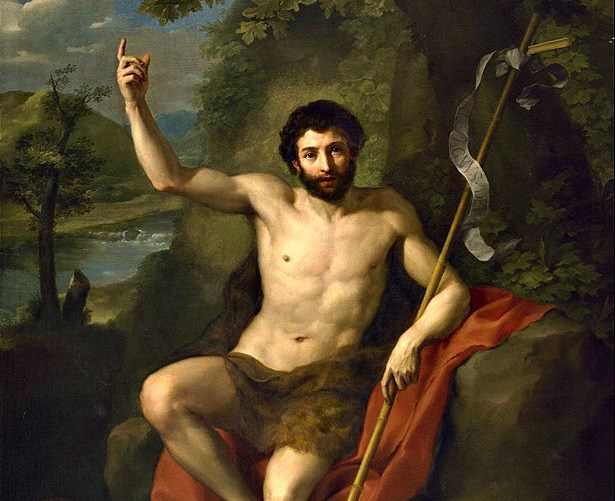
The Greatest of them All

From the red-letter part of Scripture:

“I tell you, among those born of women none is greater than John. Yet the one who is least in the kingdom of God is greater than he.” (Luke 7:28)

Unless Mary was not born of a woman — a whole new meaning to immaculate conception — Jesus’ words would seem to rank John the Baptist higher than the Virgin Mary.

Calvin comments:

Accordingly, Christ extols and places him above the rank of the prophets, and gives the people to understand that he had received a special and more excellent commission. When he elsewhere says respecting himself that he was not a Prophet, (John 1:21,) this is not inconsistent with the designation here bestowed upon him by Christ. He was, no doubt, a Prophet, like others whom God had appointed in his Church to be expounders of the Law, and messengers of his will; but he was more excellent than the Prophets in this respect, that he did not, like them, make known redemption at a distance and obscurely under shadows, but proclaimed that the time of redemption was now manifest and at hand. Such too is the import of Malachi’s prediction, (Malachi 3:1,) which is immediately added, that the pre-eminence of John consisted in his being the herald and forerunner of Christ; for although the ancient Prophets spoke of his kingdom, they were not, like John, placed before his face, to point him out as present. As to the other parts of the passage, the reader may consult what has been said on the first chapter of Luke’s Gospel.

Had Jesus forgotten his mother?

Anabaptist Roman Catholics

Roman Catholic apologists are currently leaving a lot out of their presentation of Christianity. Here’s another where the author seems to imagine a Roman Catholicism that transcends the fall of Rome, the rise of the Holy Roman Empire, and Christendom. Is Roman Catholicism just simple Christians trying to follow Jesus?

Why are self-described “trad” Catholics prone to nostalgia? The typical mistake is to conflate the traditions of the Church with the traditions of the broader society. These are very different things; the Church is an ark afloat on a dangerous sea, which preserves its own internal traditions in part with walls that prevent it from being deluged by secular practices and mores. 1 Peter thus connects Catholic rootlessness and homelessness with a rejection of human political traditions, enjoining Catholics to “live out the time of your exile here in reverent awe, for you know that the price of your ransom from the futile way of life handed down from your ancestors was paid, not in anything perishable like silver or gold, but in precious blood …” Catholicism is not Burkeanism. Because Catholics are exiled in the world, they can ultimately have no attachment to man’s places and traditions, including political traditions. They can have no final affection for the misty English landscape that always stands just behind Scruton’s prose, for Reno’s polite distinction of liberal tradition and liberal creed, for the bipartisan fedora-hatted governance of Douthat’s postwar golden age, or even for Ahmari’s era of the triumph (albeit short-lived) of liberal democratic freedom after 1989.

Ahmari acidly mocks a certain strand of Catholic integralism as “hobbit village” nostalgia. In this Ahmari is partly unfair (the rural village and the integral City are very different ideals) but partly correct. After the collapse of the postwar rapprochement with liberalism, integral Catholicism can only go forward, with the hope of translating the old principles into new settings and institutional forms, creating an altogether new order. But Ahmari, like Douthat, Reno, Scruton and the authors of the Paris Statement, ought to apply that same acid-wash to his own nostalgic views as well.

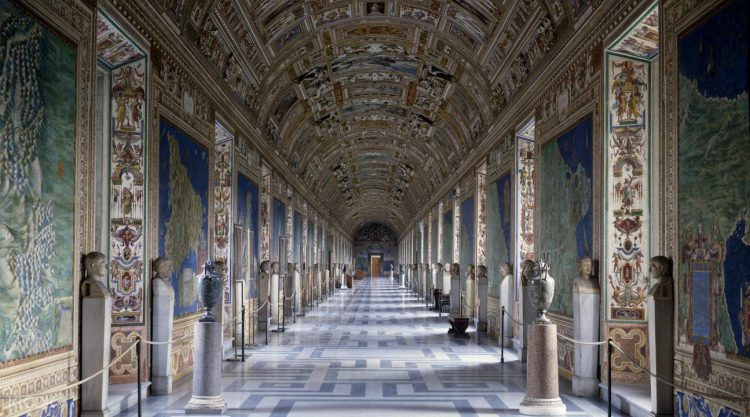
Roman Catholics in exile with all that stuff in Rome (and all those museums)?

Wow!

I’ll See Your World Order and Raise You One Principality and Two Powers

Isn’t this what caused mainline Protestantism to go south, namely, identifying the church with the work of building human civilization? George Weigel explains:

If there’s anything Catholics in the United States should have learned over the past two decades, it’s that order—in the world, the republic, and the Church—is a fragile thing. And by “order,” I don’t mean the same old same old. Rather, I mean the dynamic development of world politics, our national life, and the Church within stable reference points that guide us into the future.

Didn’t the apostle Paul (saint if you will) think the church had/has bigger fish to fry?

11 Put on the whole armor of God, that you may be able to stand against the schemes of the devil. 12 For we do not wrestle against flesh and blood, but against the rulers, against the authorities, against the cosmic powers over this present darkness, against the spiritual forces of evil in the heavenly places. 13 Therefore take up the whole armor of God, that you may be able to withstand in the evil day, and having done all, to stand firm. (Ephesians 6)

Russia, neo-liberalism, social justice warriors have nothing on sin, the flesh, and the Devil.

Of course, political order is a good thing, so good that churches need it to function — it may actually be that political order precedes church order rather than the other way around. But if the church sees its mission as supporting political order, it may seriously underestimate the amazing work God called ministers of the word to do. And that perspective might prevent a reviewer from writing this about a book on the nineteenth-century papacy:

Whatever misgivings one may have about the First Vatican Council, one does not need to squint to see a providential hand in Pastor Aeternus. As secular governments continue to chip away at different forms of civil society, especially religious forms, a strong papacy can serve as a powerful counterweight.

Counter-weights to secular governments chipping away at civil society? Isn’t that why we have The New York Times?

If God So Loved the World, Why is The West So Special?

In his review of Ross Douthat’s new book, Rod Dreher makes his bracing claim:

any Christian or secular conservative who cares about the stability of Western civilization cannot be indifferent to the fate of the institution that, more than any other, created it. The Orthodox Church is alien to the West, and Protestantism has become far too fragmented and rootless to hold things together.

That is a big burden for Rome to bear. But it also represents a much bigger problem. For a church that ministers a gospel based on a person (and God) who never set foot in the West, your identification with the West may be the hugest (thanks Bernie!!) version of cultural Christianity eh-veh. (Imagine Mormonism without upstate New York and you have a speck of Rome’s burden.) I understand that many Protestants envy Rome’s cultural and historical footprint. Some even become Roman Catholic for the wide swath the communion appears to give.

But, non-Western lives matter too.

On the flip side, when you have your religious identity so bound up with a culture or civilization, you set yourself up for the kind of inevitable cultural adaptation that Protestant modernists created and embraced. You need to do this to keep up with the culture of which you are part since civilizations have never been one-way, top-down endeavors. Today it’s emperors, tomorrow it will be senates and republics. Today it’s Thomism, tomorrow its Kantianism. Today it’s Baroque, tomorrow it’s Bauhaus.

Even more of a problem: today it’s hell, tomorrow its annihilationism. So when Pope Francis flirts with denying the existence of hell, Michael Brendan Dougherty notices about today’s Vatican what fundamentalists used to observe about Protestant modernists:

Because, as I write on Maundy Thursday, his favorite Italian journalist, Eugenio Scalfari, is reporting his latest conversation with Francis. In his reconstruction of their conversation, Scalfari has the pope saying that souls who have not repented and therefore have not received God’s pardon simply scomparire — disappear, in English. In other words, there is no hell. The souls of the damned aren’t damned, they just are no more.

The Vatican promptly put out a statement that the interview is a reconstruction of their conversation, not a series of direct quotes. But the Vatican also pointedly issued no specific denial of any of the pope’s words. Amazing to say it, but that’s typical. In essence this constitutes an invitation to disbelieve whatever you want. Predictably, Catholic media who rely on the pope’s star power and the appearance of impeccability put out stories noting that the pope has often talked about hell in the past and that, by the way, Scalfari is an atheist and unreliable narrator. Frankly, I find the Vatican’s position revoltingly underhanded. It refuses to tell us whether the pope said these things, and encourages us to believe what we want. It incentivizes the pope’s defenders to defame Scalfari as a fraud and an underhanded atheist. What kind of game is this? It shouldn’t be hard to just tell the truth about this, yet it is.

This is the fifth interview the pope has done with Scalfari, and far from the first scandal to come out of it. It is impossible to believe that someone as earthy as Francis is still innocent of what’s happening here. Yes, he’s talked about hell as a reality before. But the whole intellectual culture of Catholic seminaries and formation is filled with doublespeak. Doctrines are proclaimed in creedal statements, and then their contents are emptied in theological essays, or given a completely opposite interpretation in “practical” application. I can’t possibly pretend any longer that Francis is immune from this culture of deception, including self-deception.

You Gotta Exegete Someone

Reformed Protestants may be a tad hung up on Scripture, though it is supposed to be the very word of God. But if you begin to waffle on that canon notice how you begin to add to the authoritative texts.

For Roman Catholics, the doctrine of development has a hard time nurturing content with the Bible (even including the Apocrypha):

The deepest reason for the identity of Revelation in its ecclesial continuity is given in the hypostatic union, i.e., in the unity of the human and divine natures in the one divine person of Jesus Christ. The many words he spoke, revealing God’s plan to us through the medium of human language (cf. Joh 3:34; 6:68), are united in the hypostasis or person of the one Word that is God and has become flesh (cf. Joh 1:1, 14). The Word of God comes to us through the preaching of human beings (cf. 1 Thess 2:13); it is made present through human words, with their grammar and vocabulary. Therefore, it is possible and necessary to grow individually and communally in our understanding of the revelation that has been given to us once and for all in Christ. It is clear, then, that Catholic theology has always recognized the fact and necessity of the development of dogma. It is part of Christianity’s essence as the religion of the incarnate Word—the religion of God’s self-revelation in history—to affirm the identity of the doctrine of the faith along a continuous process by which the Church comes to an ever more differentiated conceptual comprehension of faith’s mysteries.

Make of that what you will about the potential problems of development but here you see an affirmation of continuity between the incarnation, divine revelation, and the ongoing revelation of divine truth in the doctrines of the church. Finding a distinction there between the prophets and apostles, and the teachings of the bishops and councils becomes fairly murky when the word incarnate, the word inscripturated, and the mystical body of Christ (the church) are all pieces of ongoing understanding of truth.

Unfortunately, it seems that Lutherans have a similar problem distinguishing between the apostles and the church’s theologians or pastors:

From a very practical standpoint, we have, as Lutheran pastors sworn to uphold the theology of the Book of Concord of 1580, also consequently, committed ourselves to the hermeneutic of reading the confessions we find in the Formula of Concord, and that is, if ever a question arises within the Lutheran church, the writings of Luther are to be consulted for the answer. In other words, the confessions understand themselves not to be so much a theology in and of themselves, but a summation of Luther’s theology:

“Since Dr. Luther is rightly to be regarded as the most eminent teacher of the churches which adhere to the Augsburg Confession and as the person whose entire doctrine in sum and content was comprehended in the articles of the aforementioned Augsburg Confession and delivered to Emperor Charles V, therefore the true meaning and intention of the Augsburg Confession cannot be derived more correctly or better from any other source than from Dr. Luther’s doctrinal and polemical writings.”[1]

Thus the confessions are not the bottom of a theological well from which Lutheran theologians thereafter would draw, but instead the confessions are the peak of the mountain, the mountain which is the theology of Martin Luther. But if that mountain remains unknown to us, how then are we to understand our task as pastors today in view of the Lutheran confessions?” (Paul Strawn, “Rediscovering the Theology of the Small Catechism, i.e. Martin Luther”)

Luther was great and is always edifying to read. But he did not approach salvation by following a great theologian, unless you consider (as some do) Paul the church’s first great theologian. Here, though, Paul had an advantage over Luther. He was infallible.

Words that Only Some Western Christians May Sing

1 A debtor to mercy alone,
of covenant mercy I sing;
nor fear, with Your righteousness on,
my person and off’ring to bring.
The terrors of law and of God
with me can have nothing to do;
my Savior’s obedience and blood
hide all my transgressions from view.

2 The work which His goodness began,
the arm of His strength will complete;
His promise is yea and amen,
and never was forfeited yet.
Things future, nor things that are now,
nor all things below or above,
can make Him His purpose forgo,
or sever my soul from His love.

3 My name from the palms of His hands
eternity will not erase;
impressed on His heart it remains,
in marks of indelible grace.
Yes, I to the end shall endure,
as sure as the earnest is giv’n;
more happy, but not more secure,
the glorified spirits in heav’n. (Augustus Toplady, 1771)

Good but Different Americans

With Ash Wednesday comes Lent and different rationales for turning up those practices that increase holiness. George Weigel opts for the difference that Lenten practice makes:

Friday abstinence was once a defining mark of the practicing Catholic, and Lenten pork roll raillery aside, it ought to be again. The Catholic Bishops’ Conference of England and Wales is not renowned for its traditionalism, but some years ago the bishops mandated a year-round return to Friday abstinence south of Hadrian’s Wall, and good for them for doing so. If our baptisms really set us apart for Christ, then we should live a different temporal rhythm than the rest of the world: not to advertise our righteousness, but to remind ourselves, each other, and those who might be curious about these Catholics and their ways that we’re, well, different. And at a moment in Western cultural history in which the tsunami of the Culture of Me threatens to overwhelm everything, putting down behavioral markers of difference is no small thing. From Friday abstinence, who knows what might grow?

Well, these days at First Things someone might ask if Friday abstinence could lead to the kidnapping of baptized children from non-Roman Catholic parents.

Or how about the royal absolutism of French monarchs?

For those keeping score at home, liberalism is on the ropes at First Things, which is odd for a magazine that used to be (along with Weigel) firmly in the Americanist camp of U.S. Roman Catholics.

The problem is not Lent or abstinence from meat. I have great respect for minority groups that maintain their religious ways in face of a society that does little to encourage or foster such practices. The Amish and Orthodox Jews, for instance, who continue to maintain family and spiritual traditions without trying to Americanize their traditions are (or should be) obviously admirable in their fortitude and conviction.

But transferring such admiration to Roman Catholics comes with a catch. That snag is that Roman Catholic piety for a long time was not simply a way of being a good Christian before God but also came with expectations about society, the political order, and the church’s authority. To sever personal piety from Rome’s global reach or cultural aspirations was never possible, the way it has been for other faiths outside the political order that brought them into existence. The reason is that fellowship with the Bishop of Rome and all the affairs in which he had his hands was necessary to be a good Roman Catholic.

So Weigel’s proposal for being more distinct is no neutral proposition when Roman Catholicism in its most distinct expression was not necessarily a respecter of the sort of freedoms that allow the Amish and Orthodox Jews to practice their faiths. Like Neo-Calvinism, Roman Catholicism is not content with a personal faith. Religion is not a private affair but needs to take root in all areas of life — and there goes political liberalism.

Jumping on the Eagles’ Bandwagon

Here is how one Roman Catholic writer saw the faith of Eagles‘ players as a win for the good guys (meaning the faith tradition centered in Vatican City):

On Sunday night, the Philadelphia Eagles beat the New England Patriots to become Super Bowl winners for the first time in history. But as national news outlets reported the big win, only a few also highlighted the quarterback’s Christian faith and his dream of becoming a pastor.

And he’s not the only player who praises God. A majority of them credit Him as their inspiration, and publicly, on Twitter.

In his Twitter bio, Eagles quarterback Nick Foles lists himself as a “believer in Jesus Christ” and uses his account to share quotes from the Bible. He tweets messages like “with God all things are possible” and “Thank you God for another day.”

And while quarterback Carson Wentz stayed off the field due to injuries, he offered God thanks shortly before the game.

“God’s writing an unbelievable story and he’s getting all the glory!” he exclaimed. After the game he added, “God is so good!!!! World Champions!!!!”

Two days after the game, Wentz turned to God after another life-changing event: He proposed to his girlfriend.

“She said YES!” he announced. “God is doing some amazing things and I can’t thank him enough!”

Acknowledging God is nothing new for Wentz. He uses Twitter to cite the Bible, give God credit, and even post pictures of himself with teammates kneeling on the field — to pray.

“My life is lived for an Audience of One,” he likes to remind his followers.

Likewise, running back Jay Ajayi tweets “GOD IS GREAT.” And wide receiver Nelson Agholor, along with left tackle Halapoulivaati Vaitai and right guard Brandon Brooks, tells fans “God is good.”

Following their win, wide receiver Torrey Smith tweeted, “God is amazing.” Left guard Stefen Wisniewski declared, “Let all the Glory be to Jesus!!” (Instead of stressing before the “big game,” Wisniewski contemplated Bible verses.)

In his Twitter bio, tight end Zach Ertz also identifies as a “believer.” Right tackle Lane Johnson wishes “God Bless America.” Wide receiver Alshon Jeffery regularly tweets out “God Bless.”

On defense, Brandon Graham once posted a picture of the team in prayer. “Win, Lose, or Draw we make sure we give God all the glory because he is the reason we are able to go out each and everyday and play this game,” the left defensive end stressed in the caption.

No mentions of Mary, the church, sacraments, or the bishops. It could be that these players are Roman Catholic, but they don’t talk like it. In fact, lines like “God is great” or “God is good” could actually be Islamic.

Which raises the question of just how firm Roman Catholics’ resolve is in maintaining the differences between Luther and Francis. Of course, Francis has met and hugged Protestants during the 500th anniversary of the Reformation observances. And outlets like Commonweal, America, or National Catholic Reporter are hardly going to bang the gong for Tridentine Roman Catholicism. But lay writers like Katie Yoder working for Catholic Voter? Doesn’t she worry that, at the very least, these Eagles are going to spend a very, very long time in Purgatory without all the assistance of the church’s sacramental system?

But that worry would get in the way of the boosterism that regularly afflicts religious “journalism.”

Postscript: Is that a WWJD bracelet on Nick Foles?

Fussy Certainty

The interview with Brad Gregory about his latest book on Martin Luther revealed a fundamental difference between Roman Catholics and magisterial Protestants. Around the twenty-minute mark, Gregory starts to challenge Luther’s quest for certainty of salvation in ways that would make you think the Notre Dame professor had been reading Scott Clark’s, Recovering the Reformed Confession. According to Gregory, Luther was on an illegitimate quest for certainty or freedom from doubt, especially considering all the ways (acts of devotion) the church had for helping Christians along the path of salvation.

But here’s the thing, Luther wanted to know that he could stand before the judgment seat of God as a righteous man. The best Rome could do was get Luther to purgatory. He had no assurance he would go to heaven (this was a time when all Roman Catholics worried about sin and damnation). And so, the idea that a sinner could be righteous through faith, having Christ’s righteousness imputed to them, was not part of some illegitimate quest for certainty. It was what every single person should want who knows God is holy and humans are sinful. Who will stand on that great day? Not how do I get through this life so that I can endure millennia of purging my remaining sin?

Which leaves us with two rival certainties. On the one hand, Roman Catholics have the certainty that comes through trust in the church:

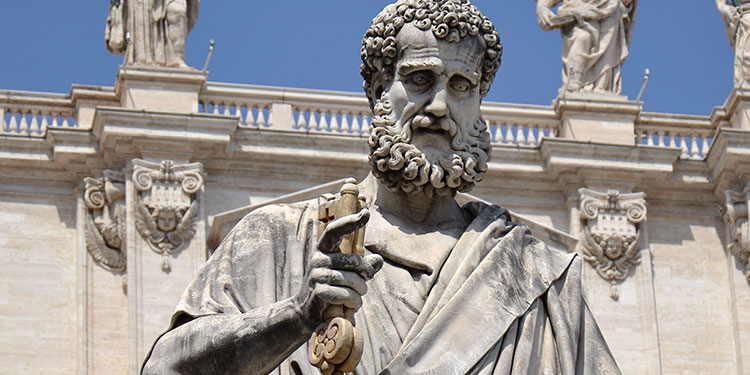
the Catholic Church enjoys some Divine guarantees, but they are not numerous. Christ promised to be with the Church to the end of time, and that the gates of hell would not prevail against her. This means essentially that the Holy Spirit will not permit the Church’s Divine constitution to be lost (such as the disappearance of the Catholic hierarchy), that the fullness of all the means of salvation will always be available in the Church, that the Church’s sacraments will always be powerful sources of grace, that the Church’s Magisterial teachings will be completely free from error, and that the Church will remain the mystical body of Christ under the headship of Our Lord Himself, as represented here on earth by His Vicar, the successor of Peter.

A Roman Catholic knows that the institutional church won’t fail even if he or she doesn’t have assurance about the eternal destiny of their body and soul.

On the other hand, Protestants who affirm justification by faith, have certainty that their sins are and will be forgiven thanks to the work of Christ. Here is how Luther put it in his commentary on Galatians (excerpted here):

This I say, to confute that pernicious doctrine of the sophisters and monks, which taught that no man can certainly know (although his life be never so upright and blameless) whether he be in the favor of God or no. And this sentence, commonly received, was a special principle and article of faith in the whole Papacy, whereby they utterly defaced the doctrine of faith, tormented men’s consciences, banished Christ out of the Church, darkened and denied all the benefits and gifts of the Holy Ghost, abolished the true worship of God, set up idolatry, contempt of God, and blasphemy against God in men’s hearts. For he that doubteth of the will of God towards him, and hath no assurance that he is in grace, cannot believe that he hath remission of sins, that God careth for him, and that he can be saved.

Augustine saith very well and godly, that every man seeth most certainly his own faith, if he have faith. This do they deny. God forbid (say they) that I should assure myself that I am under grace, that I am holy, and that I have the Holy Ghost, yea, although I live godly, and do all works. Ye which are young, and are not infected with this pernicious opinion (whereupon the whole kingdom of the Pope is grounded), take heed and fly from it, as from a most horrible plague. We that are old men have been trained up in this error even from our youth, and have been so nusled therein, that it hath taken deep root in our hearts. Therefore it is to us no less labor to unlearn and forget the same, than to learn and lay hold upon true faith. But we must be assured and out of doubt that we are under grace, that we please God for Christ’s sake, and that we have the Holy Ghost. ‘For if any man have not the spirit of Christ, the same is none of his’ (Romans 8:9).

I don’t know why anyone would choose to lose Luther’s version of certainty to gain Gregory’s confidence in an institution that has not always been so worthy of trust.