Liberalism Does Not Frame 2k

When I read Jake Meador’s index of political theologies, I was generally in agreement and thought he accurately describe 2k. I guess my biggest disagreement was over his definition of liberalism:

When I speak of liberalism, I am referring to something broader than just left-wing politics or even some brand of liberalism realized in a single discipline, such as theological liberalism.

At its heart, liberalism is concerned with how human beings know things. As a system, it is suspicious of knowledge not derived from empirical observation. Thus it is suspicious of the claims of religious faith as they inform social life. Religious practice is fine for individuals, but any attempt to enforce a set of religiously based moral norms beyond the religious individual or maybe a voluntary religious community is suspect because the knowledge is not sure enough to justify political application. Indeed, this skepticism goes beyond a skepticism toward religious faith and goes so far as a skepticism toward any kind of comprehensive moral system that claims to be true in anything beyond a particular, local sense. We simply do not trust our moral judgments enough to think they can be binding in anything beyond an individualistic, voluntaristic sense. When this epistemological agnosticism becomes pervasive in a social order, you basically have some species of liberalism.

In an odd way, these instincts can make liberalism like a more traditional Christian sort of social order. It tells us that men should be persuaded rather than coerced into belief. It tells us that there is, as one friend put it, a “just area of sovereignty,” that each person possesses. However, the way that liberalism arrives at these ideas is not necessarily through the belief in a God who rules over creation and endows his creatures with dignity, honor, and freedom. Rather, they arrive at it through a lack of confidence in the ability of anybody to wield coercive authority justly or to infringe upon a person’s autonomy.

I don’t understand why you conceive of a political order in epistemological or philosophical categories. For mmmmmeeeEEEE, liberalism was mainly a way to overcome divine right monarchy that extends from Hammurabi through to those audacious claims for the papacy by canon lawyers in the thirteenth century down to French and British kings (among others) who objected to checks upon their power. The question that liberalism (classical) tackled was not how we know but what authority is legitimate. I guess you could push that back to epistemology. But why unless you privilege philosophy?

Meador went on to describe 2k’s relationship to liberalism this way:

The best way to get at the key difference between this group and the Radical Anabaptists is to highlight the differences in how they see the church’s relationship to civil society. For these thinkers, there is no problem with Christians participating in civil society. Indeed, such participation is inevitable. That is why Dr. Moore heads up an organization dedicated to protecting religious liberty and why Dr. Leeman and a number of his colleagues with 9 Marks pastor in Washington D.C. and support church planting efforts in the capitol city.

However, the good that these thinkers hope to achieve in all societies outside of the institutional church is purely natural while the goods they hope to achieve within the church are supernatural. The institutional church is, in Leeman’s understanding, an embassy for the Kingdom of God. Thus the institutional church as such is an institution of a qualitatively different sort than any other physical, visible institutions in the world. Likewise, Drs. VanDrunen, Hart, Clark, and Trueman have all at various times gotten very nervous about what they see as an attempt to sacralize work that is rightly understood as secular.

Thus there are two core pieces that unite the Post-Liberal Retreatists:

First, they have what I take to be a realistic and appropriately sober assessment of our cultural state.

Second, they see the work to be done in non-ecclesial institutions as being primarily defensive not only in our current moment, but in principle.

The positive work of taking hold of supernatural goods happens primarily in the institutional church. Thus the Post-Liberal Retreatists are suspended, as it were, between the Post-Liberal Protestants and the Radical Anabaptists. They share a similar read of the current cultural moment with both groups. Like the Post-Liberal Protestants, they still have a place for Christian participation in civil society. Like the Radical Anabaptists, they see the work of the institutional church as being qualitatively different than the work Christians do outside the church and essentially constructive in a way that civil society participation cannot be. So they would say, with the Anabaptists, that the church is a polis, but that it is not a comprehensive polis in the way that the Anabaptists use the term.

That sounds fair enough. But it locates 2k too much within the categories of the pre-modern and modern West. In fact, much of the blow back that 2k receives comes from Protestants who have a soft spot for Christian establishment in the form of the confessional state, whether Geneva’s City Council, Scotland’s monarch, or the Netherlands’ republic. Most critics of 2k want a Christian society of some kind. 2k is suspect, then, because it won’t support such a desire or programs to achieve such a society.

But what if Christendom or post-Christendom are not the only options? What about pre-Christendom? Here the idea is not that the time before Constantine was ideal but that a religiously diverse or even a religiously hostile environment is normal. It’s what Jesus and the apostles faced. Those are the conditions under which the church emerged and the canon established. For that reason, modern Christians should not think that either Christendom or a Christian friendly liberal government (like the U.S. before 1965) are the default settings for the church. Christianity can persist in any number of circumstances. It can be like the Old Testament promised land, like the Israelites in exile, like the early church under the domination of Rome, or even like Scottish Presbyterians in covenant with a divine-right monarch. Christianity is flexible. It’s not tied to one political order.

This perspective seems to inform Proto-Protestant in his assessment of political liberalism. Notice that he starts by identifying the way that Rome used to regard liberalism and the United States:

Classical Liberalism so poignantly represented by the United States was viewed as poison and a triumph of the secular over the sacred. Rome sought to protect its flock from the influences of American ideology. Classical Liberalism was the spawn of the Reformation’s triumph of the individual. The lone man was allowed to challenge and cast down all authority. This is the sociological aspect to Luther that many Protestants have failed to grasp. The individual gets to decide what is right and wrong and the Reformation unleashed epistemological uncertainty and the social chaos which began the long process of dismantling Christendom.

The Reformation led to Modernism and as a consequence Post-Modernism and now Nihilism.

Undoubtedly there is some truth to this narrative and the post World War II period has brought about a time of intellectual reconsideration on the part of Evangelical Protestants and not a few defections to both Rome and Constantinople. The political Papacy utterly defeated by the late 19th century reformed its teaching and came up with a new paradigm for the industrial secular age. Consequently it allied first with Fascism then with the West (in general) at the conclusion of the war. It began to build a new empire, one wed to the Capitalist forces so dominant in the Protestant world and joined the fight (real or imagined) against world Communism. Today Rome no longer rules a geopolitical realm but instead reigns over a vast financial empire and has regained a little of its lost ground.

Evangelicals have been forced to reckon with the problems of Christianity wed to Classical Liberalism and as I’ve written elsewhere there are tendencies both toward revisionist history and increasingly in the direction of abandoning Liberalism for a more Roman Catholic-friendly Throne and Altar type paradigm.

So if Protestants don’t follow Roman Catholics, where do they turn? The Bible and in so doing they abandon the sufficiency of Scripture. Protestants have made Scripture do more than it was supposed to:

There is undoubtedly much that is valid in the critique of Classical Liberalism and in what the Reformation unwittingly unleashed. And for this reason the glorification of Protestantism which is at its zenith in this 500th anniversary year, ought to be weighed carefully if not rejected.

But the truth of the critique is limited to the sociological realm.

The true problem is not individualism (which can indeed work to destroy society) but the attempt to formulate Sola Scriptura into a comprehensive societal worldview. That was a rival philosophical project rooted in speculation and dependent on speculative philosophical coherence… thus it fragmented.

The Reformers only began to toy with this question. Luther, perhaps the more conservative of the Reformers was content to sustain the Medieval-Renaissance order and sit under the protection of a so-called Christian prince. Calvin’s Geneva moved in the direction of Authoritarian Republican government. Zwingli took up the sword (so to speak) and died by it on the battlefield.

It was in the 17th century that Protestant Scholasticism began to earnestly reckon with the implications of the Reformation applied to society. It was at this point that Sola Scriptura as a social organising principle failed. Rightly so I would add, as the New Testament nowhere even envisions a Christian State/Christendom project. In fact it repudiates the very notion of it.

In wedding Reformation theology to the Christendom project the Protestant Reformers and certainly the Scholastics after them undermined their own vision and sowed the seeds for epistemological collapse. They employed (and even exploited) the Scripture for something it was not meant to be used for. In the end their project exploded into the 17th century Wars of Religion and ultimately undermined not only their social vision… but their theological and ecclesiastical hopes as well….

But even granting the narrative that Liberalism and Modernism were the natural outgrowth of Protestant theology applied to society, then such a notion must be condemned as sub-Biblical. It does not represent New Testament doctrine either in its concepts of values. Confidence in reason? I think not. Rights? The individual? Progress? None of the concepts are found in the New Testament. Only deformed Judaizing hermeneutics can locate them through distorted readings of the Old Testament.

If liberalism is not the basis for evaluating politics or its reaction to Christendom, the proper starting point for political theology is as Paul Helm recently observed Christ’s teaching that his kingdom is not of this world. Proto-Protestant explains what that means for 2k (even if he does not self-identify as 2k):

Speaking generally if both paradigms were and are wrong, what then are we to make of the so-called and very misnamed Judeo-Christian West? Not much. As a society it has some very good things about it and many that are rightly condemned. Christian it is not. And the more it is associated with Christianity the more problematic it becomes.

As pilgrims we understand that this world is not our home. We look for a city to come, a new heavens and new earth. We can live and function as the salt and light Oracular Church in any culture and civilisation. That said, some will be more pleasant than others. But pleasant isn’t always better, especially if it leads to laxity, complacency and confusion. Though not pleasant the most spiritually vivacious times of my life have been during periods of hardship and opposition. It’s not pleasant to live that way but the antithesis becomes razor sharp which spiritually speaking is healthy. It’s a good place to be. If goods, lands, and prosperity are set aside and no longer important to me, then hardship becomes certainly less hard. The yoke of suffering, the burden of Christ to which we are called, becomes a little lighter.

And though on a practical level I lament the downfall and paganising trajectory of the West … spiritually speaking it’s probably the best thing that could happen. The widespread apostasy is like a forest-burn. In the end it will make for a healthier forest. The forest to which I refer is not society, but the Church. Don’t ever confuse the two.

While on the one hand I celebrate the fact that the Protestant Classical Liberal narrative is being exposed as a lie… both doctrinally and historically, I am concerned that many Protestants are quickly succumbing to an equally problematic lie… the Pre-Liberal Throne and Altar vision of Medieval Roman Christendom.

If Jake Meador had started with the church in exile and Christians as pilgrims as the frame for his index, he might have used a this-worldly (immanentize the eschaton) vs. an otherworldy (don’t immanentize the eschaton) division. That one even pits 2k against Anabaptists since the latter regard (as I understand it) the company of believers as an outworking of “the perfection of Christ.”
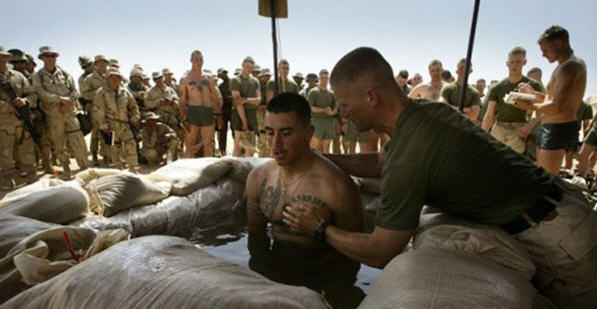

What Princeton Seminary Could Learn from the Pentagon

Peter Berger notices a sector of American religiosity where true inclusion and diversity reigns — the military chaplaincy:

One particularly interesting development is that the military chaplaincy, in its Protestant group, is increasingly filled with Evangelicals, who feel more at home in the military than among largely liberal mainline clergy, whose concerns over gender and multiculturalism Evangelicals don’t resonate with. Some years ago I presided over a seminar dealing with whatever issues members of the seminar were concerned about. One of the seminar students was an Evangelical Air Force chaplain. This was the issue she wanted to think through: She served on a small base in the Arctic where she was the only Protestant chaplain. Of course she was not expected to perform religious services that did not agree with her own beliefs. But she was expected to facilitate services for any group of Air Force personnel. A group of Air Force women wanted to perform the rituals of Wicca, which defines itself as a modernized version of the old witches’ Sabbath. How, she asked, could she help organize a worship service of the devil without betraying the core of her Christian faith? I tried to convince her that the devil part was not to be taken seriously, that Wicca was a rather harmless form of nature worship—dancing naked in the moonlight and showing respect for menstrual blood. She said that the way I spoke about this showed I did not take the religious beliefs of this group seriously. I’m afraid she was quite right. In the end she had no choice unless she wanted to resign from the chaplaincy—so the would-be witches did their thing as facilitated by a nonsectarian Evangelical minister. (Religious freedom bears strange fruit, including the struggle of conscience of an Evangelical pastor ordered to go against her conscience by her commanding officer.)

Here’s the thing: if NAPARC communions and the PCUSA wonder about the fit between Tim Keller and a liberal Presbyterian seminary, why are those same NAPARC communions willing to send their pastors off to work not only with ordained women but even witches? I keep asking. I’m still not hearing many answers.

Good and Bad Israel Complexes

David P. Goldman (aka Spengler) tries to explain appropriate and inappropriate appropriations of Israel:

There is a fine but definite line, to be sure, between the Gentiles’ identification with Israel and their idolatrous desire for election in place of Israel. It is one thing for the Puritans to speak metaphorically of a new chosen people in a new promised land, and quite another for Joseph Smith to rewrite Scripture in order to place Jesus Christ on American soil. African Americans saw themselves as suffering Israel in Egypt, and their emancipation as a new exodus; that is not the same as James Cone’s eccentric 1969 claim that Jesus was black and that blacks are the chosen people.

Goldman thinks the key to this distinction is whether or not Christians engage in theocracy because he believes Christians are people of God “by the Spirit” not “by the flesh.” As such, Christians have a dual loyalty, one their nation by birth, the other their kingdom by new birth. He invokes the Jewish theologian Michael Wyschogrod:

As understood by Christianity, a model of dual loyalty develops. The individual belongs both to a nation and to a religion. He is a Frenchman and a Christian or a German and a Christian. As Frenchman or German, he is a member of a national community with territorial and linguistic boundaries. But he is also a member of the supra-national church which has no national boundaries . . . . The church is a spiritual fellowship into which men bring their national identities because they possess these identities but not because such identities play a role in the church. The church thus understands itself as having universalized the national election of Israel by opening it to all men who, in entering the church, enter a spiritualized, universalized new Israel.

This sure seems 2k friendly.

Obedience Boys, Say Hello to Law Enforcement Boys

Courtesy of John Fea:

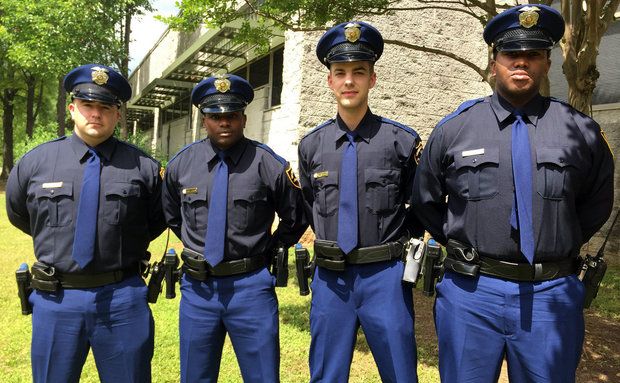
The Alabama Senate has voted to allow a church to form its own police force.

Lawmakers on Tuesday voted 24-4 to allow Briarwood Presbyterian Church in Birmingham to establish a law enforcement department.

The church says it needs its own police officers to keep its school as well as its more than 4,000 person congregation safe.

Critics of the bill argue that a police department that reports to church officials could be used to cover up crimes.

The state has given a few private universities the authority to have a police force, but never a church or non-school entity.

Police experts have said such a police department would be unprecedented in the U.S.

A similar bill is also scheduled to be debated in the House on Tuesday.

The big question: if women may not serve in combat, how about law enforcement?

When Did Christians Forget their Jewish Roots?

Maybe when Constantine tempted them to think that Christendom meant the end of exile and alienation?

But it sure would help if Christian-Americans thought about American society more the way Jewish-Americans do than the way people who used to be the Church of Scotland think.

Imagine if Rod Dreher had grown up not mainline Protestant but Jewish:

Dreher has frequently and sometimes testily responded to critics by saying he’s not calling for anybody to head for the hills. But that’s not what I’m asking about. The Lubavitch hasidim are as “in the world” as any strictly observant Jewish group I can think of. They send shlichim to the four corners of the earth to minister to Jews wherever they may be. They are all about outreach, and they try in a host of ways to meet the people they are reaching out to where they are. And they are certainly making sure that they have something to give the world before they give it — they are ferocious about deeply educating their kids, and traditional Judaism is all about imbuing every single action of every day with the sacred. If you wanted to point to a Benedict Option-like group that had unquestionably not withdrawn into itself and fled for the hills, they’d be a perfect candidate.

But they are also a group apart within a people apart, and they believe themselves to be precisely that. And I can assure you, that has a real impact on how other Jews perceive them and relate to them. I’m curious to know whether that is a dynamic the Benedict Option would inculcate within Christianity, and whether Dreher thinks that would be a problem if it did.

The answer, by the way, to Millman’s question is that Christians who read Peter know that Christianity has a set-apart dynamic:

9 But you are a chosen race, a royal priesthood, a holy nation, a people for his own possession, that you may proclaim the excellencies of him who called you out of darkness into his marvelous light. 10 Once you were not a people, but now you are God’s people; once you had not received mercy, but now you have received mercy.

11 Beloved, I urge you as sojourners and exiles to abstain from the passions of the flesh, which wage war against your soul. (1 Pet 2)

And then imagine what it would mean if Christian America was as fantastic an idea as Jewish America:

[Christian traditionalists] are more likely to win space to live according to their consciences to the extent that they are able to convince a majority that includes more liberal Christians and non-Christian believers, as well as outright secularists, that they are not simply biding their time until they are able to storm the public square. In addition, they will have to develop institutions of community life that are relatively low-visibility and that can survive without many forms of official support. The price of inclusion in an increasingly pluralistic society may be some degree of voluntary exclusion from the dominant culture.

There is no doubt that this will be a hard bargain for adherents of traditions that enjoyed such immense authority until recently. . . . The basis for coexistence must be a shared understanding that the Christian America for which some long and that others fear isn’t coming back—not only because it was Christian but also because it involved a level of consensus that is no longer available to us. There are opportunities for believers and nonbelievers alike in this absence.

Why Moderation and Charity Are Overrated

In Jake Meador’s review of Rod Dreher’s BenOp, he makes this passing observation of the NAPARC landscape:

A desire to preserve unity at the cost of clarity and an unwillingness to take a stance is not a solution and, in fact, will probably cause as many to drift as will a lack of charity and restraint in our rhetoric. Being in the PCA, this is the concern that occupies my mind more as it seems the greater danger in my immediate ecclesial context. I suspect that it is also the greater danger in most Catholic dioceses and many non-denominational evangelical churches.

Even so, a lack of charity and restraint in our rhetoric will lead some who might otherwise be persuadable to dismiss us. That seems the greater danger in the Southern Baptist Convention, if my read of things is accurate. It is also the greater danger in many reformed microdenominations such as the OPC and CREC, I strongly suspect.

For the record, the books that came out recently about the contemporary cultural bankruptcy had no ties to the micro Reformed denominations. They came from an Eastern Orthodox layman (Dreher), a Roman Catholic archbishop (Chaput), and a Roman Catholic layman (Esolen). Those are churches that have labored under the Christ and culture burden, have tried to make society Christian, and are now showing the effects of that weight.

What has the little old OPC produced about the current crisis (a conference on gay marriage that technical glitches prevented from being recorded?)? Nothing. It is still more or less wedded to J. Gresham Machen’s assessment of the Protestant mainstream and is more or less committed to passing on the faith without the assistance of America’s cultural or political institutions. But when a church simply tries to do what a church is called to do (see 25.3 of the Confession of Faith), it is in danger of showing a lack of restraint and charity?

Not to be missed is the kind of transformationalist vision that has become the PCA’s calling card of late. Perhaps the idea of being a church to the big city is charitable and restrained (though to anyone with half a brain it sure looks delusional to think you can teach Woody Allen’s New Yorkers to become Wheaton’s evangelicals). But from the perspective of the Protestant mainline, the PCA looks downright sectarian.

That may be the single recommendation for Rod Dreher’s book — to provoke those who want a seat at the table (or a mouthful of the Big Apple) to consider what it means to be a stranger and alien. I know Jake Meador already knows this. But sometimes his PCA identity gets in the way of his inner Stanley Hauerwas and he never says “boo” about PCA exceptionalism in the era of Tim Keller.

What’s the Difference between a Pro-Refugee Evangelical (Tim Keller) and a Democrat (Dianne Feinstein)?

Short answer: neither quotes the Bible.

Notice for instance the parallels among the National Association of Evangelicals, Ed Stetzer, Evangelical leaders (among them Tim Keller), and the Democrats.

The NAE:

“Christians and churches have been welcoming refugees for 2,000 years, and evangelicals are committed to continue this biblical mission. Thousands of U.S. evangelicals and their churches have welcomed hundreds of thousands of refugees over the past 40 years through World Relief and other federally approved resettlement agencies. We don’t want to stop now,” NAE President Leith Anderson said.

The Trump administration’s plans to make severe cuts to the admission of refugees are alarming. We call on President Trump to declare his support for the continuation of the U.S. refugee resettlement program, which is critical at a time when the world faces a significant refugee crisis.

Ed Stetzer:

Scott Arbeiter, president of World Relief, says it this way: “The decision to restrict all entry of refugees and other immigrants … contradicts the American tradition of welcoming families who come to the United States to start their lives again in safety and dignity. The American people — most of whom can trace their own families’ stories through a similar immigrant journey in search of freedom — are a hospitable people.”

He’s right. But, it’s not just because we are Americans. It’s because we are Christians.

God’s people should be the first ones to open their arms to refugees. We should welcome them and do what Christians, in your church and mine, have been doing a long time — showing and sharing the love of Jesus with them.

Tim Keller et al:

As Christians, we have a historic call expressed over two thousand years, to serve the suffering. We cannot abandon this call now. We live in a dangerous world and affirm the crucial role of government in protecting us from harm and in setting the terms on refugee admissions. However, compassion and security can coexist, as they have for decades. For the persecuted and suffering, every day matters; every delay is a crushing blow to hope.

Since the inception of the refugee resettlement program, thousands of local churches throughout the country have played a role in welcoming refugees of all religious backgrounds. Ministries to newly arrived refugees are ready, and desire to receive many thousands more people than would be allowed under the new executive order.

The Democratic Party (according to Damon Linker):

Many liberals argue that refugees are among the most vulnerable people on Earth and so must be welcomed with open arms. That forcing undocumented immigrants to leave the country is gratuitously cruel, violates their rights, and so justifies municipalities flouting federal law by turning themselves into “sanctuary cities.” That banning entry to refugees or immigrants not yet within the United States can violate their due process rights under the U.S. Constitution. And that the desire to restrict immigration is invariably an expression of xenophobia, racism, and other forms of irrational animus and so morally (and perhaps constitutionally) indefensible.

All of these claims are, at bottom, expressions of a fundamentally anti-political humanitarian ideology that is unlikely to fare well in the next presidential election. Democrats desperately need to confront the vulnerabilities of this position and stake out a more defensible and pragmatic one if they hope to push back against Trump’s populist-nationalist message in upcoming years.

Of course, evangelicals don’t need to worry about running for election (though the likes of Russell Moore does need to worry about ministry dollars going somewhere other than the Southern Baptist cooperative program). But evangelicals who live in the United States may want to think (with help from Linker) about how to love their actual neighbors who live within U.S. borders (Walter didn’t see his buddies die face down in ‘Nam for open borders):

Many Americans believe that their constitution presumes or appeals to certain timeless, universal moral truths that apply to all human beings. But the U.S. Constitution itself — like the constitutions, fundamental laws, and commonly affirmed norms and rules of all political communities — is nonetheless instantiated in a particular place, rooted in a particular tradition. It also pertains and applies only to people who are members of the political community known as the United States of America.

Those who are members of this community are known as American citizens. They get a say in what laws get passed and how they get enforced. Those who are not members of this community — who are not citizens — don’t get such a say. The community is perfectly within its rights to decide which and how many of these outsiders will be allowed to visit the country, how long they will be allowed to stay, when they will need to go, and how many, if any, will be permitted to join the community permanently by becoming citizens.

This is one of the most elemental acts of politics: the community deciding who to admit and on what terms. To treat this act as somehow morally illegitimate is to treat politics as such as morally illegitimate.

In other words, evangelicals think like 1kers, as if the U.S. is a Christian community. Imagine welcoming non-Christians into fellowship in a Christian congregation. What sense does that make? So why should citizens of the United States act as if they are the United Nations of the World. As Linker says, it’s a complicated question how Americans decide what to do with outsiders:

Note that nothing I’ve said tells us anything about how many immigrants or refugees the political community of the United States should welcome at any given moment of history, or what criteria should be used to make this determination. I generally favor liberal immigration policies; many Trump voters take a very different view. The point, as Josh Barro recently argued in an important column, is that the policy debate needs to be made in terms of the good of the political community as a whole and in its parts, not in terms of abstract, extra-political moral duties owed to prospective newcomers. A political community exists in large part to benefit itself — to advance the common good of its citizens. There’s nothing shameful in that. It’s to a considerable extent what politics is.

And don’t forget, if godless Democrats and progressive evangelicals agree that Jesus is on the side of refugees, w-w has failed.

It’s Not Salvation, It’s Politics

Christians who look to discern religious significance in the United States have only two options. The first is to sacralize the nation:

By conflating a certain understanding of American history with scriptural revelation, proponents of “Christian America” risked idolizing the nation and succumbing to an “irresistible temptation to national self-righteousness.” They also sacrificed any ability to offer a scriptural critique of the cultural values they themselves embraced.

A second should be to secularize the nation — look at it simply as part of God’s providential care which is almost impossible to discern. But that’s not the way it goes because the search for a Christian American usually results in seeing how un-Christian America is. That leads to sacralizing anti-Americanism:

What, then, might a Christian understanding of the nation look like?

To begin with, it would reject any notion that the United States, or any other nation since the coming of Christ, occupies a unique position as God’s chosen people. It would recall that God’s people, wherever they find themselves, were to be “strangers and pilgrims”—good citizens, yes, but always remembering that their real home lies elsewhere. And Christians must also remember that they will be judged not according to what they profess, but rather according to how they act. Thus, the righteousness of any society should be judged “not merely by the religious professions that people make, but also by the extent to which Christian principles concerning personal morality and justice for the oppressed are realized in the society.”

And that leads to the demonization of Trump’s America (thanks to Chris Gerhz):

I didn’t actually want a Trump sign, but one of the volunteers had shoved it into my hands as I walked through the door earlier; “Make America Great Again!” That sign probably saved someone from getting hurt. I held the sign close to my chest as I positioned myself between the chanting protesters and the angry mob. My 11-year-old daughter was clinging to my arm, sobbing in fear.

The two angry, screaming ladies looked at me, both of them raised their middle finger at me in my face and repeatedly yelled, “F*#% YOU!” Repeatedly.

I calmly responded, “No thank you, I’m happily married.” Their faces and their voices were filled with demonic anger.

I have been in places and experiences before where demonic activity was palpable. The power of the Holy Spirit of God was protecting me in those moments and was once again protecting me and my daughter in this moment.

This is what happens when people try to find religious significance in every nook and cranny. Sometimes a cigar is a cigar. Sometimes a nation is simply a nation. But when you’re in the habit of using religious categories to justify national greatness, it’s only natural to use the same outlook to conclude national turpitude.

Every Square Inch is a Demanding Taskmaster

Devin Wax is not so happy with the significance attached in the current cultural climate to ordinary choices like where to eat. He wishes a chicken filet sandwich were merely a chicken filet sandwich:

We’re witnessing a convergence of two developments.

Development #1: Consumerism as a Religion

The first development is the lifting up of our consumer choices to the level of religion.

In American society, we are more and more inclined to define ourselves by what and how we consume. We no longer buy things to meet our needs, but to become something, or to express who we are.

“Brands are the new religion,” says Douglas Atkin, writing about customer loyalty. People express their own identities through what they buy.

With an endless sea of choices, Skye Jethani says, “individuality is the new conformity.” Choice is a powerful factor in a consumer society, because more choices provide more ways for consumers to demonstrate their uniqueness.

Development #2: Politics as Religion

The second development is the lifting up of our political views to the level of religion.

In American society, we are more likely to see political views as non-negotiable aspects of our true selves. This is why recent research shows families having a harder time with a son or daughter who wants to marry someone from an opposing political party than from a different religion!

Tell me how Neo-Calvinism did not add momentum to this. When all of our choices have religious significance, how different is that from the “personal is political” that feminists and other politics of identity advocates taught us? Now Mr. Trax wants a cigar (okay, a bubble gum cigar) to be only a cigar?

If more New Calvinists had read 2kers more than Tim Keller, had understood that religion is different from common life, had been content with Reformed worship instead of transformed cities, had valued church officers more than every membered ministry, they might be able to eat tacos without the least concern for larger significance — political or religious.

An Anti-2kers Dream Come True

Thanks to our southern correspondent:

Briarwood Presbyterian Church in Vestavia Hills is trying to establish its own police force.

The move requires approval from state lawmakers. The bill, sponsored by Rep. Arnold Mooney (R-Shelby County) cleared its first major hurdle Wednesday. The House Public Safety Committee gave its OK.

Briarwood Presbyterian Church calls this a way to create a safer campus in a fallen world.

Some lawmakers argue allowing a private church to have its own police force could begin a slippery slope.

“What do we do when other church affiliates come and ask for the same thing?” questioned Rep. Mary Moore (D-Birmingham). “They’re not a college. They’re a church and they’re a church asking for police jurisdiction.”

Many questions were posed during Wednesday’s committee meeting.

“Who do the officers answer to?” asked Rep. Chris England (D- Tuscaloosa).

“They would answer to the leadership of the section of the church,” a representative from the church answered.

Rep. Connie Rowe (R- Jasper) is a former police chief. She supports allowing Briarwood to create its own force.

“They will conduct their own investigations,” explained Rowe. “They will conduct their own security. They will make their own arrests and instead of calling on the local law enforcement agency to take over the particular situation they’re trying to control, they will do that themselves. All they will utilize from their other law enforcement agencies is their lock up facilities.”

At a time when the PCA is repenting of racism and Black Live Matters is calling for reform of the police, has not the word “optics” entered the PCA thesaurus?