Winning?

A war that won’t end:

Thus neither side won the Twenty Years’ War. Victory would mean achieving core aims at an acceptable cost relative to the benefits. Al-Qaeda did meet some of its goals: With limited resources, bin Laden gained incredible notoriety and inflicted enormous damage on a great power. In 2003, U.S. troops left Saudi Arabia—the key goal outlined in the 1996 manifesto. In 2004, bin Laden released a video that compared the costs of the 9/11 attacks to al-Qaeda versus the United States: “Al-Qaeda spent $500,000 on the event, while America, in the incident and its aftermath, lost—according to the lowest estimate—more than $500 billion, meaning that every dollar of al-Qaeda defeated a million dollars.”

But in a broader analysis, bin Laden failed. Yes, U.S. forces left Saudi Arabia, but they did so voluntarily, after Saddam was toppled. Crucially, al-Qaeda was unable to mobilize Muslims around a strict Islamist identity that transcended other loyalties. As Charles Kurzman showed in his book The Missing Martyrs, after 9/11, fewer than one in every 100,000 Muslims became jihadist terrorists. The vast majority of Muslims completely reject bin Laden’s ideology. And national, tribal, and other local identities remain profoundly important from the Palestinians to the Pakistanis. From 2003-2011, confidence in bin Laden collapsed in many Muslim-majority countries, falling from 59 percent to 26 percent in Indonesia, and from 56 percent to 13 percent in Jordan. In a 2013 poll taken in 11 Muslim countries, a median of just 13 percent had a favorable view of al-Qaeda, whereas 57 percent had an unfavorable view.

Al-Qaeda’s loss is not U.S. gain:

Let’s turn first to the United States on offense: the invasions of Afghanistan and Iraq. Recounting the costs is numbing: over 7,000 Americans killed, tens of thousands of soldiers seriously wounded, trillions of dollars expended, and over 100,000 civilian deaths in Iraq alone. And there’s the wider impact of spending on America’s debt, of enhanced interrogation and torture on the U.S. global image and ethical standing, and of seemingly endless quagmires on domestic political unity.

In an interview, Zbigniew Brzezinski, the national security advisor to President Jimmy Carter, told me, “The Iraq War was unnecessary, self-damaging, demoralizing, delegitimizing, and governed primarily by simplistic military assumptions that didn’t take into account the regional mosaic in which Iraq operates and the internal mosaic inside Iraq.”

The eclipse of al-Qaeda by ISIS is a loss for al-Qaeda but not a gain for the United States. ISIS is an even more ruthless and capable adversary.

Does idealism hurt the United States (and are believers responsible for imbuing America with too many ideas?)?

But the main combatants in the struggle lost for similar reasons: They were hobbled by ideology. Al-Qaeda’s vision of austere Wahhabi Islam and endless global jihad is profoundly unappealing to the vast majority of Muslims. But ideology also shaped U.S. strategy, sometimes in dangerous ways. American idealism is one of the country’s most attractive qualities, central to its moral standing and “soft power.” But idealism also helped to frame the Twenty Years’ War as a struggle between good and evil, which required grandiose goals to topple regimes and build beacons of freedom in the Middle East. It also encouraged Americans to lump terrorists and rogue states together into a big bucket of bad guys. At the same time, Americans are also hostile to the whole notion of nation-building, often seeing stabilization missions as a kind of big-government welfarism, and not something that the country’s warriors should be doing. In a recent foreign-policy speech, Donald Trump said, “ISIS will be gone if I’m elected president,” but at the same time, the United States will be “getting out of the nation-building business.” This combination of beliefs is as American as apple pie.

As a result, the United States is an impatient crusader: eager to smite tyrants and terrorists but unwilling to invest the time and resources needed to win the peace.
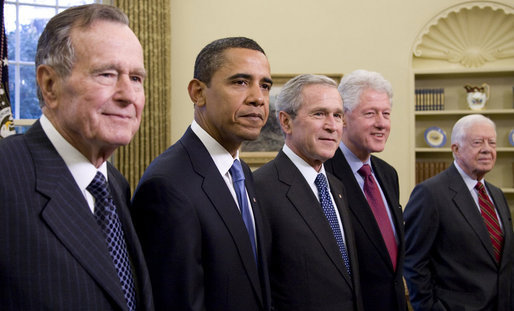
I’ll See Your 2 Popes and Raise You 5 Presidents

That would be, after the next inauguration, Jimmy Carter, George H.W. Bush, Bill Clinton, George W. Bush, and Barack Obama all improving the world during the reign of Hilary or Donald. I wonder if Michael Sean Winters had President Obama in mind when he wrote:

All politicians should write their memoirs. After that, they should retire from the public stage beyond the occasional speech and whatever work the management of a presidential library entails. It is unhealthy for a democracy if new slots on the stage are not opened with regularity. Stroking the egos of former presidents is redundant. And, creating these personalized, secular and necessarily politicized charities will, beyond doubt, harm the brand of charity over time.

When professional athletes retire, they have a long life ahead of them. But they have precedents. Color commentators. Coaches. Automobile dealerships. Not so with presidents. Where do you go after being the most powerful man in the free world? Even presiding over Harvard seems like slumming.

Winters thinks the Clintons’ problem is moral earnestness:

The real problem here is not so much the foundation itself as the tone deafness of the Clintons to the suspicions of their motives. I have noted before that there is something creepy about the ethics of the Clintons, something commonly found among the do-gooders of the world. It goes like this: I am a good person, and X is not a good thing to do, yet I did it, therefore X must not be such a bad thing after all. It is true that they no doubt mix up their prideful motives with their altruistic ones. Find me the politician who doesn’t? But they take it to a level that is noxious.

I think it has more to do with their former lack of wealth. Hilary had to find a law job after Bill lost the Arkansas governor in 1980. They were supposedly in serious debt. How do you rub shoulders with the rich and famous (and Yale Law alums) if you aren’t rich? Well, you speculate in real estate, you take really really big speaking fees. Once out of the White House, you form a charity like the Gates. That shows you are philanthropic and rich. But it doesn’t play well with the hillbilly/hound dog in Bill, just as Huma’s break with Anthony Weiner doesn’t make Hilary look all that virtuous for standing by her man.

Catching Up

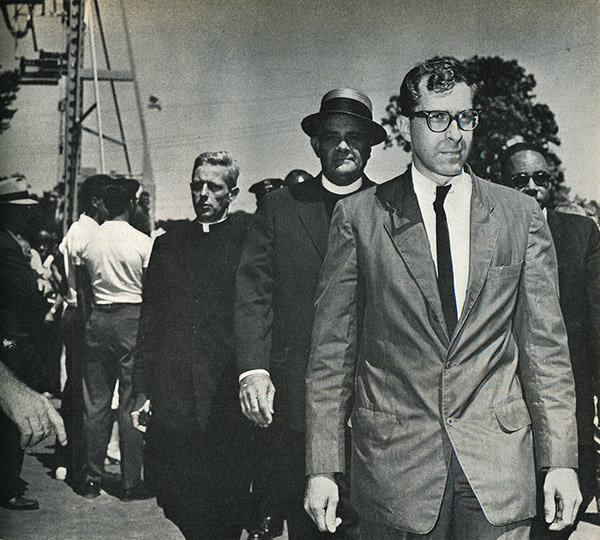
Mark Galli thinks evangelicals have opened a new chapter on race. But I wonder if it is the chapter that mainline Protestants opened — oh — fifty years ago:

We are currently experiencing a new “God moment,” when God is shining his burning light on how our nation and our churches are fractured by racial division and injustice. In the past two years, we’ve seen image after image of injustice perpetrated against black Americans. We’ve studied the statistics. And most important, we’ve heard the anguished cry of a suffering community that is understandably hurting, angry, and demanding progress.

Moderate white evangelicals, who make up the bulk of our movement, see more clearly than ever how racism is embedded in many aspects of our society, from business to law enforcement to education to church life. We have been slow to hear what the black church has been telling us for a while. And in all that, we hear God calling his church to seek justice and reconciliation in concrete ways.

To be evangelical now means to be no longer deaf to these cries or to God’s call. In 2012, only 13 percent of white evangelicals said they thought about race daily (41% of black evangelicals did so). Today, we’re thinking about race more than daily—due partly to the news cycle, and partly to our rediscovering biblical teaching.

I used to hear a lot about how evangelicals were always about 10 to 15 years behind the times.

So I wonder when evangelical Protestants like Galli will get around to reading John McWhorter whose book, Winning the Race, came out ten years ago:

It’s not that there is “something wrong with black people,” but rather, that there is something wrong with what black people learned from a new breed of white people in the 1960s. . . . The nut of the issue is that [people who see racism everywhere] want neither justice nor healing. What people like this are seeking is, sadly, not what they claim to be seeking. They seek one thing: indignation for its own sake. . . .

Two new conditions were necessary for alienation among blacks to so often drift from its moorings in the concrete and become the abstract, hazy “race thing” that whites just “don’t get.”

One condition was that blacks had to be prepared to embrace therapeutic alienation, and ironically, this could only have been when conditions were improved for blacks. When racism was omnipresent and overt, it would have been psychological suicide for blacks to go around exaggerating what was an all-too-real problem.

Second, whites had to be prepared to listen to the complaints and assume (or pretend) that they were valid. This only began during the counter cultural revolution, within which a new openness to blacks and an awareness of racism were key elements. . . . Many whites were now, for the first time, ready to nod sagely at almost anything a black person said. And in that new America, for many blacks, fetishizing the evils of the White Man beyond what reality justified was a seductive crutch for a spiritual deficit that we would be surprised that they did not have. It was the only way to feel whole. Even blacks less injured were still injured enough to let the loudest shouters pass, as bards of their less damaging, but still aggravating, pains. (4, 5, 7)

What will Galli’s successor write about evangelicals and race in twenty-five years when she discovers John McWhorter?

Newsflash: My Parents were Right

The world is not a safe place.

Even the University of Chicago agrees with Ellen and Jay Hart:

Looking for safe spaces on campus or trigger warnings on a syllabus?

Incoming students at the University of Chicago have been warned they won’t find either in Hyde Park.

They all received a letter recently from John Ellison, dean of students, which went beyond the usual platitudes of such letters and made several points about what he called one of Chicago’s “defining characteristics,” which he said was “our commitment to freedom of inquiry and expression.” Ellison said civility and respect are “vital to all of us,” and people should never be harassed. But he added, “You will find that we expect members of our community to be engaged in rigorous debate, discussion and even disagreement. At times this may challenge you and even cause discomfort.”

To that end, he wrote, “Our commitment to academic freedom means that we do not support so-called trigger warnings, we do not cancel invited speakers because their topics might prove controversial and we do not condone the creation of intellectual safe spaces where individuals can retreat from ideas and perspectives at odds with their own.”

What I (mmmeeeeEEEE) can’t fathom is parents rearing children to expect that the world will be safe. I thought this was the age of the helicopter parent, the one who is always worried about something going wrong. Or is it that helicopter parents have been so successful in keeping their children from danger that the kids really do think the world is a safe place, and if it is not something’s wrong?

Why the Olympics are Un-American

The Silver Medalists for 2015:

Seattle Seahawks
Cleveland Cavaliers
Tampa Bay Lightning
New York Mets

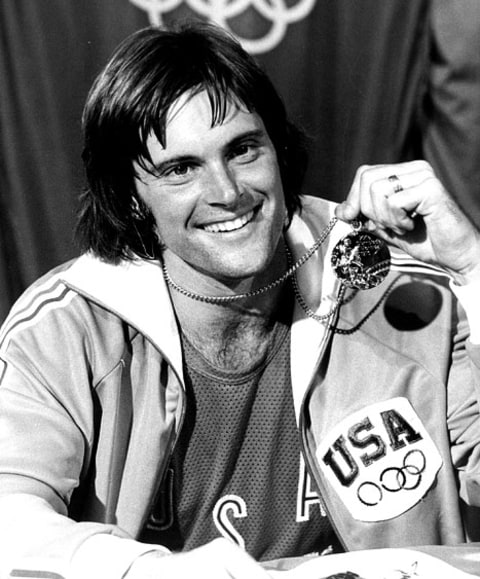
Yes, those are all the teams that made it to the championships last year and lost. Did the players on those teams receive a consolation prize? So why the big deal with silver medals? And who even thinks coming in third is noteworthy? Does anyone remember Dortmund?

Chalk some of this up to old age. I used to be glued to the television during the 1960s broadcasts of the Olympics. (But remember, back then sports on television were rare. To see Lew Alcindor play Elvin Hays in the college basketball game of the century you needed to travel to Houston.) Then it dawned on me, thanks to Wide World of Sports, that every year some international competition in track, swimming, or skiing was happening, and that the record-winning times had as much significance as performances in the Olympics. The Olympics were no longer special, and they had yet to be hyped the networks or doped by the pharmacists (at least in the free world).

Add to that the admission of professional athletes to what used to be a competition for amateurs, though of course Harold Abrahams superiors at Caius College had other thoughts about gentlemen athletes, and I figured I’d just as soon watch national sports as opposed to those competitions promoted by liberals who pined for one-world-government.

If Department of Justice Had only Watched “The Wire”

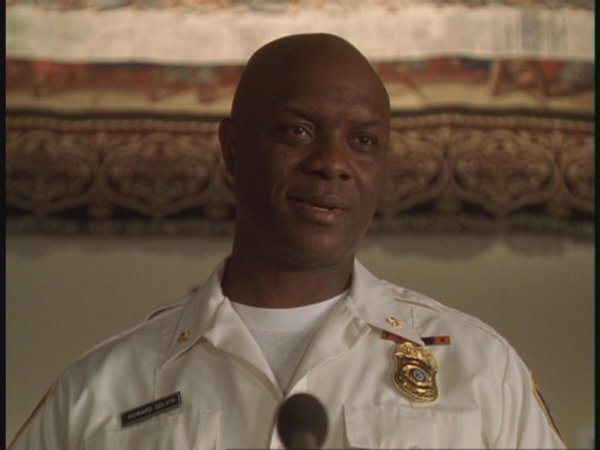
Peter Moskos continues to dissect the Department of Justice’s report on the Baltimore Police Department. It sounds just like the HBO series:

The system has several key deficiencies. First, BPD sets thresholds of activity that trigger “alerts” to supervisors about potentially problematic conduct that are too high. Because of these high thresholds, BPD supervisors often are not made aware of troubling behavioral patterns until after officers commit egregious misconduct. Second, even where alerts are triggered, we found that BPD supervisors do not consistently take appropriate action to counsel the officer, consider additional training, or otherwise intervene in a way that will correct the behavior before an adverse event occurs. Third, critical information is omitted or expunged from the EIS that could help address officer training or support needs or help prevent future misconduct.

It is clear that the Department has been unable to interrupt serious patterns of misconduct. Our investigation found that numerous officers had recurring patterns of misconduct that were not adequately addressed. Similarly, we note that, in the past five years, 25 BPD officers were separately sued four or more times for Fourth Amendment violations.

Minus the sex, of course:

Officers suffer from being supplied with outdated, broken, or in some cases, no equipment. As one officer noted to the Fraternal Order of Police in a focus group, “How am I supposed to pull someone over for having a taillight out when my car has two?”

Officers have no computers in their cars, forcing them to return to the district station to type reports, and even those computers are often not working…. Taking officers off the street to type reports at the district takes away from time that could be spent on law enforcement or community building activities. It also creates inefficiencies for officers who often must write reports on paper in the field while their memories of incidents are fresh, and then type the same information into computer databases after arriving at the district station at the end of their shift.

We’ll Surrender if You Let Us Keep Our Emperor

Noah Millman explains why Christians may need to work out a truce with the Democrats:

Suppose that you look out a couple of decades, and you see, as Dreher does, an America in which traditional Christians are a dwindling minority ever more clearly out of step with American culture, to the point of mutual incomprehension and even loathing. In that world, a polarized party system in which one party is resolutely determined to circumscribe the freedom of that dwindling minority while the other party pays lip service to its defense is a world in which that minority’s life gets progressively worse and worse year after year. One can dispute the probability of that world coming to pass, but I believe that’s what Dreher believes is coming.

If it is, my question is: what’s the political strategy for heading it off? Voting over and over again for a party that pays less and less attention to your concerns is clearly a losing strategy — for obvious reasons. So what’s the alternative?

It seems to me, clearly, that the alternative is making an overture to the enemy party. After all, as Yitzhak Rabin famously said, you don’t make peace with your friends — you make peace with your enemies. And you cannot make peace with your enemies if you decide, from the start, that your enemies will never make peace, on any terms. It seems to me that if Dreher really believes the Democratic Party is moving in the direction of outright persecution of traditional Christians, then it is a moral and practical imperative for traditional Christians to engage in outreach to the Democratic Party to try to change their course, and to keep trying if the first efforts bear no fruit.

But suppose the enemy really is as implacable as you imagine. If the correlation of forces is similarly dire, then what we’re talking about isn’t making peace but negotiating the terms of surrender. Even then, terms have to actually be offered. And it’s the people seeking an end to hostilities who have to offer them.

If that is the case, then — and I know this is a very ugly way of putting it, and I apologize in advance, but Dreher himself is the one who brought up “Japanese-soldier Religious Rightists hiding out on a desert island in the South Pacific” — my question is: what is the traditional Christian version of “we’ll surrender if you let us keep our Emperor?”

The World Just Got Bigger by A Third

Historians generally like the adage that the world is divided in two, between splitters and lumpers. The reason is that historians generally either stress continuity (lump) or discontinuity (split). Now comes a third category, a person who splits in order to lump:

In contrast to Trump’s strong law-and-order message, Hillary sought to split the difference between cops and Black Lives Matter. Blacks and Latinos are the victims of “systemic racism.” In a country where affirmative action, or in Nathan Glazer’s acute phrase “affirmative discrimination,” often governs hiring and college admissions, this is one of the more bizarre leftist codewords to adopt. But Hillary is now on record as believing in it. Yet she also spoke words of compassion to the cop who fears for his life, doing his “dangerous and necessary” job. The now widely pervasive anti-cop rhetoric and respect for police officers are fundamentally unreconcilable; Hillary’s acknowledgement of the fears of a cop saying goodbye to his wife and kids before going to work was an attempt to reconcile it, and a political necessity. She must hope dearly that the Black Lives Matter part of the Democratic coalition is not perceived as contributing to more urban violence in the weeks before November.

Ideas with stomachs have consequences. Get to the grocery store soon. Bread and milk may be gone.

If You Think Universities are Too Western, You’re Right

Students at Seattle University, a Jesuit institution, have successfully forced a controversial dean to resign. Jodi Kelly, dean of the university’s Matteo Ricci College, drew fire from students when she used the n-word in an email to a student. That the word was also the title of a book by an African-American author didn’t matter to students:

in a discussion with a student who wanted to better understand the experiences of members of minority groups, Kelly suggested Nigger, the autobiography of Dick Gregory, the civil rights activist. Among those who defended Kelly on her recommending the book by name was Gregory himself, who wrote an essay for Inside Higher Ed about the debate at Seattle.

Even as attention on the N-word receded, the debate about Kelly and the college she led only grew. Kelly’s critics and supporters agree that she is a proponent of a rigorous humanities curriculum — such as that offered by the college — built around the Western classics. To the protesting students, that was a big part of the problem.

But universities are supposed to be Western. It’s what they do:

Universities are one of the few institutions that are a direct contribution of medieval Latin Christendom to contemporary Western civilization. Being an export wherever else they are found, they are also unique to Western culture. To be sure, all cultures have had their intellectuals: those men and women whose task it has been to learn, to know, and to teach. But only in Latin Christendom were scholars — the company of masters and students — gathered together into the universitas whose entire purpose was to develop and disseminate knowledge in a continuous and systematic fashion with little regard for the consequences of their activities. When professors and students today study and write about universities, they are therefore engaged in more than group therapy in the midst of troubled times for what is now ambiguously called “higher education.” They are analyzing an essential element in the culture that has come to dominate the entire globe. (James M. Kittelson, “The Durability of the Universities of Old Europe”)

In other words, if you want to speak truth to power, don’t go to university. If you do, you join the system of oppression.

Will A Revival Save Us?

In hopes of understanding my own blindness about race relations in America and what I (me me I I me me) might do to make the nation and me less racist, I listened to Thabiti Anyabwile’s discussion with Carmen Fowler LaBerge. Here’s what I learned. First, I need to acknowledge that whites have treated blacks badly:

We need to acknowledge the ways in which the church has intentionally, historically refused to be the Body of God along the lines of race. Whether it from Virginia’s enactment of laws that if a slave became a Christian did not mean they would be freed from slavery, to the segregation of congregations in the 1800s and into the 1900s, to the Evangelical church just missing the ball in the Civil Rights Movement and other areas. We have to tell the truth- the bone deep truth- about our complicity if we will ever be free from it.

When I taught colonial America last fall, I ended with the point that race is one of the lasting and darkest legacies of colonial slavery. I may need to do more in class. But I think I’ve got this part of it. I understand in part if not in full.

Second, I need to do something:

Pastor T says one tangible step is to pray for revival. Pray that God pours out his Spirit on His church, and that His spirit would graciously bring conviction of sin. That He would quicken His church in repentance and holiness. Pray that God would subdue the hearts of those hearts in rebellion against God and turn to Him.

Pastor T hopes the Lord would use the grief and mourning that has gripped the nation to break our hearts in repentance and so we would draw near to Him in revival.

Here I’m scratching my head. Does Pastor Anyabwile (and Carmen) not know that revivals were incredibly divisive throughout U.S. history? Revivals don’t unify. They divide churches between pro- and anti-revivalists.

If Pastor Anyabwile means that revival might bring sanctification, I appreciate the point. But in the case of cop shootings, does that mean city governments should only hire applicants who have made a profession of faith? If revival saves America, aren’t we still thinking about politics the way Constantinians, neo-Calvinists, Covenanters, and theonomists do? Can we only trust officials who are saved?

So what do we do if we are to live with non-Christians? Any policies? Interestingly enough, Pastor Anyabwile faulted Ta-Nehisi Coates in the latter’s piece on mass incarcerations for not recommending any policies:

Coates repeats the significant failure he recognizes in an earlier Moynihan. Coates tells us that the fatal flaw in Moynihan’s infamous report was Moynihan’s decision to omit specific policy solutions. Having seen that so clearly, it’s odd that Coates should repeat that failure so often in the important writing he now undertakes. A mind as formidable as Coates’s ought not stop with descriptive analysis, however compelling its portrayal of the problem. It should push itself to hazard a prescription, to call for some specific redress.

Pastor Anyabwile is of course right. He should also know that revival is not policy.

So what policy is out there? Maybe Peter Moskos is on to something about what California and Chicago police can learn from New York City’s patrol people and their supervisors:

Last year in California, police shot and killed 188 people. That’s a rate of 4.8 per million. New York, Michigan, and Pennsylvania collectively have 3.4 million more people than California (and 3.85 million more African Americans). In these three states, police shot and killed (just?) 53 people. That’s a rate of 1.2 per million. That’s a big difference.

Were police in California able to lower their rate of lethal force to the level of New York, Michigan, and Pennsylvania — and that doesn’t seem too much to ask for — 139 fewer people would be killed by police. And this is just in California! (And California isn’t even the worst state; I’m picking on California because it’s large and very much on the high end.)

Now keep in mind most police-involved shootings are not only legally justifiable, they are necessary and good at the moment the cop pulls the trigger. But that doesn’t mean that the entire situation was inevitable. Cops don’t want to shoot people. They want to stay alive. You give cops a safe way to reduce the chance they have to pull the trigger, and they’ll certainly take it.

I really don’t know what some departments and states are doing right and others wrong. But it’s hard for me to believe that the residents of California are so much more violent and threatening to cops than the good people of New York or Pennsylvania. I suspect lower rates of lethal force has a lot to do with recruitment, training, verbal skills, deescalation techniques, not policing alone, and more restrictive gun laws. (I do not include Tasers on this list.)

If we could bring the national rate of people shot and killed by police (3 per million) down to the level found in, say, New York City (The big bad NYPD shoots and kills just 0.7 per million) we’d reduce the total number of people killed by police 77 percent, from 990 to 231!

The thing is, we don’t need the Holy Spirit’s miraculous powers for this. Providential control is always appreciated.