The Real 1619 Project

Imagine understanding United States history with this view of human nature front and center (from the Synod of Dort which concluded — go figure — in 1619):

Human beings were originally created in the image of God and were furnished in mind with a true and sound knowledge of the Creator and things spiritual, in will and heart with righteousness, and in all emotions with purity; indeed, the whole human being was holy. However, rebelling against God at the devil’s instigation and by their own free will, they deprived themselves of these outstanding gifts. Rather, in their place they brought upon themselves blindness, terrible darkness, futility, and distortion of judgment in their minds; perversity, defiance, and hardness in their hearts and wills; and finally impurity in all their ­emotions. (III/IV.1)

Big Oil, Little Oil, Big Presbyterians, Tiny Presbyterians

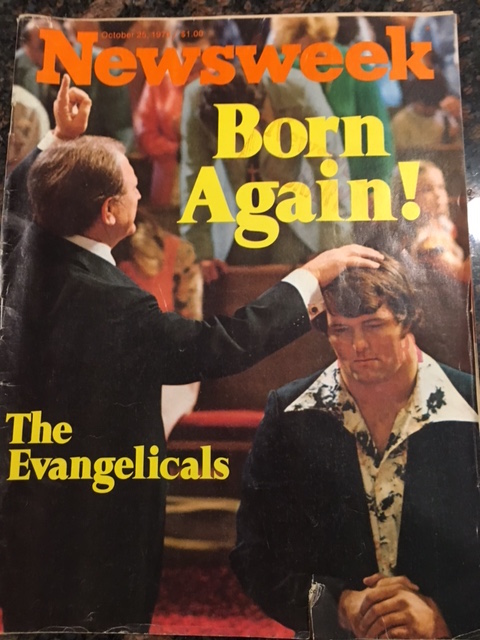
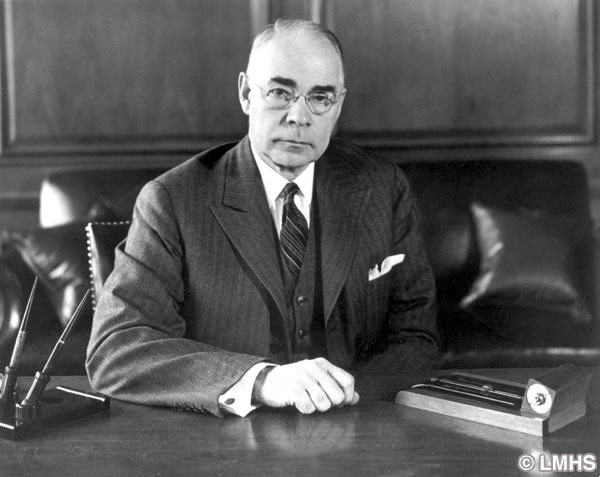
Darren Dochuk’s new book, Anointed with Oil: How Christianity and Crude Made Modern America, continues his study of American Protestantism’s financial profile. A very simple way of putting his findings is to say that John D. Rockefeller’s Standard Oil financed mainline Protestant organizations and J. Howard Pew (and other small oilmen) sustained evangelical Protestantism. In his own words:

By the late 1940s, Howard was not only bitter about major oil’s global expansion at the cost of U.S. domestic production (and with Washington’s privileging of that trend), but also about how the Rockefellers were reshaping society with their mammoth charity. John D. Rockefeller Jr., and his sons were, by now, heading a multifaceted foundation that sought to provide humanitarianism and economic development on an international scale. In Pew’s mind, it was the Rockefellers’ brand of ecumenical, interdenominational and internationalist (“monopolistic”) Protestantism, and its prioritizing of science and structural reform over personal matters of the soul that was responsible for the nation’s secular slide. Determined to offset the Rockefellers’ modernistic gospel, in 1948 Pew helped his siblings incorporate the Pew Memorial Trust to “help meet human needs” through support of “education, social services, religion, health care and medical research,” then christened his own, the J. Howard Pew Freedom Trust, whose charge was even bolder: “to acquaint the American people with the values of a free market, the dangers of inflation, the paralyzing effects of government controls on the lives and activities of people” and “promote the recognition of the interdependence of Christianity and freedom.”

That stance in opposition to Protestant modernism and ecumenism prompted Pew to be a major backer of the neo-evangelicals (later just plain evangelicals) at institutions like Fuller, Christianity Today, Billy Graham (Inc.), and Gordon-Conwell:

the Pews rigorously protected personal liberty in theological terms. Howard continued that tradition in the Cold War years. While serving as chair of the National Lay Committee in the National Council of Churches, he agitated against the “collectivist” drift in Presbyterianism and America’s Protestant mainline.

He found another way to push back by funding pastors, seminaries and lobbies associated with “new evangelicalism,” the loosely coordinated movement that would lay the groundwork for the religious right. In one respect, new evangelicals sought simply to continue a fight against liberal “modernist” trends in American Protestantism and society that self-identified “fundamentalists” had waged in the previous half century. Thanks to the unmatched financial support of independent oilmen Lyman and Milton Stewart, the brother tandem at the helm of Union Oil Company of California (whose own hatred of the Rockefellers knew no bounds), fundamentalists had proved highly successful at constructing an alternative infrastructure of churches, missionary agencies and schools that resisted progressivism’s pull. Yet new evangelicals, unlike fundamentalists, wanted to engage rather than recoil from mainstream society—they sought to redeem it rather than run from it. The number of institutions within the new evangelical orb that would benefit from Pew’s millions would be spectacularly large, including illustrious representatives such as Christianity Today, the National Association of Evangelicals and evangelist Billy Graham. Graham and his friends were known to lean on the “big boys” of southwestern oil for financing, among them the superrich Sid Richardson and Hugh Roy Cullen. But J. Howard Pew was the biggest backer among them.

The thing is, confessional Protestants fell between the cracks of categories like liberal and evangelical Protestants, but also sometimes drew fire from oilmen like Pew. (Machen actually preached at the union congregation in Seal Harbor, Maine, at the invitation of John D. Rockefeller, Jr., the place where the Machens and Rockefellers worshiped while on vacation.)

When the OPC began, its original name was the Presbyterian Church of America (not to be confused with “in America”). That was a bridge too far (aside from the Independent Board for Presbyterian Foreign Missions) for mainline Presbyterians. In 1935 while J. Gresham Machen and other board members belonged to the PCUSA, opposition to conservatives could use ecclesiastical courts. But once Machen was convicted of breaking church law and excommunicated, the only recourse to stop his efforts was the civil courts. And so, the PCUSA brought a civil suit against the new Presbyterian communion and asked the judge to force the new communion to change its name. Here was part of the PCUSA’s reasoning (humor warning):

It is impracticable and impossible for the plaintiff church to recover in damages what it has suffered and is likely to suffer from the aforesaid acts done and threatened to be done by and on behalf of the defendant church. The plaintiff church is powerless to prevent the resulting injury to its property and enterprises, or to avoid the resulting loss in donations and financial support which may be diverted from it, which injuries are immediate, continuous and irreparable, and incapable of computation or estimate. (Bill of Complaint, reprinted in Presbyterian Guardian, Sept. 12, 1936)

To put readers’ laughter in perspective, here are some figures to keep in mind for comparison between the PCUSA and the original OPC:

At its first General Assembly the [OPC] counted only thirty-four ministers, with roughly thirty congregations and 5,000 members. Funds were so scarce that the minutes of the first five General Assemblies do not even include financial reports. No doubt the ministers themselves bore most of the expenses of the denomination and its proceedings, with help from congregations. The only mention of finances at the third General Assembly, for example in 1937, was in connection with the costs for printing the minutes and agenda, and the budget of the Committee on Home Missions and Church Extension. Printing costs were $137 and the receipts from churches and ministers were only $122, leaving a deficit of $15. Because the Committee on Home Missions was the only agency with a real budget, the delegates passed along the rest of the bill to Home Missions. But that committee was not exactly flush. Their expenses for the first year came to just short of $13,000, with receipts totaling a little more than $13,000. In fact, the Committee on Home Missions’ budget was the OPC’s denominational budget. In addition to picking up the expenses of printing the General Assembly’s minutes, the Committee also footed the bill for renting the hall where the Assembly met. Thus, by the end of its first year the OPC’s total assets, if the balance of the Committee on Home Missions’ bank account is any indication, were $221.54.

In contrast, the PCUSA’s wealth and stature were truly staggering. In their complaint against the OPC the officers of the mainline denomination listed their resources to show how much they had to lose if a new church came along with a similar name. The PCUSA had close to 9,000 congregations, with just under 2 million church members, and 9,800 ministers. The church had approximately 1,600 home missionaries with an annual budget of $2.5 million and trust funds totaling just over $33 million. The PCUSA’s efforts in foreign missions were also large. They counted 1,300 missionaries with an annual budget of $2.9 million and trust funds totaling a little more than $18 million.

The [OPC] did not even send out their first foreign missionaries until 1938 and then could only manage support for eight, a number figure that included wives. (DGH, “Why the OPC: The History behind the Name)

What does this have to do with big oil or J. Howard Pew? The first two names on the Bill of Complaint were:

THE PRESBYTERIAN CHURCH IN THE UNITED STATES OF AMERICA By (Sgd) HENRY B. MASTER, Moderator

TRUSTEES OF THE GENERAL ASSEMBLY OF THE PRESBYTERIAN CHURCH IN THE UNITED STATES OF AMERICA By (Sgd) J. HOWARD Pew, President.

This does not mean that Pew was aiming for Machen and the OPC. He likely signed this complaint as part of his responsibilities as an elder in the PCUSA.

But, the man who funded so much of the neo-evangelical world, the friend of so-called conservative Protestants, was right there in the legal proceedings against other conservative Protestants, the ones who were the most Presbyterian of all the Protestants (minus the Covenanters, and Associate Reformed). And one reason that Pew might have favored Graham et al and not had much regard for Machen was the the latter’s understanding of the mission of the church was not going to abet the political and economic policies that Pew wanted the federal government to pursue. Graham and the neo-evangelicals, sorry Mark Galli, wanted to be evangelicalism for the nation. That earned them Pew’s support.

White Christian Nationalism for Urban Hipster Presbyterians?

Remember when some Presbyterians were quick to link a certain failed mass-shooter with theology in the OPC?

And remember also when critics of President Trump were quick to associate (in a fear-mongering way) the rhetoric of “the West” with white Christian nationalism?

Well, what do you do with someone who sits regularly under the ministry of a famous Presbyterian pastor in a major mega city and then writes this, for instance, about slavery?

the Times wants to reimagine the European version of America as founded on slavery and stained in every possible way by the continuing effects of slavery. This is a political project more than a historical one. Its unacknowledged goal is to taint all opposition to progressive political goals as rooted in the perpetuation of oppression, and perhaps to delegitimize America itself.

The 1619 Project overstates things a bit. Slavery does have lingering consequences, and the economic, cultural, and political history of the country does reflect the awful institution. But the 1619 Project also reduces the lives of African Americans to perpetual victimhood, and it ignores the glorious ideal of freedom in American history. It reverses the traditional conception of America as an exceptional land of liberty to conceive of it as an exceptional land of slavery and oppression.

Four centuries ago, almost every Englishman believed a piece of anti-Spanish propaganda called the “Black Legend.” It presented all Spaniards and all Catholics as uniquely, demonically evil, whose cruelty was proved not least by their barbaric treatment of the Indians. The 1619 Project creates a new kind of Black Legend, which casts America as uniquely, demonically evil.

The Times is calculating that Americans are already primed to believe this new Black Legend. They have been softened up by the pseudo-history of Howard Zinn, whose elaborately distorted vision in A People’s History of the United States has been swallowed whole by millions. (A nod of appreciation is due to Mary Grabar whose new book Debunking Howard Zinn is a long-overdue corrective to the Marxist storyteller.) Others are hoping the 1619 Project will flatten what is left of resistance to anti-American mythmaking in K-12 and college history courses. The new Black Legend is already comfortably ensconced in many of our high schools and colleges. The first book college students read very likely treats it as fact.

And what are we to make of the associations between preacher and worshiper when the latter writes this about Harvard University’s president’s failure to include western civilization as part of the institution’s academic mission?

What is completely absent is anything that connotes “civilization,” as in “western civilization” or “comparative civilizations.” Harvard once took this concept as central to its educational work. It has apparently fallen by the wayside, though it lingers in the names of some departments, as in “East Asian Languages and Civilizations” and “Archaeology and Ancient Civilization.”

There is food for thought in this observation. Why has civilization, especially Western civilization, slipped beneath the notice of Harvard’s current president? In considering the comings and goings of students across oceans and national borders, is “civilization” not a factor? Why do students from diverse parts of the “world” want to study in the West? In the United States? At Harvard? Might our civilization bear on their motives to travel so far and undertake the hardships of studying in a foreign culture?

Don’t be confused. I do not fault the author for these complaints about the direction of important institutions in the life of the United States. In fact, I believe he is right to raise these concerns.

What I do wonder about is why the #woke Presbyterians who think the United States is racist and Christian nationalist don’t take issue with the pastor and related congregation who would seem to be responsible for this conservative author’s sentiments? I mean, if you can connect the dots between the alt-right and Reformed Protestant covenant theology, can’t you also tie defenses of western civilization and the United States to urban hipster Presbyterianism?

Constantine as Mr. Rogers

Remember when Presbyterians used to confess this about the civil magistrate?

The civil magistrate may not assume to himself the administration of the Word and sacraments; or the power of the keys of the kingdom of heaven: yet he hath authority, and it is his duty, to take order, that unity and peace be preserved in the Church, that the truth of God be kept pure and entire; that all blasphemies and heresies be suppressed; all corruptions and abuses in worship and discipline prevented or reformed; and all the ordinances of God duly settled, administered, and observed. For the better effecting whereof, he hath power to call synods, to be present at them, and to provide that whatsoever is transacted in them be according to the mind of God. (Confession of Faith 23.3)

Of course, imagining Donald Trump presiding over the General Assembly of the PCA might prompt chuckles (moderating debate with Roberts’ Rules, winding up the woke commissioners, Trump supporters’ embarrassment). But even giving “good” presidents this kind of power is precisely why American Presbyterians revised the Confession (at least one reason). The Congregationalist, Barack Obama moderating a General Assembly? The United Methodist, George W. Bush? The Roman Catholic, John F. Kennedy? I don’t think so!

But even in a secular United States, Americans have trouble abandoning the idea of a president’s moral authority. Even those who believe in total depravity struggle with expecting too much of POTUS. Here’s one fairly recent foray into the topic of presidents’ morality at National Public Radio. Surprise, it started with St. Abe:

While Americans often take the idea of the president as a moral leader for granted, Barbara Perry, a presidential historian in Charlottesville at the University of Virginia’s Miller Center, says she has traced this concept back to Abraham Lincoln’s Gettysburg Address in 1863.

The North and South were divided in the middle of the Civil War, and Lincoln sought to bring the country together by pointing to our common heritage, Perry says.

“He points to the fact that our common heritage is that our forefathers came upon this continent and created a new nation, dedicated to the proposition that all men are created equal,” Perry tells NPR’s Audie Cornish. “To me it is the ultimate presidential speech of unification, grief, calming — but also uplifting and inspirational.”

What exactly is moral about social unity, grief over soldiers’ deaths, calm reassurance, uplift, and inspiration? That’s a pretty low bar (not low enough for Trump).

“The president is not always successful in the persuasion, in terms of policy outcomes,” Perry says, “but if he can be successful in at least calming and soothing the nation and showing us a way forward — that someday perhaps we will reach the policy point, as we did with President Kennedy and the ’64 Civil Rights Act — he will have been successful.”

So what, ultimately, is the responsibility of a president in critical moments? Perry says the president primarily serves to comfort the American people in times of crisis. We look to the president as a father figure.

“The president is the very first symbol of American government that children comprehend,” she says. “The president, especially in the modern era, comes into our homes — first by radio, then television, now through all sorts of electronic gadgetry — and so we think of him as part of our life. And that’s why it’s so important for him to model the proper behavior for us.”

The only way this makes sense for Christians is to have two standards, one for Christians, another for citizens. The United States relies on conduct that is outwardly moral in some sense. But that is a far cry from the Confession:

Works done by unregenerate men, although for the matter of them they may be things which God commands, and of good use both to themselves and others; yet because they proceed not from a heart purified by faith, nor are done in a right manner, according to the Word, nor to a right end, the glory of God; they are therefore sinful, and cannot please God, or make a man meet to receive grace from God. (Confession of Faith, 13.7)

A president’s moral authority, accordingly, should proceed from true faith, obedience to God’s word, and an aim to give God the glory.

And yet, we have many Americans who expect presidents to be moral at a time when Christians have been “engaged” in politics in a direct way for at least a generation. You might think that a Christian perspective would reduce expectations for a presidential morality. It is exactly the reverse. Many American who have made a living by flouting conventional standards (think Hollywood celebrities) now have no trouble echoing Jerry Falwell, Sr.

If only Mencken were alive to see this show.

Big Beer, Local Beer

My proposal for a sabbatical this fall did not include beer tasting, but a break from the routine in a different location did afford to the opportunity to visit two breweries on Boston’s North Shore, Ipswich Ale Brewery and True New Ale Company. Truth be told, in the IPA sampling, True North’s Northern Haze came out ahead of Ipswich’s 1620 IPA but a hop or two. The crisp, slightly bitter flavor had none of the sweetness or fruitiness that sometimes afflicts IPAs.

The outing also provoked a discussion of questions about the market for small breweries, how many there are now compared even to 15 years ago, and how they fare in a nation dominated by mass produced American lagers. Lo and behold, The American Conservative was ready.

In 1983, there were 49 breweries. Today, there are 7,480 active craft breweries, up from 6,464 last year. The number of breweries is at a 150-year high. The two majors are losing market share. This would appear to be a triumph of competition and consumer choice. They view the explosion of craft breweries as vindication that we live in a golden age of competition and proof that antitrust enforcement is unnecessary.

A little bit of knowledge is a dangerous thing. While the number of breweries has never been higher, the total number of breweries is a completely misleading metric. Consider how irrelevant they are to the average American:

Over half of all breweries brew less than 1,000 barrels and represent less than 1 percent of all volume.

Over 95 percent of all breweries make fewer than 15,000 barrels per year and account for less than 4 percent of total volume.

Almost a quarter of breweries were classified as brewpubs that only brew beer for direct-to-consumer sale on brewery-restaurant premises.

Most craft brews do not get sold or distributed off premises.

Libertarians in Manhattan and D.C. think tanks may have choice, but most people don’t. As of 2018, only 8.4 percent of breweries fell outside of Census Bureau defined urban areas, and the areas that have the most breweries are seeing the most new breweries.

Despite the explosion in craft breweries, Big Beer still rules the game. Bart Watson, chief economist of the Brewers Association, put it succinctly: “The majority of growth continues to come from microbreweries, taprooms, and brewpubs, whereas the distribution landscape remains more challenging for regional craft brewers.”

Jonathan Tepper’s article is largely negative, about how states and big beer conspire to prevent small brewers from increasing their market share. One example is this:

Texas, up until this year, was the only state where visitors to craft brewery tap rooms couldn’t buy cases of beer and take them home. In Texas, craft brewers were forced to give the distribution rights away to local distributors for free. In 2016, a court ruled that it was unconstitutional for the legislature to pass laws that enriched one business at the expense of another.

Texas is not much of an anomaly. Most other states force craft brewers to give up their distribution after exceeding a low level of production. For example, in North Carolina, most craft brewers do not go over 25,000 barrels a year to avoid giving away distribution. Small brewers start small and stay small, while distributors and Big Beer control the market.

I get it. But for a magazine that does a good job of making a case for localism, the proliferation of craft beer with limited distribution is precisely what conservatives who are critical of the big box stores wish would happen in the world of retail and fast food.

So, I can’t get True North in Michigan. It won’t kill me with Dark Horse and Founders (not that one) in state. But when we return to the Methodist Camp Ground for summer rest, the local breweries will be there.

What am I missing?

John Owen Preached Irrelevantly

Speaking of liberalism, Benjamin Rush, a Presbyterian, agreed with Thomas Jefferson, that preachers should stay in their own lane and stop trying to do what politicians do. He even recommended John Owen’s sermons:

I agree with you likewise in your wishes to keep religion and government independant of each Other. Were it possible for St. Paul to rise from his grave at the present juncture, he would say to the Clergy who are now so active in settling the political Affairs of the World. “Cease from your political labors your kingdom is not of this World. Read my Epistles. In no part of them will you perceive me aiming to depose a pagan Emperor, or to place a Christian upon a throne. Christianity disdains to receive Support from human Governments. From this, it derives its preeminence over all the religions that ever have, or ever Shall exist in the World. Human Governments may receive Support from Christianity but it must be only from the love of justice, and peace which it is calculated to produce in the minds of men. By promoting these, and all the Other Christian Virtues by your precepts, and example, you will much sooner overthrow errors of all kind, and establish our pure and holy religion in the World, than by aiming to produce by your preaching, or pamphflets any change in the political state of mankind.”

A certain Dr Owen an eminent minister of the Gospel among the dissenters in England, & a sincere friend to liberty, was once complained of by one of Cromwell’s time serving priests,—that he did not preach to the times. “My business and duty said the disciple of St Paul is to preach—to Eternity— not to the times.” He has left many Volumes of Sermons behind him, that are so wholly religious, that no One from reading them, could tell, in what country,—or age they were preached.

(Thanks for this to a certain Irishman who is known to regard Owen almost as highly as John Nelson Darby.)

Mencken Day 2019: Minorites in the U.S.

From Prejudices, Third Series:

Worse, a minority not only has no more inalienable rights in the United States; it is not even lawfully entitled to be heard. This was well established by the case of the Socialists elected to the New York Assembly. What the voters who elected these Socialists asked for was simply the privilege of choosing spokesmen to voice their doctrines in a perfectly lawful and peaceable manner,—nothing more. This privilege was denied them. In precisely the same way, the present national House of Representatives, which happens to be Republican in complexion, might expel all of its Democratic members. The voters who elected them would have no redress. If the same men were elected again, or other men of the same views, they might be expelled again. More, it would apparently be perfectly constitutional for the majority in Congress to pass a statute denying the use of the mails to the minority—that is, for the Republicans to bar all Democratic papers from the mails. I do not toy with mere theories. The thing has actually been done in the case of the Socialists. Under the present law, indeed—upheld by the Supreme Court—the Postmaster-General, without any further authority from Congress, might deny the mails to all Democrats. Or to all Catholics. Or to all single-taxers. Or to all violoncellists.

Yet more, a citizen who happens to belong to a minority is not even safe in his person: he may be put into prison, and for very long periods, for the simple offense of differing from the majority. This happened, it will be recalled, in the case of Debs. Debs by no means advised citizens subject to military duty, in time of war, to evade that duty, as the newspapers of the time alleged. On the contrary, he advised them to meet and discharge that duty. All he did was to say that, even in time of war, he was against war—that he regarded it as a barbarous method of settling disputes between nations. For thus differing from the majority on a question of mere theory he was sentenced to ten years in prison. The case of the three young Russians arrested in New York was even more curious. These poor idiots were jailed for the almost incredible crime of circulating purely academic protests against making war upon a country with which the United States was legally at peace, to wit, Russia. For this preposterous offense two of them were sent to prison for fifteen years, and one, a girl, for ten years, and the Supreme Court upheld their convictions. Here was a plain case of proscription and punishment for a mere opinion. There was absolutely no contention that the protest of the three prisoners could have any practical result—that it might, for example, destroy the morale of American soldiers 6,000 miles away, and cut off from all communication with the United States. The three victims were ordered to be punished in that appalling manner simply because they ventured to criticise an executive usurpation which happened, at the moment, to have the support of public opinion, and particularly of the then President of the United States and of the holders of Russian government securities.

It must be obvious, viewing such leading cases critically—and hundreds like them might be cited—that the old rights of the free American, so carefully laid down by the Bill of Rights, are now worth nothing. Bit by bit, Congress and the State Legislatures have invaded and nullified them, and to-day they are so flimsy that no lawyer not insane would attempt to defend his client by bringing them up. Imagine trying to defend a man denied the use of the mails by the Postmaster-General, without hearing or even formal notice, on the ground that the Constitution guarantees the right of free speech! The very catchpolls in the courtroom would snicker. I say that the legislative arm is primarily responsible for this gradual enslavement of the Americano; the truth is, of course, that the executive and judicial arms are responsible to a scarcely less degree. Our law has not kept pace with the development of our bureaucracy; there is no machinery provided for curbing its excesses. In Prussia, in the old days, there were special courts for the purpose, and a citizen oppressed by the police or by any other public official could get relief and redress. The guilty functionary could be fined, mulcted in damages, demoted, cashiered, or even jailed. But in the United States to-day there are no such tribunals. A citizen attacked by the Postmaster-General simply has no redress whatever; the courts have refused, over and over again, to interfere save in cases of obvious fraud. Nor is there, it would seem, any remedy for the unconstitutional acts of Prohibition agents. Some time ago, when Senator Stanley, of Kentucky, tried to have a law passed forbidding them to break into a citizen’s house in violation of the Bill of Rights, the Prohibitionists mustered up their serfs in the Senate against him, and he was voted down.

Imagine if Reformed Protestants were a minority.

First Evangelicalism, Now W-w, but Still Hope for U.S.A.

Thabiti Anyabwile concludes his interaction with agitated Southern Baptists over social justice by making some odd concessions. If race relations started to unravel big eva in 2014, with a major goose from the 2016 election, it now looks like racism is making Neo-Calvinist w-w diagnosis look like nonsense.

How? Anyabwile faults Tom Ascol’s evidence for the influence of critical race theory (aka cultural Marxism) in evangelical circles as insufficient or anecdotal:

Sometimes people note a correlation or a suspicion and pronounce with certainty that a movement or an infiltration is there. I think that’s largely what’s happening when people claim a “movement” exists. Some look at the number of followers on Twitter or the number of returns on a search as “evidence.” But raw numbers tell us nothing about whether those Twitter followers agree with the one they follow or whether the followers were even purchased. Raw numbers of “hits” on searches tell us nothing about whether the content of the hits were for or against the subject searched.

The entire discussion is being built on an inadequate evidentiary approach. We have a low bar that actually breaks the rules of evidence in most every field, and it proves too much.

It used to be in New Calvinist and Neo-Calvinist circles that w-w was sufficient to spot a problem. You did not need to rise to the level of a movement to show that an idea or practice was sinful or destructive. Now, Anyabwile wants Ascol to show the institutional apparatus seemingly if he is going to prove that critical race theory is present in evangelicalism. Would that also mean that we need evidence of a movement to prove that sexual infidelity is making some gains in American society and the church?

Oddly, though, Anyabwile concedes that critical race theory is behind one of Truth Table’s hosts’ recent comments:

On the first point, consider Tom’s listing of Ekemini Uwan’s comments at the Sparrow Conference. He offers it as proof of secular social-justice ideologies infiltrating evangelical spaces. It’s true that Ekemini’s comments have much in common with the fields of whiteness studies and CRT. She uses “whiteness” not as a reference to skin color or even race but to a social ideology rooted in power and greed. But that’s a view at least as old as Frederick Douglass’s writing, well before CRT/IS, cultural Marxism, or today’s social-justice trends.

As long as Frederick Douglass argued that way, the ideas must be okay. So much for Abraham Kuyper.

But Anyabwile leaves room for hope. He argues that just because the founders of the SBC held slaves, we do not throw out their entire theology:

Tom leads an organization called “Founders Ministries.” It’s a reference to the theology and ministries of the founders of the SBC. Founders is dedicated to calling the convention back to the theological commitments (doctrines of grace) of those founders, among whom were men like Basil Manly Jr, who owned 40 slaves. Manley would not be the only early leader of the convention who owned slaves. In fact, the convention was formed following a split on the question of slave owning. You could say the SBC was the pro-slavery denomination. Its flagship seminary, The Southern Baptist Theological Seminary, recently issued a report documenting that institution’s history on the question of slavery and racism. The report indicates that the seminary’s founding faculty—James P. Boyce, John A. Broadus, Basil Manly Jr., and William Williams—all held slaves and, in some cases, actively defended the practice. Yet such men are cited in books and sermons as heroes of the convention and of evangelicalism.

Now, here’s the question: Are we to attribute all the beliefs and commitments of the founding leaders of the SBC and Southern Seminary to Tom as a leader of “Founders Ministries”? If a person expresses indebtedness to Boyce, Broadus, Manly, or Williams for their writing on some subject, are we to attribute to that person anything or everything we find repugnant in Boyce and company or their writings on that subject? I would answer an emphatic “No” to both questions.

By way of analogy, the same point applies to Americans who defend and memorialize the American Founding. Just because Thomas Jefferson and Ben Franklin owned slaves, we do not reject all that they did, especially the institutions and political rationales they left behind.

If Anyabwile is willing to entertain that sort of sifting of the American past, he needs to write a letter to the New York Times (and maybe send an email message to Jemar Tisby).

Is God Holding Back Urbanist Presbyterians?

For those social justicey pastors who labor for the city, what’s wrong with this picture?

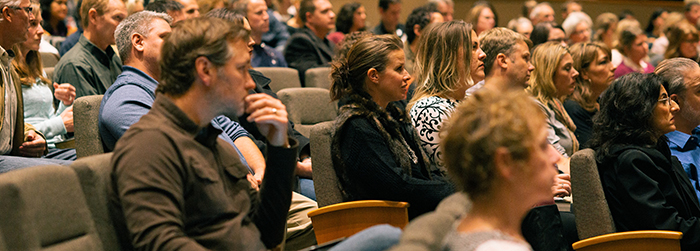
Observant Presbyterians are always part of gatherings at Rutgers Presbyterian Church. But much of the time, so are Roman Catholics and Jews, as well as a smattering of people who consider themselves vaguely spiritual. Valerie Oltarsh-McCarthy, who sat among the congregation listening to a Sunday sermon on the perils of genetically modified vegetables, is, in fact, an atheist.

“It’s something I never thought would happen,” she said of the bond she has forged with the church’s community, if not the tenets of its faith. She was drawn to the church, she said, by “something in the spirit of Rutgers and something in the spirit of the outside world.”

Katharine Butler, an artist, was lured into Rutgers when she walked by a sandwich board on the street advertising its environmental activism. Soon, she was involved in more traditional aspects of the church, too.

“I can’t believe I’m doing this, singing away and all the Jesus-y stuff,” she said. “It was wonderful to find a place larger than me, that’s involved in that and in the community and being of service. It’s nice to find a real community like that.”

Typically, the connective tissue of any congregation is an embrace of a shared faith.

Yet Rutgers, a relatively small church on the Upper West Side of Manhattan, has rejected that. Sharing a belief in God — any God at all — isn’t necessary. Instead, the community there has been cobbled together by a different code of convictions, pulled in by social justice efforts, activism against climate change, meal programs for the homeless and a task force to help refugee families.

Houses of worship — including Christian churches from a range of denominations, as well as synagogues — have positioned themselves as potent forces on progressive issues, promoting activism on social justice causes and inviting in the L.G.B.T.Q. community. But religious scholars said that Rutgers was reaching a new frontier where its social agenda in some ways overshadowed its religious one.

“Rutgers has periodically reinvented itself as the Upper West Side has gone through changes like this,” said James Hudnut-Beumler, a professor of American religious history at Vanderbilt University. “This isn’t the first reinvention. It is one of their more interesting ones.”

The approach at Rutgers reflects how spirituality has shifted in fundamental ways. Those who enter the unassuming brick-and-limestone sanctuary on West 73rd Street find a place for pancake breakfasts, fund-raisers, activism and developing ties to a neighborhood.

“People who otherwise feel marginalized or pushed out by regular congregations, more thoughtful people, say, or those who like to ask questions about faith, started to gather around our congregation,” said the Rev. Andrew Stehlik, the senior pastor at Rutgers.

“Not all of them are deeply interested in becoming yet another member of a denomination,” he added. “They are still coming and worshiping with us. We call them friends of the church. Often, they’re a substantial part of the worshiping community here.”

It seems that the worshiping community could use an injection of people. Mainline Protestant denominations like Presbyterianism have seen their followings diminish in recent years. (Leaders of the Presbyterian Church put out a news release in April announcing that fewer followers were leaving, declaring that they were “encouraged by the slowing trend downward.”)

To address shrinking congregations, some pastors are searching for new ways to use their churches and redefine what fellowship means. Churches have the space and the good will, after all, to commit to community works, social justice or arts and educational projects. And opening their doors in this way can bring in those looking for more than a Bible study class.

Some progressive Reformed and evangelicals are wont to insist that you can’t have the gospel without social justice.

But at churches like Rutgers Presbyterian, you do have social justice without the gospel. And this is not the Democratic Party. It’s a church.

So, where do you draw the line? At what point do you have too much God to be effectively social justice in your church’s orientation? If Rutgers’ pastors came on with the Westminster Confession, they might see unbelievers less inclined to participate in church activities. Or, when does social justice begin to impede God? If Rutgers’ pastors pastors came on with the Westminster Confession, they might see Presbyterians object to a broad church held together by left-wing activism.

Whatever the answer, a line exists. Or you can put churches on a spectrum. Either way, the gospel is not identical to social justice. Mainline Protestantism is example number one.

A Federal Department of Sanctification?

Pastor Anyabwile is back to the pursuit of social justice with a series of posts, the most recent of which renders those not active in opposition to racism as complicit with previous generations’ sins:

The actual debate is about the extent to which the sins of previous generations still mark this generation, and, if so, whether people today will acknowledge and repent of it. What is in dispute is whether a mere claim to not being guilty of certain sins constitutes either repentance or innocence when the sins in view actually require active opposition and when we may be unaware of some sins (Ps. 19:12; 1 Cor. 4:4). The life the gospel produces ought to be actively anti-racist, anti-oppression, anti-family destruction, and so on.

How could Anyabwile leave out sexism and misogyny, or climate change? How can any American stand on that great day of judgment for sins covered in the national press?

One of his posts includes the point, not very controversial, that the gospel involves renovation of the Christian’s moral life:

…historically and at present we have an evangelical Christian church generally failing at the ethical half of the faith. That failure results from little teaching and inadequate understanding of gospel ethics, especially as it relates to the practice of justice on a range of issues.

The conservative and Reformed evangelical church receives a heavy dose of gospel doctrine (appropriately so) but not nearly enough discipleship in gospel duty. Its witness is being hurt by the latter (duty), not the former (doctrine). Or, to use Paul’s words to Timothy, there’s need for the church to “closely watch its life and doctrine.”

The social justice “debate” appears to me as a kind of spiritual and intellectual dissonance caused by some quarters of the church awakening to the ethical demands of God while other quarters resist that awakening or perceived excesses in it. From my vantage point, Christians pursuing justice are attempting to hold together evangel and ethic in renewed ways as they apply biblical texts and appropriate history. (I stress Christians here because I am not defending and am not a part of the large number of non-Christian things traveling beneath the banner of “social justice.”) To put it simply: Some Christians are trying to grow in their understanding and pursuit of Bible- and gospel-informed justice, while some other Christians are invested in protecting the gospel from threats they believe they see. My critique of the latter is that they appear to be severing evangel from ethic.

Here’s maybe not the but a thing: ethics is not justice. Ethics may not even be sanctification. But if social justice and supporting reform of the criminal justice system (which is desirable) is a form of sanctification, the good pastor has engaged in some serious baiting and switching.

Truth be told, the United States has a Department of Justice that is involved in much more than ethics:

To enforce the law and defend the interests of the United States according to the law; to ensure public safety against threats foreign and domestic; to provide federal leadership in preventing and controlling crime; to seek just punishment for those guilty of unlawful behavior; and to ensure fair and impartial administration of justice for all Americans.

Of course, recent controversies, from Russia to Missouri, have shown how flawed the execution of justice can be. But that’s the nature of society and justice in a fallen world. Heck, not even sanctification is entire in this life for the individual Christian.

So why does Pastor Anyabwile continue to talk about social justice in ways that indicate he is a Christian nationalist, that is, someone who thinks the United States should meet, not Jewish, Muslim, or Mormon norms for social life, but Christian ones?

Why not separate the church from the federal government and talk about ways to eliminate racism from national institutions on political grounds, rather than trying to turn political reform into the third use of the law?