Christianity and Conservatism

Robert Merry thinks conservatism is in crisis:

In an influential 1957 essay entitled “Conservatism as an Ideology,” political scientist Samuel P. Huntington listed fundamental elements of the conservative creed, embraced by nearly all of its proponents: society is the organic product of slow historical growth, and existing institutions embody the wisdom of previous generations; man is a creature of instinct and emotion as well as reason, and evil resides in human nature rather than in any particular societal institutions; the community is superior to the individual, and the rights of men derive from civic responsibility; except in an ultimate moral sense, humans are unequal, and society always consists of a variety of classes, orders, and groups; the settled schemes of government based on human experience are always superior to abstract experimentation.

Thus, wrote Huntington, conservatism differs from other ideologies (except radicalism) in that it lacks any “substantive ideal”—a vision of the perfect society. “No political philosopher,” he said, “has ever described a conservative utopia.”

George W. Bush was a utopian. No other word adequately defines his vision of a Middle East culture in which the ancient Bedouin sensibilities are wiped away in favor of Western values and structures. His stated resolve to “rid the world of evil” demonstrated a lack of any conservative sensibility on where evil resides. He certainly didn’t manifest any understanding of society, particularly Middle Eastern society, as the organic product of slow historical growth. And he placed abstract experimentation over human experience in formulating this war policy rationale.

Why do Christians invariably side with Bush over Huntington? Why would they immanentize the eschaton (bring heaven to earth) when they are supposed to believe a perfect social order won’t come until Christ returns. Is it:

a) Christians are invariably Pelagian or Semi-Pelatian

b) Christians invariably reject amillenialism

c) modern Christians are inherently democratic

d) all of the above?

Following the apostle Paul or agreeing with Augustine certainly doesn’t require someone to be a conservative as Huntington defines it. But clearly, you have to reject important pieces of Christian orthodoxy to avoid conservatism.

If Gospel Coalitions Can’t Unite, What about Social Gospels?

Paul Carter is worried about factionalism dividing the unity of young Calvinists (largely identified with the Gospel Coalition). He’s also worried that the young Calvinists are in over the heads on politics:

The YRR movement has been fueled by some very admirable concerns: the desire to trust in Scripture, the desire to worship God as he is and not as culture dictates, the desire to reach the nations with the saving Gospel of Jesus Christ – these are noble and appropriate motivations. But mixed in with these there were no doubt some motivations of lesser quality.

There was a desire, for example, to be different than the generation that went before.

The Baby Boomers were indifferent to doctrine – by and large – and in bed with the Republican Party – metaphorically speaking. The YRR crowd wanted to make it clear that they were different. For the first 10 years or so of the movement this meant largely avoiding the political implications of the Gospel.

At T4G 18 that all began to change.

Politics was back on the table.

To a certain extent this was inevitable – the Gospel has social and political consequences. But the YRR movement does not appear prepared to facilitate that conversation. The movement appears poised to fracture under the pressure posed by long neglected issues and implications.

If Jesus taught his disciples to turn the other cheek, what need has a Christian to own a handgun?

If the Gospel has broken down the wall of hostility and made of us one new people – then why are we still talking about black and white?

If the mission of the church is to take the Gospel to the nations, then why are so many Christians opposed to immigration?

I’m not telling you what the answers are I’m just telling you what the questions are. Questions are being asked that for over a decade were not being asked and the weight of those questions threatens to derail the movement.

Here’s why the young Calvinists can’t avoid talking about race, immigration, and guns. Not only does The Gospel Coalition feed a steady diet of gospelly reflections about the latest headlines at Fox or MSNBC, but these people actually believe that the Bible speaks to government policies on race, immigration, and guns. They have a comprehensive w-w that requires the Bible to speak – period – totally – period – to all of life – period (thanks Aaron Sorkin). The spirituality of the church is not an option.

As much as critics might want to accuse defenders of the spirituality of the church of racism, they should actually consider that a reduced scope for Scripture and the church is much like classical liberalism. Government is supposed to be limited in its operations; in the case of the United States the Constitution was supposed to inform that limitation. But for Fascists, Communists, and some aspects of Progressivism, a limited government won’t get done all you want government to do. Plus, a government that provides mere basic services won’t generate the aspirations that people need to make a nation great or exceptional.

The same goes for the transformationalizationalists. A reduced footprint for Christianity is not good enough. The church needs to do more than proclaim the gospel, conduct faithful worship, provide discipline, and care for widows and orphans (with 1 Tim. 5 scrutiny). How could Christianity ever make people go “wow” if the church restricted what it did to word, sacrament, and discipline (and let all the other agencies of a civil society pitch in on the aspirational stuff)?

In the heart of most people beats the pulse of a Yankee fan, which helps to explain Kuyperianism, Youthful Calvinism, and Roman Catholicism. Comprehensivalists all.

Wasn’t Pius IX Speaking for the Church?

R. J. Snell responds to a piece a while ago about the flap over Edgardo Mortara at First Things:

When the Church is speaking for itself, its teachings do not lead to anti-liberalism.

This handy distinction seems to be a way to avoid Augustine’s views on religious liberty:

As Augustinians, Shields elaborates, Catholics define liberty not as “freedom from constraint” but as acting in conformity with the good. Once defined in that way, liberty cannot primarily mean (as it meant to Locke, Mill, and other founders of modern liberalism) “freedom to choose, freedom from constraint, freedom from coercion.” Instead, in the Augustinian view as described by Shields, the purpose of the state is not to secure a morally neutral freedom in consonance with whatever vision of the good life citizens happen to hold. Rather, it is to “orient citizens” toward the genuine liberty that leads to collective salvation. While “Catholic integralism,” as this position is sometimes termed, “may not be a necessary consequence” of the Augustinian vision of liberty, anti-liberal Catholics are disposed in its direction.

Snell goes on to say that this is not what John Paul II taught:

In 1993, for instance, John Paul II, quoting among other things the Declaration on Religious Freedom (Dignitatis Humanae) issued in the mid-1960s at Vatican II, taught that humans have a duty to follow their own conscience, since “God willed to leave man in the power of his own counsel,” with individuals “free and self-governed, swayed autonomously by [their] own will.” Of course, the Church also continues to insist that human conscience lacks the right to create moral value, and that persons attain genuine liberty when freely choosing the good. Yet mark the word “freely”: no one is to be, or coherently can be, coerced into either faith or liberty—such coercion is wrong and contradictory.

John Paul II similarly insists that individuals and political communities alike have a “rightful autonomy”: the “autonomy of earthly realities” in which “created things have their own laws and values . . . discovered, utilized, and ordered by man”—not by the Church. To the contrary, in recognizing the freedom of the individual, the Church also recognizes the autonomy of disciplines of knowledge, society, and legitimate political authority.

But the problem of Pius IX remains. When he was speaking — the Syllabus of Errors (which condemned political liberalism, for starters), for instance — apparently someone pretty high up in the church was the voice of the Vatican. Now, Snell might argue that John Paul II came later than Pius IX, and so the most recent teaching of the papacy matters, sort of the way you can see the development of an author and differentiate the early Wendell Berry from the late Wendell Berry.

That only increases the problem for Snell, however. The church is not supposed to have recent and early voices. Rome is not supposed to change. It is the rock in the history of West which resists modernity, the church Jesus founded in 30 AD and all.

Except that the Second Vatican Council broke widely with Pius IX (among many other popes). That means that something comparable was happening in Roman Catholicism to what was going on in the Presbyterian Church U.S.A. when the latter adopted the Confession of 1967.

Doh!

The Greatest of them All

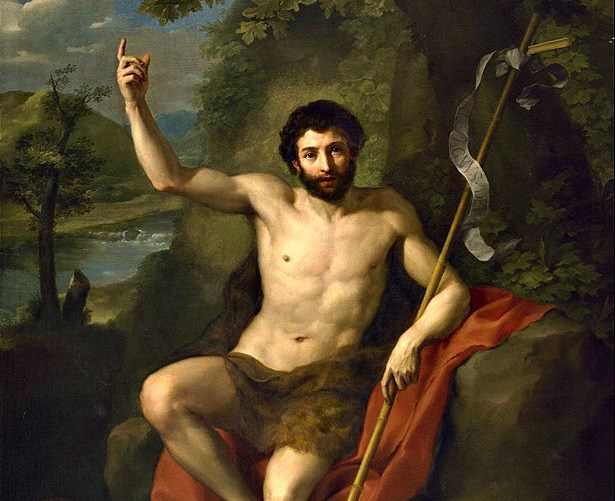
From the red-letter part of Scripture:

“I tell you, among those born of women none is greater than John. Yet the one who is least in the kingdom of God is greater than he.” (Luke 7:28)

Unless Mary was not born of a woman — a whole new meaning to immaculate conception — Jesus’ words would seem to rank John the Baptist higher than the Virgin Mary.

Calvin comments:

Accordingly, Christ extols and places him above the rank of the prophets, and gives the people to understand that he had received a special and more excellent commission. When he elsewhere says respecting himself that he was not a Prophet, (John 1:21,) this is not inconsistent with the designation here bestowed upon him by Christ. He was, no doubt, a Prophet, like others whom God had appointed in his Church to be expounders of the Law, and messengers of his will; but he was more excellent than the Prophets in this respect, that he did not, like them, make known redemption at a distance and obscurely under shadows, but proclaimed that the time of redemption was now manifest and at hand. Such too is the import of Malachi’s prediction, (Malachi 3:1,) which is immediately added, that the pre-eminence of John consisted in his being the herald and forerunner of Christ; for although the ancient Prophets spoke of his kingdom, they were not, like John, placed before his face, to point him out as present. As to the other parts of the passage, the reader may consult what has been said on the first chapter of Luke’s Gospel.

Had Jesus forgotten his mother?

Did He Read Religious Affections Too Many Times?

Tim Challies explains the come-to-Calvinism moment for the young and restless when John Piper spoke:

So why and how has Piper caught the attention of this generation? I think we can sum it up in one word: authenticity. The college students attending those early Passion conferences, they’re a mix. They’re the last of Gen-X and the very first of the Millenials. A generation that, above all, values authenticity. This rising generation wants genuine, authentic faith and they’ve grown weary of preachers who water down their messages in a desperate attempt to be relevant. In Piper, that rising generation has found their authentic preacher. They’ve found someone who really, really believes what he’s saying and who is not going to pander to them in any way at all. And they honor that. They can’t listen to Piper and be unaffected by his passion. From his unglamorous clothes to his sweeping hand gestures to his dramatic facial expressions, to his booming voice. Students know that Piper truly sees the glory of God and just can’t help but declare it. Even if they don’t know what they believe, they sure know what he believes. And it is contagious. His authenticity is the bridge to his theology. Students are first drawn by his authentic passion, then they’re captivated by his view of God. So when Piper takes the stage toward the end of that rainy day at the conference, hundreds of young people have made sure to shuffle back from the porta potties to their seats. They’re now leaning forward expectantly. They’re ready to hear his passion again. But even they could not have expected what happened next.

Has he not ever seen actors play roles authentically? Since when is passion a mark of being genuine? And why would anyone think they know — I mean epistemologically know — what John Piper believes because of his clothes or body movements? As Jesus said in the Sermon on the Mount, men look on the outside of a person but God sees the heart. That implies that only God knows for sure whether John Piper is authentic; for those in his church who hold him accountable and his family, they may have a better read on the sincerity of the pastor. But in a big crowd you think you know the state of the speaker? I bet even Jonathan Edwards would caution against that kind of gullibility.

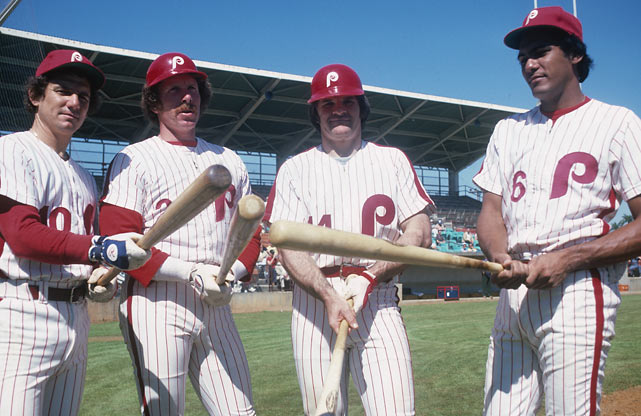
Challies may not know it but he is doing exactly what Philadelphia fans did with Mike Schmidt. The all-star third baseman was not emotional. He was stoical. And the fans thought he didn’t care, that Schmidt was simply going through the motions. When Pete Rose arrived and played in his gung ho way, the fans jumped on the emotional bandwagon. Schmidt was the high strung thoroughbred to Rose’s siss-boom-bah hustle.

And no one knows whether Rose cared about winning more than Schmidt. Not even their hair dressers.

Anabaptist Roman Catholics

Roman Catholic apologists are currently leaving a lot out of their presentation of Christianity. Here’s another where the author seems to imagine a Roman Catholicism that transcends the fall of Rome, the rise of the Holy Roman Empire, and Christendom. Is Roman Catholicism just simple Christians trying to follow Jesus?

Why are self-described “trad” Catholics prone to nostalgia? The typical mistake is to conflate the traditions of the Church with the traditions of the broader society. These are very different things; the Church is an ark afloat on a dangerous sea, which preserves its own internal traditions in part with walls that prevent it from being deluged by secular practices and mores. 1 Peter thus connects Catholic rootlessness and homelessness with a rejection of human political traditions, enjoining Catholics to “live out the time of your exile here in reverent awe, for you know that the price of your ransom from the futile way of life handed down from your ancestors was paid, not in anything perishable like silver or gold, but in precious blood …” Catholicism is not Burkeanism. Because Catholics are exiled in the world, they can ultimately have no attachment to man’s places and traditions, including political traditions. They can have no final affection for the misty English landscape that always stands just behind Scruton’s prose, for Reno’s polite distinction of liberal tradition and liberal creed, for the bipartisan fedora-hatted governance of Douthat’s postwar golden age, or even for Ahmari’s era of the triumph (albeit short-lived) of liberal democratic freedom after 1989.

Ahmari acidly mocks a certain strand of Catholic integralism as “hobbit village” nostalgia. In this Ahmari is partly unfair (the rural village and the integral City are very different ideals) but partly correct. After the collapse of the postwar rapprochement with liberalism, integral Catholicism can only go forward, with the hope of translating the old principles into new settings and institutional forms, creating an altogether new order. But Ahmari, like Douthat, Reno, Scruton and the authors of the Paris Statement, ought to apply that same acid-wash to his own nostalgic views as well.

Roman Catholics in exile with all that stuff in Rome (and all those museums)?

Wow!

Obviously, Tim Has Not Read Meredith

Tim Challies posted a brief for medical missions that could help anyone understand why a health gospel is not far removed from a wealth version:

2. You are able to proclaim the gospel at a time in life when your listeners are keenly aware that there are serious problems they cannot remedy in their own strength, and there are worrisome risks they must accept. They know they need God’s help, and they want it. . . .

4. Medical evangelism affords the opportunity to tell people about Christ in the context of helping them with no expectation of personal gain. It confirms that their well-being is your motivation in telling them the gospel.

5. Medical work gives credibility to the evangelist. It shows that he not only wants to help his listeners, but that he can help them. If the physical problem can be remedied, then what the physician has to say about the spiritual problem should be worth listening to as well.

On the flip side, someone might be prone to exhibit faith in order to win the attention of the physician. And sometimes missionaries may want to be thought of as compassionate or humanitarian. Whatever happened to mixed motives?

1. Patients strive diligently to come to you. You do not have to go to them, apologizing for invading their privacy or encroaching on their time.

3. You can evangelize a large geographical area–while traveling only a few miles from home. At Marrere, people came from all over the province and from an additional four states as well. Those five provinces represented half the nation.

Congregations and church buildings accomplish the same purpose, even if indigenous peoples who come to church may be interested in gaining the attention of the Western Christians and the benefits that follow.

6. Mission hospitals provide conspicuous testimonies before entire communities of the transforming work Christ accomplishes in Christians. In primitive cultures, the kind of medical care Christians provide stands in marked contrast to the carelessness and lack of compassion that often characterizes other care-givers.

Or, medical missions show the advances that come from studying bodies as natural phenomena. You don’t need a witch doctor to get well. You don’t need a Christian physician either. What you need is a good medical practitioner.

Why spiritualize medicine? And why, in the process, make the means of grace, word and sacrament, common or even inferior?

Meredith Kline’s logic in his minority report is still worth pondering for the ecclesiology on which it is based. Here is an excerpt:

It is now further to be observed that ithe church finds itself in conflict with the most important principles of biblical ecclesiology as soon as it adopts the traditional approach to medical missions, the approach recommended in the committee’s report. It would seem evident that a physician commissioned by the church to devote his full time to performing in the name of the church what is alleged to be an ecclesiastical function is thereby appointed as some sort of officer of the church. Which office he is supposed to occupy is somewhat obscure-the convenient title of “missionary” is bestowed on him and that covers a multitude of problems. Yet, his work does not coincide with that of any of the church officers as described in’the standards of government of the Orthodox Presbyterian Church. The committee’s report presents his ministry as one of mercy and presumably then he would be, in terms of the committee’s position, a specialized variety of deacon. . . . However, since there is no biblical evidence of deacons or any others practicing ordinaay medicine as an official ecclesiastical function, what the modern church has actually done is to invent the new office of the ecclesiastical medic.

But leaving aside the question of the medical missionary’s official status, there remains the fact that the function of medicine is, according to the committee’s insistence, a properly ecclesiastical function. Therein the committee would find the justification for its policy of medical missions. But if, operating on such assumptions, the church proceeds to commission physicians to practice medicine as an ecclesiastical function, the question at once arises: By what standards is this work to be performed and governed? The church may not abandon responsibility for the nature of the performance of any ecclesiastical function carried out in the church’s name. . . .

Unless, then, the church has lost the third mark of a true churdh and is prepared to disclaim responsibility for exercising disciplinary supervision over its medical work, it will be obliged to adopt a set of standards by which to judge of the medical qualifications of those whom it would appoint and by which afterwards to govern their labors. Such a code of medical practice is, however, not provided in the Word of God.

Presumably, the church will desire to practice medicine according to the present state of the art (that, indeed, becomes the fourth mark of the true church). It will then probably be the latest medical journals that are elevated to the position of standards of the church alongside the Bible. In any case, the Scriptures will no longer be the sole authority and rule in the government of the church. And, of course, there are not available to the church from any source standards of absolute authority and validity for the practice of medicine like the divine norms available to the church in the canon of Scripture for regulating the functions that are indispensably the church’s proper ministry. Thus, when the church usurps to itself from the sphere of human culture the function of medicine, it involves itself in the relativism, the uncertainties, and the fallacies of expert human opinion and repudiates the character of absolute divine authority that is the glory of its true ministry.

Nor is that the end of the dilemma for the church entangled in the medical profession. Such a church must also be ready to submit to the interference of the state in its own proper ecclesiastical functioning in a way clearly prejudicial to the prerogatives of Christ as Head of the church. For the missionary doctor has no license to operate in independence of the civil regulations governing the practice of medicine nor does he have diplomatic immunity from the sanctions of the civil court by which those regulations are enforced. Consequently, the church that commissions him must acknowledge the right of the state to interfere in its government and ministry so far as to determine who is and who, is not qualified to be appointed by the church to one of its own offices or ministries; to establish the particular procedures that the medical appointee must follow in fulfillment of his ecclesiastical ministry; and, in case of malpractice, to inflict temporal penalties on him for his official ecclesiastical shortcomings and virtually to compel his suspension or deposition.

Surely the church that submits to such state interference has thereby removed itself from under the exclusive lordship of Christ as King (in a special sense) of the church. And the church that insists that the practice of medicine is one of its proper divinely assigned functions has no choice but to submit to that kind of state control and in so doing to become guilty of giving unto Caesar that which belongs unto God. (Minutes of the OPC’s Thirty-First General Assembly, 54-55)

Another reason New Calvinists need a doctrine of the church (but won’t find one at The Gospel Coalition).

What Would a Woke Christian Do (WWWCD)?

Is it just I, or do the times when Jesus ministered seem very different from ours?

5 When Jesus had entered Capernaum, a centurion came to him, asking for help. 6 “Lord,” he said, “my servant lies at home paralyzed, suffering terribly.”

7Jesus said to him, “Shall I come and heal him?”

8 The centurion replied, “Lord, I do not deserve to have you come under my roof. But just say the word, and my servant will be healed. 9 For I myself am a man under authority, with soldiers under me. I tell this one, ‘Go,’ and he goes; and that one, ‘Come,’ and he comes. I say to my servant, ‘Do this,’ and he does it.”

10 When Jesus heard this, he was amazed and said to those following him, “Truly I tell you, I have not found anyone in Israel with such great faith. 11 I say to you that many will come from the east and the west, and will take their places at the feast with Abraham, Isaac and Jacob in the kingdom of heaven. 12 But the subjects of the kingdom will be thrown outside, into the darkness, where there will be weeping and gnashing of teeth.”

13 Then Jesus said to the centurion, “Go! Let it be done just as you believed it would.” And his servant was healed at that moment.

Jesus Heals Many

14 When Jesus came into Peter’s house, he saw Peter’s mother-in-law lying in bed with a fever. 15 He touched her hand and the fever left her, and she got up and began to wait on him. (Matthew 8)

First, we have a centurion with a servant who boasts that he has authority to boss people around. Does that put Jesus off? No. Instead, he marvels at the centurion’s faith.

Would a social justice warrior be so insensitive to the power relationships, the intersectionality, that pervaded Roman society and that assumed a high ranking military official should have servants and bark orders at them?

Or how about Peter’s mother-in-law (leaving aside that the first pope was married)? Yes, it’s a genuine act of kindness for Jesus to heal the woman without being asked. But what’s up with Peter’s mother-in-law feeling the need to wait on Jesus as soon as she recovered? Why not tell Peter, who later had to learn to feed sheep, to feed his Lord?

Or maybe our standards of equality, justice, politeness, and social rank are not the Lord’s.

Shouldn’t Calvinists (even new ones) Understand Clay Feet?

Even if Russell Moore received several tweeted thumbs up for his address at the Gospel Coalition conference on Martin Luther King, Jr., others are raising questions about ERLC head’s commentary on race relations.

For starters, Lorine Spratt, executive assistant to the Pastor of First Baptist Church Bossier City, LA, thinks Moore’s finger on the pulse of Southern Baptist life is numb:

I am a born-again Christian, Conservative, Black attender of a White, Southern Baptist, Evangelical Church in Louisiana. In fact, I not only attend, I also work there and I am very concerned about the narrative that I’m hearing from our ERLC leadership. I am absolutely appalled by the comments made by Dr. Russell Moore concerning racism within the White Evangelical churches.

I, and many other Black congregants, attend a predominately White, Southern Baptist Evangelical Church. We attend there because we are free to do so, we’ve been welcomed, and we’re seen and treated as brothers and sisters in Christ. I truly believe that I could attend any White Evangelical church and be welcomed. However, there are born again Black believers who choose to attend Black evangelical churches and worship within their culture and they are free to do so. We are exercising our freedom to choose. We are not commodities to be bargained with or exploited or used to promote an agenda or boost quotas.

White churches are not advocating racism but Dr. Moore is. He is fueling racial tensions. I view his comments as divisive and antagonistic. His words do not promote unity!

Please, let it be known that Dr. Moore does not speak for me or other Black Christians who believe that great strides and fearless efforts have been made by many throughout the years to abolish racism such as William Wilberforce, Martin Luther King Jr., Billy Graham and many others.

The letter above originally appeared here and the anti-Calvinists in the SBC, truth be told, may relish a chance to catch the New Calvinist, Moore, mangling relations among black and white Southern Baptists.

Then there is the arresting perspective of Bob Gagnon who couldn’t help but notice the way that critics of Trump’s moral failings were noticeably silent about King’s own behavior (in ways that may actually resemble how the “court evangelicals” have overlooked Trump’s character):

Gagnon, a conservative biblical scholar recognized as the foremost traditionalist interpreter on the topic of the Bible and homosexuality, said Russell Moore, head of the SBC Ethics and Religious Liberty Commission and lead organizer of the gathering, failed to address documented evidence that King lived a sexually immoral personal life.

Gagnon called Moore “the same guy, mind you, who has had no trouble accusing the vast majority of his brethren who voted for Trump in order to avoid Clinton (or who supported Roy Moore in order to avoid Doug Jones) of falling prey to ‘moral relativism’ and ‘consequentialism,’ of being an embarrassment to the gospel because they are not standing up for their own Bible values around sexual fidelity in marriage.”

“He said not a word about MLK’s sexual immorality that was arguably the equal of Trump’s,” the scholar said.

Gagnon said speakers at the “MLK50: Gospel Reflections From the Mountaintop” confab also tried to explain away “the fact that by any reasonable standard of what counts for essential Christian faith, King was what evangelicals then and today would view as a heretical Christian.”

“He denied Christ’s incarnation, virgin birth, substitutionary atonement, bodily resurrection, and second coming; in short, a full sweeping denial of orthodox Christian faith,” Gagnon said in an earlier post. “For King, Christ was an excellent moral teacher and human exemplar of trust in God. No more, no less.”

Gagnon said King’s sexual immorality was arguably worse than Trump’s, not only because he was a minister of the gospel but also because he “was willing to risk the fate of the entire civil rights struggle in order to continue his sexually immoral conduct, week after week, right up to what would be his final night on earth.”

Of course, the way out of these dilemmas is to rely not on heroes or celebrities but on Scripture for moral standards. From Thomas Jefferson to Charlie Rose, exemplary humans are fallen and their lives don’t prove one side or the other in any debate. But if you want to signal that you are on the right side of the cultural divide, lining up behind a social or political icon works as long as you forget that you are living in the #metoo era.

How Orthodox Presbyterians became PCA

Another way to supplement Chris Gordon’s post about the demise of confessionalism in the CRC and lessons for the PCA is to consider what happened to the OPC after the failure of union between the CRC and the OPC.

The merger that the OPC and CRC contemplated between 1956 and 1972 never took place but at roughly the same time that those negotiations died, the PCA was born and for the next twenty years became the chief player in ecclesiastical mergers-and-acquisitions. First the PCA acquired in 1982 the Reformed Presbyterian Church, Evangelical Synod (an earlier merger of revival-friendly Covenanters and dissident – read agreeable – Bible Presbyterians of the McIntire variety) and then the PCA almost in 1986 absorbed the OPC (a majority of Orthodox Presbyterians voted in favor but not by the two-thirds majority required for sending the plan to presbyteries for ratification). In the aftermath of that failed plan for Joining & Receiving, congregations in the OPC and PCA had the liberty to re-align if they chose. This was opening for a number of New Life churches (among them the Glenside congregation where Tim Keller learned the ways of New Life Presbyterianism) to join the PCA during the late 1980s.

Again, a piece of OPC history (self-promotion alert) that fills out Gordon’s observations:

In 1988 the effects of the OPC’s change of direction were still visible but not altogether clear. Again the church experienced a growth numerically, rising to 19,422 members but it also lost two more congregations to the PCA, one (New Life) in Philadelphia and one in Southern California. Only in 1989 did the OPC’s statistician start to notice these numerical changes as part of a “step backward.” That year was the peak of membership and congregational loss. The church’s total membership decreased by 3.5 percent to 18,689. [ed. no snickering] Meanwhile, five congregations transferred to the PCA, among them New Life in Escondido, California. This was the same year that the Assembly’s decisions about Bethel church took their toll. A majority of the Wheaton congregation (162 out of 301) left the OPC to form an independent congregation, which eventually affiliated with the Evangelical Presbyterian Church. In 1990 the “step backward” statistically lengthened. The OPC lost another 546 members and three congregations; among them New Life, Glenside, joined the PCA. Only by 1991 did the hemorrhaging stop and membership begin to rise again. In 1992 the OPC added 525 members and total membership increased to 18,767.

The movement of OPC congregations into the PCA was the occasion for a exchange between John M. Frame and Richard B. Gaffin, Jr. in New Horizons on realignment at the same time that statistics were revealing the consequences of congregational transfers. It was a telling exchange because it revealed an important aspect of Orthodox Presbyterianism that after the semi-centennial was beginning to reassert itself within the life of the communion and causing sufficient discomfort for others to look for another denominational home. That characteristic of Orthodox Presbyterianism was the Reformed doctrine of the church in which membership in particular communion was not a supplement to Christian identity but its embodiment. As Gaffin explained in this exchange, the OPC was not merely a denomination; “it is a church, a church that exists by divine warrant.” As such, he added, “Biblical presbyterianism has no place for loyalties torn between the denomination and the local congregation, or for greater loyalty to either one.” In contrast, Frame, who was then an associate pastor of the New Life congregation in Escondido that had realigned with the PCA, explained that the reason for transferring was to partner more effectively with other church planting efforts in southern California. Denominational affiliations for him were at best accidental, at worst sinful. Either way, he hoped that denominational “barriers” would become less important and that Orthodox Presbyterians would understand that transferring to the PCA was not a sign of disloyalty or contempt. The move was simply practical.

Clearly, Frame did not see the switch to the PCA as the serious risk that Gaffin said it was. Gaffin believed such transfers were dangerous because they nurtured a mind set that increased divisions in the church, not along lines of biblical witness, but according to personal preferences or styles of ministry. As such, Gaffin was expressing a doctrine of the church that had deep roots in American Presbyterianism reaching back to Old School Presbyterianism and even to the Old Side Presbyterians of the colonial era. Frame, in contrast, was more typical of a view of the church characteristic of New School and New Side Presbyterians, where the formal work of ministry was supplemental to the religious endeavors of all believers. In other words, whether Frame or Gaffin acknowledged the history of American Presbyterianism in their reflections, they spoke volumes about Orthodox Presbyterianism and how it emerged and developed in relation to its Presbyterian past. Among the many convictions for which the OPC had stood historically, the doctrine of the church as part of biblical teaching and necessary for faithful witness was one of the hallmarks of Orthodox Presbyterianism. During the 1970s and 1980s that ecclesial conviction had begun to wane if only because it was not producing the size and influence that some Orthodox Presbyterians desired. But as the OPC began to take stock of its past, it also recovered one of its most noticeable features. Furthermore, just as that commitment to biblical Presbyterianism had been a source of frustration to Bible Presbyterians in the 1930s, neo-evangelicals in the 1940s, and more generally to Orthodox Presbyterians like Edwin H. Rian who had hoped the OPC would turn out to be a conservative version of culturally established and respectable Presbyterianism, so in the late 1980s as the OPC recovered its doctrine of the church some felt compelled to look for better, friendlier, or less restrictive expressions of American Presbyterianism than the OPC. (Between the Times, 316-18)

In other words, the consequences of Reformed ecumenism from the 1970s and 1980s were having consequences for all of the players — the CRC, OPC, and PCA. Where Presbyterians went, their forms of association, and their understand of the church were factors in the witness they embraced.