When Philadelphia Wins, It’s Not a Theology of Glory

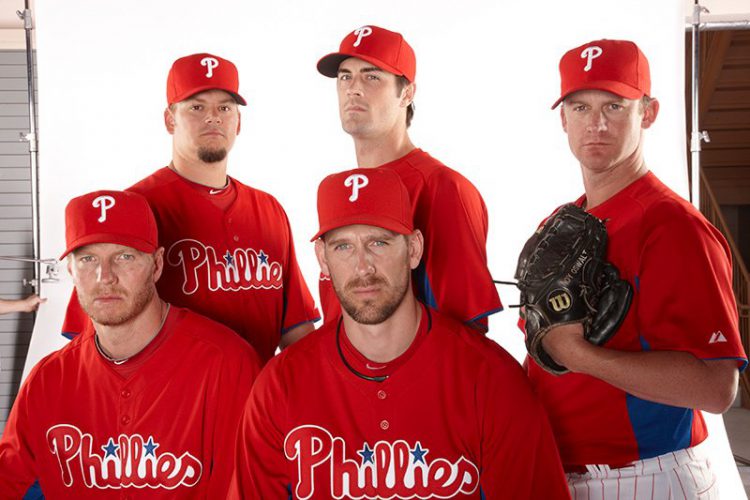
Anyone want to think back to the Phillies’ starting line up in 2008 when they won the World Series? The starting pitchers were be Cole Hamels, Brett Myers, Jamie Moyer, and Joe Blanton. Yes, they won with that rotation. They did not yet have Roy Halladay, Cliff Lee, or Roy Oswalt, everyone’s dream rotation from the 2011 season when the Fightin’s lost to the Cardinals in the first round of playoffs (and have been looking in from the outside ever since).

So now what happens when the Eagles finally break through to championship status in the much hyped Super Bowl era? Did their franchise quarterback, the fittingly praised and highly regarded, Carson Wentz, shepherd them to the promised land? No, it was Nick Foles, the Joe Blanton of NFL quarterbacks. (Mind you, I was pulling hard for Foles if only because he is as dull as his opponents have been relentless in pointing it out.)

This means that Philadelphia general managers should not try to stack their rosters with the best and most gifted. It means they need to roll the dice, say their prayers, hope for good karma. In Philadelphia, talent does not win. Lighting in a bottle — Ben Franklin might be proud — does.

And just to add to this Calvinistically dark take on Philadelphia sports — what if last night was the closest that Carson Wentz comes to a Super Bowl victory? In Philadelphia, going to championship games is hardly automatic. Wentz could have a wonderful career and take the Eagles to the playoffs many years. But winning in the big game could always elude him as it did Donovan McNabb and his coach, Andy Reid.

If that’s the case, then the best quarterback the Eagles will ever have is no. 9, Nick Foles. Wentz may go to the Hall of Fame and McNabb and Randall Cunnhingham may have more impressive careers. But Foles is the guy who won the big game for the Birds.

That is poignant.

Fussy Certainty

The interview with Brad Gregory about his latest book on Martin Luther revealed a fundamental difference between Roman Catholics and magisterial Protestants. Around the twenty-minute mark, Gregory starts to challenge Luther’s quest for certainty of salvation in ways that would make you think the Notre Dame professor had been reading Scott Clark’s, Recovering the Reformed Confession. According to Gregory, Luther was on an illegitimate quest for certainty or freedom from doubt, especially considering all the ways (acts of devotion) the church had for helping Christians along the path of salvation.

But here’s the thing, Luther wanted to know that he could stand before the judgment seat of God as a righteous man. The best Rome could do was get Luther to purgatory. He had no assurance he would go to heaven (this was a time when all Roman Catholics worried about sin and damnation). And so, the idea that a sinner could be righteous through faith, having Christ’s righteousness imputed to them, was not part of some illegitimate quest for certainty. It was what every single person should want who knows God is holy and humans are sinful. Who will stand on that great day? Not how do I get through this life so that I can endure millennia of purging my remaining sin?

Which leaves us with two rival certainties. On the one hand, Roman Catholics have the certainty that comes through trust in the church:

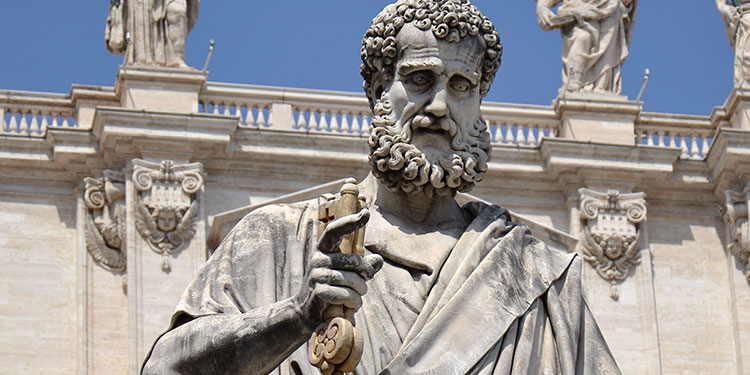
the Catholic Church enjoys some Divine guarantees, but they are not numerous. Christ promised to be with the Church to the end of time, and that the gates of hell would not prevail against her. This means essentially that the Holy Spirit will not permit the Church’s Divine constitution to be lost (such as the disappearance of the Catholic hierarchy), that the fullness of all the means of salvation will always be available in the Church, that the Church’s sacraments will always be powerful sources of grace, that the Church’s Magisterial teachings will be completely free from error, and that the Church will remain the mystical body of Christ under the headship of Our Lord Himself, as represented here on earth by His Vicar, the successor of Peter.

A Roman Catholic knows that the institutional church won’t fail even if he or she doesn’t have assurance about the eternal destiny of their body and soul.

On the other hand, Protestants who affirm justification by faith, have certainty that their sins are and will be forgiven thanks to the work of Christ. Here is how Luther put it in his commentary on Galatians (excerpted here):

This I say, to confute that pernicious doctrine of the sophisters and monks, which taught that no man can certainly know (although his life be never so upright and blameless) whether he be in the favor of God or no. And this sentence, commonly received, was a special principle and article of faith in the whole Papacy, whereby they utterly defaced the doctrine of faith, tormented men’s consciences, banished Christ out of the Church, darkened and denied all the benefits and gifts of the Holy Ghost, abolished the true worship of God, set up idolatry, contempt of God, and blasphemy against God in men’s hearts. For he that doubteth of the will of God towards him, and hath no assurance that he is in grace, cannot believe that he hath remission of sins, that God careth for him, and that he can be saved.

Augustine saith very well and godly, that every man seeth most certainly his own faith, if he have faith. This do they deny. God forbid (say they) that I should assure myself that I am under grace, that I am holy, and that I have the Holy Ghost, yea, although I live godly, and do all works. Ye which are young, and are not infected with this pernicious opinion (whereupon the whole kingdom of the Pope is grounded), take heed and fly from it, as from a most horrible plague. We that are old men have been trained up in this error even from our youth, and have been so nusled therein, that it hath taken deep root in our hearts. Therefore it is to us no less labor to unlearn and forget the same, than to learn and lay hold upon true faith. But we must be assured and out of doubt that we are under grace, that we please God for Christ’s sake, and that we have the Holy Ghost. ‘For if any man have not the spirit of Christ, the same is none of his’ (Romans 8:9).

I don’t know why anyone would choose to lose Luther’s version of certainty to gain Gregory’s confidence in an institution that has not always been so worthy of trust.

Could Billy Graham Stand in Alan Jacobs’ Great Day?

Jacobs is a smart fellow and should have enough sense to beware of crowds. If the group is running one way, to paraphrase Glenn Loury, “head for the other.” Right now, group-think is decidedly against any evangelical who supported or voted for Trump.

I did not vote for Trump nor am I an evangelical. So I am a neutral in all the Trump- and evangelical-bashing.

Jacobs recently attributed Jerry Falwell, Jr.’s folly in coddling up to the current POTUS to the poor education he received from his father, Jerry Falwell I:

Point the first: Jerry Falwell, Jr., though not a pastor and holding no advanced degrees in Bible or theology, graduated from two institutions founded by his pastor father for the express purpose of offering seriously Christian education: Liberty Christian Academy and then Liberty University. (JF Jr.’s college major was Religious Studies.)

Point the second: As is evident from the statements that French discusses in his post, Jerry Falwell, Jr. shows no evidence of having even the most elementary understanding of what the Bible says and what the Christian Gospel is.

The problem, as discerning readers will already have noted, is how to reconcile these two points. How could someone raised as Jerry Falwell, Jr. was raised, educated as he was educated, living as he now lives, say that Jesus “did not forgive the establishment elites”? Could he really not know that Jesus said of those establishment elites who killed him, “Father, forgive them”? And this is not an isolated incident. Quite often in recent months JF Jr. (like a number of other evangelical leaders) has made statements that clearly contradict some of the best-known passages in the Bible.

Notice what happens if you apply these standards to Billy Graham. Did his “decisionism” actually express the gospel faithfully? You don’t need to read white papers from the Orthodox Presbyterian Church to know that the greatest evangelical of all time may have not used the best of methods or theology to reach the unconverted or lukewarm. Just listen to Tim Challies:

Last weekend Billy Graham preached at what may be his final crusade, preaching before up to 82,000 people at a time. A headline at Pastors.com proclaimed the crusade a great success, indicating that some 12,000 people made decisions for Christ. In a previous article I expressed concerns with Graham’s ecumenism and the fact that Roman Catholic counselors would be present at the event and any people who made decisions and indicated they were from a Catholic background would be directed back to their Catholic churches. Today I’d like to examine the idea of the “decision” that weights so heavily at these crusades.

If you were to do a survey of church history, reading books and documents from the first century all the way to the early nineteenth century, you would find no mention of “decisions for Christ.” Similarly one would find no reference to the altar calls which are the culmination of every modern evangelistic crusade. Those elements, which are found in nearly every evangelical church today, were inventions generally attributed to evangelist Charles Finney who lived from 1792 to 1875. He emphasized the need for a decision, usually made by “coming forward” to approach the altar. Becoming a believer became synonymous with making a decision and proving that decision by taking physical action. It is important to note that this system is entirely foreign to the Scriptures.

Bam!!

By the way, Billy Graham’s theological education was not exactly first-rate, but it didn’t prevent him from preaching his entire life. Nor did it raise questions about the institution where Alan Jacobs used to teach — Wheaton College — which in 1943 granted Graham a degree in — wait for it — anthropology.

In addition to Jacobs’ fastidiousness about Falwell’s theology is the professor’s distaste for the Liberty University president’s politics. Just say Donald Trump and you’ve said all you need to.

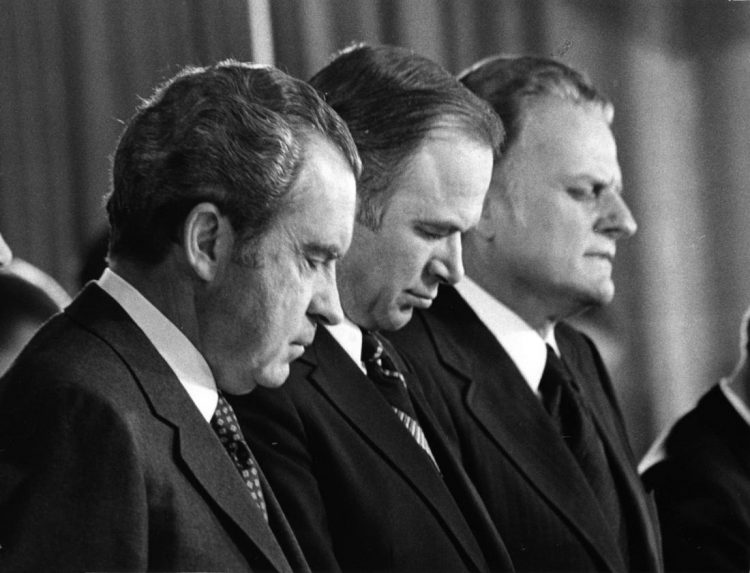
But just how reassuring were Billy Graham’s political ties during his long career? What would Jacobs’ have written about Billy Graham conducting worship services in the Nixon White House? And it went beyond worship:

Rev. Billy Graham, the Montreat-based, world-renowned evangelist, long ago addressed some of his troublesome interactions with President Richard Nixon, but disclosures about their behind-the-scenes connections have kept surfacing.

Now, formerly classified and otherwise hidden parts of the daily diary kept by Nixon’s chief of staff, H.R. Haldeman, have added even more to the record on Nixon and Graham’s tight relationship.

Last week, on the day before Graham celebrated his 96th birthday, the Nixon Presidential Library posted most of the previously unreleased parts of Haldeman’s “candid personal record and reflections on events, issues and people encountered during his service in the Nixon White House,” as the library describes the diary.

The records add a new level of detail on how Nixon and Graham consulted and bolstered each other during contentious times, with dissent over the Vietnam War sweeping the country, the Watergate scandal erupting, and both men sizing up their standing in national debates.

Most of the records came in the form of audio recordings, which can be heard below.

They expand on how Graham advised Nixon to make more effective speeches, clinch his 1972 re-election bid, address the nation’s spiritual woes and conduct matters of war and diplomacy.

“I talked to Billy Graham during the day,” Haldeman, who ultimately became the key conduit between the preacher and the president, noted in one newly released tape from May 8, 1971, the day Nixon made a major address on his decision to expand the war in Southeast Asia.

“And he said to tell the president to get tough, that that’s what people wanted.”

The point here is not to besmirch Billy Graham. If you were an evangelical you had to scratch your head a lot. Instead, the point is to wonder about the bar that critics of evangelicals like Alan Jacobs are now raising for the likes of Jerry Falwell II. Old Life holds no brief for Mr. Falwell’s mix of religion and politics. But some can wonder where the critics were in the days of Billy Graham.

As the Church Lady used to say, “isn’t that convenient.”

When You Ignore the Context

You have lose your outrage over evangelical hypocrisy.

John Fea argues that Damon Linker nails it when the latter writes:

No informed evangelical today seriously hopes for a reversal of same-sex marriage. (Even in the unlikely event that the Supreme Court’s Obergefell decision affirming a right to same-sex marriage were overturned, public opinion would by this point strongly support legalizing the institution through democratic means.) What they do hope for is protection from persecution for their religiously based views of sexual morality. That can be done most effectively by the appointment of judges who are friendly to religious freedom and the reining in of the power of executive branch bureaucracies to apply anti-discrimination law to every corner of American life. The Trump administration has been doing a lot of both. And evangelicals are understandably elated about it.

Those who loathe and fear the religious right should keep all of this in mind when they mock evangelicals for their cynical political maneuvering. The willingness of evangelicals to embrace Trump is a function not of their strength but of their weakness. It may not look that way from the outside, with an increasingly Trumpified Republican Party exercising so much control in Washington and in state houses around the country. Yet evangelicals are right to recognize that people like them have by now long since decisively lost the culture and the political support of the bulk of the American electorate.

The moral majority has shrunk to become a moral minority surrounded by a sea of secularism. For all the talk of the president serving as God’s instrument in the 2016 election, most evangelicals understand very well that he’s an emissary from the wider secular world. But that makes his willingness to serve as their strong man and protector all the more remarkable — and all the more an occasion for gratitude and loyalty.

But Linker’s point is not simply that evangelicals support Trump out of fear and weakness, thus adding to the woe of being hypocrites. His point is that evangelicals the alternative to Trump as even worse:

Like the residents of an urban neighborhood who gladly pay a local mob boss a share of their earnings in return for safety and security, evangelicals have made a transactional calculation. In return for obsequious, gushing, unconditional support, Trump will serve as their protector, surpassing all prior Republican presidents in his willingness to advance a religious right agenda for which he personally feels nothing but indifference.

The character of this arrangement shows just how much the situation for evangelicals has changed since the administration of their previous presidential champion, George W. Bush.

Bush spoke frequently and convincingly about his faith, and he backed it up by advocating for the passage of a constitutional amendment to ban same-sex marriage and working to get anti-same-sex-marriage referendums on the ballots of numerous states in the run-up to the 2004 presidential election. Trump, by contrast, expressed explicit support for LGBTQ rights in his acceptance speech at the 2016 Republican convention.

Meanwhile, in the intervening eight years, a Democratic president and just about every member of his party shifted from opposing gay marriage to supporting it while denouncing the remaining holdouts as bigots. Then, in the blink of an eye, progressives immediately began waging the next battle in the anti-discrimination wars: a defense of the rights of the transgendered, including an insistence that all public discussion and debate of the issue begin by affirming the absolute malleability of gender, a position radically incompatible with historic Christianity’s teachings on sexual morality.

This is the context in which the evangelical embrace of Trump needs to be understood.

John left that out of his post. He also leaves this context out of his apparent loathing for the so-called “court” evangelicals. His categories for evaluating Trump and evangelicals are chiefly moral. He leaves out the context of politics.

Normal for a fundamentalist or evangelical, odd for a historian.

John Fea Has Some ‘Splainin’ to Do

John may think that the 2k growing in Presbyterian gardens is something he has never heard before, but I’m not so sure. This is from an interview John did with Jacques Berlinerblau for the book, Secularism on the Edge:

Fea: I’m a little skeptical about this whole-term secularism catching on within Christian churches, espeically of the evangelical variety. The Christian Right has done such an outstanding job of demonizing this word that any kind of alternative vision of secularism is going to raise red flags. If you want to lead a revitalization of secularism among the evangelical community, you will have a lot of work to do.

When I told some of my friends about this conference they said, “What are you going to a conference on secularism for?” If you read my work at The Way of Improvement Leads Home and elsewhere (or at least my work when I am not writing generally detached history, you will see that I make no bones about my faith. I am an evangelical. I can affirm everything that Barack Obama said at the Easter Prayer breakfast we discussed earlier. I might say that I have some problems with the president using that languate in his official capacity as the president, but the theology and the doctrine about the Resurrection — I believe that.

Berlinerblau: But you don’t shove it down my throat. You don’t want me to believe it — well, maybe you do want me to believe it. Do you?

Fea: Of course, I do, Jacques. My faith as an evangelical requires me to try to win you to Christ. My desire would be to evangelize you and have you become a believer.

Berlinerblau: Me?

Fea: Yes, but I don’t believe that the state or the government should be trying to evangelize you. Rather, I would love the opportunity to talk about my faith with you, perhaps in a series of conversations over coffee. . . . Evangelicals should not see the practice of sharing their faith with others as a political issue. It is something that should be done locally and individually as a manifestation of the church’s work in the world. . .

I think this is how evangelicals can embrace secularism. Evangelicals want to change the world; they want to be — as the Sermon on the Mount teaches — “salt and light.” They want to be a witness for what is good. They do not need politics to practice such a witness. We don’t need to have a Christian nation in order to live faithfully in the world. (pp. 31-32)

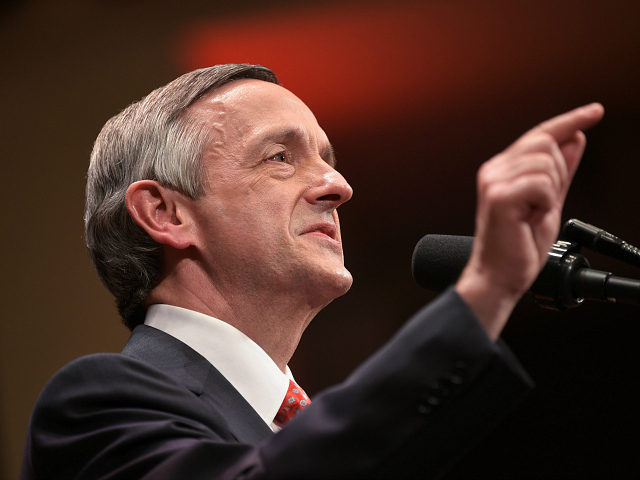
If this is how John looks at church-state, religion-politics relations, then why does he associate 2k with Robert Jeffress’ recent remarks but not see that he himself agrees with the Dallas pastor?

John’s agreement with Jeffress is evident when you consider, first, the way Mike Bergman critiqued Jeffress who compared the Baptist pastor’s views on immigration to those of a pro-choice advocate (a charitable construction – not):

The worldview of those who support abortion is flawed by utilitarianism. The difference between a fetus being something to be cherished or something to be destroyed is its usefulness to the woman carrying the child. Is the child wanted by the woman? Is the child not going to be an excessive burden upon the life of the woman? If the child is unwanted and/or deemed burdensome, then the child can be aborted upon demand.

It is ultimately the attitude: “You add no value to my life, and might even cost me more than I am willing to share, therefore I will not let you into my world.”

Rightly, conservative Christians in our culture have long said, “This is wrong! The child in the womb is valuable because it is a child. She deserves to be born into this world!”

Recently, President Trump referred to certain other countries using a far-from-flattering term when discussing immigration. Many have criticized his message, but some under the banner of “conservative Christianity” have supported it.

Bergman goes on to quote Jeffress:

“What a lot of people miss is, America is not a church where everyone should be welcomed regardless of race and background. I’m glad Trump understands the difference between a church and country. I support his views 100 percent, even though as a pastor I can’t use that language.”

If I understand Jeffress and Fea, both distinguish the U.S.A. from the church of Christ. Both recognize that the state and the church have different standards and tools. Jeffress talks about the difference between church and country, Fea between politics and evangelism.

So why does John conclude he’s never encountered anything like this version of 2k?

What is remarkable is that more Protestants did not see the problem, and that contemporary Protestants who advocate religion in pubilc schools do not understand the way in which their religion is abused when used for only its ethical norms while neglecting the centrality of its redemptive message. One plausible explanation for the disparity is that the believers who desire a common morality for public institutions like schools are actually better republicans than they are Christians. For the impulse behind public school morality stems much more from republican ideology about restraining liberty with virtue than it does from Christian teaching about a religious standard for ethical conduct. In fact, in both the Old and New Testaments, the ethical instructions given to Jews and Christians were for the believing communities themselves, not blueprints for public morality among the Chaldeans, Philistines, Romans or Greeks. To follow either the law of Moses or the teaching of Christ, a person first had to affiliate with the Jews and Christians respectively, by worshiping their God and renouncing all others. That American Protestants thought their exclusive faith could provide the moral standard for a republic conceived in religiously neutrality is one of the more surprising twists in the history of biblical religion. Not only was the misunderstanding of religious liberty in the United States glaring, but the distortion of the Christian religion was enormous. (A Secular Faith, 93)

Those who believe they have a Christian duty to condemn the immorality of the President, assume implicitly that Christian morality is the standard for American public life. And that imports Christian norms into a secular society and government.

John Fea apparently wants to embrace secularism and keep evangelism distinct from politics. When Robert Jeffress tries to apply that distinction to President Trump, John acts like he’s never seen or heard of this kind of separation before.

Why? Has Donald Trump made everyone crazy?

Irish Presbyterians are Exceptional

If you take that word, exceptional, as synonymous with unusual. In other words, the Presbyterian communions in Ireland don’t line up with the mainline vs. conservative brands that we know in the U.S.

Here‘s one piece of evidence. Two former moderators of the Presbyterian Church in Ireland have issued a statement opposed to abortion. If you didn’t know better, you might think the PCI is the mainline equivalent of the PCUSA. The PCI is closer to the mainstream of Irish life than the Evangelical Presbyterian Church, a communion that started with some inspiration from J. Gresham Machen and set up a rival communion to the PCI. But I can’t imagine this ever happening in the PCUSA:

Two former moderators of the Presbyterian Church in Ireland have written to all TDs and Senators expressing grave concern at recommendations that unrestricted abortion be allowed in Ireland up to 12 weeks and for health reasons thereafter.

In their letter, Rev Dr Trevor Morrow and Rev Dr Norman Hamilton have said “our church holds a strongly pro-life position, while recognising that there can be very exceptional circumstances when the termination of pregnancy may be necessary”.

They continued: “However, we are very gravely concerned about the [Oireachtas] Committee’s recommendations to introduce abortion with no restriction as to reason until the 12th week of gestation, and beyond 12 weeks on health grounds.

“Even if the recommendation of abortion on request is excluded, the health proposals on their own will create similar provisions to those in Britain, which have, in practice, brought about abortion on request (we note that one in five pregnancies ends in abortion in Great Britain and that of the 190,406 abortions in England and Wales in 2016, 97 per cent took place on health grounds).”

For some reason, apparently, Irish Presbyterians do not stumble over Orwellian language like “women’s reproductive health.”

Another indication that Irish Presbyterians are exceptional odd comes from this recent announcement:

True Christian Piety

Speaker: D.G. Hart

Subject: “True Christian Piety”

Dates: 2-3 August 2018

Times: 10am-4pm

Venue: Stranmillis Evangelical Presbyterian Church

Darryl Hart teaches at Hillsdale College, USA, and is a well-known writer on historical and ecclesiastical matters. On 2-3 August 2018, he will lead a workshop that will explore major themes in his work, teaching and leading discussions on such themes as the Sunday gatherings, marriage as a means of grace, and sanctified work. Attendees should prepare for the workshop by reading Darryl’s books, “Recovering Mother Kirk,” “The Lost Soul of American Protestantism,” and “Deconstructing Evangelicalism.”

Cost: £40 for both days, including lunch and refreshments.

For some reason, Irish Presbyterians do not consider “Old Life” and “True Christian Piety” oxymoronic.

Thread 1.2

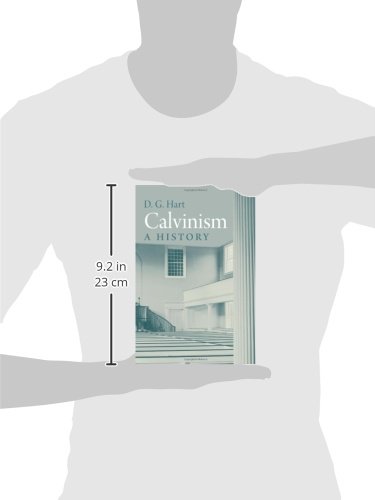
(A series on the history of Calvinism)

Reformed Christianity existed before Calvin became a Protestant and so calling the churches Calvinist to which he belonged is anachronistic. Before Geneva became a home for Protestantism, several cities in the Swiss Confederation, Zurich chief among them, had initiated reform. At the same time, Geneva was a late addition to the Swiss Confederation and always dependent on stronger Swiss cities. This meant that in addition to the struggles Calvin faced in his adopted city, he also encountered resistance and sporadic opposition from the other Reformed churches in Switzerland. His difficult dealings with the other pastors make all the more ironic the later identification of Reformed Protestantism with Calvinism. For instance, in 1554 around the time that Calvin was facing stiff opposition in Geneva from old-time aristocrats who fought the new spiritually inspired regulations of city life, the government of Bern banned Calvin=s writings from the lands under its authority and ordered that they be burned. Burning books was what Roman Catholics were supposed to do with Protestant texts but here was a Reformed city judging Calvin=s teaching beyond the pale. In point of fact, the opposition to Calvin from the Bernese officials had less to do with theology than politics; Geneva was an upstart city that seemed to be acting independently of Bern and so the Bernese wanted to teach the Genevans a lesson. As one biographer argues, this treatment of Calvin=s writings said more about the personalities involved than the intricacies of double predestination or any other contested point of doctrine. Still, the incident is instructive for remembering Calvin=s status among the Reformers and their civic patrons in Switzerland. (p.21)

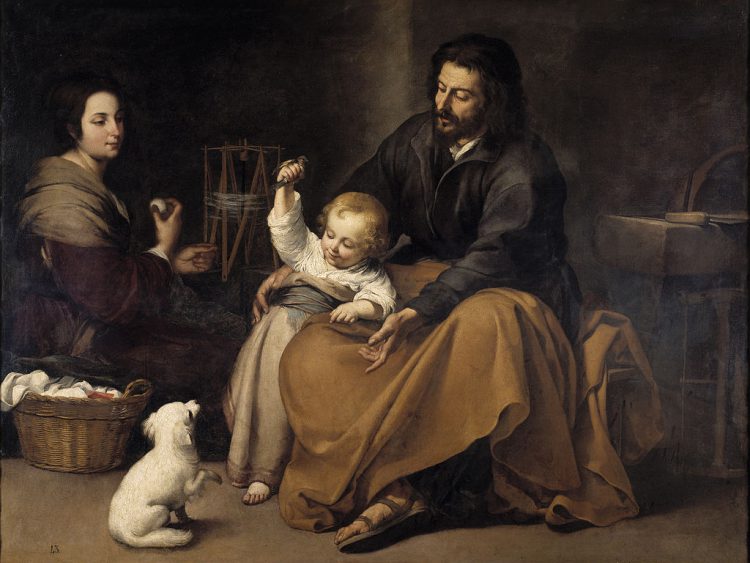
What Did Joseph Know?

A sermon series on Matthew has prompted all sorts of thoughts about the holy family, among them what kind of man Joseph was who would not have sexual relations with his wife (if she really was perpetually a virgin). If Mary was holy, wasn’t Joseph at least remarkable for living celibate even while a married man? (And if sex is not sinful in marriage, and Mary was already sinless, would sex with Joseph have really compromised her righteous standing?)

Here’s the kicker, though. Matthew writes at the end of chapter 1:

24 When Joseph woke from sleep, he did as the angel of the Lord commanded him: he took his wife, 25 but knew her not until she had given birth to a son. And he called his name Jesus.

These verses require modesty. On the one hand, according to John Calvin:

Let us rest satisfied with this, that no just and well-grounded inference can be drawn from these words of the Evangelist, as to what took place after the birth of Christ. He is called first-born; but it is for the sole purpose of informing us that he was born of a virgin. It is said that Joseph knew her not till she had brought forth her first-born son: but this is limited to that very time. What took place afterwards, the historian does not inform us. Such is well known to have been the practice of the inspired writers. Certainly, no man will ever raise a question on this subject, except from curiosity; and no man will obstinately keep up the argument, except from an extreme fondness for disputation.

(Perhaps this post errs on the side of “fondness for disputation.”)

On the other hand, just because the text doesn’t say Joseph did “know” Mary after Jesus’ birth, it doesn’t give grounds for Mary’s perpetual virginity. On Luke 1:34 Calvin writes:

The conjecture which some have drawn from these words [“How shall this be, since I know not a man?”], that she had formed a vow of perpetual virginity, is unfounded and altogether absurd. She would, in that case, have committed treachery by allowing herself to be united to a husband, and would have poured contempt on the holy covenant of marriage; which could not have been done without mockery of God. Although the Papists have exercised barbarous tyranny on this subject, yet they have never proceeded so far as to allow the wife to form a vow of continence at her own pleasure. Besides, it is an idle and unfounded supposition that a monastic life existed among the Jews.

So you take from this immaculate conception and perpetual virginity of Mary? That’s a stretch.

But if you can whack Donald Trump by referring to Joseph as Jesus’ father — even though Matthew goes to great lengths in the genealogy to connect Jesus to the Davidic line through Joseph — then it’s fine for impartial journalists to embrace “orthodoxy.”

What would He Think of Machen?

This is about the reporter who has had many fruitful interactions with Tim Keller:

The late writer Christopher Hitchens had what you might call an intellectual jumper cable routine: he would wake up in the morning, open the New York Times, read its front page motto “All the News Fit to Print,” and allow that hackneyed boast to enrage him into carrying out his polemical duties. Lately I’ve found myself accidentally mimicking Hitchens, but with the Washington Post, which since Trump’s election has been running with the slogan “Democracy Dies in Darkness.” So long as that shamelessly self-aggrandizing, wokeness-overdosed, low-rent Dashboard Confessional refrain-cum-greasy fortune cookie slip remains the ethos of my local paper, it’ll only take one cup of coffee to wake me up, thanks.

This week, though, it’s the Times that’s got my goat, probably because, unlike the Post, I read as much of it as possible every morning (for its excellent foreign coverage, not its masthead). Last week the Gray Lady published a column by op-ed page fixture Nicholas Kristof, the Tom Bergeron of liberal internationalism, titled “Trump’s Threat to Democracy.” Kristof cites two political science academics at Harvard who list four omens as to whether a “political leader is a dangerous authoritarian”: he “shows only a weak commitment to democratic rules,” “denies the legitimacy of opponents,” “tolerates violence,” and “shows some willingness to curb civil liberties or the media.” “Donald Trump,” the profs ruefully announce, “met them all.” And then the clincher: “With the exception of Richard Nixon, no major-party presidential candidate met even one of these four criteria over the last century.”

Come again?

That timespan easily covers Franklin Delano Roosevelt’s presidency, during which the mildly anti-civil liberty policy of rounding up 120,000 Japanese Americans and interning them in camps was implemented. But you don’t even need to go back that far to refute Kristof’s professors: events still in the public memory can provide. The George W. Bush administration instituted a surveillance regime that stretched the Fourth Amendment into cellophane, and then tried to browbeat a hospitalized (and possibly addled) John Ashcroft into granting it his approval; it allowed prisoners to be indefinitely detained and tortured, and even mulled using the military against terrorism suspects on U.S. soil. Barack Obama assassinated American citizens with drones, invoked the Espionage Act to spy on reporter James Rosen, launched a war against Libya’s Moammar Gaddafi without congressional authorization, and set a record for the most Freedom of Information Act requests denied in American history. Bush and Obama didn’t just “show some willingness to curb civil liberties or the media,” to use the academics’ soupy words; they rammed right through them with the brunt power of the federal government.

With friends like these. . .

The Dilemma

On the one hand, Roman Catholicism is nothing without the papacy:

There is nothing more distinctly Catholic than the papacy. While just about every other Catholic belief can be found in at least some other Christian denominations, our beliefs about the papacy are unique. Nobody else believes that the bishop of Rome has jurisdiction over the entire Church or that he can infallibly define dogmas; only we do. As a result, these doctrines are essentially what make us Catholic rather than Protestant or Orthodox, so they are extremely important for us.

In addition to the papacy, you need the magisterium:

There is agreement among all Christians that Holy Scripture is the Word of God. But since this Word is conveyed in human language, it does not have the evidence (quoad se—in itself) that the Protestants want to attribute to it. Rather, there is need for a human interpretation on the part of the teachers of the faith whose authority comes from the Holy Spirit. Toward those who hear the Word of God, these teachers represent God’s own authority, making use of human words and decisions (quoad nos—to us). The task of authoritative teaching and governing cannot be left solely to the individual believer who in his or her conscience comes to accept a certain truth. After all, revelation has been entrusted to the Church as a whole. Therefore, the Magisterium is an essential part of the Church’s mission. Only with the help of the living magisterium of the pope and the bishops can the Word of God be passed on in its integrity to the faithful and to all the people of all times and places.

On the other hand, you endure clericalism:

Clericalism affects the whole church. It has been accepted and even lauded by clergy as if it is an anticipation of the Kingdom yet to come. Its hold on us rests comfortably in the symbolic imagination of Roman Catholicism and the Orthodox churches of the East, at once their charm and their curse. That structure must be radically reviewed and reformed if the faith and hope and healthy life of the church are to be revived. As a Quaker colleague once put it to me: “What American adult wants to belong to a church in which he is treated as a child?” Clericalism infects the other Christian churches to a lesser degree and variously, but the Roman Church has simply collapsed under its weight.

According to some, there is nothing to be done about the crisis because the clergy-lay distinction is a matter of the divine will; in other words, “It’s Tradition, a very, very, very old Tradition!” Or could it be that there is something that can and ought to be done that is so radical and church-embracing, so chilling, that it is beyond clerical contemplation? If indeed clericalism is the problem, then the solution is the elimination of that division between clerical and lay Catholics. I am not opposed to leadership, to authority, to structure, to ministry, even to its three-tiered Roman Catholic articulation, but I am opposed to its sacrality and its sanctification. I suppose I am now advocating anti-clericalism, an instinct almost as old as clericalism itself, a historical protest against what the priesthood has done to the church (and a lot for the church, it must be said) through nearly two millennia. Can we count on the clergy to eliminate clericalism? Or the bishops? Or the pope? Not likely! They may badmouth it on occasion, much to their credit. But undo it? Never.

Protestants did not fix this, but they did localize church government. The downside for Protestants is a lack of unity. The upside is not having to act like the apostles’ successors know how to interpret the Bible better than you (as long as you know Greek and Hebrew).