Why Do Celebrity Pastors Stumble Over “Thus Saith the Lord”?

I am not sure why Eugene Peterson’s flip-flop on gay marriage is such a big deal. But (all about mmmmmeeeeEEE) I’m not in the habit of taking my cues any more from popular Christian authors or personalities. That could be age, temperament (naysayer), or wisdom — and in the right combination separating those traits may be redundant. But I continue to be surprised by what catches on among evangelicals who fret (even if I don’t want to come across as being above it all).

While following some of the reactions, I came across responses from Tim Keller, John Stott, and Sam Allberry. Since Stott is deceased, I should have known that these would not be direct reactions to Peterson. What caught my eye was the link to a review by Keller — can you believe it? There on display is the same affliction that got Peterson into trouble in the first place — namely, failing to minister God’s word and telling us instead about thoughts and reflections based on a lot of stuff you’ve read.

What is especially noteworthy about Keller’s handling of such a controversial subject as homosexuality if he is going to maintain his New York City profile is his ability to quote authors (other than the prophets and apostles).

First some of the debate about homosexuality in church history and antiquity:

These arguments were first asserted in the 1980s by John Boswell and Robin Scroggs. Vines, Wilson and others are essentially repopularizing them. However, they do not seem to be aware that the great preponderance of the best historical scholarship since the 1980s — by the full spectrum of secular, liberal and conservative researchers — has rejected that assertion. Here are two examples.

Bernadette Brooten and William Loader have presented strong evidence that homosexual orientation was known in antiquity. Aristophanes’ speech in Plato’s Symposium, for example, tells a story about how Zeus split the original human beings in half, creating both heterosexual and homosexual humans, each of which were seeking to be reunited to their “lost halves” — heterosexuals seeking the opposite sex and homosexuals the same sex. Whether Aristophanes believed this myth literally is not the point. It was an explanation of a phenomenon the ancients could definitely see — that some people are inherently attracted to the same sex rather than the opposite sex.

For comparisons of homosexuality to slavery Keller can take you to more scholarly literature:

But historians such as Mark Noll (America’s God, 2005 and The Civil War as a Theological Crisis, 2006) have shown the 19th century position some people took that the Bible condoned race-based chattel slavery was highly controversial and never a consensus. Most Protestants in Canada and Britain (and many in the northern U.S. states) condemned it as being wholly against the Scripture. Rodney Stark (For the Glory of God, 2003) points out that the Catholic church also came out early against the African slave trade. David L. Chappell in his history of the Civil Rights Movement (A Stone of Hope, 2003) went further. He proves that even before the Supreme Court decisions of the mid-50s, almost no one was promoting the slender and forced biblical justifications for racial superiority and segregation. Even otherwise racist theologians and ministers could not find a basis for white supremacy in the Bible.

He even uses awareness of 19th century debates about slavery to take a swipe at Southern Presbyterians:

During the Civil War, British Presbyterian biblical scholars told their southern American colleagues who supported slavery that they were reading the Scriptural texts through cultural blinders. They wanted to find evidence for their views in the Bible and voila — they found it. If no Christian reading the Bible — across diverse cultures and times — ever previously discovered support for same-sex relationships in the Bible until today, it is hard not to wonder if many now have new cultural spectacles on, having a strong predisposition to find in these texts evidence for the views they already hold.

What are those cultural spectacles? The reason that homosexual relationships make so much more sense to people today than in previous times is because they have absorbed late modern western culture’s narratives about the human life. Our society presses its members to believe “you have to be yourself,” that sexual desires are crucial to personal identity, that any curbing of strong sexual desires leads to psychological damage, and that individuals should be free to live as they alone see fit.

As if the Bible supported abolitionists or anti-slavery arguments were immune to “modern western culture’s narratives about the human life.” Sometimes Keller wades into scholarly material superficially so that it agrees with him, but I digress. (Funny how when I bring the Bible into the history seminar it doesn’t gain me any credibility.)

Then you have Keller appealing to more academics to critique these modern “narratives”:

These narratives have been well analyzed by scholars such as Robert Bellah and Charles Taylor. They are beliefs about the nature of reality that are not self-evident to most societies and they carry no more empirical proof than any other religious beliefs. They are also filled with inconsistencies and problems. Both Vines and Wilson largely assume these cultural narratives. It is these faith assumptions about identity and freedom that make the straightforward reading of the biblical texts seem so wrong to them. They are the underlying reason for their views, but they are never identified or discussed.

Maybe this is impressive to David Brooks and other columnists and reporters at the Times, but wasn’t Keller called to minister God’s word? Where is Moses, Jesus, or Paul? Nothing wrong inherently with being aware of some of the scholarly and public intellectual literature. But can’t you give us a “thus saith the Lord” pastor Tim?

When he finally gets around to the Bible, Keller accentuates the positive (the way Mr. Rogers did):

The saddest thing for me as a reader was how, in books on the Bible and sex, Vines and Wilson concentrated almost wholly on the biblical negatives, the prohibitions against homosexual practice, instead of giving sustained attention to the high, (yes) glorious Scriptural vision of sexuality. Both authors rightly say that the Bible calls for mutual loving relationships in marriage, but it points to far more than that.

In Genesis 1 you see pairs of different but complementary things made to work together: heaven and earth, sea and land, even God and humanity. It is part of the brilliance of God’s creation that diverse, unlike things are made to unite and create dynamic wholes which generate more and more life and beauty through their relationships. As N.T. Wright points out, the creation and uniting of male and female at the end of Genesis 2 is the climax of all this.

That means that male and female have unique, non-interchangeable glories — they each see and do things that the other cannot. Sex was created by God to be a way to mingle these strengths and glories within a life-long covenant of marriage. Marriage is the most intense (though not the only) place where this reunion of male and female takes place in human life. Male and female reshape, learn from, and work together.

Gee golly williker. Marriage is just one stroll down the trail of delight (or maybe through Homer Simpson’s Land of Chocolate). Where is the grit of NYC? Where is the complicated character of life in the modern world where we have to make tough choices, or recognize the good and less attractive in all people we meet, and the institutions in which moderns operate? Where is the edge that attracts at least some people like Brother Mouzone or Woody Allen to the Big Apple? The view from Keller’s study is awfully pleasant (and crowded with books other than the Bible).

Meanwhile, Russell Moore made a decent point about Peterson when he compared the evangelical celebrity to Wendell Berry’s own flip-flop on gay marriage:

And now Peterson says he’s willing to walk away from what the Scriptures and 2,000 years of unbroken Christian teaching affirm on the conjugal nature of marriage as the one-flesh union of a man and a woman reflecting the mystery of Christ and the church. I can’t un-highlight or un-flag my Peterson books. I can’t erase from my mind all the things he has taught me. Should I stop reading him, since he has shown a completely contrary view on an important issue of biblical interpretation—and, beyond that, of the very definition of what it means to repent of sin?

This is the same sort of conversation had a few years ago among those of us who’ve been taught much by novelist and poet Wendell Berry when he, too, embraced the zeitgeist on marriage and sexuality. Some said we should throw out our Berry books and never read him again. Others, I’m sure, seeing how much they’d benefited from Berry on place and memory, probably decided to follow him right into this viewpoint. Maybe the same will happen with Peterson now.

True enough, but when Moore says we should not throw Peterson’s books away (who am I to adopt such a move since H. L. Mencken sets on my shelf of worthies right next to Machen — alphabetically anyway), I wonder why Mr. Southern Baptist doesn’t distinguish Peterson as a would-be pastor and theologian from Berry who simply is a writer and farmer. Berry makes no pretension to issue “thus saith the Lord’s” based on his reading of Scripture. Peterson, however, operates in the world of Scripture and theology (and all you usually get — my impression — is “the Lord would be really happy if you might ever consider this and you may also flourish forever and ever”).
Talk Radio Matters Now More than Eh-vuh

Rush Limbaugh is a big fat idiot, so says one of the U.S. Senators (has Ben Sasse got a book for him). Rush is also sometimes funny, but mainly annoying, grating, predictable, and verbose. Whenever the missus hears Rush (and she’s a captive audience on road trips), she cannot believe how long he takes to say something basically simple.

Rush also over exegetes the stuffings out of most statements, votes, or policy proposals. If it’s from the left, he will find the tell-tale signs of liberal excess. If from the right, he’ll detect all the virtues of liberty and the American way.

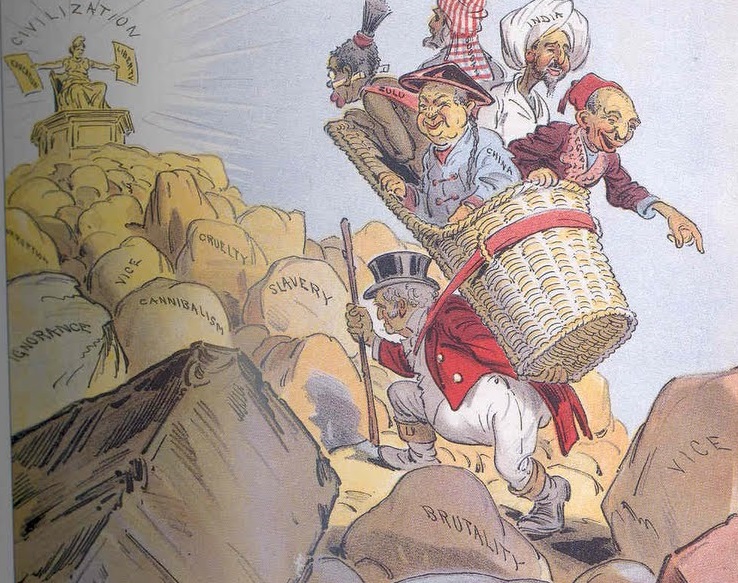
The reason for bringing up Rush is that Donald Trump has turned the non-talk radio media into Rush. The latest example comes from reactions to the President’s speech in Poland where he defended the West and its civilization. The speech and its responses are well in the rear view mirror thanks to Donald Jr., but the hyperventilated reaction from the normally mild and decent James Fallows should not be missed.

Robert Merry picked up on the Nazi slur that Fallows attached to Trump’s use of the word, “will”:

…he truly reveals himself in savaging Trump’s suggestion that the West must muster “the will to survive.” Aha! Fallows clearly thinks he has nailed it here. This, he informs us, was a not-too-subtle reference to Leni Reifenstahl’s famous Nazi propaganda film, Triumph of the Will. Fallows speculates that Trump’s speechwriters (including Bannon) certainly knew of Riefenstahl and probably understood “how it would sound, in a Europe that also remembers connotations of national ‘will,’ to have an American president say this.”

Is it really still necessary, some 80 years later, to forswear any use of the word “will” in discussing politics or geopolitics because of this German film? And, if someone uses the term, is that prima facie evidence of fascistic tendencies?

Fallows not only sneered over “will” but also over Trump’s using “blood”:

Trump gave grace-note nods to goals of liberty and free expression. Mainly, though, he spoke not about an expanded us but instead about us and them. He spoke repeatedly about our “heritage,” our “blood,” our “civilization,” our “ancestors” and “families,” our “will” and “way of life.” Every one of these of course has perfectly noble connotations. But combined and in practice, they amount to the way the Japanese nationalists of the early 20th century onward spoke, about the purity of “we Japanese” and the need to stick together as a tribe. They were the way Mussolini spoke, glorifying the Roman heritage—but again in a tribal sense, to elevate 20th century Italians as a group, rather than in John F. Kennedy’s allusion to a system of rules that could include outsiders as civis romanus as well. They are the way French nationalists supporting Marine LePen speak now, and Nigel Farage’s pro-Brexit forces in the U.K., and “alt-right” activists in the United States, and of course the Breitbart empire under presidential counselor Steve Bannon. They rest on basic distinctions between us and them as peoples—that is, as tribes—rather than as the contending ideas and systems that presidents from our first to our 44th had emphasized.

Blood is code for the European right where bloodlines, acreage, throne, and altar are supposed to matter. (This paragraph with its isolation of quoted words from the context of sentences and paragraphs actually reminded me of the specifications of charges against a minister in the OPC we heard at GA, but I digress.) But here is how the president actually used the word blood (and only 4 times):

In the summer of 1944, the Nazi and Soviet armies were preparing for a terrible and bloody battle right here in Warsaw. . . .

They ran across that street, they ran through that street, they ran under that street — all to defend this city. “The far side was several yards away,” recalled one young Polish woman named Greta. That mortality and that life was so important to her. In fact, she said, “The mortally dangerous sector of the street was soaked in the blood. It was the blood of messengers, liaison girls, and couriers.” . . .

Those heroes remind us that the West was saved with the blood of patriots; that each generation must rise up and play their part in its defense — (applause) — and that every foot of ground, and every last inch of civilization, is worth defending with your life.

So in all, President Trump said “bloody” in reference to a battle, quoted a Polish woman who used “blood” to describe a scene, and spoke of the “blood” shed by soldiers who died in combat. That last reference had no explicit link to white people since Caucasians, Africans, Asians, and Hispanics lost their lives fighting in U.S. Armed forces.

Talk about overreach. Talk about the mainstream press sounding like Rush and Sean.

And oh by the way, what was the point of doing away with Western Civ courses back in the 1980s when Jesse Jackson chanted, “Hey Hey Ho Ho (Don Imus anyone?) Western Civ has got to go”? The rationale was all about blood. The old canon had all white men whose blood had stopped circulating. The curriculum needed new blood — women, blacks, Asians. That’s a lot of genetic material going on in the selection of reading assignments. But don’t let that get in the way of likening Donald Trump to a eugenics promoting nativist.

At least, like H. L. Mencken said, what a show.

Jesuits Make Stuff Up

So you thought the evil Steve Bannon was objectionable for his ties to rad-trad Roman Catholics:

Before becoming White House chief strategist, Bannon — who is Catholic — was the executive chairman of Breitbart News, which he called a “platform for the alt-right.” That’s a movement associated with white nationalism.

During a visit to Rome a few years ago, Bannon struck up a friendship with the American Cardinal Raymond Burke, a traditionalist who has emerged as one of Pope Francis’ most vocal critics.

Bannon hired Thomas Williams, an American former priest, as Breitbart’s Rome correspondent. Williams belonged to the conservative Legion of Christ, which was roiled by scandal when it was revealed its founder had been a pedophile.

Well, silly you. Turns out according to the Argentinian edition (thanks to Rorate Caeli) of La Civiltà Cattolica, “the journal considered the official voice of the Vatican, and its diplomatic department (the Secretariat of State)” — wait, the Vatican is still doing state craft? — that Bannon is really an intellectual descendant of Protestant fundamentalism:

Pastor Rousas John Rushdoony (1916-2001) is the father of so-called “Christian reconstructionism” (or “dominionist theology”) that had a great influence on the theopolitical vision of Christian fundamentalism. This is the doctrine that feeds political organizations and networks such as the Council for National Policy and the thoughts of their exponents such as Steve Bannon, currently chief strategist at the White House and supporter of an apocalyptic geopolitics.

“The first thing we have to do is give a voice to our Churches,” some say. The real meaning of this type of expression is the desire for some influence in the political and parliamentary sphere and in the juridical and educational areas so that public norms can be subjected to religious morals.

Rushdoony’s doctrine maintains a theocratic necessity: submit the state to the Bible with a logic that is no different from the one that inspires Islamic fundamentalism. At heart, the narrative of terror shapes the world-views of jihadists and the new crusaders and is imbibed from wells that are not too far apart. We must not forget that the theopolitics spread by Isis is based on the same cult of an apocalypse that needs to be brought about as soon as possible. So, it is not just accidental that George W. Bush was seen as a “great crusader” by Osama bin Laden.

That’s one way to gain favorable ratings with the editors of the New York Times and Washington Post. But it sure seems a stretch. Is this what has become of the Great Roman Catholic intellectual tradition? Maybe only Pretty Good?

You Can Make This Up

Father Z explains the old and new rules for becoming a saint after the Vatican’s recent expansion of the categories of beatification:

In the Church we have had the ancient teaching and tradition of “red” or bloody martyrdom for the sake of charity whereby the martyr dies giving witness in the face of hatred for Christ, the Church, the Faith or some aspect of the Christian life that is inseparable from our Christian identity. There is also a long tradition of identifying “white” martyrdom, coined by St. Jerome, whereby a person gives witness through an ascetic life, withdrawal from the world, pilgrimages involving great sacrifice, or who suffer greatly for the Faith but who do not die in bearing witness. Coming from another tradition there is a kind of “blue” (or “green”) martyrdom, involving great penance and mortifications without necessarily the sort of withdrawal from life that a hermit or a cenobite might live. Gregory the Great in his Dialogues, writes of different kinds of martyrdom, bloody, public martyrdom in time of persecution and secret martyrdom, not in time of persecution. He wrote that secret martyrs are no less worthy of honor, because they also endured sufferings and the attacks of hidden enemies, but they persevered in charity.

In principle I think that this is a good move… if we are going to stay on the course of so many causes for beatification, that is. Once upon a time, it was an extremely difficult process to investigate a life, gather proofs and organize all the documentation properly, and then study it thoroughly, etc. Now, with the modern means of travel and communication, that process is easier. Many more causes have resulted and, because they in fact corresponded to the criteria established, more causes have been successful. Also, it was the clear desire of John Paul II that there be more examples of Christians “raised to the altar” for our edification and imitation, so as to say, “Yes, it IS possible to be a saint!” I think that results have varied in that project. In a way, it is good to encourage people to aspire to sainthood. However, once the number of beatifications and canonizations multiplied, they seems less “special”.

Whatever happened to faith in Christ (doesn’t look like that Joint Declaration with the Lutherans on justification changed all that much the sufficiency of Christ)?

Meanwhile, for the rest of the church, beatification is not the end but purgatory:

Let’s start by reviewing what the Catechism of the Catholic Church (1030-1032) teaches about Purgatory:

“All who die in God’s grace and friendship, but still imperfectly purified, are indeed assured of their eternal salvation; but after death they undergo purification, so as to achieve the holiness necessary to enter the joy of heaven.”

“The Church gives the name Purgatory to this final purification of the elect, which is entirely different from the punishment of the damned. … The tradition of the Church, by reference to certain texts of Scripture, speaks of a cleansing fire…”

“This teaching is also based on the practice of prayer for the dead, already mentioned in Sacred Scripture…”

“From the beginning the Church has honored the memory of the dead and offered prayers in suffrage for them, above all the Eucharistic sacrifice, so that, thus purified, they may attain the beatific vision of God…”

“The Church also commends almsgiving, indulgences, and works of penance undertaken on behalf of the dead…”

Is the lesson then that a hierarchical church produces a hierarchical plan of salvation? The saints and the rest?

In Protestantism, all believers are saints. Even Paul knew that:

Paul, an apostle of Christ Jesus by the will of God, and Timothy our brother, To the church of God that is at Corinth, with all the saints who are in the whole of Achaia: Grace to you and peace from God our Father and the Lord Jesus Christ. (2 Cor:
1-2)

If You Can Take Passion Out of Sex

Why do you want to keep it in worship?

Garrett Kell explains that sex is not supposed to be all zowie and pizzazz:

God created sex to be a bond between a husband and wife that strengthens over time. Married couples make love on their honeymoon and after a miscarriage. They make love to conceive children and after they bury them. They make love when bodies are healthy and during battles against cancer. As a husband and wife pursue each other through intimate service, sacrifice, and struggle, God blesses them in a way the world can never know. . . .

That doesn’t mean sex is always enjoyable or easy for married couples. Because marriage is the union of an ever-changing and ever-growing pair of fallen people, we can expect that sexual intimacy to have both sweet and sour days and seasons. That is part of God’s wise design.

He has called a man and a woman to be committed to each other and to make love with each other during every season of life. Lovemaking on a honeymoon may be wonderful or awful. Intimate times are shared when buying a new house or burying a parent. It is pursued when God gives conception, and when he withholds it.

So if sex and passion can be ordinary and even sour, why have New Calvinists insisted that worship much be intense, earnest, deeply heart-felt if it is genuine? If married couples have seasons of less and more vibrant sex, Christians may also experience worship that is true and genuine even if all the religious affections aren’t bubbling.

Or maybe it was a mistake in the first place to introduce the language of passion and hedonism into the realm of piety. The Bible invariably uses agrarian imagery to explain the Christian life. Farms and gardens do not produce the intensity or sound of fireworks. Sure, Spring flowers pop (and they last a lot longer than even the best fireworks display). But even the flowers fade. That’s why we need less passion and more routine in worship.

What married couples do in the boudoir is on them (sheesh).

The White Man’s Burden

With all the talk of intersectionality and white privilege, it now turns out that white men themselves can play the victim card. We too are oppressed and marginalized as Pete Enns recently discovered:

White male privilege really is a thing, I never see it from the outside in, and I was never challenged to critique white male privilege as an expression of my faith. Rather, it was allowed to fit far too comfortably with my faith.

Not being an oppressed person puts me at a disadvantage. I rarely need to cry out as the psalmists do about being treated with injustice, prejudice, with violence. I don’t need to worry about being pulled over by uniformed protectors of the public. There are many more places I can go and things I can do because I am part of the dominant culture.

And I don’t worry about my competence or value being questioned because of my gender. I am the default, the norm. I do the judging.

An iteration of the Christian faith that doesn’t see the problem here, really see it, is its own refutation.

But here come some complications when men of privilege grasp for the ring of oppression:

Was the fact that Pete was a victim of white male domination at WTS its own form of oppression? On the scales of social justice this instance of maltreatment (according to some) does not itself rise to the level of what people of color have experienced. But Pete needs to see that white male privilege only goes so far when it collides with other white men with privilege. Ten years ago the Psalms would have made total sense of Pete’s experience.

But that raises a question about using as expressions of lament the prayers of kings, which is much of the OT Psalter. Should a victim of oppression really appeal to a prayer from an officer who according to social justice warriors is inherently oppressive? After all, the left has taught us that the wealthy and powerful are chief among the perpetrators of injustice. So how do you sing the songs of lament of the wealthy and powerful, like kings as opposed to the oppressed people (who haven’t left much of a paper trail)?

One last wrinkle: can a white Christian man really appeal to the text of Hebrews even if that is his academic specialty? Isn’t this a form of cultural appropriation? If Oberlin College students have taught us about authentic tacos in the cafeteria, and if Pete wants to approve the arguments that currently fuel the politics of identity, hasn’t he gone to the wrong place if he turns to the Psalms? Wouldn’t T.S. Eliot be a better fit for a white Christian man if he were — hypothetically of course — to experience oppression?

The gods of social justice are a demanding bunch. Call on them at your peril if your complexion is pink or ruddy.

Even Neo-Calvinists Get 2K Religion Once in a While

In her review of Philip Gorski‘s American Covenant: A History of Civil Religion from the Puritans to the Present, Susan Wise Bauer concludes with a distinction between the earthly and the spiritual that clearly out the arteries (spiritually, of course) of an Old School Presbyterian’s heart:

But I also think the prophets and the New Testament writers would agree with me that giving up earthly power (and make no mistake, language is power) is only possible if you believe that earthly power is not the end of existence, that the death of something worldly, whether that earthly thing is influence, recognition, or even life itself, will lead to a supernatural resurrection brought about by a transcendent reality much greater than yourself.

What in the world does this do to every square inch redemption of all things earthly, created, cultural, and urban? Does Bauer mean to suggest that these things, like the grass, fade? And that only the life resurrected abides?

How did Jamie K.A. Smith let this get through? Is this the Neo-Calvinist of the broken clock?

When Did Philadelphia Turn into San Diego?

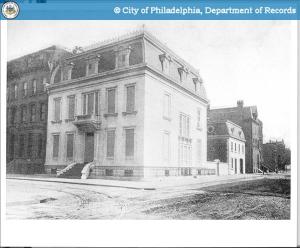
I was in the nation’s original capital yesterday and saw this at 22nd and Walnut:

It replaces this:

Which makes me think this has a point:

Meanwhile, in Philadelphia, a generous tax abatement program—combined with flawed preservation policies—changed the landscape of Center City and its surrounding neighborhoods. During the past decade, the city experienced a demolition bonanza. In neighborhoods of historic housing like Powelton Village, developers “have discovered they can make a tidy sum simply by replacing one of these old houses with a stucco-clad apartment building and then cramming it with students,” observed the Philadelphia Inquirer’s architecture critic, Inga Saffron.

Preservationists have protested how Philadelphia’s demolition permits are approved. In the past year, two historic structures were razed for projects that never materialized. Currently, the preservation fight is focused on Center City’s Jeweler’s Row, a charming set of commercial properties on a block laid out in 1799. The historic storefronts, slated for demolition, would be replaced by a massive condo tower. Ill-advised demolition projects continue throughout Philadelphia, its future depending on an influx, however temporary, of millennials and students.

Why does it take regulative-principle toting confessional Presbyterians, not urban hipster pastors, to notice?

What’s Next, Women Bishops?

The Vatican is apparently pleasantly disposed to the decision of the Reformed Churches (the modernist and always modernizing ones) to sign on to the Lutheran-Roman Catholic Joint Declaration on the Doctrine of Justification:

The Vatican’s Pontifical Council for Promoting Christian Unity has released a note regarding the association of the Reformed Churches to the Joint Declaration on the Doctrine of Justification (JDDJ), calling the occasion an “important milestone”.

The Joint Declaration was signed between the Catholic Church and the Lutheran World Federation in 1999, with the World Methodist Council adopting the document in 2006.

On Wednesday, 5 July 2017 the World Communion of Reformed Churches becomes the fourth party to associate itself to the doctrine on Justification as accepted by Catholics, Lutherans, and Methodists.

“One of the crucial issues of dissent between the Reformers and the authorities of the Catholic Church in the sixteenth century is thus being diffused and overcome, making further growth in spiritual and ecclesial communion between the Protestant and Catholic Churches possible,” the note states.

An ecumenical prayer service held in Wittenberg, Germany by the Communion of Reformed Churches, along with representation by the Vatican and other signatories, marks their association with the Joint Declaration.

The Vatican is represented by Bishop Brian Farrell, Secretary of the Pontifical Council for Promoting Christian Unity, and Fr. Avelino Gonzalez, an official of the Western Section of the same dicastery.

Though a milestone in ecumenical relations and “the full, visible unity of Christians”, the note says the event is “not yet the end of the road but a significant stage on the way.”

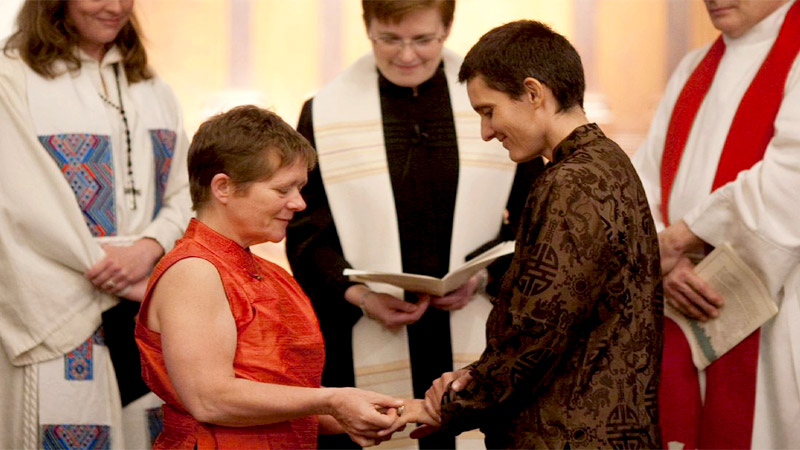
So will the Vatican help modernist Lutherans, Methodists, and Reformed Protestants overcome their errors of ordaining women and celebrating gay marriages? Or are such matters merely ecclesiastical preferences, like using port instead of a red blend?

Whatever the answer, ecumenism only happens when churches become indifferent to doctrine. Of course, doctrine doesn’t change. Churches don’t have to. You just stop enforcing orthodoxy.

Are Bryan and the Jasons really that gullible?

How to Love America

Noah Millman proposes this (while meditating on G. K. Chesterton):

People feel an attachment, and a willingness to fight to protect, their homes, and their communities. That can take noble and ignoble forms — sometimes fighting to defend your community means committing injustice (as, for example, if you band together with your neighbors to prevent someone from a disfavored ethnic group from moving to the neighborhood). But the feeling is rooted in a direct experience, not an abstract attachment.

For any political community larger than a city, though, that attachment necessarily becomes abstract. So you need to teach your children why they should care about that larger community, be proud of it, and treat it as constituent of their identity.

Chesterton famously quipped that the sentiment, “my country, right or wrong” is like the sentiment, “my mother, drunk or sober.” But the thing about the latter is that she is your mother whether she’s drunk or sober — it’s just that your obligations change based on her condition. If she’s drunk, you won’t let her drive — instead, you’ll make sure she gets home safely.

The question, then, is how you teach your children to see their country as, in some sense, like a mother when their relationship is necessarily abstract rather than directly felt. A love of country based on the lie that your mother is never drunk will be too brittle to survive any kind of honest encounter with reality. But it seems to me equally problematic to say that you should love your country because it is on-balance a good one. Does anyone say about their mother that they love them because on-balance they are sober?

While Millman stresses the particular (a people, a place, a way of life — think baseball), Kevin DeYoung goes abstract and is thankful for the “idea” of America:

The United States of America began with the conviction that a nation should be founded upon truth. Not simply values or preferences, but upon truths. Self-evident truths that were true, are true, and will remain true no matter the time, the place, or the culture.

And central among these truths is the belief that all men are created equal. No one possesses more intrinsic worth for being born rich or poor, male or female, artisan or aristocracy. Of course, this truth, as much as any, unmasks our history of hypocrisy, for 3/5 of a person is an eternity from equality. But truth is still true. We all come into the world with the same rights and the same dignity–whether “gated community” in the world’s estimation or “trailer trash.”

These unalienable rights, we must note, are not granted by the Declaration of Independence. Our rights do not depend upon government for their existence. They are not owing to the largesse of the state or the beneficence of any institution. The rights of man are the gifts of God. The Creator endows; the state exists to protect. These unalienable rights can be suppressed or denied. But they cannot be annulled. We possess them–no matter what kings or parliaments say or presidents and congress decree–by virtue of being created in the image of our Creator.

Oh, by the way, if all humans have these rights irrespective of government, then how is that the basis for founding a nation? Didn’t this way of thinking lead in France to Napoleon’s wars to teach Europe liberty good and hard?

The thing is, if you stress ideas you wind up with a creedal nation, one that you tend to treat like a church, with people divided into the camps of orthodox and heretics, saints and pagans. Protestants suffer from this affliction and it shows in the recent anti-liberalism of Peter Leithart and Jake Meador.

Leithart took Matt Tuininga to task for turning Calvin into a liberal. Leithart added an objection to liberalism that fits with the nation-as-idea mentality:

Virtually none of liberalism’s theological critics objects to these forms and procedures as such. Their complaint isn’t against representative government or voting or freedom of speech and association. No one advocates a fusion of Church and state.

Rather, they claim that such a formal, procedural description masks the basic thrust of liberalism. Liberalism’s stated aim is to construct a society without substantive commitments, leaving everyone free to choose whatever his or her or hir own may be. Liberalism’s common good is to protect society from adopting any single vision of the common good. That’s a deviation from classical and traditional Christian politics (including Calvin’s), which sought to orchestrate common life toward a common end—the cultivation of virtue or the glory of God. In fact—and this is the other side of the critique—liberal societies do have substantive commitments. The liberal state pretends to be a referee, but beneath the striped shirt it wears the jersey of the home team. Under the cover of neutrality, liberal order embodies, encourages, and sometimes enforces an anthropology, ecclesiology, and vision of the good society that is often starkly at odds with Christian faith. Tuininga never confronts that line of analysis.

Since the U.S. is a liberal nation, it’s its liberal order becomes its an orthodoxy. But I thought the liberalism of the founders was not to form a society. They already had one — a people, a place, and a way of life. What they wanted was a liberal government, one that would not take sides in religion and other matters. If the U.S began to replace a liberal government with a liberal society, you could blame the centralizing and bureaucratizing effects of a national government that needed to organize the economy, schools, and industry to fight world wars, even cold ones. It really helps when the churches jump on the bandwagon and tell American officials the government is making the nation great.

Jake Meador thinks that the current spate of intolerance that liberals direct toward Christians is a function of liberalism itself:

If the move that western Christians attempt to make in response to all these challenges is to simply rebuild liberalism, then whatever victories we win will be short term. Liberalism is the soil from which the current regime has grown. It’s emphasis on individual autonomy and self-definition and the illegitimacy of unchosen authorities is precisely how we ended up where we are today.

So, two points: First, trying to Make Liberalism Great Again is probably no more realistic than trying to return America to the 1950s. In both cases, the order in question was the unique product of historical circumstances that our own era does not share. Thus any attempt to recreate said order is doomed to fail. Second, we need better language and concepts to make our case to both those within our church communities and those outside the church. Liberalism is not the way forward. It is the way toward further and deeper darkness. If we start thinking about common goods, shared life, and the neighborly arts, then we may be onto something. But all of these things, of course, assume a sort of communitarian sensibility that has always had a hard time reconciling itself to the deeply democratic, egalitarian nature of American Christianity. Therefore, whatever our project ends up being, it figures to be a long-term thing.

Meador should likely include Protestantism as the soil out of which liberal progressivism grew. Protestants were intolerant of Roman Catholics and other outsiders. Remember the threat that parochial schools posed to public ones and the way that American governments insisted no parochial school receive a whiff of public funding (still in the balance in SCOTUS’s recent Trinity Lutheran v. Comer decision). He has a point about “common goods, shared life, and the neighborly arts.” I wish he had included baseball and drip coffee makers. But why these way-of-life matters are at odds with liberalism baffles me.

A truly liberal government, like the one the founders hoped for, was one with a fairly small footprint within the broader American society. Government, in other words, is not society. Communities and people groups have existed within the terms set by the founders for better or worse for the better part of two centuries.

The challenge for the U.S. on this holiday of independence is to figure out how to separate the nation from the government, so that officials do somethings, people and communities do other, and we have a national identity that does not revolve around an idea like liberty and justice for all, and the military campaigns that justify such abstract convictions.

To paraphrase Meador, Americanism or the liberal international order that the U.S. has maintained in its capacity as leader of the free world is not the way forward, at least for building attachments to the nation. We still need less national government, more attachments to people, places, and the ways of life that emerge from them.