Real or Fake Spin

Sarah Pulliam Bailey reports that hipster-urban church planting may be responsible for Donald Trump:

In recent decades, white evangelical leaders made the American city their mission field. If you wanted to change hearts and minds, you had to go to cultural centers of power, such as New York City or Washington, where the population was growing. Now some evangelicals are wondering if that shift has caused them to overlook the needs and concerns of their counterparts in rural America.

Donald Trump’s victory put the spotlight on white, rural voters, many of them evangelicals, who were drawn to his “Make America Great Again” message. Even as exit polls suggested that 80 percent of white evangelicals voted for Trump, some evangelicals in urban and suburban areas said they didn’t personally know other evangelicals who vocally supported the president-elect. Although three-quarters of evangelicals are white and lean heavily Republican, they are a huge and diverse group, accounting for a close to a quarter of all Americans, with Latinos making up the fastest-growing segment.

Trump carried nearly 93 percent of rural, mostly white evangelical counties, according to political scientist Ryan Burge.

So does she interview the guru of The City Company of Pastors, aka Tim Keller? You bet:

Ahead of the election, Keller, who leads Redeemer Presbyterian Church in New York, said that, aside from best-selling author Eric Metaxas, he did not know one evangelical openly supporting Trump.

Keller made his own shift from a rural church to eventually lead one in the country’s largest city and a global church-planting network called City to City.

“Cities have a cool factor, a starry-eyed cool factor,” he said. “Young evangelicals are not motivated to go to places that are not very desirable places to live.”

Keller said young pastors could learn quite a bit by starting at a small-town church in rural America. Pastors at larger churches in big cities tend to specialize in areas such as ministries to women or children, while rural pastors usually do a little bit of everything, he said.

So now Keller has even more credibility because he started as a country pastor? Why are religion reporters so naive?

Why are readers more discerning that religion reporters?

I like Keller, but his thoughts in this are completely self-serving. How is the church failing rural parts of America? Simple: millennials.

No mention that he has spent the better part of a decade saying that we need to focus on cities, that cities are where you change the world, that cities are the fulcrums of culture, that cities are where you find the most people and get the best harvest, that God wants you to love cities, that God is asking, ‘Why aren’t you moving there?’

Does Ms. Bailey think Keller won’t return her calls if she writes a critical story? Surely, a pastor would not be that vindictive. Or perhaps sanctified celebrity carries the same afflictions as unredeemed celebrity.

Thankful for Trump

I rarely see eye-to-eye with Michael Novak, but m(mmmmeeeeEEE)y reaction to the election was similar to his in the sense that I dreaded four more years of progressivism at that center of American life and felt a sense of relief when news came that Hillary Clinton did not win.

But a better expression of my thoughts comes from Damon Linker who recognizes, as few do inside the bubble of progressivism, that the United States includes more than elite institutions and their unofficial establishment:

The urge toward exclusion is a perennial possibility of politics. That’s because politics takes place on two levels. On one level is the back and forth of partisan conflict, involving persuasion, argument, electoral battles, triumphs, and defeats. On this level, pretty much anything goes as long as it abides by the rules of the political game. But there’s also a second, more fundamental level of politics that involves a competition over who gets to set the rules, the boundaries of what is publicly acceptable, in the first place — and precisely where those boundaries will be positioned.

The most obvious example of second-order politics in the American system is the judiciary, and especially the Supreme Court. Until the Obergefell decision in 2015, for example, the American people were engaging in a free-flowing debate about same-sex marriage, with some people in favor of allowing it and others opposed, and public opinion shifting rapidly in the “pro” direction. That was politics conducted on the first level. But then the Supreme Court stepped in to declare gay marriage a constitutional right. That was second-order politics in action: Suddenly the rules were changed, with the “pro” side summarily declared the winner throughout the nation and the “anti” side driven — and permanently excluded — from the political battlefield going forward.

But second-order politics isn’t only found in the formal strictures of a Supreme Court ruling. It comes into play when prominent institutions in civil society (such as mainstream media outlets, universities, corporations, movie studios, and other arms of the entertainment industry) informally unite in deciding that an issue, or a specific position on an issue, is simply unacceptable because it crosses a moral line that leading members of these institutions consider inviolable. Over the past several decades, a range of positions on immigration, crime, gender, and the costs and benefits of some forms of diversity have been relegated to the categories of “racism,” “sexism,” “homophobia,” “white supremacy,” or “white nationalism,” and therefore excluded from first-order political debate.

I’m not going to cry for progressives. They still have elite journalism, Hollywood, the most exclusive colleges and universities, and lots of agencies related directly and indirectly to the federal government. They just don’t have the White House for the next four years. Let’s see Aaron Sorkin make a television show about that.

Why Not Address President Obama?

I’m with Chris Bodenner that Brandon Victor Dixon’s remarks to Vice President-elect Mike Pence after a performance of Hamilton was not all that disrespectful or edgy. Here’s part of the speech:

We have a message for you, sir. We hope that you will hear us out. And I encourage everybody to pull out your phones and tweet and post because this message needs to be spread far and wide, OK?

Vice President-elect Pence, we welcome you and we truly thank you for joining us here at Hamilton: An American Musical, we really do. We, sir, we are the diverse America who are alarmed and anxious that your new administration will not protect us — our planet, our children, our parents — or defend us and uphold our inalienable rights, sir. But we truly hope that this show has inspired you to uphold our American values and to work on behalf of all of us. All of us.

What does President Obama not need to hear in this advice? Should he have been governing in a way to keep BLM protests from happening, opponents of gay marriage from feeling marginalized, and Americans with pre-Affordable Care Act health insurance from having to lose benefits in their existing their plans? Of course, a president has to make choices and not all of the electorate will be happy. But why do the elites in the U.S. — Democrats in D.C., Hollywood, university faculty, and mainstream journalists — think that partisanship in politics only happens when Republicans get elected?

And I wonder what Dixon makes of President Obama acting in a statesmanlike manner in meeting and greeting President-elect Trump? Was the President properly empathizing with those Americans who not only refused to vote for Trump but view his supporters as deplorable?

The Parachurch with the Mind of a Superpower

In 1922 G. K. Chesterton said of the United States it was a “nation with the soul of a church.” He was referring in part to the difficulty he had finding an adult beverage, Prohibition being the law of the land thanks to the support of both modernist and fundamentalist Protestants.

Seldom noticed is that American evangelicals think they are the center of world Christianity. Consider this report on what the recent presidential election says about evangelicalism:

Russell Moore, president of the Ethics and Religious Liberty Commission, of the Southern Baptist Convention, said the campaign reminded him of the Vietnam War in the way it divided families; he’d heard from spouses who couldn’t discuss it, or watch the news together anymore.

Not everyone sees a major split, though.

“There’s always been a minority of evangelicals that are more liberal in their political leanings,” said Liberty University President Jerry Falwell Jr., one of Trump’s earliest and most vocal evangelical supporters, “and it’ll always be that way, but it’s less divided than I’ve seen it in a long time.”

But Moore makes a distinction even among those who voted for Trump: There were “reluctant Trumpers,” who regarded the candidate as the lesser of two evils, believing he was more likely to appoint a Supreme Court justice who was pro-life than his opponent, Hillary Clinton.

Then there were “the people who have actively sought to normalize” Trump as the candidate of choice.

“For me, I think the bigger issue is with the political activist religious right establishment that, in many cases,actually waved away major moral problems,” he said, citing the Access Hollywood tape, in which the now president-elect talked about grabbing women by their genitals and forcibly kissing them.

Moore, who has been a vocal opponent of Trump, said that among those evangelicals who were “Never Trump,” or “reluctant Trump,” reconciliation is already underway. But he said those evangelical leaders who have “repurposed the gospel itself in order to defend a political candidate” reveal a problem bigger than a political election.

Falwell sees the divide in evangelicalism as being between its leaders.

“The evangelical rank and file closed in behind Donald Trump long before most of the leaders did,” he said, because those in the pews were “tired of business as usual” and excited by Trump’s choice of Mike Pence as running mate.

For the Rev. Sammy Rodriguez, president of the National Hispanic Christian Leadership Conference, the schism is between white evangelicals and African-American born-again Christians, and, as a result of the election it “just grew larger.”

The story links to reactions from historians (and other academics) who study evangelicalism and so you would think might be aware of different ways of evaluating born-again Protestantism, such as global Christianity:

History professor John Fea; authors Preston Yancey, D.L. Mayfield, and Skye Jethani; and author and activist Shane Claiborne all have distanced themselves from, if not abandoned, the label. While still identifying as evangelical, former Christianity Today editor Katelyn Beaty wrote she “can’t defend my people. I barely recognize them.”

Earlier this week, Fuller Theological Seminary issued a statement that was nothing short of remarkable for the influential evangelical institution.

“To whatever degree, and in whatever ways, Fuller Theological Seminary has contributed, or currently contributes, to the shame and abuse now associated with the word evangelical,” said the statement, signed by president Mark Labberton and president emeritus Richard Mouw, “we call ourselves, our board of trustees, our faculty, our staff, our students, our alumni, and our friends to repentance and transformation.”

Ever since Philip Jenkins wrote The Next Christendom, global Christianity has become “hot.” Scholars have been amazed at the growth of evangelicalism in Africa, South and Central America, and Asia for starters. Jenkins even argued that by 2050 Christianity in the global North (Europe and North America) would be in the rear view mirror of the churches in the global South.

But when it comes to politics, American evangelicals put the born-again in evangelical Protestantism. What do Canadian, British, Swiss, Nigerian, Australian, Costa Rican evangelicals think about Donald Trump? Did the election divide evangelicals outside the United States? I surely doubt it. But no one really knows because American journalists only follow the cues of American evangelicals.

So why do American evangelicals think that their religious identity hangs in the balance thanks to what happens in the nation’s electoral politics? (The short answer is that U.S. evangelicals, like their mainline predecessors are Christian nationalists and have trouble separating national from religious identity.) Especially when the evangelical academy is supposed to aware of the non-American church among the people of color around the world (and celebrates those Christians when the campaign season is over), all of a sudden the future of evangelicalism depends on white Protestants’ votes in U.S. elections? It’s hard to think of a faith more parochial, nationalist, and introverted.

And yet, somehow the people who voted for Trump are bigoted, intolerant, and mean nationalists.

Evangelicals need to get out more. They need to go to an Orthodox Presbyterian Church General Assembly and hear reports from fraternal delegates who minister in churches in places like Australia, New Zealand, Canada, Asia, Scotland, and Switzerland. If they did, maybe their understanding of the church would be more like the one that prevails in the OPC — a communion that transcends national boundaries but ministers in a low key way (if you aren’t all that impressed with word and sacrament) chiefly in a particular nation. As near as I can reckon, neither SCOTUS’s ruling on gay marriage nor the 2016 presidential election is threatening to divide our little, off the radar, church.

That proves once again the Old Life maxim: the higher your estimate of the nation, the weaker your ecclesiology (or vice versa).

Localism is Great (beats pretty good) as Long as Charles Taylor is Your Neighbor

Joshua Rothman has a thoughtful piece on Charles Taylor and ends on a surprisingly hopeful note considering the recent election and how fly-over country voted:

[Taylor] is in favor of localism and “subsidiarity”—the principle, cited by Alexis de Tocqueville and originating in Catholicism, that problems should be solved by people who are nearby. Perhaps, instead of questing for political meaning on Facebook and YouTube, we could begin finding it in projects located near to us. By that means, we could get a grip on our political selves, and be less inclined toward nihilism on the national scale. (It would help if there were less gerrymandering and money in politics, too.)

One imagines what this sort of rooted, meaningful democracy might look like. A political life centered on local schools, town governments, voluntary associations, and churches; a house in the woods with the television turned off. Inside, family members aren’t glued to their phones. They talk, over dinner, about politics, history, and faith, about national movements and local ones; they feel, all the time, that they’re doing something. It’s a pastoral vision, miles away from the media-driven election we’ve just concluded. But it’s not a fantasy.

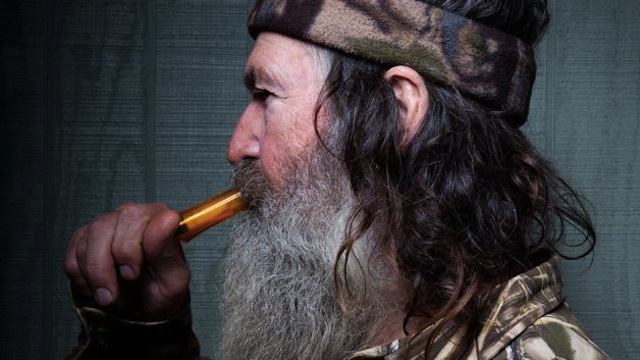
But what about Phil Robertson’s community? Not even the Gospel Allies are willing to countenance those parts of America:

That “cultural curtain” prevents Robertson from seeing the reality of the Jim Crow era, allowing him to look back in wistful fondness. Yet I think there is also a personal element that keeps the former “white trash” farmhand from seeing the segregation of his youth as it truly was.

Robertson makes it clear that he didn’t come to Christ until the late 1970s. During the 1960s he was abusing drugs and alcohol, cheating on his wife, and hiding out in the woods to prevent being arrested by the authorities. His former fellow farmworkers might look on the 1960s as an era when African Americans were gaining access to long-overdue civil rights. But for Robertson, that decade was a time of self-destruction and familial strife. Since then Robertson has turned his life over to God and become, to use his catchphrase, “Happy, happy, happy.” In his mind, godliness is equated with happiness.

That is why I believe that when Robertson looks back on his youth, what he sees is not African Americans suffering under the evil of segregation, but men and women who were godly, and thus obviously had what he has now: a happiness that transcends mortal woes. He seems to think that because they were godly, the exterior signs of happiness (singing, smiling, etc.) can be construed as a sign of their having inner peace, if not peace with the world. It’s a noble, if naïve, idealization of his neighbors.

Does that noble intent excuse his insensitive remarks about the segregated South? Not at all. Robertson is a public figure and when he gives interviews in the media, he must take responsibility for how his words are perceived. While I believe he was attempting to pay tribute to the African-American Christians who preceded him in the faith, he has inadvertently offended many of his African American brothers and sisters.

And so it looks like the Gospel Industrial Complex is a much on the side of President Obama and Hillary Clinton’s one-world order as they are part of an organizational enterprise that disdains denominational attachments (is Tim Keller Presbyterian?). Can anyone imagine an evangelical academic or preaching/teaching celebrity writing what Damon Linker did about universalistic cosmopolitanism and humanitarian liberalism?

any outlook that resists or rejects humanitarianism is an atavistic throwback to less morally pristine times, with the present always superior to the past and the imagined even-more-purely humanitarian future always better still.

Concerned about immigrants disregarding the nation’s borders, defying its laws, and changing its ethnic and linguistic character? Racist!

Worried that the historically Christian and (more recently) secular character of European civilization will be altered for the worse, not to mention that its citizens will be forced to endure increasing numbers of theologically motivated acts of terrorism, if millions of refugees from Muslim regions of the world are permitted to settle in the European Union? Islamophobe!

Fed up with the way EU bureaucracies disregard and override British sovereignty on a range of issues, including migration within the Eurozone? Xenophobe!

As far as humanitarian liberals are concerned, all immigrants should be welcomed (and perhaps given access to government benefits), whether or not they entered the country illegally, no matter what language they speak or ethnicity they belong to, and without regard for their religious or political commitments. All that matters — or should matter — is that they are human. To raise any other consideration is pure bigotry and simply unacceptable.

Earlier forms of liberalism were politically wiser than this — though the wisdom came less from a clearly delineated argument than from observation of human behavior and reading of human history. “Love of one’s own” had been recognized as a potent and permanent motive force in politics all the way back to the beginning of Western civilization, when Homer and Sophocles depicted it and Plato analyzed it. It simply never occurred to liberals prior to the mid-20th century that human beings might one day overcome particularistic forms of solidarity and attachment. They took it entirely for granted that individual rights and civic duties needed to be instantiated in particulars — by this people, in this place, with this distinctive history and these specific norms, habits, and traditions.

But now liberals have undergone a complete reversal, treating something once considered a given as something that must be extricated root and branch.

If people gave up their particular attachments easily, conceding their moral illegitimacy, that might be a sign that the humanitarian ideal is justified — that human history is indeed oriented toward a universalistic goal beyond nations and other forms of local solidarity. But experience tells us something else entirely. The more that forms of political, moral, economic, and legal universalism spread around the globe, the more they inspire a reaction in the name of the opposite ideals. The Western world is living through just such a reaction right now.

That means, of course, that Phil Robertson’s family, neighborhood, and church might harbor expressions that other people find objectionable. But since when did we think that people will always be easy to like and say things that make us feel happy? I guess the answer is — as long as we have been rearing children who go to college and expect to find nothing more challenging to their well being than cookies and milk (aside from the frat parties). Still, I wonder if those kids were accepted at every elite university to which they applied. If they received a rejection letter, did they burn the U.S. flag?

PCA Trumped

Or, how politics matters more than communion:

But a few predicted that this election could permanently damage attempts to create unity among evangelicals. “I spend most of my time in ministry talking and teaching about racial reconciliation,” said Jemar Tisby, the president of the Reformed African American Network, a “theologically traditional” coalition of black Christians and churches, as he described it. “The vast majority of white evangelicals with whom I interact are on board and want to see a more racially diversified and unified church. However, when that same constituency overwhelmingly supports Donald Trump, I feel like they haven’t understood any of my concerns as a racial minority and an African American.”

All the racial reconciliation that last year’s General Assembly allegedly accomplished was thin compared to a PCA minister or member’s status in the world of evangelicalism. Does the PCA now need to repent for its members who voted for Trump? Or can its pastors, theologians, and elders help members understand that belonging to the visible church — the kingdom of Jesus Christ, mind you — is so much more significant than what federal politicians do (or votes for them)?

Now more than ever, the PCA needs a healthy dose of the spirituality of the church. It needs to understand that the politics of this world are trifling compared to the realities of the world to come, and that the freedom a Christian enjoys in Christ has nothing to do with politics (just ask the peasants who used Luther’s gospel to advocate an egalitarian social order). But that doctrine is now in the rear view mirror.

How to Achieve Racial Solidarity — Apply Ben Franklin’s Racism

When Thabiti Anyabwile complains about white evangelicals voting for Donald Trump, he should remember that Ben Franklin defined racial solidarity differently than the Washington DC pastor does. According to Franklin:

The Number of purely white People in the World is proportionably very small. All Africa is black or tawny. Asia chiefly tawny. America (exclusive of the new Comers) wholly so. And in Europe, the Spaniards, Italians, French, Russians and Swedes, are generally of what we call a swarthy Complexion; as are the Germans also, the Saxons only excepted, who with the English, make the principal Body of White People on the Face of the Earth. I could wish their Numbers were increased.

By that reckoning, many people of color voted for Donald Trump on Tuesday. It might undermine Anyabwile’s point (already attempted). But it would be a way of achieving the “white” identification with African-Americans for which the pastor strives.

Make America Sane

I won’t reveal how I voted. Nor can I claim to be happy about yesterday’s outcome (I married a woman who took it hard). But a piece of me thinks that a Donald Trump presidency may make it harder for certain sorts of outlooks or activities to be taken seriously.

The first is the grief counseling offered to students at U Mass Lowell:

Dear Students,

We at the Multicultural Affairs Office hope this email reaches you and you are doing ok. We know many of you stayed up waiting to hear of the election results. These are unprecedented times. The nation as well as our community is reacting in many different ways. We are reaching out to each of you because we know that this was an intense election and we are already hearing a number of reactions, feelings and emotions. This is a critical time to make sure that you, your friends, classmates, neighbors are doing ok and seeking the appropriate support especially if they need a place to process or work through what they’re feeling.

You may hear or notice reactions both immediate and in the coming weeks, some anticipated and many that may be difficult to articulate or be shared. While it may take some time to fully take in all the recent events, please also know that the OMA office is here for you. Our UMass Lowell community is here for you. Do not hesitate at all to come in or ask for support.

Today there is a Post-election self-care session from 12-4pm in Moloney. The event will include cookies, mandalas, stress reduction techniques and mindfulness activities. Counseling and Health Services will also be available. We have sent out messages through our Social Media sites as well as encouraging students to drop in all week. Above all, take good care and know that there is strength in our community that you can lean on.

Kind regards,
Office of Multicultural Affairs Staff

Do these people cower when reading accounts of the American founding for all of the self-actualized agency that colonists displayed in seeking self-determination and limited government? (Read: are they American?)

The second is Damon Linker’s description of the cosmopolitan w-w that has dominated the Obama years (thanks to Rod Dreher):

Underlying liberal denigration of the new nationalism — the tendency of progressives to describe it as nothing but ‘racism, Islamophobia, and xenophobia’ — is the desire to delegitimise any particularistic attachment or form of solidarity, be it national, linguistic, religious, territorial, or ethnic… cosmopolitan liberals presume that all particularistic forms of solidarity must be superseded by a love of humanity in general, and indeed that these particularistic attachments will be superseded by humanitarianism before long, as part of the inevitable unfolding of human progress.

For those of us 2k Protestants who have managed to hyphenate ourselves, and found ways to recognize our multiple loyalties, the notion that all attachments to what Edmund Burke called little platoons block national progress is — well — unwelcoming. It’s also dumb. Were the Students for a Democratic Society wrong to exclude Young Americans for Freedom?

I don’t think President Trump will issue executive orders for colleges students to human-up or for Orthodox Presbyterians to sponsor OPC Pride Parades. But I do sense that he will not lend the support of the White House to the touchier and more ethereal sides of American character.

Day After Perspective

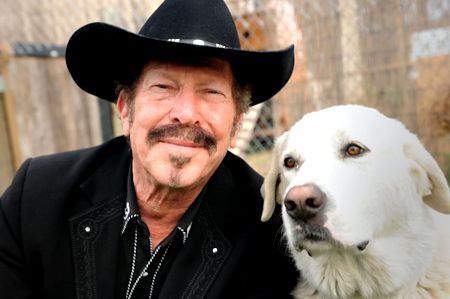
One of our many southern correspondents sent Kinky Friedman’s remarks about the election. Since the Bible tells us that all is vanity, Friedman is sounding 2k (there’s a syllogism in there somewhere):

Trump is not my hero. I prefer Mr. Anonymous. I like the guy who gives a million bucks to the children’s hospital and doesn’t insist that his name has to be up there. But that’s who Trump is, that’s who he’s been. It should be pointed out that we’re not in a position to know where greatness comes from. Not only did Jesus ride in on a jackass, but Gandhi was a yuppie lawyer living in London, with no interest in helping people.

If you look at the great ones, Mother Teresa, Winston Churchill, FDR, they were all aristocratic freaks with very little interest in others. They’re very much like Trump. I mean, particularly Churchill. He was a polo player in India and an adult butterfly collector. They liked to hang out at the country club, Rachel. They were very privileged people.

When they got into office, Churchill and FDR, they did something that Obama was never able to do: change. The agent of change, Obama, could not change himself. He remained a fixed point in a changing world. It’s just too bad; it’s who he is. He’s not the smartest guy in the room. He may be the glibbest. He may be the most facile. I believe, if he’s concerned about a legacy, I believe he can pretty well forget that.

All I’m saying is, we don’t know who the hero is until the ship sinks. Or when the plane is crashing. You don’t know who’s going to run back and save somebody, or who’s going to dress up like a woman so he can hide in a lifeboat.

I’m not moving to Canada yet, but if Michigan wants to secede and join the great North Country, I won’t fight.

Last Minute Election Advice

Since chances for Congress electing POTUS are non-existent (for now), Old Lifers may want to take this counsel to the polls tomorrow:

Here’s the most shocking illustration of the GOP’s Supreme Court problem: in the 19 years between Roe v. Wade and Planned Parenthood v. Casey, Republicans lost only one presidential race. The Court that decided Casey in 1992 included two Bush I appointees (Clarence Thomas and David Souter) and four Reagan appointees (William Rehnquist, Antonin Scalia, Sandra Day O’Connor, and Kennedy), in addition to a Ford appointee (John Paul Stevens) and a Nixon appointee (Harry Blackmun). Only one justice had been appointed by a Democrat, and that was Byron White, who’d dissented from Roe and supported overturning it.

And yet the Court upheld a constitutional right to abortion, though Roe’s seven-vote consensus for such a right was whittled down to five and several restrictions were also upheld. Three of the justices who helped keep Roe alive were consistent liberals during their time on the Court despite having been appointed by Republicans.