In That Church with This Editorial?

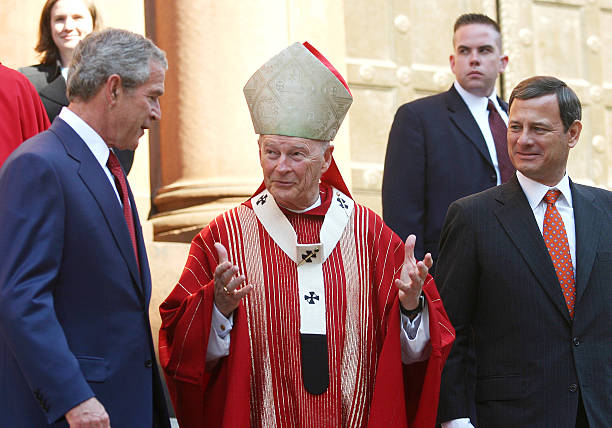
As much as the world of Roman Catholicism remains mysterious, this excerpt from Commonweal seems like a case of changing the subject. At a time when many Roman Catholics are wailing and gnashing their teeth over the latest sex scandal (the case of Theodore McCarrick), the editors at Commonweal decide to keep the attention on President Trump:

The mesmerizing farce of the Trump administration —its scandals, lurid intrigues, and flagrant lies—can easily distract us from the many ways this president and his party are making life harder for vulnerable Americans. While we all attend to the latest antics of President Twitter, his appointees and congressional allies are quietly punching holes in the safety net that protects millions of people from destitution.

One way the GOP is trying to deprive the poor of public assistance is by imposing strict work requirements on the tenants of public housing and recipients of Medicaid. In January, Seema Verma, who runs the federal Centers for Medicare and Medicaid Services, announced that the Trump administration would begin allowing states to require most non-disabled adults to work as a condition of Medicaid coverage. In late June, a few days before the first such work requirement was to take effect in Kentucky, a federal judge blocked it, ruling that the Trump administration had been “arbitrary and capricious” in approving Kentucky’s plan without making sure it was in keeping with Medicaid’s stated purpose of “furnish[ing] medical assistance” to the poor. “The record shows that 95,000 people would lose Medicaid coverage,” the judge wrote, “and yet the secretary [of Health and Human Services] paid no attention to that deprivation.” The judge was right, but he may yet be overruled by a Supreme Court too solicitous of states’ rights and too deferential to executive authority.

Now, it could be truly that the scandal of Trump is much more momentous than the allegations against a cardinal and former archbishop of The District. But if you believe in the world to come and that the church, unlike the United States, is the institution that is best equipped to get people into heaven (or purgatory for the righteousness-challenged), wouldn’t the story of one of the apostles’ successors be a bigger deal than a depraved POTUS’ welfare policy?

Again, I don’t know Commonweal as well as I might, though I have read and used many of its essays and columns about the Roman Catholic Church for my own writing and teaching. It is a readable magazine with thoughtful writers (I could do without E. J. Dionne) on a variety of subjects, from the arts to church life.

The other problem is one of jumping on the bandwagon. With all the kvetching about scandalous priests and lack of accountability for the bishops, do the editors at Commonweal have anything new to say?

At the same time, the allegations surrounding Theodore McGarrick and its implications for Rome’s oversight are so potentially toxic that one would think editors of a Roman Catholic publication would want to put some distance between themselves and their hierarchy.
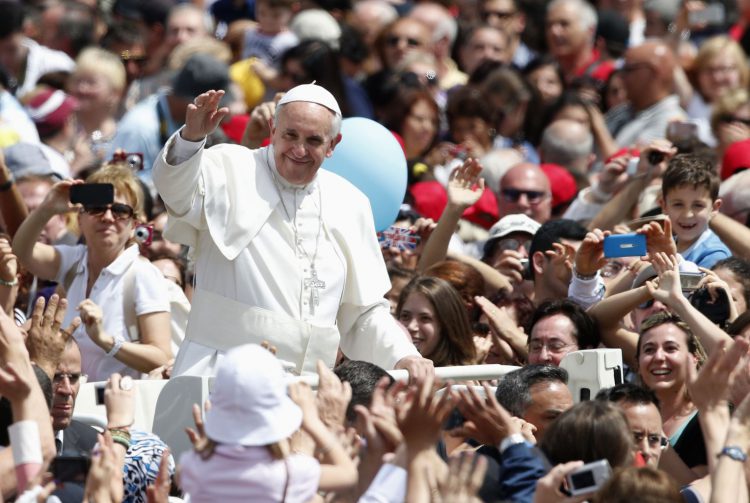
Meanwhile, Bryan and the Jasons got zip, nada, zilch.

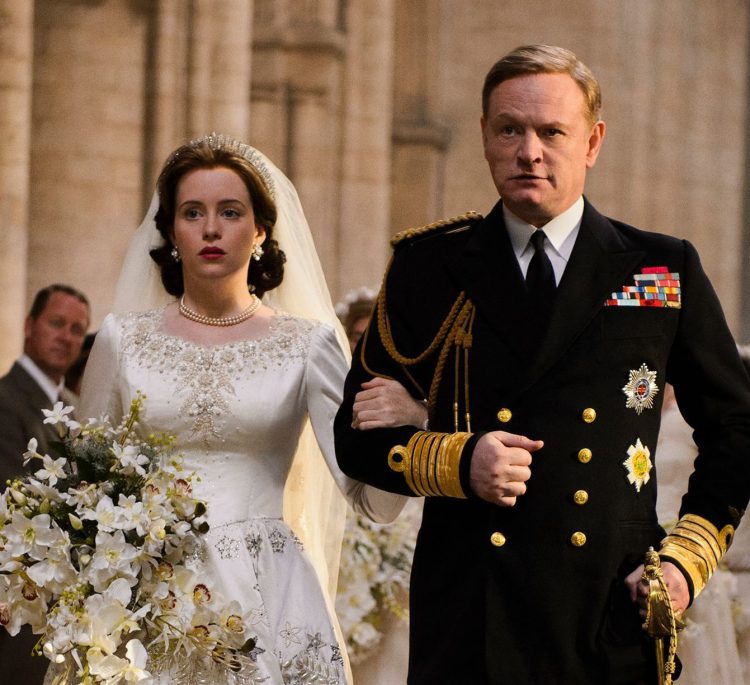
I Understand The Wire, but The Crown?

What should we stream on Netflix or Amazon Prime? Should we do what the Puritans did (even though they didn’t have wifi)?

Here’s one piece of advice on what to watch:

Does this [movie] increase my love to the Word of God, kill my sin, and prepare me for the life to come?

Remember that this world is not our home. The fact that we are forgiven sinners, purchased by Christ and bound for heaven should impact every aspect of our lives.

Additionally, we know from Scripture that we have an adversary who is determined to take Christ’s soldiers out of the fight. What soldier would spend time in activities that weaken his armor?

Be critical of the choices you have when deciding what to watch. Does this movie help you to better appreciate the truths expressed in Scripture, or is it void of redemptive elements? Does this show encourage you to snuff out sin in your life, or does it entice you to see how close you can get to the flame without getting burned? Does this film make you long for God’s kingdom, or does it merely increase your desire for the things of earth?

Okay. I can understand (and always have) why some people won’t watch The Wire. As much as I appreciate the show, I don’t recommend it to all Christians. It’s like meat offered to idols. Some people can’t handle it (and those who can aren’t superior, just different).

But The Crown? Why not watch a series that is highly suggestive about the English monarchy and its responsibilities, recent British history, the nature of British politics and the decline of Britain’s empire, not to mention very revealing about human nature (nor to mention exquisitely accomplished). None of this is particularly edifying or redemptive. The Crown doesn’t make me a better Christian.

But God is not merely a redeemer. He’s also the creator and that means — doesn’t it? — he’s also involved with and oversees the non-redemptive parts of human history. In that case, watching The Wire and The Crown makes me a better human being because they help me understand God’s creation and providence.

If you only take spiritual cues from the Puritans, you’ll have Christian duties figured out (perhaps) but you’ll still need to get a life.

What Rome and Mainline Protestants Have in Common

Fear of being small and on the margins.

The most poignant part of Ross Douthat’s new book on Pope Francis and the crisis over remarriage and divorce is the admission that to be large and influential, Roman Catholicism cannot demand too much from its adherents. Douthat uses several episodes from church history to put the current controversy in perspective and one of those was the seventeenth-century conflict between Jansensists and Jesuits. Jansenism lost not because they laced “theologically decisive argument,” “brilliant” exegesis, or a persuasive interpretation of Augustine’s thought. The problem was that Roman Catholicism would not survive as a global faith on Jansenists’ grounds. Here he quotes Leszek Kolakowski (who wrote a book on the controversy):

In the new world, full of novelty and excitement. . . Christianity had to mae itself, if not “easy,” at least much easier, in order to survive. One could not resurrect as a universal norm the ethos of the apostolic time when the faithful lived in the shadow of imminent apocalypse. But that is precisely what the [Jansenists] tried to do — to their doom.

One way of putting that is to say that to ask Christians to live as if pilgrims and exiles, as if this world is not their home, is too much, even if that’s exactly what Christ and the apostles taught.

Douthat adds that this — the gap between rigor and accommodation — may be why Francis will wind up winning:

…history’s likely verdict on this era in the church would be that Pope Francis had understood, as his critics do not, what the Catholic faith must accept to move forward and continue preaching Christ. Like the Jansenists before them, with their desperate quest for purity in a changing world, the “more orthodox” church of today’s conservatives could only be a sect, not a universal faith, so great is the gap between our own new world and their kind of rigorism. So the faith must change, and in the changing, the conservatives must diminish, and like the Jansenists before them, lose. (To Change the Church, 167, 168)

What this says about why conservative churches are growing is anyone’s guess. And whether its a consoling view for Protestants who operate in micro-communions may be tempting, but pride in smallness is a danger also.

What it does explain is the consolation that many Roman Catholics take from that 1.2 billion number. It is encouraging apparently to belong to something big (like those who follow Tim Keller on Twitter). But size has its cost and one of those debits is faithfulness. The current Vatican and many others in the church want Roman Catholicism but not too much.

I May Come to the Garden Alone, But Stay (in part) Because of Who’s There

Is it okay for conservative Presbyterians to talk about the perseverance of the saints in terms of social psychology? Not exclusively, but at least a little? The idea is that we certainly depend on the work of the Spirit to endure hardships and doubts. But what if the work of the Spirit includes the people around us, in our homes, congregations, friendships, social networks?

Part of what got me thinking about this was an exchange a while ago between Glenn Loury and Steven Teles about the former’s Christian background and how he experienced tensions between the fairly unsophisticated faith of his charismatic congregation and the intellectual cast of his peers at an Ivy League university. This was not simply a question of faith versus reason. It was one of whether Loury knew other academics who were Christian and, by virtue of associations with them, make his own Christian belief plausible. Here’s a link to that conversation.

These thoughts returned after reading Tommie Kidd’s post about Philip Jenkin’s reflections on fertility and religiosity. First Jenkins (via Kidd):

… there is an inverse relationship between the fertility rates of a community and that society’s degree of religious fervor and commitment. High fertility societies, like most of contemporary Africa, tend to be fervent and devout. Conversely, the lower the fertility rate, and the smaller the family size, the greater the tendency to detach from organized or institutional religion. That shift from high to low commonly takes place in a short time, a generation or so. Fertility rates thus supply an effective gauge of trends towards secularization. What follows is a bare sketch, but I will deal with it in much greater detail in a book that I am currently working on–especially on issues of causation and correlation.

The classic example of demographic/religious change is modern Europe. Not coincidentally, the Europe that has become so secular since the 1960s has also, in these same years, pioneered an epochal demographic revolution of historically low fertility rates. Those rates are at their lowest in such countries as Spain and Italy, where they stand today around 1.3 or 1.4, and they have dipped well below that.

(Ahem. What am I missing about Humanae Vitae, Spain, and Italy?)

Then Kidd:

Religious adherence does have a lot to do with kids. In spite of horror stories about how many youth group kids “leave the faith,” people who took a break often come back into church when they get married and start having kids. Anecdotally, I know of parents who readily admit that they only go to church for the sake of their kids. I recently had a conversation with someone who said they would not go to a certain church because of a lack of children and children’s programs. My family would certainly have to re-evaluate our involvement at our current church if we felt like their programming for teenagers was inadequate (thankfully, it is terrific).

I too know of people who became pillars of Reformed congregations after having kids and recovering the faith that they had mainly abandoned during young adulthood.

But the point I am raising goes beyond families and child rearing. It has to do with the people with whom we hang out and how they keep us in the faith. You may have a doubt or two, but because you know other folks for whom these thoughts are not troubling, you may be inclined to go with the flow until you find a resolution. Conversely, without people in your faith tribe who reinforce your beliefs by virtue of their smarts, humor, outlook, sartorial display, or friendship, if you hit a period of doubt, are you more willing to consider unbelief?

Our dependence (if that’s not too strong) on other believers need not be at odds with the work of the Spirit. After all, the Spirit is also behind providence, which are God’s most “holy, wise, and powerful, preserving and governing all his creatures and all their actions.”

So it’s not social psychology or pneumatology. It’s both/and, a win win.

Or maybe not.

Minorities within a Small Segment of a Sliver of the Population

This reflection about the experience of ethnic minorities and the Southern Baptist Convention got me thinking (which is about when then missus leaves the room):

Dave Miller wrote in SBC Voices that although he didn’t comprehend why many minorities reacted so strongly to the announcement of Pence’s invitation, he wanted to be able to comprehend. He wrote, “I know some of you in minority communities are discouraged but things are beginning to change and we need you. I need you. I need to hear what you think and how you think even when it makes me uncomfortable or challenges my normal thinking.”

I am thankful for people like Dave Miller–people in the SBC who genuinely want to understand the experiences and opinions of minorities. It is this open-mindedness that prevents stagnation and fosters growth.

I am a SBC pastor who is an ethnic minority. I am only one voice, so I cannot represent all ethnic minorities in the SBC. However, I thought I would offer my take on the situation in the hope that more people will understand where we come from. Here are a few things to know about ethnic minorities in predominantly white denominations, and how it affects our reaction to what happened at the SBC Annual Meeting.

Does this pastor, Larry Lin, assume that Southern Baptists are in the majority of the U.S. population (or mainstream)? With roughly 16 million church members, the SBC is almost four times the size of Chinese Americans (3.8 million). But even as large as the SBC is, they account for about 4.5 percent of the American population. That puts Southern Baptists well behind either African-Americans or Hispanic-Americans. (Let’s not even do the math for Reformed Protestants in the U.S.)

If pastor Lin’s point is that by virtue of being white, the SBC belongs to the dominant culture, then why aren’t all white people Southern Baptist?

But then, he shifts to politics:

When I am spending time with white ministers within my denomination, people are often taken aback when I mention that I identify with the political left more so than the political right. It is almost as if I am speaking heresy. Evangelical Protestants frequently assume that all theological conservatives are political conservatives, but that assumption is not true. A Pew Research study in 2014 found that while 65% of white evangelical Protestants lean Republican, only 49% of Asian evangelical Protestants, 31% of Latino evangelical Protestants, and 12% of black evangelical Protestants do so. Alternately, while only 21% of white evangelical Protestants lean Democrat, 37% of Asian evangelical Protestants, 41% of Latino evangelical Protestants, and 73% of black evangelical Protestants do so.

I can’t do the math, but at this point pastor Lin has gone from the minority (ethnically within the nation and church) to the majority (within the nation and the church). The reason is that far more people in the United States identify with the Democrats than the SBC has Republicans. If 81 percent of Southern Baptists voted for Donald Trump, that’s almost 13 million, though of course, the figure needs to be calibrated to exclude kids who don’t vote. But since almost 66 million Americans voted for Hillary Clinton, Lin’s political preferences take him from the minority of Southern Baptists to the majority of American voters (or something like that).

Of course, in the United States we side with the underdog (unless we are Yankees’ fans or Roman Catholics). I wonder if pastor Lin can make room in his minority world for white Baptists.

The 355th Reason to Recommend H. L. Mencken

He had a keen sense of pretense, that is, when people were trying to be something more important than they really wore. Mencken was especially astute at detecting pretense in politics. Would World War I make the world safe for democracy or be the war to end wars? Seriously? Would a given federal program or policy eliminate crime or poverty? What kind of gullibility do you need to believe that?

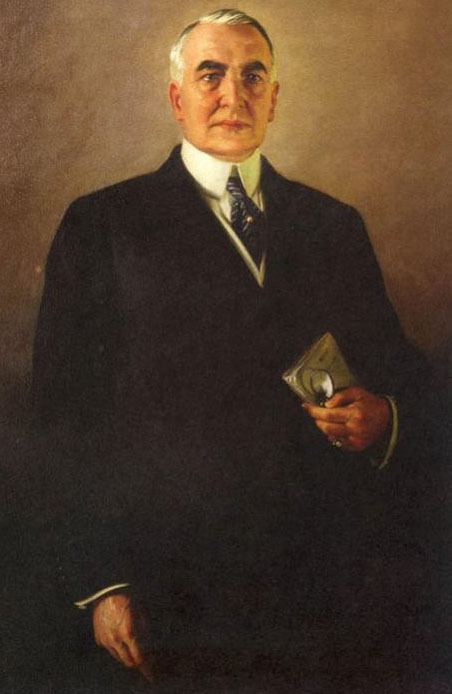
When it came to spotting where inspiration left reason behind in political speeches, Mencken was relentless. Consider his take down of Warren G. Harding:

On the question of the logical content of Dr. Harding’s harangue of last Friday I do not presume to have views. The matter has been debated at great length by the editorial writers of the Republic, all of them experts in logic; moreover, I confess to being prejudiced. When a man arises publicly to argue that the United States entered the late war because of a “concern for preserved civilization,” I can only snicker in a superior way and wonder why he isn’t holding down the chair of history in some American university. When he says that the United States has “never sought territorial aggrandizement through force,” the snicker arises to the virulence of a chuckle, and I turn to the first volume of General Grant’s memoirs. And when, gaining momentum, he gravely informs the boobery that “ours is a constitutional freedom where the popular will is supreme, and minorities are sacredly protected,” then I abandon myself to a mirth that transcends, perhaps, the seemly, and send picture postcards of A. Mitchell Palmer and the Atlanta Penitentiary to all of my enemies who happen to be Socialists.

But when it comes to the style of a great man’s discourse, I can speak with a great deal less prejudice, and maybe with somewhat more competence, for I have earned most of my livelihood for twenty years past by translating the bad English of a multitude of authors into measurably better English. Thus qualified professionally, I rise to pay my small tribute to Dr. Harding. Setting aside a college professor or two and half a dozen dipsomaniacal newspaper reporters, he takes the first place in my Valhalla of literati. That is to say, he writes the worst English I have ever encountered. It reminds me of a string of wet sponges; it reminds me of tattered washing on the line; it reminds me of stale bean-soup, of college yells, of dogs barking idiotically through endless nights. It is so bad that a sort of grandeur creeps into it. It drags itself out of the dark abysm (I was about to write abscess!) of pish, and crawls insanely up the topmost pinnacle of posh. It is rumble and bumble. It is flap and doodle. It is balder and dash.

The Bible tells believers not to put trust in princes. So does Mencken. Christians should appreciate his help.

If You Thought King James’ English Was Tough, What about Thomas Jefferson’s?

This is a few days late, but pairs well with the recent post about a modern English version of the Westminster Standards. H. L. Mencken believed the Declaration of Independence was showing signs of inaccessibility:

The following attempt to translate the Declaration of Independence into American was begun eight or ten years ago, at the time of of my first investigations into the phonology and morphology of the American vulgate. I completed a draft in 1917, but the publication was made impossible by the Espionage act, which forbade any discussion, however academic, of proposed changes to the canon of the American Koran. In 1920 I resumed the work and have since had the benefit of the co-operation of various other philologists, American and European. But the version, as it stands, is mine. That such a translation has long been necessary must be obvious to every student of philology. And this is Better Speech Week.

The great majority of Americans now speak a tongue that differs materially from standard English, and in particular from the standard English of the eighteenth century. Thus the text of the Declaration has become, in large part, unintelligible to multitudes of them. What, for example, would the average soda-fountain clerk, or City Councilmen, or private soldier, or even the average Congressman make of such a sentence as this one: “He has called together legislative bodies at places unusual, uncomfortable and distant from the depository of their public records, for the sole purpose of fatiguing them into compliance with his measures”? Or this one: “He has refused for a long time, after such dissolutions, to cause others to be elected, whereby the legislative powers, incapable of annihilation, have returned to the people at large for their exercise”? Obviously, such sonorous Johnsonese is as dark to the plain American of 1921 as so much Middle English would be, or Holland Dutch. He may catch a few words, but the general drift is beyond him.

With such remoteness in view, between 1776 and 1920 English, Mencken offered the following remedy (only the first two paragraphs):

When things get so balled up that the people of a country have to cut loose from some other country and go it on their own hook, without asking no permission from nobody, excepting maybe God Almighty, then they ought to let everybody know why they done it, so that everybody can see they are on the level, and not trying to put nothing over on nobody.

All we got to say on this proposition is this: First, you and me is as good as anybody and maybe a damn sight better; second, nobody ain’t got no right to take away none of our rights; third, every man has got a right to live, to come and go as he pleases, and to have a good time however he likes, so long as he don’t interfere with nobody else. That any government that don’t give a man these rights ain’t worth a damn; also people ought to choose the kind of government they want themselves, and nobody else ought to have no say in the matter. That whenever any government don’t do this, then the people have got a right to can it and put in one that will take care of their interests. Of course, that don’t mean having a revolution every day, like them South American coons and Bolsheviki, or every time some jobholder does something he ain’t got no business to do. It is better to stand a little graft, etc., than to have revolutions all the time, like them coons, Bolsheviki, etc., and any man that wasn’t a anarchist or one of them I. W. W.s would say the same. But when things gets so bad that a man ain’t hardly got no rights at all no more, but you might almost call him a slave, then everybody ought to get together and throw the grafters out, and put in new ones who won’t carry on so high and steal no much, and then watch them. This is the proposition the people of these Colonies is up against, and they have got tired of it, and won’t stand it no more. The administration of the present King, George III, has been rotten from the jump-off, and when anybody kicked about it he always tried to get away with it by strong-arm work. Here is some of the rough stuff he has pulled…

Break Sure Sounds like Change

It feels like old times with v,dt paying a disdainful visit to Old Life at Twitter. So, here‘s one for those in denial about Vatican II and the changes it accomplished. I’m not sure I’d agree with Massimo Faggioli about the nature of Roman Catholicism (if I were in fellowship with the Bishop of Rome), but he is often a better guide to matters Roman than the cheerleaders and converts:

Some people in Europe and the United States still haven’t accepted that we now live in a world church that represents a historical development beyond medieval Christendom. The state of denial of those who still believe that a return to Christendom is possible is driven by many factors, but one in particular: the return of the myth that the whole category of the secular is a liberal invention, the myth that “once, there was no secular.”

There is, of course, nothing new in populist politicians using religion for their appel à la violence . The major problem is the legitimacy that a new generation of anti-liberal Catholics seems willing to give to this kind of populist rage, with the intention of overcoming current political challenges with a return to the past—as if the failures of liberalism automatically make Christendom possible again. The crude fact is that Christendom failed. What are usually called “liberal Catholicism” and “liberal theology” acknowledge this.

In an important book published in Italy and Germany this year, the young church historian Gianmaria Zamagni recounts the modern history of the debate on the “Constantinian age” of European Catholicism. The critique of the Constantinian model of Christendom begins at least thirty years before Vatican II. In 1932, in the first volume of the Kirchliche Dogmatik, Karl Barth identified Constantine as the reason for the decline of Christianity. In the spring of 1963, as debates about what would become Gaudium et spes were underway, the French Dominican Marie-Dominique Chenu also drew attention to the problems of Constantinianism in a paper titled “The Church and the World.” Nor were Barth and Chenu isolated cases. Friederich Heer, Erik Peterson, Ernesto Buonaiuti, Étienne Gilson, Jacques Maritain, Emmanuel Mounier, and Yves Congar all made similar arguments.

Vatican II’s attitude toward the church’s past was complex and ambivalent. It’s clear from the way the council dealt with the issue of Concordats and bishops’ appointments that there was still a desire to maintain certain features of the old relationship between the church and political power. But Vatican II’s teachings on religious liberty, ecumenism, and non-Christian religions represented a break with key aspects of the theology that had undergirded Christendom. As for ecclesiology, in paragraph 8 of Lumen gentium , Vatican II looked to the way Jesus himself dealt with the issues of freedom and coercion, especially religious coercion: “Just as Christ carried out the work of redemption in poverty and persecution, so the Church is called to follow the same route that it might communicate the fruits of salvation to men…. [the Church] ‘like a stranger in a foreign land, presses forward amid the persecutions of the world and the consolations of God,’ announcing the cross and death of the Lord until He comes.”

Protestants have an easier time around our Constantian history since no European government or Reformed church declared a specific political order to be the Christian ideal. Protestants varied and worked church-state matters out on the ground, whether as established churches (Scotland and Geneva), persecuted minorities (France), or voluntarist communions (United States).

Not so with Roman Catholics. Popes and their advisers since the eleventh century spent a lot of time defining papal supremacy in relation to Europe’s Christian social order, and then after 1789 doubling down on the state’s subordination to the church and condemning all forms of liberalism.

But then Vatican II happened. Roman Catholicism is still trying to figure out what Vatican II means and meant since it presents at least three different papal models from which Roman Catholics may choose: Pius IX (traditionalist), John Paul II (conservative) and Francis (progressive). But as Faggioli insists, Vatican II broke the mold of the papacy’s place in western politics.

And since the old, Pius IX political theology was part of the church’s infallible teaching not just on society but on salvation (a liberal society tolerated errors that led the faithful to mortal sins), Vatican II represents a problem for any Roman Catholic who says this is the church that Jesus founded (and doesn’t have his fingers crossed).

https://www.commonwealmagazine.org/denial-1

If You Can Give Up KJV English in the Bible, Why not the Confession of Faith?

The recent General Assembly of the OPC established a special committee to study the value of producing a modern English version of the Westminster Standards. Here‘s a little window into the OPC’s deliberations from the daily GA report:

As part of the work of the Committee on Christian Education, on motion, the body approved this: “That the Eighty-fifth (2018) General Assembly notify the member churches of NAPARC and other appropriate church bodies with which we have fellowship that it has erected a special committee to propose linguistic updating of the doctrinal standards of the Orthodox Presbyterian Church and include details of the specific mandate, and that it welcomes any input that such churches might desire to give with respect to such proposed linguistic revision.”

Speeches for and against may have depended too much on how deeply commissioners had dug in their heels. For advocates, a modern version would seem to promise a millennium of broad and popular acceptance of Reformed Protestantism. I’m not so sure. For opponents, the arguments sounded a lot like reasons to retain the King James Version. I’m not so sure. If we can welcome modern English versions of the Bible, why not our Standards? One reason is that they come in English, not German, French, or Dutch. Which is to say that CRC and URC Synods have had no trouble updating English versions of the Heidelberg Catechism, for instance, because those communions are not invested in English the way Presbyterians are. If the original is in English, English-speakers tend to think the text is sacrosanct. Same goes for the Bible. If we talked about modern Hebrew versions of the OT, or modern Greek versions of the NT, after scratching their heads (what’s the point?), commissioners would likely object.

A related concern is a teaching device as opposed to a theological standard. If the Confession were like the chemist’s chart of elements, we would likely not want a modern version, better life through chemistry and all. People using the Standards as a benchmark for theological clarity don’t mind requiring users to suffer with the alien words and forms. “Eat your broccoli.” But if you have a chemistry textbook from the 18th century, revising the language for contemporary use in the classroom makes some sense. In which case, the appointed committee may propose a modern language version of the Standards that functions as a teaching device while recommending the old English version for theological exams and the Constitution. I say “may.” I have no direct access to the committee (which hasn’t even met!).

I would recommend to the committee and everyone else, though, a podcast I heard this week. It is an exchange between linguist, John McWhorter and Mark Ward, a Bible software engineer for Logos, on King James English. Ward is also the author of a book on the KJV which goes through fifty examples of how modern readers, even ones who are well educated, don’t understand the Bible (if only because the only way to discern seventeenth-century meanings is by consulting the Oxford English Dictionary, an expensive addition to any family or church library).

The podcast is a bit of a love fest because McWhorter’s arguments for updating Shakespeare convinced Ward to revise his arguments about the KJV. Here‘s part of McWhorter’s argument (beware the Jesuits):

Most educated people are uncomfortable admitting that Shakespeare’s language often feels more medicinal than enlightening. We have been told since childhood that Shakespeare’s words are “elevated” and that our job is to reach up to them, or that his language is “poetic,” or that it takes British actors to get his meaning across.

But none of these rationalizations holds up. Much of Shakespeare goes over our heads because, even though we recognize the words, their meaning often has changed significantly over the past four centuries. . . .

It is true that translated Shakespeare is no longer Shakespeare in the strictest sense. But are we satisfied with Shakespeare’s being genuinely meaningful only to an elite few unless edited to death or carefully excerpted, with most of the rest of us genuflecting in the name of “culture” and keeping our confusion to ourselves? Should we have to pore laboriously over Shakespeare on the page before seeing his work performed?

At the same time, the exchange has the advantage of listening to a sophisticated New Yorker, professor at an Ivy League university, who seems to have no religious preferences, talking respectfully, even warmly, to an avowed evangelical with a terminal degree from Bob Jones University. You almost think you’ve gone back to the 1950s.

The Debt Confessionalists Owe to Modernists

And we never said “thanks.”

Carl Trueman makes an observation that requires qualification:

And that perhaps is the real problem many Christians have with the current anti-Christian culture. It is not that they really object to vile insults, mischaracterizations of opponents, hashtag wielding mobs, and the use of corporate economic power and the politicization of the judiciary as a means to subvert constitutional rights and democratic process. It is that they no longer have the influence over the culture which embodies such things.

I read that and wondered when I or my people ever had cultural influence and power. I know, I am white and that’s supposed to come with privilege. But my fundamentalist parents never taught me how to act at my seat at the culturally privileged table (they went to Bob Jones, don’t you know). They reared me to think I was on the outside looking in. The same goes for my current communion, the OPC. I’m not sure when Orthodox Presbyterians ever had cultural reach or political influence. They certainly had big mouths and might complain about those in control. But they lived out the Benedict Option before it became trendy — that is, they retreated from the mainstream cultural institutions in order to pass on the faith.

What conservatives and confessionalists miss, however, is the benefits we enjoyed from mainline Protestants running things. Until roughly 1970 sectarian Protestants could count on American culture generally to be congenial to their faith and life. Public schools did not directly undermine faith, television might go blue but it was generally tame (think Leave it to Beaver), and institutions like the Boy Scouts, for as bad as their civil religion was, were still wholesome in a civilly righteous way. Expectations for public morality prevailed — illegitimate children, divorce, coarse language, and pornography were bad, respect for authority and participating in the nation’s ways were good. Every culture has to have a code, right?

But then the mainline became #woke about sex, race, gender, and U.S. foreign policy. In a word, it turned skeptical if not hostile to wholesome America and regarded the nation’s virtues as smokescreens for colonialism, imperialism, and bigotry. Once that outlook trickled down to public and private institutions, confessional Protestants had to think twice about whether the surrounding culture would impede what families and churches were trying to pass on to their kids. The point is not that pre-1970s America was actively Christian or genuinely wholesome. But it was a place that did not directly (unless you were a #woke neo-Calvinist) undermine shared expectations about families, sex, marriage, personal responsibility, and respect for authority.

In which case, the problem isn’t losing cultural influence or control, as Trueman has it. It’s a problem that no one seems to want to be a gatekeeper anymore, except when it is convenient.