Alexander Hamilton Meets Abraham Kuyper

From our correspondent in The District comes this revenue enhancer:

It only takes $10 to sponsor a square inch of the Calvin College campus.

Your symbolic sponsorship will help equip the next generation of Calvin students with the knowledge, skills and experiences they need to serve as Christ’s agents of renewal in every square inch of creation.

What if I want to give to Calvin University?

I don’t know, when you turn Kuyperianism into something a fund-raising technique, it feels like you are Canadians playing Major League Baseball.

Maybe This is what b, sd Had in Mind (trigger warning for Keller aficionados)

)And for contributors to Sasse 2020.)

Rod Dreher re-posted parts of an Aaron Renn post about urban/hipster Protestantism.

First, Renn’s categories:

Ben Sasse is a conservative exemplar of what I term “neutral world” Christianity. In my framework, there are three worlds we’ve seen in my lifetime related to the status of Christianity and traditional Christian norms in society.

1 Positive World (Pre-1994). To be seen as a religious person and one who exemplifies traditional Christian norms is a social positive. Christianity is a status enhancer. In some cases failure to embrace those norms hurt you.
2 Neutral World (1994-2014). Christianity is seen as a socially neutral attribute. It no longer had dominant status in society, but to be seen as a religious person is not a knock either. It’s more like a personal affectation or hobby. Traditional norms of behavior retain residual force.
3 Negative World (2014-). In this world, being a Christian is a social negative, especially in high status positions. Christianity in many ways as seen as undermining the social good. Traditional norms are expressly repudiated.

To illustrate the differences, consider these three incidents:

1 Positive World: In 1987 the Miami Herald reported that Sen. Gary Hart had been having an affair, and cavorting with the woman in question on his yacht. He was forced to drop out of the presidential race as a result.
2 Neutral World: In 1998 the Drudge Report broke the story that Bill Clinton had been having an affair with intern Monica Lewinksy, including sex acts in the Oval Office. Bill Clinton was badly damaged by the scandal but survived it as the Democratic Party rallied around him and public decided his private behavior was not relevant to the job.
3 Negative World: In 2016 Donald Trump, a many whose entire persona (sexual antics, excess consumption, boastfulness, etc.) is antithetical to traditional Christianity, is elected president. The Access Hollywood tape, for example, had no effect on voter decisions about him.

Even for those who hate Christianity, the rise of Trump, something only possible in a post-Christian world, should give them pause to consider.

Tim Keller’s ministry is the consummate neutral world Christianity:

The neutral world church is very different in a number of ways. It has traditionally been much more apolitical (though many of its practitioners lean left). It’s also much more heavily urban and global city focused. It tries to avoid highlighting areas where Christianity is in conflict with the world. Instead of being antagonistic towards the culture, it is explicitly positive towards culture. In fact, you could sum up much of the model under the heading “cultural engagement.” They want to meet the culture on its own terms, and reach people as participants in a pluralistic public square. They want to be in the mainstream media, not just Christian media or their own platforms. Many of their ministries have been backed by big money donors. These are many of the people who denounced Trump to no effect during the election. In effect, they represent a version of Christianity taking its cues from the secular elite consensus.

Which means that some political topics are okay, some aren’t:

The average neutral world Christian leader – and that’s a lot of the high profile ones other than the remaining religious righters, ones who have a more dominant role than ever thanks to the internet – talks obsessively about two topics today: refugees (immigrants) and racism. They combine that with angry, militant anti-Trump politics. These are not just expounded as internal to the church (e.g., helping the actual refugee family on your block), but explicitly in a social reform register (changing legacy culture and government policy).

I’m not going to argue that they are wrong are those points. But it’s notable how selective these folks were in picking topics to talk about. They seem to have landed on causes where they are 100% in agreement with the elite secular consensus. . . .

I won’t speculate on their motives, but it’s very clear that neutral world leaders have a lot to lose. Unlike Jerry Falwell, who never had secular cachet and lived in the sticks, these guys enjoy artisanal cheese, microbrews, and pour over coffees in Brooklyn. They’ve had bylines in the New York Times and Washington Post. They get prime speaking gigs at the Q conference and elsewhere. A number of them have big donors to worry about. And if all of a sudden they lost the ability to engage with the culture they explicitly affirmed as valuable, it would a painful blow. For example, to accept Dreher’s Benedict Option argument they’d have to admit that the entire foundation of their current way of doing business no longer works. Not many people are interested in hearing that.

The neutral world Christians – and again that seems to be much of Evangelical leadership today – are in a tough spot when it comes to adjusting to the negative world. The move from positive to neutral world brought an increase in mainstream social status (think Tim Keller vs. Pat Robertson), but the move to a negative world will involve a loss of status. Let’s be honest, that’s not palatable to most. Hence we see a shift hard to the left and into very public synchronization with secular pieties. That’s not everybody in Evangelical leadership, but it’s a lot of them. Many of those who haven’t are older and long time political conservatives without a next generation of followers who think like them. (Political conservatism is also dying, incidentally).

And lo and behold, The Gospel Coalition is smack dab in Neutral World Christianity:

I was speaking with one pastor who is a national council member of the Gospel Coalition. He’s a classic neutral worlder who strongly disapproves of Trump. But he notes that the Millennials in his congregation are in effect Biblically illiterate and have a definition of God’s justice that is taken from secular leftist politics. They did not, for example, see anything at all problematic about Hillary Clinton and her views. A generation or so from now when these people are the leaders, they won’t be people keeping unpopular positions to themselves. They won’t have any unpopular positions to hide. They will be completely assimilated to the world. Only their ethics will no longer be Hillary’s, but the new fashion du jour.

Renn’s recommendation is not necessarily the Benedict Option but the Fighting-the-Good-Fight Option:

The template is Paul, who was one tough hombre. Paul was a Jewish blueblood on the fast track to high council membership who threw it all way to endure beatings, imprisonment, etc. (One of the underappreciated virtues of Paul is just how physically and mentally tough that guy was). He said he counted it all as loss for the surpassing worth of knowing Christ. He also someone who could say, “I have not shunned to declare unto you the whole counsel of God.”

Even the author of the Benedict Option, Dreher, sees merit in Paul as the model for ministry:

Paul did not focus his struggle on the world, but within the church itself. Aside from seeking converts, he doesn’t advise his followers to engage the culture, get politically active, or anything like that. Nor did he instruct his followers to run away from the world. Rather, he focused on building up the church in holiness, and exhorting believers in the new faith to overcome the world in themselves.

That seems a lot like the confessional Reformed Protestant model. It’s very personal, familial, congregational, and local, perhaps even too local for the advocates of localism.

Transforming New York City Was Always Going to be a Slog

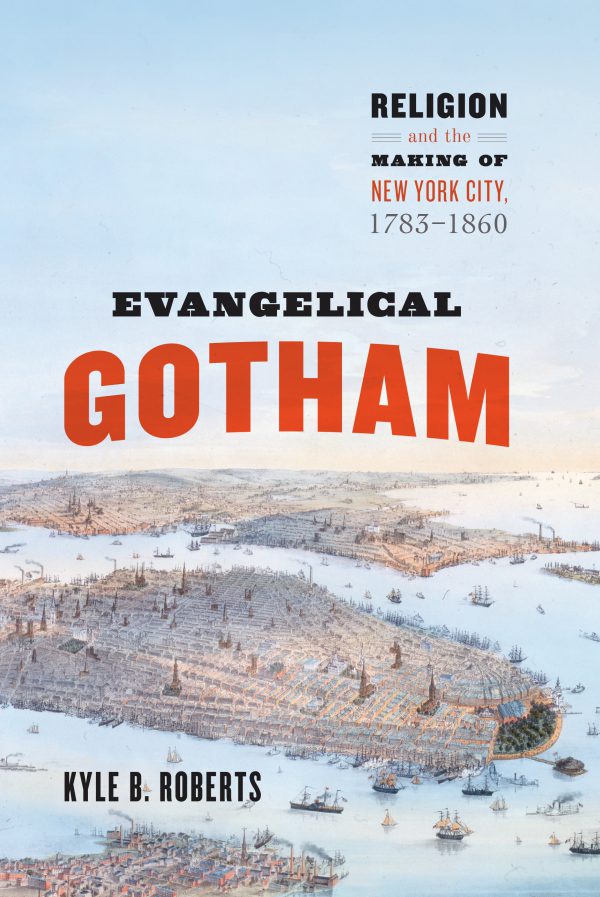
Kyle B. Roberts explains:

Evangelical New Yorkers did nothing less than make the city between the American Revolution and the Civil War. Their systematic strategy of aggressively building in new opening neighborhoods put them on the forward edge of urban development. . . . Asylums, bethels, book concerns, missions, and orphanages supported by lay voluntary associations and denominations expanded that presence. In time, immigrant Roman Catholics and Jews proved more formidable opponents than High Church Protestant Episcopalians, but a community is more than its churches and societies; it is, fundamentally, it’s people. Fifteen percent of the city’s adult population identified as evangelical and joined a city church by the middle of the nineteenth century. That might not sound like much, but it was five times what it had been at the close of the American Revolution. Given the high bar evangelical churches set by making conversion a criteria for membership, the number of spouses, children, cousins, and neighbors still hopefully waiting for conversion was undoutedly much higher.

This massive emotional, financial, and spiritual investment in the city came at a cost. The principles at the core of evangelical belief and practice–individual conversion and community-focused social activism–exist in continual tension. They provided the rational for aggressive interventions in the city, hope to the hopeless, friends for the friendless, and homes for the homeless, but just as easily supplied an excuse for withdrawal, into meeting-houses, parlors, and even their own spiritual selves at moments when their presences was most needed. . . . every worshiper at the John Street church had to decide for her or himself whether to join the exodus of middle-class Protestants up the island or to stay put, even as nearly every other evangelical meeting-house shuttered. These choices were not limited to the antebellum period; Evangelical Gotham always had been and always would be a profoundly ambivalent place. (255-56)

b, sd on Evangelicalism’s Car Salesman Psyche (from Rod Dreher)

Or, why the Benedict Option makes no sense to believers addicted to outreach and tranformationalism:

Post-WW2, a group of Christians with theological sympathies with the fundamentalists thought they needed to be open to society and be willing work with anyone who will help them save souls. Additionally, they believed that redirecting culture meant influencing culture makers. Rather than eschew rock music as being worldly (as the fundamentalists did), they wanted to save the rock star so he could make Christian rock songs and lead people to Christ (think the conversion of Bob Dylan). This meant taking on the trappings of mainstream society and baptizing them in order to evangelize. At some level it worked. It moved the Overton window as it were. If Billy Graham was meeting with presidents, then evangelicalism by definition is mainstream. The Jesus Music, the amphitheater style worship centers, the faith and culture types name dropping Nietzsche, Wittgenstein, and Camus (i.e., Francis Schaeffer) were taking back the stage while the mainline was declining. It was the year of the evangelical and God wasn’t dead any more.

And now after 50 yrs of progress, it all seems to be slipping away. Evangelicalism is fractured. People within aren’t so sure being relevant is…well…all that relevant. There are major internal tensions over the role of women in ministry, race relations, biblical inerrancy, the pope of evangelicalism (Billy Graham) is dead and two of its three theological architects have died (Henry and Stott). More concerning, there is no one on the horizon to replace these guys – people who command the respect of the larger evangelical world. And now one of the most important books on religion is telling us to turn inward and do a better job of discipleship. But that’s what we are doing with the podcasts, publishing houses, bible studies, retreats, Sunday Schools, small groups (lots and lots of small groups), etc… They are thinking, “to drop our outward focus is to lose the thing that makes us what we are.” It’s like telling a Catholic not to pray the rosary or an Eastern Orthodox not to fast so much. Spreading the word, telling others the good news is their third sacrament so to speak.

What the evangelical leaders miss though is that the culture has shifted. But even though evangelicalism is more outward focused than fundamentalism, in its own way it is just as insular. When you see the world through CT eyes, it is hard to really understand what orthodox believers are up against. I think they are starting to see. Unfortunately, I don’t see anyone coming up with good solutions for how to implement the BenOp for those of us who don’t have the option of moving to a planned community.

Which may explain why Tim Keller is really an evangelical (not a Presbyterian) and why hunkering down in the ministry of the PCA is just too withdrawn.

Something for All Commissioners to Consider before Heading Off to General Assembly (or Synod)

What’s true for liberals may also be true for Christians who think they have social justice covered:

Consider some ways liberals have used their cultural prominence in recent years. They have rightly become more sensitive to racism and sexism in American society. News reports, academic commentary and movies now regularly relate accounts of racism in American history and condemn racial bigotry. These exercises in consciousness-raising and criticism have surely nudged some Americans to rethink their views, and to reflect more deeply on the status and experience of women and members of minority groups in this country.

But accusers can paint with very wide brushes. Racist is pretty much the most damning label that can be slapped on anyone in America today, which means it should be applied firmly and carefully. Yet some people have cavalierly leveled the charge against huge numbers of Americans — specifically, the more than 60 million people who voted for Mr. Trump.

In their ranks are people who sincerely consider themselves not bigoted, who might be open to reconsidering ways they have done things for years, but who are likely to be put off if they feel smeared before that conversation even takes place.

It doesn’t help that our cultural mores are changing rapidly, and we rarely stop to consider this. Some liberals have gotten far out ahead of their fellow Americans but are nonetheless quick to criticize those who haven’t caught up with them.

Within just a few years, many liberals went from starting to talk about microaggressions to suggesting that it is racist even to question whether microaggressions are that important. “Gender identity disorder” was considered a form of mental illness until recently, but today anyone hesitant about transgender women using the ladies’ room is labeled a bigot. Liberals denounce “cultural appropriation” without, in many cases, doing the work of persuading people that there is anything wrong with, say, a teenager not of Chinese descent wearing a Chinese-style dress to prom or eating at a burrito cart run by two non-Latino women. (Gerard Alexander, “Liberals, You’re Not as Smart as You Think You Are,” New York Times, May 12, 2018)

Resist that temptation to feel good after a vote for the right side of history.

From Molly Worthen’s Review of Ross Douthat’s Review of Pope Francis (in the Times)

This was Luther’s point (along with a lot of other Reformers):

One might argue that the Catholic hierarchy’s entwinement with state power and wealth from the 4th century until our own time constitutes one long, largely unrepentant heretical act. It is a rebellion against Jesus’ declaration that his “kingdom is not of this world” (John 18:36), that Christians should refrain from serving both God and mammon (Matthew 6:24) and should render unto Caesar only the things that are Caesar’s (Mark 12:17). The pope’s effort to disentangle his church from the excesses of neoliberalism and nationalist politics is a profound act of resistance against the forces of secularization and worldliness, far braver than his opponents’ defense of traditional marriage.

The problem for this reading of Pope Francis is that such “entwinement” with the things of this world has hardly gone away during this pope’s tenure. If as the old adage has it, actions speak louder than words, the Vatican will show that Francis’ words matter when it gives up the Swiss Guard, the Vatican museums, the pope becomes a bishop of a large metropolitan city like any other archbishop (and has to negotiate properties and staff with local governments), the Vatican bank becomes a branch of Bank of America, and well . . .

A lot has to change for the papacy to be its truly spiritual office.

One Take Away from Royal Wedding

Baptism matters.

The bride, Meghan Markle, we learned, grew up in a Christian home but was never baptized. For shame. What kinds of churches don’t sweat the Great Commission, as in “baptizing them in the name of the Father, the Son, and the Holy Ghost”?

Q. 94. What is baptism?
A. Baptism is a sacrament, wherein the washing with water in the name of the Father, and of the Son, and of the Holy Ghost, doth signify and seal our ingrafting into Christ, and partaking of the benefits of the covenant of grace, and our engagement to be the Lord’s.

Q. 95. To whom is baptism to be administered?
A. Baptism is not to be administered to any that are out of the visible church, till they profess their faith in Christ, and obedience to him; but the infants of such as are members of the visible church are to be baptized. (Shorter Catechism)

So, a little less than three months ago, in order to belong to the Church of England, the Archbishop of Canterbury baptized Ms. Markle:

The Archbishop of Canterbury, Justin Welby, confirmed that he baptized the former “Suits” actress into the Church of England last week. Though he admitted he can’t reveal much about the actual ceremony, which took place at St. James’s Palace in London, he described it as “very special.”

“It was beautiful, sincere and very moving,” Welby told ITV News in a report published Friday. “It was a great privilege.”

Of course, baptism in a state church context means that the sacrament carries more baggage than it should:

Meghan Markle’s baptism, by Anglican Archbishop of Canterbury Justin Welby, is a necessary precondition for her marriage to HRH Prince Harry, younger son of the Prince of Wales and currently fourth in line to the throne of the United Kingdom. Her May marriage will bring her into the Royal Family, and attendance at Church of England services from time to time will be part of her public life — from Christmas Day in a village church in Norfolk to formal gatherings marking national events in Westminster Abbey. Hence the baptism.

But the point stands. To belong to the church means receiving the mark of the church. And access to the Lord’s Supper requires (along with true faith and belonging to a faithful church) being baptized. Heck, even to marry another church member (of a faithful — or gospelly — communion) means needing to be a Christian, which means needing to be baptized.

So none of this Jesus in my heart, be a part of the fellowship, feel the buzz of the Spirit without the rites and ceremonies of baptism, the Lord’s Supper, the word preached and read. The Church of England may gum up the ecclesiastical works by tying matters of state to church forms. But they followed the right pattern in this case by requiring baptism for church membership.

White People, Butch Up

That is the not so subtle message from Brandi Miller:

When situations arise where race and privilege are questioned and criticized, often times white people free fall into fear, anger, silence, denial or guilt. These emotions, while understandable and not bad in their own right, typically derail and recenter race conversations around the feelings of the privileged white person instead of on the lived oppressive reality of people of color.

White Evangelical Christians are particularly fragile, with whiteness being normalized and pandered to in society and theologized in the church. Evangelicalism at large cannot even identify with its inherent Christian privilege, let alone with the sexism or racism within the church. It is wholly unsurprising that if Evangelicals can claim to be persecuted even as 83 percent of Americans identify as Christian, they will almost certainly interpret the suggestion that their whiteness has negative meaning as an attack on the very core of who they are.

A white evangelical could possibly take this as a compliment. At a time when we award participation trophies to child athletes and issue trigger warnings for sensitive college students (for starters), the idea that some sectors of the population should be tough enough to take criticism is a welcome one, and may indicate a backhanded compliment. The people against whom Ms. Miller thunders are those who don’t need safe spaces.

Young Calvinists Discover Old Princeton

The Gospel Industrial Complex recently invoked two Princetonians to make points that generally elude the Young and Restless’ heroes.

Fred Zaspel writes about Benjamin Warfield’s views on race (which contrasts with the New Calvinists’ Homeboy, Jonathan Edwards). He even used Warfield’s critique of Southern Baptist Seminary’s president, W. O. Carver:

In a 1918 review of Hastings’s Encyclopedia of Religion and Ethics27 Warfield takes issue with an article on “Negroes in the United States” by William O. Carver of The Southern Baptist Theological Seminary. Warfield characterizes Carver’s article as cheerfully endorsing a permanently segregated America—“two races, separated from one another by impassible social barriers, each possessed of an ever more intensified race-consciousness and following without regard to the other its own race-ideals.”

Warfield objects, and argues instead for an integrationist position:

This [Carver’s viewpoint expressed in the encyclopedia article] is to look upon the negro as (according to one current theory of the nature of cancerous growth, at any rate) just a permanent cancer in the body politic. We may suspect that it is not an unaccountable feeling of race repulsion that impels Dr. Carver to repel with sharp decision the forecast that amalgamation of the races must be the ultimate issue. With continued white immigration and the large death rate of the blacks working a progressive decrease in the proportion of the black population to the white, is it not natural to look forward to its ultimate absorption? That is to say, in a half a millennium or so? That is not, however, our problem: for us and our children and children’s children the two races in well-marked differentiation will form but disproportionate elements in the one State. What we have to do, clearly, is to learn to live together in mutual amity and respect and helpfulness, and to work together for the achievement of our national ideals and the attainment of the goal of a truly Christian civilization.

Meanwhile, Kevin DeYoung appropriated J. Gresham Machen’s doctrine of the spirituality of the church to argue for preachers restraining themselves about politics (contrary to Tim Keller’s transformationalist outlook):

3. Distinguish between the corporate church and the individual Christian. We need believers in all levels of government and engaged in every kind of public policy debate. But there is a difference between the Bible-informed, Christian citizen and the formal declarations from church pronouncements and church pulpits. In the early part of the 20th century, most evangelicals strongly supported the Eighteenth Amendment, the Volstead Act, and Prohibition in general. When J. Gresham Machen made the unpopular decision to vote against his church voicing support for the amendment, he did so, in part, because such a vote would have failed to recognize “the church in its corporate capacity as distinguished from the activities of its members, on record with regard to such political questions” (Selected Shorter Writings, 394).

4. Think about the nature of your office and the ministry of your church. I studied political science in college, and I’ve read fairly widely (for a layman) in economics, sociology, and political philosophy. I have plenty of opinions and convictions. But that’s not what I want my ministry to be about. That’s not to say I don’t comment on abortion or gay marriage or racism or other issues about the which the Bible speaks clearly. And yet, I’m always mindful that I can’t separate Blogger Kevin or Twitter Kevin or Professor Kevin from Pastor Kevin. As such, my comments reflect on my church, whether I intend them to or not.

That means I keep more political convictions to myself than I otherwise would. I don’t want people concluding from my online presence that Christ Covenant is really only a church for people who view economics like I do or the Supreme Court like I do or foreign affairs like I do. Does this mean I never enter the fray on hot button issues? Hardly. But it means I try not to do so unless I have explicit and direct biblical warrant for the critique I’m leveling or the position I’m advocating. It also means that I try to remember that even if I think my tweets and posts are just a small fraction of what I do or who I am, for some people they are almost everything they see and know about me. I cannot afford to have a public persona that does not reflect my private priorities.

5. Consider that the church, as the church, is neither capable nor called to address every important issue in the public square. This is not a cop-out. This is common sense. I’ve seen denominational committees call the church to specific positions regarding the farm bill, Sudanese refugees, the Iraq War, socially screened retirement funds, immigration policy, minimum-wage increases, America’s embargo of Cuba, the Palestinian-Israeli conflict, global economics, greenhouse gas emissions, social welfare, and taxation policies. While the church may rightly make broad statements about caring for the poor and the oppressed, and may even denounce specific cultural sins, the church should not be in the business of specifying which types of rifles Christians may and may not use (a real example) or which type of judicial philosophy Christians should want in a Supreme Court justice (another real example).

Again, Machen’s approach is instructive. He insisted that no one “has a greater horror of the evils of drunkenness than I” and that it was “clearly the duty of the church to combat this evil.” And yet, as to the “exact form” of legislation (if any), he allowed for difference of opinion. Some men, he maintained, believed that the Volstead Act was not a wise method of dealing with the problem of drunkenness, and that enforced Prohibition would cause more harm than good. Without stating his own opinion, Machen argued that “those who hold the view that I have just mentioned have a perfect right to their opinion, so far as the law of our church is concerned, and should not be coerced in any way by ecclesiastical authority. The church has a right to exercise discipline where authority for condemnation of an act can be found in Scripture, but it has no such right in other cases” (394-95).

Not sure where any of this is headed. But if you are postmillennial, you might take encouragement.

Drunk on Postmillennialism

Peter Leithart thinks Pentecost has lots of relevance for social order:

The Bible does not permit us to confine the work of the Spirit to the inner man or to private experience. Through Isaiah (44:3), the Lord promised to pour out water on the land of Israel and his Spirit upon Israel’s seed. When the Spirit is poured out like water, he turns desolate places to fruitfulness, transforms the dry land into a grove, transfigures the withered leaf into a green (Isa. 32:15; Ezek. 39:29; Joel 2:29; Zech. 12:10; Acts 2:17¯18, 33; 10:45). Restoration of nature symbolizes cultural flourishing. When the Spirit is poured out on Israel, the Lord promises, the nation will be renewed.

At the first Christian Pentecost, the apostles filled with the Spirit proclaimed the gospel in multiple languages, and by the end of the day a community of believers had been established, drawn from “every nation under heaven” (Acts 2:5). The miracle of languages that took place at Pentecost reversed the curse on languages at Babel; the divided nations are reunited by the Spirit. For the Bible, international peace is a Pentecostal reality.

That’s one way of reading the Bible. But what does Leithart do with these?

scoffers will come in the last days with scoffing, following their own sinful desires. 4 They will say, “Where is the promise of his coming? For ever since the fathers fell asleep, all things are continuing as they were from the beginning of creation.” 5 For they deliberately overlook this fact, that the heavens existed long ago, and the earth was formed out of water and through water by the word of God, 6 and that by means of these the world that then existed was deluged with water and perished. 7 But by the same word the heavens and earth that now exist are stored up for fire, being kept until the day of judgment and destruction of the ungodly.

8 But do not overlook this one fact, beloved, that with the Lord one day is as a thousand years, and a thousand years as one day. 9 The Lord is not slow to fulfill his promise as some count slowness, but is patient toward you,a not wishing that any should perish, but that all should reach repentance. 10 But the day of the Lord will come like a thief, and then the heavens will pass away with a roar, and the heavenly bodies will be burned up and dissolved, and the earth and the works that are done on it will be exposed. (2 Peter 3)

Or?

For many will come in my name, saying, ‘I am the Christ,’ and they will lead many astray. 6 And you will hear of wars and rumors of wars. See that you are not alarmed, for this must take place, but the end is not yet. 7 For nation will rise against nation, and kingdom against kingdom, and there will be famines and earthquakes in various places. 8 All these are but the beginning of the birth pains.

9“Then they will deliver you up to tribulation and put you to death, and you will be hated by all nations for my name’s sake. 10 And then many will fall away and betray one another and hate one another. 11 And many false prophets will arise and lead many astray. 12 And because lawlessness will be increased, the love of many will grow cold. 13 But the one who endures to the end will be saved. 14 And this gospel of the kingdom will be proclaimed throughout the whole world as a testimony to all nations, and then the end will come. (Matthew 24)

Or?

2 For you yourselves are fully aware that the day of the Lord will come like a thief in the night. 3 While people are saying, “There is peace and security,” then sudden destruction will come upon them as labor pains come upon a pregnant woman, and they will not escape. 4 But you are not in darkness, brothers, for that day to surprise you like a thief. 5 For you are all children of light, children of the day. We are not of the night or of the darkness. 6 So then let us not sleep, as others do, but let us keep awake and be sober. (I Thessalonians 5)

I get it if you want to avoid dispensational premillennialism’s bleak (never mind the flannel graphs) picture of human history, though I hear Leithart has a Lutheran past. But if you are going to try to turn Pentecost into a banner for socio-economic progress and world peace, don’t you need to keep an eye on other parts of the biblical narrative? How about postmillennialism meets nuclear winter? After millennia of human flourishing, suffering takes over the world and runs things until Jesus returns.