Wedding Cakes Are Not Simple

I wish Jack Phillips’ case was easy but after listening to Ben Domenich’s interview with Mike Farris I can’t side entirely with the baker who refused to make a cake for the gay couple, David Mullins and Charlie Craig. One of Phillips’ lines of defense is that he refuses to do something that contradicts his religious convictions about marriage. And making a cake for a gay marriage would be to participate in a religious ceremony that violates Christian teaching.

Not to put too fine a point on it, but the couple and guests at a marriage do not consume a wedding cake during the service. Cake is not like the bread and wine of the Lord’s Supper. A wedding cake is not sacramental (neither is marriage for Protestants). Are receptions biblical? Do we have a “thus saith the Lord” about the necessity and exact order of a reception? Personally, if I were a dad, I’d be saying to daughters from an early age, “cake and punch, cake and punch.” Have the reception in the church basement. Get on the road to your first night. And save the money on the meal and cake for a down payment on a car or home. (In parts of the U.S., homes are as cheap as cars — ahem.)

Which is to say, if I were Mr. Phillips’ pastor, I’d encourage him to rethink how narrowly he identifies a cake with his beliefs. Heck, I think 5:00 each day is borderline sacramental, but the regulative principle helps me draw a line.

As for Mr. Mullins and Mr. Craig, did they really need to take Mr. Phillips to court? Did they have nowhere else to find a cake for their wedding reception? Turns out they did:

As for Mullins and Craig, they got hitched without any other major hitches, marrying in Massachusetts before going back to their home state of Colorado to celebrate with family and friends. After their story spread across the Internet, the couple was inundated with cake offers — “even from China,” Craig noted — and, ultimately, they landed on a special plan.

When whites denied blacks access to certain schools or luncheon counters, African-Americans did not have a long line of people signing up to educate or sell them a meal. This is why gay rights, for starters, is different from ending racial discrimination. Gay people since roughly 1990 have had a remedy for services desired — another business down the block. African-Americans did not have such a remedy.

That is why blacks had good reason to make a federal case of Jim Crow. Gays of decorated cakes? Not so much.
The Best Decision I ever Made

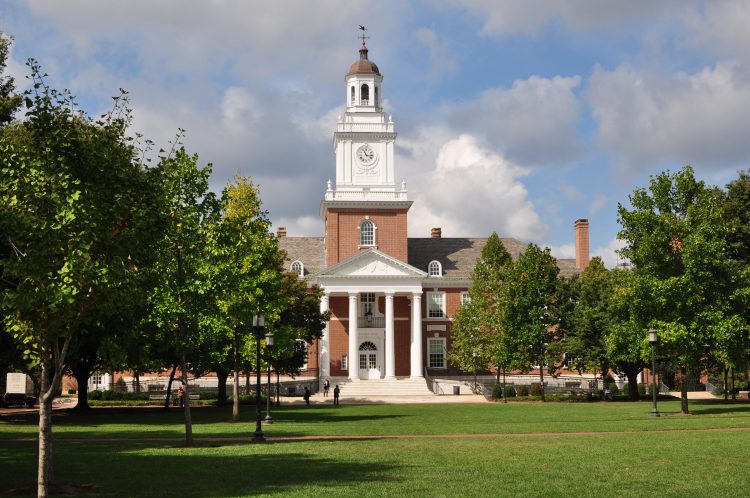
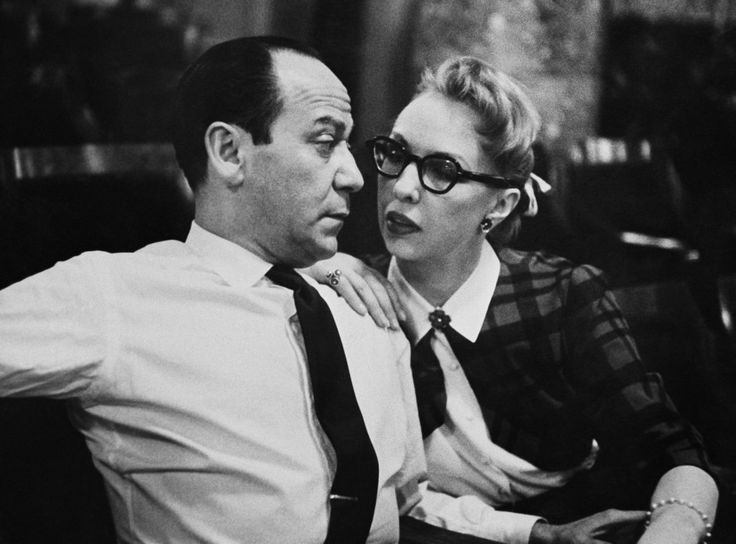
Maybe not ever. Marrying the missus has to be at the top since deciding to trust Jesus was not really my decision. But my conversation yesterday with Tom Woods about Machen was one of those rare moments when you see directly the consequences of a choice made longer ago than you care to admit. The closest I could come most easily to that decision was to resurrect the preface to my dissertation (“‘DOCTOR FUNDAMENTALIS’: AN INTELLECTUAL BIOGRAPHY OF J. GRESHAM MACHEN, 1881-1937,” Johns Hopkins University, 1988):

The central argument of this study is that Machen’s involvement in the fundamentalist controversy, his eventual expulsion from the Presbyterian Church, and his founding of Westminster Seminary and the Orthodox Presbyterian Church were logical outcomes of his biblical scholarship and critique of religious liberalism. In fact, when understood in the light of his theological convictions, Machen’s behavior appears thoroughly reasonable.

This reading of Machen stems in part from my concerns as an intellectual historian. One of my presuppositions is that ideas, both religious and secular, operate with some autonomy from social and cultural settings. More importantly, I assume that religious thought cannot be reduced to or interpreted narrowly by social experience. These suppositions imply that Machen’s studies and beliefs were causal factors in his career and explain his behavior as well as, if not better than, his personality. I have not pursued psychological interpretations, then, because Machen’s ideas seem to offer an adequate explanation. Having said this, however, I must still admit that this approach stacks the deck in Machen’s favor since he also insisted throughout the fundamentalist controversy that differences stemmed from intellectual, not personal or administrative factors.

Because many recent studies have stressed the intellectual dimension of fundamentalism, I should also explain why I think mine is different. By emphasizing Machen’s Calvinistic outlook, this dissertation breaks with previous interpretations which explain fundamentalism largely by reference to such epistemological considerations as the persistence of Scottish Common Sense Realism among conservative Protestants. As helpful as these studies have been, I believe they overdramatize the philosophical differences between Protestants and overlook the significance of doctrine to the fundamentalist controversy. Yet, rather than stressing the theological convictions that united conservative Protestants, I have focused on one fairly specific rationale for opposition to modernism, namely, Machen’s Old School Presbyterian heritage, not Princeton Seminary’s defense of biblical inerrancy. Without considering Machen’s confessional concerns, students of twentieth-century evangelicalism cannot understand properly Princeton Seminary’s relationship to fundamentalism.

Still, my personal beliefs have informed this study, perhaps even more than I imagine. To be sure, my upbringing in a fundamentalist home as well as my education at Westminster Seminary account for many of my sympathies. Nonetheless, my interest in Machen is still relatively fresh because ironically I learned little about him at Westminster. A survey course in American religious history at Harvard Divinity School, which required the reading of Machen’s Christianity and Liberalism, generated my initial interest and led to a greater appreciation of Old Princeton Theology and Machen’s efforts to preserve it.

Nevertheless, I have tried to account for my own biases and present as correct an understanding of Machen as possible. To do so I have relied on my dissertation advisor, Professor Timothy L. Smith, whose knowledge and perspective on American religion challenged me to keep in mind the diversity of evangelicalism. Furthermore, his careful editing often cleaned up wooden prose and improved this dissertation considerably. Professors John Higham and Ronald A. Walters also deserve credit for their helpful criticisms throughout my studies. I must also thank Professors Mark A. Noll, George M. Marsden, and Richard B. Gaffin, who read earlier drafts and made helpful suggestions, and Professor William R. Hutchison, who first introduced me to Machen and offered advice at a preliminary stage. I am especially indebted to the librarians and staff members of the Montgomery Library at Westminster Seminary, particularly John R. Muether, Grace Mullen, and Jane Patete, who guided me through the Machen Archives, allowed me liberal use of the library’s holdings, and answered many questions. Jeff Charles and David Harrington-Watt have been good friends throughout my time in graduate school, offering as much aid through informal chats and rounds of golf as through their comments on various chapters.

Above all I must acknowledge my wife’s contribution. Her patience and support would have been more than sufficient. But her genuine interest in American history as well as her willingness to edit, proofread, and criticize my research and writing have been a tremendous encouragement. My debt to her is emphasized by the dissertation’s dedication.

A Song Unfit for A Time Such as This

“Baby it’s cold outside” is not simply an appropriate description of Michigan right now but also a song that should be abandoned (and some have attributed it to the Christmas season) in these sexually charged times:

I really can’t stay – Baby it’s cold outside
I’ve got to go away – Baby it’s cold outside
This evening has been – Been hoping that you’d drop in
So very nice – I’ll hold your hands, they’re just like ice

My mother will start to worry – Beautiful, what’s your hurry
My father will be pacing the floor – Listen to the fireplace roar
So really I’d better scurry – Beautiful, please don’t hurry
Well Maybe just a half a drink more – Put some records on while I pour

The neighbors might think – Baby, it’s bad out there
Say, what’s in this drink – No cabs to be had out there
I wish I knew how – Your eyes are like starlight now
To break this spell – I’ll take your hat, your hair looks swell

I ought to say no, no, no, sir – Mind if I move a little closer
At least I’m gonna say that I tried – What’s the sense in hurting my pride
I really can’t stay – Baby don’t hold out
Ahh, but it’s cold outside

Marya Hannum observed two years ago that many had concluded that this was a date-rape song:

It’s that most wonderful time of the year. City storefronts are aglow with snowflakes and fairy lights, stockings have been hung by chimneys with care, and on the Internet debates over the holiday hit, Baby It’s Cold Outside, rage on.

In the past four years, this last seems to have morphed into a holiday tradition in its own right. In true Christmas spirit, The Daily Beast didn’t even wait until Thanksgiving to publish a listicle covering “Everyone’s Favorite Date-Rape Holiday Classic.”

Meanwhile, Urban Dictionary now lists the song under the heading “Christmas Date Rape Song.” Recently, it was given a “feminist makeover” in the clever, if not quite as catchy, YouTube video “Baby, It’s Consent Inside.”

Is all this controversy over a catchy classic really warranted?

Upon first listen, maybe. The tune was penned in the 1940s by Frank Loesser — writer of Guys and Dolls — to be performed as a duet with his wife at Los Angeles parties. Its predatory nature is apparent from the original notes, which label the male’s part as “wolf” and the female’s as “mouse.”

Hannum also explained that some feminists defended the song:

As feminist blog Persephone Magazine noted in 2010, the song’s historical context matters. At the time they were written, an unmarried woman staying the night at her beau’s was cause for scandal. It’s this fear we see reflected in the lyrics, more than any aversion on the part of the woman to staying the night.

She never expresses any personal distaste at the idea,e rather pointing out that her “sister will be suspicious,” her “maiden aunt’s mind is vicious.” Really, then, we are hearing a battle between his entreaties and her reputation.

In this light, the song could be read as an advocacy for women’s sexual liberation rather than a tune about date rape.

How times change.

I Didn’t Think Kevin Spacey was an Orthodox Presbyterian

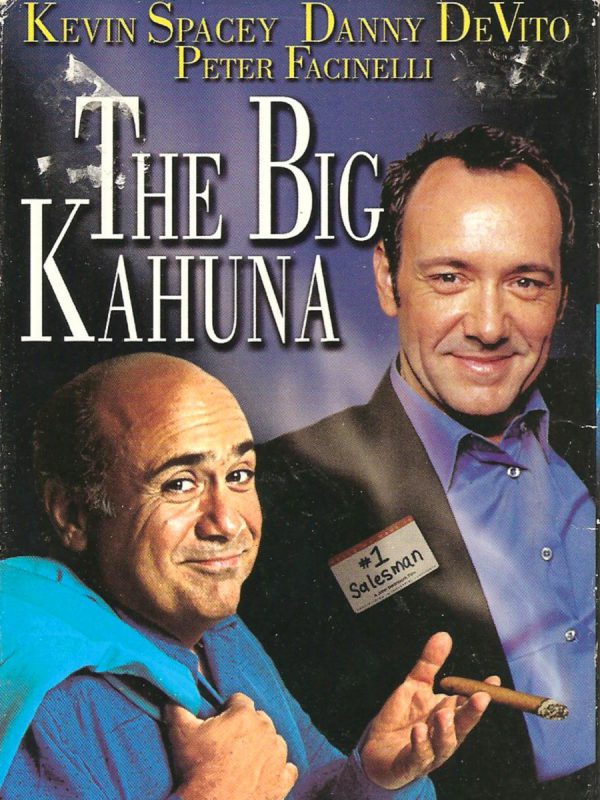
Despite what we now know about the actor, I remain a big fan of The Big Kahuna, a movie I even recommended as one of Hollywood’s better renderings of evangelicalism. (Trigger warning: language is vulgar in places.) Spacey starred in and produced the movie. Am I in danger of my publisher removing all copies of That Old-Time Religion in Modern America because of the way the book opens?

The Big Kahuna may not have been a box office hit, but the 1999 movie starring Kevin Spacey and Danny DeVito offered a surprisingly candid glimpse of the way many Americans have come to regard the subject of this book, twentieth-century evangelicalism in the United States. The film features three men who work for a firm that produces industrial lubricants and are assigned to host a cocktail party at a hotel in Wichita, Kansas, during a convention for industry-related vendors and producers. Two of the characters are from the sales division, experienced salesmen for whom the task of pitching the company’s product has nurtured a degree of cynicism and weariness. The third is a young, bright and somewhat naive evangelical Protestant who works in the research division. Their chief task on this particular evening is to make contact with the owner of Indiana’s largest manufacturing company, the “big Kahuna,” whose contract could salvage the salesmen’s declining careers.

Of course, Kevin Spacey is not the only one vulnerable. But we have no better sign of how Harry Emerson Fosdick lost and fundamentalists won than the way that mainstream institutions are employing standards that would have made my fundamentalist Baptist congregation think they were living in a Christian nation. Back then, as I have remarked before, I was under the impression that anyone I should esteem as a hero should also be a Christian. And with that logic, I turned my favorite athlete, Richie Allen, 3rd-baseman for the Phillies (and rookie of the year in 1964), into a born-again Christian, only to be crushed when a television camera showed him smoking a cigarette during a game.

Has our culture really come to that, the moral calculus of an eight-year-old dispsenationalist Baptist?

Of course, Peter Leithart tries to put a better spin on it:

But is private morality so easily distinguished from public ethics? Can we trust someone who lies, bullies, and manipulates to cover up the embarrassment of private sin? Doesn’t such a person prove himself a liar? Hasn’t he proven that he lacks the basic public virtue of justice?

Leithart is writing with politicians in mind, but the same point applies to artistic expressions? Should I sit with an author, director, or musician for anywhere between 30 minutes and two weeks who may be performing acts in private that would prove distasteful in public?

But here’s the other side that few of the new morality police seem to consider: why are good works whether performed in private or public any sort of guarantee of admirable character? If good works are filthy rags, if people do good works for noble and ignoble reasons, and if someone is unregenerate, how trustworthy are they (especially by our current Wesleyan standards)? According to the Confession of Faith:

Works done by unregenerate men, although for the matter of them they may be things which God commands; and of good use both to themselves and others: yet, because they proceed not from an heart purified by faith; nor are done in a right manner, according to the Word; nor to a right end, the glory of God, they are therefore sinful, and cannot please God, or make a man meet to receive grace from God: and yet, their neglect of them is more sinful and displeasing unto God. (16.7)

I get it that sexual abuse is bad. But let’s not fool ourselves about any actor or politician. The doctrine of total depravity teaches that behind that image of virtue and decency lurks a heart that is desperately wicked. Who can know it? Agents, spouses, interns, anyone who sees the public figure off camera.

If Daniel Could Serve a Pagan King, Why Can’t Old School Presbyterians vote for Bill Clinton?

Kevin DeYoung offers some perspective for Alabama voters (though he never mentions Roy Moore):

9. Am I casting my vote for someone who will damage the reputation of Christ and may harm the cause of Christ in the world? While it is often good to vote for other Christians, we have to consider how someone conducts himself in public as a representative of Christian convictions, ethics, and character.

10. Am I willing to consider that thoughtful Christians may answer some of these questions differently than I would? I certainly have my opinions about how these questions might apply in specific instances, but more than a particular vote, I want to encourage Christians to think critically and strategically about their civic participation. There is more to consider than majorities for our side and defeat for theirs.

I am glad he follows point 9 with point 10 because Daniel, the prophet, would have had a hard time answering the ninth question. Not only could Daniel not vote, but he served a King who worshiped and served false gods. Sure, Daniel resisted the king in some ways, but he also excelled in pagan learning (and so distinguished himself for public service):

17 As for these four youths, God gave them learning and skill in all literature and wisdom, and Daniel had understanding in all visions and dreams. 18 At the end of the time, when the king had commanded that they should be brought in, the chief of the eunuchs brought them in before Nebuchadnezzar. 19 And the king spoke with them, and among all of them none was found like Daniel, Hananiah, Mishael, and Azariah. Therefore they stood before the king. 20 And in every matter of wisdom and understanding about which the king inquired of them, he found them ten times better than all the magicians and enchanters that were in all his kingdom.

If not obeying the first table of the law is a big deal — and we’re not simply talking about images of Christ — how could a faithful believer excel in pagan literature and wisdom (which by Neo-Calvinist standards had to be worse than public schools) and then also serve a king whose cult involved idolatry?

I get it, Daniel did eventually disobey, which is music to the socially righteous warriors ears (thanks to one of our Southern correspondents):

We might hide our motives or blanket them in a veil we call authority or expertise. We will always become like the things we worship. Daniel writes about three men who stood in bold ambivalence to the foolishness of a conqueror king, because he was not their true king. They knew who they worshipped, and the more they lived like Him the closer they came to His presence.

Resist!

But that perspective on Daniel entirely misses the prophet’s assimilation to a regime tainted throughout by blasphemy and idolatry. Again, if 1789 affected all of European society, imagine the intersectionality of Babylonian gods and society. What did Daniel do? He cooperated as much as possible.

Don’t resist!

Honor (even the pagan megalomaniac)!

13 Be subject for the Lord’s sake to every human institution, whether it be to the emperor as supreme, 14 or to governors as sent by him to punish those who do evil and to praise those who do good. 15 For this is the will of God, that by doing good you should put to silence the ignorance of foolish people. 16 Live as people who are free, not using your freedom as a cover-up for evil, but living as servants of God. 17 Honor everyone. Love the brotherhood. Fear God. Honor the emperor.

In which case, the lesson is that as long as a Christian does not worship the senator, create statues of him for worship, pray to the senator, hand out the senator’s voting guide on Sunday, still honors his parents while working or voting for the senator, is not the senator’s hit-man, doesn’t lust after the senator’s wife, doesn’t embezzle for the senator, doesn’t lie to or for the senator, and doesn’t envy the senator, or his wife, or servants, or property, the a Christian can vote for the senator.

But if you want to be a pietist about it and consider primarily what a vote says (all) about you, then chances are you have the makings for being an Anabaptist.

“My Body,” Their Souls

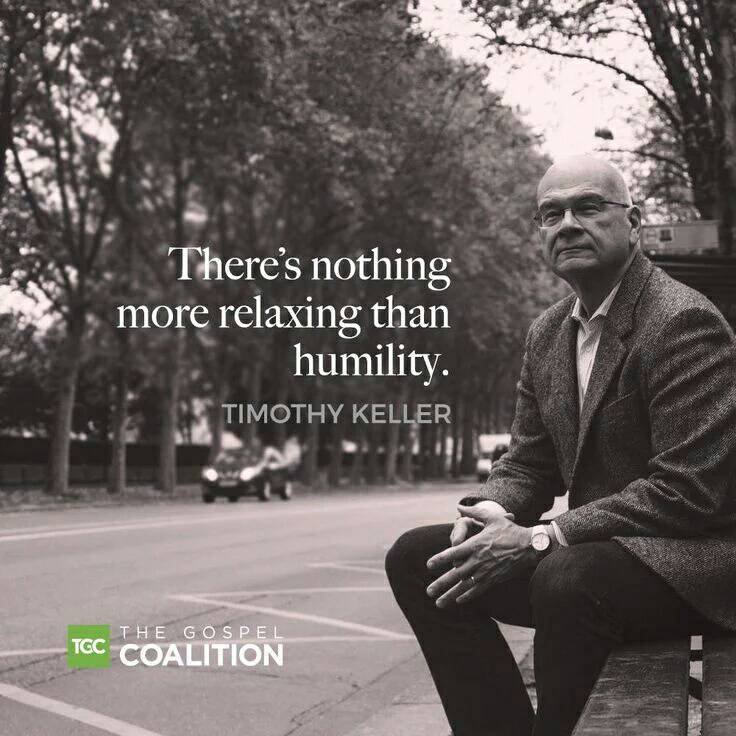
Father Dwight (who seems to write more than Tim Keller) is back with a biblical justification for placing relics under the altar in Roman Catholic churches.

In Revelation 6:9 it is written: And when he had opened the fifth seal, I saw under the altar the souls of them that were slain for the word of God, and for the testimony which they held.

What does it mean “under the altar were the souls of them that were slain for the Word of God and the testimony they held.”?

In the early church, the remains of the martyrs were placed in above ground table tombs. Similar to the one shown here. During the times of persecution the church would gather in the catacombs for worship and the table tombs were used as the altar for Mass. Thus the remains of the martyrs were under the altar.

When they no longer had to worship in secret, the early Christians still wanted the presence of their martyrs to be near them so they opened the tombs, removed the bones and put them into jars which they then placed beneath the altar.

If you visit churches in Rome today you will often seen the jars with relics on display beneath the altar. More than that, you will often see the whole body of the saint on display beneath the altar. Here, for example is the altar beneath which is the relic of Pope St John XXIII.

Call me a literalist, but Rev 6:9 does not say “bodies.” It also says that the author was able to “see” something that is not visible. How do you see a soul?

So notice that when it comes to the body of Christ in the Mass, the bread becomes the very (true) body of Christ. After all, Christ said, “this is my body.” But when it comes to relics, the bones are memorials to the souls under the altar.

I’m confused. Maybe Zwingli can sort it out.

That’s An Awfully Low Threshold

Tim Challies identifies the marks of a false teacher, including this one:

Third, false teachers teach their own wisdom rather than God’s wisdom. False teachers always teach their own foolishness instead of divine wisdom. This means then, that the ultimate source of their teaching is their own minds. It’s their own hearts, it’s their own sinful desires. Listen to what God said through the prophet Jeremiah. He said, “The prophets are prophesying lies in my name. I did not send them, nor did I commend them or speak to them. They are prophesying to you a lying vision, worthless divination, and the deceit of their own minds.” That was true in Jeremiah’s day, it’s just as true in our day.

Imagine what that does for pastors who Tweet (or even elders).

Victims All

Branden Henry thinks that some (many?) Americans are in denial about race relations in the U.S. Take, for instance, the white supremacists who marched last summer in Charlottesville:

Playing the Victim – This, right here, is what we witnessed in Charlottesville. Grown white men marching against Jews and Blacks because the white men believe they are being replaced. These same folks who cry foul when minorities attempt to be treated as equal are the same folks who tend to ignore the genocide of the native people of this continent, as well as ignore the long-lasting effects of slavery, Jim Crow, etc. on black persons. These people remind me of the husbands I work with who get angry at their wives when their mistresses are discovered. It is absurd and downright shameful.

Henry has a point. Thinking that whites have had it anywhere near as bad as descendants of slaves is folly. But has Henry considered what happens if economics (class) trump race? What happens if we experience forces even larger and more powerful than structures that perpetuate racism? Finding critics of capitalism who see it as sufficiently powerful to shape (or even change) human nature is not difficult.

Consider this:

My argument in Desiring the Kingdom is that, in fact, the vast majority of our action and behavior is “driven” by all sorts of unconscious, pre-cognitive “drivers,” so to speak. Those pre-conscious desires are formed in all sorts of ways that are not “intellectual.” And so while I might be fueling my mind with a steady diet of Scripture, what I don’t realize that is that all sorts of other cultural practices are actually forming my desire in affective, unconscious ways. Because of the sorts of creatures we are, those pre-conscious desires often win out. This is why it’s crucial that Christian spiritual formation – and Christian worship – is attentive to a holistic formation of our imagination.

Or this:

Nike seems well aware that the good life can be on display on the living icons that are today’s celebrities.

I’m using Smith’s book in my classes to teach my students about how culture shapes us to be particular kinds of people–people that perhaps we did not know we were before we thought about it in class. We’re learning just how substantially we’ve been shaped by culture, rather than how much we think we’re immune to outside influence. Contrary to how we might imagine ourselves, we’re not autonomous, deliberative, rational, choice-making creatures. Often, we’ve been habituated into certain ways of being and doing in the world, before we’re even aware of it. You were saying the Pledge of Allegiance before you had much of a choice in the matter. And by the time you had a choice, you simply would have chosen to keep doing it because you would have been habituated into the story of why it was good to do so.

Learning about this phenomenon of our cultural formation is a strategy to help us think about how we might participate in the counter-formative efforts of influencing the world in manners that are faithful to the ways of Jesus, rather than damaging and destructive ways of culture. Consumerism–the sort that Nike seems able to foster–is often damaging and destructive. It makes us competitive–we start comparing ourselves with each other and our relationships get bent way out of shape. It messes with our desires to the extent that our sense of satisfaction becomes insatiable and we know no contentment. It even replaces religion, and we end up chasing transcendence by means of consumption.

Or this:

In the late nineteenth century, argues Leach, advances in industrial technology, the availability of electricity, and the newly available means to pool vast amounts of capital made production much cheaper and hence threatened to flood the market with goods. This worried capitalists greatly. Marketing consequently acquired the purpose not merely of informing potential customers how a given product might fulfill their existing needs, but of creating new desires. As one proponent of the new culture, Emily Fogg Mead, wrote, it was imperative that Americans be awakened to “the ability to want and choose.” What was needed was a moral reeducation, the replacement of traditionally religious values with consumer values.

Thus, one of the new breed of merchants, Alexander Turney Stewart, was hailed by Harper’s Bazaar for freeing Americans “from the guilt of having wealth and desiring money.” L. Frank Baum, who was not only the author of The Wizard of Oz but a pioneer in the creation of the display case and show window, counseled hedonism: “To gain all the meat from the nut of life is the essence of wisdom, therefore, ‘eat, drink, and be merry’—for tomorrow you die.” To inculcate the ability to forget the past was a key aspect of the needed moral reeducation. Harry Selfridge, superintendent of Marshall Field’s, exhorted his staff “to forget the past, and deal more and more with the present.” Likewise, Mead “urged businessmen to penetrate the home, break down the resistance of ordinary housewives, and ‘forget the past’ in their pursuit of profits.”

That’s why we need churches that ordain women and podcasts that use the latest audio software to teach us how to resist such cosmic forces.

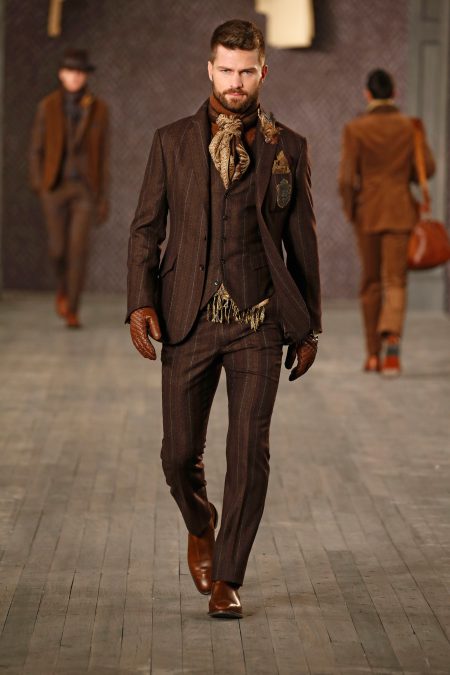
Or, it could be that people actually have agency and make calculations all the time — based on reality, like, even though I really want the BMW I don’t think I can afford those car payments. Or, as much as I’d like to wear Joseph Abboud suits all the time, that might not be the right look on campus (and may be a tad more expensive than piecing together items from Jos. A. Bank and L. L. Bean).

I do understand that consumerism creates certain desires. But we are not 16-year olds with dad’s credit card. Some people make better decisions than others. Capitalism and big business have not turned us into victims. Even fans of Bojangles sometimes crave a meal at Waffle House.

Morality Divides, Coalitions Unite

That is, as some may tell, an riff on the old line used during the fundamentalist controversy to counter conservatives — “theology divides, ministry unites.”

Our friend, Chortles Weakly explains how officers in NAPARC communions who also hold official positions in The Gospel Coalition — can anyone identify the Allies? — are looking the other way when it comes to the Second Commandment, the bedrock of the Regulative Principle:

As the cultural exegetes must surely agree, an organization’s use of images, technology, and messaging strategies is fair game for critics. What follows is my attempt to critique some of the ways TGC uses images and innovates. The standard will not be something I learned in business school, the standard will be the confessions of the Reformed churches.

My concern here is not really with Reformed churches as such (which cannot actually align with TGC) or with members (who are free to consume as they will). It is with the officers (elders and pastors) of confessionally Reformed churches who participate in TGC leadership, given the fact that TGC’s content so strongly influences the one culture that really matters, the one culture that truly ought to be ordered according to the Bible – the household of faith, the church of God.

My concern is that the officers of confessionally Reformed churches (basically those from denominations affiliated with the North American Presbyterian & Reformed Council – NAPARC) who sit on the TGC council are giving their stamp of approval to some things that are specifically forbidden by the Bible, the Reformed confessions, and the historic practice of the Reformed churches.

The TGC web page over the recent Thanksgiving weekend provided a notable example of TGC-endorsed aberrant practices. The front page of the site used an image of a nativity scene (with the second person of the Trinity supposedly represented) in support of an article on “8 New Resources for Advent”. This is not an isolated instance. Pictures of Jesus and commendations of movies and materials depicting him are nothing new at the TGC web site.

What specifically is wrong with images of Jesus? Well, simple logic tells us that any image of Christ is necessarily a lie – the Bible is not a picture book. No image of Christ can be accurate. Can inaccurate images be a help to those who view them? Some will argue that serve an essential pedagogical use when it comes to children. Some, as were heard at the last General Assembly of the Presbyterian Church in America, will argue that we cannot appreciate the humanity of Jesus without images.

The Westminster Larger Catechism, to which the presbyterian ministers on the TGC council have taken vows of subscription, would seem to speak both to images of Christ and things like Advent in question 109:
Picture

Q. 109. What sins are forbidden in the second commandment?

A. The sins forbidden in the second commandment are, all devising, counseling, commanding, using, and any wise approving, any religious worship not instituted by God himself; the making any representation of God, of all or of any of the three persons, either inwardly in our mind, or outwardly in any kind of image or likeness of any creature whatsoever; all worshiping of it, or God in it or by it; the making of any representation of feigned deities, and all worship of them, or service belonging to them; all superstitious devices, corrupting the worship of God, adding to it, or taking from it, whether invented and taken up of ourselves, or received by tradition from others, though under the title of antiquity, custom, devotion, good intent, or any other pretense whatsoever; simony; sacrilege; all neglect, contempt, hindering, and opposing the worship and ordinances which God hath appointed. (http://opc.org/lc.html)

Now, I am aware that there are officers who take exceptions (where allowed) to portions of this section, especially concerning mental images. I am aware that some presbyterian bodies have in the last few decades allowed loose or “system” subscription to confessional documents. Still the question must be raised: Should a NAPARC church officer sit on a quasi-ecclesial body’s board when that that body condones and promotes violations of the second commandment as defined by the confessional standards of the officers’ own denominations?

At a time when America is leading the crusade for obedience to God’s law, do Gospel Allies really want to be caught on the sidelines?

Which Victims Do You Believe?

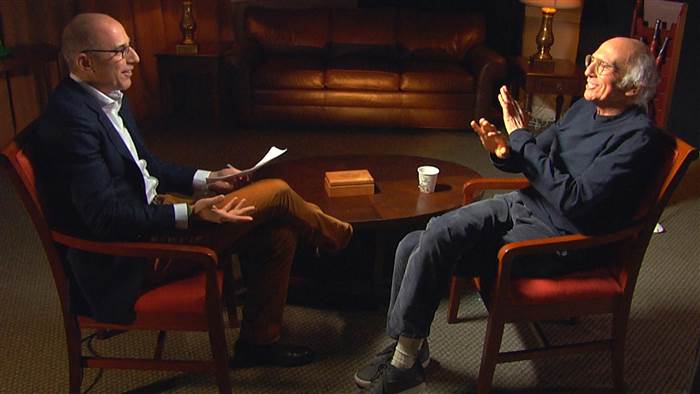
Yet another mainstream figure bites the dust — Matt Lauer of morning news fame whose performance only matter to mmmeeeEEE when he interviewed Larry David; I just can’t figure out any of the appeal of morning network news. Once again, women have come forward to accuse Lauer of inappropriate sexual behavior. NBC executives believed the women. And so Lauer loses his job.

What I can’t understand is the willingness of business, political, and journalistic authorities to believe what is generally one person’s word against another. This is not an opinion based on male privilege. It’s a legal reality hammered home by the Netflix series, The Keepers, in which Baltimore prosecutors and Roman Catholic Archdiocese officials were unwilling to believe the testimony of women who came forward almost 30 years later to accuse a specific priest of molesting them (and setting up meetings for other priests and police). No priest lost his standing (though a trip outside the country swept the controversy under the proverbial rug for a time). The reason as one of Baltimore’s States Attorneys explained was that the testimony of one person — even if memories were credible — was insufficient to start the engine of prosecution. (Of course, what is liable to prosecution in a court of law is not the same as public opinion or the rules of private employers.)

So what happened only six months after The Keepers was gaining some attention from video streamers?

And imagine writing today what one author did about the documentary series when it appeared:

How can anyone believe this?

The central thesis of The Keepers is that an alleged abusive priest, the now-deceased Rev. Joseph Maskell, can be tied to the disappearance and murder of Sr. Cathy. However, some of the central accusers in all of this, who claim that Maskell sexually abused them when they were young girls, have quite a bit of explaining to do.

For example, in 1995, a woman named Jean Wehner – whose claims play a central role in The Keepers – filed a civil lawsuit against Maskell under the name Jane Doe. What was uncovered in the course of her suit can only described as disturbing. It turns out that all of Wehner’s claims of abuse surfaced through the dangerous and discredited practice of “repressed memory therapy.”

It turns out that, according to court documents, Wehner has not just claimed that Rev. Maskell abused her in her life. Wehner has also claimed that she has somehow also been abused by:

four additional priests; three or four religious brothers; three lay teachers; a police officer; a local politician; an uncle; and two nuns.

Good grief. Really, Jean?

For a fuller account of the Archdiocese’s responses, see here.

Is it I or does it seem that Roman Catholics have been a little shy about weighing in on the current spate of revelations if only because of the church’s recent scandal-ridden past? Never to be intimidated, though, is Father Dwight:

What does this new and unexpected social phenomenon mean?

I think it indicates that a new generation of women don’t give two hoots about the old feminist agenda. The main objectives for women have been pretty much obtained-fair pay and fair treatment in the workplace. Now a new generation of women is saying, “We don’t have to put up with the harassment and objectification that still continues.

Hands off!

This is very interesting because, whether they like it or not, the modern women who take this view are echoing a very traditional set of values–ones which their great grandmothers would have recognized.

Its called modesty. In the past women were expected to draw the line, slap the man’s hand away and refuse a kiss until he was worthy.

The woman was the one who was supposed to be pure and unsullied and the keep the horny man at bay.

Father Dwight does realize, doesn’t he, that this “just-say-no” approach did not apparently work for the girls in The Keepers.

Meanwhile, some think the new found disgust with male appetites is not so much a recovery of virtue as an acquisition of power:

…what puzzles many of us is why the definition of deviance varies so dramatically over time. We cannot always predict who will become defined as deviant, and when the definitions will change. We do know that power plays the most important role in identifying who gets to define deviant behavior.

Until recently, allegations of sexual harassment and abuse by powerful men were not taken seriously—they were not viewed as deviant because the acts were perpetrated by powerful men on less powerful women. Now, the power to define sexual deviance has shifted to women—those who have collaborated with the media to bring attention to the issue and reform how such behavior is perceived and dealt with by society.

Until recently indeed — only 4 months ago.