America is Already Great

I’m in a good mood. Time to celebrate the joys and accomplishments of this blessed land.

Where else to you have the liberty to make observations like these from Mitch Albom on the differences between 1967 and 2017 of dropping your kids off at college/university?

OLD: “We drove our son to college today. What a proud moment. He was a little embarrassed by Mom and Dad coming up to his room, but we promised not to make any ‘square’ jokes. We unpacked his trunk and Mom helped organize his drawers. We met his roommate, who seemed nice. His name is Scott.”

NEW: “We drove our young prince to college today. What a proud moment. He was embarrassed by having his mom and step-dad and dad and former step-mom and dad’s current girlfriend all coming up to his room, so we had to watch from a distance. We saw him hook up his cable TV and his Xbox, then assemble his IKEA furniture. We also met his roommate, who seemed nice. Her name is X. And we are not supposed to use the word ‘her.’ ”

NEW: “After helping our son hang his flat screen and surround-sound speakers, we went for a walk around campus. We saw the 24-hour state-of-the-art exercise facility and the 24-hour Apple computer labs. He showed us the ‘safe spaces’ where no offensive words can be used, and the ‘healing spaces’ where you can go if you were accidentally exposed to an offensive sentence. There were seven cafeterias to pick from, so we chose the non-GMO, gluten-free, nut-free, dairy-free, vegan facility, which made our young person very happy. His nonbiological father took him aside and said, ‘Listen, friend, we know the drinking age is 21, but since you’re 18, please go easy on the beer. You don’t want to pass out in a hot tub and have it uploaded to YouTube.’ ”

OLD: “Our son had a brief meeting with his academic adviser, who told him his first two years, as expected, would be mostly required classes including classic literature, philosophy, math, a foreign language and history. But he was excited to learn he could choose an ‘elective’ each semester. Such freedom of study!”

NEW: “Our young liege checked his iPhone to pick his classes. A student protest to eliminate dead poets from the curriculum means he won’t have to study Shakespeare, and since history was found to be an offensive word (“His” and “story,” so sexist!) he doesn’t have to worry about that anymore. The fact is, his curriculum is totally up to him — to inspire and challenge his natural talents — but he did say he planned to study a foreign language. I think he said, ‘Fortran.’ ”

OLD: “We wanted to have ‘the talk’ with our son, make sure he wasn’t confused about the whole birds and the bees issue or its consequences. His mom told him she wouldn’t mind if he met a nice girl here, and if it was someone special, maybe she could come home with him for Thanksgiving. Dad took him aside and reminded him that he was here to study. After all, tuition costs $2,500 a year.

“Then, despite all that, Dad gave him a bottle of aftershave.”

NEW: “We wanted to have ‘the talk’ with our child, after he told us the hookup rate at his school was one of the highest in the nation. We toured the nearby Planned Parenthood office and the sexually transmitted disease clinic. His step-dad gave him a box of condoms, as did his mother. We were happy that his biological father reminded him that tuition, with room and board, was $70,000 a year. So it would be good if he studied once in a while.

“Happily, our young genius nodded repeatedly with his eyes closed. Then again, he was wearing headphones.”

The U.S.ofA. is no less great because people can react to Albom’s column in such thoughtful and inspired ways:

Filling a column with hackneyed jokes about gender identity, biological parents and more reasons college has “changed since 50 years ago” doesn’t seem like the smartest move, but apparently no one told Mitch Albom that. Albom, the long-time Detroit Free Press columnist (where he’s previously gotten in trouble for fabricating a story about players attending a game as well as self-plagiarism), decided to write a column along those lines this week, and it’s so, so bad.

The lesson? To notice difference is bad.  To have no awareness of historical change is good.

But we are the land of the free.  Bravery is mainly a symptom of following Major League Baseball in the South.

Signers and Decliners

Now comes another statement, named for a Tennessee city, with the signatures of more Christian scholars attached to it. I wonder if those who signed “An Open Letter from Christian Scholars on Racism in America Today” will also sign the Nashville Statement on biblical sexuality. Lots of professors are listed on each statement, and yet I can’t help but think each set has reservations about the scholarship practiced by the signers of the other statement.

What is it about statements? The one time Tim Keller and I agreed came in 1996 at the meeting of theologians and pastors that produced the Cambridge Declaration, a statement that expressed concerns about contemporary worship and megachurches. Keller did not sign. Nor did I. My reasons for not signing went along the lines that Matthew Anderson recently gave for not signing the Nashville Statement:

While I am generally ‘statement-averse,’ it seems reasonable to want a succinct depiction of the theological boundaries on these issues. If nothing else, such statements are efficient: they remove much of the work of retelling all of our convictions on a certain matter by giving us a public document to point to. It’s a lot easier to find all the people who are on board with a certain vision of the home, for instance, by asking what they make of the Danvers Statement.

Yet this virtue is also a vice: by creating a public context in which all the people who affirm certain doctrines or ideas are identified under the same banner, statements tacitly shift the playing field, such that to not sign is to signal disagreement.

Ding ding. Statements imply that those who don’t sign are not of the right outlook because those who sign are right. A lot of signaling going on.

Yet, a curious feature of the Nashville Statement is that it includes the heavy hitters in the Gospel Coalition. John Piper, Lig Duncan, D. A. Carson, Al Mohler, Russell Moore, even J. I. Packer and R. C. Sproul. Tim Keller did not sign.

The problem could be that statements are a problem. But Anderson also explains another reason for the Nashville Statement’s deficiency. It specifies a minimal set of norms while leaving aside a broader sexual ethic and biblical anthropology that should provide the source for specific practices or convictions:

With the signers and the drafters of the Nashville Statement, I am persuaded that the current controversies over sex, gender, and marriage are of maximal importance. With those individuals, I agree that there are matters here essential to the truthful, beautiful articulation of the Gospel of Jesus Christ. With those individuals, I agree that the crisis in the evangelical church is real, and that those seeking to alter our institutions so that they affirm gay marriage undermine and distort the faith that all Christians, in all places and times have affirmed.

But issues of maximal importance deserve maximal responses. It is possible to say too little, as it is possible to say too much. If I have sometimes erred toward the latter vice in my exposition and defense of a traditional account of sex and gender, I have done so only because the deflationary and minimalist approach to such questions is itself an intrinsic part of the intellectual atmosphere which has left the orthodox Christian view unintelligible to so many.

Meanwhile, secular academics are trying to defend middle-class virtues:

That [mid-twentieth-century bourgeois] culture laid out the script we all were supposed to follow: Get married before you have children and strive to stay married for their sake. Get the education you need for gainful employment, work hard, and avoid idleness. Go the extra mile for your employer or client. Be a patriot, ready to serve the country. Be neighborly, civic-minded, and charitable. Avoid coarse language in public. Be respectful of authority. Eschew substance abuse and crime.

These basic cultural precepts reigned from the late 1940s to the mid-1960s. They could be followed by people of all backgrounds and abilities, especially when backed up by almost universal endorsement. Adherence was a major contributor to the productivity, educational gains, and social coherence of that period.

Imagine if the Christians who signed the Open Letter or the Nashville Statement had joined with Amy Wax and Larry Alexander in a defense of older American norms.

It sure looks like Wax and Alexander could use it:

We, a group of Penn alumni and current students, wish to address white supremacist violence and discourse in America. Even if we are not surprised that Charlottesville can happen, witnessing blatant racism takes an emotional toll on us, some more so than others. And yet, overtly racist acts are identifiable and seem “easy” to criticize. It is nearly impossible for anyone, white, black or otherwise to see what happened in Charlottesville and not admit that a wrong occurred — unless you are a white supremacist yourself, that is.

But at the same time, history teaches us that these hateful ideas about racial superiority have been embedded in many of our social institutions. They crawl through the hallways of our most prestigious universities, promoting hate and bigotry under the guise of “intellectual debate.” Indeed, just days before Charlottesville, Penn Law School professor Amy Wax, co-wrote an op-ed piece with Larry Alexander, a law professor at the University of San Diego, claiming that not “all cultures are created equal” and extolling the virtues of white cultural practices of the ‘50s that, if understood within their sociocultural context, stem from the very same malignant logic of hetero-patriarchal, class-based, white supremacy that plagues our country today. These cultural values and logics are steeped in anti-blackness and white hetero-patriarchal respectability, i.e. two-hetero-parent homes, divorce is a vice and the denouncement of all groups perceived as not acting white enough i.e. black Americans, Latino communities and immigrants in particular.

Wax’s and Alexander’s claims rely on a simplistic, bigoted and archaic notion of culture; a concept purported to be bounded and discrete, a postulate which anthropologists “dismantled” decades ago by showing how such formulations of culture are embedded in systems of political, economic and social oppression.

Against outlooks like this statements don’t have a snowball’s chance in hades.

Alien Southerners

Has it occurred to many that the same people who have major reservations about the Confederate Monuments generally favor amnesty for undocumented aliens? Sure, that might seem like an inconsistency but the nooks and crannies of citizenship for aliens have more square inches than a container of Thomas’ English muffins.

Consider, for instance, the recent statement by the American Historical Association, the (trigger warning) Cadillac historical professional bodies:

Decisions to remove memorials to Confederate generals and officials who have no other major historical accomplishment does not necessarily create a slippery slope towards removing the nation’s founders, former presidents, or other historical figures whose flaws have received substantial publicity in recent years. George Washington owned enslaved people, but the Washington Monument exists because of his contributions to the building of a nation. There is no logical equivalence between the builders and protectors of a nation—however imperfect—and the men who sought to sunder that nation in the name of slavery.

Thing is, historians do not have the power to determine who is an American citizen. After the Civil War, President Johnson and Congress had to walk a very delicate line between preventing rebels to resume power of state governments while also honoring that the southern states had never seceded and so their governments were still legitimate. Here‘s one angle of the tight rope, namely that President Lincoln advised leniency (more than the AHA):

Lincoln desired to hasten the end of hostilities and quickly reestablish the fraternity of the parted Union. After asking Lincoln what to do with the defeated rebel armies in March 1865, General William Tecumseh Sherman remarked that, “all [Lincoln] wanted of us was to defeat the opposing armies, and to get the men composing the Confederate armies back to their homes at work on their farms and in their shops.” Additionally, the Secretary of the Navy remarked after Lincoln’s last cabinet meeting that Lincoln “was particularly desirous to avoid . . . any vindictiveness of punishment.” Other members of Lincoln’s party were not so forgiving. Many felt that Lincoln’s policies and desires were too soft and wished to punish former Confederates more harshly. They feared that former Confederates, returned to power, would not accept the fruits of Union victory, namely emancipation, and would harass black and white former Unionists in the South. To this extent, The New York Herald on April 16, 1865, estimated that Andrew Johnson’s policy towards former Confederates would be “more tinctured with the inflexible justice of Andrew Jackson than with the prevailing tenderness of Abraham Lincoln.”

Here’s how amnesty worked:

It was under these proclamations that, from May 1865 to December 1868, former Confederates flooded the office of Andrew Johnson with thousands of amnesty requests, with the numbers eventually tapering off as the exemptions narrowed. Each request for amnesty included a signed copy of the oath certifying the individual’s compliance, as well as a personally-written request and a third party endorsement, generally by the governor of that person’s state. The personally written requests generally followed the same sequence: the individual introduced himself and his place of residence and often proclaimed his age. He then described his actions (and/or sentiments) before secession, his conduct during the war, the clause under which he was exempted, and whether or not he had any property confiscated from him. The petitions ranged from brief requests for amnesty to “long and well-prepared defenses” of their conduct.

Petitioners were “anxious” to have their amnesty requests granted and their rights and privileges as citizens of the United States resumed. Their exemption from amnesty precluded them from such activities as the “transfer of titles or properties” and the obtainment of copyrights and patents, making business very difficult. Some were even tentative to marry. Until these individuals were pardoned, they lacked civil rights and faced the prospect of having their property confiscated. Above all, they lacked political rights, and thus could not take part in the discourse involving Reconstruction, and were unable to participate in the future of the South. Thus, asking for pardon was the “sensible thing for these people to do.”

Imagine that. Wanting a working society rather than attitudinal purity.

Finally, President Johnson declared “unconditionally, and without reservation, … a full pardon and amnesty for the offence of treason against the United States, or of adhering to their enemies during the late civil war, with restoration of all rights, privileges, and immunities under the Constitution and the laws …”

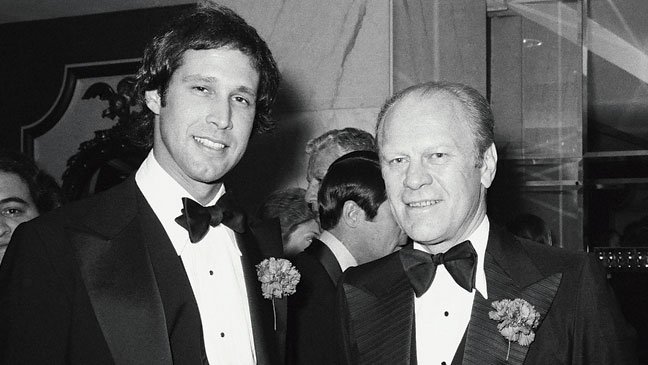
That pardon went to everyone but Robert E. Lee. He did not receive his executive pardon until Michigan’s own, President Ford:

Lee sent an application to Grant and wrote to President Johnson on June 13, 1865:

“Being excluded from the provisions of amnesty & pardon contained in the proclamation of the 29th Ulto; I hereby apply for the benefits, & full restoration of all rights & privileges extended to those included in its terms. I graduated at the Mil. Academy at West Point in June 1829. Resigned from the U.S. Army April ’61. Was a General in the Confederate Army, & included in the surrender of the Army of N. Va. 9 April ’65.”

On October 2, 1865, the same day that Lee was inaugurated as president of Washington College in Lexington, Virginia, he signed his Amnesty Oath, thereby complying fully with the provision of Johnson’s proclamation. But Lee was not pardoned, nor was his citizenship restored. And the fact that he had submitted an amnesty oath at all was soon lost to history.

More than a hundred years later, in 1970, an archivist at the National Archives discovered Lee’s Amnesty Oath among State Department records (reported in Prologue, Winter 1970). Apparently Secretary of State William H. Seward had given Lee’s application to a friend as a souvenir, and the State Department had pigeonholed the oath.

In 1975, Lee’s full rights of citizenship were posthumously restored by a joint congressional resolution effective June 13, 1865.

At the August 5, 1975, signing ceremony, President Gerald R. Ford acknowledged the discovery of Lee’s Oath of Allegiance in the National Archives and remarked: “General Lee’s character has been an example to succeeding generations, making the restoration of his citizenship an event in which every American can take pride.”

When will the social justice warriors be heading for Grand Rapids to show their rectitude on the facade of the Ford Presidential Library? If they go, they’ll find good beer.

Indian Summer Christmas

H. L. Mencken comes with a reminder that some Americans may need a little more familiarity with those beverages that make the heart glad:

The free use of alcohol at the Christmas season, whatever its drawbacks otherwise, has at least this one great merit: that it induces in mankind a degree of sentimentality unattainable by any other means. By sentimentality I mean the inbibition of prejudices, and particularly of those prejudices which are founded upon sound considerations. For instance, the prejudice against the personal habits of children, that against the Czerny* piano exercises and that against sentimentality itself.

A sentimental man is simply one who believes (or, at all events, maintains) that the unpleasant thing is pleasant. If you point out to him that his mother-in-law constantly invades his dignity, he will reply that she has a kind and solicitous heart. If you point out to him that his wife overdoes the “brightening” of her hair, he will tell you that he likes ber as she is. And if you point out to him (and prove with abundant logic) that Charles Dickens’ “A Christmas Carol” is maudlin balderdash, he will answer that it makes him cry, and that crying is exquisite.

Such is the sentimental man. The same definition, it quickly appears, will also serve for the boozy man—not the downright drunken man, remember, but the man gently mellowed and etherized by the fumes. The two are brothers. The sole difference between them is that the congenitally sentimental man is sentimental always, while the artificially—i. e., the alcoholically—sentimental man is sentimental only so long as the stuff he has swallowed is in his veins. Give him 10 hours’ sleep or plunge him into ice water, or let him drink a gallon of black coffee, and he will see things once more in their true aspect. His liquorish geniality, his unintelligent toleration will vanish and he will be again the cold critic, the alert foe.

*Carl Czerny was the father of modern piano techniques.

How Liberalism Abets Sin

People who self-identify as Christian scholars have issued a statement that condemns racism:

Racism should be denounced by religious and civic leaders in no uncertain terms. Equivocal talk about racist groups gives those groups sanction, something no politician or pastor should ever do.

The Christian basis for such denunciation is that all humans are created in the image of God. So far, so uncomplicated.

The statement also includes an affirmation of civil liberty:

Even as we condemn racism, we recognize that the First Amendment legally protects even very offensive speech.

The statement could include freedom of assembly, and freedom to publish. But these Christians see that our laws protect speech even when it is offensive.

Now imagine if the abolitionists had made similar assertions about slavery:

Slavery should be denounced in no uncertain terms.

Even as we condemn slavery, we recognize that the First-Amendment legally protects slavery advocates to express their ideas.

I don’t think that kind of toleration was in William Lloyd Garrison’s playbook.

I am aware, that many object to the severity of my language; but is there not cause for severity? I will be as harsh as truth, and as uncompromising as justice. On this subject, I do not wish to think, or speak, or write, with moderation. No! no! Tell a man whose house is on fire, to give a moderate alarm; tell him to moderately rescue his wife from the hands of the ravisher; tell the mother to gradually extricate her babe from the fire into which it has fallen; —but urge me not to use moderation in a cause like the present. I am in earnest—I will not equivocate—I will not excuse—I will not retreat a single inch—AND I WILL BE HEARD. The apathy of the people is enough to make every statue leap from its pedestal, and to hasten the resurrection of the dead.

And so, the problem that proponents of certain moral positions in public face is that in a free society, we make room for sinners.

Even as we condemn adultery, we recognize that we don’t want police going into private homes to see what people are doing.

Or

Even as we condemn the desecration of the Lord’s Day, we recognize that those who try to observe the Fourth Commandment should not receive special protections from law enforcement officials for their beliefs.

Or

Even as we condemn Communism, we recognize that the freedom of association allows the Communist Party USA to enjoy the protections of tax laws and civil and corporate codes.

In other words, a liberal society will not allow government to root out sin. It even protects its practice.

That is an especially difficult aspect that this statement does not address. The authors acknowledge that racism has taken many forms in U.S. history:

Slavery was formally abolished in 1865, but racism was not. Indeed, it was often institutionalized and in some ways heightened over time through Jim Crow legislation, de facto segregation, structural inequalities, and pervasively racist attitudes.

American law and policy have addressed some of these instances of racism — Jim Crow, structural inequalities, voting rights. But can legislation do anything about racist attitudes or the efforts of those who hold them to meet and publish?

Probably. But then you may no longer have a free society.

In which case, what does speaking out do?

Even without liberalism, will always have sin with us. With it, we have different interpretations of sin and so vice receives protection.

Even Patriotic Good Works May Be Tainted

The overwhelming case against Confederate Monuments is that either those memorialized or their patrons stood for an evil cause — slavery.

But what if Union Monuments — those memorialized or their patrons — don’t stand for a righteous cause — anti-slavery? What if Union Monuments were designed, like the war itself, to preserve the — get this — Union?

Frederick Douglass pointed out that Abraham Lincoln’s motives in the war were not pure, and that those who came to celebrate the 16th POTUS at the unveiling of the Freedmen’s Memorial Monument, also had mixed motives in the war:

It must be admitted, truth compels me to admit, even here in the presence of the monument we have erected to his memory, Abraham Lincoln was not, in the fullest sense of the word, either our man or our model. In his interests, in his associations, in his habits of thought, and in his prejudices, he was a white man

He was preeminently the white man’s President, entirely devoted to the welfare of white men. He was ready and willing at any time during the first years of his administration to deny, postpone, and sacrifice the rights of humanity in the colored people to promote the welfare of the white people of this country. In all his education and feeling he was an American of the Americans. He came into the Presidential chair upon one principle alone, namely, opposition to the extension of slavery.

His arguments in furtherance of this policy had their motive and mainspring in his patriotic devotion to the interests of his own race. To protect, defend, and perpetuate slavery in the states where it existed Abraham Lincoln was not less ready than any other President to draw the sword of the nation. He was ready to execute all the supposed guarantees of the United States Constitution in favor of the slave system anywhere inside the slave states. He was willing to pursue, recapture, and send back the fugitive slave to his master, and to suppress a slave rising for liberty, though his guilty master were already in arms against the Government. The race to which we belong were not the special objects of his consideration.

Knowing this, I concede to you, my white fellow-citizens, a preeminence in this worship at once full and supreme. First, midst, and last, you and yours were the objects of his deepest affection and his most earnest solicitude. You are the children of Abraham Lincoln. We are at best only his stepchildren; children by adoption, children by forces of circumstances and necessity. To you it especially belongs to sound his praises, to preserve and perpetuate his memory, to multiply his statues, to hang his pictures high upon your walls, and commend his example, for to you he was a great and glorious friend and benefactor.

Having said all that, Douglass was willing to honor Lincoln:

Instead of supplanting you at his altar, we would exhort you to build high his monuments; let them be of the most costly material, of the most cunning workmanship; let their forms be symmetrical, beautiful, and perfect; let their bases be upon solid rocks, and their summits lean against the unchanging blue, overhanging sky, and let them endure forever! But while in the abundance of your wealth, and in the fullness of your just and patriotic devotion, you do all this, we entreat you to despise not the humble offering we this day unveil to view; for while Abraham Lincoln saved for you a country, he delivered us from a bondage, according to Jefferson, one hour of which was worse than ages of the oppression your fathers rose in rebellion to oppose.

If Politics is Downstream from Culture

Is political iconoclasm downstream from recreational drugs?

Here’s why the question makes sense. If more people drank wine at lunch, would be they be less moralistic? Which is related to how much marijuana have neo-Nazis and antifa smoked to reach their adult years?

The apparent popularity of the idea that drinking at lunchtime is unacceptable tells us two things about Britain today – one is about attitudes to drinking, the other is about the way we assess or evaluate things. The first is straightforward: drinking at lunchtime is becoming more unpopular partly because of changing working habits – people work too hard, essentially – and partly because of concerns about the effects of alcohol on health and the fashionability of the healthy lifestyle.

That is not how things used to be. An academic friend of mine from Switzerland, recently retired, told me he had a glass of wine (or two) every day at lunchtime during his productive and satisfying thirty-five-year career. It’s hard to imagine any of today’s academics telling such a story in twenty or thirty years’ time. But fashions change, and maybe today’s will change too.

The second thing, though, is more insidious: the growing tendency to assess all human activity in moral terms: in terms of obligations, duties and the ideas of right and wrong, acceptable and unacceptable, fair or unfair.

Politics is one area of life that has become deeply moralized. Most political decision-making in peaceful well-functioning democracies concerns practical questions about the allocation of resources, and the structure of social organizations. These decisions are for the most part not moral decisions, nothing to do with obligations and rights and wrongs, but the result of compromises based on what is desirable, practical and efficient. Yet people find it so attractive to think of politics – even in this plonking, practical, reliable sense – in moral terms.

In other words, can’t a cigar just be a cigar? Or an Asian-American sportscaster just a guy with a good voice and telegenic demeanor?

It should be emphasized that things in our lives can be evaluated in ways that have very little to do with morality – for example, whether things are pleasant or disgusting, delicious or bland, funny or boring, gauche or stylish, awkward or harmonious, sensible or silly – and in many ways these evaluations come more easily and naturally to us than the abstract judgements of today’s moralists. Yet the preaching tone of the moralist lurks in the speeches of politicians, on the Left and the Right – whether it is about climate change, what we eat, what art or music we enjoy, how we bring up our children, what kind of gender we identify with, etc. My point is not that these are unimportant questions – but that it is not obvious that they are moral questions. Nonetheless, our current political leaders in the UK find it alarmingly easy to adopt moralizing personae, from the honest and pure teetotal bearded vegetarian, to the stern yet fair authoritarian who knows best. Wouldn’t it be a refreshing change to have politicians who were not preaching to us?

Imagine if U.K. politicians had to live statues of people who executed heretics.

(thanks to one of our Southern correspondents who assures me he is not a neo-Confederate)

The Attack on Public Art

With all the attention to Confederate Monuments, I was wondering about what the recent hostilities in Charlottesville might say about the state of public art in the United States.

For instance, Nicole Martinez wrote positively about public art displays as recently as May:

If you walked past one of the Garment District plazas in New York City last fall, you may have noticed those giant, vibrantly colored animal sculptures towering over sidewalk diners at café tables. Or perhaps you were running to catch a plane at Miami International Airport, and you glanced up to see an intricate web of etched glass on the roof of the bustling transportation center. If you’re an artist, you might be wondering how you might land an opportunity to showcase your work in a public space and land a public art commission – and while the process can be long and arduous, there are a variety of opportunities to participate in public art programs across the country.

Public art programs were first launched in the United States in the 1930s, when President Roosevelt’s New Deal spurred the idea that Americans should take pride in their cultural treasures. The New Deal program Art-in-Architecture (A-i-A) developed percent for art programs, a structure for funding public art still utilized today. This program gave one half of one percent of total construction costs of all government buildings to purchase contemporary American art for that structure. Today, acquisitions also include specially commissioned art projects for public art spaces, and the percentage allocated from a new construction project typically varies from one-half to two percent.

You might think that public art is a positive aspect of American society.

The Association for Public Art admits that some pieces might receive support from the entire community but that should not stop funding and recognition:

In a diverse society, all art cannot appeal to all people, nor should it be expected to do so. Art attracts attention; that is what it is supposed to do. Is it any wonder, then, that public art causes controversy? Varied popular opinion is inevitable, and it is a healthy sign that the public environment is acknowledged rather than ignored. To some degree, every public art project is an interactive process involving artists, architects, design professionals, community residents, civic leaders, politicians, approval agencies, funding agencies, and construction teams. The challenge of this communal process is to enhance rather than limit the artist’s involvement.

For that reason, Martinez advises caution to artists:

Ultimately, artists interested in landing public art commissions should pay close attention to government agency websites in an effort to keep track of open calls for public art commissions. If you choose to apply, consider crafting a proposal that directly addresses the architectural components of the space, bearing in mind the agency’s budget constraints and your own ability to stick to the budget you’ve laid out. And while its true that a public art project may not be the most lucrative commission of your artistic career, its lasting influence will likely impact it for years to come.

Obviously, she wasn’t thinking about changing historical awareness.

Consequently, to keep up with the times, Americans for the Arts decided to create distance between their support for public art and the kinds of public displays that have drawn ire recently:

“For nearly 60 years, Americans for the Arts, with its member organizations, has been a fierce advocate for public art and how it can help transform, inspire, and educate communities. Americans for the Arts stands with community members who are coming together to have civil and just dialogues, and to meaningfully and honestly assess the value of their existing public art pieces, monuments, and memorials in telling the narratives that their communities desire and deserve today. Americans for the Arts stands in opposition to any form of violence, intimidation, or illegal activity that cuts short such community dialogue.

“We support ongoing community dialogue around truth, reconciliation, and removal and replacement of the various artistic and cultural vestiges of white supremacy and racism in the United States, and the installation of monuments commemorating narratives of emancipation, shared strength, and equity. We recommend that local arts agencies and other arts institutions join these dialogues in concert with affected communities.

“Americans for the Arts strongly supports diversity, equity, and inclusion, and stands against racism, bigotry, and hatred. To support a full creative life for all, we commit to championing policies and practices of cultural equity that empower a just, inclusive, equitable nation.”

Sixty years for public arts. Four days against white supremacy and racism. You do the math.

American Exceptionalism Perfectionist Style

Forget the meme that has Roman Catholics winning. The big winner of late is Charles Finney, that evangelist who insisted that Christians renounce all sin in their lives and taught a generation of Protestants that compromise with sin in politics was — wait for it — sin.

Evidence of the prevalence of such perfectionism comes in Theon Hill’s piece on Charlottesville. Surprising is his acknowledgement that black Civil Rights advocates were far from pure:

The practice of accommodating white supremacy is not unique to white America. People of color have often deployed accommodation strategically, hoping that it will lead to greater acceptance by whites. Booker T. Washington, in his famous Atlanta Exposition Address, embraced the logics of “separate but equal,” expecting blacks to experience upward mobility as they demonstrated their worth to white America. W. E. B. DuBois called on blacks to avoid racial activism during the First World War, believing that loyalty to the nation during this difficult moment would produce greater acceptance during the post-war period. Even my personal hero Dr. King hesitated to oppose racists in the Democratic Party in 1964, believing that accommodation would produce greater gains for blacks in the long term.

Isn’t that the nature of politics? Don’t you take certain gains while recognizing you don’t get everything? Since politics is about maintaining order and equity in a world that consists of sinners, and since you can’t eradicate sin in this life and don’t want to live in a society where government (who uses force legitimately) is looking into everything you do and think, maybe you live with a little compromise? Maybe you fight another day for another round of proximate goods.

Not so when you apply the standards of perfectionist Christianity:

Scripture and history repeatedly warn that accommodating sin never produces greater holiness.

That is certainly true for the believer and even the church — oh, by the way has anyone asked how pure the mainline churches are in their efforts to combat the alt-right? But monuments and social protests are not about personal righteousness. They are about what we share as people inhabiting the same national borders and government by the same civil authorities.

When did people ever start expecting a nation to be holy?

Oh, that’s right. Mr. Finney.

Theology of the Cross or Glory?

Where do you put a guide to domestic duties?

A few years ago, 2013, a gift was received from Mrs. Robert (Renata) Voeltz — a 1951 “Your Household Guide” sponsored by the Ladies Aid Society of Our Saviors Lutheran Church. This book contained 1,001 helpful household hints selected from several hundred home recipe books of Walsworth Bros., located in Marceline, Missouri, distributed throughout the nation…. It was a wealth of information. For instance, baking, birthstones and flowers, canning, children’s section, cooking, business laws, federal old age benefits. Then, freezing, gardening, health and accident, holidays, insects and kitchen measures. Going on…laundry, paints, picnics, postal rates, presidents of the U.S., sewing, state capitals, time savers and wedding anniversaries.

These were only “hints:” For even consistency when making a pie crust, add water with a clothes sprinkler.” (Clothes sprinkler?? Perhaps a thing of the past.) To see whether old yeast was still good, put it in warm water with a teaspoon of sugar, stir. If it foams in 10 minutes, use it right away. Place an egg in a pan of water — if fresh, it will turn on its side; a few days old, it will tilt upwards; if stale it will stand on end; if very old it will float! Rub scissors with butter to cut up marshmallows. Sprinkle talcum powder into new shoes, they will seem much more comfortable when new. Onions will not make your eyes water if scalding water is poured over them before they are peeled. Boil potato or carrot peelings in the teakettle to remove lime. When scalding a chicken, add one cup soda to the boiling water — the feathers will come off easier and the flesh will be clean and white.

Postal rates? First Class – 3 cents for each ounce. Postal cards – 1 cent each. Second Class – newspapers – 1 cent per two ounces. Third Class – 2 cents for each two ounces; Fourth Class – Parcel Post – must weigh eight ounces.

Sponsors of the book? Full pages: Home Federal Savings & Loan, three offices, savings accounts insured up to $10,000, home loans, convenient monthly payments. Distel & Co.: Furniture, funeral services, ambulance; service within the reach of all, day and night phones. Rendahl & Highum: Feed, seed, grain. Burgess & Sons, Inc.: Lumber, building materials, Clech quality coal, paint and hardware, big enough to accommodate, small enough to appreciate.

Half pages: Kvale’s IGA Store; Kehrberg’s Our Own Hardware, Sears Roebuck & Co. “Shop at Sears & Save.” Biel Implement Co. – Oliver and Minnesota machinery and repairs. One third page: Nash Cafe, Valley Dry Cleaners, Stickan’s Ben Franklin, Webster & Kohn N.J.C. Pure Foods; McConnell Electric; Sward-Kemp Drug; Sande’s Implement – Allis Chalmers and New Idea farm equipment and Studebaker cars; Root River Oil Station – Shell gas and oil; Art’s Husky Station – Goodyear tires; Clifford Walker’s D-X Station – home and auto supplies; Denny’s Cafe – home baked pastries.

As cultural Christianity goes, this seems harmless, even appealing. I’m still not seeing much gospel or cross.