Rescue Mission vs. Lent

Something about this logic seems fishy:

Creighton University’s Online Ministries program, “Praying Lent 2017,” says the purpose of fasting is to “experience the effects of not eating. It also serves to be a penance or a sacrifice for the purpose of strengthening us.”

“When we get hungry, we have a heightened sense of awareness,” it adds, noting that the practice helps people to clarify their thoughts. “It is purifying and prepares us to pray more deeply,” the resource from Jesuit-run Creighton University in Omaha, Nebraska, points out.

By that logic, those Christians who go to rescue missions to conduct a worship service for and serve a meal to the homeless should put worship before food. But the way I experienced it, when our youth group helped out with rescue missions in Philadelphia, we served the meal first because the idea was that someone who is hungry could not concentrate on the message of the gospel. But if Creighton’s counsel is right, that kind of hunger heightens spiritual awareness and a sense of the need for the gospel.

Am I right?

Spiritual Discipline

Notice how devoting yourself to fasting and prayer winds up concentrating your mind on what to eat:

Here are some meatless Friday suggestions:

Cheese Quesadillas. In the unforgettable words of Napoleon Dynamite’s grandmother, “Just fix your self a dang QuesaDILLA.” Our family is all about the quesadilla on Friday. Cheap. Easy. Kids love them. Make big ones and use a pizza cutter to cut them up into slices for everybody. Add some sour cream and hot sauce for the parents, maybe some chips and home-made guacamole. You’ve got a great meal.

Nachos. A variation on quesadillas. My wife Joy gets cookie sheets out, covers them with chips and grated cheese and then puts them in the oven. Bring them out and put them in front of the kids and watch them disappear. Super cheap and kids love it. For adults, add sour cream, salsa, chives, guacamole, etc. You can also add refried beans – but make sure you get the kind without animal fat/lard since this would violate the Friday meatless rule.

Pizza. Cheese pizza for the kiddos. Margarita pizza for the parents. Perfect.

Grilled Cheese Sandwich and Tomato Soup. This is a nice simple meal and surprisingly our kids love it. You dip the grilled cheese in the soup. Comfort food. For parents, add some pesto to your grilled cheese sandwich. Also, adults like mixing up the cheeses – try different kinds.

Pasta and Marina. Fast. Easy. Children love. It costs next to nothing.

Fettuccine Alfredo. Another meatless meal that most people like. Very filling. Lots of energy.

Mac and Cheese. A good option for kids – especially when mom and dad are leaving on a date. Meatless. Inexpensive.

Vegetable Lasagna. This may not be a winner with the kids, but adults like it. It’s a lot of work to prepare, though.

Egg Salad Sandwich. My wife and I really like egg salad sandwiches with tomato and lettuce.

Tuna Salad Sandwich. Honestly, this can get old, but you change it up additions like cucumbers, olives, or even curry powder. You can get tuna sandwiches at Subway on Fridays.

Fish and Chips. My go to Friday meal, especially if at a restaurant.

Salmon. During the year, when we want a nice Friday meal, we go for salmon. Healthy. Lean. Not hard to prepare. I grill it on a cedar plank. Fantastic. This is a nice option if you have friends coming over for dinner on a Friday night, but don’t want to bore them with mac and cheese. You can also mix the grilled salmon with greens, fruits, and nuts for a beautiful salad.

Cheese Enchiladas and Chips and Salsa. This is the number one Marshall Friday meal. Joy makes it and everybody loves it. Very filling. Not very expensive. The hard part is heating all the corn tortillas in oil. It takes a little more time, but it’s worth it. My nine year old twin daughters made this meal one Friday night while my wife was away from start the finish (but I had to wash the dishes!).

Need to eat out on a Friday? My favorite option is a Bento Box lunch at a Sushi restaurant.

My least favorite Friday option? Well, the McFish Sandwich and frozen fish-sticks are my least favorite. The children like fish-sticks, but when I discover that they are for dinner, I inwardly groan. Nothing says “penance” like fish-sticks.

Imagine if you believed that conversion was a life-long process, not just 40 days a year:

Q 88. Of how many parts does the true conversion of man consist?
A: Of two parts; of the mortification of the old, and the quickening of the new man.

Q 89. What is the mortification of the old man?
A: It is a sincere sorrow of heart, that we have provoked God by our sins; and more and more to hate and flee from them.

Q 90. What is the quickening of the new man?
A: It is a sincere joy of heart in God, through Christ, and with love and delight to live according to the will of God in all good works.

A Girl By Any Other Name

That student of the American language, H. L. Mencken, almost always had his finger on the pulse of usage:

Every lover of the true, the good and the beautiful must needs be interested in the Hon. A. Toven Worm’s campaign for a reform in the nomenclature of chorus girls. Hitherto, as we all know, the terms used to designate girls of different heft, altitude and talent have run to a distressing vulgarity. The smaller girls have been called “ponies,” “broilers” or “squabs,” and the larger “hillhorses,” “amazons,” “welterwetghts” or “beefs.” It is the aim of the Hon. Mr. Worm, who represents Miss Gertrude Hoffmann in the capacity of confidential fictioner, to remedy this curse by substituting names of a romantic and poetic nature. Accordingly, he takes space in the current Sunpaper to announce that Miss Hoffmann will be surrounded on her coming appearance here by a choir of “chickens” and “canaries,” with a few “violets” and “rosebuds” for good measure.

A benign reform, but one which Mr. Worm has failed to workout to more than one place of decimals. His invention of “canaries” deserves all praise, but he makes concessions to current slang in “chicken.” Why not rename the whole hierarchy of chorus girls, from “squabs” to “hillhorses,” with the names of pretty birds? Why not begin with “humming-birds” and run up the scale to “swans,” or even to “penguins” and “cassowaries”? Why not attempt to differentiate between girls who can sing and girls who can merely stand and wait by calling the former “nightingales,” “canaries” and “mockingbirds”? I submit the following provisional and partial list to the Hon. Mr. Worm for his consideration and judgment:

CANARIES—Singing blondes of less than 120 pounds weight, but of a generally rotund aspect.
DOVES—Small, sylphlike creatures, demure and dumb.
PARROTS–Large, gaudy girls with aquiline noses.
PENGUINS—Stately beings in ball gowns, heavy on their feet.
OSTRICHES—The grenadiers of the chorus, none less than 170 pounds in weight.
FLAMINGOES—The so-called “showgirls” of yesteryear: Florodora sextetters.
SWABS—Tall, resilient, necky girls, vocal only in the final chorus.
PHEASANTS–Bunchy little ones.
CROWS–Inky brunettes, large and sad.
TANAGERS—All red-haired girls, regardless of size. (Formerly called “Zazas”).
HUMMING BIRDS–Hundred-pounders.
STORKS–Long, panatella girls, voiceless and austere.
SPARROWS–Happy little chirpers, unbeautiful but industrious.
THRUSHES–Half-portion sopranos.
BULBULS—Deep-chested contraltos, gurgly and amiable.

And so on and so on. I offer only few suggestions. Let the Hon. Mr. Worm engage a competent ornithologist and proceed to the completion of the list. Again, he might try a list of flower-names, beginning with “violet” and running up to “chrysanthemum.” “Sunflowers” would be apt and excellent for towering, gawky blondes, and “dahlias” would fit the auburn-haired admirably. Let the hon. gent. proceed to the business at once. He has launched a laudable and long-needed reform. All connoisseurs of nomenclature look to him to give it substance and permanence.

Those Also Were the Days

Damon Linker remembers those crazies times under President Obama:

As Delmore Schwartz once joked, sometimes paranoids have real enemies, and the paranoid-in-chief occupying the Oval Office has some very real and very powerful enemies.

Anyone who denies this needs to go back and reread the most important (and unfairly maligned) magazine feature written last year: David Samuels’ 9,500-word New York Times Magazine profile of Obama administration senior staffer Ben Rhodes. Journalists hated the piece, but for reasons so self-serving that it’s hard to believe anyone took the objections seriously. (My colleague Noah Millman noted as much shortly after the essay appeared.)

Samuels portrays (and quotes) Rhodes as someone who views both reporters (“they literally know nothing”) and Washington’s foreign policy establishment (Rhodes calls it “The Blob”) with utter contempt. It’s that contempt that Rhodes uses to justify the propaganda shop he ran out of the Obama White House, subtly but significantly manipulating the story that the mainstream media told about the Iran nuclear deal by selectively and repeatedly leaking tiny bits of information to dozens of journalists who wove those bits of micro-spin into countless tweets and stories over the course of many months. The end result was a pro-Iran deal conventional wisdom — a pointillistic picture of reality composed entirely of colorful dots painted by Rhodes and his staff with the knowledge and support of the president.

While trying to get the Iran deal approved, Rhodes was in the position of needing to use journalists to defeat The Blob, which viewed with extreme skepticism (if not outright hostility) the Obama administration’s efforts to reach a nuclear accord with Tehran. But once Donald Trump won the presidency, old opponents found themselves firmly on the same side. Rhodes and his former boss, the bipartisan foreign policy establishment, and the nameless and faceless bureaucrats who staff the executive branch agencies and departments that make up the “intelligence community.” All of them were now united in standing against a president who had vowed to break far more radically from the established Washington consensus than Obama ever dreamed of doing.

What makes America great? Remembering sometime.

Rules for Who Gets In Are Complicated

Imagine if the U.S. government used for immigration policy Notre Dame’s reasons for not inviting President Trump:

The decision by the University of Notre Dame to invite Vice President Mike Pence to be this year’s graduation speaker and recipient of an honorary degree was surely not made lightly. The last six presidents have all been invited to the school’s commencement exercises, so the decision to invite someone other than President Donald Trump represents a change from the norm. And that is precisely why it was the correct decision.

The first thing to remember about the decision is that it affects not only the Indiana university’s standing, but the actual students whose families and friends will be gathering that day. There were some protests eight years ago, when newly inaugurated President Barack Obama attended the commencement exercises, but those protests were mostly on the internet and at the margins. The day itself was not ruined for the graduates.

Can anyone really think that Trump’s presence would not elicit a different kind of protest? Is it not likely that the protests would be so vociferous and widespread that the day would be marred for the students who should be the focus of the day?

I am sure that consideration weighed heavily on the decision-making process, which is not to say Notre Dame is likely to award a heckler’s veto to anyone. It is a mere acknowledgement that a man for whom a central campaign theme was the demonization of other people elicits a kind of visceral response, not because some people are too politically correct or thin-skinned, but because that visceral response is what Trump was after. He stoked the flames and cannot now wonder that people recoiled from the prospect of being burned.

Lots can go wrong if you invite POTUS. Nothing can go wrong with open borders?

But don’t forget welcoming the stranger.

Welcome the stranger.

Trump is strange.

Welcome Trump.

When Law Robbed the Phillies

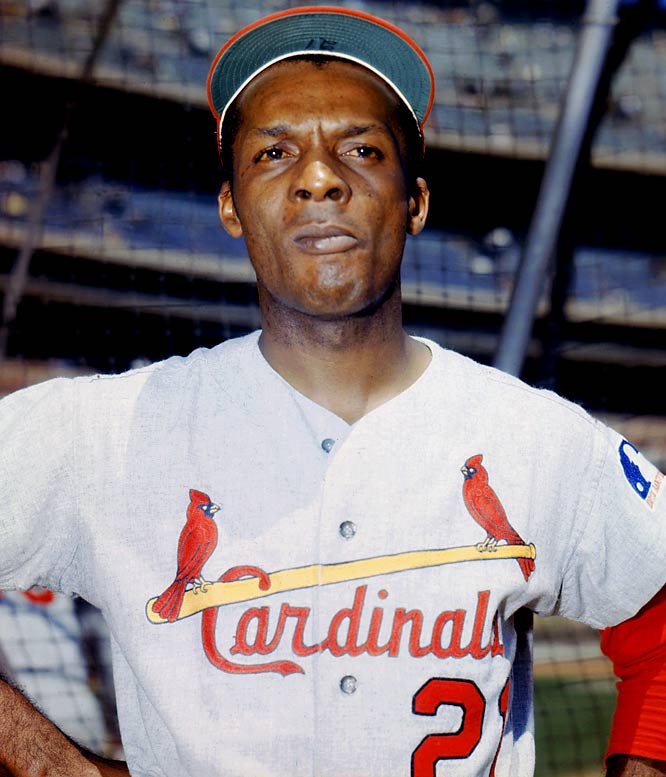
To provoke students to think about whether the Emancipation Proclamation ended slavery and similar inequalities related to property, I brought to class today a little piece of Major League Baseball and constitutional history. Anyone remember Curt Flood, the man for whom the Phillies in 1969 traded Richie Allen (my childhood hero)? Funny, he never played for the Phils:

So when the Cardinals traded him to Philadelphia that October, Flood, 31 at the time, was not much inclined to go, even though he had no choice if he wanted to stay in the game. That’s how the reserve clause worked. The owners insisted it preserved balance between the teams; of course, it also let them buy and keep talent on the extremely cheap. Such collusive, anticompetitive conduct would normally have violated the Sherman Antitrust Act. But in 1922, the United States Supreme Court had held that the business of baseball was somehow not interstate commerce covered by that law, and in 1953 it ruled, equally ludicrously, that Congress had wanted it that way.

Over the years, the court refused to extend that tortured logic to theatrical productions, basketball, boxing and football. But something about baseball — here, all those clichés about its hold on the American psyche apparently held true — blinded even the most revered jurists, including Oliver Wendell Holmes Jr., Earl Warren, Hugo Black, William O. Douglas and Felix Frankfurter. (Only the historically disparaged justices Stanley Reed and Harold Burton, who dissented from the 1953 ruling, got it right.) That the Supreme Court would reverse two of its own precedents seemed highly unlikely.

And that was what Marvin Miller, the firebrand executive director of the Major League Baseball Players Association, told Flood. His lawsuit, Miller warned, was “a million-to-one shot.” Bringing free agency to the game was on Miller’s agenda, but not for a while; at a time when baseball’s minimum salary was $10,000 and players got $15 daily meal money, his union was just too weak. And with his $90,000 annual salary — big bucks at the time — Flood was not the most sympathetic plaintiff. But backed by representatives from the various teams, Miller agreed to bankroll Flood’s case, retaining Arthur Goldberg, late of the Supreme Court, to handle it.

Flood himself was undeterred by the inevitable blacklisting to come. He liked living on the edge — he was the type to throw baseballs with his phone number written on them to pretty women in the stands — and was a contrarian, always itching for a fight. Then there was his race, and his rage. Other black stars, like Mays, Aaron and Ernie Banks, rocked no boats. But Flood always had, attacking segregated training camps in Florida, appearing at an N.A.A.C.P. rally in Mississippi and, with the help of a court order and police protection, moving into a white neighborhood in the Bay Area. To him, protests were nothing new.

And coincidentally (or providentially), I also read today why Curt Flood may not have wanted to play in Philadelphia (for reasons similar to Richie Allen’s:

Winter was a leader of the very powerful Philadelphia Klan, which at its height claimed some fifty thousand members in the metropolitan area. He was one of the movement’s most effective publicists and evangelists, but he was also deeply involved in factional struggles. In a striking portent of his later political allegiance, Winter earned notoriety by forming a personal elite bodyguard and enforcement squad known as the Super-Secret Society, the “S. S. S.” (at this early date, the similarity of name to the German S. S. is coincidental. And no jokes, please, about Double Secret Probation). The “Night Riders” of this “Black-Robed Gang” beat and intimidated opponents who questioned Winter’s shady financial dealings. Winter’s tactics included exposing the Klan membership of his opponents, seeking thereby to attract boycotts and demonstrations against them by Catholics and other hostile groups. His critics accused him of “building up a far more autocratic organization than Rome ever dared to build.” In 1925-26, the Philadelphia Klan’s klaverns (lodges) were riven by violence, lawsuits, and spectacular mutual expulsions.

In 1928, the Klan nationwide was galvanized anew by the threat of a Catholic Presidential candidate in the form of Al Smith. In that year, Winter published in his What Price Tolerance? (Hewlett, N.Y.: All-American Book, Lecture and Research Bureau, 1928) a comprehensive statement of anti-Catholic ideology. The book gives an excellent idea of the kind of rhetoric used by Klan leaders in their speeches intended to recruit new members, and to fire up supporters.

For Winter, Catholic “aggression” was expressed in the Catholic marriage laws, which denied the validity of Protestant marriage and family life, and in the sectarian schools, which created and sustained a whole alternative society and cultural life. Surging Catholic power threatened to overwhelm American society and values. In the previous century, the Church in the United States had grown from fifty thousand adherents and 35 priests to twenty million faithful with a vast network of clergy, schools, and seminaries. By the 1920s, there was a “general staff” – perhaps a provisional government? – in the form of the elaborate bureaucracy of the National Catholic Welfare Council. The nightmare was that all Americans would someday be subjected to this tyranny, and that a Catholic would someday attain the presidency. Catholic strength was founded on “Alienism”, “the unassimilated hordes of Europe”, which threatened American racial purity.

The shadow of racism was large in Philadelphia.

How to Tell the Difference between Turkey and the U.S.

You don’t read about President Erdogan in the pages of Washington Post, New York Times, or New Yorker:

As Turkey heads toward a constitutional referendum designed to grant its leader Recep Tayyip Erdoğan even greater powers, the polls predict a neck-and-neck race.

That doesn’t mean their chances are equal. While the April vote is likely to be free, whether it will be fair — given rising repression of political dissent and the ongoing state of emergency — is another question.

Take the case of İrfan Değirmenci, a well-known news anchor for Kanal D, who explained his opposition to the proposed changes in a series of tweets earlier this month. “No to the one who views scientists, artists, writers, cartoonists, students, workers, farmers, miners, journalists and all who do not obey as the enemy,” he wrote.

He was promptly fired.

Değirmenci’s dismissal has heightened fears among No campaigners that those who oppose the new constitution will be subject to threats and intimidation ahead of the referendum on April 16.

“A lot of people are risking their careers and their future by openly and publicly campaigning for No,” said İlhan Tanir, a Turkish columnist and analyst based in Washington. “There is nothing fair about this.”

Government supporters face no such risk: While Kanal D claimed Değirmenci had been let go for violating the media group’s neutrality rule, Yes supporters have been free to air their views in the pages of Hürriyet, which belongs to the same group.

Hurriyet itself — a newspaper that positions itself as neutral — has muted critical voices: Its editors last week scrapped an interview with Orhan Pamuk, in which the Nobel Prize-winning Turkish novelist explained his reasons for voting No.

So why do elite journalists cover the Trump administration as if we’re living in the television series, Man in the High Castle. Perhaps because they believe in American innocence as much as Jerry Falwell, Jr.

Mencken, the Prophet

On the eve of that “Great” War, H. L. Mencken saw where vice crusaders were headed:

In the midst of all our torquernadan crusading, how is it that no moralist has dedicated himself to the extinction of the cigarette, that coffin nail, that debauchery, that father of crime? Elsewhere in this fair land it has been dealt staggering licks by the chemically pure. In Kansas, Iowa and Missouri the children in the public schools are taught to fear and abominate it; in Nebraska, Michigan and Alabama there are hot campaigns against it; in Indiana its sale is forbidden by law. But here in Baltimore not a single voice in raised against it. Our moralists are the most virulent in Christendom–their ardor, indeed, is often far more Mohammedan than Christian–and yet I have not heard a word from them about the licentious and diabolical cigarette.

Certainly this cannot be due to ignorance of its deadliness. It is a matter of common knowledge, indeed, that the cigarette is one of the most insidious of all agents of sin. The boy who inhales its noxious fumes today will be a drunkard tomorrow and a murderer next week. The woman who smokes cigarettes is sinister and unspeakable–a dangerous companion for the young. The man who pursues the corrupting vice is a shifty, blear-eyed rascal, with the complexion of a bilious jonquil and a liver that plots treasons. All criminals smoke cigarettes. So do all paranoics. It is the unanimous pet and comfort of felons condemned to be hanged.

On the medical side the evidence against it is irrefutable and overwhelming. In Dr. Osler’s great work on “The Principles and Practices of Medicine” (lib. XIV, fol. 324) there is the direct statement that the cigarette is one of the most potent causative agents in influenza, cancer, diphtheria, ophthalmia, beri-beri and senile dementia. Dr. Osler there describes an experiment with guinea pigs made by Prof. Dr. Hugo Bierfisch, of Leipzig. Two sets of guinea pigs, one of which had been trained to smoke cigarettes and the other of which had been kept pure, were exposed to virulent cultures of the bacillus typhosus. The virtuous guineas at once leaped out of the window, but the cigarette smokers, besotted by nicotine, snouted the fatal germs and at once fell into convulsions. By next morning all of them save one were dead of arterio-sclerosis, and that one was a babbling maniac. . . .

And all this medical evidence is amply supported by the statistics of our prisons and almshouses. Of the 226 murderers confined in Sing Sing prison between January 1, 1900, and December 31, 1910, no less than 207 ascribed their downfall to cigarettes. Of the 1,987 forgers imprisoned at the same place during the same time 1,562 blamed cigarettes. From Charleston Prison, near Boston, come reports that are even more impressive. Every one of the yeggmen now serving time there is a cigarette fiend. The late Dr. Clarence Richeson was another. Dr. Harvey H. Crippen, hanged in London for the murder of his wife, smoked 15 packages a day. Johann Hoch, the celebrated Chicago murderer, went to the gallows with a cigarette in his mouth and a glass of fake Plisener in his hand.

Time for Sausage

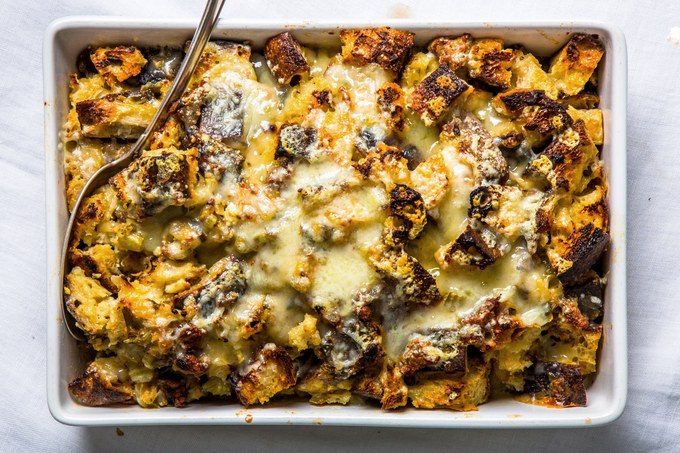
Martin Luther’s reform began with posting a message — how logocentric. Reformed Protestantism began with eating food. To reinforce Protestant identity while so many manque Protestants are finding their inner penitential selves, here are a couple recipes.

The first is for St. Galler bratwurst:

63.00% veal
32.00% pork jowl
1.50% salt
1.25% milk, dry skim
0.85% sugar
0.42% mustard seed, ground
0.42% lemon zest
0.35% pepper, white, ground
0.10% ginger, powdered
0.06% mace, ground

26mm sheep casings

For those who think that looks hard (I do — who measures like that?), here’s a way to dine on sausage that looks tasty and comforting:

Ingredients 12 SERVINGS
2 tablespoons unsalted butter, plus more
1 medium boule sourdough, cut into 1-inch pieces (9–10 cups), dried out overnight
2 tablespoons olive oil
1 pound sweet or spicy Italian sausage, casings removed
2 large onions, finely chopped
3 celery stalks, chopped
¼ cup finely chopped sage
Kosher salt, freshly ground pepper
1 cup dry white wine
2 large eggs, beaten to blend
1 cup low-sodium chicken broth
2 cups half-and-half
1 pound aged cheddar, grated (about 5 cups), divided

Preparation
Preheat oven to 300°. Butter a shallow 13×9″ baking dish and a large piece of foil. Place 9 cups bread in a large bowl.
Heat oil in a large skillet over medium-high. Cook sausage, stirring occasionally and breaking into small pieces with a wooden spoon, until browned and cooked through, 7–10 minutes. Transfer to bowl with bread.
Place onions, celery, sage, and 2 Tbsp. butter in same skillet; season with salt and pepper. Cook, stirring often, until onions are golden brown and soft, 10–12 minutes. Add wine and cook, stirring occasionally, until almost completely evaporated, about 5 minutes; scrape into bowl with bread and sausage.
Whisk eggs and broth in a medium bowl until smooth, then pour over bread mixture. Pour in half-and-half and add 3 cups cheese; toss to combine. Season with salt and pepper. Transfer to prepared baking dish and cover with foil, buttered side down. Bake until a paring knife inserted into the center comes out hot, 40–50 minutes .
Heat broiler. Uncover stuffing and top with remaining cheese. Broil until top is golden and bubbling, about 4 minutes. Let sit at least 10 minutes and up to 30 before serving.
Do Ahead: Stuffing can be assembled 1 day ahead; cover with foil and chill. Stuffing can be baked (but not broiled) 3 hours ahead. Store tightly wrapped at room temperature until ready to broil.

What’s the Difference between a Pro-Refugee Evangelical (Tim Keller) and a Democrat (Dianne Feinstein)?

Short answer: neither quotes the Bible.

Notice for instance the parallels among the National Association of Evangelicals, Ed Stetzer, Evangelical leaders (among them Tim Keller), and the Democrats.

The NAE:

“Christians and churches have been welcoming refugees for 2,000 years, and evangelicals are committed to continue this biblical mission. Thousands of U.S. evangelicals and their churches have welcomed hundreds of thousands of refugees over the past 40 years through World Relief and other federally approved resettlement agencies. We don’t want to stop now,” NAE President Leith Anderson said.

The Trump administration’s plans to make severe cuts to the admission of refugees are alarming. We call on President Trump to declare his support for the continuation of the U.S. refugee resettlement program, which is critical at a time when the world faces a significant refugee crisis.

Ed Stetzer:

Scott Arbeiter, president of World Relief, says it this way: “The decision to restrict all entry of refugees and other immigrants … contradicts the American tradition of welcoming families who come to the United States to start their lives again in safety and dignity. The American people — most of whom can trace their own families’ stories through a similar immigrant journey in search of freedom — are a hospitable people.”

He’s right. But, it’s not just because we are Americans. It’s because we are Christians.

God’s people should be the first ones to open their arms to refugees. We should welcome them and do what Christians, in your church and mine, have been doing a long time — showing and sharing the love of Jesus with them.

Tim Keller et al:

As Christians, we have a historic call expressed over two thousand years, to serve the suffering. We cannot abandon this call now. We live in a dangerous world and affirm the crucial role of government in protecting us from harm and in setting the terms on refugee admissions. However, compassion and security can coexist, as they have for decades. For the persecuted and suffering, every day matters; every delay is a crushing blow to hope.

Since the inception of the refugee resettlement program, thousands of local churches throughout the country have played a role in welcoming refugees of all religious backgrounds. Ministries to newly arrived refugees are ready, and desire to receive many thousands more people than would be allowed under the new executive order.

The Democratic Party (according to Damon Linker):

Many liberals argue that refugees are among the most vulnerable people on Earth and so must be welcomed with open arms. That forcing undocumented immigrants to leave the country is gratuitously cruel, violates their rights, and so justifies municipalities flouting federal law by turning themselves into “sanctuary cities.” That banning entry to refugees or immigrants not yet within the United States can violate their due process rights under the U.S. Constitution. And that the desire to restrict immigration is invariably an expression of xenophobia, racism, and other forms of irrational animus and so morally (and perhaps constitutionally) indefensible.

All of these claims are, at bottom, expressions of a fundamentally anti-political humanitarian ideology that is unlikely to fare well in the next presidential election. Democrats desperately need to confront the vulnerabilities of this position and stake out a more defensible and pragmatic one if they hope to push back against Trump’s populist-nationalist message in upcoming years.

Of course, evangelicals don’t need to worry about running for election (though the likes of Russell Moore does need to worry about ministry dollars going somewhere other than the Southern Baptist cooperative program). But evangelicals who live in the United States may want to think (with help from Linker) about how to love their actual neighbors who live within U.S. borders (Walter didn’t see his buddies die face down in ‘Nam for open borders):

Many Americans believe that their constitution presumes or appeals to certain timeless, universal moral truths that apply to all human beings. But the U.S. Constitution itself — like the constitutions, fundamental laws, and commonly affirmed norms and rules of all political communities — is nonetheless instantiated in a particular place, rooted in a particular tradition. It also pertains and applies only to people who are members of the political community known as the United States of America.

Those who are members of this community are known as American citizens. They get a say in what laws get passed and how they get enforced. Those who are not members of this community — who are not citizens — don’t get such a say. The community is perfectly within its rights to decide which and how many of these outsiders will be allowed to visit the country, how long they will be allowed to stay, when they will need to go, and how many, if any, will be permitted to join the community permanently by becoming citizens.

This is one of the most elemental acts of politics: the community deciding who to admit and on what terms. To treat this act as somehow morally illegitimate is to treat politics as such as morally illegitimate.

In other words, evangelicals think like 1kers, as if the U.S. is a Christian community. Imagine welcoming non-Christians into fellowship in a Christian congregation. What sense does that make? So why should citizens of the United States act as if they are the United Nations of the World. As Linker says, it’s a complicated question how Americans decide what to do with outsiders:

Note that nothing I’ve said tells us anything about how many immigrants or refugees the political community of the United States should welcome at any given moment of history, or what criteria should be used to make this determination. I generally favor liberal immigration policies; many Trump voters take a very different view. The point, as Josh Barro recently argued in an important column, is that the policy debate needs to be made in terms of the good of the political community as a whole and in its parts, not in terms of abstract, extra-political moral duties owed to prospective newcomers. A political community exists in large part to benefit itself — to advance the common good of its citizens. There’s nothing shameful in that. It’s to a considerable extent what politics is.

And don’t forget, if godless Democrats and progressive evangelicals agree that Jesus is on the side of refugees, w-w has failed.