Publishing Is Not Good for the Soul

Just ask Jonathan Edwards (via Jonathan Yeager):

Edwards vocalized his disgust with the way that his book Religious Affections was published in 1746, probably because it was concisely printed, with tightly cropped margins and line spacing. Despite his complaints, the printer for this book feared that he had not printed enough copies to meet public demand. In an advertisement at the end of the book, the Boston printer Samuel Kneeland remarked that some 1,300 subscriptions had been taken for Religious Affections, at a time when a colonial author would have rejoiced if 500 copies of a book sold.

Edwards was also not happy with the editorial work that the ministers Benjamin Colman, John Guyse, and Isaac Watts did when publishing his revival account A Faithful Narrative in London. After its publication in 1737, none of the first editions of Edwards’s book would be published again from London. Partially because of Edwards’s desire to exercise more control in how his future books would be edited and published, he preferred to have them printed from Boston, where his trustworthy friend Thomas Foxcroft could oversee the presswork. Here again is more irony. A Faithful Narrative was one of Edwards’s best-selling books, and led to his international recognition as a revivalist. Yet if this book had been published in Boston, he might not have achieved international fame within his lifetime.

Personally, I don’t think Edwards was wrong to be particular about the way his books looked, nor do I think he should have thought his own book sense better than someone in the business. But is this the kind of reaction you’d expect from a man so earnest for holiness? Sure, he was a regenerate sinner like the rest of us. But the New Calvinists (and their Obedience Boys siblings) keep marveling at former New Calvinists’ sanctity. Can’t we de-escalate the piousity syndrome and relate like real human beings?

Buyer Beware

A common refrain among converts to Roman Catholicism is a lament about the sorry state of Protestantism, especially the mainline Protestant churches. Betsy Fox Genevose spoke for many when she described the lack of Christianity she had experienced while growing up a Protestant:

Throughout my non-churchgoing, non-believing adult years, I had always considered myself a Christian in the amorphous cultural sense of the world. Having been reared on the Bible and Protestant hymns, I was conversant with the language and basic tenets of Christianity. I had, moreover, been reared with a deep respect for the great Hebrew prophets, assorted Protestant leaders and Catholic saints, and even the unique value of Jesus Christ as the preeminent exemplar of loving self“sacrifice. Never, I am grateful to say, did I, like too many secular intellectuals, denigrate or disdain believing Christians, whom I had always been inclined to regard with respect. But for long years, I did not give much thought to joining their number.

So why is it that the communion that was supposed to elevate former Protestants and give them a better grade of faith is entering into ecumenical discussions with one of the churches, mainline Lutherans, that sent Protestants in search of witness firm on sex and the body?

Nearly 500 years after Martin Luther nailed his 95 theses to the Castle Church door, the largest Lutheran denomination in the U.S. has approved a declaration recognizing “there are no longer church-dividing issues” on many points with the Roman Catholic church.
The “Declaration on the Way” was approved 931-9 by the 2016 Evangelical Lutheran Church in America Churchwide Assembly held last week at the Ernest N. Morial Convention Center in New Orleans.

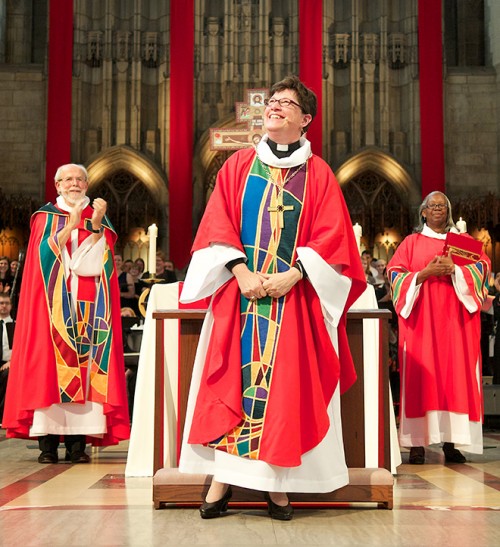
ELCA Presiding Bishop Elizabeth A. Eaton called the declaration “historic” in a statement released by the denomination following the Wednesday vote.

That’s right. A female bishop welcomed the news of entering into closer relations with church that will not ever ordain women.

But some Roman Catholics are not happy (the unhappy Lutherans are already in a different synod — LCMS):

The ecumenical drive has been part of the check-list of popes before the current pontiff. The joint worship service has been described by both the Vatican and the Lutheran World Federation as a “commemoration” rather than a “celebration” in order to avoid further controversy. Some Catholics, especially traditionalists, have criticized the prospect of a pope celebrating a schism. Another issue that has traditionalist Catholics and some clerics baleful is the issue of the differing theologies held by the Catholic Church and Lutherans regard the nature and the confection of the Eucharist.

On the upside, Betsy Fox Genovese, who died in 2003, will not have to witness her church’s pursuit of unity with her former church.

Fishermen Need Not Apply

Does the path to sanctification (or virtue) really lie in a liberal education?

Liberal education, according to Blessed Cardinal Newman, is primarily formation of the mind enabling it to seek, know, and contemplate truth, which is the good of the intellect and which prepares us to know fully and love fully the One who is the truth. But I do not think education of the mind is sufficient. Just as a specialist education in one field or skill should not come before a generalist and integrative education in the principles and mindset of all fields, education of the mind alone or as foremost is imbalanced, and can lead to extreme deformations in the soul, such as hyper intellectualism, an inability to act decisively, and a lack of emotional intelligence and integration. In addition to the mind, there must also be an education of the body in endurance and long-suffering, the imagination in beauty, and the will in the good. All this is to say that a proper education is an education of the whole person, but the person is neither his intellect, his will, his imagination, his memory, nor his body. He is, rather, his heart. And the heart is what WCC educates best.

Why is the heart so important? In a word, God. God makes His presence known in our hearts, and we see God with our heart, not our eyes, and not even our intellects. But the synthesis of all our powers at the very core of our being. The heart is supernaturally educated by grace, the sacraments, the life of Christian charity, and the teachings of the Catholic Church, but the heart needs a robust natural education in order for the supernatural formation to take root and bear fruit. How can the heart be educated? Only by a “curriculum of the heart,” one that forms and perfects all our powers in different disciplines: humanities, the moral imagination; the fine arts, the aesthetic sense; the outdoors, the will, the senses, and our character; math and science, our powers of observation and interpretation; philosophy, our critical and questioning powers, our dialectical mind; and theology, our contemplative essence.

Imagine if Peter and Paul had had to go to college before attending seminary with their Lord. Jesus would be dead and they’d be rising seniors.

Or maybe, just maybe, word, sacrament, and prayer work independently of philosophy and literature. Nothing wrong with education and in Protestant circles, literacy was pretty important for participating in the worship service — hymn singing and all. But education will not save us. If we know that in politics, why not (Christian) religion?

Homosexual Militarism

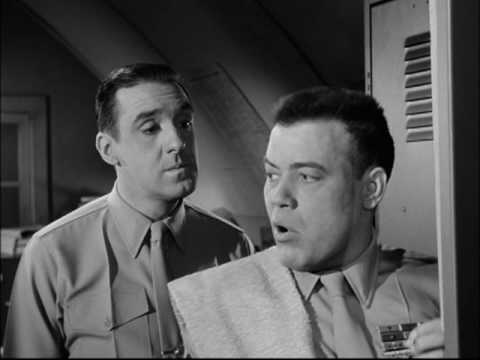
When I think of gayness, I don’t think of weapons of mass destruction. Call me a homophobe, but the cause of gay rights and the promotion of alternative “lifestyles” has not usually been synonymous with a strong U.S. military or neo-conservative (read interventionist) U.S. foreign policy. Then again, if Gomer Pyle really was gay, maybe the Navy’s decision to name a ship after Harvey Milk makes sense:

Navy Secretary Ray Mabus is expected on Tuesday to formally name a fleet replenishment oiler after gay-rights activist Harvey Milk, but one congressional critic says Mabus’ name choice is putting politics ahead of the Navy’s legacy.

Mabus will participate in a naming ceremony for the USNS Harvey Milk on Tuesday afternoon in Treasure Island, Calif. The oiler, which can carry 156,000 barrels of oil, is the first of six that will be built by General Dynamics NASSCO and will replenish Navy ships, as well as the aircraft deployed on them, while at sea.

Some conservatives are not happy, as you might expect. According to Congressman Duncan Hunter:

What this says to the men and women of the Navy is that there wasn’t one of you — at any time in history — who is more suitable for this honor. There are plenty of names out there to pick from, but Ray Mabus makes every decision with politics in his mind first and foremost, and that’s a real disservice to men and women of the U.S. Navy and the service’s legacy.

But are homosexuals also comfortable with having one of their heroes’ names painted on a ship that doesn’t make love but executes war? If, for instance, Equality California, one of the larger LBGT rights organizations, is currently soliciting support for a proposition against gun violence, are they comfortable with military violence?

Then again, if you want a seat at the table of the U.S. of A., for now that means cozying up to the nation’s military. Isn’t integration grand!

Why the Olympics are Un-American

The Silver Medalists for 2015:

Seattle Seahawks
Cleveland Cavaliers
Tampa Bay Lightning
New York Mets

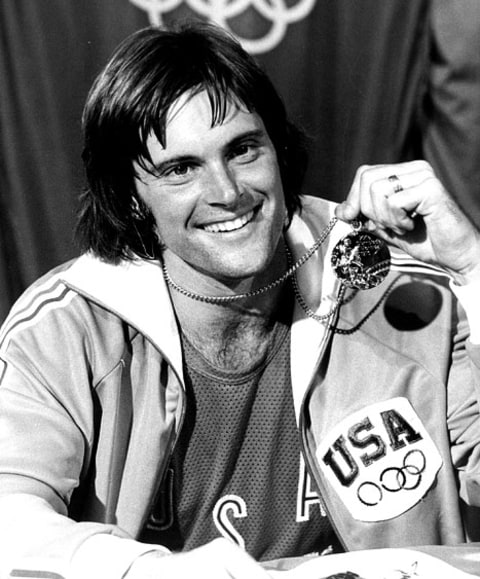
Yes, those are all the teams that made it to the championships last year and lost. Did the players on those teams receive a consolation prize? So why the big deal with silver medals? And who even thinks coming in third is noteworthy? Does anyone remember Dortmund?

Chalk some of this up to old age. I used to be glued to the television during the 1960s broadcasts of the Olympics. (But remember, back then sports on television were rare. To see Lew Alcindor play Elvin Hays in the college basketball game of the century you needed to travel to Houston.) Then it dawned on me, thanks to Wide World of Sports, that every year some international competition in track, swimming, or skiing was happening, and that the record-winning times had as much significance as performances in the Olympics. The Olympics were no longer special, and they had yet to be hyped the networks or doped by the pharmacists (at least in the free world).

Add to that the admission of professional athletes to what used to be a competition for amateurs, though of course Harold Abrahams superiors at Caius College had other thoughts about gentlemen athletes, and I figured I’d just as soon watch national sports as opposed to those competitions promoted by liberals who pined for one-world-government.

If Department of Justice Had only Watched “The Wire”

Peter Moskos continues to dissect the Department of Justice’s report on the Baltimore Police Department. It sounds just like the HBO series:

The system has several key deficiencies. First, BPD sets thresholds of activity that trigger “alerts” to supervisors about potentially problematic conduct that are too high. Because of these high thresholds, BPD supervisors often are not made aware of troubling behavioral patterns until after officers commit egregious misconduct. Second, even where alerts are triggered, we found that BPD supervisors do not consistently take appropriate action to counsel the officer, consider additional training, or otherwise intervene in a way that will correct the behavior before an adverse event occurs. Third, critical information is omitted or expunged from the EIS that could help address officer training or support needs or help prevent future misconduct.

It is clear that the Department has been unable to interrupt serious patterns of misconduct. Our investigation found that numerous officers had recurring patterns of misconduct that were not adequately addressed. Similarly, we note that, in the past five years, 25 BPD officers were separately sued four or more times for Fourth Amendment violations.

Minus the sex, of course:

Officers suffer from being supplied with outdated, broken, or in some cases, no equipment. As one officer noted to the Fraternal Order of Police in a focus group, “How am I supposed to pull someone over for having a taillight out when my car has two?”

Officers have no computers in their cars, forcing them to return to the district station to type reports, and even those computers are often not working…. Taking officers off the street to type reports at the district takes away from time that could be spent on law enforcement or community building activities. It also creates inefficiencies for officers who often must write reports on paper in the field while their memories of incidents are fresh, and then type the same information into computer databases after arriving at the district station at the end of their shift.

How the World Might Have Changed if the Apostles Had Religious Liberty

I don’t want to deny that it’s a tough world out there for believers. Have to worry about the flesh, the devil, and the world. So having also to keep an eye on California state legislators can make Christian piety a real challenge.

Still, the U.S. Christian tendency to play the persecution card doesn’t make sense of the greatness of American society (no need for Trump). In case Old Life readers did not know, the California legislature was proposing to expand the rights of LBGT students in ways that would have compromised restrictions that Christian institutions placed on their students, faculty, and staff.

And now the good great news. Enough people in California and elsewhere lobbied the California legislature to remove the controversial provisions of the bill:

Sen. Ricardo Lara (D-Bell Gardens) is removing a provision of his bill that sought to take away the exemption of religious schools to anti-discrimination laws. Instead, he will press forward with the amended bill that would still require such schools to disclose if they have an exemption and report to the state when students are expelled for violating morality codes.

“The goal for me has always been to shed the light on the appalling and unacceptable discrimination against LGBT students at these private religious institutions throughout California,” Lara said.

“I don’t want to just rush a bill that’s going to have unintended consequences so I want to take a break to really study this issue further,” the senator said. He said the requirement for schools to report expulsions based on morality codes to the state Commission on Student Aid will give him information on how common such cases are.

The senator said he will pursue other legislation next year, possibly including the provision dropped Wednesday.

Lara’s decision came after a half-dozen universities formed a new committee called the Assn. of Faith Based Institutions and contributed $350,000.

The group has flooded the districts of members of the Assembly Appropriations Committee, including Chairwoman Lorena S. Gonzalez (D-San Diego), with mailers saying the bill violates religious freedoms and urging voters to contact their Assembly person.

“Stop state control of private education,” says one mailer to Gonzalez’s constituents. Her committee is scheduled to vote on the bill Thursday.

The institutions include Azusa Pacific University, Point Loma Nazarene University and William Jessup University.

After Lara’s announcement, the universities released a letter to the Senator that said “Pending review of this new language, we are pleased to change our position on this legislation from “oppose unless amended” to `support.’ “

What makes democracy great is that it can reverse falling sky.

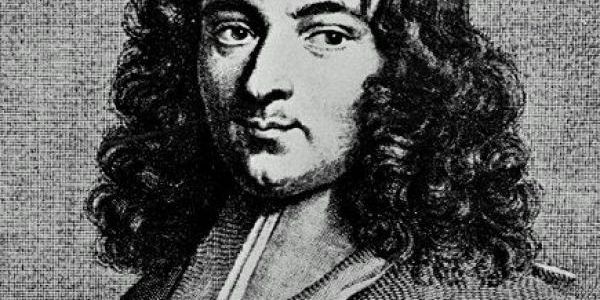
The Patron Saint of Calvinist 2k?

The Anabaptists may have seen the problems with Constantinianism, but they weren’t fans of religious tolerance the way Pierre Bayle was:

Bayle’s passion for religious liberty reflected his circumstances. Unlike better-known champions of tolerance such as Voltaire or John Locke, he had first-hand experience of persecution. He was the son of a poor Calvinist pastor in a small French town near the Spanish border. Protestants such as the Bayles were a harassed minority in France, where roughly 95 per cent of the population was Catholic.

Thousands of Bayle’s co-religionists had been massacred in the late 16th century, and even though Protestants won some freedoms at the end of the French wars of religion in 1598, their position worsened during Bayle’s lifetime. He fled to the Netherlands in 1681, when he was in his early thirties. A few years later, one of his brothers was arrested and died in a French prison. If he had converted to Catholicism, he would have been released. Bayle never got over his brother’s death.

Bayle had the misfortune to be not only a heretic in Catholic eyes, but also an apostate, for which the punishments were still worse. In his youth, he had briefly been convinced by the intellectual case for Catholicism and had converted. After about a year and a half as a Catholic, however, he decided that he had been mistaken and switched back. He followed his conscience, and this became the linchpin of his case against persecution. Why would God have given us a conscience if He did not mean us to use it?

Even if an alleged heretic, such as Bayle, was in error and was worshipping the wrong God, or worshipping Him in the wrong way, might this not be an honest mistake? He used a well-known example of mistaken identity to make his point. The wife of the peasant Martin Guerre sincerely believed an impostor to be her long-lost husband. When the real Martin Guerre returned to his village, the impostor confessed and was executed for adultery and fraud. But Guerre’s wife went unpunished, because her error had been made in good faith. Bayle reasoned that “heretics” should be treated in the same way. If they had searched diligently for the truth and acted conscientiously, they were guilty of no sin. Nobody should punish them or try to compel them to act against their honest beliefs.

Do we need religion to prop up morality? Bayle didn’t think so (and he hadn’t even listened to Angelo Cataldi):

Nor was Bayle much troubled by the notion of atheism, either, which is perhaps the most modern thing about him. Locke maintained that unbelief cannot be tolerated, because it is bound to lead to the moral collapse of any society foolish enough to allow it. Voltaire thought the same. Bayle seems to have been the first person in the Christian world to deny this conventional opinion. Morality, he reasoned, can exist perfectly well without religion.

Bayle was also unimpressed by contemporary apologists:

When an exceptionally bright comet was spotted by a German astronomer in late 1680, it caused a panic. Comets had presaged countless disasters, from the fall of Carthage to the Norman invasion of Britain, or so it was widely believed. Hundreds of alarmist pamphlets were published across Europe and in North America, announcing that the new comet was a dire warning from God to repent immediately.

Bayle set out to show that it would be against God’s nature to use celestial phenomena to send messages to mankind. With typical thoroughness, he offered eight main arguments for this conclusion, supported them with several hundred texts, ancient, medieval and modern, and made sideswipes at dozens of other superstitions along the way.

The argument of which he was most proud was original, effective and simple. It was that any such divine warnings would be bound to backfire and achieve the opposite of what God supposedly intended.

It was easy to show from scripture that God abhorred the worship of false gods. ­According to the prophets, idolatry seemed to rile Him even more than murder, theft or adultery. Yet most people on the planet are not Christians. As Bayle put it, the majority of human beings “remain idolators or have become Mohammedans”. So, if God put awe-inspiring warnings in the sky, most people would just embrace their false religions even more fervently. Why would He send harbingers of doom that could only “reanimate false and sacrilegious devotion almost everywhere on Earth” and “increase the number of pilgrims to Mecca”?

Bayle didn’t try to play God (which should be obvious to Reformed Protestants):

Why is there so much wickedness and suffering in the world? Bayle went through the standard theological answers to this question and knocked down each one, often with a vivid analogy. Is God absolved of man’s evil by His gift of free will – which makes everything man’s fault? No, Bayle answered: that would be like giving a knife to a man when you know he will use it to commit murder. The gift does not absolve the giver. Did God permit man to rebel so that He could send Jesus as a redeemer? That, Bayle replied, would make God “like a father who allows his children to break their legs so that he can show everyone his great skill in mending their broken bones”.

The real answer, he insisted, is that we cannot comprehend why God allows evil. A true Christian must simply accept that He does.

I can’t vouch for Bayle’s personal devotion, but he may be one of those many bridges between Protestantism and Enlightenment.


Those Were the Days (again)

What a church with discipline (and even a little 2k) looks like:

[The] argument for Trump recalls an earlier episode in Catholicism and political theology, the condemnation of L’Action française (AF) by Pope Pius XI in 1927. AF was an anti-liberal political movement in early twentieth-century France. It was a monarchist and nationalist movement centering on the French literary figure Charles Maurras, who held that in order for France to become great again, she must exhibit a national, religious, and political unity that could only be achieved by sloughing off liberal republicanism and embracing “integral nationalism.”

Maurras himself had lost his Catholic faith and was an agnostic, but his “throne and altar” politics appealed to many Catholic clergy and laity. Maurras saw the Catholic Church as a French institution capable of uniting Frenchmen politically. The Church was basically an instrument for implementing Maurras’s cry of “la politique d’abord,” or “politics first!” (Compare this with Trump’s recent appeal to evangelical Christians.) Maurras was also politically anti-Semitic, for Judaism was not French and not a religion capable of uniting the French. Maurras later obtained the sixteenth seat in L’Academie française, the same seat occupied by Cardinal Dupanloup in the nineteenth century. He supported the Vichy regime and spent five years in prison after World War II for doing so. He died with little support, even though he had influenced an entire generation of French politicians and intellectuals, Charles de Gaulle among them.

In spite of Maurras’s anti-Semitism and because his movement promised restitution and renewed privilege for a beleaguered Church, many Catholics supported AF. The waves of the French Revolution had continued to break over the Church in France, with the most recent assault at the time being the 1905 Law of Separation, which finally separated the Church from the Republic, except that all Church property was placed under state ownership and under the management of government-supervised lay committees. To many French Catholics, the Law of Separation showed the futility of Leo XIII’s ralliement policy of trying to find a modus vivendi for French Catholics in the Third Republic’s secular democracy. Hence the swing to anti-liberal, monarchist, restorationist movements like AF, movements generally labeled “integralist.”

One of the Catholics supporting AF was Jacques Maritain, who had affiliated himself with AF on the advice of his spiritual director, Fr. Clérissac. Maritain hoped that he could temper the components of integral nationalism incompatible with Catholicism through his association with Maurras in their joint publication Revue Universelle, for which Maritain wrote for seven years.

The Vatican had contemplated a condemnation of AF for some time, and the Holy Office’s desire to place Maurras’s writings on the Index was checked only by the outbreak of World War I. But late in 1926 after hearing of more French Catholic youth joining AF, Pius XI prohibited Catholic membership in AF’s “school” and Catholic support for AF’s publications. In early 1927, the official condemnation and excommunications began, shocking many French Catholics. Two French bishops lost their sees for failing to comply with the condemnation, and the great ecclesiologist Billot lost his cardinal’s hat. Papal ralliement was here to stay, and any party spirit suffused with pagan attitudes was deemed incompatible with Catholic political involvement. The condemnations were a watershed moment for Maritain, who quickly began to reevaluate his political and social commitments in light of his ultimate commitment to the Catholic faith. His apology for the condemnation of AF, Primauté du spirituel (1927), set the trajectory for his most famous political works, Humanisme intégral (1936) and Man and the State (1951). These works later influenced the Fathers of Vatican II, including Pope Paul VI.

It is possible for popes to act even when they are not temporal princes.

The Vatican wanted Catholics to refuse an attractive but ultimately self-defeating choice in supporting AF, and today American Catholics face a similar sort of choice. Now Trump is dissimilar to Maurras in many ways. The latter was revered for his intellectual and literary ability and had coherent and firm philosophico-political commitments, while Trump has demonstrated a shocking ignorance of Christianity and malleable, opportunistic political positions. Although both in a sense promoted the “liberty of the Church,” Maurras did so through throne and altar restorationism while Trump does so through an appeal to religious liberty.

So what’s the lesson?

The lesson from the AF crisis bears mentioning today. The Church, both her teaching office and her living members, constantly must discern whether new means for political action are compatible with a genuine concern for the common good and the integrity of Catholics involved in politics.

Is such discernment the consequence of losing confidence in the bishops?

Who is going to save our Church? Do not look to the priests. Do not look to the bishops. It’s up to you, the laity, to remind our priests to be priests and our bishops to be bishops. Archbishop Fulton Sheen

But I thought episcopacy and apostolic succession was what made Protestantism look like such a poor alternative for western Christians.

Do Historians Do This?

Last night’s conversation at Presbycast about a lot of things Presbyterian, together with current research on Roman Catholic debates during the 1980s about the church and American identity, got me thinking about whether I, as a historian of J. Gresham Machen and the OPC get away with writing this kind of evaluation of the PCUSA. What follows is from Jay Dolan’s The American Catholic Experience (1985) [Dolan taught history for many years at Notre Dame]. Here’s his description of what happened in the United States after Vatican II:

Another change that transformed the religious world of Catholics was a new understanding of sin. The traditional concept of sin was grounded in a system of laws, some of which were rooted in Scripture or the natural law, while others were promulgated by the church. The new Catholic morality argued for a more personal, less legalistic, approach to sin. The virtue of love became primary, together with the individual conscience. The implications of this shift, publicized in both scholarly and popular works, was tremendous. Perhaps most dramatic was the decline in confession. A 1974 study found that only 17 percent of the Catholics surveyed went to confession monthly, compared to 37 percent in 1963. Soon form followed function, and reconciliation rooms, where priest and penitent could interact face to face, replaced the dark confessional box. Penitential services became popular, and on some occasions a public general absolution replaced private confessions. (434).

For those who say nothing changed after Vatican II, Dolan is a contrary voice and a recognized authority on Roman Catholicism in the United States to boot (not a blogger or apologist).

But that’s not the primary reason for unearthing this quote. The point is this: what if I wrote this about the PCUSA after the OPC’s formation? What if I asserted in a book published by a trade press (Doubleday) that the PCUSA had become liberal, that it changed its theology on sin and salvation, and that these departures from historic Presbyterian practices constituted a “new” Presbyterianism, or Protestantism for a “new age.”

Of course, while wearing my OPC hat, I think that about the PCUSA. But I can’t get away with that in the mainstream publishing world without running the risk of being ostracized from the profession as the Gary North of American historians. Call me a coward. But historians of American religion cannot make certain claims about communions everyone knows to be theologically accurate because they don’t want to admit that the fundamentalists had a point.

It could also be a function of 2k. What is acceptable for churchmen’s judgments is not so for professional historical scholarship. We don’t always succeed but we do try to keep theological judgments from informing historical analysis. Sometimes that’s artificial. But it’s also the case that professional academics is not the place to settle ecclesiastical conflicts.

Still, why do those academic calculations not apply to Jay Dolan, the history of Roman Catholicism in the United States, or Doubleday? Is it a function of academic seniority? Once you acquire tenure you can write whatever you want?

Or is it that what Dolan said is actually good history and that converts and apologists have yet to catch up with the church they’ve joined and celebrated?