Endorsement Overkill

Rans

(Y)“During my college years the chapters reprinted in this volume along with other non–academic writings of Machen were a significant influence in my life, and I have returned to them from time to time, always with great profit. Written for his own day, they have lost none of their relevance and will continue to serve the cause of the gospel and the church’s wellbeing not only today but for generations to come.”
— Richard B. Gaffin, Jr., Emeritus Professor of Biblical and Systematic Theology, Westminster Theological Seminary

(Y)“In J. Gresham Machen, God gave the church an inimitable champion of biblical orthodoxy and gospel clarity. This book will show you why Machen is one of American evangelicalism’s most important 20th–century thinkers. More to the point, this book will ground you firmly in what it means to see in the face of Jesus Christ the grace and truth and glory of God.”
— Russell D. Moore, President, Southern Baptist Ethics & Religious Liberty Commission

(Y)“In these seven brief lectures, Machen follows the main spine of Christian truth….The Person of Jesus is Machen’s reminder to the church of who we are–a reminder we needed then, and that we need still. In these lectures, the mists of mysticism melt away, and the simple, elegant, profound truths of the Bible appear.”
— Mark Dever, Senior Pastor, Capitol Hill Baptist Church, Washington D.C.

(Y)“J. Gresham Machen was a man of his times, enmeshed in protracted and penetrating conflict over the triumphant liberalism of his day. He was also a man who transcended his times, because he undertook, with rare learning and clear–sighted understanding, the defense of the faith ‘once for all entrusted to God’s holy people’ (Jude 3). His Christianity and Liberalism, for instance, written almost a century ago, still sounds amazingly prophetic. This present short volume brings together six of Machen’s radio talks of 1935, preserving Machen’s voice and emphases in an idiom that is more popular than his large books, but no less important. Machen is always worth reading.”
— D. A. Carson, Research Professor of New Testament, Trinity Evangelical Divinity School

(Y)“J. Gresham Machen was one of the best thinkers and writers among Reformed theologians before his untimely death on New Year’s Day of 1937….Machen’s writing is always crisp and clear, without any compromise of cogent argument….When Machen finishes dealing with an unbelieving argument, I always feel that there is nothing more to be said on the unbelieving side.Even though this work is over eighty years old now, I would not hesitate to give it to someone who had doubts as to the deity of Christ, his miracles, and his resurrection.”
— John M. Frame, J. D. Trimble Chair of Systematic Theology and Philosophy, Reformed Theological Seminary, Orlando

(Y)“Dr. Machen’s radio addresses on Christ, uttered over eighty years ago, are astonishingly contemporary when read today….To get maximum benefit from this book, read one address per day praying your way through it for worldwide reformation and revival today.”
— Joel R. Beeke, President and Professor of Systematic Theology and Homiletic, Puritan Reformed Theological Seminary; Pastor, Heritage Netherlands Reformed Congregation, Grand Rapids, MI

(Y)“The life and teaching of J. Gresham Machen are rightly revered by contemporary Christians who prize Reformed orthodoxy. Dr. Machen’s compelling voice lives again in the pages of this short book of radio talks on the divine Son of God. As a theologian for ordinary Christians, his clear and concise communication of biblical truth will draw new readers into a deeper and more personal knowledge of the risen Christ.”
— Philip Graham Ryken, President, Wheaton College

(Y)“These pages constitute treasure that has been hidden far too long–J. Gresham Machen bringing his incisive scholarly mind to bear on the big issues surrounding the person of Christ. As well as clearly expounding Jesus’s identity, these pages excel in dismantling false assumptions, muddle–headed and illogical reasoning, and subtle mishandlings of the Scriptures. The Person of Jesus is simultaneously a superb primer on the teaching of the Gospels and a powerful illustration of how to ‘destroy arguments and every lofty opinion raised against the knowledge of God, and take every thought captive to obey Christ’ (2 Cor 10:5).”
— Sinclair B. Ferguson, Professor of Systematic Theology, Redeemer Seminary

(Y)“J. Gresham Machen was one of the most prescient and courageous Christian theologians of the early 20th century. During his life, Machen was a clear and consistent voice for Christian orthodoxy and evangelical truth in the face of liberalism. This collection of lectures is a valuable addition to the Machen library. These lectures reflect the heart of Machen’s ministry and provide yet another compelling presentation of Apostolic Christianity. Machen’s works are as relevant now as they were when they were first written. These lectures are no exception.”
— R. Albert Mohler, Jr., President and Joseph Emerson Brown Professor of Christian Theology, The Southern Baptist Theological Seminary

(Y)“When I was in seminary I discovered these radio addresses by J. Gresham Machen in which he offered a highly accessible and popular presentation of Christian doctrine, and Reformed doctrine at that. I was fascinated by the media savvy of Machen. These lucid radio talks preceded C. S. Lewis’s famous broadcasts by several years. I have read and profited from them for decades. Their arguments and illustrations have strongly influenced my preaching. I can’t recommend them enough.”
— Timothy J. Keller, Senior Pastor, Redeemer Presbyterian Church, New York, NY

Also Rans

“I first encountered J. Gresham Machen’s work as an undergraduate student grappling with modern challenges to the Christian faith. I found in him a mind passionate for the truth and a heart aflame with the gospel. Both of these traits shine through in these radio talks from the 1930s. We still need to hear what he had to say.”
— Timothy George, Dean, Beeson Divinity School; Executive Editor, Christianity Today

“Someone said recently that we need ‘a new Machen’ to speak insightfully to present–day theological confusions. That would be great. But, thank the Lord, the old Machen does continue to teach us. These wonderful addresses speak powerfully–and with refreshing clarity–to all of us today about the living Christ.”
— Richard J. Mouw, President Emeritus, Fuller Theological Seminary

“This is a superb volume: clear, lucid, precise, and easy to follow. In each chapter, one must not miss that Machen clearly makes his case for the historical factuality of Christ’s identity on the basis of the authority of Scripture. Machen brought the listener–and now the reader–into the serious antithesis between the biblical teaching about Christ and modernism’s teaching about Christ.His sharp, contrasting arguments will always be relevant in the life of the church. Hence, it would be well for Christ’s body not to marginalize Machen as a nostalgic symbol. His battle for Christian truth uncovers the folly of those growing increasingly flexible toward broadening the doors of biblical orthodoxy.”
— William D. Dennison, Professor of Interdisciplinary Studies, Covenant College

“While these addresses, delivered by J. Gresham Machen in 1935, were important in their own time, they are perhaps even more urgent and necessary today. What more important topic is there than the person and work of Christ? Machen, a first–rate scholar, knew how to take the case to the people–and here he does exactly that.”
— Stephen J. Nichols, President, Reformation Bible College; Chief Academic Officer, Ligonier Ministries

“This is vintage Machen. He is lucid, logical, and unrelenting in defending what Scripture claims regarding God and the deity of Christ versus modern critics who would explain away or diminish those claims.”
— George M. Marsden, Francis A. McAnaney Professor of History Emeritus, University of Notre Dame

“These popular addresses show the heart of J. Gresham Machen: brilliant, clear, persuasive, calling everyone to faith and life in Jesus. They will bless and encourage all who read them.”
— W. Robert Godfrey, President, Westminster Seminary California

“Tight in argument yet pastoral in exhortation! What a treat! The revival of the uniqueness of Christ is to rediscover the gospel for today. The publication of Dr. Machen’s The Person of Jesus is an excellent contribution by Westminster Seminary Press, considering that the theological climate in Asia, let alone the whole world, is rapidly growing weak in its grips of who Jesus really is.”
— Kevin Woongsan Kang, Professor of Systematic Theology, Chongshin University and Theological Seminary

“Dr. J. Gresham Machen was one of the lions of reformed evangelical thought in the twentieth century. His clarity of thought and courage borne of a deep conviction and a personal walk with the God about whom he spoke and wrote suffuses every one of these fine radio addresses….With disarming simplicity they present the most important truths in the world and challenge us all to take them seriously. We need more of such clarity and directness today.”
— Mark D. Thompson, Principal, Moore Theological College

“All of the qualities that enabled J. Gresham Machen to make such an important contribution to English–speaking Protestantism–theological tenacity, clarity of mind, readability, and courageous conviction–are easy to see in this instructive and edifying collection of radio addresses on the person of Christ. These talks show once again that doctrine has consequences, with Machen as a superbly gifted guide to the significance of what the church confesses about Christ.”
— D. G. Hart, Author of Defending the Faith: J. Gresham Machen and the Crisis of Conservative Protestantism in Modern America

“Almost eighty years after his death, J. Gresham Machen’s voice still speaks with clarity and timeliness concerning the person of Christ. In our time, when people question whether Christians and Muslims worship the same God, Dr. Machen’s cogent exposition of Scripture in these radio addresses from 1935 provides needed clarity concerning the triune God and the deity of Christ.”
— William S. Barker, Emeritus Professor of Church History, Westminster Theological Seminary

“J. G. Machen was the towering intellectual defender of historic Christianity during one of the most turbulent periods in American church history….These talks on the person of Jesus, delivered in the heat of the battle, are not merely an important theological voice from the past; they will encourage your faith today.”
— Frank A. James, President, Biblical Theological Seminary

“These gems by J. Gresham Machen are essential reading now for thoughtful Christians. Historians of conservative Protestantism will also greatly benefit from these addresses….In these talks, Machen distills the core doctrines about the person and work of Christ that he fought so hard to defend against the acids of modernity. Listen for Machen’s voice as you read these transcriptions. Lend your ear to this man whose apologetic labors hastened his tragic, early death.”
— Douglas A. Sweeney, Professor of Church History and the History of Christian Thought, Trinity Evangelical Divinity School

“Sanity regained in a world gone mad. J. Gresham Machen flows with a heart of love for the Lord Jesus. Cool, clear, and fresh as a mountain stream, he bubbles with living water. Doctrinal indifference, a big issue in his day, is the black plague of ours. The antidote to truth decay is his clarity about who Jesus was, what he said and did, and, above all, how he lives and reigns today.”
— Paul Wells, Emeritus Professor, Faculté Jean Calvin

“Many know of Machen’s scholarly achievement and powerful support for historic Christianity over modern substitutes. Less well–known is his ability to convey what is lofty and profound in the simplest of terms. This little book restates the Bible’s depiction of God the Son in language easy to grasp….Machen’s remarks are as timely now as when first uttered. This is a superb survey of New Testament Christology and a powerful invitation to (re)discover the true Jesus, still Lord despite generations of naysayers and the complacency of his church.”
— Robert W. Yarbrough, Professor of New Testament, Covenant Theological Seminary

“Throughout his life, J. Gresham Machen wrestled with questions over the relationship between history and faith, between Jesus and Paul. Here in these radio addresses, we have his warm and winsome answers to those questions….It is a great gift to the church that these radio addresses are now being published; take up and read–be refreshed and strengthened in our common faith.”
— Sean Michael Lucas, Professor of Church History, Reformed Theological Seminary, Jackson

“These addresses on the person of Christ were forged long ago in the furnace of debate. They are, however, as fresh today, and as compelling, as they were when they were first delivered. Machen speaks with clarity, conviction, a matchless command of the subject, and with the wind of historic Christianity behind him.”
— David F. Wells, Distinguished Senior Research Professor, Gordon-Conwell Theological Seminary

“Dr. Machen’s talks are timeless, though set in the swirling currents of his day, because the Christ he described, the Christ revealed in the Scriptures by the Spirit, rises above time. His learned rhetoric, his passionate defense of Christian orthodoxy, his love of the Savior and his church make what you will find in these pages a delight to read, a source of spiritual strengthening, and a bulwark against the destructive effects of a contemporary scholarship that continues to denigrate the Creator, Redeemer, and only Judge of mankind.”
— John D. Hannah, Distinguished Professor of Historical Theology, Dallas Theological Seminary

“This powerful little book on the deity of Christ fully displays what made Machen great. We see his relentless logic in the clarity of his thinking and the lucidity of his prose. The Gospels leave us no doubt that Jesus Christ is fully God, and Machen demonstrates that any other interpretation falls to the ground.”
— Thomas R. Schreiner, James Buchanan Harrison Professor of New Testament Interpretation, The Southern Baptist Theological Seminary

“This work certainly is a classic jewel. A ‘classic’ because, even though it dates back to 1935, this book is still fresh and relevant. A ‘jewel’ because it presents the person and work of Jesus Christ so clearly, convincingly, and appealingly to the reader. Dr. Machen’s voice can be heard again and we do well to listen to it.”
— Herman J. Selderhuis

“J. Gresham Machen is one of a select band of Christian writers of whom it can truly be said that ‘he being dead, yet speaketh.’ This reprint of some of his most important talks will be widely welcomed by those who appreciate his strong and learned defense of orthodoxy, and it will make his thought more accessible to a younger generation.”
— Gerald L. Bray, Research Professor of Divinity, Beeson Divinity School

“With disarming brevity, Machen bracingly pleads with his reader for true belief in the true King of heaven and earth. I understand why even his theological sparring partner, Pearl Buck, respected her orthodox opponent so profoundly. Machen is clearly a spiritual gentleman, a worthy scholar, and a tender shepherd….Machen may well have no peer when it comes to clear, direct, and stirring expositional and applicational writing. Reader, prepare your mind and heart for a bracing read.”
— Joseph V. Novenson, Pastor, Lookout Mountain Presbyterian Church, Lookout Mountain, Tennessee

“Here is theology that floats like a butterfly and stings like a bee. In these addresses Machen defends a high and biblical view of Christ with punch and quite stunning verve. Fresh, enlightening, and logically compelling, this is not only good theology but a model of good apologetics.”
— Michael Reeves, Director of Union and Senior Lecturer, Wales Evangelical School of Theology

Every Square Inch is a Demanding Taskmaster

Devin Wax is not so happy with the significance attached in the current cultural climate to ordinary choices like where to eat. He wishes a chicken filet sandwich were merely a chicken filet sandwich:

We’re witnessing a convergence of two developments.

Development #1: Consumerism as a Religion

The first development is the lifting up of our consumer choices to the level of religion.

In American society, we are more and more inclined to define ourselves by what and how we consume. We no longer buy things to meet our needs, but to become something, or to express who we are.

“Brands are the new religion,” says Douglas Atkin, writing about customer loyalty. People express their own identities through what they buy.

With an endless sea of choices, Skye Jethani says, “individuality is the new conformity.” Choice is a powerful factor in a consumer society, because more choices provide more ways for consumers to demonstrate their uniqueness.

Development #2: Politics as Religion

The second development is the lifting up of our political views to the level of religion.

In American society, we are more likely to see political views as non-negotiable aspects of our true selves. This is why recent research shows families having a harder time with a son or daughter who wants to marry someone from an opposing political party than from a different religion!

Tell me how Neo-Calvinism did not add momentum to this. When all of our choices have religious significance, how different is that from the “personal is political” that feminists and other politics of identity advocates taught us? Now Mr. Trax wants a cigar (okay, a bubble gum cigar) to be only a cigar?

If more New Calvinists had read 2kers more than Tim Keller, had understood that religion is different from common life, had been content with Reformed worship instead of transformed cities, had valued church officers more than every membered ministry, they might be able to eat tacos without the least concern for larger significance — political or religious.

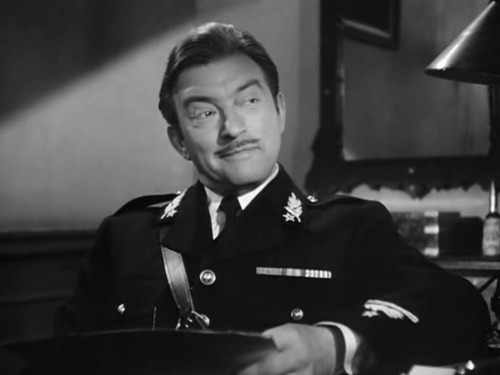
The Captain Renault GIF

How can you be shocked, shocked to find injustice going on in America after Ferguson (film noir anyone?)? And yet, people like Patricia McGuire of Trinity Washington University act as if the country has not been having a conversation about having a conversation about race for the past two plus years:

“We Americans study the history of tyranny and exclaim, ‘That’s terrible, but it would not happen here!’ as we congratulate ourselves on the robust state of our democracy. The experience of the last few months now exposes this once-confident boast as terribly naive and perhaps even dangerous as a new administration indulges in a remarkable torrent of false and misleading statements as a basis for policy and action,” she wrote. “The gravest lie we are grappling with at the present moment is the Trump Administration’s cruel and unreasonable war on immigrants — mostly people who are black and brown, and Muslim — Mexicans and refugees from central America, Syrian refugees, people from certain countries in the Middle East and Africa including Iran, Iraq, Sudan, Syria, Yemen, Libya and Somalia.”

Black lives mattered before Trump?

This is why we worry about those who use the present to turn history into morality plays. What history does best is teach students we’ve been here before, all is vanity. Only Whig historians believe in progress and then are surprised when their narratives let them down.

Social Justice Warriors Then

Mencken explains how to pursue social reform without eschatology or sanctity:

I do not hold, with the suffragettes, that the extension of the suffrage would bring the millennium, that the will to power would become the will to kiss, that sin would perish from the earth. Far from it. But I do hold that the dear girls could do no worse with the vote than men have done, that the present discrimination against them is unjust and absurd, that they ought to have their equal chance to inject their favorite antitoxins into the body politic and perform their pet mazurkas.

The common theory that women would not vote as intelligently as men is one that doesn’t appeal to me. I see no evidence in support of it. Women, in general, are certainly not less intelligent than men. On the contrary, they are probably more intelligent. That is to say, they keep in closer contact with reality, they are less romantic, they yield less to emotion. A woman’s eye is always upon the immediate certainty, not upon the remote possibility. She is not an idealist; she seldom dreams great dreams. But in the everyday, commonplace business of living she renders inestimable services to the human race. She keeps it upon the track; she sees that it gets three meals a day; she darns its socks and bathes its fevered brow; she assiduously counts its change.

In the great business of marriage, for example, the attitude of women is far less sentimental than that of men. A man usually marries romantically: he is full of magnificent visions of incredible bliss. Many men, indeed, are so romantic that they never marry at all—the true explanation of 90 per cent. of all masculine celibacy. But women marry with an eye to the main chance. They seldom allow romance to obliterate worldly prudence. In the whole history of England, I am told, no woman has ever actually refused a Duke. And here in free America it is not often, I venture, that a sane woman ever refuses a man who is her social equal and of good repute and able to support her. She may do it if she has a free choice between two such men, but such opportunities, it must be plain, are rare, and even when they occur there is commonly a Palpable difference between the two men, and so the woman’s choice is not free. She picks the better, not the worse. Her eye is on her number.

Such instinctive sagacity, I believe, would have a good influence upon politics. The woman voter would decide public questions, not from the idealistic standpoint, but from the standpoint of bread and butter. She would regard all political wizards and windjammers with distrust and aversion, just as she regards them now. She would bring to the business of government that salubrious cynicism which she now brings to the business of ensnaring and managing her husband. In brief, she would introduce a sharp common sense into political controversy and combat—a quality now almost wholly lacking.

But the suffragettes! The suffragettes! What of them? Isn’t it a fact that their present propaganda is utterly without sense, that their panaceas are all bosh, that their arguments and claims are romantic and nonsensical? Maybe it is. But don’t make the mistake, beloved, of confusing suffragettes with women in general. The suffragettes, by the irony of fate, are the worst of all imaginable specimens of their sex—not in the sense that they are evil, but in the sense that they are untypical. They no more represent the normal habits and mental processes of women than the fantastic Ibsenites of yesterday represented old Henrik, or than the S. P. C. A. of today represents that kindly and lovable creature, the Canis familiaris.

No; the suffragettes are not typical women, and so it would be absurd to charge their extravagances to the normal feminine character. On the contrary, they are untypical women, romantic women, women without womanly common sense. The thing that attracts thern to the suffrage cause is not the cause itself, but the excitement of the campaign. In brief, they are emotionalists—which is exactly what normal women are not. This explains their eager adoption of such ludicrous jehads as the vice crusade. This explains, too, their willing alliances with prima donna preachers, Chautauqua “sociologists,” Socialists, play censors and other such bogus “thinkers” and laryngeal bravos. And this explains, finally, the curious fact that many of them also belong to other windy lodges—of anti-vivisectionism, of anti-vaccinationists, of medical freedomists, of initiators and referendors, of deep breathers, of eugenists.

Why History Matters

Journalists and historians can — we get it — perform moral outrage well. Consider the Times on Stephen Bannon:

[T]he defining moment for Mr. Bannon came Saturday night in the form of an executive order giving the rumpled right-wing agitator a full seat on the “principals committee” of the National Security Council — while downgrading the roles of the chairman of the Joint Chiefs of Staff and the director of national intelligence, who will now attend only when the council is considering issues in their direct areas of responsibilities. It is a startling elevation of a political adviser, to a status alongside the secretaries of state and defense, and over the president’s top military and intelligence advisers.

The quotation comes from John Haines piece on Bannon’s appointment to the NSC in historical perspective:

While Mr. Bannon has sardonically compared himself to “Thomas Cromwell in the court of the Tudors” (perhaps choosing to ignore how that role ended), his national security brief might better analogize to Nelson Rockefeller. As noted earlier, he succeeded C.D. Jackson as Special Assistant to the President for Cold War Planning in the Eisenhower administration. Mr. Rockefeller’s appointment was memorialized in a March 1955 memorandum to President Eisenhower from Rowland Hughes, the director of the Bureau of the Budget (later renames the “Office of Management and Budget”):

b.The appointment of Mr. Nelson Rockefeller as Special Assistant to the President to provide leadership on your behalf in the development of increased understanding and cooperation among all peoples and in reviewing and developing methods and programs by which the various departments and agencies of the Government may effectively contribute to such cooperation and understanding.

c.The assignment to a Special Committee chaired by Mr. Rockefeller of responsibility for coordinating the implementation of the policies contained in NSC 5505/110 and NSC 5502/1.

Mr. Rockefeller assumed a direct role in national security and intelligence operations when President Eisenhower named him chair of the Planning Coordination Group (PCG), which was subordinate to the NSC’s Operations Coordinating Board (OCB). The OCB was established by a September 1953 executive order “to provide for the integrated implementation of national security policies by the several agencies.”[26] According to a letter to Director of Central Intelligence Allen Dulles, “At the time of the issuance of the Executive Order creating the OCB the President designated his Special Assistant for Cold War Planning as his representative on the OCB.”

President Eisenhower authorized the PCG in a 10 March 1955 letter to Mr. Rockefeller. He directed that the PCG was to be advised “in advance of major covert programs initiated by the Central Intelligence Agency;” and furthermore, that the PCG “should be the normal channel for giving policy approval for such programs as well as for securing coordination of support therefor among the Departments of State and Defense and the Central Intelligence Agency.” The two referenced NSC reports — NSC 5505/1 (“Exploitation of Soviet and European Satellite Vulnerabilities”) and NSC 5502/1 (“U.S. Policy Toward Russian Anti-Soviet Political Activities) — are January 1955 directives for an “active political warfare strategy” against the Soviet Union.

Mr. Rockefeller’s brief was defined in a March 1955 NSC memorandum that discussed “The Foreign Information Program and Psychological Warfare Planning.” Declaring “the principle that propaganda in both peace and war is a continuing mechanism of national policy directed toward the achievement of national aims,” the NSC charged Mr. Rockefeller to conduct:

[A] high level review of the existing arrangements in the light of NSC 59/1 and NSC 127/1 should be undertaken with a view to preparing appropriate recommendations for consideration by the National Security Council. Such a review should be undertaken with a full understanding of the existing arrangements and current plans and programs in this field, as well as the status of planning for the possibility of limited or general war.

The NSC further directed that “responsibility for making such a review and recommendations [was] assigned to Mr. Nelson Rockefeller as Special Assistant to the President:”

[T]o provide leadership in the development of increased understanding and cooperation among all peoples and in reviewing and developing methods and programs by which the various departments and agencies of the Government may effectively contribute to such cooperation and understanding. In this assignment Mr. Rockefeller should be provided with such advice and assistance as he requires from the Bureau of the Budget, the Office of Defense Mobilization and the Operations Coordinating Board as well as the responsible operating departments and agencies.

Never let real historical details get in the way of surreal moral outrage. Do notice that Bannon is not as well dressed or coiffed as the Ivy League’s own, Rockefeller.

How America Can Become America Again

Noah Millman, on a roll again, squares the circle of American identity and national narrative:

In our private lives, few would accept leaving this question — who inherits our property, our name, and the custody of our reputations — to forces entirely beyond our control. Most of us think seriously about who we marry, who we will have children with. Even those of us — like myself — who are adoptive parents recognize that the choice to adopt is exactly that: a choice.

Questions of identity — of who we are — are just as fundamental to any political community. A shared sense of identity is what makes collective action possible, whether that action is financing a community center or fighting a war. Any time we make sacrifices today to benefit generations yet unborn, we imply an identifying bond between the present and the future. And yet, for many supporters of immigration there is a real dispute about whether this is even a valid political question — or, on the contrary, whether freedom of movement is an inalienable right, or whether asking questions about national identity is inherently racist.

In a piece that considers deeply how immigration advocates have gone wrong, Josh Barro argues for the need to make the case for a relatively liberal immigration regime as being in the national interest (as opposed to just being “the right thing to do”). And he’s right about that. But before that case can be made, they need to win the trust of those who suspect — perhaps rightly — that immigration advocates see “the national interest” as the interest of a corporate entity known as the United States of America, without regard to what the nature of that entity is, or who it exists for in the first place.

If they can’t rule questions of identity out of bounds, liberals will be tempted to answer them with ideological definitions of Americanism that implicitly deem large numbers of actual Americans to be less-than-faithful communicants of the national religion (something conservatives have been prone to do at least as much). It’s an approach that is distinctly unlikely to win over anyone not already singing from their hymnal.

So how can those with a more expansive conception of American identity make their case? The answer begins with a return to that word: posterity.

From the perspective of the founders, we are their posterity, whether our ancestors are from England, Ethiopia, or Ecuador. They are our ancestors. And what they have bequeathed to us — from our political institutions down to the land itself — is our inheritance.

We all have varied relationships with our individual parents. Some of us live in awe of their shadows; others of us cringe at their failures; still others of us have spent years working our way through the residue of abusive childhoods. And some of us are lucky to stand tall and proud on our forebears’ shoulders. For all of us, they are still the people to whom we owe our beginnings. We can love them, hate them, live in illusion, or see them for who they are — but we cannot disclaim them.

The same is true of our political ancestors — and we need to talk that way.

If we want to share our inheritance more broadly, and convince our cousins to do the same, we need first to be able to demonstrate that we cherish it, that we recognize that it is our inheritance, something we, as individuals, did not create, but was given to us by those who came before, and that we are responsible for passing on. If it is ours, then we have the right to remodel it to better suit the needs of the present and the future — we don’t have to be shackled by the past. But if we care about it as an inheritance, then we’ll show gratitude for what we have received, and make changes in that spirit, even if we know that many of those who came before would have cringed to see just who has taken up residence in what was once their house, and what they’ve done to the place.

But if the United States (where did the name ever come from) did not begin until the nation elected Barack Obama, who cares about the so-called Greatest Generation or the Founders or even Abe Lincoln? Such a way of looking at the past — today’s social justice warriors’, not Millman’s — does make it hard to look at Donald Trump as a betrayal of inheritance. If they can cut themselves off from Jefferson, Jackson, and Wilson, why can’t Trump cut himself off from Obama?

Doh! History always comes back to bite. Not to mention that the founding has been pretty good business for Lin-Manuel Miranda.

Old Urbanism

H. L. Mencken was so much more than an iconclast:

The chief beauty of such a town as Paris lies in the harmony visible in its architecture, and particularly in the architecture of its private buildings. Look down any of the principal streets and you will note at once that most of the houses are of a height, and, what is more, that most of them are of the same general style. In the treatment of details there remains plenty of room for individual enterprise and skill. Some houses are quite commonplace. But taken together they produce an effect of order and dignity. There are no bloody wars between Doric and Gothic, Moorish and Tudor English, the pointed arch and the mansard roof, the Corinthian column and the Byzantine minaret. Huge towers do not leap indecently from squat Greek temples. The stories of one house are not twice as high as the stories of the house next door.

Even in London, a town generally hideous, an effort at harmony is still visible. True enough, you will find huge sarcophagi shouldering pretty little Georgian houses in Pall Mall, and a saturnalia of styles in Park lane, but in most other parts of the West End every separate street, beside its virtues in detail, has some virtue as a whole. It is, in fact, a street, and not a mere hodge-podge of houses. The roofline is broken, not by leaps, but by intelligible progressions. And if we cross the Channel and proceed to such streets as the Ludwigstrasse, in Munich, we find harmony become almost perfect.

Harmony, of course, does not mean sameness. Here in Baltimore, at least in our residence sections, we have plenty of sameness. One wanders for hours through endless rows of undifferentiated houses. Citizens in liquor are constantly pulling the wrong bells, swearing at the wrong keyholes. It is difficult, so I hear, even for a teetotaler to find his house on foggy nights; the wine-bibber, in despair, frankly gives it up and so stays down town. But that ugly and depressing monotony is not harmony–no more, indeed, than the beating of a tom-tom is music. Harmony means the agreeable co-ordination of distinct but related details. It is important that they have elements in common, but it is also important that they have elements not in common.

Such harmony is rare in Baltimore. South street, for example, which might well have had character and beauty, for its builders did not lack money, is unspeakably and amazingly ugly. It has beautiful details, true enough, but the general effect is cacophonous and repulsive. So with Baltimore street, Lexington street, Hopkins Place. Even Mount Vernon Place, for all its charm, is still chaotic and disturbing. The serene dignity of a London square is not in it: the war between its antagonistic details is too savage and too noisy.

America is not America (part two)

Can we turn anywhere in the past for instruction about refugee and immigrant policy?

No, say the undergraduates at Princeton University:

Trump’s vision for the United States is perniciously fascist — incorporating elements of racism, xenophobia, jingoism, totalitarianism, and misogyny. Worst of all, Trump’s vision is indefinite: His actions have no bounds, and it is unclear when this nation will heal from his actions.

But this is not a departure from Americanism. There is nothing specifically un-American about Trump’s executive orders or rhetoric. The American Nightmare is an American Reality. Only when we realize that “living up to American values” is to sanction Trump may we wake up from this horrid dream.

Immigrant exclusion based on race, religion, or national origin is an American pastime. The Alien and Sedition Acts, arguably the first discriminating immigration act, were signed into law in 1798. Following this was the 1882 Chinese Exclusion Act; in response to popular racist and xenophobic anti-Chinese sentiment, the act “required the few nonlaborers who sought entry to obtain certification from the Chinese government that they were qualified to immigrate.” The act was extended into the 20th Century with the Geary Act, and its effects were not effectively reversed until the Immigration and Nationality Act of 1965.

The Chinese Exclusion Act is only one of many governmental measures to marginalize those deemed a “threat” to white civilization. Notably, the United States is guilty of genocide against Indigenous tribes. The Trail of Tears, perhaps the most infamous atrocity committed against an Indigenous tribe, resulted from Andrew Jackson’s abuse of presidential power to seize Native lands and force thousands into what is now Oklahoma. More than 4,000 died on the journey, with hundreds of others dying upon arrival. Trump’s executive orders in support of Keystone XL and the Dakota Access Pipeline is a continuation of the United States’ regnant disregard for indigenous peoples, not an anomaly.

Cold War policy isn’t much help either:

There was another way to become a refugee, an immigrant, and eventually a U.S. citizen. According to immigration law, if a migrant was on American soil, even if one had entered illegally, one could claim asylum, arguing that the applicant had a “well founded fear” of persecution if returned home. Only two thousand or so persons won asylum annually in the 1970s. For example, the government denied asylum to most of the Haitian boat people during the 1970s and deported them. After the 1980 refugee act incorporated the new UN definition of refugee status in place of the anticommunist one, and when the civil wars in Central America escalated, the number applying for asylum skyrocketed. More than 140,000 applied in 1995, for example, and by the end of the 1990s the backlog reached several hundred thousand. Haitians came by boat, but tens of thousands of Central Americans illegally crossed the border separating the United States and Mexico. The State Department and the INS insisted they were mostly illegal immigrants who should be deported. INS officials in Florida did modify policy slightly toward Nicaraguans. An official said that he could not deny asylum to Nicaraguans when the United States insisted that the government of that country was undemocratic and that the CIA-backed contras were trying to overthrow it. Nicaraguans still had difficulty in winning asylum status, but their approval rate was more than double that of their neighbors. In 1989, for example, 5,092 Nicaraguans won asylum, compared with 102 Guatemalans and 443 Salvadorans.

Friends of these contestants for asylum insisted that a double standard was being applied: Cubans merely had to get to the United States, but Central Americans had to win their claims on an individual basis. Many undocumented immigrant Salvadorans, Guatemalans, Hondurans, Haitians, and Nicaraguans did adjust their status due to an amnesty for undocumented immigrants passed in 1986. As noted, the law covered those in the United States before 1982, but for others fleeing violence in Central America after that date individual asylum was required, which was even more difficult to demonstrate when the civil wars in Central America ended in the early 1990s. Fewer than 10 percent of Salvadorans, Guatemalans, and Hondurans were granted asylum in 1999—up slightly from the rate of the 1980s but less than half of the general approval rate. Those who came after the IRCA amnesty were left in limbo, although minor modifications in immigration policy did permit some to remain. Moreover, once these Central Americans won asylum, they were eligible to adjust their status to that of regular immigrants and could then use the family preference system to sponsor their relatives. For example, in 1996 Haitian immigrants numbered 18,386, with 8,952 of these under the family preference system and another 4,815 coming as immediate family members of U.S. citizens who were exempt from the quotas. Comparable figures for Salvadorans were 17,903; 8,959; and 5,519. Data for Hondurans and Guatemalans were similar. The United States did permit Salvadorans and Hondurans the right to stay temporarily in the United States when earthquakes and hurricanes struck in the 1990s. These temporary stays, called temporary protected status (TPS), were not asylum; when TPS ended, the undocumented aliens were expected to go home.

But who cares about history? I know some evangelical historians who care but for some reason their historical perspective means moral disapproval (with a dose of self-approval).

America Is Not America (part one)

Ross Douthat wrote a very good piece on the two U.S. narratives that have vied with each other for the last thirty-five years.

The liberal narrative (with President Obama functioning as story-teller in chief) runs like this:

“That’s not who we are.” So said President Obama, again and again throughout his administration, in speeches urging Americans to side with him against the various outrages perpetrated by Republicans. And now so say countless liberals, urging their fellow Americans to reject the exclusionary policies and America-first posturing of President Donald Trump.

The problem with this rhetorical line is that it implicitly undercuts itself. If close to half of America voted for Republicans in the Obama years and support Trump today, then clearly something besides the pieties of cosmopolitan liberalism is very much a part of who we are.

. . . In this narrative, which has surged to the fore in response to Trump’s refugee and visa policies, we are a propositional nation bound together by ideas rather than any specific cultural traditions — a nation of immigrants drawn to Ellis Island, a nation of minorities claiming rights too long denied, a universal nation destined to welcome foreigners and defend liberty abroad.

Given this story’s premises, saying that’s not who we are is a way of saying that all more particularist understandings of Americanism, all non-universalist forms of patriotic memory, need to be transcended. Thus our national religion isn’t anything specific, but we know it’s not-Protestant and not-Judeo-Christian. Our national culture is not-Anglo-Saxon, not-European; the prototypical American is not-white, not-male, not-heterosexual. We don’t know what the American future is, but we know it’s not-the-past.

Then there’s the conservative narrative (with Trump adding Jacksonian democratic accents):

But the real American past was particularist as well as universalist. Our founders built a new order atop specifically European intellectual traditions. Our immigrants joined a settler culture, Anglo-Saxon and Protestant, that demanded assimilation to its norms. Our crisis of the house divided was a Christian civil war. Our great national drama was a westward expansion that conquered a native population rather than coexisting with it.

As late as the 1960s, liberalism as well as conservatism identified with these particularisms, and with a national narrative that honored and included them. The exhortations of civil rights activists assumed a Christian moral consensus. Liberal intellectuals linked the New Deal and the Great Society to Thomas Jefferson and Andrew Jackson. Pop-culture utopians projected “Wagon Train” into the future as “Star Trek.”. . .

But meanwhile for a great many Americans the older narrative still feels like the real history. They still see themselves more as settlers than as immigrants, identifying with the Pilgrims and the Founders, with Lewis and Clark and Davy Crockett and Laura Ingalls Wilder. They still embrace the Iliadic mythos that grew up around the Civil War, prefer the melting pot to multiculturalism, assume a Judeo-Christian civil religion rather the “spiritual but not religious” version.

Douthat wonders if one narrative is any longer possible.

But any leader who wants to bury Trumpism (as opposed to just beating Trump) would need to reach for one — for a story about who we are and were, not just what we’re not, that the people who still believe in yesterday’s American story can recognize as their own.

What he observes though is a truth about liberal progressive narratives that we also see in mainline Protestantism — historical denial (read fake history). The PCUSA can’t talk about the days it opposed Arminianism, refused to ordain women, and possessed Princeton Theological Seminary as its chief intellectual jewel. No mainline Presbyterian today recognizes the names of William Adams Brown, Robert Speer, or Harry Emerson Fosdick. Why? Because they were not who contemporary Presbyterians are. They don’t measure up to the present.

The same goes for political progressives. They have no useful past in the actual institutions of national life because old Americans are not contemporary Americans. It is what it is becomes we are who we are. We have no capacity to say “we are who we were” even in part.

If that’s so, let’s not simply ban the confederate flag. Let’s burn the U.S. flag — what a racist, misogynist, heterosexist, capitalist country. How dare President Obama wear a flag lapel pin.

Even better — let’s move to Mars where we can reboot the human race.

Not Morality but Decency

What if Christians talked more about decency than morality, about what is normal than about what is righteous or God glorifying? Sure, we have churches to talk about the demands of God’s law and how believers glorify God. But, as 2kers are wont to point out, persuading non-Christians to embrace Christian morality sans regeneration or the means of grace seems to be bass ackward.

Does that leave us without a case for those sexual and family aspects of public policy or social life that so animate religious conservatives? It certainly leaves us without a moral high ground. But it’s not as if that high ground doesn’t look to non-Christians like a moral high horse.

So why not take a page from Joseph Epstein? His first collection of short stories about Jewish life in Chicago included one that revolved around a non-observant Jewish businessman meeting his daughter, who had just had an abortion, for dinner to express his disapproval. Part of dinner conversation went like this:

“Daddy, did you really expect me not to sleep with anyone while I was in college?”

“No,” he said, “I guess I didn’t really expect that, but I wouldn’t have minded if you hadn’t. I would have minded a hell of a lot less than I do about what has happened.”

The waitress set down their food. “Enjoy,” she said.

“You still haven’t told me why this bugs you so much, Daddy. Do you think your daughter is now, somehow, damaged goods?”

“I don’t know as I would put it that way, baby, but maybe I do. But not in the way you might think.”

“How then?”

“I think it’s a goddamned damaging thing for a girl to have had an abortion at nineteen,” he said, more emphatically than he had intended. He looked across the aisle at the two old broads and the expressionless face of the senile old gent, and hoped they hadn’t heard him.

“Look, Deb,” he said, talking more softly now, “if you’ve had an abortion at nineteen, what’ve you got planned for twenty-four, or thirty-one, or forty-two?”

“What do you mean?”

“I mean that, for the first time, as a result of what’s happened, I can imagine a terrible life for you. A life of confusion and sadness and heartbreak. And it terrifies me.”

“Why do you think that?”

“Maybe an abortion is a solution to the problem of a pregnancy, but I suspect that it brings its own problems. It isn’t as tidy as it sounds; I suspect that it takes its toll. Once you undergo something like this, your opinion of yourself changes, maybe in small little ways, but it changes. Maybe, because of something like this, you no longer think so well of yourself. Maybe it becomes easier to do more foolish things.”

“I don’t think that’s true, Daddy.”

“I hope it isn’t, sweetheart, I really do hope it isn’t.”

“But what could I have done?”

“You probably did all that you could do, but I think you may be making a big mistake if you think you got away with it. An abortion, anyhow one of this kind, is a dreary and common and pretty crummy thing.”

“What do you want, Daddy?” She had only been picking at her food, but now she gave up even doing that. Tears were in her eyes. Harry remembered her in braces.

“What I want you can’t give me, Deborah. What I want isn’t even reasonable. I want you back the way you were before this happened.”

“What I am supposed to do?” she asked.

“I don’t know what you’re supposed to do. The world is slipping away, my sweet girl, and there’s evidently not much any of us can do about it. But I don’t have to like it. And I especially don’t have to like my kid becoming a part of it.”

If we can join with all (how many?) those people who think abortion who think not that it is a violation of the sixth commandment but “crummy,” would social standards be higher? Maybe.