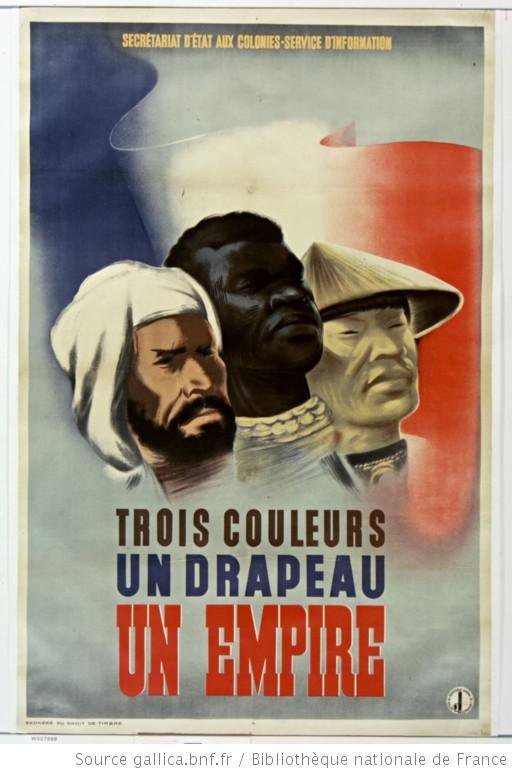
Another Golden Oldie

Thanks to Zrim, I remembered another internet intervention about 2k. This one was at Greenbaggins at the instigation of Reed DePace. It was a threepart series but here reproduced in one post.

Theological Affirmations

1) Affirmation: Jesus is Lord

Denial: Jesus is not Lord over everyone in the same way; he rules the covenant community differently than those outside the covenant.

2) Affirmation: the visible church is the kingdom of the Lord Jesus Christ

Denial: Outside the visible church is not part of the redemptive rule of Christ (even though Christ is still sovereign).

3) Affirmation: the Bible is the only rule for the visible church (in matters of conscience).

Denial: Scripture does not reveal everything but only that which is necessary for salvation.

4) Affirmation: Christ alone is lord of conscience

Denial: Christians have liberty where Scripture is silent.
Denial: the pious advice and opinions of Christians are not binding.

5) Affirmation: the visible church has real power (spiritual and moral, ministerial and declarative, the keys of the kingdom) in ministering the word of God.

Denial: the church may not bind consciences apart from Scripture.
Denial: the church may not bind consciences on the basis of one minister’s or believer’s interpretation but must do so corporately through the deliberations of sessions, presbyteries, and assemblies.

6) Affirmation: Christ’s righteousness alone satisfies God’s holy demands for righteousness, and believers receive this righteousness through faith alone (i.e., justification).

Denial: believer’s good works, much less unbelievers’ external obedience to the law, do not satisfy God’s holiness but are filthy rags.

Affirmations about Vocation

1) Affirmation: the church is called to gather and perfect saints through word, sacrament and discipline.

Denial: the church is not called to meddle in civil affairs.

2) Affirmation: the Christian family is called to nurture and oversee children in both religious and secular matters.

Denial: Christian families will not all look the same but have liberty to rear children according to Scripture and the light of nature.
Denial: non-Christian families do not rear children in godliness or holiness but still have legitimate responsibility for rearing their children.

3) Affirmation: the state is called to punish wickedness, reward goodness, and promote peace and order.

Denial: the state does not hold the keys of the kingdom.

4) Affirmation: A Christian is called to use his talents and gifts to serve God and assist his neighbor.

Denial: some Christians are not called to engage in civil affairs.
Denial: the responsibilities attending one Christian’s vocation may not be the standard for other Christians.

Affirmations on Ethics

1) Affirmation: Christians have an obligation to submit to God’s laws as they are found in general and special revelation.

Denial: persons cannot obey God’s law truly apart from regeneration by the Holy Spirit.
Denial: non-Christians may not please God in their external observance of God’s law.
Denial: even if non-Christians may not please God, their civic virtue is crucial to a peaceful and orderly society.

2) Affirmation: Christians please God in their good works thanks to the sanctifying work of the Holy Spirit.

Denial: the good works of Christians are not free from pollution (i.e. they are filthy rags).

3) Affirmation: the state and families have the responsibility for establishing and maintaining social order.

Denial: the church does not have the responsibility for establishing and maintaining social order.

4) Affirmation: church members have a duty to obey the laws of civil magistrates.

Denial: church members may not rebel against or disobey the magistrate.
Denial: church members must not obey the magistrate rather than God.

5) Affirmation: God has established a pluriformity of institutions (e.g. civil society) for the sake of social order.

Denial: the church has no calling to establish social order but will have an indirect influence on peace and order by encouraging godliness in her members.
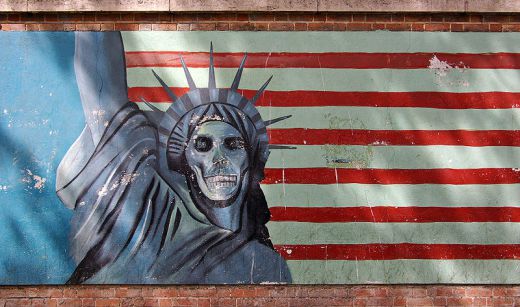
Christendom or America

Mark Noll made me aware of Hugh McLeod’s definition of Christendom:

a society where there are close ties between leaders of the church and secular elites

the laws purport to be based on Christian principles

apart from some clearly defined outsider communities, everyone is assumed to be a Christian

Christianity provides a common language, shared alike by the devout and the religiously lukewarm

A 2ker has to wonder where any reader of the New Testament supposes this is the blueprint for society. The Roman Empire was pagan. The apostles knew that and sought to make the gospel known to those whom God foreknew as his people. They also expected seemingly a quick return by their ascended Lord.

If you want that kind of society from the pages of Scripture, you go to the Old Testament. Say hello to theonomy. But Christ and the apostles failed to measure up to Christendom on all these grounds:

They had bad relations with pagan elites. That’s why they were executed — hello.

They had no instruction about laws being based on the gospel (or even “Christian principles”).

Shouldn’t have to be said, but they did not — get this — assume everyone was a Christian. Nero? Hello.

They had a firm sense of the antithesis. The difference between believers and the world pervades the New Testament.

One could reasonably conclude that Christendom is not Christian.

That makes secular America Christian. Christians have bad relations with secular elites. 2kers at least don’t expect laws to be based on Christian principles (whatever that is). No Christian (not sure about some progressive Roman Catholics) assumes every American is Christian (mainline Protestants are equally progressive but they draw the Christian line to keep Trump voters out of the kingdom). And most serious Christians in the United States go through life recognizing a gap between Christian and American cultural norms — shops are open on Sunday.

In other words, 2kers live more in line with the teaching and experience of Christ and the apostles. Christendom-inspired critics of 2k use as their norm Christian developments after Constantine, not those after Christ. Indeed, the novos ordo seclorum of 1789 was a return to the kind of society Christ and the apostles lived and breathed in. They did not know Constantinianism or Christendom which America rejected.

That also means critics of 2k are anti-American. For shame!!!

But there’s hope for Christendom. Even as Norway secularizes it still has a national church:

On Jan. 1, the Scandinavian country cut some ties with its Evangelical-Lutheran Church of Norway, rewording the national constitution to change the denomination from “the state’s public religion” to “Norway’s national church.”

The change means the nation of just over 5 million people – about 82 percent of them Evangelical-Lutherans – will still fund the church but will no longer appoint its clergy, who will still be considered civil servants. . . .

Secularism has been on the rise in Western Europe since the 1960s, with church attendance declining and strict laws on public displays of religion in nations such as France. But the past decade has seen the rise of anti-secular groups and politicians in England, Germany and France.

Meanwhile, some Norwegians feel the divorce is not sharp enough. Kristin Mile, the secretary-general of the Norwegian Humanist Association, told The Local No, an English-language Norwegian news site, that the change only muddies the relationship between church and state.

“As long as the constitution says that the Church of Norway is Norway’s national church, and that it should be supported by the state, we still have a state church,” she said.

Is that what piners for Christendom want?

Is Donald Trump Mainstreaming Apostasy?

While Mike Horton zeroes in on the personalities associated with Word of Faith who will be speaking or praying (or speaking in tongues) and the presidential inaugural, not to be missed is the rest of the clergy assembled. Among them, Cardinal Timothy Dolan:

Dolan will be the first Catholic to take part in a presidential inauguration in 40 years, since President Jimmy Carter’s in 1977, the Religion News Service reports. Rabbi Marvin Hier will be the first Jewish clergy involved since Ronald Reagan’s in 1985.

His inclusion “may reflect, in part, homage to the Jewish faith of Trump’s daughter and son-in-law,” Black said. Eldest daughter Ivanka Trump, a convert to Orthodox Judaism, is moving to Washington and expected to serve as a stand-in to the First Lady.

The broad faith representation may also reveal a desire to please the American electorate, more pessimistic about the president-elect than any of his recent predecessors. According to the Pew Research Center, Trump’s overall campaign grade is the lowest among any presidential candidate—winning or losing—since it began collecting data in 1988.

White is the only pastor from Trump’s group of evangelical faith advisors scheduled to speak at the inauguration. The Mormon Tabernacle choir is slated to perform. Trump has downplayed the celebrity factor in his confirmed guest list. So far, Carter is the only former president expected to attend.

Horton puts his objection this way:

Thanks to the First Amendment, Christian orthodoxy has never been a test for public office. But it is striking that Trump has surrounded himself with cadre of prosperity evangelists who cheerfully attack basic Christian doctrines. The focus of this unity is a gospel that is about as diametrically opposed to the biblical one as you can imagine.

But is it fair to say “surrounded”? Kevin Kruse, who teaches at Princeton puts it this way:

“The traditional tasks of an inaugural—bringing the country together and setting an uplifting and unifying agenda for the future—are even more pressing for president-elect Trump,” said Kruse. “And that, I suspect, is why he’s enlisted a much larger lineup of clergy to speak at the inauguration than his predecessors. He knows he needs their help in elevating the tone and, in turn, elevating his presidency as well.”

Either way, a confessional Protestant could object to every religious figure scheduled for the inauguration. Especially in the year that Protestants commemorate the Reformation, shouldn’t Calvinists be up in arms about a Roman Catholic bishop at the event? Why single out Paula White? Looks too much like Megyn Kelly?

Could You Write this after 9-11?

David Koyzis tries to turn B. B. Warfield into a Kuyperian and quotes this:

For there shall be a new heaven, we are told, and a new earth. Under these new heavens, in this new earth, shall gather redeemed humanity, in the perfection of its idea, and in perfect harmony with its perfected environment. In the perfection of physical vigour: for what is sown in corruption shall have been raised in incorruption, what is sown in dishonour shall have been raised in glory, what is sown in weakness shall have been raised in power, what is sown in selfishness shall have been raised in spirituality. In the perfection of social organization and intercourse: for there shall be none to hurt or destroy in all God’s holy mountain, and all the people of the Lord shall have learned righteousness. In the perfection of spiritual communion with God: for then it is that the Lord shall make Himself known to His people and shall dwell with them, and they shall need no Temple to which men should require to repair in order to meet the Lord, for the Lord God the Almighty and the Lamb are the Temple thereof, and the grace of the Lord shall flow down the streets in a river of the water of Life washing into every nook and corner.

Such is the picture the Scriptures draw for us of the salvation of our God. And let us not fail to note that it is a picture of a saved world. As no sphere of human life is left untouched by it; as on its touch, every sphere of human life is transformed; so the completeness and the profundity of its renovation of man is matched by the wideness of its extension over man. It is the renewed heavens and the renewed earth that we are bidden to contemplate; and dwelling in them in endless bliss renewed humanity.

Hard not to think that with the British Empire chugging along, the Ottomans still in charge of an unruly part of the world, the Austro-Hungarians doing their part to keep order in the Balkans, and western dominance spreading around the globe, the world was getting better and that Christians (of a kind) had a large hand in that betterment. This quotation comes from a book published in 1913.

But when the world looks less stable and life less predictable, can any Reformed Protestant still be post-millennial? (And doesn’t Koyzis have a duty to protect Warfield’s good name?)

Christianity Framed Mencken

Andrew Ferguson wonders why Eerdmans would include an entry in its American religious biography series on H. L. Mencken:

The co-editor of the series, the church historian Mark A. Noll, raises the question in his foreword: “Whatever could have led Darryl Hart, himself the author of several worthy books patiently explaining the virtues of historical Calvinism, to think that any one at all could be interested in a religious biography of H.L. Mencken?”

A few pages later, the author himself wonders the same thing. After ticking off Mencken’s many admirable qualities—his productivity as a journalist, his fearlessness as a magazine editor, his unfailing humor, his tough-mindedness—Mr. Hart asks: “What does any of this have to do with religion? Why should Mencken qualify for entry in a series of religious biographies?”

I would like to report that the answer Mr. Hart gives to this question is an irrefutable and bold assertion about . . . something or other. But I can’t. For all the book’s virtues—it is charmingly written and comprehensive of its subject—the author struggles to explain why it should have been written at all.

But, for what is Mencken best remembered? The Scopes Trial. What about his attack on Puritanism (“the haunting idea, that someone, somewhere, may be happy”)? And what about his confrontation with the nation’s Protestant-inspired decency laws? Also, what to make of his withering critique of the moral idealism that Woodrow Wilson used to rally the United States to enter a war “to end all wars?”

The point is not that Christianity defined Mencken and that he ironically owed a debt to the believers who bemused him. Instead, taking account of his life makes little sense without noticing how his literary battles with Puritanism, his columns against Prohibition, his pointed coverage of the Scopes Trial, his protracted legal contest with Boston’s Watch and Ward Society, or the book he considered his most important, Treatise, set Mencken apart from his contemporaries, gave him a lot to say along with a large readership that wanted to listen. Christianity and its dominant position in American society was not responsible for producing Mencken. But it was a sufficiently large part of his experience and thought to justify a religious biography. (Damning Words, 4)

If Mencken is best remembered for his opposition to Christianity in its political, cultural, and moral dimensions, then isn’t religion a big part of his life even if he didn’t believe? Christianity framed Mencken. He would not be the man or writer he was without having been surrounded by and pondered Christianity. That makes a religious biography plausible.

If More Rod Drehers Read Machen

Once again, Rod explains the Benedict Option:

Do you think that is generally true about our society and our civilization — that people, whether they are conscious of it or not, and operating in a sauve qui peut (save who you can) panic? To be perfectly clear about the Ben Op: it is based on the idea that Christianity itself within the West is facing this state of affairs, and that believing Christians, therefore, have to build new structures and reinforce old ones to last through the religious crash that is already happening.

If Rod had read Machen and knew anything about the 1920s contest within U.S. Protestantism over modernism, he would know that some Christians were thinking the West faced a difficult set of affairs — wait for it — a century ago.

Should we really welcome someone who is so late to the party?

The 2K Temptation

Ed Stetzer seems unable to resist:

Evangelical is not a synonym for Republican.

It’s a definition of people who believe in values like the cross, the gospel, and sharing that news (euangelion) with others. That’s often described by the Bebbington Quadrilateral, which includes biblicism, crucicentrism (focused on the cross), conversionism (the people need to be born again), and activism (works that flow from new life).

I get the temptation to want to narrow what the term means because we feel little connection with others who also use it. But facts are our friends, and labels mean something specific, even if the parameters are broad. We can hold Evangelical beliefs and see some things—like politics—in different ways.

Yes, the vast majority of White Evangelicals decided that Donald Trump was a better choice. Evangelicals of color mostly made a different choice. There are complex reasons for each. It does not help to dismiss them, and I won’t.

But I will remind everyone that being an Evangelical is about the gospel, not about a lever in a voting booth.

But if evangelicals contented themselves with the gospel (as if that’s so hard except for the obedience boy lurking inside all of us), that would mean saying no to the cultural transformation (read Christian nationalism) temptation. Because evangelicals (and most Western Christians for that matter) have refused to give in to 2K, they (along with Ed Stetzer) need to confront their American selves:

The influence of political tactics is not confined to campaign dynamics. It affects how we are formed as people. Instead of our values influencing our politics, our political circumstances are shaping our values. As partisan citizens, we explain away the flaws of the candidate we support, and buy nearly any outlandish theory about the candidate we oppose. We even change what we believe to fit the moment.

C. S. Lewis understood the temptation to seek personal meaning in politics. His essay “Membership” is most instructive in this regard. “A sick society,” Lewis writes, “must think much about politics, as a sick man must think much about his digestion.” However, “if either comes to regard it as the natural food of the mind—if either forgets that we think of such things only in order to be able to think of something else—then what was undertaken for the sake of health has become itself a new and deadly disease.”

Our culture, and many people in our churches, are sick with that new and deadly disease. Politics is causing great spiritual harm in Americans lives, and a big reason for that is Americans are going to politics to have their spiritual needs met. This is the meaning of rising polarization and the cause of our zero-sum mentality. Politics does a poor job of meeting spiritual needs. But if it will get your vote, politicians will attempt to fill the spiritual void nonetheless.

When you grow up in the greatest nation on God’s green earth, believe with President Obama that you are on the right side of history, and have the rest of the world looking to your government (either to help or leave), it is hard to turn away from the power that Paul said Jews sought and be content with the cross.

For since, in the wisdom of God, the world did not know God through wisdom, it pleased God through the folly of what we preach to save those who believe. For Jews demand signs and Greeks seek wisdom, but we preach Christ crucified, a stumbling block to Jews and folly to Gentiles, but to those who are called, both Jews and Greeks, Christ the power of God and the wisdom of God. For the foolishness of God is wiser than men, and the weakness of God is stronger than men.

For consider your calling, brothers: not many of you were wise according to worldly standards, not many were powerful, not many were of noble birth. But God chose what is foolish in the world to shame the wise; God chose what is weak in the world to shame the strong; God chose what is low and despised in the world, even things that are not, to bring to nothing things that are, so that no human being might boast in the presence of God. (1 Corinthians 1:21-29 ESV)

Total Lordship of Christ = Christ Tells Us Everything

Thanks to another of our southern correspondent comes Doug Wilson’s latest sovereignty-of-God brag. He faults Russell Moore for only wanting a Christian public square about race but not about sex:

The theological problem has to do with how we define righteousness for the public square. Russell Moore doesn’t want to build a Christian nation except on racial issues, which is like wanting a nation to be Christian every day between 9:45 am and 11:12 am. If Jesus is Lord of all, we must listen to Him on racial issues in the public square. If He isn’t, then we don’t have to. What we don’t get to do is pick and choose. Under the new covenant there is no unique chosen nation, of course. In the new covenant, every nation must be discipled, and there is no exceptionalism there. But whether you want righteousness in tiny slivers, or righteousness across the board, you still have to define it.

Sorry, Pastor Wilson, but you are picking and choosing all the time. Welcome to the novos ordo seclorum; find your inner 2k self. What is Christ’s will about the military? Read the Old Testament for “holy” war and invade Mexico? What does Christ reveal about idolatry and blasphemy? Send Jews and Muslims packing (the way King Ferdinand and Queen Isabella did)?

Theonomists are all bluff. They don’t virtue-signal. They obedience-signal. Worse, they know they’ll never have to live with their braggadocio.

Make America Great (just like England, France, Russia, and Germany)

Ron Granieri reminds that idolizing one’s nation is something that came to Americans late:

We begin with England. Formerly a semi-barbaric province of the Roman Empire, England re-imagined itself during the Reformation as a specially favored place, threatened by Spanish tyranny and Inquisitional obscurantism. As this story developed, this favored land defended itself thanks to its native creativity and bravery and the divine blessings of a Protestant Wind.

The poet of English exceptionalism was, of course, Shakespeare, who, sunning himself in the glow of Gloriana herself, wrote less than a decade after the defeat of the Armada these immortal words in Richard II:

This royal throne of kings, this sceptred isle,

This earth of majesty, this seat of Mars,

This other Eden, demi-paradise,

This fortress built by Nature for herself

Against infection and the hand of war,

This happy breed of men, this little world,

This precious stone set in the silver sea,

Which serves it in the office of a wall

Or as a moat defensive to a house,

Against the envy of less happier lands, —

This blessed plot, this earth, this realm, this England.

Those last lines in particular suggest the ultimately defensive nature of English exceptionalism, the idea that the blessed plot could retreat behind its moat and revel in the perfection of the “little world.”

Don’t forget France:

England’s great rival as it grew into a world power was France, and France also displays the imperial temptation of exceptionalism. Threatened with extinction in the 15th century after English victories at Agincourt and elsewhere, the French monarchy reasserted itself in part thanks to a sense of exceptionalism. Jeanne d’Arc heard divine voices calling her to save France from the invaders and to restore a divinely sanctioned order—a crusade that made her a saint to her fellow Frenchmen and a dangerous witch to her English coreligionists.

After going through its own internal religious struggle during the Reformation and Wars of Religion, France then reasserted itself as a special model of its own, thanks to the Absolutism of Henry IV, Cardinal Richelieu, and Louis XIV. This organization of the state magnified French power and led to triumphs in wars that expanded the size as well as the wealth of France. The more that France imagined itself to be special, the harder it was for French leaders to keep it to themselves. Henry IV was assassinated in 1610 on the eve of a major campaign against France’s Habsburg rivals; Richelieu opened the era of secular warfare when he allied France with Protestant Sweden against those same Habsburgs during the Thirty Years’ War; and Louis XIV spent virtually his entire reign attempting to expand France into its “natural boundaries,” while asserting France’s claim to cultural leadership on the continent and beyond.

It was the French Revolution, however, which especially marked French Exceptionalism. Shaped by their interpretation of Enlightenment thought, the Revolutionaries initially imagined France as an island of new thinking in a sea of obscurantism. When Revolutionary France declared war on Austria and Prussia in 1792, France’s initial posture was completely defensive. The revolutionary anthem embraced during the first months of war, the Marseillaise, called on the “children of the fatherland” to rush to arms and march on to fight off invaders “so that their blood can water our fields.” After the surprising French victory at Valmy that September, however, which offered the chance to go on the offensive, Revolutionary France dropped its defensive pose and embraced the mission to expand and spread the benefits of revolution. Victory at Jemappes in November 1792 was just the beginning, and by the time the Revolution had been co-opted by the military dictator and future Emperor Napoleon Bonaparte, the Marseillaise was associated with expansion and conquest. Indeed, when writing his 1812 Overture, Tchaikovsky drowned out the Marseillaise with God Save the Tsar to symbolize Russia’s deliverance, turning the revolutionary anthem on its head as a hymn to monarchy triumphs.

Exceptionalism Russian-style:

France’s rise in the 19th century provoked two other large cultures to action and to develop their own sense of exceptionalism.

The first was Russia. Already having developed its own historical narrative about shaking off the “Tatar yoke” and defending Christianity against the Asiatic hordes, Russia was uncertain about its place in the larger world. Leaders such as Peter the Great and Catherine the Great had hoped that selective embrace of western ideas would make Russia modern and strong, and they pursued aggressive expansion of Tsarist power at home and imperial conquest abroad. But it was the mystic Alexander I, in the wars against Napoleon, who tried to formulate a specifically Russian vision of conservative stability and engagement with Europe, heavily flavored with Orthodox religiosity. Alexander’s Russia was the architect of Napoleon’s defeat, though the Hundred Days and Waterloo robbed Russia of its role as the Corsican’s conqueror. Alexander also joined with Metternich of Austria in creating the Holy Alliance as a vehicle for preserving the postwar order. Alexander’s vision faltered on his own odd personality and his early death, and he bequeathed a mixed legacy to his successors. After the failed liberal Decembrist revolt in 1825, Nicholas I and subsequent conservative Tsars rejected the liberal ideas of the West and adopted a more defensive posture toward the outside world, but continued to believe that Russia had a special mission. As the “third Rome,” Russia imagined itself as the defender and cultivator of Christian civilization, which encouraged imperial wars against the Turks in the south and expansion into Siberia in the east. By the mid-19th century, conflicts between Slavophiles and Westernizers marked differences within the Russian elite, though both groups could be motivated to expand Russia.

And then there was Germany:

Which brings us to France’s other rival, Germany. In a way, Germany was born to consider itself exceptional. It was a German philosopher, Johann Gottfried Herder, who first explicitly developed the idea that every individual culture had its own unique Volksgeist. That was Herder’s way of reacting to the universalist claims of French Enlightenment thought, using its principles to develop the idea that the Germans—indeed, every people—were different from other peoples, and thus each nation should cultivate its own identity and also govern itself. The French may have invented the idea of modern nationalism to serve their revolutionary purposes, but the Germans were the first culture to shape it both retrospectively and prospectively developing a historical narrative to impose coherence on a scattered collection of territories with no natural boundaries. Thus, various past leaders whose Germanness was, at best, notional, from Arminius to Frederick the Great, were absorbed into a nationalist narrative that made the creation of the German empire the inevitable product of historical logic, irrefutable in the eyes of scholars who had themselves created it in the first place.

German nationalism offered, in AJP Taylor’s famous phrase, two faces: to the West, it offered the eager face of the mimic and aspirant, attempting to measure up to the cultural trendsetters across the Rhine. To the East, however, the Germans offered the cold sneer of cultural superiority, justifying centuries of conquest and dominance over allegedly inferior cultures of the East. By the 20th century, as the German Empire emerged as a powerful state in its own right, German opinion leaders tired of the earnest mimic pose and complained of the encirclement of Germany by envious inferiors.

This new attitude crested during the First World War. Novelist Thomas Mann was the most distinguished of thinkers who attempted to explain this by distinguishing authentic German Kultur, with its deep appreciation of art, community, and history, and the shallow, materialistic civilisation of France and Britain. . . .

In bringing up the Nazis, I realize I have just violated Godwin’s Law, but in this case, it is unavoidable. For the Nazis took ideas of exceptionalism and imperialism to their logically illogical conclusions. The greatest temptation for a people that considers itself exceptional is to conclude that it is superior, and that superiority justifies spreading the word to other peoples—even imposing this allegedly superior system on them and removing those people who stand in the way. Indeed, as Mark Mazower’s monumental work, Hitler’s Empire, has demonstrated, the Nazis essentially applied the lessons European powers had perfected in their overseas empires to their European empire. By forcing Western Civilization to recognize the barbarous implications of their conquests, the Nazis delivered a fatal blow to justifications for empire.

One lesson is that American exceptionalism is pretty ordinary.

The second is that the United States had a real chance to be exceptional by not following the ways of European greatness. A modest republic of hardworking and self-discipline citizens with a limited government was what some had in mind. That would have been great.

Lordship of Christ Over Every Spiritual Inch

Joseph Moore has a new book out on the Covenanters that argues in part that these radical Scottish Presbyterians make the proponents of Christian America look like posers. Covenanters, for instance, refused to take oaths that included an acceptance of the Constitution because the United States’ legal provisions failed to acknowledge the Lordship of Christ:

Many hard-liners, imitating their Anti-Burgher ancestors, refused to swear an oath implying support of an ungodly government. . . . Founding the nation on the authority of “We the People” represented, the RP’s maintained, a flaw in Revolutionary logic: it removed Christ from his rightful place about the state. The US Constitution was a “manifest dethroning of the Lord and his Anointed from the government. As mediator between God and all humankind, Jesus gave legitimacy to civil governments. Governments, in turn, acted to bring people to knowledge of God’s Goodness and law. Law, then, should be based on God’s word even when that law seemed to harsh for liberal American sentiments. (Founding Sins, 62-63)

For a 2k Protestant, US government poses no such difficulty. Christ is king as both mediator and creator. His creational rule over secular government doesn’t now require the ruler to acknowledge Christ’s rule as mediator. But for comprehensive Christians, making the distinction between redemption and providence is a high wire act forbidden to anyone who wants a safe earthly existence.

For that reason, the comprehensive Christian, if the Covenanters are right, could never serve as an attorney in the United States. How, for instance, could a Christian take the oath required of attorneys in Michigan?

I will support the Constitution of the United States and the Constitution of the State of Michigan;

I will maintain the respect due to courts of justice and judicial officers;

I will not counsel or maintain any suit or proceeding which shall appear to me to be unjust, nor any defense except such as I believe to be honestly debatable under the law of the land;

I will employ for the purpose of maintaining the causes confided to me such means only as are consistent with truth and honor, and will never seek to mislead the judge or jury by any artifice or false statement of fact or law;

I will maintain the confidence and preserve inviolate the secrets of my client, and will accept no compensation in connection with my client’s business except with my client’s knowledge and approval;

I will abstain from all offensive personality, and advance no fact prejudicial to the honor or reputation of a party or witness, unless required by the justice of the cause with which I am charged;

I will never reject, from any consideration personal to myself, the cause of the defenseless or oppressed, or delay any cause for lucre or malice;

I will in all other respects conduct myself personally and professionally in conformity with the high standards of conduct imposed upon members of the bar as conditions for the privilege to practice law in this State.

No mention of God, no Lordship of Christ.

This means that Moore’s point about David Barton may be as relevant for those critics of 2k who jeer from the cheap seats of neo-Calvinism.

America’s original religious Right, the Covenanters’ . . . centuries-long struggle contradicts suggests that the Constitution hallowed Christianity or allowed for the church to influence the state. European nations before and after the founding claimed their nationhood in part from their religious identity. America did not. The implication was clear. Its failure to honor God in the Constitution made the United States the first government in Western history to disassociate itself from Christianity. The Covenanters created the most thorough, logical, and sustained critique of the Christian America thesis in history by assaulting the Constitution on its own terms. Taken as a whole, this logic challenges the religious Right from its own right flank.

The expensive seats are those occupied by the Covenanters. Every other Christian nation advocate is faking.