How to Observe Reformation

If you are Roman Catholic, forget Martin Luther and remember Thomas More:

We should not celebrate the Reformation, because we cannot celebrate the defense of erroneous conscience held up against the authority of the Church. As St. Thomas More rightly said in his “Dialogue on Conscience,” taken down by his daughter Meg: “But indeed, if on the other side a man would in a matter take away by himself upon his own mind alone, or with some few, or with never so many, against an evident truth appearing by the common faith of Christendom, this conscience is very damnable.” He may have had Luther in mind.

More did not stand on his own private interpretation of the faith, but rested firmly on the authority of Christendom and, as Chesterton put it, the democracy of the dead: “But go we now to them that are dead before, and that are I trust in heaven, I am sure that it is not the fewer part of them that all the time while they lived, thought in some of the things, the way that I think now.”

More is a crucial example of standing firm in a rightly formed conscience. We should remember why he died and not let his witness remain in vain. He stood on the ground of the Church’s timeless teaching, anchored in Scripture and the witness of the saints. If we divorce conscience from authority, we will end in moral chaos. As Cardinal Ratzinger asked in his lucid work, On Conscience: “Does God speak to men in a contradictory manner? Does He contradict Himself? Does He forbid one person, even to the point of martyrdom, to do something that He allows or even requires of another?” These are crucial questions we must face.

Rather than celebrating the defender of erroneous conscience, let’s remember and invoke the true martyr of conscience, who died upholding the unity of the faith.

But, if you’re Roman Catholic, you follow the pope, right?

In light of the current controversy on conscience, it is troubling that Luther is now upheld as genuine reformer. The most troubling is from the Pontifical Council for Promoting Christian Unity in its Resources for the Week of Prayer for Christian Unity and throughout the year 2017: “Separating that which is polemical from the theological insights of the Reformation, Catholics are now able to hear Luther’s challenge for the Church of today, recognising him as a ‘witness to the gospel’ (From Conflict to Communion 29). And so after centuries of mutual condemnations and vilification, in 2017 Lutheran and Catholic Christians will for the first time commemorate together the beginning of the Reformation.” The Vatican also announced a commemorative stamp (which to me sounds like the United States issuing a stamp commemorating the burning the White House by British troops).

Pope Francis has spoken of Luther several times in the past year, including in an inflight press conference returning from Armenia: “I think that the intentions of Martin Luther were not mistaken. He was a reformer. Perhaps some methods were not correct.” In response I ask, what did Luther reform? Francis pointed to two things in his journey to Sweden. The Reformation “helped give greater centrality to sacred scripture in the Church’s life,” but it did so by advocating the flawed notion of sola scriptura. Francis also pointed to Luther’s concept of sola gratia, which “reminds us that God always takes the initiative, prior to any human response, even as he seeks to awaken that response.” While the priority of God’s initiative is true and there are similarities to Catholic teaching in this teaching (that faith is a free gift that cannot be merited), Luther denied our cooperation with grace, our ability to grow in sanctification and merit, and that we fall from grace through mortal sin. Francis also noted, while speaking to an ecumenical delegation from Finland: “In this spirit, we recalled in Lund that the intention of Martin Luther 500 years ago was to renew the Church, not divide Her.” Most recently he spoke of how we now know “how to appreciate the spiritual and theological gifts that we have received from the Reformation.”

Doesn’t the magisterium know more and better than Dr. R. Jared Staudt?
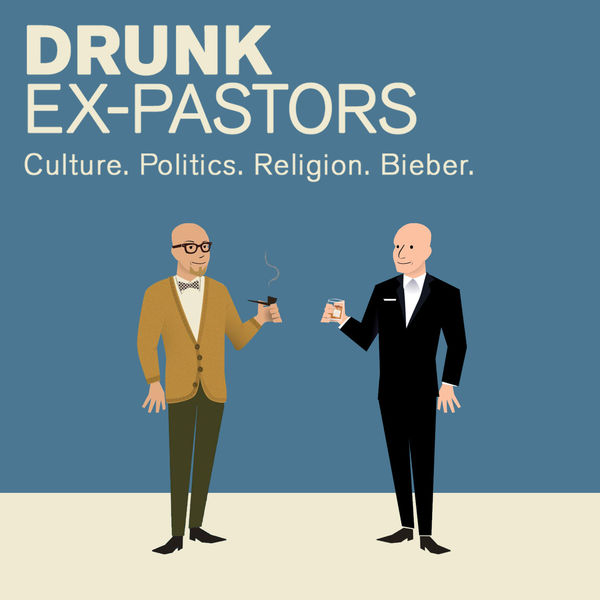
Called to Drink

Bryan and the Jasons don’t seem to update their blog much. Jason Stellman’s conversion narrative is still there. But no one at Called to Communion seems to notice where their call led Jason (thanks to our Michigan correspondent):

JASON STELLMAN, cohost of the podcast Drunk Ex-Pastors, is a Southern California native and transplant to Seattle who wishes he still lived in Europe. He served as a missionary with Calvary Chapel of Costa Mesa in Uganda (’91-’92) and in Hungary (’94-2000). Ordained In the Presbyterian Church in America, he was called to plant Exile Presbyterian Church in the Seattle area where he served from 2004-2012. In September 2012, he was received into the Catholic Church. He drinks and questions his faith regularly.

Don’t get me wrong. I like a drink as much as the next man. But I haven’t made drinking a fruit of the Spirit or a reason to be Presbyterian (hey, wait a minute).

Does POTUS Define US?

Of course, not. The federal government has two other branches and the United States is way more than its government. McDonalds? Hollywood? Caitlyn? Harvard? The military? Heck, we don’t even pledge allegiance to the White House.

But what’s true for a nation is not true for a church like Roman Catholicism. There the papacy does define Roman Catholicism. And Ross Douthat explains why investing all that power and identity in a single office is a mistake, or why Pope Francis is more of a threat than President Trump:

Friendly media coverage casts the pontiff as a man of the center, an ecclesiastical equivalent of Angela Merkel or Barack Obama or David Cameron, menaced by authoritarians to his right. But he is no such thing, and not only because his politics are much more radical and apocalyptic than any Western technocrat. In the context of the papacy, in his style as a ruler of the church, Francis is flagrantly Trumpian: a shatterer of norms, a disregarder of traditions, an insult-heavy rhetorician, a pontiff impatient with the strictures of church law and inclined to govern by decree when existing rules and structures resist his will.

His admirers believe that all these aggressive moves, from his high-stakes push to change church discipline on remarriage and divorce to his recent annexation of the Knights of Malta, are justified by the ossification of the church and the need for rapid change. Which is to say, they regard the unhappiness of Vatican bureaucrats, the doubts of theologians, the confusion of bishops and the despair of canon lawyers the way Trump supporters regard the anxiety of D.C. insiders and policy experts and journalists — as a sign that their hero’s moves are working, that he’s finally draining the Roman swamp.

Meanwhile the church’s institutionalists are divided along roughly the same lines as mainstream politicians in the face of Trump’s ascent.

There is a faction that has thrown in with Francis completely, some out of theological conviction, some out of opportunism, some out of simple loyalty to the papal office. (The analogy would be to the mix of populists, opportunists and institutionalists who smoothed Trump’s progress to the Republican nomination.)

There is a group that is simply silent or deeply cautious — note how few of the world’s bishops have taken any position on the controversy over divorce and remarriage — in the hopes that things will simply return to normal without their having to put anything at risk. (The analogy would be to most Republican elected officials, and a few red-state Democrats as well.)

There is a group that is relatively open in criticism of the pope’s agenda but also unwilling to cross the line into norm-smashing of its own. (The analogy would be to the American center-right and center-left, from John McCain to Hillary Clinton.)

This last group’s sheer diversity is one reason the Bannon-versus-Francis theory fails. The ranks of papal skeptics are filled with Africans and Latin Americans as well as North Americans and Europeans, with prelates and theologians and laypeople of diverse economic and political perspectives. Most are not traditionalists like Burke; they are simply conservatives, comfortable with the Pope John Paul II model of Catholicism, with its fusion of the traditional and modern, its attempt to maintain doctrinal conservatism while embracing the Second Vatican Council’s reforms.

But because this larger group is cautious, its members have been overshadowed by the more forthright, combative and, yes, reactionary Cardinal Burke, whose interventions might as well come with the hashtag #TheResistance.

Which places him in the same position, relative to Francis, that a Bernie Sanders occupies relative to Trump — or that Jeremy Corbyn occupies relative to Brexit. He’s a figure from the fringe whose ideas gain influence because the other fringe is suddenly in power; a reactionary critic of a radical pope just as Sanders or Corbyn are radical critics of a suddenly empowered spirit of reaction.

So the story of Catholicism right now has less to do with reaction alone and more to do with what happens generally when an institution’s center doesn’t hold.

You don’t hear Bryan and the Jasons saying much about church politics. It’s like reading the Federalist Papers and ignoring the 2016 presidential campaign. And yet, ideas do have consequences and the theory of chief and infallible interpreter of the faith is not simply an idea. It is a way of life. At least the federalists left behind a Constitution. What enumerated powers did papal supremacists leave behind?

Dressing Like a King is Not Unobtrusive

Hello.

Father Dwight again challenges reason:

The priest’s robes are a ceremonial vesture—a uniform of their sacred office. They are meant to effectively obliterate the priest’s personality. They are also, by the way, meant to be unobtrusive. They should not be creative or clever or call attention to the smart vestment designer or the wonderful seamstress. They are simply to dignify the office of the priest and dignify and beautify the celebration of Mass.

If the Mass is the Royal Marriage Feast of the Lamb, then the priest should dress up for his entrance into the royal court. The robes should therefore be regal in their dignity, their simplicity and their style. As much as possible their beauty should be shown, not by cleverness of design or ornamentation, but through quality materials and fine workmanship.

Why should the priest dress like a king? Because he reminds the whole people of God that they serve Christ the King, and the priest is in persona Christi. Furthermore, they remind the people of God that they too are a chosen people, and a royal priesthood. The priest focuses in his own person and ministry the royal priesthood of the people of God.

The question is why priests still dress in a medieval manner when the church has opened the windows to and come alongside the modern world. Not even Queen Elizabeth dresses like a priest.

How to Argue for Christian Day Schools

Timothy Cardinal Dolan gives instruction indirectly to those neo-Calvinists spooked by Betsy DeVos:

These stellar Catholic schools help the community dramatically. Let me just mention one incredible stat: 98% of our high school seniors graduate on time, and 96% of them go on to college! A large part of that high school success is that our Catholic elementary schools do a great job getting students ready to learn and thrive in high school. No wonder we’re so proud of them, and committed to keeping them open!

But these celebrated schools that so help society need help! Although four of these school changes were decided because the school is no longer connected to a local parish church and office, and only two were made due to declining enrollment, it is still a fact that we must always fight for our schools. We often find ourselves in a catch-22: if we raise tuition, fewer parents, already sacrificing so much to meet even our modest tuition, can’t do it, and tearfully withdraw their children; if we don’t increase fees, well, we don’t have enough funds.

That’s why we’re so grateful to our benefactors, of all faiths or none, who are especially generous to our Inner City Catholic School Scholarship Fund, and to our own Catholic people, who dig deep each year to help keep them strong.

Notice that Dolan thinks by going private you help the public. The neo-Calvinist critics of DeVos seem to think education is a zero sum game — either pro-public or pro-private. If that’s the dynamic, why are neo-Calvinists still advocating private schools? (Thus, another way that Protestants shoot themselves in the foot on public education.)

The Nation-State with the Ethic of a Church

What does it mean to be American?

“For the Catholic community, the Gospel mandate to ‘welcome the stranger’ is a searing responsibility, not only in our personal lives, but also in guiding our efforts to create a just society in a world filled with suffering and turmoil,” San Diego Bishop Robert McElroy wrote in a statement about the executive orders.

“For this reason, the historic identity of the United States as a safe haven for refugees fleeing war and persecution is for American Catholics both a source of justifiable pride and an unswerving religious commitment, even as we recognize that at shameful moments in our national history prejudice, fear and ignorance have led our country to abandon that identity.”

We heard Chicago Cardinal Blase Cupich state: “It is time to put aside fear and join together to recover who we are and what we represent to a world badly in need of hope and solidarity. ‘If we want security, let us give security; if we want life, let us give life; if we want opportunities, let us provide opportunities.’ Pope Francis issued these challenging words to Congress in 2015, and followed with a warning that should haunt us as we come to terms with the events of the weekend: ‘The yardstick we use for others will be the yardstick which time will use for us.’ ” The cardinal’s statement got so many hits, the archdiocesan website crashed.

What does it mean to be Roman Catholic?

When it comes to religious affiliation, a distinctive pattern has emerged in President Donald Trump’s new administration: Most of the high-ranking appointees to military-related positions hail from a Catholic background.

That includes not only Gen. James Mattis, who was sworn in as secretary of defense in late January, but also the new secretary of the Department of Homeland Security, Gen. John Kelly. The pattern holds with the national security adviser, Michael Flynn, who is also a general and grew up in an Irish-Catholic family in Rhode Island.

Other high-ranking Catholics include the Army secretary appointee, Vincent Viola, an Army veteran and major donor to Fordham University; and Gen. Joseph Dunford, who was tapped to serve as chairman of the joint chiefs of staff under President Barack Obama and is viewed as likely to continue in that role.

That so many Catholics ended up in top military positions is not necessarily by design, but it is nonetheless significant, according to several military historians.

Lisa Mundey, a military historian at the University of St. Thomas in Houston, said the appointments reflect broader social trends. “I think what is interesting is how well Catholics are integrated into society [now] than they were historically,” Mundey said. A key turning point was the election of John F. Kennedy as president in 1960, which especially paved the way for other Catholics to serve in key government posts, according to Mundey.

Another watershed moment was the end of the draft and the birth of the all-volunteer army, in 1973. Since then, more of those who serve in the military have been making their careers there, according to Mundey.

The armed forces provide an environment that is friendly to the expression of faith, according to William Leeman, a military historian at Salve Regina University in Newport, Rhode Island, who formerly taught at West Point. “They seem very comfortable with their religion, in the sense that it seems to be a more conservative environment,” Leeman said.

For those in the military, their faith can help them get through the hardships they face, becoming an important part of their service, Leeman said.

The cafeteria is opening a franchise near you soon.

Aesthetic Relativism

If you don’t have standards for beauty, how do you have them for truth and goodness? Father Dwight doesn’t explain:

If you are a convert to the Catholic faith from Lutheranism or Anglicanism or any other form of tasteful religion, then you will have to deal with Catholic kitsch. What are we to do with the trashy trinkets, the horrid holy cards, the sappy statues? How do you put up with the banal hymns, bad preaching and sentimental religiosity? . . .

It’s true Catholics have some awful music and bad hymns. But we also have Palestrina, Elgar, Mozart and Byrd.

Yes, we do have plastic glow in the dark rosaries and those night lights you plug in where the plastic statue of the Blessed Mother lights up. But we also have the Pieta and the Sistine Chapel and Michelangelo and Caravaggio.

It’s true we have brutalist churches that look like a cross between a flying saucer and a parking garage, but we also have Chartres, St. Mark’s in Venice, Sainte-Chapelle, Notre Dame, St. Peter’s and Mont Saint-Michel.

This is the authenticity of the Catholic faith. It is universal. It has room for the peasant and the aristocrat, hoi polloi and high falutin’, the learned and the ignorant, the tasteful and the tacky, the sinner and the saint.

With that kind of tolerance, why would you ever reject Protestantism?

But Father Dwight insists he has standards:

“If I were choosing a church I liked I’d still be an Anglican. I didn’t become a Catholic because I liked the Catholic Church.” I retorted. “I became a Catholic because it’s the true Church.”

How would he know? Because the bishop with all the high end art told him?

You can’t argue this stuff up.

Just In Time for the 500th Anniversary of the Reformation

A papal crackdown:

For most of us, who are not Knights of Malta, the resignation of the group’s grand master will have little immediate impact. But the unprecedented papal intervention into the affairs of that venerable body fits into a pattern that should, at this point, worry all faithful Catholics. Under Pope Francis, the Vatican is systematically silencing, eliminating, and replacing critics of the Pope’s views.

During the reigns of Popes John Paul II and Benedict XVI, “progressive” Catholics frequently complained about a crackdown on theological dissent. On the rare occasions when the Congregation for the Doctrine of the Faith issued a warning about a wayward theologian’s published works, there were anguished warnings about a reign of terror at the Vatican. Now a crackdown really is occurring—instigated by the Pontiff who famously asked, “Who am I to judge?” And the objects of the current crackdown are not theologians who question established doctrines, but Catholics who uphold the traditional teachings of the Church.

The first and most prominent victim of the purge was Cardinal Raymond Burke, who was exiled from the Roman Curia soon after Pope Francis took office, and given a mostly ceremonial post as patron of the Knights of Malta. It is ironic—and perhaps not coincidental—that the latest incident involves his new charge.

As much as I admire and sympathize with conservative Roman Catholics (like Ross Douthat and the author of this piece, Phil Lawler), can such folks really complain about papal supremacy? Isn’t this what rule by one is supposed to look like (and why Americans love to talk about checks and balances)? In fact, as long as Rome depends on the Bishop of Rome to support its claims of superiority — unity, authority, antiquity — can devout Roman Catholics really object to popes who use their authority to enforce unity?

Why Mencken Matters

He is a reminder that belief is not normal (to fallen human beings).

The reason for that aside is Regis Martin’s article about the stupidity of atheists (trigger warning for the w-w deniers):

…people do not arrive at atheism as a result of hours heuristically spent perusing the philosophical journals. That is because it is not a matter of the intelligence that compels one to choose disbelief, but a movement of the will. One would have to be pretty witless if, on the strength of a syllogism, one were to conclude that there is no God. An atheist can no more eliminate God’s existence by his refusal to believe than a blind man can by his inability to see expel the sunlight. “The essence of God does indeed lie beyond the scope of intelligence,” Fr. Murray freely concedes, “but his existence does not.” And not to know at least that much, “is to nullify oneself as a man, a creature of intelligence.” Because belief in God is, very simply, the bedrock truth upon which everything else depends. To think otherwise, he argues, amounts to “a miserably flat denouement to the great intellectual drama in whose opening scene Plato appeared with the astonishing announcement that launched the high action of philosophy—his insight that there is an order of transcendent reality, higher than the order of human intelligence and the measure of it, to which access is available to the mind of man.”

In which case, we should never trust an atheist or unbeliever with any sort of responsibility (and we should live in a Christendom because only God-affirmers have the bedrock for truth).

But what if faith is not natural? What if philosophical inquiry and logical deduction still don’t make a man or woman believe? What if, get this, Paul was right?

28 And since they did not see fit to acknowledge God, God gave them up to a debased mind to do what ought not to be done. 29 They were filled with all manner of unrighteousness, evil, covetousness, malice. They are full of envy, murder, strife, deceit, maliciousness. They are gossips, 30 slanderers, haters of God, insolent, haughty, boastful, inventors of evil, disobedient to parents, 31 foolish, faithless, heartless, ruthless. 32 Though they know God’s righteous decree that those who practice such things deserve to die, they not only do them but give approval to those who practice them. (Romans 1)

Imagine that: Reformed Protestants take atheists more seriously than Roman Catholics because of the doctrine of total depravity. If you start with the reality that all people are lost in their trespasses and sins, that their minds are “darkened” as a result, you set your expectations of unbelievers accordingly. But if you look at faith as the bedrock of understanding the world (think w-w), and you need to trust your neighbors not to do irrational things, then you are going to attribute belief in God to them (and meanwhile deny total depravity).

Mencken matters because he’s proof that unbelievers are smart, and that the Holy Spirit is more powerful than reason in giving people faith in Jesus Christ as their savior.

How Theological Liberalism Wins

First, you have the traditionalists:

I think you can see Professor Esolen’s essay as reflecting the long-term concerns of one group, in particular: Catholic faculty members who share a particular vision of the college’s mission. They assume that our Catholic identity should be at the center of everything we do, and they look to the long history of Catholic tradition, including recent documents like Pope St. John Paul II’s Ex Corde Ecclesiae, as crucial.

This group of faculty, in which I include myself, are worried. To put it simply, they don’t want to see Providence College join other religious universities who have moved away from their religious foundation. (Jim Burtchaell’s The Dying of the Light chronicles this phenomenon.)

Second, you have the social justice warriors:

Another group immediately involved here are some of the people who tend to fall on the margins in our community-and also those supporting them. They have serious concerns about systemic forms of exclusion. (And here, too, are a number of concerns that I myself share.)

They can see, for example, that Providence College’s 100-year history includes almost nothing of the African-American experience, or of Hispanic culture and tradition. In the last few years, the college has made a concerted effort to recruit more students, faculty, and staff from underrepresented groups, but frankly, it hasn’t always succeeded in offering needed support once they arrive.

For all those who are part of this second group, their frustrations are also part of a larger story: longstanding exclusion and unjust mistreatment of marginalized people. And, it’s important to say, some of these folks would also note that their concerns are prompted by Catholic commitments, beginning with a recognition of the dignity of every human being.

Third, you notice that tradition doesn’t get you satisfaction social justice.

Esolen’s essay was read as opposition to individuals, and, by extension, as disregard for the specific cultural realities they represent. Unfortunately, the essay’s polemical tone contributed to that reading, especially once the editor had framed the whole piece with a headline that was pure clickbait.

When a number of people voiced criticism of the essay, the president responded with his own critique in a campus-wide email, and the executive vice president reported the impact of the essay as “implicitly racist” in another campus-wide email. In the end, these official responses then confirmed fears of that first group of faculty that questioning the way that diversity is being conceived and pursued means you’ll be cut off at the knees.

Fourth, you see that lots of people outside the faith also want social justice.

Finally, you conclude either that those non-believers are really on the side of the faith, or that justice is as or more important than doctrine for real Christianity.

That means reversing what Paul wrote. Instead of “If in Christ we have hope in this life only, we are of all people most to be pitied,” you now say, “If in Christ we have hope for resurrected life only, we are of all people most to be pitied.”