Labor Day South of the Equator

I used to think (I avoid assuming because of the consequences) that the rest of the world followed the general contour of the seasons in the United States.  Is that a consequence of American greatness and status as leader of the free world?  Perhaps.

But now I am woke.

While still flying solo last night I viewed a documentary about beach resorts in Argentina, Balnearios.  It was pretty good.  It was more orchestrated than some documentaries, but provided a glimpse of Argentinian life that fascinates. I give it three stars.  The cats are still voting.

One aspect that struck me was that summer there is our winter.  Of course, since I spent time in Brazil a couple decades ago during the month of February, I knew that their summer matched our winter.  But since I was teaching at a seminary and classes were in session (which they also seemed to be at the affiliated university), I had assumed that the school year below the equator lined up with ours in North America.

I saw vividly last night what this website confirms (by the way, I checked to see about South Africa and discovered they have four terms that run almost the entire year):

The school year in Argentina runs from March to December and lasts about 200 days. Schools are closed for national holidays, such as Good Friday and Easter, and two weeks in July for vacation. Normally, public elementary schools are in session four and a half hours each weekday. Saturdays are generally reserved for extracurricular school activities. Often, a school will have a morning and afternoon session, allowing pupils and teachers to choose their sessions. Some elementary schools offer evening classes for adults.

Imagine that. Stocking up on notebooks and pencils about the same time you are throwing out Christmas gift wrapping and determining this time really really to lose a few pounds.

What may even be harder to conceive is not having a Christmas recess from classes because the school year just ended.

Talk about American myopia.

Postscript: Ellen Marie Jones and Jay Glenn Hart were married on this day seventy-five years ago at Metropolitan Baptist Church (now Capitol Hill Baptist). Need to mention this here since in heaven, where they are, there’s no marriage and so likely no wedding anniversary celebrations.

America is Already Great

I’m in a good mood. Time to celebrate the joys and accomplishments of this blessed land.

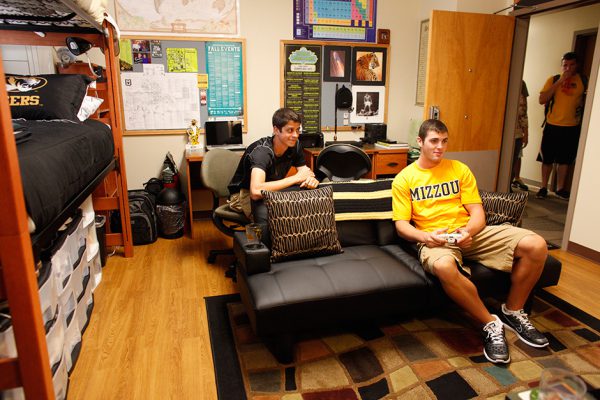
Where else to you have the liberty to make observations like these from Mitch Albom on the differences between 1967 and 2017 of dropping your kids off at college/university?

OLD: “We drove our son to college today. What a proud moment. He was a little embarrassed by Mom and Dad coming up to his room, but we promised not to make any ‘square’ jokes. We unpacked his trunk and Mom helped organize his drawers. We met his roommate, who seemed nice. His name is Scott.”

NEW: “We drove our young prince to college today. What a proud moment. He was embarrassed by having his mom and step-dad and dad and former step-mom and dad’s current girlfriend all coming up to his room, so we had to watch from a distance. We saw him hook up his cable TV and his Xbox, then assemble his IKEA furniture. We also met his roommate, who seemed nice. Her name is X. And we are not supposed to use the word ‘her.’ ”

NEW: “After helping our son hang his flat screen and surround-sound speakers, we went for a walk around campus. We saw the 24-hour state-of-the-art exercise facility and the 24-hour Apple computer labs. He showed us the ‘safe spaces’ where no offensive words can be used, and the ‘healing spaces’ where you can go if you were accidentally exposed to an offensive sentence. There were seven cafeterias to pick from, so we chose the non-GMO, gluten-free, nut-free, dairy-free, vegan facility, which made our young person very happy. His nonbiological father took him aside and said, ‘Listen, friend, we know the drinking age is 21, but since you’re 18, please go easy on the beer. You don’t want to pass out in a hot tub and have it uploaded to YouTube.’ ”

OLD: “Our son had a brief meeting with his academic adviser, who told him his first two years, as expected, would be mostly required classes including classic literature, philosophy, math, a foreign language and history. But he was excited to learn he could choose an ‘elective’ each semester. Such freedom of study!”

NEW: “Our young liege checked his iPhone to pick his classes. A student protest to eliminate dead poets from the curriculum means he won’t have to study Shakespeare, and since history was found to be an offensive word (“His” and “story,” so sexist!) he doesn’t have to worry about that anymore. The fact is, his curriculum is totally up to him — to inspire and challenge his natural talents — but he did say he planned to study a foreign language. I think he said, ‘Fortran.’ ”

OLD: “We wanted to have ‘the talk’ with our son, make sure he wasn’t confused about the whole birds and the bees issue or its consequences. His mom told him she wouldn’t mind if he met a nice girl here, and if it was someone special, maybe she could come home with him for Thanksgiving. Dad took him aside and reminded him that he was here to study. After all, tuition costs $2,500 a year.

“Then, despite all that, Dad gave him a bottle of aftershave.”

NEW: “We wanted to have ‘the talk’ with our child, after he told us the hookup rate at his school was one of the highest in the nation. We toured the nearby Planned Parenthood office and the sexually transmitted disease clinic. His step-dad gave him a box of condoms, as did his mother. We were happy that his biological father reminded him that tuition, with room and board, was $70,000 a year. So it would be good if he studied once in a while.

“Happily, our young genius nodded repeatedly with his eyes closed. Then again, he was wearing headphones.”

The U.S.ofA. is no less great because people can react to Albom’s column in such thoughtful and inspired ways:

Filling a column with hackneyed jokes about gender identity, biological parents and more reasons college has “changed since 50 years ago” doesn’t seem like the smartest move, but apparently no one told Mitch Albom that. Albom, the long-time Detroit Free Press columnist (where he’s previously gotten in trouble for fabricating a story about players attending a game as well as self-plagiarism), decided to write a column along those lines this week, and it’s so, so bad.

The lesson? To notice difference is bad.  To have no awareness of historical change is good.

But we are the land of the free.  Bravery is mainly a symptom of following Major League Baseball in the South.

The Attack on Public Art

With all the attention to Confederate Monuments, I was wondering about what the recent hostilities in Charlottesville might say about the state of public art in the United States.

For instance, Nicole Martinez wrote positively about public art displays as recently as May:

If you walked past one of the Garment District plazas in New York City last fall, you may have noticed those giant, vibrantly colored animal sculptures towering over sidewalk diners at café tables. Or perhaps you were running to catch a plane at Miami International Airport, and you glanced up to see an intricate web of etched glass on the roof of the bustling transportation center. If you’re an artist, you might be wondering how you might land an opportunity to showcase your work in a public space and land a public art commission – and while the process can be long and arduous, there are a variety of opportunities to participate in public art programs across the country.

Public art programs were first launched in the United States in the 1930s, when President Roosevelt’s New Deal spurred the idea that Americans should take pride in their cultural treasures. The New Deal program Art-in-Architecture (A-i-A) developed percent for art programs, a structure for funding public art still utilized today. This program gave one half of one percent of total construction costs of all government buildings to purchase contemporary American art for that structure. Today, acquisitions also include specially commissioned art projects for public art spaces, and the percentage allocated from a new construction project typically varies from one-half to two percent.

You might think that public art is a positive aspect of American society.

The Association for Public Art admits that some pieces might receive support from the entire community but that should not stop funding and recognition:

In a diverse society, all art cannot appeal to all people, nor should it be expected to do so. Art attracts attention; that is what it is supposed to do. Is it any wonder, then, that public art causes controversy? Varied popular opinion is inevitable, and it is a healthy sign that the public environment is acknowledged rather than ignored. To some degree, every public art project is an interactive process involving artists, architects, design professionals, community residents, civic leaders, politicians, approval agencies, funding agencies, and construction teams. The challenge of this communal process is to enhance rather than limit the artist’s involvement.

For that reason, Martinez advises caution to artists:

Ultimately, artists interested in landing public art commissions should pay close attention to government agency websites in an effort to keep track of open calls for public art commissions. If you choose to apply, consider crafting a proposal that directly addresses the architectural components of the space, bearing in mind the agency’s budget constraints and your own ability to stick to the budget you’ve laid out. And while its true that a public art project may not be the most lucrative commission of your artistic career, its lasting influence will likely impact it for years to come.

Obviously, she wasn’t thinking about changing historical awareness.

Consequently, to keep up with the times, Americans for the Arts decided to create distance between their support for public art and the kinds of public displays that have drawn ire recently:

“For nearly 60 years, Americans for the Arts, with its member organizations, has been a fierce advocate for public art and how it can help transform, inspire, and educate communities. Americans for the Arts stands with community members who are coming together to have civil and just dialogues, and to meaningfully and honestly assess the value of their existing public art pieces, monuments, and memorials in telling the narratives that their communities desire and deserve today. Americans for the Arts stands in opposition to any form of violence, intimidation, or illegal activity that cuts short such community dialogue.

“We support ongoing community dialogue around truth, reconciliation, and removal and replacement of the various artistic and cultural vestiges of white supremacy and racism in the United States, and the installation of monuments commemorating narratives of emancipation, shared strength, and equity. We recommend that local arts agencies and other arts institutions join these dialogues in concert with affected communities.

“Americans for the Arts strongly supports diversity, equity, and inclusion, and stands against racism, bigotry, and hatred. To support a full creative life for all, we commit to championing policies and practices of cultural equity that empower a just, inclusive, equitable nation.”

Sixty years for public arts. Four days against white supremacy and racism. You do the math.

Pope Angelo

First, he condemned Joe Paterno to hell.

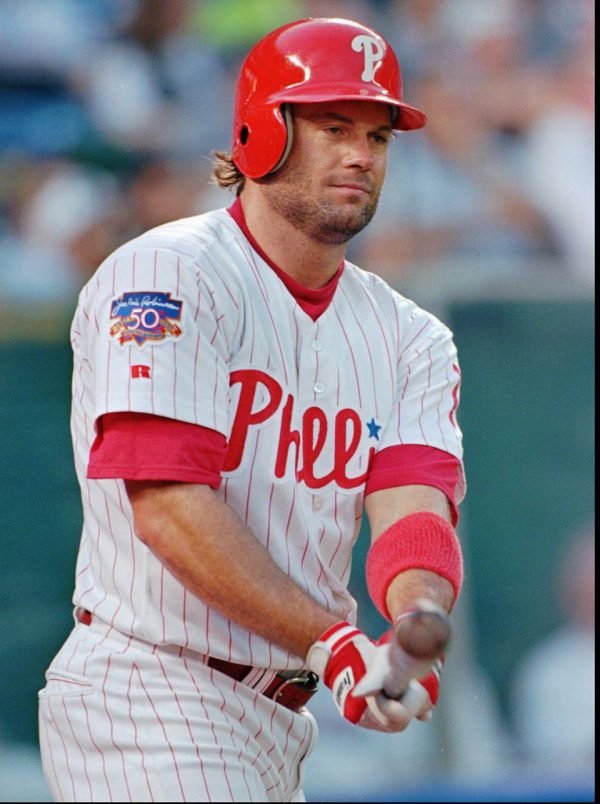
Now, Angelo Cataldi opens the pearly gates for Darren Daulton, the Phillies catcher who succumbed to brain cancer yesterday. On this morning’s show, Angelo told one caller whose mom, now deceased, had a crush on the sexiest MLB player of the 1990s, that she now had the chance to meet Dutch since both the mom and the catcher were in heaven.

I initially thought that Angelo was going beyond the creed of Therapeutic Moralistic Deism. Maybe this was a holdover from his pre-Vatican II upbringing in the archdiocese of Providence, Rhodes Island. Surely the idea of heaven and hell — eternal rewards and punishments — was harshing out his listener’s buzz of learning about car insurance discounts and dancers at “gentlemen”‘s clubs. But sure enough, heaven is part of Therapeutic Moralistic Deism’s creed:

God is a cosmic therapist and divine butler, ready to help out when needed. He exists but really isn’t a part of our lives. We are supposed to be “good people,” but each person must find what’s right for him or her. Good people will go to heaven, and we shouldn’t be stifled by organized religion where somebody tells us what we should do or what we should believe.

Mind you, Angelo should not speculate on Daulton’s eternal fate. It’s not what sports-talk-radio-hosts should do. But if Angelo is going to create a moral spread sheet on every sports figure in Philadelphia, can he himself really stand in that great day?

How Did Nancy MacLean Miss Calvinism?

The Duke historian’s book, Democracy in Chains: The Deep History of the Radical Right’s Stealth Plan for America has generated lots of attention and the debate appears to be one more indication of how much the United States resembles Turkey. For those who missed it, here is how the story at the Chronicle summarized the book:

At the heart of this purported plot is a Nobel-winning economist whose ideas MacLean characterizes as “diabolical” and “wicked”: James McGill Buchanan. Buchanan, a libertarian who taught at George Mason University and died in 2013, developed a novel way of analyzing government that would have far-reaching consequences for democracy, MacLean argues. In his view, self-interest dictated the behavior of public officials and those who tried to influence them. The incentives that shaped officials’ actions — winning re-election, expanding their bureaucratic turf — encouraged profligate government spending at the expense of a minority of taxpayers. This violated the taxpayers’ freedom and burdened the economy.

In MacLean’s telling, Buchanan was both an intellectual and a “deeply political foot soldier of the right.” Over time, she says, he came to believe that the best way to bring about radical change was to focus on the rules, not the rulers. Freedom would flourish only by imposing legal and constitutional shackles that prevented public officials from responding to the will of democratic majorities. In the late 1990s, MacLean writes, a like-minded billionaire, Charles Koch, seized on Buchanan’s ideas as a “personal operational strategy” for his campaign to “save capitalism from democracy — permanently.” Because most Americans didn’t support their ideas, that strategy required stealth: small, piecemeal moves that could win approval without provoking an outcry.

This is one more instance where I marvel at professionals who work in privileged and hierarchical environments like universities with tenure and ranks become indignant defenders of democracy. As if any senior professor would submit to democratic rule at his or her institution — let the students, groundskeepers, and athletic trainers in on running the university.

But I do wonder if MacLean might have made her story even juicier if she had thrown in that Buchanan (sort of a Presbyterian name, no?) was part of a sinister plot of Calvinists to control America. After all, the way Sam Tanenhaus describes Buchanan’s contribution sure sounds like the economist knew the fall infected politics:

Yet race, MacLean acknowledges, was not ultimately a major issue for Buchanan. Fending off desegregation was only a skirmish in the long campaign to revive antigovernment ideas. That campaign dated back to the nation’s founding, gained new strength in the pre–Civil War nullification arguments of John Calhoun, and reached its modern apogee in debates over taxes and spending. Here the enemies were unions (“the labor monopoly movement,” in Buchanan’s phrase), leftish policy makers, and also Keynesian economists. Together these formed a “ruling class” that was waging war against the marketplace. This was not a new argument, but Buchanan gave it fresh rigor in his theory of “public choice,” set forth in his pioneering book, The Calculus of Consent (1962), written with Gordon Tullock. Governments, they argued, were being assessed in the wrong way. The error was a legacy of New Deal thinking, which glorified elected officials and career bureaucrats as disinterested servants of the public good, despite the obvious coercive effects of the programs they put into place. Why not instead see politicians and government administrators as self-interested players in the marketplace, trying to “maximize their utility”—that is, win the next election or enlarge their department’s budget?

Real Calvinists don’t believe in public good and reach for their two-edged sword whenever a public servant serving servers invokes such immodest language.

Talk Radio Matters Now More than Eh-vuh

Rush Limbaugh is a big fat idiot, so says one of the U.S. Senators (has Ben Sasse got a book for him). Rush is also sometimes funny, but mainly annoying, grating, predictable, and verbose. Whenever the missus hears Rush (and she’s a captive audience on road trips), she cannot believe how long he takes to say something basically simple.

Rush also over exegetes the stuffings out of most statements, votes, or policy proposals. If it’s from the left, he will find the tell-tale signs of liberal excess. If from the right, he’ll detect all the virtues of liberty and the American way.

The reason for bringing up Rush is that Donald Trump has turned the non-talk radio media into Rush. The latest example comes from reactions to the President’s speech in Poland where he defended the West and its civilization. The speech and its responses are well in the rear view mirror thanks to Donald Jr., but the hyperventilated reaction from the normally mild and decent James Fallows should not be missed.

Robert Merry picked up on the Nazi slur that Fallows attached to Trump’s use of the word, “will”:

…he truly reveals himself in savaging Trump’s suggestion that the West must muster “the will to survive.” Aha! Fallows clearly thinks he has nailed it here. This, he informs us, was a not-too-subtle reference to Leni Reifenstahl’s famous Nazi propaganda film, Triumph of the Will. Fallows speculates that Trump’s speechwriters (including Bannon) certainly knew of Riefenstahl and probably understood “how it would sound, in a Europe that also remembers connotations of national ‘will,’ to have an American president say this.”

Is it really still necessary, some 80 years later, to forswear any use of the word “will” in discussing politics or geopolitics because of this German film? And, if someone uses the term, is that prima facie evidence of fascistic tendencies?

Fallows not only sneered over “will” but also over Trump’s using “blood”:

Trump gave grace-note nods to goals of liberty and free expression. Mainly, though, he spoke not about an expanded us but instead about us and them. He spoke repeatedly about our “heritage,” our “blood,” our “civilization,” our “ancestors” and “families,” our “will” and “way of life.” Every one of these of course has perfectly noble connotations. But combined and in practice, they amount to the way the Japanese nationalists of the early 20th century onward spoke, about the purity of “we Japanese” and the need to stick together as a tribe. They were the way Mussolini spoke, glorifying the Roman heritage—but again in a tribal sense, to elevate 20th century Italians as a group, rather than in John F. Kennedy’s allusion to a system of rules that could include outsiders as civis romanus as well. They are the way French nationalists supporting Marine LePen speak now, and Nigel Farage’s pro-Brexit forces in the U.K., and “alt-right” activists in the United States, and of course the Breitbart empire under presidential counselor Steve Bannon. They rest on basic distinctions between us and them as peoples—that is, as tribes—rather than as the contending ideas and systems that presidents from our first to our 44th had emphasized.

Blood is code for the European right where bloodlines, acreage, throne, and altar are supposed to matter. (This paragraph with its isolation of quoted words from the context of sentences and paragraphs actually reminded me of the specifications of charges against a minister in the OPC we heard at GA, but I digress.) But here is how the president actually used the word blood (and only 4 times):

In the summer of 1944, the Nazi and Soviet armies were preparing for a terrible and bloody battle right here in Warsaw. . . .

They ran across that street, they ran through that street, they ran under that street — all to defend this city. “The far side was several yards away,” recalled one young Polish woman named Greta. That mortality and that life was so important to her. In fact, she said, “The mortally dangerous sector of the street was soaked in the blood. It was the blood of messengers, liaison girls, and couriers.” . . .

Those heroes remind us that the West was saved with the blood of patriots; that each generation must rise up and play their part in its defense — (applause) — and that every foot of ground, and every last inch of civilization, is worth defending with your life.

So in all, President Trump said “bloody” in reference to a battle, quoted a Polish woman who used “blood” to describe a scene, and spoke of the “blood” shed by soldiers who died in combat. That last reference had no explicit link to white people since Caucasians, Africans, Asians, and Hispanics lost their lives fighting in U.S. Armed forces.

Talk about overreach. Talk about the mainstream press sounding like Rush and Sean.

And oh by the way, what was the point of doing away with Western Civ courses back in the 1980s when Jesse Jackson chanted, “Hey Hey Ho Ho (Don Imus anyone?) Western Civ has got to go”? The rationale was all about blood. The old canon had all white men whose blood had stopped circulating. The curriculum needed new blood — women, blacks, Asians. That’s a lot of genetic material going on in the selection of reading assignments. But don’t let that get in the way of likening Donald Trump to a eugenics promoting nativist.

At least, like H. L. Mencken said, what a show.

When Did Philadelphia Turn into San Diego?

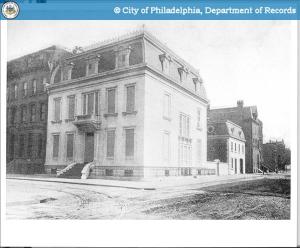
I was in the nation’s original capital yesterday and saw this at 22nd and Walnut:

It replaces this:

Which makes me think this has a point:

Meanwhile, in Philadelphia, a generous tax abatement program—combined with flawed preservation policies—changed the landscape of Center City and its surrounding neighborhoods. During the past decade, the city experienced a demolition bonanza. In neighborhoods of historic housing like Powelton Village, developers “have discovered they can make a tidy sum simply by replacing one of these old houses with a stucco-clad apartment building and then cramming it with students,” observed the Philadelphia Inquirer’s architecture critic, Inga Saffron.

Preservationists have protested how Philadelphia’s demolition permits are approved. In the past year, two historic structures were razed for projects that never materialized. Currently, the preservation fight is focused on Center City’s Jeweler’s Row, a charming set of commercial properties on a block laid out in 1799. The historic storefronts, slated for demolition, would be replaced by a massive condo tower. Ill-advised demolition projects continue throughout Philadelphia, its future depending on an influx, however temporary, of millennials and students.

Why does it take regulative-principle toting confessional Presbyterians, not urban hipster pastors, to notice?

Isn’t the Point of Social Media to Attract Followers?

So why is it that some tweeters choose to block followers? If you want to have a private conversation on social media I believe we still have email, discussion list-serves, and even password protected blogs. But if you are in the business of trying to enlighten as many as possible about how unjust U.S. society is, why do you cut off someone from hearing what you tweet and link?

I mean, not even Johnny Eric Williams was all that careful about his social media profile (Greg and those like consider this a trigger warning):

Williams’s case has attracted the interest of academic freedom and free speech advocates, partly because the sociologist is among a number of other scholars who have been physically threatened or harassed online in recent months for their public comments. Most of those comments concerned race in some way.

Williams last week shared an article from Medium called “Let Them Fucking Die.” The piece argues that “indifference to their well-being is the only thing that terrifies” bigots, and so people of color should “Let. Them. Fucking. Die” if they’re ever in peril. The Medium piece linked to another Fusion piece about Republican Representative Steve Scalise, who was shot earlier this month in Alexandria, Va. It says Scalise has previously opposed extending protections to LGBTQ people and reportedly once spoke at a meeting of white supremacists, while one of the black law enforcement officers who rescued him is a married lesbian.

In sharing the Medium piece, Williams used the “Let them fucking die” comment as a hashtag, and wrote that it is “past time for the racially oppressed to do what people who believe themselves to be ‘white’ will not do, put end to the vectors of their destructive mythology of whiteness and their white supremacy system.”

That post and a similar one prompted critical reports on conservative websites suggesting Williams was advocating violence against white people.

“Less than one week after a gunman opened fire on more than a dozen Republican members of Congress on a Virginia baseball field, a Connecticut college professor said that first responders to the shooting should have ‘let them die’ because they are white,” The Blaze reported, for example.

Williams has since apologized for his remarks and said he was not advocating violence against whites, only drawing attention to systemic racism.

Maybe this is a case where you want to block those who may disagree. But what fun is it to be provocative with those already #provake?

Do Poets Write Verse this Good?

Do you remember a fragrance girls acquire in autumn? As you walk beside them after school, they tighten their arms about their books and bend their heads forward to give a more flattering attention to your words, and in the little intimate area thus formed, carved into the clear air by an implicit crescent, there is a complex fragrance woven of tobacco, powder, lipstick, rinsed hair, and that perhaps imaginary and certainly elusive scent that wool, whether in the lapels of a jacket or the nap of a sweater, seems to yield when the cloudless fall sky, like the blue bell of a vacuum, lifts toward itself the glad exhalations of all things. This fragrance, so faint and flirtatious on those afternoon walks through the dry leaves, would be banked a thousandfold on the dark slope of the stadium when, Friday nights, we played football in the city. (John Updike, “In Football Season” from Olinger Stories)

Rating Professors is Arbitrary

So warns Jacques Berlinerblau:

Professorial prestige, I contend, is an awfully arbitrary thing.

Among professors, where one works is a marker of status. Thus, the assistant professor employed by an Ivy League college accrues greater glory than her counterpart at a midsize regional university. The latter, in turn, is more esteemed than an assistant professor laboring at some far-flung small liberal-arts college. The same hierarchies prevail, I guess, among high-school seniors comparing their college-acceptance letters as they hotbox their parents’ Toyota Priuses.

The juveniles and, distressingly, the professors are just following the logic of popular college-ranking systems. They are assuming that the greater the renown of an institution as measured by U.S. News & World Report, the greater will be the quantity and quality of research produced by scholars in its employ. Is this assumption accurate?

If it were, it would follow that an assistant professor in anthropology at Princeton University (U.S. News 2016 rank No. 1) publishes more and better work than her exact counterpart at the University of Southern California (U.S. News 2016 rank No. 23). The USC savant, in turn, outperforms the identically ranked anthropologist at Clark University (U.S. News 2016 rank No. 75). The Clark ethnographer has a heftier CV than a comparable scholar employed at Oklahoma State University (U.S. News 2016 rank No. 149). The better the institution, the better the research its tenure-line professors produce. Right?

Well, practice has a habit of trolling theory. Let’s imagine an experiment. All four of our hypothetical tenure-track anthropologists are asked to submit an updated CV and all of their relevant publications. Upon their arrival, these materials are scrubbed of any identifying markers. The anonymous files are then forwarded to a panel of experienced academicians, no-nonsense types who understand how the game is played. Their task: Figure out which CV corresponds to which sage employed at colleges ranked 1, 23, 75, and 149.

Our arbiters, I’m convinced, would fail this blind test. They would fail even if we asked them not to look at mere quantity of publications but quality as well. That’s because the contestants would all look puzzlingly similar. The judges might assume that the assistant professor at Clark worked at Southern California. And, yes, it is not unthinkable that they would place the Oklahoma State ethnographer in New Jersey. The problem is not that the Princeton person is a slouch. The problem is that all four are publishing a lot and all are very impressive on paper. Ergo, it would be impossible for the judges to distinguish between scholarly Coke and Pepsi.

Does this apply to New York City pastors?

What about U.S. Senators?

What about platforms makes an author more of an authority than another author?