Make America Sane

I won’t reveal how I voted. Nor can I claim to be happy about yesterday’s outcome (I married a woman who took it hard). But a piece of me thinks that a Donald Trump presidency may make it harder for certain sorts of outlooks or activities to be taken seriously.

The first is the grief counseling offered to students at U Mass Lowell:

Dear Students,

We at the Multicultural Affairs Office hope this email reaches you and you are doing ok. We know many of you stayed up waiting to hear of the election results. These are unprecedented times. The nation as well as our community is reacting in many different ways. We are reaching out to each of you because we know that this was an intense election and we are already hearing a number of reactions, feelings and emotions. This is a critical time to make sure that you, your friends, classmates, neighbors are doing ok and seeking the appropriate support especially if they need a place to process or work through what they’re feeling.

You may hear or notice reactions both immediate and in the coming weeks, some anticipated and many that may be difficult to articulate or be shared. While it may take some time to fully take in all the recent events, please also know that the OMA office is here for you. Our UMass Lowell community is here for you. Do not hesitate at all to come in or ask for support.

Today there is a Post-election self-care session from 12-4pm in Moloney. The event will include cookies, mandalas, stress reduction techniques and mindfulness activities. Counseling and Health Services will also be available. We have sent out messages through our Social Media sites as well as encouraging students to drop in all week. Above all, take good care and know that there is strength in our community that you can lean on.

Kind regards,
Office of Multicultural Affairs Staff

Do these people cower when reading accounts of the American founding for all of the self-actualized agency that colonists displayed in seeking self-determination and limited government? (Read: are they American?)

The second is Damon Linker’s description of the cosmopolitan w-w that has dominated the Obama years (thanks to Rod Dreher):

Underlying liberal denigration of the new nationalism — the tendency of progressives to describe it as nothing but ‘racism, Islamophobia, and xenophobia’ — is the desire to delegitimise any particularistic attachment or form of solidarity, be it national, linguistic, religious, territorial, or ethnic… cosmopolitan liberals presume that all particularistic forms of solidarity must be superseded by a love of humanity in general, and indeed that these particularistic attachments will be superseded by humanitarianism before long, as part of the inevitable unfolding of human progress.

For those of us 2k Protestants who have managed to hyphenate ourselves, and found ways to recognize our multiple loyalties, the notion that all attachments to what Edmund Burke called little platoons block national progress is — well — unwelcoming. It’s also dumb. Were the Students for a Democratic Society wrong to exclude Young Americans for Freedom?

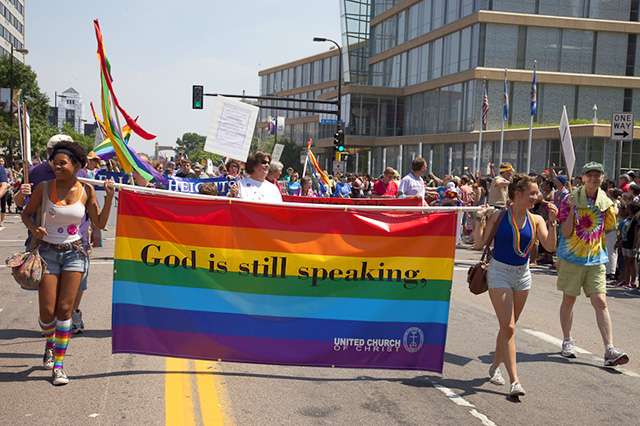
I don’t think President Trump will issue executive orders for colleges students to human-up or for Orthodox Presbyterians to sponsor OPC Pride Parades. But I do sense that he will not lend the support of the White House to the touchier and more ethereal sides of American character.
Last Minute Election Advice

Since chances for Congress electing POTUS are non-existent (for now), Old Lifers may want to take this counsel to the polls tomorrow:

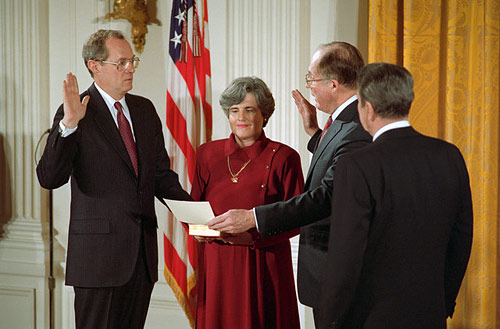
Here’s the most shocking illustration of the GOP’s Supreme Court problem: in the 19 years between Roe v. Wade and Planned Parenthood v. Casey, Republicans lost only one presidential race. The Court that decided Casey in 1992 included two Bush I appointees (Clarence Thomas and David Souter) and four Reagan appointees (William Rehnquist, Antonin Scalia, Sandra Day O’Connor, and Kennedy), in addition to a Ford appointee (John Paul Stevens) and a Nixon appointee (Harry Blackmun). Only one justice had been appointed by a Democrat, and that was Byron White, who’d dissented from Roe and supported overturning it.

And yet the Court upheld a constitutional right to abortion, though Roe’s seven-vote consensus for such a right was whittled down to five and several restrictions were also upheld. Three of the justices who helped keep Roe alive were consistent liberals during their time on the Court despite having been appointed by Republicans.

Before You Put On Any More Sackcloth and Ashes

Consider that secular judges are not always out to get Christians (even though it’s a good narrative to whoop up hysteria):

A decisive legal victory in British Columbia has put an evangelical Christian university one step closer in its bid to secure recognition for its proposed law school.

The Appeal Court of B.C. released a decision in favour of Trinity Western University on Tuesday, describing efforts by B.C.’s law society to deny accreditation to the school’s future lawyers as “unreasonable.”

The legal dispute centres around the university’s community covenant that bans its students from having sexual relations outside of heterosexual marriage.

In a unanimous decision, a panel of five judges said the negative impact on Trinity Western’s religious freedoms would be severe and far outweigh the minimal effect accreditation would have on gay and lesbian rights.

“A society that does not admit of and accommodate differences cannot be a free and democratic society — one in which its citizens are free to think, to disagree, to debate and to challenge the accepted view without fear of reprisal,” says the 66-page judgment.

Warning: stay on your meds. No reason to return to the mania of postmillennial optimism.

Why Cubs Fans Aren’t Loveable

If Chicago had only one sports franchise, such ebullience might be plausible:

Like all great stories, though, the most important part of this one is that it can serve as a picture of gospel hope in miniature. The Cubs’ saga, because the drought was so much longer and more desperate than any other North American professional sports franchise, actually illustrates that hope uniquely. Think of it: more than a century of constant struggle, doubt, and disappointment. Hopes for a glorious and cathartic future of which we’ll all be an emotionally and spiritually invested part, despite not being the main actors.

But don’t Cubs fans know they live in a city with four — not three — four other franchises. And lo and behold, the other teams’ championships hardly constitute a 2016 Cubs World Series victory as an oasis in a desert of sports futility.

Bulls — 6 Championships
-1991 defeated LA Lakers, 4-1
-1992 defeated Portland Trail Blazers, 4-2
-1993 defeated Phoenix Suns, 4-2
-1996 defeated Seattle Supersonics, 4-2
-1997 defeated Utah Jazz, 4-2
-1998 defeated Utah Jazz, 4-2
MVP for each championship: Michael Jordan

Blackhawks — 5 Stanley Cups
-1934 defeated Detroit Red Wings, 3–1
-1938 defeated Toronto Maple Leafs, 3–1
-1961 defeated Detroit Red Wings, 4–2
-2010 defeated Philadelphia Flyers, 4–2
-2013 defeated Boston Bruins, 4–2

White Sox — 3 World Series
-1906 defeated Chicago Cubs
-1917 defeated NY Giants
-2005 defeated Houston Astros

Cubs — 2 World Series|
-1907 defeated Detroit Tigers
-1908 defeated Detroit Tigers

Bears — 1 Super Bowl
-1985 defeated the Patriots

Hardly a drought. Compared to Atlanta it’s a veritable feast: 1. Atlanta, Georgia – 162 seasons per title

Now if Cubs fans only root for the Cubs and follow no other sports, that doesn’t add up to a point but it moves such people closer to Hillary Clinton’s basket of deplorables. Instead, they need to act like they’ve been there before. They have.

Update: by the way, this thought about Chicago fans first occurred to me last night while talking with Chortles and Wresbyterian.

The Trump Will Set You Free

Free to criticize that is.

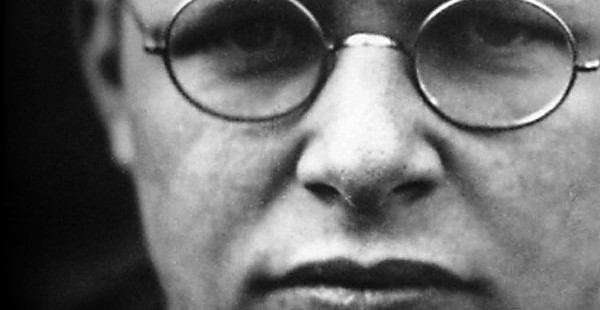
In 2014 when Charles Marsh’s highly acclaimed biography of Dietrich Bonhoeffer came out, the author avoided taking on Eric Metaxas. In an interview with John Fea, this is the worst he could do:

I’m pleased that Eric Metaxas has inspired such a spirited and intense conversation on Bonhoeffer’s life and legacy. Nevertheless, I wanted to tell the story anew by relying primarily on a treasure of recent archival and scholarly discoveries, on letters, journals, and other documents, as well as my own interviews. I spent a lovely afternoon in the home of Eberhard Bethge, shortly before his death, talking candidly about aspects of Bonhoeffer’s character that had been largely ignored. Metaxas’s book also offered me a cautionary tale on the political misuses of biographical writing; had I not been able to see what havoc his own heavy-handed political agenda wreaked on the telling of Bonhoeffer’s life I might have been inclined to tweak it in the direction of my partisan biases.

In his review of Marsh’s book for the Wall Street Journal, Christian Wiman even faults Marsh for failing to correct Eric Metaxas’ popular biography of Bonhoeffer:

Mr. Marsh does not even mention the Metaxas book or the enormous attention it brought to Bonhoeffer. He is a scholar, and Mr. Metaxas is a popular biographer, and it’s possible that Mr. Marsh found no new information in the Metaxas book that he needed for “Strange Glory.” Still, though Mr. Marsh deals quite well with the intractable contradictions of Bonhoeffer’s beliefs and actions, he misses the chance to situate the theologian and his ideas more clearly within the contemporary context. A simple preface would have helped.

That is why Marsh’s recent post about Metaxas was a surprise:

WRITTEN WITH BUT the slightest familiarity with German theology and history, Metaxas’s best-selling Dietrich Bonhoeffer: Pastor, Martyr, Prophet, Spy was published by Thomas Nelson in the spring of 2010 and launched at the Young Republicans Club of New York City. Christians in the United States needed to learn some very important lessons from Bonhoeffer’s story, and Eric Metaxas, who some followers call “the American Bonhoeffer,” had been called by God to deliver these lessons in our own hour of decision: It is not the role of the state to take care of people. America is the greatest nation in the world. People can take care of themselves; small government is the best government. Germans turned to Hitler to do the things that other people ought to be doing, and we in America are in danger of the same mistake. People who like big government don’t believe in God; they’re secularists and can be compared to the Nazis. We need Bonhoeffer’s voice today—Metaxas told an interviewer—“especially in view of the big government ethos of the Obama administration.”

With a literary background that includes a popular biography of the abolitionist William Wilberforce and the VeggieTales children’s series, Metaxas said that his purpose in writing the book was to save Bonhoeffer from the liberals, from the globalists, the humanists, and the pacifists. His Bonhoeffer was a born-again Christian who espoused traditional family values.

This is complete nonsense.

What explains the change? Metaxas has endorsed Trump and Marsh disapproves. The Trump will set you free.

But the editors at Religion & Politics and Dr. Fea should remember that just because Marsh is agreeable about Trump, it doesn’t make him right about Bonhoeffer. In fact, both Marsh and Metaxas may reflect their own “American” perspective. Ferdinand Schlingensiepen, a German biographer of Bonhoeffer, sure thought so:

Marsh and Metaxas have dragged Bonhoeffer into cultural and political disputes that belong in a U.S. context. The issues did not present themselves in the same way in Germany in Bonhoeffer’s time, and the way they are debated in Germany today differs greatly from that in the States. Metaxas has focused on the fight between right and left in the United States and has made Bonhoeffer into a likeable arch-conservative without theological insights and convictions of his own; Marsh concentrates on the conflict between the Conservatives and the gay rights’ movement. Both approaches are equally misguided and are used to make Bonhoeffer interesting and relevant to American society. Bonhoeffer does not need this and it certainly distorts the facts.

Years ago Charles Marsh described his Bonhoeffer biography project. This reviewer remembers a passage about him wanting to approach the topic in a more ‘writerly’ way than Bethge, using a talent for storytelling for which the Southern States are famous. It is true that his book surpasses that of Bethge in terms of writerly skill, but is has become ‘A Life of Bonhoeffer’ that never existed in this form. A number of mistakes found in Marsh’s book have been referred to above. There are more, but I have deliberately concentrated on those that do most to distort the picture of Bonhoeffer.

I have no doubt that Schlingensiepen would disapprove of Trump. I do doubt he would let his view of Trump inform his understanding of the past.

Oh, Canada

We don’t stand on guard for thee because we in the United States fear Mexico and its people more (think Trump).

I sometimes ask students to think what the United States would look like if we had not fought a war for independence from Great Britain. We would look like Canada, where a sign of national greatness is to be part of the United Nation’s Security Council. U.S. Americans (Canadians are American too) prone to revel in national greatness might sniff at such low aspirations. But Canada’s modesty as a nation should appeal to any real American conservative.

So does the way it appoints its Supreme Court justices — regionally rather than the political hot potato that U.S. Americans prefer:

The nine “supremes” are distributed geographically throughout the country. A limiting factor for appointments is the constitutional restriction that three must come from Quebec. Trudeau would like to appoint the first aboriginal justice, but is caught in the numbers game. The sole Atlantic Provinces justice has just retired, and Trudeau floated a trial balloon implying that it was not automatic that a justice from the region would be selected. The trial balloon turned to lead as Atlantic Province lawyers and politicians (and the region is a Liberal bastion) responded furiously. The idea seems to be set aside—for the moment. Also hiding in the wings is Trudeau’s intimation that new justices should be effective in both English and French upon appointment—a requirement that would highly restrict the pool of available legal talent.

For a peek at a country that U.S. Americans generally disregard, go here.

Why Christians Should Read Mencken

If only the Jerry Falwell’s had considered this:

Preachers, of course, have a right to their political views, but it does not follow that they have a right to become politicians. When they dedicate their lives to religion they give over many of the common rights of ordinary men, the while they take on rare and valuable privileges one of those forfeited rights, I believe, is that of playing politics. Politics is a dirty business. It is inevitably and eternally contaminating. No man can touch it and not carry away his smear. As a profession it ranks with saloon-keeping and bookmaking. As a diversion it ranks with poker and cornet playing.

Preachers had better keep out of it. Let them vote as they please. Let them even, as private citizens, solicit the votes of their friends. But let them beware of going into active politics, as preachers. The public does not want to hear their political views in that capacity. Their training does not give them any appreciable fitness for judging politicians. Their opinions about the tariff, public expenditures and the trusts are no weightier than the opinions of other men. All the more danger, then, when they seek to give those opinions the false force of their ecclesiastical authority. All the more peril when they try to capitalize their good repute.

Wouldn’t Cops Support Gun Laws?

Peter Moskos explains gun legislation is meaningless for cops:

So then we just delve into the gun control debate with all the usual and predictable sides and lack of progress. Cops see danger coming from a small subset of criminals with guns, and not guns in general. Remember: police officers and all their friends are (for the most part) legal responsible gun owners. Cops want laws to focus on criminals and crimes, rather than guns. Collectively, most cops are incredibly pro-gun and equate the 2nd Amendment with freedom (just as you and I might do with the 1st Amendment). Inasmuch as gun laws are seen to infringe their rights while doing nothing to prevent criminals from shooting each other and shooting cops, cops aren’t going to support it.

Consider this: there are (almost) no shootings in Chicago or New York or Baltimore that involves a legally possessed handgun. We’ve already “controlled” these guns and made them illegal. So what would passing *more* restrictive gun laws do to stop this violence? Are we going to double-dog-dare make them illegal? They’re already illegal. We don’t prioritize the laws we do have.

How can we take guns out of the hands of criminals? (Or get criminals to use them less?) That’s the $64,000 question. Most gun-control laws are close to irrelevant here. Perhaps the only way to get guns out of the hands of criminals is to confiscate guns with strong gun control, Australian style. Many people, myself included, like this idea. But the majority of Americans and the current Supreme Court would not agree.

The basic ideological divide is that liberals see guns as the problem and conservatives see criminals as the problem. And nobody on either side has a good plan to keep guns out of the hands of criminals.

There are three-hundred million guns in America; ten-million guns are manufactured every year! And yet only about 10,000 of these gun are used to murder somebody (plus suicides, of course). How many millions of guns would we have to confiscate before we prevented a single gun homicide? And how would we go about doing this?

Most proposed gun-control is pretty useless in actually preventing crime (as opposed to preventing a small number of gun sales.) And gun people see this as an ideological battle on gun-owners, so they won’t give in (even on so-called “common-sense” issues). The political reality is that there’s no way right now we could enact gun control so restrictive it would actually do any substantial good.

Cop in the Hood Smoh-Kin

Peter Moskos was on a roll yesterday.

First, he brought up the problem that police fired by one city sometimes acquire jobs in another city. The Department of Justice used to have a database to track cops who lost their jobs, but that’s too expensive:

The Justice Department, which gave the association about $200,000 to start the database in 2009, no longer funds it. The department declined to explain why it had dropped its support, but a spokesman said the goal was “ensuring that our nation’s law enforcement agencies have the necessary resources to identify the best qualified candidates to protect and serve communities.”

If Washington can put a transgender in a bathroom dot dot dot

Second, Moskos linked to a story about the growing rates of heroine additionaddiction and overdoses. He added the insight that the criminal justice system will not fix this (nor should it try):

There’s still the basic and false belief among too many people that somehow, somewhere, there are “programs” to help people. Or that the criminal justice system is a system with so single goal in mind. Like police arrest you, you do time, and you come out better for it. It’s not true. And it never has been true. Sure, sometimes there’s a program here or a grant-funded thing there, but basically, no. There’s nothing. It doesn’t matter what the problem is — crime, drugs, mental illness, poverty (or all of the above) — when somebody calls 911, police will show up. But then what? A lot of people need help. But it’s not the kind of help police officers can give. Especially when police departments themselves need help.

Last, he recognized the growing interest in American hillbillies and pondered why murder rates among poor whites in Columbiana County, Ohio don’t reach the level of urban blacks in places like Baltimore. It’s not the economy, stupid, but the culture (and we’re not talking Shakespeare or Beethoven):

Baltimore City has more unemployment (7.4 percent vs. 5.3 percent). Yeah, sure. And there’s more poverty and extreme poverty in Baltimore. I’m not saying that doesn’t matter. But deep down, no. Poverty is a red herring. Culture matters. Columbiana County’s unemployment could be 20 percent and the murder rate would still be lower that Baltimore City.

There’s something else going on. The nexus of violence is not poverty and racism but public drug dealing and drug prohibition. I suspect addicts in Columbiana County buy their heroin from friends and family and coworkers. Not from Yo-Boys on the corner. Push drug dealers inside and violence plummets. But when police try and do that in Baltimore, the DOJ complains about systemic racism.

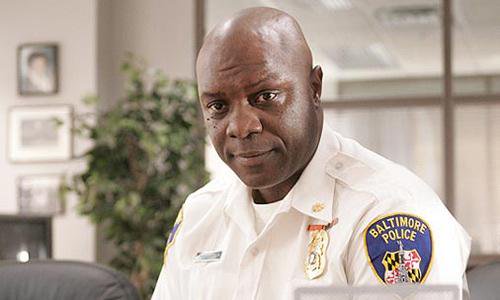
Turns out Bunny‘s problem wasn’t creating Hamsterdam but not moving drug dealers inside to the vacant houses.

Acting National

We live in a federal republic, or so the Federalist Papers tried to persuade those Americans on the fence about adopting the Constitution. Trying to tell the difference between a nation and a federation can be tough. In fact, the Anti-Federalists, those who opposed the slightest hint of political centralization, thought the federalists should really be called “nationalists” because the government they proposed was more national than federal. (A federation recognizes the sovereignty of member states, a nation places the state governments in some subjection to the national government.)

When President Obama issued a executive order recently about bathrooms, you could plausibly argue that the president was acting national. Acting federal might have required working with Congress (with its representatives from the states). Or perhaps the president could have called a governors’ conference.

Because of the confusion surrounding “national” and “federal,” it was heartening to see the NCAA put the national in National Collegiate Athletic Association:

The National Collegiate Athletic Association announced Monday evening that it is moving seven championship events that had been scheduled to take place in North Carolina to other states. The NCAA cited North Carolina’s antigay law, which bars all local laws that protect people from discrimination based on sexual orientation, and the ban on transgender people using state organizations’ bathrooms that reflect their identities.

No ambiguity there. The national body rules what the local bodies may or may not do.

Washington D.C. still wrestles with the ambiguity. After all, it is the United States of America not United State of America (that would be redundant).