What Would a Woke Christian Do (WWWCD)?

Is it just I, or do the times when Jesus ministered seem very different from ours?

5 When Jesus had entered Capernaum, a centurion came to him, asking for help. 6 “Lord,” he said, “my servant lies at home paralyzed, suffering terribly.”

7Jesus said to him, “Shall I come and heal him?”

8 The centurion replied, “Lord, I do not deserve to have you come under my roof. But just say the word, and my servant will be healed. 9 For I myself am a man under authority, with soldiers under me. I tell this one, ‘Go,’ and he goes; and that one, ‘Come,’ and he comes. I say to my servant, ‘Do this,’ and he does it.”

10 When Jesus heard this, he was amazed and said to those following him, “Truly I tell you, I have not found anyone in Israel with such great faith. 11 I say to you that many will come from the east and the west, and will take their places at the feast with Abraham, Isaac and Jacob in the kingdom of heaven. 12 But the subjects of the kingdom will be thrown outside, into the darkness, where there will be weeping and gnashing of teeth.”

13 Then Jesus said to the centurion, “Go! Let it be done just as you believed it would.” And his servant was healed at that moment.

Jesus Heals Many

14 When Jesus came into Peter’s house, he saw Peter’s mother-in-law lying in bed with a fever. 15 He touched her hand and the fever left her, and she got up and began to wait on him. (Matthew 8)

First, we have a centurion with a servant who boasts that he has authority to boss people around. Does that put Jesus off? No. Instead, he marvels at the centurion’s faith.

Would a social justice warrior be so insensitive to the power relationships, the intersectionality, that pervaded Roman society and that assumed a high ranking military official should have servants and bark orders at them?

Or how about Peter’s mother-in-law (leaving aside that the first pope was married)? Yes, it’s a genuine act of kindness for Jesus to heal the woman without being asked. But what’s up with Peter’s mother-in-law feeling the need to wait on Jesus as soon as she recovered? Why not tell Peter, who later had to learn to feed sheep, to feed his Lord?

Or maybe our standards of equality, justice, politeness, and social rank are not the Lord’s.

Shouldn’t Calvinists (even new ones) Understand Clay Feet?

Even if Russell Moore received several tweeted thumbs up for his address at the Gospel Coalition conference on Martin Luther King, Jr., others are raising questions about ERLC head’s commentary on race relations.

For starters, Lorine Spratt, executive assistant to the Pastor of First Baptist Church Bossier City, LA, thinks Moore’s finger on the pulse of Southern Baptist life is numb:

I am a born-again Christian, Conservative, Black attender of a White, Southern Baptist, Evangelical Church in Louisiana. In fact, I not only attend, I also work there and I am very concerned about the narrative that I’m hearing from our ERLC leadership. I am absolutely appalled by the comments made by Dr. Russell Moore concerning racism within the White Evangelical churches.

I, and many other Black congregants, attend a predominately White, Southern Baptist Evangelical Church. We attend there because we are free to do so, we’ve been welcomed, and we’re seen and treated as brothers and sisters in Christ. I truly believe that I could attend any White Evangelical church and be welcomed. However, there are born again Black believers who choose to attend Black evangelical churches and worship within their culture and they are free to do so. We are exercising our freedom to choose. We are not commodities to be bargained with or exploited or used to promote an agenda or boost quotas.

White churches are not advocating racism but Dr. Moore is. He is fueling racial tensions. I view his comments as divisive and antagonistic. His words do not promote unity!

Please, let it be known that Dr. Moore does not speak for me or other Black Christians who believe that great strides and fearless efforts have been made by many throughout the years to abolish racism such as William Wilberforce, Martin Luther King Jr., Billy Graham and many others.

The letter above originally appeared here and the anti-Calvinists in the SBC, truth be told, may relish a chance to catch the New Calvinist, Moore, mangling relations among black and white Southern Baptists.

Then there is the arresting perspective of Bob Gagnon who couldn’t help but notice the way that critics of Trump’s moral failings were noticeably silent about King’s own behavior (in ways that may actually resemble how the “court evangelicals” have overlooked Trump’s character):

Gagnon, a conservative biblical scholar recognized as the foremost traditionalist interpreter on the topic of the Bible and homosexuality, said Russell Moore, head of the SBC Ethics and Religious Liberty Commission and lead organizer of the gathering, failed to address documented evidence that King lived a sexually immoral personal life.

Gagnon called Moore “the same guy, mind you, who has had no trouble accusing the vast majority of his brethren who voted for Trump in order to avoid Clinton (or who supported Roy Moore in order to avoid Doug Jones) of falling prey to ‘moral relativism’ and ‘consequentialism,’ of being an embarrassment to the gospel because they are not standing up for their own Bible values around sexual fidelity in marriage.”

“He said not a word about MLK’s sexual immorality that was arguably the equal of Trump’s,” the scholar said.

Gagnon said speakers at the “MLK50: Gospel Reflections From the Mountaintop” confab also tried to explain away “the fact that by any reasonable standard of what counts for essential Christian faith, King was what evangelicals then and today would view as a heretical Christian.”

“He denied Christ’s incarnation, virgin birth, substitutionary atonement, bodily resurrection, and second coming; in short, a full sweeping denial of orthodox Christian faith,” Gagnon said in an earlier post. “For King, Christ was an excellent moral teacher and human exemplar of trust in God. No more, no less.”

Gagnon said King’s sexual immorality was arguably worse than Trump’s, not only because he was a minister of the gospel but also because he “was willing to risk the fate of the entire civil rights struggle in order to continue his sexually immoral conduct, week after week, right up to what would be his final night on earth.”

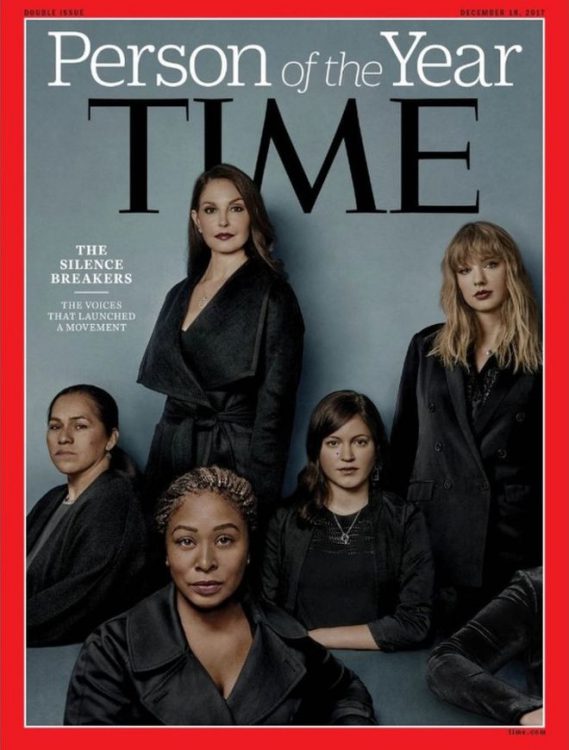
Of course, the way out of these dilemmas is to rely not on heroes or celebrities but on Scripture for moral standards. From Thomas Jefferson to Charlie Rose, exemplary humans are fallen and their lives don’t prove one side or the other in any debate. But if you want to signal that you are on the right side of the cultural divide, lining up behind a social or political icon works as long as you forget that you are living in the #metoo era.

How Orthodox Presbyterians became PCA

Another way to supplement Chris Gordon’s post about the demise of confessionalism in the CRC and lessons for the PCA is to consider what happened to the OPC after the failure of union between the CRC and the OPC.

The merger that the OPC and CRC contemplated between 1956 and 1972 never took place but at roughly the same time that those negotiations died, the PCA was born and for the next twenty years became the chief player in ecclesiastical mergers-and-acquisitions. First the PCA acquired in 1982 the Reformed Presbyterian Church, Evangelical Synod (an earlier merger of revival-friendly Covenanters and dissident – read agreeable – Bible Presbyterians of the McIntire variety) and then the PCA almost in 1986 absorbed the OPC (a majority of Orthodox Presbyterians voted in favor but not by the two-thirds majority required for sending the plan to presbyteries for ratification). In the aftermath of that failed plan for Joining & Receiving, congregations in the OPC and PCA had the liberty to re-align if they chose. This was opening for a number of New Life churches (among them the Glenside congregation where Tim Keller learned the ways of New Life Presbyterianism) to join the PCA during the late 1980s.

Again, a piece of OPC history (self-promotion alert) that fills out Gordon’s observations:

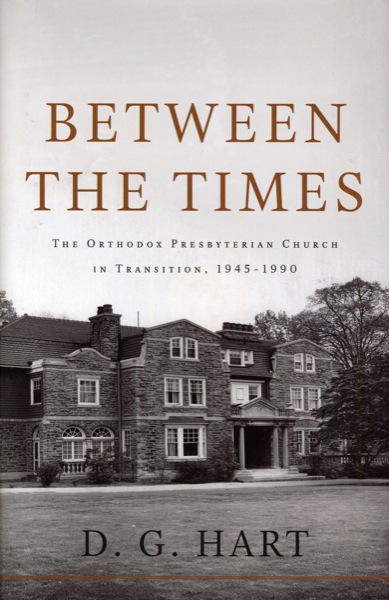
In 1988 the effects of the OPC’s change of direction were still visible but not altogether clear. Again the church experienced a growth numerically, rising to 19,422 members but it also lost two more congregations to the PCA, one (New Life) in Philadelphia and one in Southern California. Only in 1989 did the OPC’s statistician start to notice these numerical changes as part of a “step backward.” That year was the peak of membership and congregational loss. The church’s total membership decreased by 3.5 percent to 18,689. [ed. no snickering] Meanwhile, five congregations transferred to the PCA, among them New Life in Escondido, California. This was the same year that the Assembly’s decisions about Bethel church took their toll. A majority of the Wheaton congregation (162 out of 301) left the OPC to form an independent congregation, which eventually affiliated with the Evangelical Presbyterian Church. In 1990 the “step backward” statistically lengthened. The OPC lost another 546 members and three congregations; among them New Life, Glenside, joined the PCA. Only by 1991 did the hemorrhaging stop and membership begin to rise again. In 1992 the OPC added 525 members and total membership increased to 18,767.

The movement of OPC congregations into the PCA was the occasion for a exchange between John M. Frame and Richard B. Gaffin, Jr. in New Horizons on realignment at the same time that statistics were revealing the consequences of congregational transfers. It was a telling exchange because it revealed an important aspect of Orthodox Presbyterianism that after the semi-centennial was beginning to reassert itself within the life of the communion and causing sufficient discomfort for others to look for another denominational home. That characteristic of Orthodox Presbyterianism was the Reformed doctrine of the church in which membership in particular communion was not a supplement to Christian identity but its embodiment. As Gaffin explained in this exchange, the OPC was not merely a denomination; “it is a church, a church that exists by divine warrant.” As such, he added, “Biblical presbyterianism has no place for loyalties torn between the denomination and the local congregation, or for greater loyalty to either one.” In contrast, Frame, who was then an associate pastor of the New Life congregation in Escondido that had realigned with the PCA, explained that the reason for transferring was to partner more effectively with other church planting efforts in southern California. Denominational affiliations for him were at best accidental, at worst sinful. Either way, he hoped that denominational “barriers” would become less important and that Orthodox Presbyterians would understand that transferring to the PCA was not a sign of disloyalty or contempt. The move was simply practical.

Clearly, Frame did not see the switch to the PCA as the serious risk that Gaffin said it was. Gaffin believed such transfers were dangerous because they nurtured a mind set that increased divisions in the church, not along lines of biblical witness, but according to personal preferences or styles of ministry. As such, Gaffin was expressing a doctrine of the church that had deep roots in American Presbyterianism reaching back to Old School Presbyterianism and even to the Old Side Presbyterians of the colonial era. Frame, in contrast, was more typical of a view of the church characteristic of New School and New Side Presbyterians, where the formal work of ministry was supplemental to the religious endeavors of all believers. In other words, whether Frame or Gaffin acknowledged the history of American Presbyterianism in their reflections, they spoke volumes about Orthodox Presbyterianism and how it emerged and developed in relation to its Presbyterian past. Among the many convictions for which the OPC had stood historically, the doctrine of the church as part of biblical teaching and necessary for faithful witness was one of the hallmarks of Orthodox Presbyterianism. During the 1970s and 1980s that ecclesial conviction had begun to wane if only because it was not producing the size and influence that some Orthodox Presbyterians desired. But as the OPC began to take stock of its past, it also recovered one of its most noticeable features. Furthermore, just as that commitment to biblical Presbyterianism had been a source of frustration to Bible Presbyterians in the 1930s, neo-evangelicals in the 1940s, and more generally to Orthodox Presbyterians like Edwin H. Rian who had hoped the OPC would turn out to be a conservative version of culturally established and respectable Presbyterianism, so in the late 1980s as the OPC recovered its doctrine of the church some felt compelled to look for better, friendlier, or less restrictive expressions of American Presbyterianism than the OPC. (Between the Times, 316-18)

In other words, the consequences of Reformed ecumenism from the 1970s and 1980s were having consequences for all of the players — the CRC, OPC, and PCA. Where Presbyterians went, their forms of association, and their understand of the church were factors in the witness they embraced.

How the OPC Avoided becoming the CRC

Chris Gordon’s piece on how the CRC lost its Reformed bearings has wisdom not only for noticing similarities between the CRC and New Calvinists but also contains a warning about developments in the PCA:

NAPARC churches should not forget their older brother, the CRC. Unless these concerns are taken seriously, I foresee the PCA and other Reformed denominations following this trajectory heading for fights, splits, and empty pews. They will be on a fast track to becoming just another mainline liberal denomination scratching its head at General Assembly meetings as they desperately try to find answers. I pray that my dear brothers and sisters in NAPARC will hear this humble plea from a brother in Christ who learned how true it is that those who forget their (church) history, are most certainly doomed to repeat it.

One difference between the CRC and PCA is the former’s ethnic outsider self-identity compared to the latter’s effort to become the Presbyterian insider. In other words, the CRC wanted to leave the ghetto and enter the mainstream; one way to do that was to embrace some forms of evangelicalism. For a time the CRC even considered merging with the OPC (as explained in Between the Times — self-promotion alert!):

Decreasing familiarity with the OPC was one of the factors to which Henry Zwaanstra pointed in this study of the CRC’s ecumenical relations. In fact, his narrative highlights developments in 1967 as decisive for sinking the project. The previous year, according to Zwaanstra, the OPC’s committee was requesting “their general assembly to declare that the joint committee should work toward the definite goal of organic union.” But the following year, the OPC’s Assembly “retired its representatives from the joint committee and appointed new members.” The reason for the new appointments, according to Zwaanstra, was “mandate to investigate trends toward Liberalism in the CRC.” . . .

Indeed, the overwhelming factor that prompted the OPC to worry about liberal theological trends in the CRC was a re-ignition of anti-liberal polemics during the mid-1960s over the PCUSA’s adoption of The Confession of 1967. During the 1960s leadership within the OPC spent considerable time disputing the mainline Presbyterian Church’s revision of its confessional standards and faulting the denomination for embracing a Barthian doctrine of the Word of God. This view, exhibited in the Confession of 1967, distinguished in effect between the sort of encounter with divine revelation that came through Scripture rather than regarding Scripture itself, its words, paragraphs, and books, as the Word of God. One Orthodox Presbyterian who was particularly vocal in defending the Reformed doctrine of Scripture and in criticizing was E. J. Young, newly appointed to the OPC’s committee to confer with the CRC. The Old Testament professor was by no means insensitive to the assistance the CRC had given to the OPC since Young had served with the likes of Van Til, Stonehouse, and Kuiper, and as a renowned scholar had trafficked in Christian Reformed circles at conferences and lectures. And yet, Young was adamant in his diagnosis of Barthian developments in the PCUSA and was likely sensitive to similar trends in the CRC even if evident in much less noticeable ways.

Thanks to arguments by Young and Van Til, for instance, by the second half of the 1960s the OPC’s sensitivity to defective expressions of the doctrine of Scripture was at an all time high and undoubtedly many pastors and teachers detected echoes of a Barthian view in Dutch Calvinist circles. Whether members of the CRC themselves actually resembled Barth or were simply guilty of not condemning Barth’s influence upon the GKN is a debatable point. Either way, the controverted status of Barthianism for Orthodox Presbyterians was certainly a factor in the growing distance between the OPC and the CRC. (161-62)

The OPC did not have a front-row seat to changes in the CRC, but it had more familiarity than most Presbyterian churches. In which case, reading about OPC-CRC relations between 1956 and 1970 is a supplement to Gordon’s post (read: buy the book).

MLK and 2K

Matt Tuininga observes how convenient 2k is for someone who wants to distance their politics from their faith:

Recent evidence indicates that two kingdoms theology explains why some Christians, such as Christian Right pastor Robert Jeffress, support Donald Trump and the Republican Party. As David R. Brockman warns in the Texas Observer, Jeffress “has deployed Two Kingdoms thinking repeatedly since the presidential election” to justify his support for Donald Trump. If you believe Christianity requires that Christians support the Democratic party, that should be deeply concerning.

But wait. Recent evidence also indicates that two kingdoms theology explains why some Christians, such as Andrew White, candidate for governor of Texas, are Democrats. As Larry Ball warns in the Aquila Report, White’s approach “is deduced from what is called two-kingdom theology.” If you believe Christianity requires that Christians support the Republican party, that should be deeply concerning.

These articles advance arguments I have repeatedly heard from the lips of Reformed theologians and pastors. One highly esteemed Reformed scholar told me he is convinced that two kingdoms theology is on the rise because it gives Christians an excuse to support the Republican party despite its unChristian tendencies on poverty and race. Two kingdoms advocates, he believes, are crypto-Republicans. At the same time, numerous pastors have told me they are convinced that two kingdoms theology is on the rise because it gives Christians an excuse to support the Democratic party despite its unChristian positions on abortion and same-sex marriage. Two kingdoms advocates, it turns out, are crypto-Democrats.

Tuininga’s solution is to let the church be the church:

It’s time for the church to be the church. If you are sick and tired of the politicization of the church – if you are eager to see the church faithfully witness to the kingdom and its righteousness as it applies to every area of life, without compromise to any political party – then two kingdoms theology is for you.

Wouldn’t the same point apply to Martin Luther King, Jr.? Why can’t King simply be a pastor who preached the gospel or a political activist who worked with political officials to overturn unconstitutional arrangements? Why turn him into the model of Christian activism? Is Tuininga willing to take on the recent depictions of King that blur 2K?

According to Gary Dorien:

Any reading that minimizes King’s upbringing or graduate education misconstrues him, which is what happens when scholars fail to credit the black social gospel tradition he embraced. King was nurtured in the piety and idioms of an urban, middle-class, black Baptist family and congregation. He absorbed the evangelical piety and social concerns preached by his father. He got a more intellectual version of both things when he studied at Morehouse College, where Mays influenced him, and then at Crozer Seminary in Pennsylvania, where the prominent Baptist preacher and writer J. Pius Barbour was his pastor. At Crozer and Boston University, King adopted a socialist version of social gospel theology and a personalist version of post-Kantian idealistic philosophy, and he acquired a conflicted attraction to Gandhian nonviolence. Throughout his movement career King was committed to democratic socialism, personalist theological liberalism, and Gandhian nonviolence. He fashioned these perspectives into the most compelling public theology of the twentieth century, mobilizing religious and political communities that had almost no history of working together.

Imagine pointing out Jerry Falwell’s (senior) theological pedigree and not objecting to the sectarian or illiberal nature of his political activism.

Or consider Michael Sean Winter’s benediction of King:

King was a great civil rights leader because he was both a great American and a genuine Christian prophet, not the other way round. A prophet does not simply point to some future of his or her own imagining. A prophet calls a people to return to their truest selves in order that they may return to a righteous path.

King did not tell the American people to stop being American. He told them to be true to the ideals that they claimed had shaped our national founding. His message was subversive of the ways those ideals had been betrayed, not of the ideals themselves. King evidenced none of the hatred of America that has marred the politics of the left since his death.

When Robert Jeffress makes such claims about Donald Trump most people object, but is it because Jeffress confuses the kingdoms or because he backed an immoral public figure?

Tuininga actually knows that King’s theology violated 2k:

My concern, however, is to encourage evangelicals to wrestle with King’s determination to allow the Gospel to shape Christians’ civic and political engagement. To be sure, we must take care not to conflate the two. King himself did often conflate the kingdom of Christ and temporal politics in his rhetoric, I believe, as did the broader trajectory of mainline clerical activism that took its inspiration from him in following decades. We cannot use political means to establish the kingdom of God, nor should we confuse the liberation that comes through Christ with the justice that can be accomplished through politics.

That means that baptizing King’s politics as manifestations of the kingdom of God is just as flawed as baptizing Donald Trump’s person or policies.

I’ll See Your World Order and Raise You One Principality and Two Powers

Isn’t this what caused mainline Protestantism to go south, namely, identifying the church with the work of building human civilization? George Weigel explains:

If there’s anything Catholics in the United States should have learned over the past two decades, it’s that order—in the world, the republic, and the Church—is a fragile thing. And by “order,” I don’t mean the same old same old. Rather, I mean the dynamic development of world politics, our national life, and the Church within stable reference points that guide us into the future.

Didn’t the apostle Paul (saint if you will) think the church had/has bigger fish to fry?

11 Put on the whole armor of God, that you may be able to stand against the schemes of the devil. 12 For we do not wrestle against flesh and blood, but against the rulers, against the authorities, against the cosmic powers over this present darkness, against the spiritual forces of evil in the heavenly places. 13 Therefore take up the whole armor of God, that you may be able to withstand in the evil day, and having done all, to stand firm. (Ephesians 6)

Russia, neo-liberalism, social justice warriors have nothing on sin, the flesh, and the Devil.

Of course, political order is a good thing, so good that churches need it to function — it may actually be that political order precedes church order rather than the other way around. But if the church sees its mission as supporting political order, it may seriously underestimate the amazing work God called ministers of the word to do. And that perspective might prevent a reviewer from writing this about a book on the nineteenth-century papacy:

Whatever misgivings one may have about the First Vatican Council, one does not need to squint to see a providential hand in Pastor Aeternus. As secular governments continue to chip away at different forms of civil society, especially religious forms, a strong papacy can serve as a powerful counterweight.

Counter-weights to secular governments chipping away at civil society? Isn’t that why we have The New York Times?

If God So Loved the World, Why is The West So Special?

In his review of Ross Douthat’s new book, Rod Dreher makes his bracing claim:

any Christian or secular conservative who cares about the stability of Western civilization cannot be indifferent to the fate of the institution that, more than any other, created it. The Orthodox Church is alien to the West, and Protestantism has become far too fragmented and rootless to hold things together.

That is a big burden for Rome to bear. But it also represents a much bigger problem. For a church that ministers a gospel based on a person (and God) who never set foot in the West, your identification with the West may be the hugest (thanks Bernie!!) version of cultural Christianity eh-veh. (Imagine Mormonism without upstate New York and you have a speck of Rome’s burden.) I understand that many Protestants envy Rome’s cultural and historical footprint. Some even become Roman Catholic for the wide swath the communion appears to give.

But, non-Western lives matter too.

On the flip side, when you have your religious identity so bound up with a culture or civilization, you set yourself up for the kind of inevitable cultural adaptation that Protestant modernists created and embraced. You need to do this to keep up with the culture of which you are part since civilizations have never been one-way, top-down endeavors. Today it’s emperors, tomorrow it will be senates and republics. Today it’s Thomism, tomorrow its Kantianism. Today it’s Baroque, tomorrow it’s Bauhaus.

Even more of a problem: today it’s hell, tomorrow its annihilationism. So when Pope Francis flirts with denying the existence of hell, Michael Brendan Dougherty notices about today’s Vatican what fundamentalists used to observe about Protestant modernists:

Because, as I write on Maundy Thursday, his favorite Italian journalist, Eugenio Scalfari, is reporting his latest conversation with Francis. In his reconstruction of their conversation, Scalfari has the pope saying that souls who have not repented and therefore have not received God’s pardon simply scomparire — disappear, in English. In other words, there is no hell. The souls of the damned aren’t damned, they just are no more.

The Vatican promptly put out a statement that the interview is a reconstruction of their conversation, not a series of direct quotes. But the Vatican also pointedly issued no specific denial of any of the pope’s words. Amazing to say it, but that’s typical. In essence this constitutes an invitation to disbelieve whatever you want. Predictably, Catholic media who rely on the pope’s star power and the appearance of impeccability put out stories noting that the pope has often talked about hell in the past and that, by the way, Scalfari is an atheist and unreliable narrator. Frankly, I find the Vatican’s position revoltingly underhanded. It refuses to tell us whether the pope said these things, and encourages us to believe what we want. It incentivizes the pope’s defenders to defame Scalfari as a fraud and an underhanded atheist. What kind of game is this? It shouldn’t be hard to just tell the truth about this, yet it is.

This is the fifth interview the pope has done with Scalfari, and far from the first scandal to come out of it. It is impossible to believe that someone as earthy as Francis is still innocent of what’s happening here. Yes, he’s talked about hell as a reality before. But the whole intellectual culture of Catholic seminaries and formation is filled with doublespeak. Doctrines are proclaimed in creedal statements, and then their contents are emptied in theological essays, or given a completely opposite interpretation in “practical” application. I can’t possibly pretend any longer that Francis is immune from this culture of deception, including self-deception.

On the Way to the CRC

Tim Challies linked to Chris Gordon’s piece on the demise of confessionalism in the Christian Reformed Church. Challies seemed to find Gordon’s piece a worthwhile caution: “This strong article warns certain Reformed denominations against going down paths that will necessarily lead to destruction.”

But when you look at the six features of CRC declension, don’t at least three of them apply to the New Calvinists?

1. The Abandonment of the Authority of Scripture–This was the first domino to tip knocking everything else over. No longer was Scripture the final say regarding doctrine and life, but major doctrines were called into question due to cultural pressure.

2. The Abandonment of Reformed Principle of Worship–Historic Reformed convictions and principles laid out in the confessions were abandoned based on seeker sensitive assumptions.

3. The Abandonment of the Sabbath and the Second Worship Service–Even the word Sabbath was abandoned in embarrassment. The evening service was jettisoned by claiming better opportunities for Bible studies and home gatherings to reach the lost and love their neighbor.

4. The Abandonment of Gospel-Centered Expository Preaching–Expository gospel-centered sermons through books of the Bible were replaced with topical messages often addressing the current social justice discussion of the culture.

5. The Abandonment of God Assigned Roles in the Church (Women’s Ordination)–The classic distinctions between creation roles and functional hierarchy were abandoned in support of full equality of function in ecclesiastical offices.

6. The Abandonment of Moral Standards for Her Members–Those committing gross sins were no longer called to repentance, but instead welcomed into the life of the church upon the assumption that “justice” demands it. Nicholas Wolterstorff, a professor at Calvin College of over thirty years claimed that biblical justice requires that people of homosexual orientation be granted “the great good of civil and ecclesial marriage.”

New Calvinists of the kind at Gospel Coalition have given up number 2, 3, and parts of number 4. If the cultural servings of Gospel Coalition on-line are any indication, efforts to understand media and politics are more important than explaining the catechism or biblical commentary.

So why don’t New Calvinists see affinities between themselves and progressive Protestants?

Bigger is Bigger

The appeal of Roman Catholicism is size. It has 1.2 BILLION members. It has 2000 years of history. It has oh so many paintings, galleries, cathedrals, yada yada. Size matters.

Redeemer Big Apple’s appeal is also to size — but it is the big city, and being connected to churches in other big cities, in following a pastor who has enough celebrity even for New York City editors. It’s size has almost nothing to do with the past, at least if Kathy Keller is to be believed:

I’ve saved my most important value for last: carefully screening our language is the most critical thing we can do.

I can’t find enough words to stress how important this is. We must have a care for how we choose our words, our images, and our ideas when we communicate, no matter what we’re communicating — whether it’s donor updates, lectures, or emails about events that are coming up. You absolutely must comb out all of the Christian subcultural phrases that clutter up so much of the Christian church. This is vitally important, and perhaps it’s even more important today than it was 30 years ago, because the cultural moment that we’re in now loathes evangelical Christians, and we don’t need to give them any more reasons to disrespect and dislike us.

Redeemer has been pretty good at this, partly because it was actually one of the major parts of my job description to search and destroy any piousbabble. That’s the word I coined to describe the-language-that-must-not-be-spoken. You’ve heard of psychobabble? That’s pop psychology drawn from catchphrases, media, podcast pontification and other non-academic sources.

Piousbabble are those phrases and those words that creep into your prayers and into your language.. Lord, we just, we just, Lord … We want traveling mercies, we want to bathe it in prayer, and we need prayer warriors, and we need a hedge of protection. All that sounds kind of normal-ish to most Christians. But it’s like Swahili to the nonbelievers and the seekers who are coming.

Does pious babble extend to words like Presbyterian, justification, Holy Spirit (Ghost is even more alarming, I guess), eschatology, ministry, or vocation?

That may explain why Tim Keller thought he needed a catechism other than the one his own communion uses.

But isn’t this piousbabble?

Sixth, that we do not hurt, or hate, or be hostile to our neighbor, but be patient and peaceful, pursuing even our enemies with love. Seventh, that we abstain from sexual immorality and live purely and faithfully, whether in marriage or in single life, avoiding all impure actions, looks, words, thoughts, or desires, and whatever might lead to them. Eighth, that we do not take without permission that which belongs to someone else, nor withhold any good from someone we might benefit.

Even so, if I can count on Kathy Keller to renounce the use of such pious phrases as “dead orthodoxy,” I’m on board.

Maybe not Delegated but Self-Selective General Assembly

I enjoyed listening to Chortles and Wresby talk to Charlie Nave about the problems of under representation among elders (OPC lingo) at GA. Mr. Nave made his case in e-print before the podcast. Here is how he described his experience at the 2017 PCA GA:

The experience was certainly instructive, but I found that the troublingly secretive caucus controlled the assembly entirely. It installed its own candidate for Moderator; it cut off debate on topics about which it had already made up its mind; it defeated a measure to protect biblical marriage within the PCA; and it approved recommendations to open the door to ordaining women.

This all struck me as very odd and un-Presbyterian. How are things being done “decently and in order” if a caucus is making decisions in secret and then imposing them upon the General Assembly? How are we abiding by the plurality of elders principle if this caucus is predominantly Teaching Elders (TE)?

Worse still, I found that REs were outnumbered by TEs by 4:1 at General Assembly (apparently this is typical). Ultimately, this is the root of the problem. After all, we know that everyone – even a TE! – is a sinner. And people who prioritize politics in a convention system will eventually network together for mutual benefit. The formation of this caucus was inevitable.

One major reason why they were able exercise control was that there weren’t enough REs there to counsel them otherwise. So that raises the question: why don’t more REs attend General Assembly?

As it turned out, this was the same day that I registered for the OPC GA. I don’t want to gloat, but the OPC has a fairly good representation from its elders and that has to do partly with all costs being reimbursed. You ask, how does the OPC do it?

Well, we meet on college campuses and have commissioners share rooms and bathrooms. This year at Wheaton I will share a bedroom with one other commissioner and a bathroom with three others (my sphincter is already tightening).

I’d much prefer to have a hotel room to myself and even meet in the comfortable surroundings of a convention center. But dorm rooms and gymnasiums go with the OPC’s no-nonsense approach to affect.

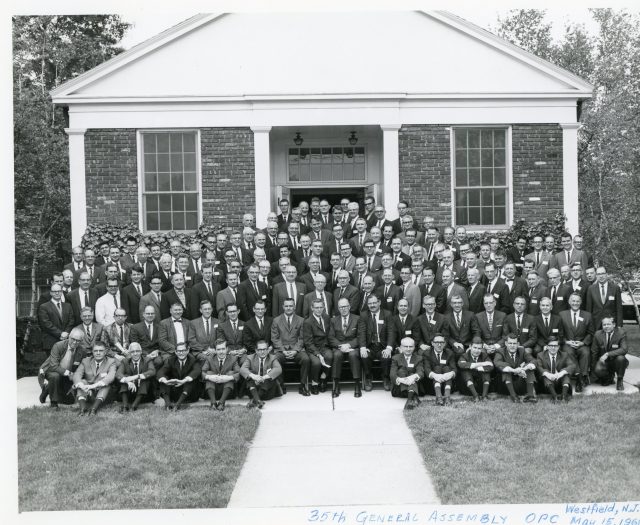
In which case, one way to even out the proportion of pastors and elders (OPC lingo) is to meet in settings that weed out the under motivated.