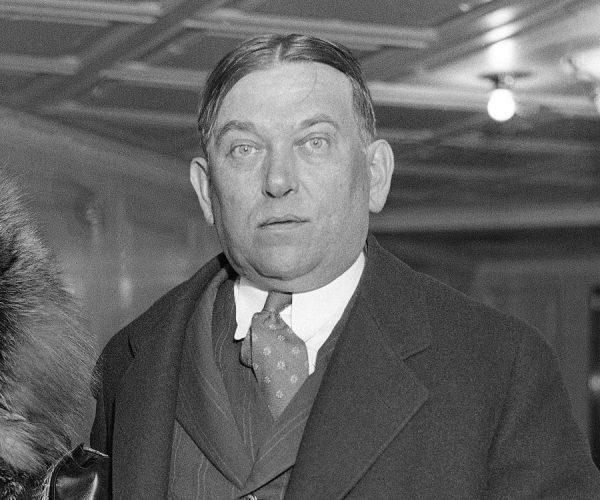
Mencken Day 2017

Where else do you read arguments against intelligent design that include taking a swipe at government?

The argument from design, once the bulwark of Christian apologetics, has been shot so full of holes that it is no wonder it has had to be abandoned. The more, indeed, the theologian seeks to prove the wisdom and omnipotence of God by His works, the more he is dashed by the evidence of divine incompetence and stupidity that the advance of science is constantly turning up. The world is not actually well run; it is very badly run, and no Huxley was needed to labor the obvious fact. The human body, very cunningly designed in some details, is cruelly and senselessly bungled in other details, and every reflective first-year medical student must notice a hundred ways to improve it. How are we to reconcile this mixture of finesse and blundering with the concept of a single omnipotent Designer, to whom all problems are equally easy? If He could contrive so efficient and durable a machine as the human hand, then how did He come to make such botches as the tonsils, the gall bladder, the ovaries and the prostate gland? If He could perfect the elbow and the ear, then why did He boggle the teeth?

Having never encountered a satisfactory – or even a remotely plausible – answer to such questions, I have had to go to the trouble of devising one myself. It is, at all events, quite simple, and in strict accord with all the known facts. In brief, it is this: that the theory that the universe is run by a single God must be abandoned, and that in place of it we must set up the theory that it is actually run by a board of gods, all of equal puissance and authority. Once this concept is grasped the difficulties that have vexed theologians vanish, and human experience instantly lights up the whole dark scene. We observe in everyday life what happens when authority is divided, and great decisions are reached by consultation and compromise. We know that the effects at times, particularly when one of the consultants runs away with the others, are very good, but we also know that they are usually extremely bad. Such a mixture, precisely, is on display in the cosmos. It presents a series of brilliant successes in the midst of an infinity of failures. (“The Cosmic Secretariat,” 1924)

I Thought John Fea Is Evangelical

John linked to a report from Baylor on the outlook of Trump voters. Among those voters are these characteristics:

• are members of white Evangelical Protestant churches

• consider themselves “very religious”

• think of the United States as a Christian nation

• believe that God is actively engaged in world affairs

• fear Muslims and refugees from the Middle East

• believe that women are not suited for politics

• oppose LGBTQ rights

Here’s what’s odd about this finding. I’m betting John and I are on the same side of these bullet points.

He and I consider ourselves very religious.

He and I think the United States is not a Christian nation.

He and I believe likely that God is actively engaged in world affairs since we tend not to be deists.

He and I do not fear necessarily Muslims or refugees from the Middle East, though I bet if those Muslims or refugees had fought for ISIS John might be a little afraid as I would be.

He and I do not think that women are unsuited for politics, though John was far more congenial to Hillary Clinton than I was.

He and I likely overlap on rights for LBGTQ folks, though I also suspect that the extent of those rights might be qualified.

In which case, neither John nor I fit the profile of evangelicals who voted for Trump. And yet, John still self-identifies as evangelical. I do not and have not for at least 25 years.

In which another case, why does John object to Trump as strongly as he does? Is it because he identifies as evangelical even while the majority of evangelicals voted for Trump? That disconnect could make you wonder about the group to which you belong. I imagine if Bruce Springsteen came out in favor of Trump, John would have as much psychic discomfort as I would if Ethan Coen trashed J. Gresham Machen.

In which a third case, isn’t what matters here not someone’s religious w-w but his or her politics? I can belong to a communion that includes (or used to) Kevin Swanson and that’s okay because the OPC does not require fidelity on political or cultural matters. But if you are part of a religious group that includes a wide swath of Protestants and think that faith should inform a lot of what you do — not to mention that the group has been identified with a certain political trajectory for FORTY years, evangelical support for Trump might give you pause. In other words, if you think religion and politics need to be consistent, then you might assume that a self-identified Calvinist is also a political conservative (which Donald Trump is not). But doesn’t that also mean that if you are an evangelical, your politics should align in some way with the rest of the evangelical world? Being evangelical surely doesn’t make you a liberal (though evangelical professors seem to think otherwise). And oh by the way, some of the biggest opponents of Donald Trump like Russell Moore also oppose policies like gay marriage. In other words, you don’t need to oppose Trump and go over to the editorial page of The New Republic.

Even so, nothing on that list of Trump voters’ attributes is inherently Christian.

Regarding those qualities now as sub-Christian is going to take a little more work than simply finding Trump repugnant. Ever since Ronald Reagan, most Christians in either the Democrat and Republican parties would have agreed with those convictions.

In which a fourth case, Donald Trump justifies rewriting the rules governing yucky evangelicalism.

Bodie and Jimmy Are Back

Here’s some of the dialogue I plan to include in my talk on Saturday for Mencken Day. Its title is “When America Was Great and Baltimore Knew Better.”

Scene 1:

Bodie: The radio in Philly is different?

Shamrock: N-word, please, you gotta be f-word with me. You ain’t never heard a radio station outside of Baltimore?

Bodie: Man, I ain’t never left Baltimore except that Boys Village s-word, one day, and there wasn’t no radio up in that b-word.

[Shamrock starts to hit the pre-set buttons.]

Bodie: Come on, man, you’re killin’ me.

[Shamrock tunes into Prairie Home Companion and viewers hear Garrison Keillor say, “It’s been a quiet week in Lake Wobegone, my home town. It’s been
perfect tomato weather out there. . .]

Bodie: This a Philly station?

Shamrock: How the heck should I know?

Bodie: Why would anyone ever want to leave Baltimore? That’s what I’m askin’.

Scene 2:

McNulty: I feel like I don’t even belong to any world that even bleeping matters.

Greggs: ‘Cause you’re a cop?

McNulty: Nah, it’s not just that. It’s like, I went to meet her once; she was in a hotel room on the top floor. I punched the button on the elevator and it doesn’t even go there. You gotta have some kind of special key to even get to that special f-word floor. So I go to the front desk, some sneering f-word calls upstairs, gives me permission to go and get laid. I listen to the s-word she talks about and it’s the first time in my life I feel like a f-word doormat. Like anyone else with any smarts would do something else with his life, you know? Earn money, or … get elected. Like I’m just a breathing [sex] machine. I’m serious; I’m the smartest a-hole in three districts and she looks at me like I’m some stupid f-word playing some stupid game for stupid penny-ante stakes.

Jimmy and Bodie seem to have the same outlook that led Mencken to write this:

Human relations, in such a place, tend to assume a solid permanence. A man’s circle of friends becomes a sort of extension of his family circle. His contacts are with men and women who are rooted as he is. They are not moving all the time, and so they are not changing their friends all the time. . . . In human relationships that are so casual there is seldom any satisfaction. It is our fellows who make life endurable to us, and give it a purpose and a meaning; . . . What I contend is that in Baltimore, under a slow-moving and cautious social organization, touched by the Southern sun, such contacts are more enduring than elsewhere, and that life in consequence is more agreeable.

By the way, Machen is also part of the talk. Can you believe it?

This Is Embarrassing

The Protestants who I enjoy criticizing are clear at the same time that Roman Catholics are not. And the editors at First Things are caught.

First, a recommendation of the evangelicals who produced the Nashville Statement:

[Several] critiques have merit, and are especially significant since they come from within the evangelical movement. But in our era of theological mushiness and cultural transformation, even the most imperfect attempt at clarity and doctrinal solidarity is better than soft-spoken obfuscation. Christians committed to historic, biblical doctrine on sexuality should be disposed to approve of efforts to make orthodoxy clear, unequivocal, and pastoral.

Perhaps, as many have said, the timing of the Nashville Statement was insensitive. Waiting a couple weeks after the initial images from Houston had appeared might have muted this criticism. But can we foresee a season when such a clear statement of traditional doctrine would not offend, alienate, or divide?

I suspect that what has turned off many people to the Nashville Statement is its clarity. The document’s fourteen affirmations and denials are short, unequivocal, and to the point.

But Roman Catholics, not so much. Aside from the ongoing dilemma of marriage and divorce that Pope Francis and his synods introduced into the magisterium, individual priests, like James Martin, are signaling virtue but in a very sensitive way:

Fr. Martin notably seeks peace. He speaks reassuring phrases in soothing tones. He prefers the familiarity of a sweater vest and dad jeans to the strangeness of the soutane. In ways superficial and profound, he seeks to render Christianity inoffensive. At a certain level, I understand this desire. The Church may be a sign of contradiction, but it is also a source of consolation. Sometimes we need a Church built on sharp, gothic lines, and at other moments we seek the calm harmony of the classical.

But Fr. Martin’s proposed renovation goes beyond mere ornament, to require the restructuring of the whole Christian edifice. Fr. Martin never says this outright, but the logic of what he does say demands it. Approval of homosexuality is now considered the bare minimum of politeness in the world’s respectable precincts (where one hundred years ago, it would have been thought intolerably rude). If Christianity is to have the manners Fr. Martin values—if is to exhibit perfect “respect, compassion, and sensitivity” in the eyes of world—it must not only change its phrasing but reverse its teaching on sex.

Fr. Martin is no idle vandal of the Church, even if his critics often take him for one. Though I disagree with his conclusions, I believe that Catholics have something to learn from his argument that the Church treats homosexuality unfairly.

Catholic teaching has not changed, but at the practical level the Church today has made peace with heterosexual desire. Praise of virginity and warnings against lust in the marriage bed have given way to anxious reassurances that Catholics do not hate and fear sex. The Church has largely ceased to speak of sex as dangerous and requiring restraint, even where it is licit. We hear of the dangers of pre-marital sex, of extramarital sex, sometimes even of homosexual sex—but very rarely of sex simply.

Of course, doctrine hasn’t changed. You hear that a lot from those who have to live with modernists — those who won’t live by, defend, or recommend the doctrine that hasn’t changed. But something has.

And I suspect some converts to Rome are having trouble arguing for Rome’s superiority to Nashville.

Providential Wisdom

I don’t believe (or much like) the phrase, common grace, but sometimes the insights of the heterodox and even the unbeliever make you wonder about the effects of special grace. Consider Noah Millman’s invocation of Abraham Lincoln for the current pissing match over Confederate Monuments (and oh by the way not all Christians are not using the Port-a-Potties). First Millman credits Lincoln with recommending “charity for all”:

North and South were compacted together within the Union, and both prospered by that union. So both North and South bore the moral stain of slavery, notwithstanding that the slaves themselves were overwhelmingly concentrated in the Southern states, and the social and economic structure of the South changed most by emancipation.

This perspective was what made it possible for Lincoln, in the midst of war, to speak of achieving a just and lasting peace “with malice toward none, with charity for all.” It is easy to argue that such a lasting peace would require honoring the honest—if, in Lincoln’s view, badly mistaken—conviction of men like Robert E. Lee that their actions were not rebellion but a defense of their country. Indeed, it is hard to see what “charity for all” could mean if it did not extend to a man of Lee’s widely-touted honor and integrity, or those who cherish his memory. Reconciliation could be achieved between North and South on the basis that while the political matter of secession was settled on the battlefield, there was honor on all sides. Those were precisely the terms that prevailed from the end of Reconstruction through the era of the Civil Rights movement.

Of course, reconciliation is not easy (and doesn’t come by way of statements and letters):

Reconciliation in the present means reconciliation of conflicting narratives of the past, finding a place for all of our varied common ancestors. But the axes of conflict between those ancestors may, themselves, be irreconcilable.

We may fool ourselves to think that matters are simpler elsewhere. Attila may be honored in Hungary without upsetting the descendants of the cities he sacked; Bohdan Khmelnytsky may be honored as the father of the Ukrainian nation notwithstanding that his men perpetrated the most horrific massacres of Jews between the Crusades and the Holocaust. But the illusion of integral simplicity is as deliberate as it is false, as the currently bloodletting in Ukraine and the escalating authoritarianism in Hungary should demonstrate.

Regardless, no such illusion is possible in America, which is torn not on one seam but on many. Wounds still bleeding must be triaged for present succor, but our national memory must be capacious enough to acknowledge the whole truth, and not only the truth of victory, for there to be any lasting reconciliation. Lincoln’s insight is still relevant. We should properly judge slavery to be an unequivocal evil, and the Confederate cause to have been unsalvageable because it was fundamentally and overwhelmingly that evil cause—not only of defending but of extending slavery. But we should not delude ourselves that, had we sat in our ancestors seats, we would have judged our own cause any more rightly than they did.

Millman is not thinking President Trump will help but is looking to ordinary people for help (can Christian social justice warriors find their inner average?):

Today, we are led by a President as far from Lincoln’s spirit of charity as it is possible to imagine. And so it rests on the shoulders of ordinary Americans to eschew malice. It falls to the descendants of slaves to see men like Lee through the eyes of the descendants of planters, as the exemplar of their country’s virtues, and dispute their place in national memory in a spirit that appreciates that fact. And it falls to the descendants of planters to see him through the eyes of the descendants of slaves, as the American version of Erwin Rommel, Hitler’s favorite general, and let that understanding give them pause when they consider rising to defend his honor.

Imagine that. Being holy means giving up contempt and hatred for other people and trying to identify with them, you know like, grieving with those who grieve.

Labor Day South of the Equator

I used to think (I avoid assuming because of the consequences) that the rest of the world followed the general contour of the seasons in the United States.  Is that a consequence of American greatness and status as leader of the free world?  Perhaps.

But now I am woke.

While still flying solo last night I viewed a documentary about beach resorts in Argentina, Balnearios.  It was pretty good.  It was more orchestrated than some documentaries, but provided a glimpse of Argentinian life that fascinates. I give it three stars.  The cats are still voting.

One aspect that struck me was that summer there is our winter.  Of course, since I spent time in Brazil a couple decades ago during the month of February, I knew that their summer matched our winter.  But since I was teaching at a seminary and classes were in session (which they also seemed to be at the affiliated university), I had assumed that the school year below the equator lined up with ours in North America.

I saw vividly last night what this website confirms (by the way, I checked to see about South Africa and discovered they have four terms that run almost the entire year):

The school year in Argentina runs from March to December and lasts about 200 days. Schools are closed for national holidays, such as Good Friday and Easter, and two weeks in July for vacation. Normally, public elementary schools are in session four and a half hours each weekday. Saturdays are generally reserved for extracurricular school activities. Often, a school will have a morning and afternoon session, allowing pupils and teachers to choose their sessions. Some elementary schools offer evening classes for adults.

Imagine that. Stocking up on notebooks and pencils about the same time you are throwing out Christmas gift wrapping and determining this time really really to lose a few pounds.

What may even be harder to conceive is not having a Christmas recess from classes because the school year just ended.

Talk about American myopia.

Postscript: Ellen Marie Jones and Jay Glenn Hart were married on this day seventy-five years ago at Metropolitan Baptist Church (now Capitol Hill Baptist). Need to mention this here since in heaven, where they are, there’s no marriage and so likely no wedding anniversary celebrations.

House of Cards vs. Game of Thrones

Lots of discussion lately about watching sin in movies and television series.  The reason appears to be the new season of Game of Thrones.  That genre interests me not at all so I haven’t seen any of it, and I’ve only watched one episode of House of Cards (more of the original).  Too many episodes of West Wing and Friday Night Lights still to see. (And now there’s Hinterland.)

After watching last night with colleagues and students in the German literature department Run Lola Run, I started wondering again about viewing sin on the screen.  Kevin DeYoung and Nick Batzig argue for caution when watching movies with nudity and sex.  Even Katelyn Beaty finds her inner Nashville Statement when it comes to watching programs that include rape scenes.

But what about Lola and Manni from Run Lola Run? Here we have a guy entangled with drug dealers (likely) needing to pay them their money after having lost it on a subway.  And we have his girlfriend who robs a bank to help her man.  And we have a viewer (me) rooting them on.  Should I have worried about breaking the ninth commandment?

And is it more heinous to watch a movie that portrays violations of the seventh commandment compared to one that depicts breaking the ninth commandment?

Is the Larger Catechism of any help?

Q. 150. Are all transgressions of the law of God equally heinous in themselves, and in the sight of God?
A. All transgressions of the law are not equally heinous; but some sins in themselves, and by reason of several aggravations, are more heinous in the sight of God than others.

Q. 151. What are those aggravations that make some sins more heinous than others?
A. Sins receive their aggravations,
1. From the persons offending; if they be of riper age, greater experience or grace, eminent for profession, gifts, place, office, guides to others, and whose example is likely to be followed by others.
2. From the parties offended: if immediately against God, his attributes, and worship; against Christ, and his grace; the Holy Spirit, his witness, and workings; against superiors, men of eminency, and such as we stand especially related and engaged unto; against any of the saints, particularly weak brethren, the souls of them, or any other, and the common good of all or many.
3. From the nature and quality of the offence: if it be against the express letter of the law, break many commandments, contain in it many sins: if not only conceived in the heart, but breaks forth in words and actions, scandalize others, and admit of no reparation: if against means, mercies, judgments, light of nature, conviction of conscience, public or private admonition, censures of the church, civil punishments; and our prayers, purposes, promises, vows, covenants, and engagements to God or men: if done deliberately, willfully, presumptuously, impudently, boastingly, maliciously, frequently, obstinately, with delight, continuance, or relapsing after repentance.
4. From circumstances of time, and place: if on the Lord’s day, or other times of divine worship; or immediately before or after these, or other helps to prevent or remedy such miscarriages: if in public, or in the presence of others, who are thereby likely to be provoked or defiled.

It looks like what qualifies as more aggravating than something else has a lot to do with the person offended and the time of the offense. Watching a show of a disreputable nature on the Lord’s Day might be worse than seeing it on Wednesday night (as long as your not skipping prayer meeting, of course). And if you watch something the king thinks you shouldn’t see, that carries more weight than — sorry Kevin — your PCA pastor.

But what about point three — the nature of the offense? There it sure looks like stealing from a bank to pay your re-election campaign staff is more heinous than simply stealing from a bank. But maybe I’m wrong. I also see nothing from the catechism to suggest that sexual sins are more heinous than fiscal or false words.

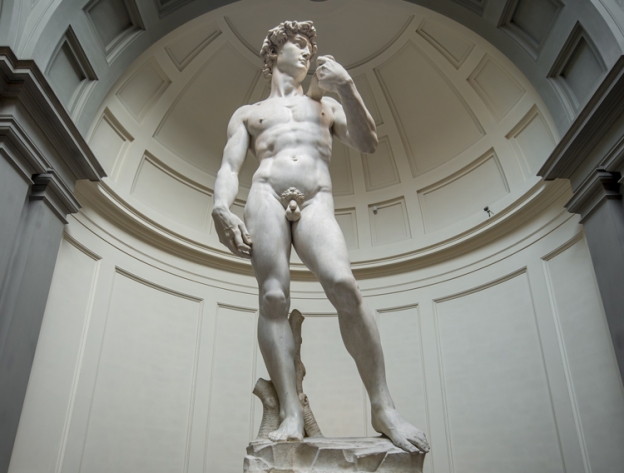
If that’s true, it looks like a lot of people obsess about what is simply looking at entertainment serious art. Whatever might these people make of Michelangelo’s David? A fig leaf, please!!

America is Already Great

I’m in a good mood. Time to celebrate the joys and accomplishments of this blessed land.

Where else to you have the liberty to make observations like these from Mitch Albom on the differences between 1967 and 2017 of dropping your kids off at college/university?

OLD: “We drove our son to college today. What a proud moment. He was a little embarrassed by Mom and Dad coming up to his room, but we promised not to make any ‘square’ jokes. We unpacked his trunk and Mom helped organize his drawers. We met his roommate, who seemed nice. His name is Scott.”

NEW: “We drove our young prince to college today. What a proud moment. He was embarrassed by having his mom and step-dad and dad and former step-mom and dad’s current girlfriend all coming up to his room, so we had to watch from a distance. We saw him hook up his cable TV and his Xbox, then assemble his IKEA furniture. We also met his roommate, who seemed nice. Her name is X. And we are not supposed to use the word ‘her.’ ”

NEW: “After helping our son hang his flat screen and surround-sound speakers, we went for a walk around campus. We saw the 24-hour state-of-the-art exercise facility and the 24-hour Apple computer labs. He showed us the ‘safe spaces’ where no offensive words can be used, and the ‘healing spaces’ where you can go if you were accidentally exposed to an offensive sentence. There were seven cafeterias to pick from, so we chose the non-GMO, gluten-free, nut-free, dairy-free, vegan facility, which made our young person very happy. His nonbiological father took him aside and said, ‘Listen, friend, we know the drinking age is 21, but since you’re 18, please go easy on the beer. You don’t want to pass out in a hot tub and have it uploaded to YouTube.’ ”

OLD: “Our son had a brief meeting with his academic adviser, who told him his first two years, as expected, would be mostly required classes including classic literature, philosophy, math, a foreign language and history. But he was excited to learn he could choose an ‘elective’ each semester. Such freedom of study!”

NEW: “Our young liege checked his iPhone to pick his classes. A student protest to eliminate dead poets from the curriculum means he won’t have to study Shakespeare, and since history was found to be an offensive word (“His” and “story,” so sexist!) he doesn’t have to worry about that anymore. The fact is, his curriculum is totally up to him — to inspire and challenge his natural talents — but he did say he planned to study a foreign language. I think he said, ‘Fortran.’ ”

OLD: “We wanted to have ‘the talk’ with our son, make sure he wasn’t confused about the whole birds and the bees issue or its consequences. His mom told him she wouldn’t mind if he met a nice girl here, and if it was someone special, maybe she could come home with him for Thanksgiving. Dad took him aside and reminded him that he was here to study. After all, tuition costs $2,500 a year.

“Then, despite all that, Dad gave him a bottle of aftershave.”

NEW: “We wanted to have ‘the talk’ with our child, after he told us the hookup rate at his school was one of the highest in the nation. We toured the nearby Planned Parenthood office and the sexually transmitted disease clinic. His step-dad gave him a box of condoms, as did his mother. We were happy that his biological father reminded him that tuition, with room and board, was $70,000 a year. So it would be good if he studied once in a while.

“Happily, our young genius nodded repeatedly with his eyes closed. Then again, he was wearing headphones.”

The U.S.ofA. is no less great because people can react to Albom’s column in such thoughtful and inspired ways:

Filling a column with hackneyed jokes about gender identity, biological parents and more reasons college has “changed since 50 years ago” doesn’t seem like the smartest move, but apparently no one told Mitch Albom that. Albom, the long-time Detroit Free Press columnist (where he’s previously gotten in trouble for fabricating a story about players attending a game as well as self-plagiarism), decided to write a column along those lines this week, and it’s so, so bad.

The lesson? To notice difference is bad.  To have no awareness of historical change is good.

But we are the land of the free.  Bravery is mainly a symptom of following Major League Baseball in the South.

Signers and Decliners

Now comes another statement, named for a Tennessee city, with the signatures of more Christian scholars attached to it. I wonder if those who signed “An Open Letter from Christian Scholars on Racism in America Today” will also sign the Nashville Statement on biblical sexuality. Lots of professors are listed on each statement, and yet I can’t help but think each set has reservations about the scholarship practiced by the signers of the other statement.

What is it about statements? The one time Tim Keller and I agreed came in 1996 at the meeting of theologians and pastors that produced the Cambridge Declaration, a statement that expressed concerns about contemporary worship and megachurches. Keller did not sign. Nor did I. My reasons for not signing went along the lines that Matthew Anderson recently gave for not signing the Nashville Statement:

While I am generally ‘statement-averse,’ it seems reasonable to want a succinct depiction of the theological boundaries on these issues. If nothing else, such statements are efficient: they remove much of the work of retelling all of our convictions on a certain matter by giving us a public document to point to. It’s a lot easier to find all the people who are on board with a certain vision of the home, for instance, by asking what they make of the Danvers Statement.

Yet this virtue is also a vice: by creating a public context in which all the people who affirm certain doctrines or ideas are identified under the same banner, statements tacitly shift the playing field, such that to not sign is to signal disagreement.

Ding ding. Statements imply that those who don’t sign are not of the right outlook because those who sign are right. A lot of signaling going on.

Yet, a curious feature of the Nashville Statement is that it includes the heavy hitters in the Gospel Coalition. John Piper, Lig Duncan, D. A. Carson, Al Mohler, Russell Moore, even J. I. Packer and R. C. Sproul. Tim Keller did not sign.

The problem could be that statements are a problem. But Anderson also explains another reason for the Nashville Statement’s deficiency. It specifies a minimal set of norms while leaving aside a broader sexual ethic and biblical anthropology that should provide the source for specific practices or convictions:

With the signers and the drafters of the Nashville Statement, I am persuaded that the current controversies over sex, gender, and marriage are of maximal importance. With those individuals, I agree that there are matters here essential to the truthful, beautiful articulation of the Gospel of Jesus Christ. With those individuals, I agree that the crisis in the evangelical church is real, and that those seeking to alter our institutions so that they affirm gay marriage undermine and distort the faith that all Christians, in all places and times have affirmed.

But issues of maximal importance deserve maximal responses. It is possible to say too little, as it is possible to say too much. If I have sometimes erred toward the latter vice in my exposition and defense of a traditional account of sex and gender, I have done so only because the deflationary and minimalist approach to such questions is itself an intrinsic part of the intellectual atmosphere which has left the orthodox Christian view unintelligible to so many.

Meanwhile, secular academics are trying to defend middle-class virtues:

That [mid-twentieth-century bourgeois] culture laid out the script we all were supposed to follow: Get married before you have children and strive to stay married for their sake. Get the education you need for gainful employment, work hard, and avoid idleness. Go the extra mile for your employer or client. Be a patriot, ready to serve the country. Be neighborly, civic-minded, and charitable. Avoid coarse language in public. Be respectful of authority. Eschew substance abuse and crime.

These basic cultural precepts reigned from the late 1940s to the mid-1960s. They could be followed by people of all backgrounds and abilities, especially when backed up by almost universal endorsement. Adherence was a major contributor to the productivity, educational gains, and social coherence of that period.

Imagine if the Christians who signed the Open Letter or the Nashville Statement had joined with Amy Wax and Larry Alexander in a defense of older American norms.

It sure looks like Wax and Alexander could use it:

We, a group of Penn alumni and current students, wish to address white supremacist violence and discourse in America. Even if we are not surprised that Charlottesville can happen, witnessing blatant racism takes an emotional toll on us, some more so than others. And yet, overtly racist acts are identifiable and seem “easy” to criticize. It is nearly impossible for anyone, white, black or otherwise to see what happened in Charlottesville and not admit that a wrong occurred — unless you are a white supremacist yourself, that is.

But at the same time, history teaches us that these hateful ideas about racial superiority have been embedded in many of our social institutions. They crawl through the hallways of our most prestigious universities, promoting hate and bigotry under the guise of “intellectual debate.” Indeed, just days before Charlottesville, Penn Law School professor Amy Wax, co-wrote an op-ed piece with Larry Alexander, a law professor at the University of San Diego, claiming that not “all cultures are created equal” and extolling the virtues of white cultural practices of the ‘50s that, if understood within their sociocultural context, stem from the very same malignant logic of hetero-patriarchal, class-based, white supremacy that plagues our country today. These cultural values and logics are steeped in anti-blackness and white hetero-patriarchal respectability, i.e. two-hetero-parent homes, divorce is a vice and the denouncement of all groups perceived as not acting white enough i.e. black Americans, Latino communities and immigrants in particular.

Wax’s and Alexander’s claims rely on a simplistic, bigoted and archaic notion of culture; a concept purported to be bounded and discrete, a postulate which anthropologists “dismantled” decades ago by showing how such formulations of culture are embedded in systems of political, economic and social oppression.

Against outlooks like this statements don’t have a snowball’s chance in hades.

Alien Southerners

Has it occurred to many that the same people who have major reservations about the Confederate Monuments generally favor amnesty for undocumented aliens? Sure, that might seem like an inconsistency but the nooks and crannies of citizenship for aliens have more square inches than a container of Thomas’ English muffins.

Consider, for instance, the recent statement by the American Historical Association, the (trigger warning) Cadillac historical professional bodies:

Decisions to remove memorials to Confederate generals and officials who have no other major historical accomplishment does not necessarily create a slippery slope towards removing the nation’s founders, former presidents, or other historical figures whose flaws have received substantial publicity in recent years. George Washington owned enslaved people, but the Washington Monument exists because of his contributions to the building of a nation. There is no logical equivalence between the builders and protectors of a nation—however imperfect—and the men who sought to sunder that nation in the name of slavery.

Thing is, historians do not have the power to determine who is an American citizen. After the Civil War, President Johnson and Congress had to walk a very delicate line between preventing rebels to resume power of state governments while also honoring that the southern states had never seceded and so their governments were still legitimate. Here‘s one angle of the tight rope, namely that President Lincoln advised leniency (more than the AHA):

Lincoln desired to hasten the end of hostilities and quickly reestablish the fraternity of the parted Union. After asking Lincoln what to do with the defeated rebel armies in March 1865, General William Tecumseh Sherman remarked that, “all [Lincoln] wanted of us was to defeat the opposing armies, and to get the men composing the Confederate armies back to their homes at work on their farms and in their shops.” Additionally, the Secretary of the Navy remarked after Lincoln’s last cabinet meeting that Lincoln “was particularly desirous to avoid . . . any vindictiveness of punishment.” Other members of Lincoln’s party were not so forgiving. Many felt that Lincoln’s policies and desires were too soft and wished to punish former Confederates more harshly. They feared that former Confederates, returned to power, would not accept the fruits of Union victory, namely emancipation, and would harass black and white former Unionists in the South. To this extent, The New York Herald on April 16, 1865, estimated that Andrew Johnson’s policy towards former Confederates would be “more tinctured with the inflexible justice of Andrew Jackson than with the prevailing tenderness of Abraham Lincoln.”

Here’s how amnesty worked:

It was under these proclamations that, from May 1865 to December 1868, former Confederates flooded the office of Andrew Johnson with thousands of amnesty requests, with the numbers eventually tapering off as the exemptions narrowed. Each request for amnesty included a signed copy of the oath certifying the individual’s compliance, as well as a personally-written request and a third party endorsement, generally by the governor of that person’s state. The personally written requests generally followed the same sequence: the individual introduced himself and his place of residence and often proclaimed his age. He then described his actions (and/or sentiments) before secession, his conduct during the war, the clause under which he was exempted, and whether or not he had any property confiscated from him. The petitions ranged from brief requests for amnesty to “long and well-prepared defenses” of their conduct.

Petitioners were “anxious” to have their amnesty requests granted and their rights and privileges as citizens of the United States resumed. Their exemption from amnesty precluded them from such activities as the “transfer of titles or properties” and the obtainment of copyrights and patents, making business very difficult. Some were even tentative to marry. Until these individuals were pardoned, they lacked civil rights and faced the prospect of having their property confiscated. Above all, they lacked political rights, and thus could not take part in the discourse involving Reconstruction, and were unable to participate in the future of the South. Thus, asking for pardon was the “sensible thing for these people to do.”

Imagine that. Wanting a working society rather than attitudinal purity.

Finally, President Johnson declared “unconditionally, and without reservation, … a full pardon and amnesty for the offence of treason against the United States, or of adhering to their enemies during the late civil war, with restoration of all rights, privileges, and immunities under the Constitution and the laws …”

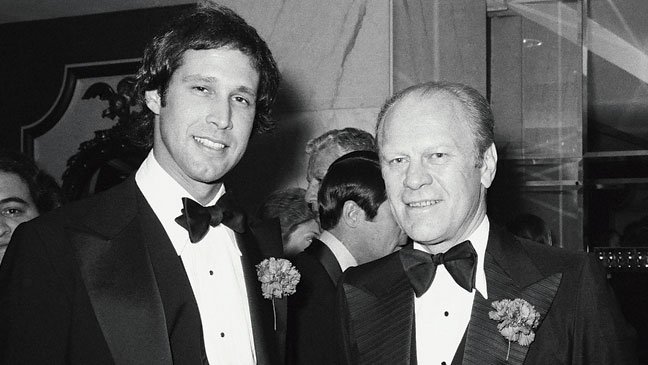
That pardon went to everyone but Robert E. Lee. He did not receive his executive pardon until Michigan’s own, President Ford:

Lee sent an application to Grant and wrote to President Johnson on June 13, 1865:

“Being excluded from the provisions of amnesty & pardon contained in the proclamation of the 29th Ulto; I hereby apply for the benefits, & full restoration of all rights & privileges extended to those included in its terms. I graduated at the Mil. Academy at West Point in June 1829. Resigned from the U.S. Army April ’61. Was a General in the Confederate Army, & included in the surrender of the Army of N. Va. 9 April ’65.”

On October 2, 1865, the same day that Lee was inaugurated as president of Washington College in Lexington, Virginia, he signed his Amnesty Oath, thereby complying fully with the provision of Johnson’s proclamation. But Lee was not pardoned, nor was his citizenship restored. And the fact that he had submitted an amnesty oath at all was soon lost to history.

More than a hundred years later, in 1970, an archivist at the National Archives discovered Lee’s Amnesty Oath among State Department records (reported in Prologue, Winter 1970). Apparently Secretary of State William H. Seward had given Lee’s application to a friend as a souvenir, and the State Department had pigeonholed the oath.

In 1975, Lee’s full rights of citizenship were posthumously restored by a joint congressional resolution effective June 13, 1865.

At the August 5, 1975, signing ceremony, President Gerald R. Ford acknowledged the discovery of Lee’s Oath of Allegiance in the National Archives and remarked: “General Lee’s character has been an example to succeeding generations, making the restoration of his citizenship an event in which every American can take pride.”

When will the social justice warriors be heading for Grand Rapids to show their rectitude on the facade of the Ford Presidential Library? If they go, they’ll find good beer.