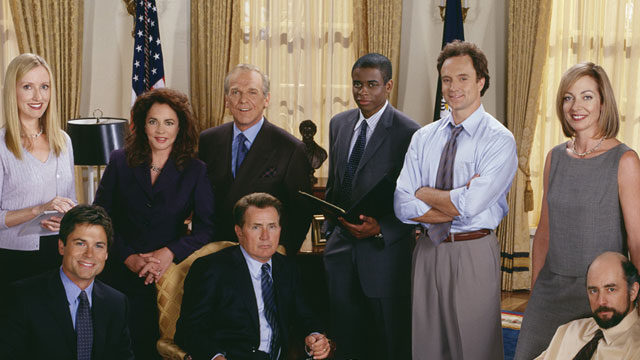
What’s The Matter with Los Angeles?

Thomas Frank asked what was the matter with Kansas. Why did lower-middle class whites vote for the GOP when the Republicans did little for such voters economically. The interests of Kansans economically were supposed to be much more Democrat than Republican. But conservatives in the GOP used social issues — abortion, marriage, etc. — to attract support.

Frank’s argument makes me wonder the same about the Hollywood stars who live in the greater Los Angeles area. Simply on economic grounds, why would people worth millions vote for a party that wants to raise taxes on them?

Then there is the art-makes-viewers-more-humane-and-empathetic argument. Don’t actors in Hollywood play all sorts of American character types, from people who vote for Republicans to business owners, cops (how many cop shows and movies are there?!?), angry white men, and Christian nationalists? If art is supposed to help us see how others see the world, why are Hollywood actors like Meryl Streep so clueless about how so many Americans other than movie stars live?

Not to mention that in the aftermath of Debbie Reynolds’ and Carrie Fisher’s death, the missus and I watched Meryl Streep give a very fine performance in Postcards from the Edge (foul language trigger warning). She plays a Hollywood star who is a drug addict and whose life is hardly stable? If you play that kind of character — and I imagine Hollywood has more people like this than among the rest of the millionaire demographic — do you really get on a soapbox and instruct the rest of the country about how insensitive and vicious regular Americans are (with a straight face)? Don’t you perhaps remember that Hollywood types have their own clay feet (even if outfitted in Prada)?

One last anomaly. Meryl Streep has far more in common with Donald Trump than Mike Huckabee or Ted Cruz. Streep and Trump are both loaded, live lives becoming the rich and famous, cultivate celebrity, and are not overly concerned about abortion, gays, or sex outside marriage. Trump is one of Streep’s tribe.

And now the press can see how hollow and shallow Trump’s way of life is:

Trump understands one thing. In business, on TV and in conducting a presidential campaign, all that matters is making the news. He was famous and infamous, but most of all he was a media tsunami. He was not to be avoided. Fame is Donald Trump’s drug of choice. Being famous gives a person an automatic market value, a faux-virtue that comes from virtual supremacy.

Didn’t they understand that when Katy Perry and Beyonce were headlining for either Barack Obama or Hilary Clinton?

End of Democracy

Then:

The proposition examined in the following articles is this: The government of the United States of America no longer governs by the consent of the governed. With respect to the American people, the judiciary has in effect declared that the most important questions about how we ought to order our life together are outside the purview of “things of their knowledge.” Not that judges necessarily claim greater knowledge; they simply claim, and exercise, the power to decide. The citizens of this democratic republic are deemed to lack the competence for self-government. The Supreme Court itself—notably in the Casey decision of 1992-has raised the alarm about the legitimacy of law in the present regime. Its proposed solution is that citizens should defer to the decisions of the Court. Our authors do not consent to that solution. The twelfth Chief Justice of the Supreme Court, Harlan Fiske Stone (1872-1946), expressed his anxiety: “While unconstitutional exercise of power by the executive or legislative branches of the Government is subject to judicial restraint, the only check upon our own exercise of power is our own sense of restraint.” The courts have not, and perhaps cannot, restrain themselves, and it may be that in the present regime no other effective restraints are available. If so, we are witnessing the end of democracy.

And now:

Trump is a child, the most childish politician I have encountered in my lifetime. The parent in this relationship is the American state itself, which allows the voters to throw a tantrum and join forces with the worst behaved kid in the class, safe in the knowledge that the grown-ups will always be there to pick up the pieces.

This is where the real risks lie. It is not possible to keep behaving like this without damaging the basic machinery of democratic government. It takes an extraordinarily fine-tuned political intelligence to target popular anger at the parts of the state that need reform while leaving intact the parts that make that reform possible. Trump – and indeed Brexit – are not that. They are the bluntest of instruments, indiscriminately shaking the foundations with nothing to offer by way of support. Under these conditions, the likeliest response is for the grown-ups in the room to hunker down, waiting for the storm to pass. While they do, politics atrophies and necessary change is put off by the overriding imperative of avoiding systemic collapse. The understandable desire to keep the tanks off the streets and the cashpoints open gets in the way of tackling the long-term threats we face. Fake disruption followed by institutional paralysis, and all the while the real dangers continue to mount. Ultimately, that is how democracy ends.

Back then it was shocking:

On September 26, after the Senate failed to overturn President Clinton’s veto of a ban on partial-birth abortions, Paul Weyrich, Gary Bauer and other leaders of the religious right assembled in the antechamber of Senate Majority Leader Trent Lott’s office. The rhetoric could not have been more fiery. As Lott looked on approvingly, Watergate felon and evangelist Charles Colson declared, ‘a nation which sanctions infanticide is no better than China, no better than Nazi Germany.’ Richard John Neuhaus, a Catholic priest, went even further. ‘It is not hyperbole to say that we are at a point at which millions of conscientious American citizens are reflecting upon whether this is a legitimate regime,’ Neuhaus said. ‘That is the solemn moment we have reached.’

Despite the apocalyptic tone of what was, after all, an open meeting convened by the most powerful Republican in Congress, the gathering in Lott’s chambers attracted little notice. But this meeting was not an isolated or aberrant event. It was a harbinger of a political development that has now reached fruition: a full-fledged war between two leading groups of conservative intellectuals over the basic question of what constitutes a moral conservatism and a moral society.”

Now, it’s sensible:

A country designed to resist tyranny has now embraced it. A constitution designed to prevent democracy taking over everything has now succumbed to it. A country once defined by self-government has openly, clearly, enthusiastically delivered its fate into the hands of one man to do as he sees fit. After 240 years, an idea that once inspired the world has finally repealed itself. We the people did it.

What’s the big deal? Didn’t the Hebrews and the Greeks teach us that democracy was more problem than solution?

Not Blogging?

Remember the old days of trying to have a conversation about race. Turns out blogging is not where Americans are turning:

About 1 in 4 of those surveyed say the office of the president has the best chance of fostering healthy public conversations (23%), while about 1 in 10 say pastors of local churches (11%) or university professors (10%). Members of the media (8%) faired slightly better than business leaders (7%) or members of Congress (6%). Few Americans look to professional athletes (1%) or musicians (less than 1%) to lead healthy conversations about the nation’s challenges.

The most common response: “None of these” (33%).

Among other findings:

Southerners are more likely to look to the president (25%) than those in the Midwest (18%).

Those in the Northeast choose the media (11%) more than those in the South (5%).

Younger Americans—those 18 to 34—look to the media (12%) more than those 65 and older (3%).

African-Americans are the most likely ethnic group to choose local pastors (21%) and the president (37%).

Hispanic Americans are the least likely ethnic group to choose the media (3%).

Christians are more likely to look to pastors (16%) than those from other faiths (1%) or those with no religious preference (2%).

Christians (7%) are less likely to look to professors than those from other faiths (18%) or those with no religious preference (15%).

Americans with evangelical beliefs have faith in pastors (36%) but little faith in the media (3%) or professors (3%) to guide such conversations.

A couple observations.

Notice bond between Southerners and African-Americans (are they they same?) — they trust the president more than other groups. Makes sense for blacks but what the heck did white southerners not learn from that excitement back in the 1860s?

Notice also Christians’ regard for professors. Maybe this explains the lack of Christian intellectuals. The more intellectual, the less trustworthy among the faithful.

Selah.

Did Sam Francis Hold a Fundraiser for Donald Trump?

Of course, not. The paleo-conservative died in 2005. But what about Bill Ayers (the co-founder of the Weatherman) fundraiser for President Obama?

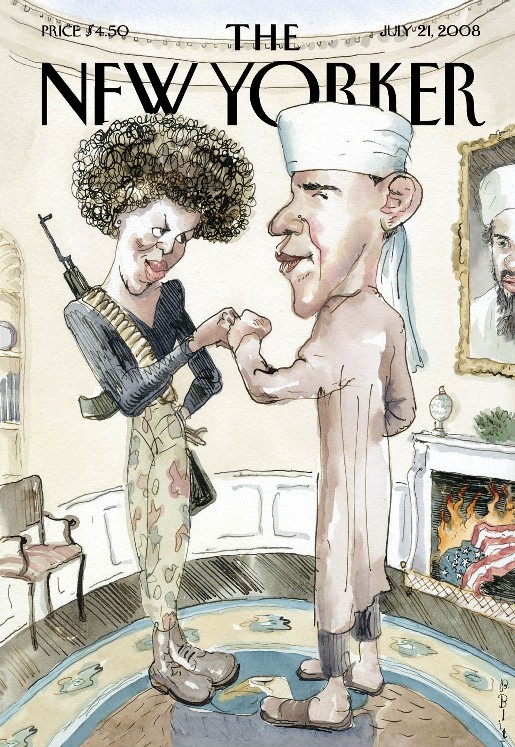
The reason for asking is elite journalism’s tic of recognizing the tawdry associations of president-elect Trump while never having taken seriously President Obama’s associations with the radical left. For instance, I read this in the New Yorker:

Throughout the campaign, he was accused of being the leader of a white backlash movement, waging war on minorities: he says that he wants to expel millions of unauthorized immigrants, and calls for a moratorium on Muslims entering the country. Since his election, many analyses of his political program have focussed on his ties to the alt-right, a nebulous and evolving constellation of dissidents who sharply disagree with many of the conservative movement’s widely accepted tenets—including, often, its avowed commitment to racial equality. This connection runs through Stephen Bannon, Trump’s chief strategist, an “economic nationalist” who was previously the executive chairman of Breitbart, a news site that aimed to be, Bannon once said, “the platform for the alt-right.” Earlier this year, Breitbart published a taxonomy of the alt-right that included Richard Spencer, a self-described “identitarian” whose political dream is “a homeland for all white people.” At a recent conference in Washington, Spencer acted out the worst fears of many Trump critics when he cried, “Hail Trump! Hail our people! Hail victory!” Later, Spencer told Haaretz that the election of Trump was “the first step for identity politics for white people in the United States.”

It is important to note that the link between Trump and someone like Spencer is tenuous and seemingly unidirectional. (When reporters from the Times asked Trump about the alt-right, in November, he said, “I disavow the group.”) But it is also true that partisan politics in America are stubbornly segregated: exit polls suggest that about eighty-seven per cent of Trump’s voters were white, which is roughly the same as the corresponding figure for his Republican predecessor, Mitt Romney. It is no surprise that many of Trump’s critics, and some of his supporters, heard his tributes to a bygone American greatness as a form of “identity politics,” designed to remind white people of all the power and prestige they had lost.

It is true, too, that Trumpism draws on a political tradition that has often been linked to white identity politics. One Journal author suggested that the true progenitor of Trumpism was Samuel Francis, a so-called paleoconservative who thought that America needed a President who would stand up to the “globalization of the American economy.” In Francis’s view, that candidate was Pat Buchanan, a former longtime White House aide who ran for President in 1992 and 1996 as a fiery populist Republican—and in 2000 as the Reform Party candidate, having staved off a brief challenge, in the primary, from Trump.

Three graphs of a long story on Trump and the alt-right even though the reporter also concedes, “what is striking about Trump is how little he engages, at least explicitly, with questions of culture and identity.” “[A]t least explicitly” gives the reporter room to disbelieve Trump and to leave readers inclined to think the worst thinking the worst.

So doesn’t that make the New Yorker the alt-left equivalent of Breitbart?

The question is how to parse these associations and affinities. Do you rely on hard evidence? Do you define narrowly the overlap between the politician and the offensive action or idea? Consider how Noam Scheiber cleared President Obama of untoward associations with Ayers:

Suppose we were talking about a meeting Mike Huckabee attended during a (fictitious) run for state senate in the early ’90s. Let’s say the meeting took place in the home of a local pastor, who, back in the ’70s, had been part of a radical anti-abortion group that at times attempted, but never succeeded in, bombing abortion clinics. The pastor was never prosecuted and had since become a semi-respectable member of his community, where he also ran an adoption clinic for children of mothers he’d counseled against abortion.

If Huckabee had once addressed a group of local conservative activists at the pastor’s home, would that tell us anything about his views on political violence? Reasonable people can disagree about this. But I don’t think it would.

But that is not the standard that Kalefa Sanneh of the New Yorker is using for Trump or the alt-right. Although he has no clear links between Spencer and Trump, because people who like Spencer voted for Trump — kahbamb — association confirmed. But because Bill Ayers and former supporters of the radical left (even in its terrorist phase) voted for Obama, no connection. Just the way the system works.

Which is true. Bad people vote for good candidates all the time. We wonder why such candidates appeal to such voters. But to see the New Yorker do what Rush Limbaugh does is well nigh remarkable. Rush assumes that people who vote Democrat are overwhelmingly bad citizens or bad Americans. Turns out — thanks to the revelations that have arisen during Trump’s candidacy and election — that editors of “respectable” journalism do the same. If you voted for Trump you must be harboring views of white supremacy. Just because you think immigration and ISIS may be a problem?

Is Donald Trump Mainstreaming Apostasy?

While Mike Horton zeroes in on the personalities associated with Word of Faith who will be speaking or praying (or speaking in tongues) and the presidential inaugural, not to be missed is the rest of the clergy assembled. Among them, Cardinal Timothy Dolan:

Dolan will be the first Catholic to take part in a presidential inauguration in 40 years, since President Jimmy Carter’s in 1977, the Religion News Service reports. Rabbi Marvin Hier will be the first Jewish clergy involved since Ronald Reagan’s in 1985.

His inclusion “may reflect, in part, homage to the Jewish faith of Trump’s daughter and son-in-law,” Black said. Eldest daughter Ivanka Trump, a convert to Orthodox Judaism, is moving to Washington and expected to serve as a stand-in to the First Lady.

The broad faith representation may also reveal a desire to please the American electorate, more pessimistic about the president-elect than any of his recent predecessors. According to the Pew Research Center, Trump’s overall campaign grade is the lowest among any presidential candidate—winning or losing—since it began collecting data in 1988.

White is the only pastor from Trump’s group of evangelical faith advisors scheduled to speak at the inauguration. The Mormon Tabernacle choir is slated to perform. Trump has downplayed the celebrity factor in his confirmed guest list. So far, Carter is the only former president expected to attend.

Horton puts his objection this way:

Thanks to the First Amendment, Christian orthodoxy has never been a test for public office. But it is striking that Trump has surrounded himself with cadre of prosperity evangelists who cheerfully attack basic Christian doctrines. The focus of this unity is a gospel that is about as diametrically opposed to the biblical one as you can imagine.

But is it fair to say “surrounded”? Kevin Kruse, who teaches at Princeton puts it this way:

“The traditional tasks of an inaugural—bringing the country together and setting an uplifting and unifying agenda for the future—are even more pressing for president-elect Trump,” said Kruse. “And that, I suspect, is why he’s enlisted a much larger lineup of clergy to speak at the inauguration than his predecessors. He knows he needs their help in elevating the tone and, in turn, elevating his presidency as well.”

Either way, a confessional Protestant could object to every religious figure scheduled for the inauguration. Especially in the year that Protestants commemorate the Reformation, shouldn’t Calvinists be up in arms about a Roman Catholic bishop at the event? Why single out Paula White? Looks too much like Megyn Kelly?

The 2017 Challenge

How can Christians who voted for Hillary show charity to Donald Trump?

This fellow doesn’t seem to have figured it out:

The “Year of our Lord” 2016 deserves the label, “The Year of the Jerk.” It has been a long time since exhibiting the maturity level of a toddler has been enabled so fiercely or rewarded so completely. Donald Trump looms as the obvious example in a crowded field. Trump’s bombastic style elevated the antics of schoolyard bullies to morbid political theater.

Many of the very people who encouraged me to stand up to bullies as a child in my small southern town were fervent flag wavers for the bully of bullies this campaign season. Rather than rejecting his candidacy due to these antics, Trump’s supporters seemed to feed on his absolute disdain for his fellow humans. Each broken taboo was like throwing red meat to a den of lions for many of his enthusiastic supporters.

Over and over again, we heard fervent Trumpites express their conviction that Trump is “real” because he “tells it like it is.” Yet there was nothing original, or even remotely factual, in much of what Trump had to say. It was the crass way he said it that appealed to an angry subset of American culture. The candidate himself, a trust fund product whose persona was manufactured by tabloid magazines and reality television, could not have been more manufactured, inauthentic, or unreal.

None of this is inherently wrong or objectionable as part of political debate (nor is it wrong to recognize Trump’s failure to manifest the fruit of the Spirit). But how do you promote Jesus’ message, the guy who hung out with publicans (not republicans) and tax collectors, and then do what the Pharisees did?

And as he reclined at table in his house, many tax collectors and sinners were reclining with Jesus and his disciples, for there were many who followed him. And the scribes of the Pharisees, when they saw that he was eating with sinners and tax collectors, said to his disciples, “Why does he eat with tax collectors and sinners?” And when Jesus heard it, he said to them, “Those who are well have no need of a physician, but those who are sick. I came not to call the righteous, but sinners.” (Mark 2:15-17 ESV)

When oh when will the Christians who voted for Hillary stop being so unforgiving of the president-elect? When will they show charity even to sinners?

It

Jeremy Young explains what he explored in his book on the charisma of politicians between the Civil War and World War II:

One of the central questions I had to answer in researching my book on turn-of-the-century charisma was how to determine whether a given leader was actually charismatic. Charisma is an enigmatic quality, both ineffable and deeply subjective; who was I to say that Theodore Roosevelt was more or less charismatic than, say, Woodrow Wilson? Ultimately, I realized that I was asking the wrong question; charisma was not a characteristic of leaders, but a relationship between them and their followers. By observing how Americans described their leaders, then, I could let followers do the work of identifying charisma.

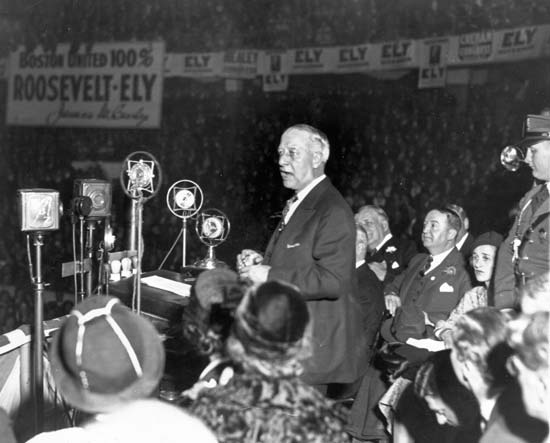
H. L. Mencken had another theory. It was whether or not a politician had “it.” Mencken thought Al Smith did.

There is something about Al’s aspect that the plain people like, not kowing why, and they seem to like it almost as well where cops are curiosities as where cows are curiosities. I have watched them at a dozen country railway stations, crowding up to the observation platform. Maybe the stop is for but two or three minutes; sometimes there is no more than a slowing down. They crane their necks expectantly, waiting for they know not what. Suddenly Al is on view, waving the brown derby, reaching out to shake hands, hauling in the bouquets brought for Mrs. Smith and joshing the local worthies. They regard him quizzically for a moment, and even with a certain hostility, but then, of a sudden, he has landed them, and as the train rolls on they are howling. . . .

The plain fact is that Al’s points are mainly infra-red and ultra-violet. It is impossible to chart or label them. He simply has the thing that the movie folk call IT — and the movie folks discovered long ago that it could not be described with any precision. There are grand and gaudy beauties who lack it altogether, and there are shabby little girls who radiate it at a pressure of a million volts. Al has it as no American politician has had it since Roosevelt. Has more of it, indeed, than Roosevelt, for the popularity of Roosevelt was largely logical: the plain people admired him because he had waded in blood and saved American womanhood from the Spanish Hun. But they know very little about Al, and what little they know, at least in these back reaches of the land, is mainly unfavorable. I don’t think it would be exact to say that they admire him, even after they have seen him. But it is as plain as day that they delight in him. He somehow thrills them and makes them happy. When he casts his magic over them it penetrates to their gizzards. (“Smith Has ‘It'” – 1928)

I suspect that Hillary didn’t have it but Trump did.

Postscript: Machen voted for Al.

It’s Fascist When You Exclude the Universities?

Michael Kinsley thinks Donald Trump qualifies technically as a fascist:

The game has several names: “Corporate statism” is one. In Europe, they call it “dirigisme.” Those two other words for it — “Nazism” and “fascism” — are now beyond all respectability. It means, roughly, combining the power of the state with the power of corporations. At its mildest, it is intrusive regulations on business about parental leave and such. At its most toxic, it is concentration camps. In the 1930s, a few Americans (including a few liberals) bought into it. Pearl Harbor ended that argument. Even for Trump, “fascism” itself now is a dirty word, not just a policy choice. Even Trump would not use it — least of all about himself.

Did Kinsley worry about combining the power of the state with the power and prestige (we’re the smartest people in the world) of universities? It’s not as if nothing could go wrong (beware the negatives):

Indeed, illiberal progressive elitism has only become more pervasive as the gap between the “educated and the ignorant” has widened.

With the rise of think tanks, research universities, and advocacy foundations and nonprofits—the vast, interlocking, insulated complex we’ve constructed to formulate, advocate, and execute public policy—we have only reinforced the barrier between the everyday voter and governance. In order to understand, much less engage in, today’s abstract, detached, and data-saturated discourse of public policy, participants require ever more specialized academic expertise. If a problem can’t be expressed in a statistical formula—with the obliteration of nuance, detail, and local variability this entails—then the problem simply doesn’t exist.

What we now call the “rise of the meritocracy” may have begun well over a century ago. But as it accelerates today, its costs are becoming more apparent. The meritocrats sort themselves out not only socially, but geographically as well, into coastal and university enclaves. There, in a contemporary bow to positive eugenics, they engage in assortative mating. Their children then follow the sheltered path from university day school to Princeton to a career in social entrepreneurship, convinced that they can “change the world,” as the slogan goes, without ever touching down in that vast swath of cultural desolation unhappily separating Nassau Hall from Palo Alto. The distance between the “educated and ignorant” grows ever larger, both literally and figuratively.

You could also call this “corporate statism” since the biggest and smartest universities in the U.S. are corporations whose assets tax collectors cannot touch.

On the Inside Looking In

Does becoming part of the elite world of publishing, Hollywood, and the academy mean you have to give up perspective?

We need to connect courageously with the rejection, the fear, the vulnerability that Trump’s victory has inflicted on us, without turning away or numbing ourselves or lapsing into cynicism. We need to bear witness to what we have lost: our safety, our sense of belonging, our vision of our country. We need to mourn all these injuries fully, so that they do not drag us into despair, so repair will be possible…. Because let’s be real: we always knew this shit wasn’t going to be easy. Colonial power, patriarchal power, capitalist power must always and everywhere be battled, because they never, ever quit. We have to keep fighting, because otherwise there will be no future—all will be consumed. Those of us whose ancestors were owned and bred like animals know that future all too well, because it is, in part, our past. And we know that by fighting, against all odds, we who had nothing, not even our real names, transformed the universe. Our ancestors did this with very little, and we who have more must do the same. This is the joyous destiny of our people—to bury the arc of the moral universe so deep in justice that it will never be undone.

Writing for the New Yorker and battling capitalist power. Keeping it unreal.

Thankful for Trump

I rarely see eye-to-eye with Michael Novak, but m(mmmmeeeeEEE)y reaction to the election was similar to his in the sense that I dreaded four more years of progressivism at that center of American life and felt a sense of relief when news came that Hillary Clinton did not win.

But a better expression of my thoughts comes from Damon Linker who recognizes, as few do inside the bubble of progressivism, that the United States includes more than elite institutions and their unofficial establishment:

The urge toward exclusion is a perennial possibility of politics. That’s because politics takes place on two levels. On one level is the back and forth of partisan conflict, involving persuasion, argument, electoral battles, triumphs, and defeats. On this level, pretty much anything goes as long as it abides by the rules of the political game. But there’s also a second, more fundamental level of politics that involves a competition over who gets to set the rules, the boundaries of what is publicly acceptable, in the first place — and precisely where those boundaries will be positioned.

The most obvious example of second-order politics in the American system is the judiciary, and especially the Supreme Court. Until the Obergefell decision in 2015, for example, the American people were engaging in a free-flowing debate about same-sex marriage, with some people in favor of allowing it and others opposed, and public opinion shifting rapidly in the “pro” direction. That was politics conducted on the first level. But then the Supreme Court stepped in to declare gay marriage a constitutional right. That was second-order politics in action: Suddenly the rules were changed, with the “pro” side summarily declared the winner throughout the nation and the “anti” side driven — and permanently excluded — from the political battlefield going forward.

But second-order politics isn’t only found in the formal strictures of a Supreme Court ruling. It comes into play when prominent institutions in civil society (such as mainstream media outlets, universities, corporations, movie studios, and other arms of the entertainment industry) informally unite in deciding that an issue, or a specific position on an issue, is simply unacceptable because it crosses a moral line that leading members of these institutions consider inviolable. Over the past several decades, a range of positions on immigration, crime, gender, and the costs and benefits of some forms of diversity have been relegated to the categories of “racism,” “sexism,” “homophobia,” “white supremacy,” or “white nationalism,” and therefore excluded from first-order political debate.

I’m not going to cry for progressives. They still have elite journalism, Hollywood, the most exclusive colleges and universities, and lots of agencies related directly and indirectly to the federal government. They just don’t have the White House for the next four years. Let’s see Aaron Sorkin make a television show about that.