The Gypsy Curse

“May you get everything you want.”

Some Calvinists have a special attachment to the original Westminster Confession:

The civil magistrate may not assume to himself the administration of the Word and sacraments, or the power of the keys of the kingdom of heaven: yet he hath authority, and it is his duty, to take order, that unity and peace be preserved in the Church, that the truth of God be kept pure and entire; that all blasphemies and heresies be suppressed; all corruptions and abuses in worship and discipline prevented or reformed; and all the ordinances of God duly settled, administered, and observed. For the better effecting whereof, he hath power to call synods, to be present at them, and to provide that whatsoever is transacted in them be according to the mind of God. (23.3)

2kers point out that U.S. Presbyterians had good reasons for revising that affirmation, reasons like Thomas Jefferson or George Washington or James Madison (Virginians all) having jurisdiction over church assemblies.

For some, though, it takes Donald Trump to recognize what 2kers have long understood:

It would be one thing for Trump to disagree with Moore. That would be totally fine and appropriate. But Trump does more than that here. Trump criticizes Moore not for bad views but for being a bad evangelical!

The problem with this is obvious. Do Americans really want a president who thinks it a part of his job description to pontificate about who is and isn’t a good evangelical? Or a good Catholic? Or a good Muslim? Or a good Jew? This is totally outside the norms and traditions of the presidency.

Presidents are fine to have convictions, religious or otherwise. But to single out a political opponent and to define him as an unfaithful evangelical simply because he opposes the Trump candidacy is an absurd and dangerous precedent.

Deep down, everyone understands 2k. Sometimes they even recommend it.

Would Donald Trump Fire Curt Schilling?

I don’t know much about the tweet that cost Schilling his job with ESPN other than that it made fun of transgender efforts to liberate the nation’s bathrooms from sexual tyranny. I understand that Schilling has a bit of a problem keeping his opinions to himself in the realm of social media.

But I am still wondering why this “issue” is absorbing the attention of state and federal officials (not to mention the news media). If Hillary Clinton can ask, “If we broke up the big banks tomorrow, would that end racism? Would that end sexism?”, why can’t other Americans wonder, “If we allowed cross-dressing men to use women’s bathrooms tomorrow, would that put an end to police brutality?” And people wonder why other people find Donald Trump refreshing (emphasis on fresh)?

Are the Democrats that serious about the politics of (make up your own) identity? Michael Lind knows that they are:

The centrality of identity politics, rather than progressive economics, to the contemporary Democratic Party is nothing new. In 1982, the Democratic National Committee recognized seven official caucuses: women, blacks, Hispanics, Asians, gays, liberals and business/professionals. Thirty-four years later, this is the base of the Democratic Party of Hillary Clinton. The pro-Sanders left objects to the solicitude of the Democratic Party for Wall Street and Silicon Valley, the sources of much of its funding. But it is safe to assume that most progressives, when confronted with conservative candidates, will prefer incremental, finance-friendly Clintonism over the right-wing alternative. Moreover, the ability or even willingness of Mr. Sanders to help down-ballot or state candidates is doubtful. The next generation of Democrats are figures like Julian and Joaquin Castro and Senator Cory Booker of New Jersey, who are much more in the mold of the Clintons and Mr. Obama than of the maverick outsider Bernie Sanders.

If true, that means that both parties are guilty of not being serious about politics. I understand when Glenn Loury says he will vote for Hillary. None of the Republican candidates (except for Kasich) seem like three-dimensional candidates who are above sloganeering. But can the Democrats be all that serious a party when they let human private parts drive American understandings of liberty and equality?

Would Russell Moore Argue This Way about Cocaine Possession?

I understand why pro-life groups want to disassociate themselves from Donald Trump’s convoluted thoughts about women who seek abortions needing to be penalized. But doesn’t Russell Moore go too far when he says these women are victims of a culture and industry that is pro-choice?

One of the worst misconceptions about pro-life Americans is that we are pro-baby and anti-women. Unfortunately, the pro-life movement hasn’t always done a good job of defeating this notion. It’s true that some rhetoric on our side has lacked compassion and holistic concern for the well-being of mothers, especially unwed moms. But despite our imperfections, the pro-life movement has indeed been remarkably consistent about our desire not only to tear down abortion culture but to build a culture of life and human flourishing in its stead. This is the conviction that has built thousands of crisis pregnancy centers, funded hundreds of adoptions., and come alongside countless numbers of women, and men, with practical acts of mercy and love.

If abortion were illegal, if it were a form of murder, why does Moore assume the mother is innocent or not responsible for her involvement in the procedure? Does Moore think this is true for wealthy professional women as much as it may be for the poor mothers who can’t afford to have a child? And would he be so forgiving of any number of harmful activities that take place in poor urban neighborhoods?

I get it that the public relations of the pro-life movement needs to avoid looking punitive. But think about it. If a woman in a Southern Baptist Convention congregation had an abortion procedure, would her deacons come along side her and grant forgiveness and offer consolation apart from an admission of guilt and an expression of repentance?

This is not 2k. Two kingdoms theology recognizes that the church’s role is forgiveness (in response to faith and repentance) and that the state’s role is to punish the wicked and reward the good. But a blanket public policy that says mothers walk away scot-free from an activity that has drawn and quartered the United States for the last four decades seems a tad cynical. If something is illegal and someone engages in an activity that breaks the law, law enforcement doesn’t assume that law breakers are victims.

Blame Trump on Sunday School

Stay with me.

It looks like evangelicals who go to church don’t support Donald Trump:

Across all the states, the March 15 elections showed that, on average, a super-majority of 60 percent of evangelicals voted for someone other than Trump. Furthermore, there continues to be strong evidence that the more religious a voter is, the less likely they are to support Donald Trump. For example, in Missouri exit polls, which tracked church attendance, Trump performed much worse than Ted Cruz. Of those who attend religious services “more than once a week,” Cruz garnered 56 percent of the vote, outpacing Trump by a full 26 percentage points. Among those who attend religious services once a week, Cruz earned 50 percent of the vote, which was a full 17 points above Trump.

In contrast, with those who only attend services “a few” times a year, Trump won 48 percent of the vote to Cruz’s 29 percent. If Missouri’s numbers are indicative of voters in other states, then Trump does much worse among those who actually take their faith seriously enough to attend religious services consistently.

So, who is responsible for nurturing evangelicals who don’t go to church (and vote for Trump)? Sunday school is.

Church leaders sensed that Boomer parents wanted the one hour break from their kids—that they wanted to focus on their own spiritual life for an hour away from the distraction of their children. And, again, we assumed, reasonably so, that worship targeted to adult boomers would not be all that engaging for kids. So dynamic Sunday school programs were created to engage the kids at their level in their language while their parents were in worship. In fact, some churches didn’t (and don’t) allow kids into big people worship at all.

The result: Many of these innovated congregations had a positive, significant impact on the lives of disenfranchised Boomers and their kids. Many saw their congregations and their children’s ministries grow exponentially. The evangelism imperative to reconnect with Boomers seemed to work.

But there was (and is) one huge unintended consequence: We have raised the largest unchurched generation in the history of our country.

Admittedly, there are many reasons why each generation in our culture is increasingly distanced from the church. Some have to do with societal shifts that have nothing to do with the church. Some have to do with the inability of the church to articulate the Gospel in compelling ways.

But perhaps one of the reasons has to do with the Sunday School shift…as we shifted kids out of the main worship experience, en-culturated them in their own program, and robbed them of any touch points with the rest of the body of Christ. Another way of saying it: by segregating our kids out of worship, we never assimilated them into the life of the congregation. They had no touch points. They had no experience. They had no connection with the main worship service—its liturgy, its music, its space, its environment, and its adults. It was a foreign place to them. And so…once they finished with the kids/or youth program, they left the church.

In other words, parents who forced their kids to sit through boring church services and eat broccoli at Sunday dinner reared people who vote — wait for it — for Ted Cruz.

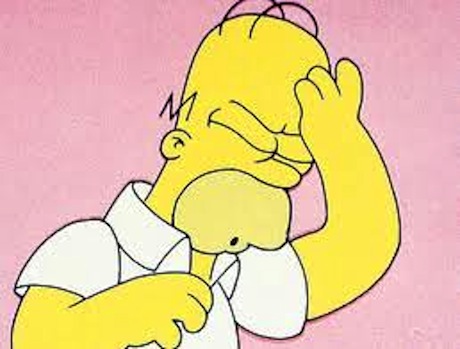
Doh!

From Goldwater to Trump

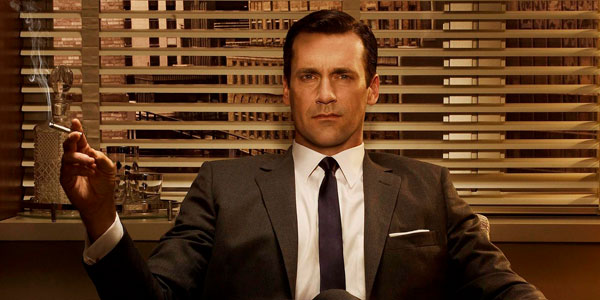
John Fea found an old LBJ ad that shows moderate Republican discomfort over ideological conservatives like Barry Goldwater, the 1964 Republican presidential nominee. If Don Draper had worked for the Democrats, this is how it would have looked:

Drawing parallels between Trump and Goldwater are somewhat overdone since the Arizona Senator had a distinguished record of public service and even vowed to support Nixon in 1960 to the dismay of political conservatives. But the parallels do contain an element of truth in the sense that since the 1950s conservatives (and I count myself as one) have stressed ideological purity over political pragmatism. Maybe it’s the effect of turning 39, or maybe it’s the Trump phenomenon, but compromise for the sake of not blowing things up looks a lot more appealing these days than fidelity to “the movement.”

And here’s the kicker for Roman Catholics reading, some of the most articulate and intellectually rigorous supporters of Goldwater were Roman Catholics like Brent Bozell and William F. Buckley, Jr. (the latter of whom during the 1964 campaign had to distance himself from Robert Welch, the leader of the John Birch Society). In fact, Brent Bozell was the man who put Barry Goldwater’s political convictions into words — The Conscience of a Conservative (as I understand it, the book was entirely Bozell’s effort — see below).

All of this to say, Trump may be much more the fruit of the conservative movement and its anti-establishment ways than conservatives are wont to admit.

Postscript: a little background on Goldwater, Bozell and the conservative conscience:

Goldwater and Bozell were incongruous collaborators: The easygoing Westerner and the intense Midwesterner; the college dropout and the Yale law graduate; the Jewish Episcopalian and the Roman Catholic convert; the principled politician and the activist intellectual (Bozell had run for public office in Mary-land). But they shared a Jeffersonian conviction that that government is best which governs least. They looked to the Constitution as their political North Star. And they were agreed that communism was a clear and present danger.

Goldwater gave his final approval of the manuscript in late December, and Clarence B. Manion, the moderator of a highly popular weekly radio program “The Manion Forum” and the former dean of the Notre Dame Law School, undertook the publication and promotion of a book he was convinced would “cause a sensation.” Indeed it did. Before The Conscience of a Conservative appeared, Barry Goldwater was an attractive but controversial senator from a small Western state who was at best a long-shot vice presidential possibility. After the publication of The Conscience of a Conservative, Goldwater became the political heir to Robert Taft, the hope of disgruntled Republicans, partyless Independents, and despairing Democrats, and the spokesman of a new national political movement—conservatism.

What had Goldwater—and Bozell—wrought? The Conscience of a Conservative was an original work of politics and philosophy, a vision of the nation and the world as it should be, not a compromise with the world as it was. It was a fusion of the three major strains of conservatism in 1960—traditional conservatism, classical liberalism or libertarianism, and anti-communism. It was a book by a conservative for conservatives at a time when conservatives were beginning to realize the potential of their political power.

Trumpsformational

One of the advantages of falling behind on reading is that the distance of several months adds the perspective of Monday morning’s quarterback to what at least in a magazine looked relatively reliable. For instance, while reading the October 2015 issue of First Things yesterday, I saw a review of Robert Putnam’s Our Kids: The American Dream in Crisis (Simon & Schuster) which sounded not nearly so smart now that we’ve had seven months of Donald Trump:

Well-designed policies supposedly can make up for the family’s collapse and set young people on the right course. Putnam recommends beefed-up tax credits, monetary transfers, benefits programs, better-trained and better-paid teachers, vocational education and apprenticeships, community college aid, widely available preschools, and free after-school sports programs. These lavishly funded initiatives will enable teachers and bureaucrats to substitute for parents from birth to adulthood, returning us to a previous idyll of mobility and equality. There is nothing really new here, and Putnam’s exposition seems half-hearted, as if he doesn’t really believe this laundry list will do the trick, even with renewed effort and much more money.

There’s also a call for a massive mentoring program for lower-class children, with the well-educated acting as surrogate parents and advisors on a wide scale. The goal is to socialize poor children to upper-class norms, thereby equipping them to attend and get through college. ­Putnam’s mentoring idea is a ­variant of the pet elite project of college-for-all, which looks to education as the force of salvation and rescues working-­class children by transforming them into upper-class kids.

This pie-in-the-sky dream reflects the deep logic of our post-1960s world, which offers the good life to the knowledge class, but lacks any approved or positive vision for others. On this view, careerism, “creativity,” ­consumerism, lifestyle cultivation, expressive ­individualism, and sexual adventure are fulfilling and prestigious, while civility, duty, ordinary work, and ­fealty to conventional social roles are exploitative and oppressive. ­Given this outlook, college for all makes perfect sense and anything else looks unjust.

In fact, the project is unrealistic and thus ultimately pernicious. Not everyone is able to join the knowledge elite, nor does everyone want to. Our society will always need basic low-skilled labor, from serving meals to caring for dependents to cleaning toilets. The working class cannot be phased out or made to disappear. Economic improvement for workers is an important goal, although difficult to achieve. But it cannot be enough. What is needed is a viable and vibrant culture that maintains the meaning of working-class life and recognizes its dignity. On this, ­Putnam has virtually nothing to say and little to offer.

Except that now, as opposed to last summer when this review was likely written, it turns out that Donald Trump is the one responding to the division between American elites and workers in an electorally successful way. Instead of a culture what the disenfranchised want is a reality show candidate. Did the Trump campaign actually read Putnam?

In that same issue, Russell Moore wrote a spokesmanish piece that put its foot squarely down on the conviction that evangelicals would not be cowed by same-sex marriage:

…the Evangelical cave-in on sexual ethics is just not going to happen. There is no evidence for it, and no push among Evangelicals to start it. In order to understand this, one has to know two things about Evangelicals. One, Evangelical Protestants are “catholic” in their connection to the broader, global Body of Christ and to two millennia of creedal teaching; and two, Evangelicals are defined by distinctive markers of doctrine and practice. The factors that make Evangelicals the same as all other Christians, as well as the distinctive doctrines and practices that set us apart, both work against an Evangelical accommodation to the sexual revolution.

And then came Donald Trump who apparently has shown that evangelicals (at least some of them), are far more interested in economic than social issues, thus making attractive a candidate who will if elected likely not do a thing to oppose same sex marriage. Could it be that evangelical spokesmen don’t really speak for evangelicals, that evangelical is too crude a religious identity to be useful for social analysis, that evangelicals are not all their cracked up to be (as in conservative)? Michelle Boorstein thinks so:

The divisions have led to a range of viewpoints about what is happening in American evangelicalism and whether the splits will endure after the fall election. Some, like Galli, see a new breakdown based on attitudes towards race and ethnicity. Others see an intensifying split between those who prioritize personal morality and those who emphasize free markets and capitalism as a route to power and freedom. Some frame the split as Christian pragmatists vs. Christian idealists.

“There was in the past a very large camp of evangelicals who were primarily interested in electing the most Christian kind of candidate. And then over time bigger doses of pragmatism set in,” said DeMoss, who was a top advisor to Mitt Romney’s two campaigns. “Evangelicals got splintered between the religious litmus test folks and the pragmatists.”

The Trump phenomenon has some leading evangelicals looking more closely at their label. Russell Moore, a Southern Baptist leader, wrote last month that he is so disgusted with being lumped in with Trump supporters that “at least until this crazy campaign year is over, I choose just to say that I’m a gospel Christian” instead of an evangelical.

Some pollsters say “evangelicals” have been way over-counted – or seen as a huge block — because the definition is so hazy. As a result, they say, practicing Christians who reflect traditional evangelical beliefs like the necessity of a born-again experience and a requirement to evangelize are being lumped in with people who are more nominally connected to Christian practice.

Perhaps the most lasting lesson of Donald Trump’s appeal to evangelicals is that no one has transformationalized the religious landscape the way the leading Republican presidential candidate has. If the comprehensive Christian crowd really wants to transform society — from neo-Calvinists and Kellerites to Roman Catholics and those nostalgic for Christendom — they may want to take a page from Donald Trump.

Two Kingdoms and Confessional Protestantism Look Pretty Good NOW

Stephen Prothero explains why evangelicals look even less reliable than they always have to those in confessional communions who take church governance seriously:

For decades, pundits have viewed white evangelicals as perhaps the most powerful voting block in American politics—the base of the Republican Party. Cohesive, well organized, and politically active, they crafted their identity around a shared belief in the Bible as the inspired word of God and a shared commitment to supplant the moral relativism of the insurgent 1960s cultural revolution with “traditional values.” It’s a bloc that’s persisted for decades. Today, roughly a quarter of all Americans identify as evangelicals, and white evangelicals make up the majority of Republican voters in many Southern primaries. In 2012, four out of five of them preferred Romney over Obama.

White evangelicals helped to send Ronald Reagan and George W. Bush to the White House, so courting them early and often has become perhaps the great art of running for office as a Republican. For decades, Republican politicians have gone on pilgrimage, Bible in hand, to Bob Jones University and Liberty University to court the Jesus vote. Even nominal churchgoers like Reagan have done what no European politician would ever do: pledge their prayerful allegiance to Christ. Along the way, they have repeatedly promised to restore school prayer or stop gay marriage or overturn Roe v. Wade.

What they have delivered, however, is defeat after defeat in the culture wars. Cultural conservatives failed to pass constitutional amendments on school prayer or abortion. They lost on Bill Clinton’s impeachment. They lost on pop culture, where movies and television shows today make the sort of entertainment decried by the Moral Majority look like It’s a Wonderful Life. And same-sex marriage is now the law of the land.

Scarred by these battles, some evangelicals have withdrawn from politics, pursuing what blogger Rod Dreher has referred to as the “Benedict Option,” which focuses on fostering local Christian communities rather than taking yet another whack at the lost cause of Christianizing the nation. Others have continued to try to bend the arc of American history toward biblical values. And some of them are now denouncing Trump as a wolf in sheep’s clothing—even as the larger flock appears poised to make him the Republican nominee.

The most outspoken of the no-Trumpers is Russell Moore, president of the Ethics and Religious Liberty Commission of the Southern Baptist Convention. Moore has repeatedly whacked Trump—a man whose “attitude toward women is that of a Bronze Age warlord”—as a reprobate unfit for the presidency. “The gospel is more important than politics,” he warns his fellow Bible believers. You can stump for Trump or be an evangelical, he says. But you cannot do both.

But Moore’s effort to keep evangelicalism pure, in a world of increasingly polluted politics, is a lost cause. Paradoxically, that effort has actually alienated him from the modern evangelical movement itself. Moore essentially admits this: in a recent op-ed, he announced that until voting habits change, he won’t even to refer to himself as an evangelical anymore. He lamented how so many of his coreligionists “have been too willing to look the other way when the word ‘evangelical’ has been co-opted by heretics and lunatics . . . as long as they were on the right side of the culture war.”

Prothero is right to see the inconsistency in evangelicalism.

What he misses is the inconsistency of academics who study evangelicals. For at least thirty years students of American religion have told us that the Assemblies of God and the Orthodox Presbyterian Church are — wait for it — evangelical. That’s like saying BMWs and Yugos are cars, as if the parts are interchangeable, as if they cost the same, as if the owners come from the same demographic, as if the same kinds of technology go into these automobiles.

In other words, not many of the smart people who study religion prepared Americans and even earthlings for what’s happening now. Some did.

The Problem with Universal Jurisdiction

Maureen Mullarky fears a resurgence of anti-Catholicism in response to Pope Francis’ discussions of economic and political matters:

As Francis’ insinuates himself into geopolitics and seeks to influence America’s immigration policies, Blanshard’s long-dormant question—Is this a foreign power?— begins to stir. Catholics themselves recoil from his will to inflate the episcopal jurisdiction of the Chair of Peter into an imperial mandate to determine secular agendas. Catholics and non-Catholics alike wince at the spectacle of Francis grinning delightedly with Iran’s President Rouhani. They shrink from his embrace of Raúl Castro, wonder at his regard for major figures of liberation theology, and resent his effort to undermine American authority over its own borders.

A solution to this would be a pastor who only ministers God’s word.

But the complications of universal jurisdiction become more complex. Imagine what a Roman pontiff will do with a Donald Trump presidency:

the Vatican is surely worried about the candidacy of Donald Trump. Vatican diplomats tend to be drawn from the same families, attend the same schools, and read the same magazines and newspapers, as their secular counterparts. It is no secret that the governments of Europe are appalled and frightened at the prospect of a Trump presidency, and that fright is surely shared at the Vatican. And, because opposition to immigrants is such a central part of Trump’s political rise, and concern for immigrants has been such a central focus of Pope Francis’ articulation of the Church’s social doctrine, it surely occurred to the Vatican leadership that an archbishop who has spent the last nine years in Mexico could be uniquely valuable at this point in time. As well, immigration is one issue on which the U.S. bishops are not only united, but on which they are totally in sync with the Vatican.

Again, the solution may be to worry less about worldly matters and attend more to the keys of the kingdom, the one not of this world.

But what if having all that power and having so much to say about the world’s affairs leads to pride?

Pope Francis, it seems to me, is described as a “humble” leader for a few reasons:

He rejects various aspects of papal ceremonial.
He moved out of the papal apartments.
He says things like bishops should “smell like their sheep.”
He emphasizes the “bishop of Rome” title.
He says he values decentralization and dialogue, has had a Synod and tweaked the Curial structures just a bit.

Perhaps.

But perhaps it is also fair to ask…

..knowing the role of the Pope, and understanding how easily misunderstood the role of the Pope is by most people today, is it a mark of humble leadership to allow your own words to become the dominant public face of Catholicism – on a daily basis?

So here’s the paradox. No, the contradiction: to brush away certain external expressions of papal authority while actually doubling down on the authority. Communicating in one way the supposed diminishing of the role while at the same time using the role to speak authoritatively to the entire world out of your own priorities on a daily basis.

If this isn’t clear, think of it this way: Change up the situation and imagine it happening in your workplace, your school or your parish with a new boss, principal or pastor.

What would you think then?

Here’s another comparison:

The Catholic Mass developed over time as an elaborate ritual in which the priest-celebrant was hidden behind a mysterious language, ceremony and vestments. It was, it was claimed, necessary to strip all of that so that the people could more directly encounter Christ. The end result is that all we have to look at now is the priest, and the “proper” celebration of Mass is completely dependent on his personal manner and how his style makes us feel.

One wonders if this is the best way to encourage humble leadership.

For all the reforms of Vatican II, the legacy of papal supremacy haunts even the least hierarchical of popes.

Even More Baffling than Evangelical Support for Trump

That would be Roman Catholic support for Trump. Korey Maas explains:

In heavily evangelical South Carolina, where a third of evangelicals voted for Trump, Monmouth had 42 percent of Catholics doing the same. Beaufort County, the only majority-Catholic county in the state, went to Trump with 30 percent of the Republican vote. Exit polls from much more Catholic Massachusetts placed Trump’s support from Catholics at an incredible 53 percent, four points higher than his support among evangelicals there.

Nor are state polls the only means by which to measure support for Trump. The comparative data national opinion polls have generated is equally revealing. Calculating the net favorability of candidates (by subtracting “very unfavorable” proportions from “very favorable”), the Barna Group finds Trump’s net favorability among evangelicals at -38. Not only was it twice as high among Catholics, at only -19, but Catholics viewed Trump more favorably than did any other religious category Barna denominated. When the same poll specifically asked respondents to choose a preferred candidate, evangelicals named Ted Cruz. Catholics? The unrepentant, pro-Planned Parenthood, adulterous strip club owner.

Trump’s favorability among Catholics is further confirmed by the Pew Research Center, which finds 54 percent of Catholic Republicans claiming he would, if elected, be a good or great president. Cruz (52 percent) and Rubio (51 percent) polled almost as well, but no candidate surpassed Trump. . . .

Still there’s more. Catholic support for Trump appears unhindered even after his recent and very public spat with the pope. Trump described as “disgraceful” Pope Francis’ assertion that “this man is not a Christian if he has said things like that.” The “things” in question were Trump’s proposed immigration policies, not least the building of a wall along the border with Mexico. Yet Monmouth pollster Patrick Murray notes that, contrary to the pope himself, a “whopping 76 percent of Catholic Republicans said they favored building a wall across the Mexican border and 61 percent specifically said they approved of Trump’s immigration plan.”

Partly prompting the bewilderment about evangelicals backing Trump has been the fact that prominent evangelical leaders—from Al Mohler and Russell Moore to James Dobson and Max Lucado—have publicly criticized him. None, though, is to evangelicalism what the pope is to Catholicism. For Catholic voters to defy the Democratic Party machine is remarkable enough; but to defy both party and pope? For Trump? For the unrepentant, pro-Planned Parenthood, adulterous strip club owner?

So much certainty, so much unity, so much authority, so little wisdom.

Blame Trump on the Mainline

So argues Mark Tooley:

Neither Sanders nor Trump would have been possible or even conceivable as serious presidential candidates during the decades of Mainline Protestant hegemony in American public life.

Excluding JFK, all presidents (including Unitarians) have had ties to Mainline Protestants, who shaped America’s political ethos for most of four centuries. Mainline Protestantism helped create American civil religion, a broad vaguely Protestant view of God that permitted all religious groups, including Catholics and Jews, to fully participate in public life without having to minimize their own religious convictions.

American democracy consequently remained very religious but also non-theocratic, tolerant and diverse, with all sects invested in America’s affirmation of religious liberty.

Through the mid-20th century, Mainline Protestantism provided the political language and ethical tools for governance and accommodation, especially for the great reform movements that expanded human equality. The Civil Rights Movement was perhaps Mainline Protestantism’s last great moral crusade, redeeming its earlier failures to address slavery and segregation.

But the great Mainline Protestant membership and wider cultural collapse began in the early 1960s. Then, one of six Americans belonged to the seven largest Mainline denominations. Today, fewer than one of 16 do.

Tooley fails to ask whether that political hegemony came with the price of theological modernism? After all, to maintain your place in the establishment, you can’t be vigorous about the particulars of your religious communion.

Tooley goes on to observe a certain tackiness among evangelicals:

Evangelicalism, lacking that magisterial heritage, is less self-confident, often uncomfortable with political power, is prone to extremes and often highly individualistic, impatient with human institutions.

These same handicaps plague even more the world of the religiously unaffiliated, who often lack the traditions, formal human communities, ethical tools and moral vocabulary for governance. They are especially vulnerable to the impulse of the moment.

So, if the the downfall of the mainline paved the way for Trump, how much more the corruption of the Roman Catholic Church which paved the way for magisterial reformers?