

After listening to Chris Gordon and Brad Isbell talk about Christian nationalism and two-kingdoms theology (where it did sound like Chris said “R two Gay” instead of “R two K”), I was surprised to read Martin Luther this morning on Psalm 87. That Psalm reads:
1 On the holy mount stands the city he founded;
2 the Lord loves the gates of Zion
more than all the dwelling places of Jacob.
3 Glorious things of you are spoken,
O city of God. Selah
4 Among those who know me I mention Rahab and Babylon;
behold, Philistia and Tyre, with Cush —
“This one was born there,” they say.
5 And of Zion it shall be said,
“This one and that one were born in her”;
for the Most High himself will establish her.
6 The Lord records as he registers the peoples,
“This one was born there.” Selah
7 Singers and dancers alike say,
“All my springs are in you.”
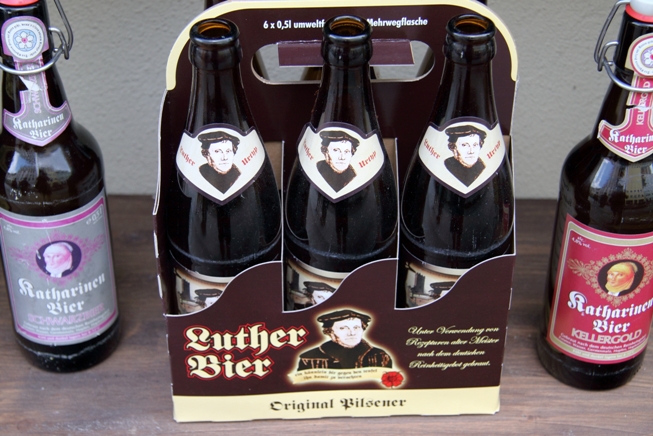
Here is how the two-kingdom Luther introduced the Psalm:
The 87th psalm is a prophecy of the Holy Christian Church, that it shall be a city as wide as the earth is, and in it shall be born Ethiopians, Egyptians, Babylonians, Philistines, residents of Tyre, and people of other lands and tongues. This shall all happen through the Gospel, which shall preach marvelous things of God, namely the knowledge of God, how one may come to God, be freed from sin, and be saved from death, through Christ. And the worship of God in this city shall also be singing and dancing, that is, they will proclaim, praise, and thank God’s grace with joy. In that city, no Moses shall plague and torment us with his Law.
Here is a sixteenth-century two-kingdom advocate, not someone from the 1990s reacting to theonomy, reading the city of God in the Old Testament and identifying it not with empire, kingdom, or nation but with the church. Of course, Luther needed a Christian magistrate (a Roman Catholic one, to boot). Without one he would have been executed. But his thoughts were on matters other than a Christian politics when looking for the kingdom of God.
What may be especially upsetting to those who subscribe recent versions of Christian nationalism is Luther’s throwing down a welcome mat at the door of the church to all tribes and ethnicities. It sure must seem odd to think of the Christian church as multi-ethnic and multi-racial when some insist that ethnic homogeneity is necessary for a Christian nation.
The jab at Moses’ law could, however, confirm the anti-nominan reputation of two-kingdom proponents. No one’s perfect.






 Old Life