Rev Kev vs. The American Reformers (who POUNCED!!)

Kevin DeYoung deserves praise for defending John Witherspoon and the American revisions to the Westminster Standards. Some of us were doing this back in the day when the Federal Vision was echoing the theonomists. But the post-liberal turn among Protestant Christian nationalists and Roman Catholic integralists has increased the need for a defense of the American revisions and their harmonization of Reformed teaching and the American Founding (republicanism, constitutional federalism, religious liberty).

The post-liberal Protestants at American Reformer have not welcomed DeYoung’s understanding of American Presbyterians’ revisions of Westminster. Some argue for continuity between the original Westminster Confession and the 1789 revision. Others go farther and assert that even the American Revisions require an affirmation of a religious establishment.

What is largely missing from the critics of DeYoung is attention to the Covenanters (or Reformed Presbyterians) whose views are similar to theirs — the American Founding is seriously flawed — and whose understanding of the civil magistrate was the dominant view among Presbyterians at the time of the Westminster Assembly. DeYoung’s first article does in fact address the corner into which the Covenanters had painted Presbyterians. He wrote:

In 1707, the Act of Union brought together England and Scotland under the name of Great Britain. Many Presbyterians opposed the union as inconsistent with the principles celebrated in the National Covenant (1638) and the Solemn League and Covenant (1643) and as undermining the Revolution Settlement (1690) which restored Presbyterian government to the Established Church in Scotland.

DeYoung later adds the change in Presbyterianism that transpired after the Glorious Revolution of 1688. He uses John Coffey, the leading scholar of Samuel Rutherford, to describe that change:

“With the exception of the Reformed Presbyterian Covenanters and some Seceders, eighteenth-century Presbyterians found ways of distancing themselves from the Westminster Assembly’s teaching on the coercive powers of the godly magistrate in matters of religion…. In every part of the English-speaking world, Lockean ideas of religious liberty looked increasingly attractive to Presbyterians who feared Anglican hegemony or saw little prospect of becoming the dominant majority.”

Zachary Garris says the Covenanters are not in the mainstream — that’s true for America today. But it was not true for the people who wrote the Westminster Confession — Presbyterians, Puritans, and Independents from England and Scotland. In fact, Scotland’s covenants with her kings (the Stuarts) who became the kings of England as well set the standard for political theology at the Westminster Assembly. Here’s why:

The Scottish Reformation gained a victory in 1581 with King’s Confession of 1581 by which James VI (later James I of England) vowed, with Parliament, the Kirk, and the people to uphold and defend the true religion (Reformed) and oppose the false religion (Roman Catholicism).

In 1638, this time with Charles I (James’ son) imposing the Book of Common Prayer on the Scottish Kirk, Parliament, the Kirk, and the people ratified the National Covenant. The expectation was for Charles to pledge his allegiance to this covenant because of the original (King’s) covenant with his father.

Soon after the National Covenant, Scottish military went to war with Charles — you guessed it, he didn’t take the vow — in the first of two “Bishop’s Wars” (1639-1640). The Scots’ covenants and war with Charles were the trial run for the English Parliament’s civil war with the king (1642-1649), the same Parliament that called for an overhaul of the Church of England and gave the responsibility to the Westminster Assembly. The English Parliament needed military help from the Scots who in turn gave it conditioned on Parliament’s ratifying an international covenant — the Solemn League and Covenant (1643). Although that covenant had different legal justification from the Scots’ National Covenant, the Solemn League and Covenant extended to England and Wales the same cooperation among the civil government, the church, and the people to uphold the true faith (and oppose the false religion of Rome) in Scotland.

Covenanting and national covenants were hardly peripheral to seventeenth-century Presbyterianism of the Westminster Confession. Covenanting likely explains one of the oddest chapters in the Confession of Faith — chapter 22 on Oaths and Vows. (If you are in a covenanting mind set, you may likely clarify the theological import of promises taken in the civil and ecclesiastical realms.)

If you wonder where Christian Nationalism among Presbyterians comes from, you may well want to look to the Covenanters.

This covenanting backdrop is especially important for understanding the American revision of the Westminster Confession. By the 1780s, the covenanting position was not part of the Presbyterians who comprised the first General Assembly of the PCUSA. That is because the Covenanters had formed their own communion, the Reformed Presbyterian Church of North America. Which is also to say that everyone in the Presbyterian world (England, Scotland, Ireland, the United States, and eventually Canada) gave up on covenants with Scottish monarchs. The lone exceptions were the Covenanters and certain sectors of the Seceders (Associate Reformed Presbyterian Church).

Why the critics of Dr. DeYoung do not resonate with or follow the Covenanters is a mystery. So is their unwillingness to acknowledge that they desire a relationship between the church and civil magistrate like the ones the Covenanters briefly had between 1638 and 1650. There is also a good chance that the American Reformers who pounced on Dr. DeYoung agree with Covenanter assessments of the American Founding. This is the Covenanter understanding of the U.S. Constitution (which puts a dent in American patriotism):

There are moral evils essential to the constitution of the United States, which render it necessary to refuse allegiance to the whole system. In this remarkable instrument, there is contained no acknowledgment of the being or authority of God —there is no acknowledgment of the Christian religion, or professed submission to the kingdom of Messiah. It gives support to the enemies of the Redeemer, and admits to its honours and emoluments Jews, Mahometans, deists, and atheists—It establishes that system of robbery, by which men are held in slavery, despoiled of liberty, and property, and protection. It violates the principles of representation, by bestowing upon the domesticity rant who holds hundreds of his fellow creatures in bondage, an influence in making laws for freemen proportioned to the number of his own slaves. This constitution is, notwithstanding its numerous excellencies, in many instances inconsistent, oppressive, and impious.

Since the adoption of the constitution in the year 1789, the members of the Reformed Presbyterian Church have maintained a constant Testimony against these evils. They have refused to serve in any office which implies an approbation of the constitution, or which is placed under the direction of an immoral law. They have abstained from giving their votes at elections for legislators or officers who must be qualified to act by an oath of allegiance to this immoral system. They could not themselves consistently swear allegiance to that government, in the constitution of which there is contained so much immorality. (Reformation Principles Exhibited, 1807)

The differences between the PCUSA and the RPCNA reflect the changes that occurred throughout the Presbyterian world once most communions abandoned Scotland’s National Covenants. Locke made a lot more sense of British society for accommodating religious diversity than insisting on promises Stuart monarchs had made to Scotland and England. And that difference was an important factor in Witherspoon’s role in revising the Westminster Confession and Catechisms.

Dr. RevKev understands that both the moderates and the evangelicals in the Church of Scotland, as well as the Old Side and New Side Presbyterians in America had no sympathy for Scotland’s covenants. They had move on.

Critics of Dr. RevKev may refuse to be lumped with the Covenanters. That’s fine. But they do need to take the Scottish background into account both to understand the context for the Westminster Assembly and the reasons behind American Presbyterians revising the Confession of Faith.
Nothing Could Possibly Go Wrong

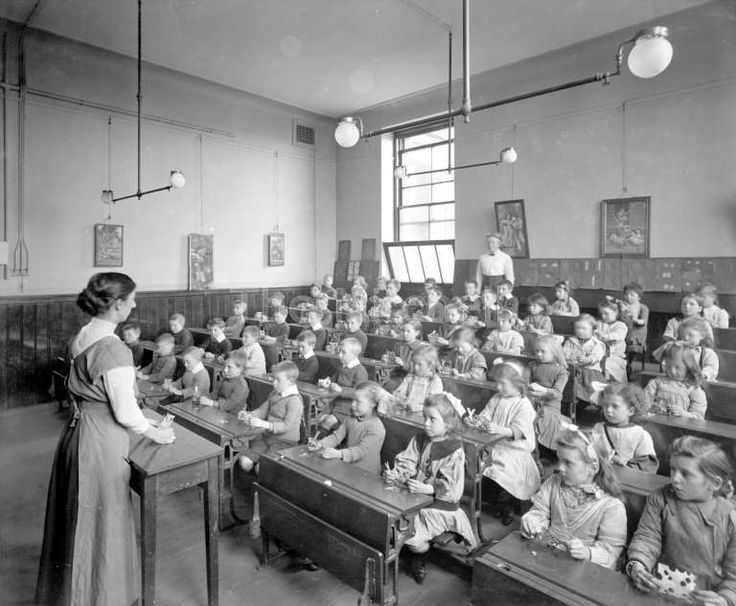
In 1872 the Protestant churches in Scotland handed over all their schools to the State on the explicit condition that Scottish State Education should continue to be Christian. From that day on the Scottish Education system (unlike the American one) has officially been Christian. The Catholics, being wiser than the Protestants, didn’t trust the State and so they kept their own schools. Even within living memory most schools in Scotland would have had ‘religious’ worship, school chaplains and bible teaching. The ethos of the schools were largely Christian. But this is now virtually unrecognisable. Secular humanists/atheists have cuckoo like taken over the State education system and are now using Salami tactics (piece by piece) to dismantle the remaining parts of it – crying tolerance and equality in order not to tolerate Christianity and in order to prevent Christians from receiving the equal education that the UN Human Rights charter demands.

2k Protestants were not so gullible.

And that’s why 2kers give two cheers (sometimes three) for the separation of church and state. It is impossible for established churches to remain faithful. They will always need to do the magistrate’s bidding and reflect the attitudes of the citizenry.

Selah.

Why Doesn’t Mere Orthodoxy Take Heed of Full Orthodoxy

Matthew Loftus thinks conservative Christians have more in common with immigrants from non-Christian countries because of the civilizational angle:

If globalism and liquid modernity are the problem, then immigration restriction is cutting off one of the few sources of new citizens who might possible share your views on the priority of faith and family and the importance of religion in providing some moral undercurrent (or restraint) for the state’s actions. Both Putin and Trump appear to be happy to throw a bone to religious conservatives in order for their loyal support, but neither has any respect for human life in the eyes of the state and would happily preside over a fiefdom full of people lost in drugs, alcohol, gambling, or sex as long as they stay in power. There won’t be much civilization left to defend because modernity will continue its corrosive destruction through the institutions we love and believe in– the individualistic atomism that is hollowing out our civilization is a juggernaut that cannot be stopped by an authoritarian state and closed borders.

The lesson for Trumpsters is apparently apparent, but why not for big city pastors who trumpet (see what I did there?) urban life as the kingdom coming? When oh when will the young restless sovereigntists ever see that modernity clings to very institutions that they consider to be “traditional” or conservative (like Gospel Coalition and Tim Keller New York City Inc.)?

Imagine if the head pastor at Redeemer NYC had to respond to this:

…resisting the corrosive and disenchanting forces of modernity is going to require solidarity across ethnic, national, and religious lines because there is a large bundle of assumptions about the self, the world, and God that we share. What’s more, intentionally assimilating people into otherwise racially and religiously homogeneous communities might be one of our best chances at building that solidarity and preventing these newcomers from becoming balkanized (or, God help us, Democrats). Whether you want real civilization that is communal instead of individualistic or genuine ideology that governs according to principle rather than power-grabbing, immigrants and refugees are conservatives’ allies.

Can Mr. Loftus ever imagine that Old School Presbyterians are closer to his concerns about modernity, community, and the self than New Calvinists who thrive in the oh so modern settings of the Internet, weekend conferences, and celebrity pastors and authorettes? If you want real solidarity among believers, try strong local congregations with clear lines of accountability who send commissioners to wider church assemblies to oversee the lives of officers and church members. It’s not magic and it’s often not as thick as village life in the Outer Hebrides, but Presbyterianism is as good a Christian effort as any to resist modernity. You sure won’t find it in the Big Apple unless you live in the ghetto.

Meanwhile Presbyterians Are Separated by More than An Ocean

But they are unified in not practicing the spirituality of the church.

Rick Phillips started the kerfuffle by declaring socialism evil:

So, biblically speaking, why is socialism evil? Let me suggest three reasons:
1. Because socialism is a system based on stealing;
2. Because socialism is an anti-work system; and
3. Because socialism concentrates the power to do evil.

Even without nude scenes, that seemed to be a pretty easy call.

But David Robertson disagrees and — get this — thinks Reformation 21 is too political (has the Moderate of the Free Church missed a chance to weigh in on Scottish politics?). So he tries to correct Phillips and in so doing regards socialism as more loving than capitalism:

Firstly, in the socialist system the idea is meant to be common ownership, not a handful of people controlling or owning it all. (The fact that this does not often happen is a testimony to human sinfulness, not the inherent evil of the system).

Secondly, Capitalism is not primarily about individuals working hard to produce wealth. They work within systems. Sometimes those systems can be corrupt; bribery, greed, exploitation (refusing to pay the workers their due reward cf. James) and corruption are as endemic within the capitalist system, as they are within any socialist system.

Thirdly it is unfettered free market Capitalism, not Socialism, which is concentrating the power to do evil in the hands of a few. It is the big corporations, headed up by a very few wealthy individuals who are pushing the LGBT agenda in the US and elsewhere. It is they who are seeking to negotiate trade agreements that take them out of democratic control and leave them free to regulate their own affairs and control their massive wealth.

But this does not stop Mr Phillips hyperbole. In Socialism everyone is impoverished, everyone is in slavery and a culture of corruption is always produced. I don’t know whether to laugh or cry at the crass ignorance and grotesque cultural pride on display here. When I first went to the US I couldn’t believe what I saw with my own eyes in some American cities, in the richest country in the world. There was a level of third world poverty and degradation that should have been a shame to any civilised society – but no, some (rich) American evangelicals saw the evils of socialist Sweden, rather than the sick of St Louis.

Robertson even tries to get the upper hand by telling American Presbyterians not to identify so much with the United States:

In this theology, American Capitalism is the essence of America, which is in turn the essence of Christianity. To criticise Capitalism (or at least refusing to agree that Socialism is de facto evil) is apparently unchristian, unbiblical and unconfessional – which is presumably why the Alliance of CONFESSING Evangelicals allowed this post. I don’t confess that socialism is evil, and if the Free Church ever was daft enough to add another chapter to the Westminster Confession stating that it was, I guess I would be out of a job! The equation of the Gospel of Jesus with ANY of the kingdoms of this world has always been a disaster.

Again, this is rich coming from a pastor who regularly comments on Scotland’s political affairs.

Imagine if pastors had to stick to their competency — the word of God. They might recommend authors with a better grasp of politics and economics, people who don’t merely dabble or pontificate.

Those Were Also the Days

Is it bad form to compare ISIS to Europe’s religious wars after the Reformation?

This Protestant versus Catholic division – our version of Islam’s Sunni versus Shia – was replicated all over Europe. In Britain, France, the Netherlands and Germany, what started as disagreement and protest later morphed into religious persecution and then, often enough, into civil war. Only when these conflicts came to an end in the mid-1600s was this nightmare, which lasted 140 years, brought to a close.

What Syria is going through at this time is no worse than what Germany experienced in the Thirty Years War that ended in 1648. The historian Norman Davies describes the post-war scene thus: “Germany lay desolate. The population had fallen from 21 million to perhaps 13 million. Between a third and half of the people were dead. Whole cities like Magdeburg stood in ruins. Whole districts lay stripped of their inhabitants, their livestock, and their supplies. Trade had virtually ceased.”

Nor is the Syrian calamity any more disastrous than the English Civil War, which petered out in 1651. Read what the Cambridge historian, Robert Tombs, has to say about the conflict: “The Civil War was the most lethal conflict England had suffered since the Conquest. A recent estimate suggests around 86,000 killed in combat, nearly all soldiers; another 129,000, mostly civilians, succumbed to the diseases that accompanied war; and infant mortality reached the highest level ever recorded. These losses, in a population of 4-5 million, are proportionately much higher than those England suffered in the First World War.”

I should add that neither the Thirty Years War nor the English Civil War was caused solely by religious hostility. The former was part of a Continental power struggle, as well as being a contest between Catholics and Protestants. On the latter, Tombs comments that: “Religion was the clearest dividing line, but even that does not explain everything.” But then religion is not the sole generator of Middle East conflict.

Sure, as a committed (or soon to be committed) Protestant, I’d prefer not to be compared to religious terrorists. And when I think about the start of the Civil War I’d like to think (in the neo-conservative part of me) that this was oh so different from the American War for Independence. But can Western Christians really avoid noticing certain parallels between their own past and Islam?

David Robertson, never one to miss a chance to send a missive to a newspaper, thinks we can refuse the analogies by rebranding Presbyterians as — get this — “freedom fighters”:

Rather than Calvinists being the Tartan Taleban, they were the freedom fighters of their day and a key part of the founding of modern Scottish democracy. The National should be celebrating their heritage, not comparing them with the Islamist fascists of ISIS.

How pastor Robertson describes the “freedom fighters” that President George W. Bush sent to Iraq to topple Saddam Hussein, a rebellion foreign policy initiative that helped to create ISIS, is a question that may be answered the next time someone in the British newspapers traces the American revolution to Scottish Presbyterianism.

Finally Time to Re-Think Establishment Principle

Barna Report conducted a study of Christianity in Scotland and the results have some discouraged even if not surprised:

31% say Scotland is a Christian nation

52% identify as Christian – although 70% of them don’t believe the basics of Christian doctrine

17% of Scots claim to be born again Christians…1 in every six is a born again Christian- committed to Christ. “The presence of more than 800,000 Scots—17 percent of the population—who report they have confessed Jesus as Saviour and have made a commitment to him that is still important in their life today—even though nearly half of them do not currently attend church”

17% of Scots regard the bible as totally accurate or authoritative.

24% of 18-24 year olds do. 23% of young 18-24s say that faith has changed their lives, as compared with 12% of all adults.

One in 8 Scots attend church once a month – i.e. they are practicing Christians but only half of those say their faith has transformed their lives – which surely indicates that they should be called ‘churchgoers’ rather than Christians. If following Christ doesn’t change your life then what does?!

David Robertson blames the churches of Scotland for this state as much as any other factors:

Something is missing. I am trying to work out what that is, and I am not clear yet…but let me have a go. Strangely enough I think it is because they seem very inward looking and are more about transforming the Church than transforming Scotland. I guess that if the Church is transformed then it will have a transformational effect upon the whole country. But I would love to have added to the nine points education, biblical ecclesiology, prophetic preaching, mercy ministries, creative arts and perhaps above all, repentance.

Scotland is in the state it is in, not because of the ‘world’ or the culture…we are in the state we are in because of the Church. We need to repent of our lukewarmness, unbelief, hypocrisy, lack of zeal and lovelessness. We need to realize that we cannot do or say anything that will fundamentally change the situation. Without the Spirit of Christ we are lost. We can write Ichabod over our nation. But we are promised the Spirit of Christ. There is hope: “If my people, which are called by my name, shall humble themselves, and pray, and seek my face, and turn from their wicked ways; then will I hear from heaven, and will forgive their sin, and will heal their land.” 2 Chronicles 7:14

What also may be missing is an attachment by Scottish Presbyterians to the Establishment Principle (see point 10), the idea that the state has a duty to promote the true religion both through churches and schools. As most people who study the evangelization of Europe know, the way to get a people to “convert” was to make the king a Christian. From there the rest follows. Peter Leithart thinks the same dynamic is at work in Africa (he quotes Andrew Walls):

Religion was always in Igboland directed to the acquisition of power; the gods were followed in as far as they provided it. So the combination of military defeat by the British, the desirable goods and capabilities in the power of the whites; and the association of all this with the power of the book now on offer to them declared the inferiority of the traditional religious channels. There was every religious reason to abandon them.

Don’t get me wrong. It’s not as if the world of the voluntary church that we have in the United States will make the rest of the world properly blessed. We have as much superficial Christianity in the United States as other parts of the world have serious resistance to belief.

But if you want to hurt the cause of Christ, it sure seems to me that identifying it with the political establishment is a long term losing proposition. Does anyone in the United States take public education seriously? And these teachers and principles are only subject to local governments. Imagine tying them directly to the feds and see conservatives, libertarians, and Christians flock to the private and home schools.

How Others See U.S.

They sound a lot like U.S.

The Good:

America is a blessed nation. Visiting New York and seeing Ellis Island and the Statue of Liberty is a great reminder of how much blessing has been brought to and through America. For many decades, with all its faults, the USA has been a bastion of liberty and freedom. Its hard not to love America.

The Bad:

it was an incredible experience to share with Tim Keller and Alistair Begg. God continues to bless the US with such pastors. Alistair is a gift of God, (from Scotland!) whose local church and wider ministry is a significant factor in the US Church. He has a wonderful ability to explain and proclaim the Word of God clearly. Tim is just the sharpest exegete of culture I know – the fact that he is also a superb exegete of the Bible and brings the two together is what makes his ministry so helpful to many of us beyond his own congregation. But it was not just the well known pastors. One of the things I loved about the conference was the fact that so many ‘blue collar’ pastors were there, battered and bruised, and hungry for the Word of God. I felt at home with them! I love Tim Keller and Alistair Begg, both of whom are great gifts to the Church and for me personally a great help to my ministry, but the Basics conference was not about them.

The Ugly:

We need to pray for this because all is not well in the US. Its political system is in trouble – prone to corruption, dumbing down and short termism. It is terrifying that someone with the reputation and inabilities of Hilary Clinton could actually become the most powerful person in the world – primarily because she has the backing of the corporate world which will grant her $2 billion of a war chest. . . .

All is not well in the church either. I don’t like the celebrity culture, the emphasis on money, the corporate business mentality or the view that America = Christianity. Yes much has been given to the Church in the US, but to whom much has been given, much is required. I think that a great deal of the Church in the US is self-obsessed, consumerist, dumbed down and shallow. How else can you explain a Church where Joel Osteen, Joyce Meyer and Rob Bell are significant figures? But its not just the obvious false teachers. My fear is that the Church is being invaded by the culture, rather than the other way round.

So there are good celebrities (TKNY) and bad ones, exegetes of culture who don’t analyze celebrity culture. And there are good politicians — Jeb Bush? — and bad, Hilary. I was hoping for an outsider’s perspective.

Did He Really Say That?

David Robertson does his best impersonation of a 2ker (minus the fear of Islam):

Why is Islam a threat to our society?

It was Christianity that brought the sacred/secular divide into the Western world. It was Christianity, especially after the Reformation, which taught that there were two kingdoms and that the one was not subject to the other. It was within that Christian context that secularism was able to develop and flourish. Christianity is the bedrock and foundation of our secular society. Islam is different. Islam has no doctrine of separation of the spiritual from the political. Islam is, and has always been, a political movement. There can be no such thing as secular Islam.

So secularization is a good thing. The sacred/secular divide is a good thing. The separation of the spiritual from the political is a good thing.

What 2k’s sayin’.

I wish the defender of Christian Scotland would employ this argument when he is tempted by political Christianity.

But I Have Stopped Beating My Wife, Really!

I don’t know which is more annoying, Yankee fans or Christians arguing that their religion is the basis for all good things. Here are a couple recent iterations on Christianity and the West from opposite sides of the Tiber. First, the pastor who would turn the world upside down (even though like it when beverages remain in their containers — odd, that), David Robertson:

The worst place to be an atheist is in an atheist country. Conversely the best place is a country where a Christian tolerance and view of humanity is deeply rooted within the structures, institutions and psyche of the nation. The vision of a ‘benign secularism’ is at best a fantastical dream. The choice is not between a theocratic Presbyterian Taliban state run by evangelical rednecks, waffling wooly liberal clergy and authoritarian paedophile priests, or an absolutist state where religion is reduced to the status of a knitting club. Why can we not reinvent the traditional Scottish model of an open tolerant State founded upon and with the ethos of, a biblical Christianity which recognizes that neither the State nor the Church is Absolute? Our societies metro-elites want the fruits of Christianity, without the roots. That’s not how the universe works. If post –referendum Scotland is to flourish then we need to heed the mottos of our two greatest cities and make them the anthems for the renewed nation. “Unless the Lord builds the house, the builders labour in vain”. “Let Scotland flourish by the preaching of the Word.”

Second, from Roman Catholic professor, Donald DeMarco:

Christianity has supplied culture with invaluable benefits, including the notion that man has an inalienable dignity, that marriage is a sacred institution, and that justice and mercy should prevail. Without these benefits man is denied his proper functioning and risks being enslaved by the state. Christianity should not be reduced to something private since, in its proper mode, it confers immense benefits to culture.

More recently, two major American prelates have written thoughtful books on why Catholicism should not be private. Archbishop Charles Chaput, OFM Cap., in Render Unto Caesar (2008) states that no other community than the Catholic Church understands better “why the health of our public life requires men and women of strong moral character in political service.” The Church, not the state, teaches and proclaims the importance of virtue and good character. He laments that America is now exporting “violence, greed, vulgarity, abortion, a rejection of children.”

I have no reluctance in worrying along with Pastor Robertson about the excesses of social activists, nor is it implausible that, as professor DeMarco points out, Christianity advanced certain virtues that were advantageous in ways the the pagan world’s ethics weren’t. But cheerleaders for Christianity and cherry pickers of the past will never persuade their adversaries when they ignore the bad things that Christians did, or forget about the lack of freedom and equality that accompanied established Christianity. A Christian social activist is just as scary as a secular one. Thinking that Christians running things is better than non-Christians running those same things is frankly dishonest. And here I would have thought that Christians would excel in honesty. Antinomianism anyone?

Show Me the Currency!

Why the Scots should listen to economists more than pastors when it comes to temporal affairs:

One of the strongest practical arguments against Scottish independence, made by Paul Krugman this weekend, is that an independent Scotland would actually wind up with less control over its economy than it does now – because it would have no more say in British monetary policy, but, so long as it kept the pound, would be as affected by that policy as it is now. And the “yes” advocates have been very clear that they intend to keep the pound.

I think he’s right. I’ve argued for some time that if anyone is interested in saving “Europe,” then “Europe” needs some kind of fiscal union – not by any means a powerful centralized state like France, but some kind of confederal or federal arrangement, with limited but real powers and direct accountability to voters. If Europe’s states don’t want to cede national sovereignty in that way, then they really do need to rethink the whole currency union thing – or just settle in to a quasi-colonial relationship with Germany and be done with it.

But if all of the foregoing is true, then why would Scotland seek an independent government but remain tied to a foreign currency? Why would “ditch Westminster, keep the pound” be a reassuring platform, rather than an ominous one?

The answer doesn’t just relate to what constitutes an optimal currency area or how integrated Scotland is with England, economically. It relates to transition costs. And it relates to what degree of confidence Scotland’s electorate has in their own, new political culture. Keeping the pound, at least initially, is much cheaper than ditching it. And the prospect of ditching it in the future would mean higher borrowing costs today. Why, after all, would you want to ditch a solid, respectable currency unless you planned to devalue? And if you wanted to tie the hands of a new government that might otherwise open the spigot a bit too wide, what better way than to force them to borrow in a foreign currency?

Precious few seceding states in recent years have adopted a truly independent monetary policy. Many have ditched their own newly-minted currencies entirely. Slovakia adopted the Euro before the Czech Republic has. Montenegro and Kosovo adopted it unilaterally. The Baltic states have rushed to adopt it as swiftly as possible. Croatia is hammering at the door to get in, notwithstanding all the nastiness of the past five years. Countries also continue to adopt the dollar as either their official currency (e.g. Ecuador, El Salvador) or as legal tender alongside a pegged local currency.

Indeed, not that many years ago, the question was whether Britain would ultimately join the Euro, not whether the Euro would ultimately collapse. If it had, then what I am calling one of the strongest practical arguments against Scottish independence would be entirely nugatory. If the UK had adopted the Euro, then leaving the UK would have exactly zero implications for Scotland’s control over its monetary policy. Even as, on one level, monetary union has made deeper European political integration more necessary, it has also made political separatism, from Catalonia to Flanders to Lombardy, vastly more plausible. But these ever-smaller political entities will perforce have even less control over the forces that largely determine their destiny than they once did as part of a national community with direct accountability to voters.

But such a calculation winds up making Scotland just as money-grubbing as London, no?