Rod Reading Tim

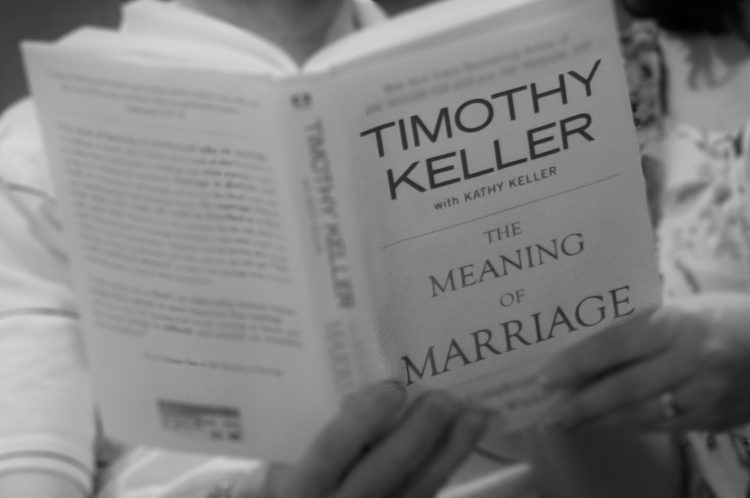
Rod Dreher doesn’t detect much daylight between the Benedict Option and Tim Keller even though I’ve tried to describe it. Here’s Keller (from Rod) on the West:

The crazy Christian gospel, so sneered at by the cultural elites that day, eventually showed forth its spiritual power to change lives and its cultural power to shape societies. Christianity met the populace’s needs and answered their questions. The dominant culture could not. And so the gospel multiplied.

Do we have Paul’s courage, wisdom, skill, balance, and love to do the same thing today in the face of many sneering cultural leaders? It won’t be the same journey, because we live in a post-Christian Western society that has smuggled in many values gotten from the Bible but now unacknowledged as such. Late modern culture is not nearly as brutal as pagan culture. So the challenges are different, but we must still, I think, plunge into the agora as Paul did.

Here’s Rod’s rendering:

Does it surprise you that I agree with this? I’m still looking for ways in which Tim Keller and I substantively disagree on cultural engagement. If you know of any, please let me know — I’m serious about that. What I emphasize in The Benedict Option is that if we Christians are going to do that in a hostile, post-Christian public square, we have no choice but to take a step back from the public square to deepen our knowledge of the faith, our prayer lives, and our moral and spiritual discipline.

One difference right off the bat is that Keller is not pessimistic about the contemporary world, the way Rod is. That’s why it had to come as a surprise when Princeton Seminary thought Keller was too conservative and should not receive the Kuyper Prize.

Yet, Keller has other readers. Rod quotes one:

I’m somewhat favorably disposed to Tim Keller’s ministry, and even attended his church for a season. But that movement is likely to head off in its own direction. The current alliances that make up evangelicalism were forged in an era before liquid modernity. There is no reason why we should expect those alliances to continue to make sense in the very different social context that we face today. And we have to avoid the trap of conflating Christian orthodoxy with practical Christian wisdom. Families raising kids need something very different from a church community than what I need, as a 30-something professional who travels 50% of the time, usually in Asia….

Liquid modernity poses a certain challenge to Western rules-based cultures. Things change faster than our ability to develop rules to address certain situations. And that places a degree of stress on existing institutions, requiring them to be thicker than they were in the past. But it’s hard for institutions to be both thick and broad. For thickness to work, there has to be a high degree of overlap in people’s life situations. Demographic differences matter more.

I’m actually an advocate of an evangelical break-up. I believe that the Benedict Option is necessary. But the Benedict Option is going to look very different for different people. My fear is that evangelicalism ends up targeting the largest market, middle-class white suburbanites with kids, and castigated everyone else as a sinner. One need not look to hard for criticisms of Tim Keller’s efforts to reach out to people like me. And it disappoints me that Keller is largely silent in the face of those criticisms. If Christianity is to survive in an age of liquid modernity, it’s going to take more than suburban mega-churches.

Another difference then is that Rod thinks modernity is a force that hurts Christianity while Keller, like Pope Francis, tries to come along side moderns.

Still one more reader of Keller that Rod should enter into his Redeemer NYC spreadsheet:

Over the past decade or so, evangelical millennials like myself and my peers (and possibly even you), could be found across the country, repenting of our former fundamentalist ways.

We’ve put away our moralistic understanding of Christianity. We’ve reclaimed what is essential: Jesus, and his gospel. We’ve tossed aside our simplistic, and less than nuanced answers to those who criticize our faith and worldview.

Aided by an Internet-powered, Information Age, we have set out to re-engage culture in a fresh new way, following Tim Keller and Russell Moore on one end of the spectrum, or Rob Bell and Rachel Held Evans on the other.

As those who will soon lead the church, we are convinced that we are called to a new vision of cultural engagement and mission. . . .

Therefore, we’ve raised our sensitivity to xenophobic nationalism, misogyny, gay-bashing, microaggressions, and anti-intellectualism. For us, being uninformed and un-’woke’ is shameful and most harmful to our Christian witness.

Instead, we have taken up the mission to winsomely engage the brightest of thinkers in order that they might believe, and to prophetically rebuke the most narrow-minded of evangelicals in order that they might think.

We see far too little cultural influencers operating out of a biblical framework. And we’ve seen too many of our friends leave the faith due to overly simplistic, unsatisfying, and stale apologetic answers to their genuine contemporary questions.

We want to articulate, in a Keller-esque fashion, an attractive “third way,” between the liberals and the conservatives, between the irreligious and the religious. And in doing so, we hope to find a better place to stand, where we are neither apostates nor anti-intellectuals, neither prodigals nor older brothers.

So we continue to study Scripture and affirm its absolute authority, while still paying close attention to contemporary culture, the media, and the academy, seeking common grace insights from them, and wrestling with how to interpret and make sense of their findings.

We heed Peter’s exhortation that we be prepared to make a defense to all, while reminding ourselves of James’ admonition to be quick to listen, and slow to speak, even when it comes to a secular culture such as ours.

We don’t settle for just being Christians, but we seek to be informed, knowledgeable, and sensitive Christians. And by God’s grace, we sometimes do find a way forward, a third way, in which we actually become “believers who think,” equipped to interact with “thinkers” who don’t believe.

And discovering a “third way” feels good. It’s the rewarding feeling of progress, and confidence — confidence in the fact that we’ve found more thoughtful and persuasive answers than the ones our Sunday School teachers gave us 20 years ago. But it’s also the feeling of transcendence, and if we’re not careful, arrogant superiority.

Thinking Christians engaged with the world. That may not have been Paul’s advice to Timothy but it’s a page right out of Harry Emerson Fosdick:

Already all of us must have heard about the people who call themselves the Fundamentalists. Their apparent intention is to drive out of the evangelical churches men and women of liberal opinions. I speak of them the more freely because there are no two denominations more affected by them than the Baptist and the Presbyterian. We should not identify the Fundamentalists with the conservatives. All Fundamentalists are conservatives, but not all conservatives are Fundamentalists. The best conservatives can often give lessons to the liberals in true liberality of spirit, but the Fundamentalist program is essentially illiberal and intolerant.

The Fundamentalists see, and they see truly, that in this last generation there have been strange new movements in Christian thought. A great mass of new knowledge has come into man’s possession—new knowledge about the physical universe, its origin, its forces, its laws; new knowledge about human history and in particular about the ways in which the ancient peoples used to think in matters of religion and the methods by which they phrased and explained their spiritual experiences; and new knowledge, also, about other religions and the strangely similar ways in which men’s faiths and religious practices have developed everywhere. . . .

Now, there are multitudes of reverent Christians who have been unable to keep this new knowledge in one compartment of their minds and the Christian faith in another. They have been sure that all truth comes from the one God and is His revelation. Not, therefore, from irreverence or caprice or destructive zeal but for the sake of intellectual and spiritual integrity, that they might really love the Lord their God, not only with all their heart and soul and strength but with all their mind, they have been trying to see this new knowledge in terms of the Christian faith and to see the Christian faith in terms of this new knowledge.

For anyone who detects an example of the genetic fallacy, please write a note to Pastor Tim and ask him to explain how he avoids the errors that modernists like Fosdick committed.
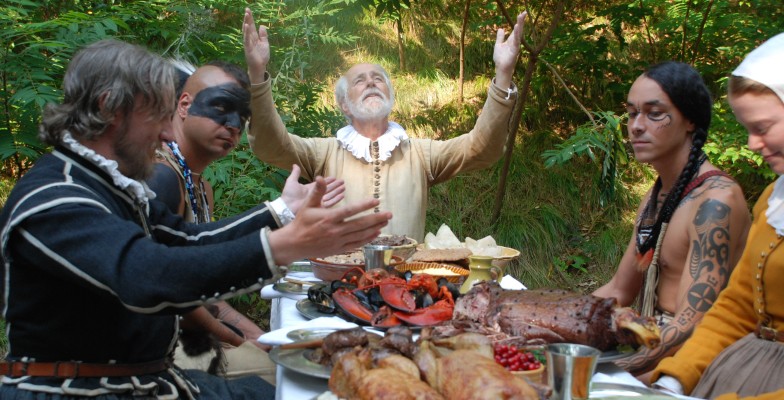
Roman Catholics at Plymouth Rock?

In the department of strange bedfellows comes George Weigel’s praise for the Museum of the Bible:

On September 29, 1952, the publication of the complete Revised Standard Version of the Bible was celebrated at the National Guard Armory in Washington, D.C., and the principal speaker was the U.S. Secretary of State, Dean Acheson. The son of the Episcopal bishop of Connecticut, Acheson movingly described the ways in which the King James Bible, which the new RSV was to supplant, had once shaped American culture and our national life:

In the earliest days in the Northeast, the Book was All. The settlers came here to live their own reading of it. It was the spiritual guide, the moral and legal code, the political system, the sustenance of life, whether that meant endurance of hardship, the endless struggle against nature, battle with enemies, or the inevitable processes of life and death. And it meant to those who cast the mold of this country something very specific and very clear. It meant that the purpose of man’s journey through this life was to learn and identify his life and effort with the purpose and will of God.

That biblical vision helped form the bedrock convictions of the American idea: that government stood under the judgment of divine and natural law; that government was limited in its reach into human affairs, especially the realm of conscience; that national greatness was measured by fidelity to the moral truths taught by revelation and inscribed in the world by a demanding yet merciful God; that only a virtuous people could be truly free.

Of course, the U.S. is a free country and anyone can assemble the past in ways consoling.

But does anyone else feel a certain discomfort with a Roman Catholic recommending the Bible without also mentioning the objections that sometimes Bishops registered against Bible readings in public schools without comment? The United States would not have as many parochial schools as it does if not for Bishops who worried about sending children to public schools where teachers read the Protestant version of the Bible.

Not to be missed is the odd relationship between the Bible and the founding. If the settlers who came to America and launched the tradition of Thanksgiving wanted a society with a biblical vision at its bedrock, don’t you also have to mention that those same Bible-only Christians were a tad jittery about including Roman Catholics in the nation that emerged from their colonial enterprises?

This may be why some Roman Catholic political theorists are uncomfortable with Roman Catholics getting comfortable with the founding.

An Answer to Prayer

At its 81st General Assembly (2014), commissioners of the OPC heard a report from the chaplains’ committee that asked for prayer for the recently released Bowe Bergdahl:

Finally, given the media attention surrounding the return of Sgt. Bowe Bergdahl, and in particular his relationship to the OPC, the following statement was placed in the minutes:

In the wise providence of our Sovereign Lord, we acknowledge thankfully, the 31 May release of Sgt. Bowe Bergdahl USA from Taliban captivity; and that he is in the custody of the United States Army.

Consequently, for those who ask how to pray, we suggest the following, or similar, petitions:

For grace to resist the temptation to rush to judgment, in the absence of sufficient information
Thanks to God for the release of Bowe
For Bowe’s recovery from any and all ill effects arising from his captivity, with healing as well for his family members
That truth will triumph and justice will be done
That, in the months to come, it might please our Lord Jesus to use the events of the past five years to draw Bowe and his family increasingly closer to Himself and give them His peace.

As one of the commissioners, I sensed that the chaplains were playing at the heart strings of those gathered. Reports from chaplains always brings out the God-and-country inner self of Orthodox Presbyterians who are generally spirituality of the church in their deliberations.

And so, I wonder if this is an answer to the prayer request for justice:

Things have changed since 1979, when a Marine named Robert Garwood, who claimed to have been captured by the Viet Cong in 1965, was tried and convicted by court-martial for desertion and sedition. The military court rejected Garwood’s claim that he had been tortured and had collaborated with the enemy only to survive, sentencing him to a dishonorable discharge and forfeiture of all pay and allowances during his alleged captivity. The Supreme Court refused to hear his appeal.

There are many similarities between Garwood’s case and that of Bergdahl, but in fact Bergdahl’s case is weaker than Garwood’s. For one thing, Bergdahl pleaded guilty to the charges. Nonetheless, for unexplained reasons, the military judge in the case refused to impose prison time.

At Powerline, Paul Mingeroff has noted the hubris of General Mark Martins, a highly decorated and celebrated brigadier general in the United States Army JAG Corps, who declared that “law embodies and summarizes human experience about right action in a particular context.” That may be true in a perfect world but it fails in the context of military justice and the goal it is designed to serve.

Some will argue that President Trump’s tweets regarding the case constitute “unlawful command influence” (UCI). That may have influenced the sentence. But if Trump is guilty of UCI, then certainly former President Obama is, too, given the Rose Garden event with Bergdahl’s parents and earlier comments by Obama’s national security adviser, Susan Rice, claiming that Bergdahl had “served with honor and distinction.”

The actions of both Obama and Trump helped to politicize the Bergdahl case, but none of that should have negated the purpose of the military justice system. Bergdahl’s actions were premeditated. They also led to American casualties. Nothing in mitigation justifies a decision that mocks not only the practical goals of good order and discipline in the military but also such military virtues as honor and sacrifice.

How Much Endeavor Is Necessary?

Mark Jones responds to the question of how many good works are necessary for salvation. He thinks the question is a tad misplaced:

Such questions (i.e., “How many?”) may actually reveal a legal spirit, not a gospel spirit, that needs mortifying. From those who should know better, to ask “How many good works?” is not evidence to me that they are trying to guard something special (i.e., justification), but rather that they are trying to ignore something glorious, namely, that God accepts the sincere obedience of his children because they are pure in heart (Matt. 5:8; Ps. 73:1; 24:4), live by faith (Gal. 2:20), and obey in the Spirit (Rom. 8:13-14). God warns, promises, and commands for our good.

Do fear of punishment and hope of rewards cause servile fear in a Christian? John Owen asserts that such a reaction is a “vain” imagination. Only the bondage of our spirits can make what we do servile. Owen says, “a due respect unto God’s promises and threatenings is a principal part of our liberty.” Returning to the Scriptures themselves, Paul says we must put to death the misdeeds of the flesh if we want to live (Rom. 8:13). This we do by the Spirit. But it isn’t an option for the Christian. If you want to ask yourself whether good works are necessary for final salvation (“life”, Rom. 8:13), ask yourself this (via Owen):

What if a professing Christian does not mortify the misdeeds of the flesh? Will he or she live or die? To argue that good works are necessary for final salvation is to answer the previous question by saying, “die”. To ask how many? Well, that, it seems to me, is to ask God a question that his word, quite rightly, does not answer.

I concede theology is above my pay grade, but I do wonder if the catechism is clearer than the conversations the Obedience Boys encourage. Notice, for instance, the two-fold distinction in the catechism:

Q. 39. What is the duty which God requireth of man?
A. The duty which God requireth of man is obedience to his revealed will.

Q. 40. What did God at first reveal to man for the rule of his obedience?
A. The rule which God at first revealed to man for his obedience was the moral law.

Q. 41. Where is the moral law summarily comprehended?
A. The moral law is summarily comprehended in the ten commandments.

So God requires obedience. But the fall happened. Now what?

Q. 85. What doth God require of us that we may escape his wrath and curse due to us for sin?

A. To escape the wrath and curse of God due to us for sin, God requireth of us faith in Jesus Christ, repentance unto life, with the diligent use of all the outward means whereby Christ communicateth to us the benefits of redemption.

Q. 86. What is faith in Jesus Christ?
A. Faith in Jesus Christ is a saving grace, whereby we receive and rest upon him alone for salvation, as he is offered to us in the gospel.

Q. 87. What is repentance unto life?
A. Repentance unto life is a saving grace, whereby a sinner, out of a true sense of his sin, and apprehension of the mercy of God in Christ, doth, with grief and hatred of his sin, turn from it unto God, with full purpose of, and endeavor after, new obedience.

The catechism separates the discussion of the law as a rule for God’s dealing with humans before the fall from teaching about how those fallen escape God’s wrath and curse. It does not say that new obedience is part of the means why which Christians escape damnation. It says, precisely, “endeavor after new obedience.” Part of repentance is seeking to obey.

So then how much endeavor is necessary? That is a different question from how much obedience.

Fundamentalists are Winning

If you had any doubt about the way Trump has turned the advocates of tolerance into fundamentalists, consider David Brooks’ (courtesy of Rod Dreher) assessment of the left and the right:

I’d say the siege mentality explains most of the dysfunctional group behavior these days, on left and right.

You see the siege mentality not just among evangelical Christians but also among the campus social justice warriors and the gun lobbyists, in North Korea and Iran, and in the populist movements across Europe.

The siege mentality starts with a sense of collective victimhood. It’s not just that our group has opponents. The whole “culture” or the whole world is irredeemably hostile.

From this flows a deep sense of pessimism. Things are bad now. Our enemies are growing stronger. And things are about to get worse. The world our children inherit will be horrific. The siege mentality floats on apocalyptic fear.

The odd thing is that the siege mentality feels kind of good to the people who grab on to it. It gives its proponents a straightforward way to interpret the world — the noble us versus the powerful them. It gives them a clear sense of group membership and a clear social identity. It offers a ready explanation for the bad things that happen in life.

Most of all, it gives people a narrative to express their own superiority: We may be losing, but at least we are the holy remnant. We have the innocence of victimhood. We are martyrs in a spiteful world.

This is precisely how I as a fundamentalist youth thought about the world. I can’t imagine graduating from Harvard and thinking like Jack Van Impe (I wonder if he grew up in the CRC). But apparently, the state of America is so bad that the nation’s elites have taken a page out of my ancestor’s playbook.

Word of advice: the only improvement that fundamentalists would make to Ridley Scott’s decision to erase Kevin Spacey from All the Money in the World would have been to use Kirk Cameron instead of Christopher Plummer.

How W-w Liberates

Dan Hitchens objects to an understanding of religion that sees faith as fundamentally opposed to freedom. Here is one version of it:

loads of us long to know our place and stay in it with strict rules and regulations so that we don’t have to be bothered with choice and can just do as the Rees-Moggs and religions tell us: get up, wash, eat, pray, wear and do this and that, before/after doing whatever, don’t eat/drive, carry money, work or speak on this or that day. Do not marry or mingle with a person from this or that class, caste, country, belief. We can have our days, weeks and whole lives planned out and pretend there is some sort of order and justice in the world. It’s so much easier than investigating, making your own mind up, or arguing day in, day out.

Hitchens adds:

This picture of religion—a round-the-clock holiday camp schedule in which scarcely a detail goes undictated or unsupervised—would be unrecognizable to many believers. But it is the picture which occupies the secular mind. Even Damon Linker, formerly a practicing Catholic, describes the 1992 Catechism as “filled with elaborate, absolute rules laying out in minute detail how God wants us to live,” as though it were a kind of technical manual—an impression which could be dispelled by opening the book at random.

Here’s the great thing about w-w: no matter what you do, rules or not, will be faith-based with the correct outlook. All of life becomes religious. Life is round-the-clock religious. No need for a manual. Just take every thought captive.

The Answer John Piper Should Have Given

I wrote yesterday about the odd advice John Piper gave to an inquirer about watching television and movies. Even odder was that Piper did not correct said inquirer for asserting this:

Dear Pastor John, hello! I know that I have begged for Christ to receive my heart and life. My repentance is sincere. I have stopped my willful sinning, and I am doing everything I can to live a holy life. My question is about my desire and satisfaction in spiritual discipline and worship. I prefer entertainment to time with God. That’s the honest truth.

Stopped willful sinning?

Hello.

If Piper doesn’t correct that one with some instruction about ongoing sin, simul justus et peccator and all, hasn’t he missed a great teaching opportunity?

That he failed to challenge this framing of the question may be a tell about the Baptist pastor’s understanding of justification and good works.

Not So Messy

The folks at Witness have abandoned a theological system (Reformed) to rally around a racial (black) identity. Jemar Tisby explained:

Christianity is not some otherworldly religion that is only concerned with our spiritual lives. True faith acknowledges that our souls inhabit bodies and we experience the world in a physical and material way. So Christianity is also concerned with our reality as a people who have been marginalized due to the racial caste system in America.

We are a “black Christian collective” because we are made in the image of God and part of that image includes our melanated skin along with the culture and experiences that go along with it….

As a “black Christian collective,” The Witness has returned to its original mission to serve black people. The move from “African American” to “black” acknowledges this endeavor is international scope. The Witness is for the entire African diaspora. We are also a collective in the sense that a variety of black Christians from different denominations, ages, regions, and experiences all contribute their perspectives. The Witness is not the voice of black Christians; it is the microphone that amplifies those who have often gone unheard.

I was curious, in light of these changes, what The Witness’ perspective or counsel on the shootings in Texas might be. After all, the congregation is white and the shooter was white. So how would black Christians speak to or about Sutherland Springs?

It turns out, they sound like any other U.S. evangelical (white or person of color):

Tragedies like this provoke many discussions and debates around issues such as domestic violence, gun control, and church security protocols. We absolutely need to address these issues and seek concrete solutions, but that is not the focus of this post. Honestly, I don’t feel like I have the proper words at this point. I am tired saints. I have been to war and back and I am tired of violence.

Will you join me in praying that those in Sutherland Springs would be comforted by the God of all comfort? Is it alright if we include Charleston, Las Vegas, Orlando, San Bernardino, Blacksburg, Aurora, and all of those who have been struck by this plague of gun violence?

Let us pray.

Father God, we cry out to you. We thank you that we can approach your throne of grace boldly through the person and work of Jesus Christ. We thank you that you have caused us to be born again by the power of your Spirit who now indwells us and testifies with our spirits that we are the sons and daughters of God.

Father, you are able to do exceeding abundantly above all that we ask or think. We come to you now and we ask that your kingdom would come and that your will would be done on earth as it is in heaven. Lord God, bring healing to the families and communities impacted by these tragedies. We ask that you invade every place of darkness with your glorious light. Let grace abound.

I do wonder about the use of the word “darkness,” but otherwise, kudos to The Witness for showing solidarity with white Baptists.

Beware Medical Missions

Frederick Lugard, a British colonial administrator and Governor at distinct times of Hong Kong and Nigeria, included this estimate of medicine and preaching in his report on the “Rise of our East African Empire” (1893):

I think the most useful missions are the medical and the industrial, in the initial stages of savage development. A combination of the two is, in my opinion, an ideal mission. Such is the work of the Scotch Free Church on Lake Nyasa. The medical missionary begins work with every advantage. Throughout Africa the ideas of the cure of the body and of the soul are closely allied. The “medicine man” is credited not only with a knowledge of the simples and drugs which may avert or cure disease, but owing to the superstitions of the people, he is also supposed to have a knowledge of the charms and dawa which will invoke the aid of the Deity or appease His wrath, and of the witchcraft and magic (ulu) by which success in war, immunity from danger, or a supply of rain may be obtained. As the skill of the European in medicine asserts its superiority over the crude methods of the medicine man, so does he in proportion gain an influence in his teaching of the great truths of Christianity. He teaches the savage where knowledge and art cease, how far natural remedies produce their effects, independent of charms or supernatural agencies, and where divine power overrules all human efforts. Such demonstration from a medicine man, whose skill they cannot fail to recognize as superior to their own, has naturally more weight than any mere preaching. A mere preacher is discounted and his zeal is not understood. The medical missionary, moreover, gains an admission to the houses and homes of the 10 natives by virtue of his art which would not be so readily accorded to another. He becomes their adviser and referee, and his counsels are substituted for the magic and witchcraft which retard development.

Meredith Kline had a point.

The Problem with Cessationism

Cessationists apparently have the reputation of not believing in miracles after the apostolic age:

No issue has been more controversial among Protestants in the past 40 years than the charismatic gifts and the role of miracles in the post-apostolic age. The issue was controversial in previous eras of Protestant history, too, although theological lines were not usually drawn as hard and fast as they are between “cessationists” and “continuationists” today.

In the 1700s and 1800s, suspicion of claimed miracles was connected to anti-Catholicism. Protestant critics saw the Catholic tradition as riddled with fake claims of miracles. Ridiculing the fake miracle claims of Catholics (such as icons bleeding a liquid that turned out to be cherry juice) became a staple of Reformed polemics against the Catholic Church. So when seemingly miraculous events happened in Protestant churches, even sympathetic observers warned against the threat of bogus miracles.

Odd, but the cessationists I know all affirm the ongoing reality of miracles. How could you ever believe in people lost in sin becoming regenerate without resorting to the miraculous work of the Holy Spirit?

The real problem comes with the “gift” of speaking in tongues. Why do we need ongoing revelations from God if scripture is sufficient?

1. Although the light of nature, and the works of creation and providence do so far manifest the goodness, wisdom, and power of God, as to leave men unexcusable; yet are they not sufficient to give that knowledge of God, and of his will, which is necessary unto salvation. Therefore it pleased the Lord, at sundry times, and in divers manners, to reveal himself, and to declare that his will unto his church; and afterwards, for the better preserving and propagating of the truth, and for the more sure establishment and comfort of the church against the corruption of the flesh, and the malice of Satan and of the world, to commit the same wholly unto writing: which maketh the Holy Scripture to be most necessary; those former ways of God’s revealing his will unto his people being now ceased. (CofF 1.1 emphasis added)

6. The whole counsel of God concerning all things necessary for his own glory, man’s salvation, faith and life, is either expressly set down in Scripture, or by good and necessary consequence may be deduced from Scripture: unto which nothing at any time is to be added, whether by new revelations of the Spirit, or traditions of men. (CofF 1.6 emphasis added)

Continuationists who want to defend tongues are in the same predicament as Roman Catholics who defend the continuing infallible teaching of the magisterium and the authority of tradition. Does God’s word have all we need for salvation and godliness? Or do we need ongoing revelations for becoming right with God? If you make an infallible pope or a Spirit-filled Christian the arbiter of Christianity, you deny the sufficiency of Scripture.

Selah.