Endorsement Overkill

Rans

(Y)“During my college years the chapters reprinted in this volume along with other non–academic writings of Machen were a significant influence in my life, and I have returned to them from time to time, always with great profit. Written for his own day, they have lost none of their relevance and will continue to serve the cause of the gospel and the church’s wellbeing not only today but for generations to come.”
— Richard B. Gaffin, Jr., Emeritus Professor of Biblical and Systematic Theology, Westminster Theological Seminary

(Y)“In J. Gresham Machen, God gave the church an inimitable champion of biblical orthodoxy and gospel clarity. This book will show you why Machen is one of American evangelicalism’s most important 20th–century thinkers. More to the point, this book will ground you firmly in what it means to see in the face of Jesus Christ the grace and truth and glory of God.”
— Russell D. Moore, President, Southern Baptist Ethics & Religious Liberty Commission

(Y)“In these seven brief lectures, Machen follows the main spine of Christian truth….The Person of Jesus is Machen’s reminder to the church of who we are–a reminder we needed then, and that we need still. In these lectures, the mists of mysticism melt away, and the simple, elegant, profound truths of the Bible appear.”
— Mark Dever, Senior Pastor, Capitol Hill Baptist Church, Washington D.C.

(Y)“J. Gresham Machen was a man of his times, enmeshed in protracted and penetrating conflict over the triumphant liberalism of his day. He was also a man who transcended his times, because he undertook, with rare learning and clear–sighted understanding, the defense of the faith ‘once for all entrusted to God’s holy people’ (Jude 3). His Christianity and Liberalism, for instance, written almost a century ago, still sounds amazingly prophetic. This present short volume brings together six of Machen’s radio talks of 1935, preserving Machen’s voice and emphases in an idiom that is more popular than his large books, but no less important. Machen is always worth reading.”
— D. A. Carson, Research Professor of New Testament, Trinity Evangelical Divinity School

(Y)“J. Gresham Machen was one of the best thinkers and writers among Reformed theologians before his untimely death on New Year’s Day of 1937….Machen’s writing is always crisp and clear, without any compromise of cogent argument….When Machen finishes dealing with an unbelieving argument, I always feel that there is nothing more to be said on the unbelieving side.Even though this work is over eighty years old now, I would not hesitate to give it to someone who had doubts as to the deity of Christ, his miracles, and his resurrection.”
— John M. Frame, J. D. Trimble Chair of Systematic Theology and Philosophy, Reformed Theological Seminary, Orlando

(Y)“Dr. Machen’s radio addresses on Christ, uttered over eighty years ago, are astonishingly contemporary when read today….To get maximum benefit from this book, read one address per day praying your way through it for worldwide reformation and revival today.”
— Joel R. Beeke, President and Professor of Systematic Theology and Homiletic, Puritan Reformed Theological Seminary; Pastor, Heritage Netherlands Reformed Congregation, Grand Rapids, MI

(Y)“The life and teaching of J. Gresham Machen are rightly revered by contemporary Christians who prize Reformed orthodoxy. Dr. Machen’s compelling voice lives again in the pages of this short book of radio talks on the divine Son of God. As a theologian for ordinary Christians, his clear and concise communication of biblical truth will draw new readers into a deeper and more personal knowledge of the risen Christ.”
— Philip Graham Ryken, President, Wheaton College

(Y)“These pages constitute treasure that has been hidden far too long–J. Gresham Machen bringing his incisive scholarly mind to bear on the big issues surrounding the person of Christ. As well as clearly expounding Jesus’s identity, these pages excel in dismantling false assumptions, muddle–headed and illogical reasoning, and subtle mishandlings of the Scriptures. The Person of Jesus is simultaneously a superb primer on the teaching of the Gospels and a powerful illustration of how to ‘destroy arguments and every lofty opinion raised against the knowledge of God, and take every thought captive to obey Christ’ (2 Cor 10:5).”
— Sinclair B. Ferguson, Professor of Systematic Theology, Redeemer Seminary

(Y)“J. Gresham Machen was one of the most prescient and courageous Christian theologians of the early 20th century. During his life, Machen was a clear and consistent voice for Christian orthodoxy and evangelical truth in the face of liberalism. This collection of lectures is a valuable addition to the Machen library. These lectures reflect the heart of Machen’s ministry and provide yet another compelling presentation of Apostolic Christianity. Machen’s works are as relevant now as they were when they were first written. These lectures are no exception.”
— R. Albert Mohler, Jr., President and Joseph Emerson Brown Professor of Christian Theology, The Southern Baptist Theological Seminary

(Y)“When I was in seminary I discovered these radio addresses by J. Gresham Machen in which he offered a highly accessible and popular presentation of Christian doctrine, and Reformed doctrine at that. I was fascinated by the media savvy of Machen. These lucid radio talks preceded C. S. Lewis’s famous broadcasts by several years. I have read and profited from them for decades. Their arguments and illustrations have strongly influenced my preaching. I can’t recommend them enough.”
— Timothy J. Keller, Senior Pastor, Redeemer Presbyterian Church, New York, NY

Also Rans

“I first encountered J. Gresham Machen’s work as an undergraduate student grappling with modern challenges to the Christian faith. I found in him a mind passionate for the truth and a heart aflame with the gospel. Both of these traits shine through in these radio talks from the 1930s. We still need to hear what he had to say.”
— Timothy George, Dean, Beeson Divinity School; Executive Editor, Christianity Today

“Someone said recently that we need ‘a new Machen’ to speak insightfully to present–day theological confusions. That would be great. But, thank the Lord, the old Machen does continue to teach us. These wonderful addresses speak powerfully–and with refreshing clarity–to all of us today about the living Christ.”
— Richard J. Mouw, President Emeritus, Fuller Theological Seminary

“This is a superb volume: clear, lucid, precise, and easy to follow. In each chapter, one must not miss that Machen clearly makes his case for the historical factuality of Christ’s identity on the basis of the authority of Scripture. Machen brought the listener–and now the reader–into the serious antithesis between the biblical teaching about Christ and modernism’s teaching about Christ.His sharp, contrasting arguments will always be relevant in the life of the church. Hence, it would be well for Christ’s body not to marginalize Machen as a nostalgic symbol. His battle for Christian truth uncovers the folly of those growing increasingly flexible toward broadening the doors of biblical orthodoxy.”
— William D. Dennison, Professor of Interdisciplinary Studies, Covenant College

“While these addresses, delivered by J. Gresham Machen in 1935, were important in their own time, they are perhaps even more urgent and necessary today. What more important topic is there than the person and work of Christ? Machen, a first–rate scholar, knew how to take the case to the people–and here he does exactly that.”
— Stephen J. Nichols, President, Reformation Bible College; Chief Academic Officer, Ligonier Ministries

“This is vintage Machen. He is lucid, logical, and unrelenting in defending what Scripture claims regarding God and the deity of Christ versus modern critics who would explain away or diminish those claims.”
— George M. Marsden, Francis A. McAnaney Professor of History Emeritus, University of Notre Dame

“These popular addresses show the heart of J. Gresham Machen: brilliant, clear, persuasive, calling everyone to faith and life in Jesus. They will bless and encourage all who read them.”
— W. Robert Godfrey, President, Westminster Seminary California

“Tight in argument yet pastoral in exhortation! What a treat! The revival of the uniqueness of Christ is to rediscover the gospel for today. The publication of Dr. Machen’s The Person of Jesus is an excellent contribution by Westminster Seminary Press, considering that the theological climate in Asia, let alone the whole world, is rapidly growing weak in its grips of who Jesus really is.”
— Kevin Woongsan Kang, Professor of Systematic Theology, Chongshin University and Theological Seminary

“Dr. J. Gresham Machen was one of the lions of reformed evangelical thought in the twentieth century. His clarity of thought and courage borne of a deep conviction and a personal walk with the God about whom he spoke and wrote suffuses every one of these fine radio addresses….With disarming simplicity they present the most important truths in the world and challenge us all to take them seriously. We need more of such clarity and directness today.”
— Mark D. Thompson, Principal, Moore Theological College

“All of the qualities that enabled J. Gresham Machen to make such an important contribution to English–speaking Protestantism–theological tenacity, clarity of mind, readability, and courageous conviction–are easy to see in this instructive and edifying collection of radio addresses on the person of Christ. These talks show once again that doctrine has consequences, with Machen as a superbly gifted guide to the significance of what the church confesses about Christ.”
— D. G. Hart, Author of Defending the Faith: J. Gresham Machen and the Crisis of Conservative Protestantism in Modern America

“Almost eighty years after his death, J. Gresham Machen’s voice still speaks with clarity and timeliness concerning the person of Christ. In our time, when people question whether Christians and Muslims worship the same God, Dr. Machen’s cogent exposition of Scripture in these radio addresses from 1935 provides needed clarity concerning the triune God and the deity of Christ.”
— William S. Barker, Emeritus Professor of Church History, Westminster Theological Seminary

“J. G. Machen was the towering intellectual defender of historic Christianity during one of the most turbulent periods in American church history….These talks on the person of Jesus, delivered in the heat of the battle, are not merely an important theological voice from the past; they will encourage your faith today.”
— Frank A. James, President, Biblical Theological Seminary

“These gems by J. Gresham Machen are essential reading now for thoughtful Christians. Historians of conservative Protestantism will also greatly benefit from these addresses….In these talks, Machen distills the core doctrines about the person and work of Christ that he fought so hard to defend against the acids of modernity. Listen for Machen’s voice as you read these transcriptions. Lend your ear to this man whose apologetic labors hastened his tragic, early death.”
— Douglas A. Sweeney, Professor of Church History and the History of Christian Thought, Trinity Evangelical Divinity School

“Sanity regained in a world gone mad. J. Gresham Machen flows with a heart of love for the Lord Jesus. Cool, clear, and fresh as a mountain stream, he bubbles with living water. Doctrinal indifference, a big issue in his day, is the black plague of ours. The antidote to truth decay is his clarity about who Jesus was, what he said and did, and, above all, how he lives and reigns today.”
— Paul Wells, Emeritus Professor, Faculté Jean Calvin

“Many know of Machen’s scholarly achievement and powerful support for historic Christianity over modern substitutes. Less well–known is his ability to convey what is lofty and profound in the simplest of terms. This little book restates the Bible’s depiction of God the Son in language easy to grasp….Machen’s remarks are as timely now as when first uttered. This is a superb survey of New Testament Christology and a powerful invitation to (re)discover the true Jesus, still Lord despite generations of naysayers and the complacency of his church.”
— Robert W. Yarbrough, Professor of New Testament, Covenant Theological Seminary

“Throughout his life, J. Gresham Machen wrestled with questions over the relationship between history and faith, between Jesus and Paul. Here in these radio addresses, we have his warm and winsome answers to those questions….It is a great gift to the church that these radio addresses are now being published; take up and read–be refreshed and strengthened in our common faith.”
— Sean Michael Lucas, Professor of Church History, Reformed Theological Seminary, Jackson

“These addresses on the person of Christ were forged long ago in the furnace of debate. They are, however, as fresh today, and as compelling, as they were when they were first delivered. Machen speaks with clarity, conviction, a matchless command of the subject, and with the wind of historic Christianity behind him.”
— David F. Wells, Distinguished Senior Research Professor, Gordon-Conwell Theological Seminary

“Dr. Machen’s talks are timeless, though set in the swirling currents of his day, because the Christ he described, the Christ revealed in the Scriptures by the Spirit, rises above time. His learned rhetoric, his passionate defense of Christian orthodoxy, his love of the Savior and his church make what you will find in these pages a delight to read, a source of spiritual strengthening, and a bulwark against the destructive effects of a contemporary scholarship that continues to denigrate the Creator, Redeemer, and only Judge of mankind.”
— John D. Hannah, Distinguished Professor of Historical Theology, Dallas Theological Seminary

“This powerful little book on the deity of Christ fully displays what made Machen great. We see his relentless logic in the clarity of his thinking and the lucidity of his prose. The Gospels leave us no doubt that Jesus Christ is fully God, and Machen demonstrates that any other interpretation falls to the ground.”
— Thomas R. Schreiner, James Buchanan Harrison Professor of New Testament Interpretation, The Southern Baptist Theological Seminary

“This work certainly is a classic jewel. A ‘classic’ because, even though it dates back to 1935, this book is still fresh and relevant. A ‘jewel’ because it presents the person and work of Jesus Christ so clearly, convincingly, and appealingly to the reader. Dr. Machen’s voice can be heard again and we do well to listen to it.”
— Herman J. Selderhuis

“J. Gresham Machen is one of a select band of Christian writers of whom it can truly be said that ‘he being dead, yet speaketh.’ This reprint of some of his most important talks will be widely welcomed by those who appreciate his strong and learned defense of orthodoxy, and it will make his thought more accessible to a younger generation.”
— Gerald L. Bray, Research Professor of Divinity, Beeson Divinity School

“With disarming brevity, Machen bracingly pleads with his reader for true belief in the true King of heaven and earth. I understand why even his theological sparring partner, Pearl Buck, respected her orthodox opponent so profoundly. Machen is clearly a spiritual gentleman, a worthy scholar, and a tender shepherd….Machen may well have no peer when it comes to clear, direct, and stirring expositional and applicational writing. Reader, prepare your mind and heart for a bracing read.”
— Joseph V. Novenson, Pastor, Lookout Mountain Presbyterian Church, Lookout Mountain, Tennessee

“Here is theology that floats like a butterfly and stings like a bee. In these addresses Machen defends a high and biblical view of Christ with punch and quite stunning verve. Fresh, enlightening, and logically compelling, this is not only good theology but a model of good apologetics.”
— Michael Reeves, Director of Union and Senior Lecturer, Wales Evangelical School of Theology


Every Square Inch is a Demanding Taskmaster

Devin Wax is not so happy with the significance attached in the current cultural climate to ordinary choices like where to eat. He wishes a chicken filet sandwich were merely a chicken filet sandwich:

We’re witnessing a convergence of two developments.

Development #1: Consumerism as a Religion

The first development is the lifting up of our consumer choices to the level of religion.

In American society, we are more and more inclined to define ourselves by what and how we consume. We no longer buy things to meet our needs, but to become something, or to express who we are.

“Brands are the new religion,” says Douglas Atkin, writing about customer loyalty. People express their own identities through what they buy.

With an endless sea of choices, Skye Jethani says, “individuality is the new conformity.” Choice is a powerful factor in a consumer society, because more choices provide more ways for consumers to demonstrate their uniqueness.

Development #2: Politics as Religion

The second development is the lifting up of our political views to the level of religion.

In American society, we are more likely to see political views as non-negotiable aspects of our true selves. This is why recent research shows families having a harder time with a son or daughter who wants to marry someone from an opposing political party than from a different religion!

Tell me how Neo-Calvinism did not add momentum to this. When all of our choices have religious significance, how different is that from the “personal is political” that feminists and other politics of identity advocates taught us? Now Mr. Trax wants a cigar (okay, a bubble gum cigar) to be only a cigar?

If more New Calvinists had read 2kers more than Tim Keller, had understood that religion is different from common life, had been content with Reformed worship instead of transformed cities, had valued church officers more than every membered ministry, they might be able to eat tacos without the least concern for larger significance — political or religious.

Why Read the Bible?

That’s the question Pete Enns doesn’t answer (unless you are like him and get paid to read it).

He thinks biblical scholarship gives a good answer to the question, “what is the Bible.”

In the Bible, we read of encounters with God by ancient peoples, in their times and places, asking their questions, and expressed in language and ideas familiar to them. Those encounters with God were, I believe, genuine, authentic, and real. . . . All of us on a journey of faith encounter God from our point of view. . . we meet God as people defined by our moment in the human drama, products of who, where, and when we are. We ask our questions of God and encounter God in our time and place in language and ideas familiar to us, just like the ancient pilgrims of faith who gave us the Bible. . . . This Bible, which preserves ancient journeys of faith, models for us our own journeys. We recognize something of ourselves in the struggles, joys, triumphs, confusions, and despairs expressed by the biblical writers. ~ The Bible Tells Me So, pp. 23-24

But I read of encounters with reality, the sublime, the stuff God created, even religious inspiration in Shakespeare, Wendell Berry, and Orhan Pamuk. So why does one set of writings qualify as the Bible when we see so many “religious” “experiences” in so many other places?

This is why the higher critics, as hard headed as they appeared to be on the old theories of divine revelation, were still as sentimental as Sunday school students when it came to offering a reasonable account for the uniqueness of a certain set of religious writings by Jewish people over almost two millennia. Can you really put the Bible up again the Norton Anthology of British Literature unless you think it’s God’s infallible word?

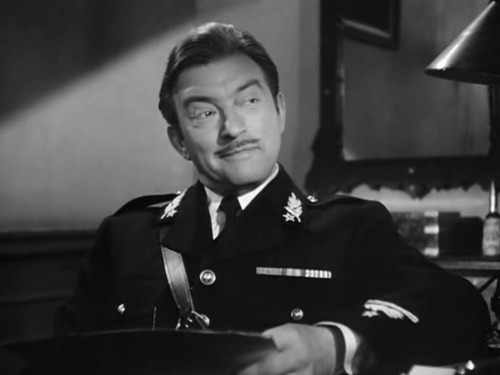
The Captain Renault GIF

How can you be shocked, shocked to find injustice going on in America after Ferguson (film noir anyone?)? And yet, people like Patricia McGuire of Trinity Washington University act as if the country has not been having a conversation about having a conversation about race for the past two plus years:

“We Americans study the history of tyranny and exclaim, ‘That’s terrible, but it would not happen here!’ as we congratulate ourselves on the robust state of our democracy. The experience of the last few months now exposes this once-confident boast as terribly naive and perhaps even dangerous as a new administration indulges in a remarkable torrent of false and misleading statements as a basis for policy and action,” she wrote. “The gravest lie we are grappling with at the present moment is the Trump Administration’s cruel and unreasonable war on immigrants — mostly people who are black and brown, and Muslim — Mexicans and refugees from central America, Syrian refugees, people from certain countries in the Middle East and Africa including Iran, Iraq, Sudan, Syria, Yemen, Libya and Somalia.”

Black lives mattered before Trump?

This is why we worry about those who use the present to turn history into morality plays. What history does best is teach students we’ve been here before, all is vanity. Only Whig historians believe in progress and then are surprised when their narratives let them down.

Social Justice Warriors Then

Mencken explains how to pursue social reform without eschatology or sanctity:

I do not hold, with the suffragettes, that the extension of the suffrage would bring the millennium, that the will to power would become the will to kiss, that sin would perish from the earth. Far from it. But I do hold that the dear girls could do no worse with the vote than men have done, that the present discrimination against them is unjust and absurd, that they ought to have their equal chance to inject their favorite antitoxins into the body politic and perform their pet mazurkas.

The common theory that women would not vote as intelligently as men is one that doesn’t appeal to me. I see no evidence in support of it. Women, in general, are certainly not less intelligent than men. On the contrary, they are probably more intelligent. That is to say, they keep in closer contact with reality, they are less romantic, they yield less to emotion. A woman’s eye is always upon the immediate certainty, not upon the remote possibility. She is not an idealist; she seldom dreams great dreams. But in the everyday, commonplace business of living she renders inestimable services to the human race. She keeps it upon the track; she sees that it gets three meals a day; she darns its socks and bathes its fevered brow; she assiduously counts its change.

In the great business of marriage, for example, the attitude of women is far less sentimental than that of men. A man usually marries romantically: he is full of magnificent visions of incredible bliss. Many men, indeed, are so romantic that they never marry at all—the true explanation of 90 per cent. of all masculine celibacy. But women marry with an eye to the main chance. They seldom allow romance to obliterate worldly prudence. In the whole history of England, I am told, no woman has ever actually refused a Duke. And here in free America it is not often, I venture, that a sane woman ever refuses a man who is her social equal and of good repute and able to support her. She may do it if she has a free choice between two such men, but such opportunities, it must be plain, are rare, and even when they occur there is commonly a Palpable difference between the two men, and so the woman’s choice is not free. She picks the better, not the worse. Her eye is on her number.

Such instinctive sagacity, I believe, would have a good influence upon politics. The woman voter would decide public questions, not from the idealistic standpoint, but from the standpoint of bread and butter. She would regard all political wizards and windjammers with distrust and aversion, just as she regards them now. She would bring to the business of government that salubrious cynicism which she now brings to the business of ensnaring and managing her husband. In brief, she would introduce a sharp common sense into political controversy and combat—a quality now almost wholly lacking.

But the suffragettes! The suffragettes! What of them? Isn’t it a fact that their present propaganda is utterly without sense, that their panaceas are all bosh, that their arguments and claims are romantic and nonsensical? Maybe it is. But don’t make the mistake, beloved, of confusing suffragettes with women in general. The suffragettes, by the irony of fate, are the worst of all imaginable specimens of their sex—not in the sense that they are evil, but in the sense that they are untypical. They no more represent the normal habits and mental processes of women than the fantastic Ibsenites of yesterday represented old Henrik, or than the S. P. C. A. of today represents that kindly and lovable creature, the Canis familiaris.

No; the suffragettes are not typical women, and so it would be absurd to charge their extravagances to the normal feminine character. On the contrary, they are untypical women, romantic women, women without womanly common sense. The thing that attracts thern to the suffrage cause is not the cause itself, but the excitement of the campaign. In brief, they are emotionalists—which is exactly what normal women are not. This explains their eager adoption of such ludicrous jehads as the vice crusade. This explains, too, their willing alliances with prima donna preachers, Chautauqua “sociologists,” Socialists, play censors and other such bogus “thinkers” and laryngeal bravos. And this explains, finally, the curious fact that many of them also belong to other windy lodges—of anti-vivisectionism, of anti-vaccinationists, of medical freedomists, of initiators and referendors, of deep breathers, of eugenists.

But We Already Have Ethics Experts

Several weeks ago while listening to NPR I heard a phrase I had not encountered before — ethics experts. These were people with expertise to comment on the conflict of interests surrounding the newly elected President Trump (as if the press needs to hind behind such expertise). This is part of the story in particular:

We are continuing our coverage of the Trump administration’s executive orders implementing a permanent ban on those coming from Syria and a temporary ban of citizens coming from six additional Muslim-majority countries – Iran, Iraq, Libya, Somalia, Yemen and Sudan.

Now, one aspect of the new policy that has drawn notice are countries that are not on the list, including Saudi Arabia, Egypt and the United Arab Emirates. And those are the countries of origin of a number of people who carried out terrorist attacks in the U.S. starting with September 11, 2001. Those countries also happen to be places where President Trump and his family have business interests.

That’s one reason ethics experts continue to raise questions about how President Trump is addressing potential conflicts or even the appearance of them.

I also noticed that one of the experts to which the reporters turned was — wait for it — formerly in the Obama administration:

One of them, for example, spoke with NPR. That’s Norm Eisen. He’s a former ethics adviser to President Obama, and he’s a fellow now at Brookings Institution. He says that it looks to him like Trump was singling out countries that did not pay him tribute. That was his words.

If Rush Limbaugh brought on ethics experts to comment on Nancy Pelosi, would anyone inside the editorial offices of NPR think such expertise credible?

But we are surrounded now by ethical expertise (though it seems to be fairly easy to come by — a general rather than expert sense).

But ethics experts say the broader conflict between the White House and Nordstrom is more worrisome, raising questions about whether the United States is entering a new environment in which presidents use government to steer money to their inner circles.

Here’s another:

Outside ethics experts say Trump’s conflicts-of-interest plan does almost nothing to clear up problems that could arise during his presidency. Walter Shaub, the director of the Office of Government Ethics, called the plan “meaningless.” Norm Eisen, who served as an ethics attorney under President Obama, told Mother Jones that Trump’s plan “falls short in every respect.”

And yet, just six months ago, according to a Google word search, ethics experts were not so easy to come by (even in the midst of all the allegations swirling around both the Clinton and Trump campaigns). One story wondered about ethical food:

Andrew Chignell, a philosophy professor at Cornell University who teaches an ethics in eating course each spring, had a change of heart when he embraced a vegan diet five years ago. But he still identifies as more of a flexitarian when he’s been invited to someone’s home for a meal.

Another commented on the ethics of a judge:

A controversial Nashville judge who retroactively signed orders committing dozens of people to mental health institutions violated ethics rules by doing so, according to a judicial expert’s opinion.

Another link led to the defense of such a thing as an ethics expert:

Within my sub-genre of philosophy – practical ethics – the suspicion of public engagement has a more specific cause. It’s often asserted that moral philosophers can’t claim expertize in ethics in the same way a chemist, for example, can be an expert on a molecule.

That’s a concern that puzzles me. Certainly there’s some evidence – from the UC Riverside philosopher Eric Schwitzgebel – that those who write about and teach courses in ethics are no more ethical than anybody else. And it’s true that specializing and so commanding authority in trichloro-2-methyl-2-propanol is disanalogous in various ways to being an authority in some corner of practical ethics – not least in how this expertize can be tested.

Still, I want to defend the expertize of moral philosophers, to maintain that their views in their chosen field merit respect and at least a degree of deference.

But now, after the Trump victory, ethics experts are easy to find.

So when John Fea says that times such as these call for the special work of historians, I’m left wondering what ethical work is left to do once every journalist and editor and academic and Hollywood celebrity has already taken a number to condemn Trump again:

Historians must remind us, in this age of Donald Trump, that we as a nation have not always lived up to our highest ideals. Their work can remind us that we have failed in the past and encourage us, perhaps this time around, to follow our better angels.

But most importantly, historians offer ways of thinking about the world that we desperately need right now. History teachers challenge students to make evidence-based arguments. They spend time showing students how to write footnotes and cite sources correctly because they do not want them to speak or write in public without research to support their conclusions. They counter “fake news” with facts.

In this regard they teach the nation’s young people how not to be like Donald Trump.

Is the argument for not living like Trump based on evidence or on ethics? Were historians worried about Trump before becoming president? Did they condemn billionaires, real estate developers, adulterers, divorcees, outer borough New Yorkers? Now, when some of the coarser aspects of American society attach themselves to the presidency — as if for the first time — we need historians to teach us how not to be like Trump?

I get it. My friend John finds Donald Trump repellent. (Is that ethical for a Christian who is called to love his enemy? Think Jesus and Zacchaeus.) But again, why gussy it up in the aura of academic expertise? Speak truth to power as a citizen. Do it as a Christian. But as a historian do remember that ethics is a different academic discipline that seldom leaves history as an unfamiliar territory. Moral indignation renders the past something to be condemned for not meeting now’s standards.

An Anti-2kers Dream Come True

Thanks to our southern correspondent:

Briarwood Presbyterian Church in Vestavia Hills is trying to establish its own police force.

The move requires approval from state lawmakers. The bill, sponsored by Rep. Arnold Mooney (R-Shelby County) cleared its first major hurdle Wednesday. The House Public Safety Committee gave its OK.

Briarwood Presbyterian Church calls this a way to create a safer campus in a fallen world.

Some lawmakers argue allowing a private church to have its own police force could begin a slippery slope.

“What do we do when other church affiliates come and ask for the same thing?” questioned Rep. Mary Moore (D-Birmingham). “They’re not a college. They’re a church and they’re a church asking for police jurisdiction.”

Many questions were posed during Wednesday’s committee meeting.

“Who do the officers answer to?” asked Rep. Chris England (D- Tuscaloosa).

“They would answer to the leadership of the section of the church,” a representative from the church answered.

Rep. Connie Rowe (R- Jasper) is a former police chief. She supports allowing Briarwood to create its own force.

“They will conduct their own investigations,” explained Rowe. “They will conduct their own security. They will make their own arrests and instead of calling on the local law enforcement agency to take over the particular situation they’re trying to control, they will do that themselves. All they will utilize from their other law enforcement agencies is their lock up facilities.”

At a time when the PCA is repenting of racism and Black Live Matters is calling for reform of the police, has not the word “optics” entered the PCA thesaurus?

Looks Like Trump is Sufjan’s Choice for POTUS

Mark Tooley reports that Sufjan Stevens opposes Christian nationalism:

Musician Sufjan Stevens blogged last week about politics and faith, decrying the parochialism of American Christianity while unconsciously offering his own brand of uniquely American impatient individualism.

The blog was republished in The Washington Post online, headlined “Stop repeating the heresy of declaring the United States a ‘Christian nation.’”

“You cannot pledge allegiance to a nation state and its flag and the name of God, for God has no political boundary,” according to Stevens. “God is love, period. God is universal, nameless, faceless, and with no allegiance to anything other than love.” He added: “A ‘Christian Nation’ is absolutely heretical. Christ did not come into this world to become a modifier. Look what happened to the Holy Roman Empire.”

That’s why President Trump’s failure to use religion to sacralize national purpose must be an encouragement to all who reject arguments that make American a Christian nation. John Fea notes that POTUS may be a blessing for mainline Protestants who edit Christian Century:

Theologians have long been wary or dismissive of civil religion, noting that it often functions as a rival religion to authentic faith—it’s a brand of Christian heresy. Civil religion borrows Christian themes but celebrates the stories and martyrs of the nation rather than the church and treats the nation rather than the church as the vehicle of God’s purposes. As such, especially in times of war, American civil religion has been an invitation to hubris and self-righteousness; it can cloak mundane self-interest in religious garb.

Yet because civil religion claims a transcendent purpose for the nation, it has also offered a basis for judging the nation’s failures and spurring it to reform. Because the nation has claimed high ideals for itself, it has invited a moral critique. It was in that tradition that Martin Luther King Jr. blended biblical ethics with democratic principles to condemn racial segregation as a betrayal of the nation’s creed of equality for all. It is in that tradition that protesters took to the streets in recent weeks to insist that the United States fulfill its promise to be a beacon of freedom to refugees from all lands and religions.

Christians have no ultimate stake in the survival of American civil religion. Its demise under Trump could conceivably encourage the church to claim and assert its distinct identity apart from the rhetoric of American politics. Yet insofar as the demise of American civil religion spells the contraction of moral imagination and the loss of a horizon of moral judgment and aspiration, it is hardly a development that Christians can cheer. The collapse of a Chris­tian heresy can lead to things that are far worse.

Just like the broken clock that is right two times each day, every Christian is going to have a 2k moment sometime in her life.

Does POTUS Define US?

Of course, not. The federal government has two other branches and the United States is way more than its government. McDonalds? Hollywood? Caitlyn? Harvard? The military? Heck, we don’t even pledge allegiance to the White House.

But what’s true for a nation is not true for a church like Roman Catholicism. There the papacy does define Roman Catholicism. And Ross Douthat explains why investing all that power and identity in a single office is a mistake, or why Pope Francis is more of a threat than President Trump:

Friendly media coverage casts the pontiff as a man of the center, an ecclesiastical equivalent of Angela Merkel or Barack Obama or David Cameron, menaced by authoritarians to his right. But he is no such thing, and not only because his politics are much more radical and apocalyptic than any Western technocrat. In the context of the papacy, in his style as a ruler of the church, Francis is flagrantly Trumpian: a shatterer of norms, a disregarder of traditions, an insult-heavy rhetorician, a pontiff impatient with the strictures of church law and inclined to govern by decree when existing rules and structures resist his will.

His admirers believe that all these aggressive moves, from his high-stakes push to change church discipline on remarriage and divorce to his recent annexation of the Knights of Malta, are justified by the ossification of the church and the need for rapid change. Which is to say, they regard the unhappiness of Vatican bureaucrats, the doubts of theologians, the confusion of bishops and the despair of canon lawyers the way Trump supporters regard the anxiety of D.C. insiders and policy experts and journalists — as a sign that their hero’s moves are working, that he’s finally draining the Roman swamp.

Meanwhile the church’s institutionalists are divided along roughly the same lines as mainstream politicians in the face of Trump’s ascent.

There is a faction that has thrown in with Francis completely, some out of theological conviction, some out of opportunism, some out of simple loyalty to the papal office. (The analogy would be to the mix of populists, opportunists and institutionalists who smoothed Trump’s progress to the Republican nomination.)

There is a group that is simply silent or deeply cautious — note how few of the world’s bishops have taken any position on the controversy over divorce and remarriage — in the hopes that things will simply return to normal without their having to put anything at risk. (The analogy would be to most Republican elected officials, and a few red-state Democrats as well.)

There is a group that is relatively open in criticism of the pope’s agenda but also unwilling to cross the line into norm-smashing of its own. (The analogy would be to the American center-right and center-left, from John McCain to Hillary Clinton.)

This last group’s sheer diversity is one reason the Bannon-versus-Francis theory fails. The ranks of papal skeptics are filled with Africans and Latin Americans as well as North Americans and Europeans, with prelates and theologians and laypeople of diverse economic and political perspectives. Most are not traditionalists like Burke; they are simply conservatives, comfortable with the Pope John Paul II model of Catholicism, with its fusion of the traditional and modern, its attempt to maintain doctrinal conservatism while embracing the Second Vatican Council’s reforms.

But because this larger group is cautious, its members have been overshadowed by the more forthright, combative and, yes, reactionary Cardinal Burke, whose interventions might as well come with the hashtag #TheResistance.

Which places him in the same position, relative to Francis, that a Bernie Sanders occupies relative to Trump — or that Jeremy Corbyn occupies relative to Brexit. He’s a figure from the fringe whose ideas gain influence because the other fringe is suddenly in power; a reactionary critic of a radical pope just as Sanders or Corbyn are radical critics of a suddenly empowered spirit of reaction.

So the story of Catholicism right now has less to do with reaction alone and more to do with what happens generally when an institution’s center doesn’t hold.

You don’t hear Bryan and the Jasons saying much about church politics. It’s like reading the Federalist Papers and ignoring the 2016 presidential campaign. And yet, ideas do have consequences and the theory of chief and infallible interpreter of the faith is not simply an idea. It is a way of life. At least the federalists left behind a Constitution. What enumerated powers did papal supremacists leave behind?

Cigar Aficianado before The Magazine

The old cost of doing business in the land of the free and home of the brave, thanks to H. L. Mencken:

The fact that the Hon. Jacobus Hook gave away 62,350 cigars during the year 1912 has aroused the jealousy of the Hon. James Young, and the two are now engaged in a gigantic struggle for the 1913 championship. The Hon. Mr. Young, so I hear, has sent such huge orders to Havana that he is getting 25-cent cigars at 3.33 cents apiece. Meanwhile, Colonel Hook has added 150 hands to the force in his private fabrico at Pinar del Rio, and, in addition, he has bought land for a new factory on Gay street. His expenditure for cigar bands alone will be $1,500 this year, and he will cut down 125 acres of cedar forest to make boxes. His leading brands continue to be the La Cuerda, the El Hofbraeu and the Pride of Old Town. The first named is a demi-blond cigar, cut in Empire style, with a violet band and a high, spicy flavor. The second is a short, squat brunette, with a scarlet bandeau around its equator. The third is a long, rakish smoke with pale, xanthous spots, suggesting flecks of mayonnaise. It is a very powerful cheroot, with fumes strong enough to loosen the scalp, and Colonel Hook reserves it for newspaper reporters, job-seekers and the judiciary.