No Legal Precedent, but Lots of Self-Righteousness

A legal scholar weighs in on local governments (think Boston) and churches that are creating sanctuaries for refugees:

While many cities have already begun to declare themselves sanctuary spaces for the undocumented, in fact there is currently no body of law or judicial precedent to which they are appealing.

“There’s really no legal definition of what sanctuary means,” explained Pham. (Even the most recent 1983 Code of Canon Law no longer refers to the practice.)

A bizarre result is that definition of the term “sanctuary” will end up coming from the executive branch.

“The President is threatening to withhold funding from sanctuary cities,” Pham said. “When he writes an executive order to do so, he’s going to have to define what it means.”

Some religious institutions might consider claiming that the declaration of sanctuary is an exercise of the rights afforded to religious organizations under the First Amendment. But that tactic will be of limited use to those seeking sanctuary, Pham said.

Such a claim, he explained, “is going to be resolved through a legal process through the courts, months later. It won’t be resolved then and there. And by that time the undocumented person may have already been arrested and deported.”

Pham also pointed out, “The housing of undocumented people is not necessarily covered under the First Amendment.”

So, the first thing to know, Pham said, is that to declare oneself a sanctuary “is mainly a symbolic statement of support.

In other words, no real help to the refugees, but lots of solace to the self seeking the superior life.

Another Golden Oldie

Thanks to Zrim, I remembered another internet intervention about 2k. This one was at Greenbaggins at the instigation of Reed DePace. It was a threepart series but here reproduced in one post.

Theological Affirmations

1) Affirmation: Jesus is Lord

Denial: Jesus is not Lord over everyone in the same way; he rules the covenant community differently than those outside the covenant.

2) Affirmation: the visible church is the kingdom of the Lord Jesus Christ

Denial: Outside the visible church is not part of the redemptive rule of Christ (even though Christ is still sovereign).

3) Affirmation: the Bible is the only rule for the visible church (in matters of conscience).

Denial: Scripture does not reveal everything but only that which is necessary for salvation.

4) Affirmation: Christ alone is lord of conscience

Denial: Christians have liberty where Scripture is silent.
Denial: the pious advice and opinions of Christians are not binding.

5) Affirmation: the visible church has real power (spiritual and moral, ministerial and declarative, the keys of the kingdom) in ministering the word of God.

Denial: the church may not bind consciences apart from Scripture.
Denial: the church may not bind consciences on the basis of one minister’s or believer’s interpretation but must do so corporately through the deliberations of sessions, presbyteries, and assemblies.

6) Affirmation: Christ’s righteousness alone satisfies God’s holy demands for righteousness, and believers receive this righteousness through faith alone (i.e., justification).

Denial: believer’s good works, much less unbelievers’ external obedience to the law, do not satisfy God’s holiness but are filthy rags.

Affirmations about Vocation

1) Affirmation: the church is called to gather and perfect saints through word, sacrament and discipline.

Denial: the church is not called to meddle in civil affairs.

2) Affirmation: the Christian family is called to nurture and oversee children in both religious and secular matters.

Denial: Christian families will not all look the same but have liberty to rear children according to Scripture and the light of nature.
Denial: non-Christian families do not rear children in godliness or holiness but still have legitimate responsibility for rearing their children.

3) Affirmation: the state is called to punish wickedness, reward goodness, and promote peace and order.

Denial: the state does not hold the keys of the kingdom.

4) Affirmation: A Christian is called to use his talents and gifts to serve God and assist his neighbor.

Denial: some Christians are not called to engage in civil affairs.
Denial: the responsibilities attending one Christian’s vocation may not be the standard for other Christians.

Affirmations on Ethics

1) Affirmation: Christians have an obligation to submit to God’s laws as they are found in general and special revelation.

Denial: persons cannot obey God’s law truly apart from regeneration by the Holy Spirit.
Denial: non-Christians may not please God in their external observance of God’s law.
Denial: even if non-Christians may not please God, their civic virtue is crucial to a peaceful and orderly society.

2) Affirmation: Christians please God in their good works thanks to the sanctifying work of the Holy Spirit.

Denial: the good works of Christians are not free from pollution (i.e. they are filthy rags).

3) Affirmation: the state and families have the responsibility for establishing and maintaining social order.

Denial: the church does not have the responsibility for establishing and maintaining social order.

4) Affirmation: church members have a duty to obey the laws of civil magistrates.

Denial: church members may not rebel against or disobey the magistrate.
Denial: church members must not obey the magistrate rather than God.

5) Affirmation: God has established a pluriformity of institutions (e.g. civil society) for the sake of social order.

Denial: the church has no calling to establish social order but will have an indirect influence on peace and order by encouraging godliness in her members.

Aesthetic Relativism

If you don’t have standards for beauty, how do you have them for truth and goodness? Father Dwight doesn’t explain:

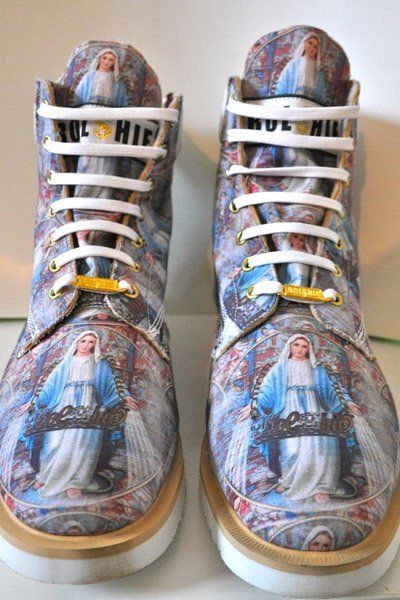
If you are a convert to the Catholic faith from Lutheranism or Anglicanism or any other form of tasteful religion, then you will have to deal with Catholic kitsch. What are we to do with the trashy trinkets, the horrid holy cards, the sappy statues? How do you put up with the banal hymns, bad preaching and sentimental religiosity? . . .

It’s true Catholics have some awful music and bad hymns. But we also have Palestrina, Elgar, Mozart and Byrd.

Yes, we do have plastic glow in the dark rosaries and those night lights you plug in where the plastic statue of the Blessed Mother lights up. But we also have the Pieta and the Sistine Chapel and Michelangelo and Caravaggio.

It’s true we have brutalist churches that look like a cross between a flying saucer and a parking garage, but we also have Chartres, St. Mark’s in Venice, Sainte-Chapelle, Notre Dame, St. Peter’s and Mont Saint-Michel.

This is the authenticity of the Catholic faith. It is universal. It has room for the peasant and the aristocrat, hoi polloi and high falutin’, the learned and the ignorant, the tasteful and the tacky, the sinner and the saint.

With that kind of tolerance, why would you ever reject Protestantism?

But Father Dwight insists he has standards:

“If I were choosing a church I liked I’d still be an Anglican. I didn’t become a Catholic because I liked the Catholic Church.” I retorted. “I became a Catholic because it’s the true Church.”

How would he know? Because the bishop with all the high end art told him?

You can’t argue this stuff up.

Just In Time for the 500th Anniversary of the Reformation

A papal crackdown:

For most of us, who are not Knights of Malta, the resignation of the group’s grand master will have little immediate impact. But the unprecedented papal intervention into the affairs of that venerable body fits into a pattern that should, at this point, worry all faithful Catholics. Under Pope Francis, the Vatican is systematically silencing, eliminating, and replacing critics of the Pope’s views.

During the reigns of Popes John Paul II and Benedict XVI, “progressive” Catholics frequently complained about a crackdown on theological dissent. On the rare occasions when the Congregation for the Doctrine of the Faith issued a warning about a wayward theologian’s published works, there were anguished warnings about a reign of terror at the Vatican. Now a crackdown really is occurring—instigated by the Pontiff who famously asked, “Who am I to judge?” And the objects of the current crackdown are not theologians who question established doctrines, but Catholics who uphold the traditional teachings of the Church.

The first and most prominent victim of the purge was Cardinal Raymond Burke, who was exiled from the Roman Curia soon after Pope Francis took office, and given a mostly ceremonial post as patron of the Knights of Malta. It is ironic—and perhaps not coincidental—that the latest incident involves his new charge.

As much as I admire and sympathize with conservative Roman Catholics (like Ross Douthat and the author of this piece, Phil Lawler), can such folks really complain about papal supremacy? Isn’t this what rule by one is supposed to look like (and why Americans love to talk about checks and balances)? In fact, as long as Rome depends on the Bishop of Rome to support its claims of superiority — unity, authority, antiquity — can devout Roman Catholics really object to popes who use their authority to enforce unity?

Is Tim Keller Leaving the PCA for the OPC?

His latest post for the Co-Allies suggests he may:

The earliest Christians were widely ridiculed, especially by cultural elites, were excluded from circles of influence and business, and were often persecuted and put to death. Hurtado says Roman authorities were uniquely hostile to them, compared to other religious groups. . . .

The earliest church was seen as too exclusive and a threat to the social order because it would not honor all deities; today Christians are again being seen exclusive and a threat to the social order because we will not honor all identities.

Yet the early church thrived in that situation. Why?

One reason was that Christians were ridiculed as too exclusive and different. And yet many were drawn to Christianity because it was different. If a religion isn’t different from the surrounding culture—if it doesn’t critique and offer an alternative to it—it dies because it’s seen as unnecessary. . . .

The early church surely looked like it was on the “wrong side of history,” but instead it changed history with a dogged adherence to the biblical gospel. That should be our aspiration as well.

When you read those estimates of the early church, do you think more of the PCA or the OPC?

By the way, Keller leaves out one of the biggest factors in the early church’s “success”: the conversion of the emperor. In 300 roughly 10 percent of the empire’s population was Christian. By 350 that number rose to 55 percent.

Now all Pastor Keller needs to do is convert his fellow New Yorker, Mr. Trump. But I’m not sure how appealing a religion ridiculed by cultural elites and that is excluded from circles of influence and business will be. I am not even sure Pastor Keller’s experience proves that kind of Christianity “works.”

How Theological Liberalism Wins

First, you have the traditionalists:

I think you can see Professor Esolen’s essay as reflecting the long-term concerns of one group, in particular: Catholic faculty members who share a particular vision of the college’s mission. They assume that our Catholic identity should be at the center of everything we do, and they look to the long history of Catholic tradition, including recent documents like Pope St. John Paul II’s Ex Corde Ecclesiae, as crucial.

This group of faculty, in which I include myself, are worried. To put it simply, they don’t want to see Providence College join other religious universities who have moved away from their religious foundation. (Jim Burtchaell’s The Dying of the Light chronicles this phenomenon.)

Second, you have the social justice warriors:

Another group immediately involved here are some of the people who tend to fall on the margins in our community-and also those supporting them. They have serious concerns about systemic forms of exclusion. (And here, too, are a number of concerns that I myself share.)

They can see, for example, that Providence College’s 100-year history includes almost nothing of the African-American experience, or of Hispanic culture and tradition. In the last few years, the college has made a concerted effort to recruit more students, faculty, and staff from underrepresented groups, but frankly, it hasn’t always succeeded in offering needed support once they arrive.

For all those who are part of this second group, their frustrations are also part of a larger story: longstanding exclusion and unjust mistreatment of marginalized people. And, it’s important to say, some of these folks would also note that their concerns are prompted by Catholic commitments, beginning with a recognition of the dignity of every human being.

Third, you notice that tradition doesn’t get you satisfaction social justice.

Esolen’s essay was read as opposition to individuals, and, by extension, as disregard for the specific cultural realities they represent. Unfortunately, the essay’s polemical tone contributed to that reading, especially once the editor had framed the whole piece with a headline that was pure clickbait.

When a number of people voiced criticism of the essay, the president responded with his own critique in a campus-wide email, and the executive vice president reported the impact of the essay as “implicitly racist” in another campus-wide email. In the end, these official responses then confirmed fears of that first group of faculty that questioning the way that diversity is being conceived and pursued means you’ll be cut off at the knees.

Fourth, you see that lots of people outside the faith also want social justice.

Finally, you conclude either that those non-believers are really on the side of the faith, or that justice is as or more important than doctrine for real Christianity.

That means reversing what Paul wrote. Instead of “If in Christ we have hope in this life only, we are of all people most to be pitied,” you now say, “If in Christ we have hope for resurrected life only, we are of all people most to be pitied.”

Reading about Machen in The Reformed Journal

Reformed Protestants 50 and up may have spent some of their reading hours with The Reformed Journal, a magazine of Dutch-American Calvinist provenance that came into existence as a forum for Christian Reformed Church progressives. I read it from my days as a seminary student until 1990 when it folded. I didn’t always agree with the politics or theology, but it was provocative and thoughtful.

Given the “progressive” character of the magazine, I should not have been surprised that TRJ’s regular contributors were slightly sympathetic but underwhelmed by J. Gresham Machen. That outlook bothered me because the deeper I went into the archives, the more impressed I was by the man who started Westminster Seminary and the OPC (with lots of help from others). In light of yesterday’s post with an excerpt from Machen’s testimony at his trial and with some reflections still fresh from the fall Presbyterian Scholars Conference (where several participants were experiencing the joy of post-PCUSA life but still not on board with Machen’s own version of that experience), I reproduce some high or low lights of TRJ takes on Machen.

First comes Rich Mouw’s argument that Machen’s departure actually hurt the cause of conservatism in the PCUSA (one echoed by George Marsden at the Wheaton conference):

Barbara Wheeler and I have argued much about the issues that threaten to divide us, but we share a strong commitment to continuing the conversation. She regularly makes her case for staying together by appealing to a high ecclesiology. The church, she insists, is not a voluntary arrangement that we can abandon just because we do not happen to like some of the other people in the group. God calls us into the church, and that means that God requires that we hang in there with one another even if that goes against our natural inclinations.

I agree with that formulation. And I sense that many of my fellow evangelicals in the PCUSA would also endorse it. The question that many evangelicals are asking these days, though, is whether God expects us to hang in there at all costs.

One of my reasons for wanting to see us stick together is that a Presbyterian split would be a serious setback for the cause that I care deeply about, namely the cause of Reformed orthodoxy. I spend a lot of time thinking about how people with my kind of theology, have acted in the past, and I am convinced that splits inevitably diminish the influence of the kind of orthodoxy that I cherish — for at least two reasons.

First, the denomination from which the dissidents depart is typically left without strong voices to defend orthodox. This is what happened in the early decades of the 20th century when J. Gresham Machen and his colleagues broke away from the northern Presbyterian church.

I know that this is not a very popular thing to say in this setting, but I happen to be a strong admirer of Machen. I think that he pretty much had things right on questions of biblical authority, the nature of Christ’s atoning work, and other key items on the theological agenda. But I have strong reservations about his ecclesiology and I regret that his views about the unity of the church led him to abandon mainline Presbyterianism. As long as he remained within the northern church, he had a forum for demonstrating to liberals that Calvinist orthodoxy could be articulated with intellectual rigor. When he and his friends departed, this kind of witness departed with them.

The evangelicals who stayed on in the northern church generally did so because they were not as polemical as the Machen group; they were also not nearly as inclined as the Machenites to engage in sustained theological discussion. This meant that the quality of theological argumentation in mainline Presbyterianism suffered for several decades — some would even say up to our present time.

Not to let facts get in the way here, but Mouw would do well to remember that the PCUSA brought Machen to trial and excommunicated him. Yesterday’s post shows that Machen was not eager to flee even if it would have been a lot more pleasant. Whether his actions were legitimate or constitutional is another question. But he asked about the constitutionality of PCUSA actions and that didn’t endear him to the people who stayed. In fact, they tried him for having the temerity to question the soundness of the Board of Foreign Missions — as if that’s never happened — and the administrative fiats that condemned dissent.

I too wonder if Mouw considers that from 1869 until 1920 the PCUSA became infected by the social gospel and Protestant ecumenism. During that very same time Princeton Seminary as the voice of Reformed orthodoxy in the northern church was still dominated by conservatives. What happened during the years when Princeton kept alive the theology that Mouw values? Princeton and it’s orthodoxy became marginal and then a nuisance — hence the reorganization of Princeton Seminary in 1929. The idea that had Machen stayed conservatives would have done better is naive and ignores what actually happened before Machen “left.” Plus, what kind of high ecclesiology settles for articulating “Calvinist orthodoxy with intellectual rigor”?

George Marsden and Mark Noll regularly wrote for TRJ and again the returns on Machen were not always positive. First, Marsden:

Both at the time and since critics of Machen have suggested that there was something peculiar about him. Most often mentioned are that Machen remained a bachelor and his very close relationship to his mother until her death in 1931. Neither of these traits, however, was particularly unusual in the Victorian era, which certainly set many of Machen’s social standards.

More to the point is that he does seem to have had a flaring temper and a propensity to make strong remarks about individuals with whom he disagreed. One striking instance is from 1913 when Machen had an intense two-hour argument with B. B. Warfield over campus policy, after which Machen wrote to his mother that Warfield, whom he normally admired immensely, was “himself, despite some very good qualities, a very heartless, selfish, domineering sort of man.” You can imagine that, if someone says things like this about one’s friends, that it might be easy to make enemies. Machen does not seem to have had a great ability to separate people from issues, and this certainly added to the tensions on the small seminary faculty. Clearly he was someone whom people either loved or hated. His students disciples were charmed by him and always spoke of his warmth and gentlemanliness. His opponents found him impossible, and it is a fair question to ask whether, despite the serious issues, things might have gone differently with a different personality involved.

This observation continues to baffle me, as if people do not distinguish public from private statements. Maybe we are only learning that lesson after Donald Trump, but historians generally know that in the archives you find people saying all sorts of things that they wouldn’t say in public. In private we blow off steam, unless we are all walking John Piper’s and sanctified all the way down. I also don’t understand why Marsden starts his sentence on Machen’s personality with the man’s opponents found him impossible. Hello. The feeling was mutual. But Machen as a sanctified believer was supposed to find his adversaries hedonistically delightful?

And finally, Mark Noll’s estimate on the fiftieth anniversary of Machen’s death:

By reading controversies within Princeton Seminary, Presbyterian missions, and eventually the Presbyterian denomination as battles between two separate religions, “Christianity and Liberalism,” Machen undermined the effectiveness of those Reformed and evangelical individuals who chose to remain at Princeton Seminary, with the Presbyterian mission board, and in the Northern Presbyterian Church. By committing himself so strongly to theological and ecclesiastical combat, Machen left successors who were ill-equipped to deal with the more practical matters of evangelism, social outreach, and devotional nurture. By pursuing the virtues of confessional integrity, he opened the door to sectarian pettiness.

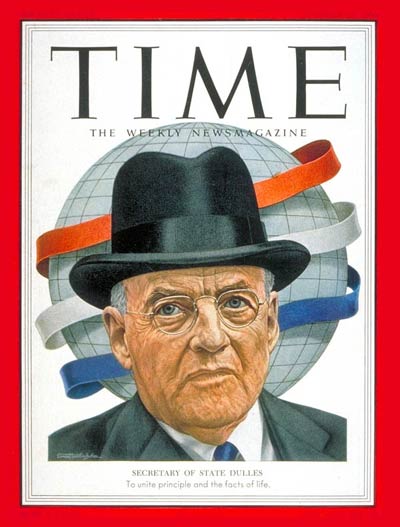
No real sense here that blaming the victim is a potential downside of such an interpretation. The perspective seemed so often in TRJ to be that Machen was a man on a mission and looking for a controversy. The bureaucrats and seminary administrators were innocent. (Yes, the lawyer who defended modernists in the 1920s, John Foster Dulles, became the Secretary of State who crafted the Eisenhower administration’s Cold War policies — the very administration that the founding editors of TRJ questioned.) The Presbyterian hierarchy simply responded — with a hammer, mind you — to Machen’s provocations. That could have been the case but no one argued that. They largely reduced Machen to a cantankerous figure who got what most of us would expect if we rock the boat the way he did.

And now in hindsight I wonder what these same men would think of Abraham Kuyper who was also part of a church that came out of the Netherlands’ state church. Didn’t Kuyper’s GKN (Reformed Churches of the Netherlands) make it a lot harder for conservatives who stayed in the NHK (Dutch Reformed Church)? And didn’t Kuyper’s Free University make life more complicated for orthodox theologians who remained at Leiden or Utrecht? (In other words, why wouldn’t it be possible to imagine Machen akin to Kuyper? Why doesn’t the Kuyper glow trickle down to Machen? Because Kuyper became Prime Minister and Machen merely president of the Independent Board for Presbyterian Foreign Missions?)

And what of John Calvin? Was he wrong to leave France? Did he leave Huguenots in the lurch? Was the Roman Catholic Church worse off without Calvin’s ministry and theological reflection? Or does the mind boggle at the questions you need to start asking other historical figures when you become so demanding of a figure of which you disapprove?

Why Doesn’t Mere Orthodoxy Take Heed of Full Orthodoxy

Matthew Loftus thinks conservative Christians have more in common with immigrants from non-Christian countries because of the civilizational angle:

If globalism and liquid modernity are the problem, then immigration restriction is cutting off one of the few sources of new citizens who might possible share your views on the priority of faith and family and the importance of religion in providing some moral undercurrent (or restraint) for the state’s actions. Both Putin and Trump appear to be happy to throw a bone to religious conservatives in order for their loyal support, but neither has any respect for human life in the eyes of the state and would happily preside over a fiefdom full of people lost in drugs, alcohol, gambling, or sex as long as they stay in power. There won’t be much civilization left to defend because modernity will continue its corrosive destruction through the institutions we love and believe in– the individualistic atomism that is hollowing out our civilization is a juggernaut that cannot be stopped by an authoritarian state and closed borders.

The lesson for Trumpsters is apparently apparent, but why not for big city pastors who trumpet (see what I did there?) urban life as the kingdom coming? When oh when will the young restless sovereigntists ever see that modernity clings to very institutions that they consider to be “traditional” or conservative (like Gospel Coalition and Tim Keller New York City Inc.)?

Imagine if the head pastor at Redeemer NYC had to respond to this:

…resisting the corrosive and disenchanting forces of modernity is going to require solidarity across ethnic, national, and religious lines because there is a large bundle of assumptions about the self, the world, and God that we share. What’s more, intentionally assimilating people into otherwise racially and religiously homogeneous communities might be one of our best chances at building that solidarity and preventing these newcomers from becoming balkanized (or, God help us, Democrats). Whether you want real civilization that is communal instead of individualistic or genuine ideology that governs according to principle rather than power-grabbing, immigrants and refugees are conservatives’ allies.

Can Mr. Loftus ever imagine that Old School Presbyterians are closer to his concerns about modernity, community, and the self than New Calvinists who thrive in the oh so modern settings of the Internet, weekend conferences, and celebrity pastors and authorettes? If you want real solidarity among believers, try strong local congregations with clear lines of accountability who send commissioners to wider church assemblies to oversee the lives of officers and church members. It’s not magic and it’s often not as thick as village life in the Outer Hebrides, but Presbyterianism is as good a Christian effort as any to resist modernity. You sure won’t find it in the Big Apple unless you live in the ghetto.

Do Southern Baptists Need a Pope of Public Policy?

What could possibly go wrong? A communion appoints an officer to represent members’ views within the corridors of the most powerful nation on God’s glowing earth. And all the members — who are Protestants, mind you and not used to submitting to church hierarchy — are going to agree with all that the officer says or the agency he leads? Heck, even in the little old OPC where the stakes are considerably lower than the Southern Baptist Convention, you cannot get church members to agree with the editor of New Horizons magazine.

So why are so many people concerned and surprised that Southern Baptists are challenging Russell Moore at the Ethics and Religious Liberty Commission? Funny the way president-elect Trump winds people up.

I (all about me) have nothing against what Dr. Moore seems to be doing. I do suspect sometimes that he’s trying to soften the edge of the religious right in a way that Tim Keller tries to make Christianity less objectionable. Maybe Aaron Sorkin and David Simon have poisoned me to suspect that public statements always come through spinners and handlers who are looking at polls and access to power or gatekeepers. But some of Dr. Moore’s recent statements do seem to have more the fingerprints of building coalitions than those of “thus, saith the Lord” or even, “this is what Southern Baptists believe, gosh darn it.”

Here’s the problem. Moore heads an agency whose mission more Kuyperian than Williamsian (think Roger Williams):

The ERLC exists to articulate every priority and every agenda item in terms of where it fits in seeking the kingdom of God in this era, in order to equip churches to stand before the watching world with the sort of quiet confidence that characterized Jesus.

The kingdom is an “already” present reality (within the life of the church) but also a “not yet” future hope (as we await the coming of Jesus). This kingdom come includes not just worship, but righteousness (ethics), freedom (religious liberty), communion (society), authority (politics), and “the glory and honor of the nations” (culture). Seeking first the kingdom of God should not dampen our concern for ethics but should instead heighten it. After all, the priorities of the King must become the priorities of his kingdom colony, the church. Therefore, the kingdom of God sets both the content of our concern and the tone with which we speak.

That’s pretty broad. Southern Baptists might want to take note that Kuyperians and 2kers disagree about the nature of the kingdom (or kingdoms), so Christ as king is hardly a consensus building affirmation. Worse, hardly clear is the understanding that such a view of God’s kingdom emerges organically from Baptist theology and experience. As dissenters for a long time in England and low on the list of Anglo-American Protestants, some might be surprised to see Southern Baptists doing their impersonation of Puritans or their descendants, the United Church of Christ. Once up a time, Southern Baptists (I’ve heard) saved string so they could send foreign missionaries to India.

So this presence in the capitol of the world’s most powerful nation seems out of character for those little old Southern Baptists.

But if you are going to enter that environment as an ambassador of the Southern Baptist Convention, please don’t tell us you are doing so in a non-partisan way:

There is no more effective evangelical leader than Moore. Under his leadership the ERLC has grown in reach and influence, hosting numerous seminars on a variety of issues with policy-making attendees from both sides of the aisle. Additionally, the ERLC plays a vital role in a number of conservative coalitions. I have witnessed House and Senate leadership offices ask for Moore to personally participate in various events to lend legitimacy and gravitas.

Too often evangelical leaders get pigeonholed into partisan identities. This is not the case with Moore. Both parties see him as a leader transcending partisan divide and stereotypes. This is because Moore and his team balance speaking truth to power while achieving real policy victories.

Being Southern Baptist is non-partisan? This is the affliction that haunts American Protestantism. We somewhere along the line — think the Second Glorious Awakening (if the Brits can have a Glorious Revolution . . . ) — believed that Protestantism is a public faith. It is the religion of the United States. That didn’t work out real well for Roman Catholics or Jews or Mormons. But it had its moments and gave the United States a measure of national identity and spiritual overtones to reasons for fighting tyranny and authoritarianism. That conviction also hollowed out the gospel from the mainline churches. Access to power became something to protect lest the offense of the gospel and calls to repentance offend. The irony is that this mainline Protestant agenda for a Christian nation left the mainline churches without a voice once they questioned America for being too white, male, anti-Communist, Christian, and hetero. The mainline lost both the nation (it was never Christian but sexist and racist) and their place at the table (do mainline pastors even have access to the boards of Harvard, Yale, and Princeton?).

The solution to Dr. Moore’s woes is to close down ERLC and let the Southern Baptist Convention be a church that is fully Baptist (whether particular or general). We have public policy agencies for matters like religious liberty, marriage, civil society, and human dignity. Sometimes even the Democrats and Republicans consider those matters. Not to mention that the Roman Catholic Church has a far greater reach than Southern Baptists.

Let the church not be non-partisan, earnest, well-meaning, tolerant, or humanitarian. Let Southern Baptists be Southern and Baptist. (Or be really Kuyperian and form an Anti-Secularist Political Party.)

Christmas as Old School Presbyterianism’s Coexist Moment

Mustafa Akyol’s column on Christmas in Turkey revealed that paleo-Calvinists share much in common with conservative Muslims and Jews during the holiday season:

Islamists in Turkey, every year, come out on the streets or in their media with the slogan, “Muslims do not do Christmas.” Of course, they have every right to not to celebrate a religious feast that is not a part of their religion. But they not only refrain from Christmas; they also protest it.

In fact, those Islamists of Turkey, and other likeminded Christmas-despisers, often “do not know what they are doing,” to quote the noble words of the very person whose birthday is at question here. They typically condemn Santa Claus costumes and Christmas trees as signs of “Western cultural imperialism.” But Christianity is not merely Western; it is also African, Asian and, in fact, global.

Hmm. Christmas as a global solvent of local Reformed Protestant teachings and practices. Go figure.

Jews — ya think? — have similar problems with Christmas.

Israel, too, seems to have a similar problem.

I read about this in an Al-Jazeera English story titled, “Israeli rabbis launch war on Christmas tree.” It reported how the Jerusalem rabbinate issued a letter warning hotels in the city that “it is ‘forbidden’ by Jewish religious law to erect a tree or stage New Year’s parties.” In Haifa, a rabbi, Elad Dokow, went even further, called the Christmas tree “idolatry,” and warned that it was a “pagan” symbol that violated the kosher status buildings.

At a time when New Calvinists heighten their sensitivity to Muslims and Jews, when will they show a little concern for Old Calvinists?