Certainly Not Calvinist But Not Even Baptist

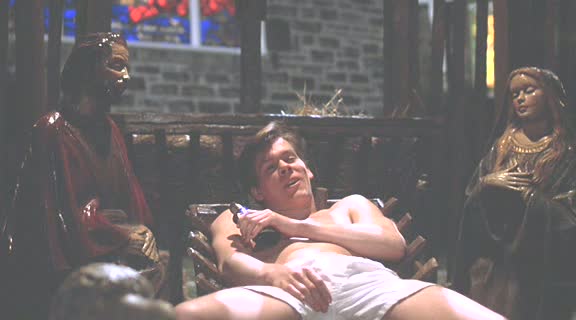
How do you explain selectivity (cafeteria Protestantism) about — wait for it — the Ten Commandments? But the Allies have their ways of satisfying itching ears. Here’s the latest — positive thoughts about Nativity Scenes:

I’ve changed my views because our culture has changed. As society becomes increasingly secular, it seems to me that just about anything that ties Christmas back to the historical account of Jesus’s birth provides an important point of connection. These small displays are an opportunity for engagement and conversation between those in our communities who celebrate nothing more than Santa and those who love the message of the Jesus’s incarnation.

In fact, I’m always intrigued when someone is offended by the presence of a nativity scene. It’s quite fascinating that people can be offended by a collection of miniature ecclesiastical characters. Why do people get upset? Perhaps it’s because they recognize that what’s being said in that small scene is challenging and even personal: “This happened, this is history, there is a Jesus, and you have to deal with him one way or another.” The person who gets annoyed by public nativity scenes is someone I want to have a conversation with.

Actually, it may be that the people who most often miss the message of the nativity scene are Christians. How easy it is to rush through the whole Christmas experience—the music in the mall, the services in your church, the presents in your house—and be left with sweet sentiments but no real worship in your heart. How easy it is to sing along to “Once in Royal David’s City”—

He came down to earth from heaven,
Who is God and Lord of all.

—and feel neither awe nor offense, but simply nothing much at all.

My point is that it’s not only non-Christians who trivialize Christmas. It’s us. The claims the Bible makes about the first Christmas are either fact or fiction, so they’re either awesome or offensive. They should move us to worship or to resistance. But so often Christians seem to be pursuing a pristine Christmas experience that more reflects the store-bought nativity scene than the costly and messy account of the Bible.

Calvinists did not celebrate Christmas. They avoided also any representation of any member of the Trinity. The same goes for Baptists. Until the twentieth century, non-Episcopalian and non-Lutheran Protestants didn’t do Christmas or display its wares. They only way to get around the second and fourth commandments (for the fourth, one day in seven is holy, not Jesus’ birthday) is if you so elevate feelings or evangelism and argue that rules don’t matter (sometimes). That’s more Whitefield than Edwards. In which case, the Allies can’t even honor properly their “homeboy.”

Just to keep score: justification is supposed to result in sanctification.

Good works constitute indispensable evidence of saving grace. Living as salt in a world that is decaying and light in a world that is dark, believers should neither withdraw into seclusion from the world, nor become indistinguishable from it: rather, we are to do good to the city, for all the glory and honor of the nations is to be offered up to the living God. Recognizing whose created order this is, and because we are citizens of God’s kingdom, we are to love our neighbors as ourselves, doing good to all, especially to those who belong to the household of God. The kingdom of God, already present but not fully realized, is the exercise of God’s sovereignty in the world toward the eventual redemption of all creation. The kingdom of God is an invasive power that plunders Satan’s dark kingdom and regenerates and renovates through repentance and faith the lives of individuals rescued from that kingdom. It therefore inevitably establishes a new community of human life together under God.

Maybe the Allies problem with the Decalogue is that they think of obedience too much in the context of the city and not being ye separate. Don’t want to take God’s word too far.

Fundamentalist Controversy Redux

John Allen explains how Roman Catholicism has come along side Protestantism. The Left and Right aren’t even on the same page of what constitutes truth:

… at this point most defenders of Pope Francis haven’t accused critics of being dissenters, nor have they suggested that people who uphold contrary positions on the substantive positions associated with the pontiff, such as opening Communion to divorced and civilly remarried Catholics, are thereby committing heresy.

The implication seems to be that fans of the pope are more generous, less vicious, and less inclined to question people’s bona fides as Catholics. There is, in other words, often a presumption of moral superiority in the observation that “we don’t talk that way.”

Simply as a descriptive matter, that proposition seems a bit disingenuous. Many in the pro-Francis camp don’t invoke concepts such as “heresy” and “dissent,” because frankly, it’s not the worst insult they can think of with which to slur an opponent.

Instead, they use terms that Francis himself also regards as abhorrent, such as “rigid,” “inflexible,” “legalistic,” “clerical,” and, of course, worst of all, “anti-Vatican II.”

In effect, what’s on display here is one of the defining differences between the Catholic left and the Catholic right over the last fifty years.

For the right, “heresy” and “dissent” are about the worst things imaginable, so when they want to say “x is terrible,” that’s the language that comes naturally. For the left, the equivalent horror is “rolling back the clock” on the Second Vatican Council, so when they want to call something or someone awful, that tends to be the verbal packaging in which the complaint comes wrapped.

Someone trying to remain objective about today’s debates would probably have a hard time concluding that either side has a claim on the moral high ground, since both are charging the other with virtually the vilest crime in their respective vocabularies.

At the same time, gatekeepers like John Allen don’t see when modernism is part of the warp and woof of church life:

Despite challenges intolerance brings, Camilleri stressed that religion, Christianity included, has an endless capacity for good, not only for individuals and communities, but for society as a whole.

The Church, he said, “does not pretend…to substitute for politics. Nor does the Church claim to offer technical solutions to the world’s problems since the responsibility of doing that belongs elsewhere.”

What religion does, then, is offer specific guidelines to both the community of believers, and to society as a whole.

Religion by its nature “is open to a larger reality and thus it can lead people and institutions toward a more universal vision” and a “horizon of fraternity” capable of enriching humanity, Camilleri said.

The Holy See, then, “is convinced that for both individuals and communities the dimension of belief can foster respect for fundamental freedoms and human rights, support democracy and rule of law and contribute to the quest for truth and justice.”

Dialogue and partnerships between religions and with religions, he said, “are an important means to promote confidence, trust, reconciliation, mutual respect and understanding as well as to foster peace.”

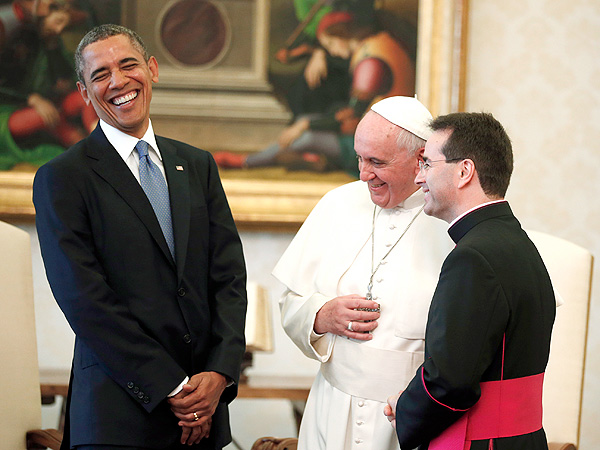
If religion did all that, I’m sure President Obama would have gotten on board. Wait. He did:

Holy Father, your visit not only allows us, in some small way, to reciprocate the extraordinary hospitality that you extended to me at the Vatican last year. It also reveals how much all Americans, from every background and every faith, value the role that the Catholic Church plays in strengthening America. (Applause.) From my time working in impoverished neighborhoods with the Catholic Church in Chicago, to my travels as President, I’ve seen firsthand how, every single day, Catholic communities, priests, nuns, laity are feeding the hungry, healing the sick, sheltering the homeless, educating our children, and fortifying the faith that sustains so many.

And what is true in America is true around the world. From the busy streets of Buenos Aires to the remote villages in Kenya, Catholic organizations serve the poor, minister to prisoners, build schools, build homes, operate orphanages and hospitals. And just as the Church has stood with those struggling to break the chains of poverty, the Church so often has given voice and hope to those seeking to break the chains of violence and oppression.

And yet, I believe the excitement around your visit, Holy Father, must be attributed not only to your role as Pope, but to your unique qualities as a person. (Applause.) In your humility, your embrace of simplicity, in the gentleness of your words and the generosity of your spirit, we see a living example of Jesus’ teachings, a leader whose moral authority comes not just through words but also through deeds. (Applause.)

You call on all of us, Catholic and non-Catholic alike, to put the “least of these” at the center of our concerns. You remind us that in the eyes of God our measure as individuals, and our measure as a society, is not determined by wealth or power or station or celebrity, but by how well we hew to Scripture’s call to lift up the poor and the marginalized — (applause) — to stand up for justice and against inequality, and to ensure that every human being is able to live in dignity –- because we are all made in the image of God. (Applause.)

You remind us that “the Lord’s most powerful message” is mercy. And that means welcoming the stranger with empathy and a truly open heart –- (applause) — from the refugee who flees war-torn lands to the immigrant who leaves home in search of a better life. (Applause.) It means showing compassion and love for the marginalized and the outcast, to those who have suffered, and those who have caused suffering and seek redemption. You remind us of the costs of war, particularly on the powerless and defenseless, and urge us toward the imperative of peace. (Applause.)

Holy Father, we are grateful for your invaluable support of our new beginning with the Cuban people — (applause) — which holds out the promise of better relations between our countries, greater cooperation across our hemisphere, and a better life for the Cuban people. We thank you for your passionate voice against the deadly conflicts that ravage the lives of so many men, women and children, and your call for nations to resist the sirens of war and resolve disputes through diplomacy.

You remind us that people are only truly free when they can practice their faith freely. (Applause.) Here in the United States, we cherish religious liberty. It was the basis for so much of what brought us together. And here in the United States, we cherish our religious liberty, but around the world, at this very moment, children of God, including Christians, are targeted and even killed because of their faith. Believers are prevented from gathering at their places of worship. The faithful are imprisoned, and churches are destroyed. So we stand with you in defense of religious freedom and interfaith dialogue, knowing that people everywhere must be able to live out their faith free from fear and free from intimidation. (Applause.)

And, Holy Father, you remind us that we have a sacred obligation to protect our planet, God’s magnificent gift to us. (Applause.) We support your call to all world leaders to support the communities most vulnerable to changing climate, and to come together to preserve our precious world for future generations. (Applause.)

Your Holiness, in your words and deeds, you set a profound moral example. And in these gentle but firm reminders of our obligations to God and to one another, you are shaking us out of complacency. All of us may, at times, experience discomfort when we contemplate the distance between how we lead our daily lives and what we know to be true, what we know to be right. But I believe such discomfort is a blessing, for it points to something better. You shake our conscience from slumber; you call on us to rejoice in Good News, and give us confidence that we can come together in humility and service, and pursue a world that is more loving, more just, and more free. Here at home and around the world, may our generation heed your call to “never remain on the sidelines of this march of living hope.”

For that great gift of hope, Holy Father, we thank you, and welcome you, with joy and gratitude, to the United States of America. (Applause.)
Where Will Converts Send Their Children to College?

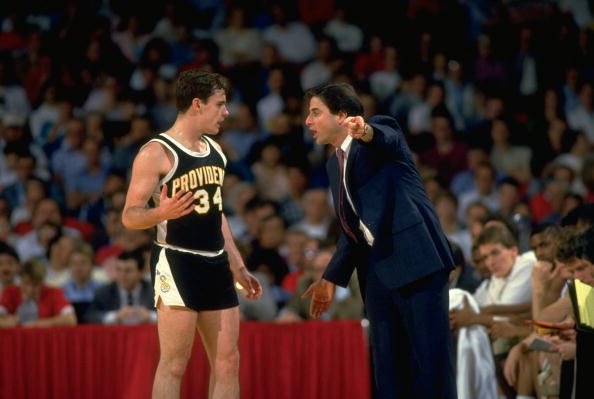
It probably won’t be Providence College where the conservative Roman Catholic professor, Anthony Esolen, is down for the count:

… when Prof. Esolen authored an article arguing, in his own inimitable style with his usual exuberant and evocative prose, that his institution had adopted a wrong-headed attitude toward “diversity,” one might have hoped that anyone who disagreed with his position would respond in a way worthy of the deepest traditions of any academic community: a thoughtful written response, laying out evidence, supplying facts, adducing arguments, contesting premises, disputing inferences, or perhaps merely appealing for a different set of perspectives.

Instead, Esolen’s argument was greeted with the academic equivalent of a loud, disapproving grunt, expressed in its commonest contemporary form: the planned creation by a faculty member of a “totally spontaneous” mob to march across campus, disrupting classes with chants and a bullhorn, until they reached the president’s office where they ceremoniously presented “their demands.” I say “ceremoniously” because representatives of this group had met with the president the night before to discuss their grievances, so he was quite clear on their wishes already. The march to present “demands” was simply a bit of planned political theater to make noise during classes the next day.

Why doesn’t the vaunted intellectual tradition of the western church prevent episodes like this? After all, lots of Roman Catholic intellectuals have rallied to Esolen’s side:

George, himself a faithful Catholic who writes from an orthodox perspective, contrasted Esolen’s treatment at Providence with Princeton hiring him, granting him tenure, installing him in one of its most celebrated endowed chairs and allowing him to create the James Madison Program in American Ideals and Institutions.

Wrote George, “If Princeton University — a secular institution the vast majority of whose faculty and administrators and many of whose students are ideologically on the left — can welcome the contributions of someone whose convictions are in line with the moral teachings of the Catholic Church (even when those teachings fly in the face of left-liberal orthodoxies) why can’t Providence College — a Catholic institution — welcome the contributions of an exceptional Catholic scholar such as Anthony Esolen?”

Meanwhile, Notre Dame professors Francesca Aran Murphy and Patrick J. Deneen have written a letter to Father Shanley, calling upon him to reframe the discussion of diversity in such a way that Esolen’s individuality as a scholar is respected and honored.

“Professor Esolen’s attempt to open a dialogue about the meaning of diversity and of its place within a Catholic and Dominican college has been greeted with a formal defense of his academic freedom, but a deeper implicit repudiation of the legitimacy of the questions he has raised,” wrote Murphy and Deneen, who added that they found it “alarming” that Esolen had been treated “in a dismissive manner by the administration.”

The letter has been signed by more than 100 scholars and observers across the country, including Ambassador Mary Ann Glendon of Harvard Law School; R.R. Reno, editor of First Things; and Ryan T. Anderson, the William E. Simon Senior Research Fellow at the Heritage Foundation.

Situations like this make a lot more sense if you conclude that the church’s institutions have accommodated themselves to modern academic standards (read modernism) and fail to uphold church teaching. This is what happens after the Land of Lakes Statement and university officials (some of them bishops) don’t pay attention to papal directives. What doesn’t make sense is all the hype of Bryan and the Jasons. Why don’t the converts reflect on the parallels between Roman Catholic and mainline Protestant higher education in the United States the way James Burtchaell did?

How to Redeem Christmas

Let Protestants have it.

Thomas (nee Tommy) Kidd’s review of Christmas in the Crosshairs notices that not until Protestants took up the cause of December 25, the holiday became safe for the women and children.

Before 1800:

In the medieval era, Christmas became a fixture of Catholic festive culture, which sometimes featured drunken celebrations and “social inversions” such as the “Feast of Fools” and “Feast of the Ass” (that is, the donkey that carried Mary). These rites made Christmas a prime target for many Reformers, who viewed them as an unbiblical “popish” riot. In the 1640s, the Puritan-dominated English Parliament banned Christmas and “all other festival days commonly called ‘Holy-days.’ ” A century and a half later, radical French revolutionaries renamed December 25 “dog day,” viewing citizens who stayed home from work as potential enemies of the secular regime.

Then English-speaking novelists saw an opening:

By 1800, Christmas was in bad shape, associated largely with working-class drunkenness and violence. But in the early 19th century, Christmas “revivalists” like Washington Irving and Charles Dickens began recasting it as a generically religious, culturally wholesome, and family-centered holiday. Clement Clarke Moore made perhaps the most significant contribution with his 1822 “Account of a Visit from St. Nicholas,” better known as “ ‘Twas the Night Before Christmas.” A friendly Santa Claus supplanted St. Nicholas’s traditional threats of wrath against disobedient children. Other menacing nocturnal visitors who had been fixtures of medieval Christmases, such as central Europe’s “Perchta the Disemboweller,” soon vanished before Santa’s kindly image. The gift-giving Santa also transformed Christmas into the merchants’ holiday par excellence.

As for me and my house, we’ll stick with Thanksgiving as the best holiday. Rule Americania!

If Anglicans Read (more of) Jesus

Alan Jacobs continues to defend himself from charges that his leniency on priests who grant membership to same-sex couples and baptize those couples’ children is a failure to adhere to Christ’s condemnation of false teachers. For some reason, he argues, Christ’s repudiation is irrelevant:

“Didn’t Jesus denounce false teaching?”” He sure did, but that’s not relevant to my argument. “We can’t abandon church discipline.” We sure can’t. Etc., etc., etc. I won’t go off on a “social media have killed reading” rant, but you know, social media really have killed reading.

Anyway, my argument is simply this: The determination of who is and is not a Christian is above your pay grade, and expressly forbidden to you by Jesus.

Jacobs does not seem to be aware that determining how to read Jesus’ words may be way above his own pay grade (though he does get paid to read for his living — not Hebrew and Greek, mind you). How can you be so absolute in ruling out the relevance of Jesus’s or Paul’s or John’s condemnation of false teachers and of wayward Christians and then say that the bottom line is ” We must be patient, humble, gentle, not quarrelsome, encouraging and upbuilding — and must exhibit all those traits even when we believe people are wrong and are striving to correct them? It’s hard work, and I stink at it. But that’s what we’re all called to.”

If we are supposed to follow Christ and the apostles, who were examples in some way, aren’t we also called to condemn false teachers and wayward Christians. At least try to wrestle with the tension between the parable of the wheat and the tares (pro-patience) and Paul’s condemnation of the Judaizers (impatient).

And simply reading Dante for instruction on Hell and Purgatory isn’t going to do much for Protestants who think the Bible is above Dante’s pay grade (nor is Dante a doctor of the church exactly, speaking of pay grades):

In the Purgatorio Dante dramatizes the extended period of waiting that those who have been excommunicated must undergo before beginning their purgation, but they will eventually begin it because they are saved. Of course, excommunicated people can indeed be damned, but that’s neither the result nor the intention of excommunication in any church that I know of. To think that you can determine someone’s salvation or damnation by their inclusion in or exclusion from a given church community would be the very highest level of hubris.

Why did Jesus give Peter the keys of the kingdom, then? To be patient in locking the gates of heaven to unrepentant sinners?

I wonder too if Jacobs notices the restraints that come upon him as an Anglican. Can he really call everyone a Christian who professes Christ and who is not in fellowship with the Archbishop of Canterbury?

Why does all of this matter? It matters because when someone in my church, or within the Christian fold more generally, says or does things that I believe terribly wrong, or terribly mistaken, I have many options available to me but among them is not the declaration that “You are not a child of the kingdom, you are a child of the evil one.“ That is, if I am going to obey the teaching of this parable, I have to treat this person as a brother or sister, as one of my fellow children of the kingdom — and they have to do the same to me.

By that logic, worshiping at any Reformed Baptist or Free Methodist church should do. Why cut yourself off from ecclesiastical communion by becoming an Anglican? If “his” church matters, that mattering cuts off any number of Christians from fellowship.

Can we have a little respect for tradition, ordination, and hierarchy, please?

From What Machen Tried to Spare American Protestants

Walter McDougall reminds of the synergy between progressive theology and progressive politics:

Historians disagree on how to date and define the Progressive Era except to say it had everything to do with reform.[16] By the 1890s it was apparent that American institutions couldn’t cope with the modern problems thrown up by industrialization, urbanization, and immigration, including corporate trusts, labor strife, corruption, big city machines, public health, women’s rights, and more. To elites in the academy, government, business, and the clergy it seemed the modern solution to those modern problems was scientific management by credentialed experts. As one scholar put it, “The Progressives believed in a … national government directing the destinies of the nation at home and abroad. They had little but contempt for the strict construction of conservative judges, who would restrict the power of the national government to act against social evils and to extend the blessings of democracy to less favored lands. The real enemy was particularism, state rights, limited government.”[17]

Note the words “believed in,” “contempt,” “social evils,” and “real enemy.” We think of Progressivism as a secular movement inspired by the natural and social sciences of that era. Why then does a language of faith and good vs. evil come so easily to the historian of Progressivism and why does it go unnoticed by most readers? The short answer is that secularism is a myth or, to put it another way, if you don’t believe in sectarian religion you will believe in some species of civil religion.

For a hundred years after 1789 Americans were not conscious of a potential conflict between their mostly Protestant faith and their civil faith because the former encouraged republican virtue and the latter ensured free exercise of religion. But under the stress of the Civil War and the onslaught of modernism (Charles Darwin first published in 1859) the main-line Protestant churches surrendered their prophetic role to the civil religion, surrendered their faith in an inerrant Bible, and surrendered cultural authority to … the Progressives! That is why, in the words of my colleague Bruce Kuklick, “We should associate Progressivism most with the rise of a more relaxed Protestantism in higher education after the Civil War.” Ivy League universities, new ones like Chicago, Johns Hopkins, and Stanford, and land-grant universities devoted themselves to secular research on the German model, and the knowledge generated in science and engineering, sociology, political science, and economics easily persuaded politicians that cultural authority must pass from the clergy to the intelligentsia, who knew how to “manage God’s universe for the benefit of mankind.”[18]

Progressives meant to break up capitalist concentrations of power and wealth, purge federal, state, and municipal governments of corruption, and protect and empower the people. We know their accomplishments including trust-busting, the Pure Food and Drug Act, civil service reform, the income tax, direct election of senators, the Federal Reserve bank, women’s suffrage, and Prohibition. But these were also the heyday of Jim Crow laws. There was no contradiction in that because the science and social science of that era endorsed racial hierarchy, Social Darwinism, and “the propriety of American imperialism.”[19]

What has all that to do with “a more relaxed Protestantism”? The answer lies in the parallel Social Gospel movement whose preachers imagined their modern spirituality was the counterpart to modern science. “The law of progress is the same in both,” said Lyman Abbott, whose “applied Christianity” blessed philanthropic cooperation with Progressive government. The Social Gospel dismissed the Augustinian distinction between the City of Man and City of God.[20] It stressed collective reform over personal salvation. It made peace with evolution, put its faith in progress, and imagined good government could perfect society over time. In Walter Rauschenbusch’s exultation, “The social gospel registers the fact that for the first time in history the spirit of Christianity form a working partnership with real social and psychological science.”[21]

The origins of liberal theology are legion: the rationalism of the Enlightenment, the “Higher Criticism” of the Bible, Darwinian evolution, discoveries in geology and paleontology that seemed to debunk the Genesis account of Creation, psychological theory that seemed to debunk the concept of sin, and technological wonders that seemed to leave nothing beyond mankind’s reach. In the intellectual universe of liberal pastors Christ ceased to be a redemptive messiah and became a prophet of social uplift. Some post-millennialists even believed America was called to build a literal heaven on earth in preparation for the Second Coming and thousand-year reign of the saints.

The American Civil Religion implications of the Progressive Social Gospel were profound.[22] The cross got confused with the flag, which preachers like Josiah Strong and politicians like Beveridge made into a veritable fetish. “We cannot retreat from any soil where Providence has unfurled our banner … for liberty and civilization are God’s promises fulfilled, and the flag must henceforth be the symbol and sign to all mankind.”[23] William Guthrie, a University of Chicago professor, even preached a “religion of Old Glory” and “evolutional view of good and evil,” even prophesying the Stars and Stripes would become “the flag of a Federation of Nations” and “the Ideal of the Kingdom of Heaven on Earth.”[24]

In sum, the Social Gospel was the marriage bed wherein mainline Protestantism mated with the civil religion. Their offspring was a newly Progressive ACR that no longer preached virtue, prudence, humility, and self-reliance, and instead preached power, glory, pride, and paternalism at home and abroad.

Reading McDougall (and Machen) gives a new meaning to woke.

If More Congregationalists Read Machen

They might understand the difference between a Baptist and Presbyterian. But to UCC pastor, Peter Laarman, Tony Campolo and Shane Claiborne’s proposal to re-brand evangelicalism (post-Trump) is a fool’s errand:

Campolo and Claiborne even get their history wrong. What they regard as the first successful re-branding of Bible-centered “orthodox” American Christianity in the early 20th century was in fact a complete failure, just as their proposed “Red Letter” re-branding will be this era.

They cite Carl F.H. Henry as the principal re-brander in the 1930s, but Carl Henry was not really a force to be reckoned with prior to the 1940s and 1950s. Moreover, Carl Henry’s beliefs were immediately understood to be contaminated by the same poisons that had fatally tainted Fundamentalism: i.e., a rigid view of biblical inerrancy (including a literalist view of the miracle stories), insistence that mere individual conversion fulfills God’s will, complete acceptance of the old patriarchal frame, etc.

It would be hard to find any daylight at all between the theological commitments of Carl Henry and those of J. Gresham Machen, who was heralded during the 1930s as the single brightest light among the Fundamentalists.

See what he did there? Machen signals fundamentalism (and Laarman didn’t even give Orthodox Presbyterians a trigger warning). Therefore, invoking Carl Henry is really to say you haven’t progressed beyond fundamentalism (yuck!), which makes Campolo and Claiborne even more clueless from a mainline Protestant perspective than even progressive evangelicals can fathom.

The problem is that you can see separation between Machen and Henry if you actually care more about theology, sacraments, and polity than about being in the American mainstream. Henry may have been a Calvinist on soteriology but his Reformedness didn’t go much beyond that (plus his high view of the Bible). Henry also refused to baptize babies, which puts Machen closer to Laarman than to Henry. And then Machen took Presbyterian polity seriously — hello, his church refused interdenominational cooperation in settings like the National Association of Evangelicals where Henry was an intellectual guru.

But that kind of Protestant fussiness only comes up fundamentalist for mainliners. Even though telling the difference between Congregationalists and mainline Presbyterians is impossible (and something you’re not supposed to do in polite Protestant ecumenical company), if you do did in your heels on denominational identity you are merely a separatist. You lack the good graces and tolerant bonhomie of mainstream, well-connected Protestantism. Never mind that after 135 years of ecumenical activism, the UCC and the PCUSA remain — get this — separate. And by all means don’t notice that Congregationalists and Presbyterians descend from the mother of all church separations — 1054, the year that the church Christ founded (as some put it) split up.

Lots of separations out there in church history, but the UCC puts “United” in church unity. As if.

If More Rod Drehers Read Machen

Once again, Rod explains the Benedict Option:

Do you think that is generally true about our society and our civilization — that people, whether they are conscious of it or not, and operating in a sauve qui peut (save who you can) panic? To be perfectly clear about the Ben Op: it is based on the idea that Christianity itself within the West is facing this state of affairs, and that believing Christians, therefore, have to build new structures and reinforce old ones to last through the religious crash that is already happening.

If Rod had read Machen and knew anything about the 1920s contest within U.S. Protestantism over modernism, he would know that some Christians were thinking the West faced a difficult set of affairs — wait for it — a century ago.

Should we really welcome someone who is so late to the party?

If More Anglicans Read Machen

Would they avoid the problem that Alan Jacobs describes here (for Anglicans who read Machen see this)?

What should Anglicans do with a gay couple that wants to have their baby baptized? Jacobs thinks the child should be baptized:

[T]o deny people the sacraments is to deny them one of the primary means by which they can receive the enlightening and empowering grace by which they can come to know God and follow Him. For the Anglican with a high sacramental theology, it is to deprive them of the “spiritual food and drink” that should be our regular diet. This strikes me as a massively dangerous thing to do. How can we expect people to think as they should and act as they should if we are denying them access to this empowering grace? If we could think and act as mature Christians without regular access to the sacraments, then what need do we have for those sacraments?

But how has the enlightening power of grace worked out in the lives of this gay couple which Jacobs admits has disregarded church teaching and Scriptural imperatives on marriage and sex? It hasn’t worked well and that is why Jacobs thinks the problem is not really with the sacrament but with the failure of Anglican catechesis (in effect a failure of ministry that includes baptism and catechesis):

It is extremely unlikely that any of the people involved have been well-catechized in the Faith. We all need to face up to the fact that almost no churches in the Anglican tradition, conservative as well as liberal, have taken catechesis seriously for a long time. To deny the sacraments to people the Church has failed to catechize is to make others suffer for the failings of the Church’s leadership.

Almost everyone in our society — with the exception of monastics, the Amish, and a few fundamentalist Protestants — has been deeply and persistently catechized by the mass media into a very different model of sexuality than the Christian and biblical one. We should have the same compassion for them as we would for people who have been raised in a brainwashing cult.

So you continue to do what Anglicans have done for a long time — baptize without catechesis? Or do you admit that for baptism to take, it needs the work of instruction in the faith?

[W]e should remember that the task of re-catechizing the Church is going to take a very long time — decades, perhaps centuries — and in the meantime we must be generous and loving to those who have been brainwashed by the world, and not prevent those who desire it from taking the true spiritual food and drink on which we were meant to live.

Why doesn’t Jacobs see how much his sacramental theology really depends on catechetical theology? Or that the ministry of the sacraments cannot be isolated from a larger understanding of pastoral theology? Is it because he doesn’t want to admit that Puritans had a point about the Elizabethan Church?

Bean Counter, Feed My Sheep

Or should it be, sheep feeder, count our beans?

Dr. Timothy Keller, Chairman of the Board at Redeemer City to City, is pleased to announce the selection of Steve Shackelford as the new CEO of Redeemer City to City (CTC).

Shackelford currently serves as President and CFO with Corporate Capital Trust, a business development company that is co-advised by CNL and KKR. The company currently has assets of approximately $4.3 billion and is one of the largest business development companies in the United States. Shackelford earned his undergraduate degree in accounting and MBA degree at Florida State University and spent ten years at the international accounting firm PricewaterhouseCoopers in Orlando, Paris and New York prior to joining CNL in 1996. The Board’s selection comes after an extensive five-month search conducted by executive search firm CarterBaldwin.

Dr. Keller said, “The goal of CTC is to build gospel movements in global cities. The population in cities is growing at a tremendous rate, and there has never been a greater need for churches to serve the diverse needs of cities. Developing leaders for urban ministry is at the core of our mission at CTC. As we grow in global scope, CTC needs an executive leader to navigate the increasing complexity of this movement around the world. I truly look forward to working with Steve to lead this ministry together.”

Imagine if churches ran themselves this way. Isn’t part of urban life worrying about optics?