Make It Stop

Yet another press release on evangelicals who have found a home that is sweet and located in Rome. And once again, the great appeal is authority (papal, infallible, audacious?):

What I came to realize is that little progress will be made on the major issues (or many secondary issues) of theology until one settles the issue of religious authority. That single concern is related to numerous key facets of the Christian faith, the most impactful of which were the canon of Scripture and its orthodox interpretation.

The canon of Scripture (the books included in the Bible) is a huge issue for anyone who considers the Bible to be the Word of God and the authority for one’s faith. If one thinks the early Church went astray somehow, it becomes a very difficult problem because the biblical collection itself was not settled until centuries after the apostles died. If the Church was in error by then, how can the “Bible-Only Christian” be sure he really has the inspired Word of God? And if the Church was kept from error while it determined the canon, why was it not likewise kept from error during the councils and creeds it produced at the same time? As I looked at the major alternate theories of canonization, I discovered the historical truth that the Church is ultimately the standard.

This was also the case with doctrine. It is well known that there is rampant disagreement among the various sects, denominations, and cults of Christianity—but where is the line drawn? Christians often speak of “orthodoxy,” “heresy,” “essentials,” and “fundamentals”—but by what authority are these words defined, and doctrines labelled? For the Christian who denies that the Church is the standard, there seemed to be no non-circular means of doing so.

I’ve asked before and no one answered. So I’ll ask again. With all that authority, how do you explain the bad stuff? What about Marquette University? What are the bishops doing? Pope Francis? The converts?

Working in my Marquette office one afternoon in the spring of 2010, I heard unusual sounds coming from the normally quiet lawns outside my window. I was surprised to see a modest assembly of students and professors preparing to march in protest. Against what? Minutes later, an email arrived informing me that the university’s then-president, Robert Wild, S.J., had voided a contract extended to Jodi O’Brien to join us as Dean of the College of Arts and Sciences. Though the contract had already been signed, Fr. Wild—perhaps under external pressure—decided that O’Brien, a partnered lesbian whose research included queer studies, was not an appropriate choice to represent our mission and identity.

Although an ordinary person with a passing knowledge of the moral teachings of the Catholic Church would think such a decision obvious, the department chairs in the college soon gathered and voted almost unanimously to censure Wild’s decision. The press, meanwhile, demanded an explanation. On the ­defensive, the university allegedly paid a considerable sum in order to break the contract. Officials were soon exercising themselves to demonstrate their concern for equitable treatment of gays and lesbians. The university would initiate projects, courses, conferences, and the like to explore issues of sex and gender! The clear implication was that change would come, though slowly. Marquette would get with the sexual-liberation program so that something like the O’Brien affair would never happen again.

Since 2010, the campaign for sexual diversity at Marquette has advanced rapidly. Last year, the university announced the expansion of the former Gender and Sexuality Resource Center (established in the wake of the O’Brien dustup) into two new initiatives: a Center for Gender and Sexualities Studies and an LGBTQ Resource Center. How much funding has been increased has not been disclosed. We also now have an Office of Institutional Diversity and Inclusion, which offers faculty and staff awards for excellence in, yes, “diversity and inclusion.” Again, how much this will cost hasn’t been revealed. We do know, however, that funds have been promised to support the development of new courses that advance the cause. A faculty fellows program in diversity is also in the works.

The whole article is worth reading, but this paragraph is particularly telling:

For the last two generations, American Catholic ­theology departments have been at the forefront of a campaign of dissent against Catholic sexual morality. This campaign has often been led by Jesuits and Jesuit universities. Unlike attempts to attract more minority students, or programs to empower students from disadvantaged backgrounds—efforts in full accord with Catholic social teaching—this campaign of dissent has sometimes been underhanded, even dishonest. It has also been ruthless, working hard to suppress and punish any who speak up for the Church’s teaching. The way Marquette has adopted and promoted the mishmash of LGBTQ ideology over the last few years is consistent with that tradition of dissent.

So why don’t the converts ever include these developments in their touting of Rome’s authority and certainty? Are they unaware?

Whatever the reason, the Marquette situation may explain Rachel Lu’s counsel (which doesn’t say much about the hierarchy that is supposed to keep everything neat and orthodox):

In that spirit, try not to pay too much attention to Church politics. Catholic politics is, well, politics. Unless your profession requires it, you probably don’t need to obsess about it, and there are much more edifying ways to immerse yourself in the faith. But whatever you do, don’t trust journalists to educate you about Catholicism.
What Must I Do To Be Married?

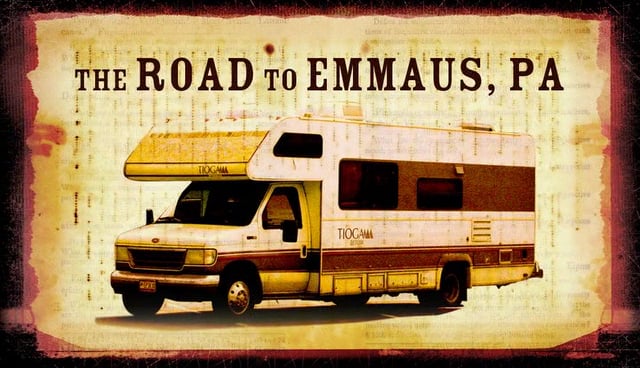
It used to be that Hebrews were the forerunners of the church. Just look at what Jesus says to his disciples on the road to Emmaus. Turns out Bible readers were wrong. It was the Stoics who prepared the way for Christianity:

The Stoics actually lived lives full of joy, peace, and meaning. Though bereft of God’s divine revelation in the Old and New Covenants, they stretched their God-given powers of reason to the limit, reaching many of the same conclusions that Christians came to regarding life, liberty, and love. . . .

How close were they to divine truth? Musonius Rufus is considered one of the first pro-life philosophers. He praised large families, extolled fidelity in marriage, argued against abortion and contraception, and connected the purpose of marriage to procreation and the unitive value between husband and wife. Quite astounding for someone who was born a few decades before Jesus Christ.

The Stoic philosophers were not interested in pie-in-the-sky theorizing. Rather, they focused on eminently practical topics like: should a child obey his parents? How should we dress ourselves? What is the meaning of pain and hardship? Must we learn what is good and follow it?

Nor were they interested in sin, damnation, sacrifice or expiation.

Kevin Devin Rose left Protestantism for this?

Prexit

State sovereignty goes hand in hand with ecclesiastical sovereignty, or it sure looks like it.

Michael Lind explains the phenomenon of Trump and what it means for Democrats and Republicans:

The culture war and partisan realignment are over; the policy realignment and “border war” — a clash between nationalists, mostly on the right, and multicultural globalists, mostly on the left — have just begun.

***

For the nationalists, the most important dividing line is that between American citizens and everyone else—symbolized by Trump’s proposal for a Mexican border wall. On the right, American nationalism is tainted by strains of white racial and religious nationalism and nativism, reinforced by Trump’s incendiary language about Mexicans and his proposed temporary ban on Muslims entering the U.S.

But while there is overlap between nationalists and racists, the two are not the same thing. The most extreme white nationalists don’t advocate nationalism as a governing philosophy in our multiracial country; they hope to withdraw from American life and create a white homeland within the nation-state. Nationalism is different than white nationalism, and a populist American nationalism untainted by vestiges of racial bigotry might have transracial appeal, like versions of national populism in Latin America.

The rise of populist nationalism on the right is paralleled by the rise of multicultural globalism on the center-left.

For multicultural globalists, national boundaries are increasingly obsolete and perhaps even immoral. According to the emerging progressive orthodoxy, the identities that count are subnational (race, gender, orientation) and supranational (citizenship of the world). While not necessarily representative of Democratic voters, progressive pundits and journalists increasingly speak a dialect of ethical cosmopolitanism or globalism — the idea that it is unjust to discriminate in favor of one’s fellow nationals against citizens of foreign countries.

Now watch (thanks to our W. Michigan correspondent) how church affairs line up with temporal politics, with ecumenists (globalists) on the left opposing the constraints of denominationalists (nationalists) on the right:

Many who witnessed the continuing denominational imprisonment of the Lord’s body and blood experienced ecumenical agony. The late Emilio Castro, the WCC general secretary who hired me, was a Methodist pastor who yearned for eucharistic sharing. He would say, “I’m not even asking the Catholics (or Orthodox) to recognize the validity of the Lord’s Supper that we Methodists celebrate. I’m simply asking them to accept that I see the body and blood of Jesus Christ fully present in their Eucharist.”

In spring 1994 I sat in a restaurant with Castro and his longtime Orthodox friend and WCC colleague Ion Bria, a priest in the Romanian Orthodox Church. The two lifted their wine glasses and said to each other with tears in their eyes, “Someday, before we die, we shall be able to share the body and blood together, with our churches’ blessings.” But they never did. Nor, if they were still living, could they do so today.

So I returned to ecclesiastical disobedience. That became more complicated once I was elected general secretary of the Reformed Church in America. When I assumed that post, I didn’t know all that would be demanded of me as general secretary, but I knew I couldn’t go forward without retreating. I knew I needed regular times away, with a spiritual director, and the nourishment of Christ’s body and blood. A Carmelite retreat center near my home in New Jersey provided all this.

As a church official, I wanted more than ever to show absolute respect for my Catholic hosts. But their invitation to receive at the table was unambiguous. On my retreat days, I’d often be invited to read one of the scriptures at their eucharistic service.

Indifference to church polity and theology like this is why confessional Protestants exited from the modern ecumenical movement.

Arguably the most astounding aspect of contemporary ecumenical discussions is that the leader of the only true church is also apparently indifferent to ecclesiastical laws:

This tension in how we understand the Eucharist is one that, remarkably, Pope Francis himself has acknowledged. Last November he met with a Lutheran congregation in Rome and responded to one member, Anke de Bernardinis, who is married to a Catholic and who asked what it would take for them to receive the Eucharist together. The pope’s spontaneous ten-minute answer was revealing, unprecedented, and even stunning.

Francis said, “I ask myself the question. To share the Lord’s banquet: is it the goal of the path, or is it a viaticum (food or provision accompanying one on a journey) for walking together?” He posed that question rather than give the doctrinal response—that she could either become Catholic or continue to pray with her husband over the pain of a divided church.

Pope Francis went on to focus on baptism. “I ask myself. But don’t we have the same baptism? If we have the same baptism, shouldn’t we be walking together?” Then he went further. “The supper? There are questions that only if one is sincere with one’s self and the little theological light that one has, must be responded to on one’s own. See for yourself. This is my body. This is my blood. Do this in remembrance of me—this is a viaticum that helps us to journey on.”

And Francis didn’t stop there, going on to address the classic dividing line over the meaning of Christ’s “real presence.” The pope recalled a Protestant pastor and friend who told him, “We believe that the Lord is present there.” So he said to the Lutheran woman, “You believe that the Lord is present. And what’s the difference? There are explanations and interpretations, but life is bigger than explanations and interpretations.”

Having noted the trademark tension between official policy and actual practice, Pope Francis concluded by saying he would not “dare to give permission to do this” but then repeated, “One Lord, one faith, one baptism. Talk to the Lord, and then go forward. And I wouldn’t dare—I don’t dare say anything more.”

In ecumenism, as in diplomacy, ambiguity can be a helpful tool, allowing room for movement on issues where formal agreement is not yet possible. Pope Francis opened the door more than a crack.

When Will Bryan and the Jasons Notice?

Papal power cannot even control what happens closest to home (think subsidiarity):

In short, the motu proprio released on Saturday is another blow to the cause of transparency and accountability at the Vatican. As veteran Vatican-watcher John Allen observed, it is a victory for the “old guard”—the entrenched bureaucracy that blocks any significant change in the way the Roman Curia do business.

Just to make things clear, Cardinal Pell’s office is not having its wings clipped because of financial scandals. (“Pope reins in Vatican’s finance minister after scandal,” read one widely circulated headline, getting the story completely upside-down.) The Secretariat for the Economy was created because of the scandals. The money-laundering charges, the massive cost overruns, the no-bid contracts, the undervalued assets, the leaked confidential information, the undocumented expenses—all these took place before Cardinal Pell set up his new shop in 2014. The Secretariat helped bring these problems to light, set up procedures to guard against them, and in some cases took over the responsibilities that other offices had proven unable to handle cleanly.

Now the main work of financial management, which had temporarily been handled by the Secretariat, will return to the purview of the Administration of the Patrimony of the Apostolic See (APSA). This is the agency responsible for much of the trouble that Cardinal Pell discovered in Vatican financial management. Remember Msgr. Nunzio Scarano: the infamous “Msgr. €500” who was arrested in 2013 and now faces several different criminal charges for financial misconduct? He worked for years at APSA, rising to be the head of the accounting department—the accounting department—without causing his superiors to question how he was amassing a personal fortune on his modest salary. APSA is one of the major reasons why the Secretariat for the Economy was needed: part of the problem, not the solution.

Nor can papal authority insureensure faithful teaching:

A group of Catholic academics and pastors has submitted an appeal to Cardinal Angelo Sodano, Dean of the College of Cardinals in Rome, requesting that the Cardinals and Eastern Catholic Patriarchs petition His Holiness, Pope Francis, to repudiate a list of erroneous propositions that can be drawn from a natural reading of the post-synodal Apostolic Exhortation Amoris laetitia. During the coming weeks this submission will be sent in various languages to every one of the Cardinals and Patriarchs, of whom there are 218 living at present.

Describing the exhortation as containing “a number of statements that can be understood in a sense that is contrary to Catholic faith and morals,” the signatories submitted, along with their appeal, a documented list of applicable theological censures specifying “the nature and degree of the errors that could be attributed to Amoris laetitia.”

Among the 45 signatories are Catholic prelates, scholars, professors, authors, and clergy from various pontifical universities, seminaries, colleges, theological institutes, religious orders, and dioceses around the world. They have asked the College of Cardinals, in their capacity as the Pope’s official advisers, to approach the Holy Father with a request that he repudiate “the errors listed in the document in a definitive and final manner, and to authoritatively state that Amoris laetitia does not require any of them to be believed or considered as possibly true.”

“We are not accusing the pope of heresy,” said a spokesman for the authors, “but we consider that numerous propositions in Amoris laetitia can be construed as heretical upon a natural reading of the text. Additional statements would fall under other established theological censures, such as scandalous, erroneous in faith, and ambiguous, among others.”

While the world turns, Bryan still debates Tim Challies.

Someone Isn’t Listening

While Pope Francis suggests that Christians need to apologize to non-heteros, Steven Jonathan Rummelsburg href=”http://www.catholicstand.com/talk-lgbtq-supporters/”>offers tips on how to talk to people in the LBGTQ community:

Admittedly, there seem to be many possible positions on the issues swirling around gender and sexual morality. Those in and of the world would contend that there are as many positions as people, but this is absurd. As it adheres with the first principle of all reality, there are only two possibilities; either one possesses a correct understanding of the LGBTQ agenda or one does not. Those who embrace a false notion of the issues asserted by the agenda appear to have many different positions, however, they are unified by their error.

Both misguided groups to the left and the right of the properly formed Catholic mistakenly believe that a personal opinion qualifies as a proper position on an issue. This is simply a nod to the Dictatorship of Relativism and has no bearing on objective reality. Before a true dialogue can begin, let the truth-seeker know that there are ever only be two possibilities for any position: either one understands reality rightly, or one does not. Our opinions are meaningless unless they correspond to the principles of truth and reality. Ironically, even the ideologue who claims that every opinion is “valid” will disagree with Catholic Truth, thus contradicting his own claim. However, the ideologue never lets self-referential incoherence get in the way of his narrative.

That’ll work.

Has Mr. Rummelsburg been taking philosophy from Bryan Cross?

And just imagine trying that approach the next time someone tells you we need to have a conversation about race relations in the United States.

Ecclesiastical Upgrade

Kathy Schiffer summarizes the most recent batch of reflections by evangelical converts to Rome. Here are the main reasons:

The contributors to Evangelical Exodus were influenced by diverse factors, notably the biblical canon, Christian orthodoxy, and the two concerns most frequently cited by Protestants: sola scriptura (all truth can be found in the Scriptures) and sola fide (man is saved by faith alone). Doug also named Beauty as one of the factors which led him and his fellow seminarians to a new appreciation for the Catholic Church. “In Protestantism,” Doug said, “there’s a tendency to dismiss any reason other than the intellectual. But as human beings, we’re both physical and spiritual creatures. In the Catholic Church, he found, intellect and reason are respected; but the Catholic Church is also more beautiful and more historical. There is an attractive package which draws the spirit, combining art and music and beauty, a long history, and tradition, with solid intellectual arguments.”

When Martin Luther broke with the church, he feared for his soul. He worried about his sins. He needed an alien righteousness to cover his transgressions which haunted him everywhere he went.

Why do Protestants who go to Rome never seem to sense the spiritual angst that motivated Luther? They’ve gone to a church that teaches if you die in mortal sin you risk going to hell. They now are in a communion where mortal and venial sins are numerous and the prospects of purgatory are real. But these “converted” folks seem to operate with the assumption that they were already “saved” as a Protestant but now have found a better version of Christianity, like going from Windows 8 to Windows 10, from Bill Hybels to John Paul II.

Give Protestants credit. We worry about salvation. We learned that worry from the church in Rome. Where did that worry go on the other side of the Tiber? It seemed to get lost in the efforts to preserve Christendom, the papal states, the West, and to win the culture wars.

The Trinity is so Fourth Century

While New Calvinists decide how to receive the teachings of Eastern bishops, Roman Catholic cardinals have moved on. According to Christoph Cardinal Schonborn:

AL [Amoris Laetitia] is an act of the magisterium that makes the teaching of the Church present and relevant today. Just as we read the Council of Nicaea in the light of the Council of Constantinople, and Vatican I in the light of Vatican II, so now we must read the previous statements of the magisterium about the family in the light of the contribution made by AL.

The funny thing about the evangelical controversy over the Trinity, the updated version offered by the likes of Ware and Grudem comes for the sake of outdated views of women’s roles.

Appropriating the past is tricky. Best to hire a historian.

Chairman of the Board

Was this what Bryan and the Jasons had in mind?

Francis’s palpable respect for other religious traditions, coupled with his determination that the various faiths must work together to advance shared values such as peace and the care of creation, have made him a global role model for interfaith cooperation. . . .

It’s possible, of course, that people in either India or Turkey unaware of the pope’s record may be briefly swayed by such rhetoric, but the moment such charges are subjected to critical examination they’ll collapse under their own weight.

While the substance of such complaints may not have much merit, there’s nevertheless a sense in which they’re meaningful. In effect, they may be an index that Francis’s ambition to be the “chairman of the board” for religious moderates around the world is working.

Obviously without using that language, that’s a role to which every recent pope has aspired – trying to galvanize a coalition of authoritative moderates within the world’s religious traditions to demonstrate that, as much as religion can be part of the problem, it is also uniquely positioned to be part of the solution.

As someone who doesn’t hail from a traditional Western power, Francis brings a special capacity to pull that off, since he doesn’t carry the same baggage in terms of being associated with either the West’s colonial history or its contemporary military and political choices. His global popularity also means he carries the largest religious megaphone in the world, allowing him to lift the standing of moderate voices in other traditions.

Don’t think too long about where ex-Nazis went after World War II.

Forget also about popes transcending personal experience. Turn STM into ASTM — Argentina, Scripture, Tradition, Magisterium:

From the beginning, it’s been striking how often Pope Francis, when pressed to explain a particular statement or policy choice, will invoke his background in Argentina.

There are really too many examples to count, but just to choose one almost at random, in a session with priests from the diocese of Rome earlier this month, Francis stirred controversy by suggesting there are cases in which it’s better for couples to live together for a while rather than take part in a shotgun wedding.

“Here’s a social fact in Buenos Aires,” he said. “I prohibited religious marriages in Buenos Aires in cases of what we call matrimonios de apuro, meaning ‘in a hurry,’ when a baby is on the way.”

In fact, Francis cited his experience in Buenos Aires no fewer than five times in that address to priests, on multiple topics.

And be sure to love the sinner while hating the sin (except if you are a global capitalist, climate change denier, or a Turk):

Furthermore, the pope did not tell anyone to issue an actual apology. And his focus was not limited to the LGBT community. Rather, he made the broader statement that the Church “must not only ask forgiveness to the gay person who is offended,” but also to all of the people “we could have defended and we didn’t,” including the poor, and women and children who are exploited.

He cited the Catechism, saying that homosexual individuals “must not be discriminated against, (but) must be respected and accompanied pastorally.”

The Catechism teaches that based on Scripture, “tradition has always declared that ‘homosexual acts are intrinsically disordered.’”

Homosexual acts, it continues, “are contrary to the natural law … under no circumstances can they be approved.”
When speaking of homosexual persons, however, the Catechism insists that most gay individuals face “a trial” due to their sexual orientation, and “must be accepted with respect, compassion, and sensitivity. Every sign of unjust discrimination in their regard should be avoided.”

What Pope Francis said, then, clearly echoes Church teaching and displays his genuine pastoral concern for a group that has and frequently still does face hostility, including, at times, from within the Church.

Isn’t independence from tyrannical authority wonderful?

The Theology of Brexit

Massimo Faggioli reminds that Vatican II and the European Union are part of the same cultural moment:

The simultaneity of the Dublin conference and Brexit made me think about the tight relationship between development of Catholic theology (especially ecclesiology) in the 20th century and the development of Catholicism from multinational to truly internationalist/globalist. Catholic support for the European project after World War II (from Pius XII to the most important politicians of the Christian-Democratic parties governing Europe after 1945) was part of the transition from the nationalist, romantic roots of the theological ressourcement between the mid-19th century and the 1920s and ’30s. At Vatican II, Catholic theology internationalized what had been born as expressions of national movements during the previous century (adoption of the vernacular; the new role of national bishops’ conferences; anti- Curia sentiment; anti-capitalist, anti-democratic, and anti-liberal Catholic social movements, etc.). The internationalist quality of Pacem in terris and Gaudium et spes was a turning point in doctrine concerning the state and government in Catholic theology, and also a response to the most powerful internationalism of the second half of the century, Communism. At Vatican II, Catholicism became an advocate of globalization, which John XXIII had called in the opening speech of the council in 1962 “a new order of human relations.”

The ties between Vatican II and the EU are even closer in the minds of traditionalist Roman Catholics:

Brexit can be seen as a subset of the debate on Vatican II and the post-Vatican II period, at least among Catholics. It’s no secret that Catholics and the Catholic bishops of Britain were deeply divided over Brexit, and that for many conservative Catholics in Britain opposition to the EU and to Vatican II has similar roots. Traditionalist Catholics who today reject “the new order”—in terms of economic and social exclusion, as well as of the dominance of what Francis in Laudato si’ called “the technocratic paradigm”—tend to put Vatican II and the EU together in one category of internationalization and globalization; they choose a traditional, pre-global church and a nation-state (even though this fallback on the nation-state is for them theologically not unproblematic) as opposed to the larger framework of a globalized ecclesial context and a European political union. It is an opposition to a much more complex world, politically and theologically, and to the modern, globalized attitudes toward vulnerable life, marriage, family, subsidiarity, immigration, war, and peace. It is an opposition that puts back into question the Catholic perception of political power, and in particular the church’s perception of the sovereignty of the nation-state and of international/supranational institutions.

Meanwhile, Damon Linker notices aspects of Angela Merkel’s responsibility for the circumstances that led to Brexit that could also be applied to Pope Francis, perhaps the post-Vatican II pope that most embodies Vatican II:

Angela Merkel is the real catalyst behind the outcome of the UK referendum. Not only did the German chancellor insist on admitting well over a million refugees and migrants from the Greater Middle East into the heart of Europe. Supporters of the policy have also made it clear on numerous occasions that they consider racism and xenophobia to be the only possible grounds for opposing her stand.

From the standpoint of progressivism, this makes perfect sense. An open-door policy toward refugees and migrants fleeing unrest in the Levant and North Africa is obviously the only morally acceptable option. It shouldn’t matter whether those immigrants are Muslims, or if they’re Syrians or Libyans, skilled or unskilled, poor or middle class, literate or illiterate, eager to assimilate or convinced of the need to resist it, looking for freedom and pluralism or hoping to build an enclave of Sharia law within the West. And there’s certainly no reason to suspect that any of them might turn toward terrorism, now or a generation from now. They’re just placeless people — human beings in need of aid, comfort, and charity. That’s all that should matter.

Except that many millions of citizens in EU member countries don’t see it this way. It does matter to them, just as it also matters to them whether Turkey is eventually invited to join the union, and they don’t appreciate having their concerns about the ethnic, religious, linguistic, and economic character of their political communities dismissed as moral pathologies.

Nor do they care to have their religious institutions circumscribed by remote bishops and cardinals. Pre- or post-Vatican II, subsidiarity matters.

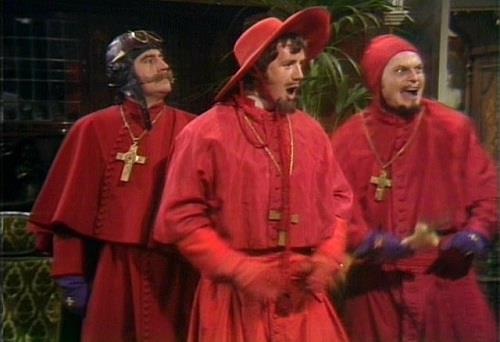
No One Expects the Puritan Witch Hunt

Some contemporary critics are debating whether Christians are experiencing something closer to a witch hunt or an inquisition. Turns out, the inquisition is worse:

By contrast, the purge of traditional Christians and Jews is a heretic hunt, an Inquisition, whose objective is to isolate and punish individuals who actually profess opinions contrary to the prevailing orthodoxy. There can be some overlap between an Inquisition and a witch-hunt, to be sure. But today’s liberal Inquisitors are not searching for individuals secretly in communion with God—yet.

This is a critical distinction. Witch-hunters eventually discover that burning a few old hags does not prevent cows’ milk from souring. Inquisitions, by contrast, usually succeed: The Catholic Church succeeded in stamping out broadly held heresies, as in the Albigensian Crusade of 1220-1229, which destroyed between 200,000 and 1,000,000 inhabitants of Cathar-controlled towns in Southern France. In many cases a town’s entire population was killed, just to make sure. For its part, the Spanish Inquisition eliminated all the Jews, Muslims, and Protestants, although it sometimes drove heretical opinions underground, with baleful consequences for the Catholic faith. (From David P. Goldman via Rod Dreher)

So, converts to Rome want to identify with all of THAT history? And were the glories of Christendom all that glorious?

But if you can defend that part of the church’s history, the recent past is easy peasy.