Alabamans Went with Augustine

Or so argues William Jason Wallace:

Christianity is not very helpful for negotiating political differences. In AD 410, when the Rome fell to Alaric and the Goths, traditional Romans believed instinctively Christians were responsible for weakening the empire and causing the calamity of decline and invasion. Saint Augustine, Bishop of Hippo in North Africa, determined to respond to this claim in his enormous work The City of God. After a careful deconstruction of Rome’s history and beliefs, Augustine turned his attention to theology and the meaning of history in light of Christianity. His stunning conclusion is that although Christians and pagans share separate eternal destinies, and understand human purpose and ends differently, they nevertheless desire the same peace and justice that good politics provides. Christians, he argues, can pursue the common good with non-Christians while rejecting the notion that politics is the highest human pursuit. Liberals and conservatives, especially in Alabama, are guilty of claiming ownership of the Christian message. Augustine implores that while the aims of Christianity and the aims of politics are infrequently congruous, they both should be respected. Alabama, in this election, was with the ancient bishop.

That’s even biblical — put no trust in princes (or Democrats or Republicans).

Do Muslims and Jews Have This Problem?

In the mood of the season, I found a Youtu.be video with Frank Sinatra’s rendition of Hark, The Herald Angels Sing.

Maybe yours doesn’t but my mind boggled (again). Frank Sinatra, the singer alluded to in The Godfather, with real ties to the Rat Pack, and no model of family mores, is singing Charles Wesley (one of the original Methodists’ better verses). Again, the mind boggles.

This is how familiar Christmas is for Americans (and people in the West more generally). Not only did Sinatra sing Wesley. But producers in the recording industry believed that Frank singing a batch of Christmas songs would be a revenue enhancer. And these entertainment geniuses decided not only to include some of the secular and corny songs, like Jingle Bells, but also the sorts of material that Anglican cathedral choirs include in Lessons and Carols services.

Is your mind boggling yet?

Do Muslims have songs to sing about the birth of Muhammad? Do Jews sing about the birth of Abraham? One way to tell is to live in a Muslim or Jewish society during the holy days? How much religious music seeps out into the larger commercial world?

I don’t know (and am willing to learn from readers).

But one of the things that makes Christmas great (in all senses of the word) is that recording celebrities have put out so many albums and cds devoted to the birth of Jesus.

For the New Schoolers out there who like to chalk such cultural expressions up to the church’s (which one?) transformatalistizational powers, the pervasiveness of Christmas cheer is a sign of the longing that many people have the good news that the nativity narratives begin. Yes, we need more Christ and less Frank in Christmas, but for Americans to devote the better part of six weeks every year to the celebration of Christmas is an indication of Christianity’s abiding appeal.

For Old Schoolers, though, the relentless persistence of Christmas in all its schmaltz and devotion is an indication of how little discomfort Christians feel about making their own holiday an affair for Muslims, Jews, and secularists to enjoy or endure. Imagine thinking that Frank Sinatra’s Christmas albums would sell in Istanbul.

At the same time, Old Schoolers who know the history of the church calendar should not blame Roman Catholics for the ubiquity of Christmas sales and music. Protestants in the United States did not observe Christmas (minus some Episcopalians and Lutherans) until the late nineteenth century when department store entrepreneurs like New School Presbyterian, John Wanamaker, connected the dots between God’s gift to man in sending his son, and the gifts that Americans could give to friends and family to participate in that incarnational spirit.

Protestants made the world safe for Frank Sinatra singing Wesley, not the bishops.

Is the PCA Big Enough?

The death of R. C. Sproul and the occasion of The New Yorker publishing Tim Keller provide the opportunity for further reflections on ecclesiology and parachurch agencies. For instance, Keller’s article in The New Yorker includes this byline:

Timothy Keller is the founder and Pastor Emeritus of the Redeemer Presbyterian Churches of New York City.

And here is how Christianity Today began its death notice for Sproul:

Late PCA leader influenced generations of Christians by filling the gap “between Sunday school and seminary.”

Both men belong/belonged to the PCA. But no one identified either man in his professional life with the PCA. Keller is his own church-planting guru with Redeemer City-to-City as the vehicle for funding church start ups in big cities around the world. Sproul made Ligonier Ministries his brand. Both are hugely successful authors who are/were known more for books than denominational affiliation. Neither man found it possible to work within the confines of denominational mechanisms. Could Keller have somehow made his church planting operation part of the PCA’s Mission to the World? (And what if Keller decided to put Crossway Publishing on his back and allow them to publish his New York Times bestsellers? Or, what if Keller became the face of the Gospel Coalition and transferred his energies from Redeemer’s many operations into the Gospel Coalition’s many operations?) Imagine what that might do for the PCA’s name recognition. Or could Sproul have operated Ligonier as an arm of the PCA’s Discipleship Ministries (the equivalent of the OPC’s Committee on Christian Education)? The answer is yes. But that affirmative would have changed significantly the shape of what Keller and Sproul accomplished as expositors of God’s word and teachers of doctrine.

This is not meant as a criticism of either man. The intention here is simply to note the real limitations of denominations. Everyone faces them. Denominations are clunky, procedural, deliberative, slow. Presbyterian denominations even more so. So to take a non-profit and move it under the umbrella of another non-profit is a dicey institutional maneuver. At the same time, becoming the head of a denomination’s church planting operations or its Christian education agency is to give up space for personal initiative and take a back seat to supervising committees and denominational procedures.

And yet, not everyone conducts work that duplicates that of a denominational agency or committee. In the case of a church historian, for instance, a denominational committee may publish books that cover institutional or theological history but they don’t produce books on the arts and sciences. In which case, an academic historian needs to find other publishing outlets for non-denominational writing. At the same time, writers and authors constantly face the temptation to create their own media company. Think Rush Limbaugh. Then imagine Rush having to cooperate and even submit to the guidance of the Republican Party. Not gonna happen. But when Rush wants to achieve a higher profile, does he work with his own website and editorial services or does he seek a trade press that knows the ropes of getting books into bookstores and handles distribution and invoices?

Which comes around then to a question bigger than celebrity, namely, entrepreneurialism. To what degree should pastors and theologians be in the business not only of creating ideas and arguments that encourage the faithful but also the start of organizations for promoting their own initiatives? The related question is whether denominations or church government is compatible with entrepreneurial pastors. Communions like the PCA, from the outside, look fairly capacious. If the OPC has the reputation for helicopter Presbyterianism — which is so far from reality — then the PCA is a Presbyterian version of a confederation of congregations like the URC or the SBC. It would seem to be a perfect place to allow for energetic and industrious pastors to work out their gifts and callings.

But the examples of Sproul and Ligonier, and Keller and Redeemer suggest otherwise. Not even as vigorous, missional, and hands-off a denomination as the PCA is capable of employing the talents of men like Sproul and Keller.

So either denominations have run their course of usefulness, or gifted ministers need to turn down their talents to settings conducive to a communion’s normal operations.

Selah.

Talk about Digging Up Your Lede and Making a Mountain out of It

Can you believe it?. Jen Hatmaker is so courageous that she’s even had death threats for — wait for it — opposing Trump:

Last fall, Jen Hatmaker, a popular evangelical author and speaker, started getting death threats. Readers mailed back her books to her home address, but not before some burned the pages or tore them into shreds. LifeWay Christian Stores, the behemoth retailer of the Southern Baptist Convention, pulled her titles off the shelves. Hatmaker was devastated. Up until that point, she had been a wildly influential and welcome presence in the evangelical world, a Christian author whose writings made the New York Times best-seller list and whose home renovation got its own HGTV series. But then 2016 happened, and, well, of course everything changed.

During the campaign, as other white evangelicals coalesced around the Republican nominee, Hatmaker effectively joined the coterie of “Never Trump” evangelicals, telling her more than half a million Facebook followers that Donald Trump made her “sad and horrified and despondent.” After the “Access Hollywood” tape leaked and prominent evangelical men came to Trump’s defense, she tweeted: “We will not forget. Nor will we forget the Christian leaders that betrayed their sisters in Christ for power.” Then, in an interview with Religion News Service columnist Jonathan Merritt, she made what was a stunning admission for her evangelical community: She said she supported same-sex relationships.

That’s when the full weight of conservative Christian outrage crashed down on Hatmaker. There were soon angry commenters and finger-wagging bloggers. She says people in her little town of Buda, Texas, just south of Austin, pulled her children aside and said terrible things about her and her husband. She was afraid to be in public, and she wasn’t sleeping or eating well. “The way people spoke about us, it was as if I had never loved Jesus a day in my life,” Hatmaker recently told an audience in Dallas. The gilded auditorium was quiet, its 2,300 seats filled to capacity with nearly all women. “And I was just an ally,” she said. “Think about how our gay brothers and sisters feel.”

Can you believe bloggers went after her? Talk about the valley of the shadow of death.

How does Jen go on in such an unjust world where fills a plus-2,000 seat auditorium? She manages:

She forged ahead anyway. In July, she debuted her weekly interview-style podcast, and it quickly shot to the top 10 in the religion and spirituality category on iTunes. By the end of the summer, Of Mess and Moxie hit the New York Times best-seller list. She created a fall event series, the Moxie Matters Tour, with her friend and Belong Tour alum, singer-songwriter Nichole Nordeman. They scaled it back from the original tour’s arenas, booking more intimate spaces like churches and theaters. After several of the stops on their 11-city tour sold out, the duo added eight more dates to the calendar after the new year.

The size of Hatmaker’s audience—her “tribe” as she calls it—has held steady despite the backlash she has faced, she told me. But she says there has still been some turnover, with fans lost and fans gained because of her comments. Recently, when Trump made a Pocahontas joke in front of Navajo veterans, Hatmaker tweeted that he was “incapable of maturity, decency, self-awareness, or shame. He humiliates us every single day. We can never stop calling out this behavior.” As sexual misconduct charges against powerful men continued to break, she wrote a note of solidarity with victims on Facebook, adding, “Voting for molesters because we prefer them to stay in power is evil,” which prompted thousands of shares and a lively debate in the comments section about whether someone who opposes abortion can support Roy Moore’s pro-choice Democratic opponent, Doug Jones. When a commenter posted, “She’s talking to YOU, Alabama,” Hatmaker replied, “And Franken and Spacey and dirty clergy and all of them. Let no one escape.”

Hatmaker also recently tweeted that the evangelical subculture “tends to elevate a very homogeneous voice: white, mostly male, women who don’t upset the power differential we’ve come to count on (white, conservative, straight, Republican).” Going against the grain, she wrote, threatens “commercial success.” But Hatmaker notes that a mentor recently advised her to just lead whatever followers she had. “I really took that advice,” she told me. “And I have felt real free since.”

Notice, that means Jen is to evangelicalism what Trump is to the political establishment. But don’t dare tell Jen or the journalist who covered her, Tiffany Stanley, that celebrity has both a tremendous upside and can easily turn toxic if fans abandon the star (think Garrison Keillor). Jen Hatmaker is a prophet, a truth-teller, whom the press can use to show the bigotry of evangelicals. Remember — death threats (but no mention of contacting the police of FBI).

And also, do remember how courageous Jen is according to the feature story writer:

While she’s against abortion, she takes pains to say she has an expansive view of what “pro-life” means. And she doesn’t think holding that view necessarily ties her to the GOP, even at a time when white evangelicals are as closely affiliated as ever with the Republican Party.

That’s almost as radical as saying Jen “supports same-sex relationships.” What does support mean? And what is a same-sex relationship? Code for gay marriage? Or a way to get credit as tolerant and progressive without ever having to stand in protest with gay Americans?

I tried to find at Jen’s website whether she attended or supported the Women’s March last January. I didn’t see much, but apparently the Trump Administration has been so traumatic that she had to do a podcast series on food. The first show was yummy:

Welcome to our all new series on (wait for it) FOOD! We kick off this series on one of our most FAVORITE topics with the amazing cookbook author and host of Food Network’s Aarti Party, Aarti Sequeira! Aarti got her start as a journalist and working CNN, dreaming of becoming the next Oprah. Always a lover of food, she began blogging about cooking and she and her husband started a YouTube cooking-variety show in their tiny L.A. home kitchen. Eventually Aarti competed on and won Season 6 of Food Network Star with her trademark food signature: American favorites with an Indian soul. She has gone on to to star in her highly successful show, along with appearances on The Talk, Dr. Oz and the Today Show (where she freaked out Al Roker by telling him she licked his plate!). By the end of this episode, you’ll want to steal Aarti’s leftovers (like Jen confesses she actually once did). BONUS INTERVIEW: Jen chats with one of our own from The Tribe, the designer of our amazing pink podcast logo; Jenny Mecher of ThreeLetterBirds.com.

Way to stick it to the man.

Did Tiffany Stanley even bother to look at Hatmaker’s website? Crediting this evangelical celebrity with being part of the resistance is like thinking Division 1 athletes are bookish.

2K in the PCA

And Stephen Wolfe is young, to boot:

Voting does not therefore endorse all parts of the moral life, even the principal part. But why? Because proper worship and good soteriology do not concern the civil realm. Worship concerns heavenly life and the ecclesiastical administration, not the civil. The Second-Table concerns civil justice, order, and our earthly duties. Voting does not endorse all of the candidate’s moral life, only the part relating to earthly life. This is a matter of civil righteousness.

So the principle so far is:

Voting for a candidate is an endorsement of a candidate’s moral life as it pertains to civil righteousness.

Civil righteousness at this point refers to one’s perfect obedience to the Second-Table of the moral law. Let’s remember however that the Law has an external and an internal component. One must act outwardly in conformity with the Law and internally in accordance with the correct motivation (or principle, mode, and end). In our sinful world, even if one seems outwardly blameless, he cannot be internally blameless. He will be covetous, for example, without showing any external indication of it. Surely when people vote for such a person they are not endorsing one’s past or present propensity to sin internally. Why?

Because what matters in the civil realm is civil action, not internal motivations seen only by God. This hypothetical candidate’s internal sin has no impact on his outward behavior. Since there are no adverse consequences, the vote does not endorse evil. So the principle is:

Voting for a candidate is an endorsement of a candidate’s moral life as it pertains to his external conformity to civil righteousness.

But has there ever been such a blameless person, one who though internally sinful (like all of us) is perfect as to civil righteousness? Surely not. Everyone outwardly sins. Does voting for him endorse that evil? If a candidate badly failed to honor his parents decades ago, does one endorse that sin by voting for him? I think that most people would say it doesn’t. Why? Because one endorses another’s sin in voting for him only when those sins adversely affect the suitability of the candidate for civil office. The sin must relate in some way to civil office. So:

Voting for a candidate is an endorsement of the candidate’s moral life as it pertains to his external conformity to civil righteousness sufficient to qualify the candidate for civil office.

We’ve significantly reduced the scope of sins that voting can endorse. We have shifted away in part from who the candidate is to what he does. More precisely, we now care about his personal features pertaining to civil action. A civil officeholder fulfills a civil function, which necessarily involves action for civil ends; and qualifying for civil office is necessarily a matter of possessing characteristics conducive to producing good, long-term civil outcomes by means of civil action in a particular time, place, and set of circumstances.

In other words, what’s good for Al Franken is good for Kevin Spacey.

Living in a fallen world really is complicated.

Wedding Cakes Are Not Simple

I wish Jack Phillips’ case was easy but after listening to Ben Domenich’s interview with Mike Farris I can’t side entirely with the baker who refused to make a cake for the gay couple, David Mullins and Charlie Craig. One of Phillips’ lines of defense is that he refuses to do something that contradicts his religious convictions about marriage. And making a cake for a gay marriage would be to participate in a religious ceremony that violates Christian teaching.

Not to put too fine a point on it, but the couple and guests at a marriage do not consume a wedding cake during the service. Cake is not like the bread and wine of the Lord’s Supper. A wedding cake is not sacramental (neither is marriage for Protestants). Are receptions biblical? Do we have a “thus saith the Lord” about the necessity and exact order of a reception? Personally, if I were a dad, I’d be saying to daughters from an early age, “cake and punch, cake and punch.” Have the reception in the church basement. Get on the road to your first night. And save the money on the meal and cake for a down payment on a car or home. (In parts of the U.S., homes are as cheap as cars — ahem.)

Which is to say, if I were Mr. Phillips’ pastor, I’d encourage him to rethink how narrowly he identifies a cake with his beliefs. Heck, I think 5:00 each day is borderline sacramental, but the regulative principle helps me draw a line.

As for Mr. Mullins and Mr. Craig, did they really need to take Mr. Phillips to court? Did they have nowhere else to find a cake for their wedding reception? Turns out they did:

As for Mullins and Craig, they got hitched without any other major hitches, marrying in Massachusetts before going back to their home state of Colorado to celebrate with family and friends. After their story spread across the Internet, the couple was inundated with cake offers — “even from China,” Craig noted — and, ultimately, they landed on a special plan.

When whites denied blacks access to certain schools or luncheon counters, African-Americans did not have a long line of people signing up to educate or sell them a meal. This is why gay rights, for starters, is different from ending racial discrimination. Gay people since roughly 1990 have had a remedy for services desired — another business down the block. African-Americans did not have such a remedy.

That is why blacks had good reason to make a federal case of Jim Crow. Gays of decorated cakes? Not so much.

The Best Decision I ever Made

Maybe not ever. Marrying the missus has to be at the top since deciding to trust Jesus was not really my decision. But my conversation yesterday with Tom Woods about Machen was one of those rare moments when you see directly the consequences of a choice made longer ago than you care to admit. The closest I could come most easily to that decision was to resurrect the preface to my dissertation (“‘DOCTOR FUNDAMENTALIS’: AN INTELLECTUAL BIOGRAPHY OF J. GRESHAM MACHEN, 1881-1937,” Johns Hopkins University, 1988):

The central argument of this study is that Machen’s involvement in the fundamentalist controversy, his eventual expulsion from the Presbyterian Church, and his founding of Westminster Seminary and the Orthodox Presbyterian Church were logical outcomes of his biblical scholarship and critique of religious liberalism. In fact, when understood in the light of his theological convictions, Machen’s behavior appears thoroughly reasonable.

This reading of Machen stems in part from my concerns as an intellectual historian. One of my presuppositions is that ideas, both religious and secular, operate with some autonomy from social and cultural settings. More importantly, I assume that religious thought cannot be reduced to or interpreted narrowly by social experience. These suppositions imply that Machen’s studies and beliefs were causal factors in his career and explain his behavior as well as, if not better than, his personality. I have not pursued psychological interpretations, then, because Machen’s ideas seem to offer an adequate explanation. Having said this, however, I must still admit that this approach stacks the deck in Machen’s favor since he also insisted throughout the fundamentalist controversy that differences stemmed from intellectual, not personal or administrative factors.

Because many recent studies have stressed the intellectual dimension of fundamentalism, I should also explain why I think mine is different. By emphasizing Machen’s Calvinistic outlook, this dissertation breaks with previous interpretations which explain fundamentalism largely by reference to such epistemological considerations as the persistence of Scottish Common Sense Realism among conservative Protestants. As helpful as these studies have been, I believe they overdramatize the philosophical differences between Protestants and overlook the significance of doctrine to the fundamentalist controversy. Yet, rather than stressing the theological convictions that united conservative Protestants, I have focused on one fairly specific rationale for opposition to modernism, namely, Machen’s Old School Presbyterian heritage, not Princeton Seminary’s defense of biblical inerrancy. Without considering Machen’s confessional concerns, students of twentieth-century evangelicalism cannot understand properly Princeton Seminary’s relationship to fundamentalism.

Still, my personal beliefs have informed this study, perhaps even more than I imagine. To be sure, my upbringing in a fundamentalist home as well as my education at Westminster Seminary account for many of my sympathies. Nonetheless, my interest in Machen is still relatively fresh because ironically I learned little about him at Westminster. A survey course in American religious history at Harvard Divinity School, which required the reading of Machen’s Christianity and Liberalism, generated my initial interest and led to a greater appreciation of Old Princeton Theology and Machen’s efforts to preserve it.

Nevertheless, I have tried to account for my own biases and present as correct an understanding of Machen as possible. To do so I have relied on my dissertation advisor, Professor Timothy L. Smith, whose knowledge and perspective on American religion challenged me to keep in mind the diversity of evangelicalism. Furthermore, his careful editing often cleaned up wooden prose and improved this dissertation considerably. Professors John Higham and Ronald A. Walters also deserve credit for their helpful criticisms throughout my studies. I must also thank Professors Mark A. Noll, George M. Marsden, and Richard B. Gaffin, who read earlier drafts and made helpful suggestions, and Professor William R. Hutchison, who first introduced me to Machen and offered advice at a preliminary stage. I am especially indebted to the librarians and staff members of the Montgomery Library at Westminster Seminary, particularly John R. Muether, Grace Mullen, and Jane Patete, who guided me through the Machen Archives, allowed me liberal use of the library’s holdings, and answered many questions. Jeff Charles and David Harrington-Watt have been good friends throughout my time in graduate school, offering as much aid through informal chats and rounds of golf as through their comments on various chapters.

Above all I must acknowledge my wife’s contribution. Her patience and support would have been more than sufficient. But her genuine interest in American history as well as her willingness to edit, proofread, and criticize my research and writing have been a tremendous encouragement. My debt to her is emphasized by the dissertation’s dedication.

A Song Unfit for A Time Such as This

“Baby it’s cold outside” is not simply an appropriate description of Michigan right now but also a song that should be abandoned (and some have attributed it to the Christmas season) in these sexually charged times:

I really can’t stay – Baby it’s cold outside
I’ve got to go away – Baby it’s cold outside
This evening has been – Been hoping that you’d drop in
So very nice – I’ll hold your hands, they’re just like ice

My mother will start to worry – Beautiful, what’s your hurry
My father will be pacing the floor – Listen to the fireplace roar
So really I’d better scurry – Beautiful, please don’t hurry
Well Maybe just a half a drink more – Put some records on while I pour

The neighbors might think – Baby, it’s bad out there
Say, what’s in this drink – No cabs to be had out there
I wish I knew how – Your eyes are like starlight now
To break this spell – I’ll take your hat, your hair looks swell

I ought to say no, no, no, sir – Mind if I move a little closer
At least I’m gonna say that I tried – What’s the sense in hurting my pride
I really can’t stay – Baby don’t hold out
Ahh, but it’s cold outside

Marya Hannum observed two years ago that many had concluded that this was a date-rape song:

It’s that most wonderful time of the year. City storefronts are aglow with snowflakes and fairy lights, stockings have been hung by chimneys with care, and on the Internet debates over the holiday hit, Baby It’s Cold Outside, rage on.

In the past four years, this last seems to have morphed into a holiday tradition in its own right. In true Christmas spirit, The Daily Beast didn’t even wait until Thanksgiving to publish a listicle covering “Everyone’s Favorite Date-Rape Holiday Classic.”

Meanwhile, Urban Dictionary now lists the song under the heading “Christmas Date Rape Song.” Recently, it was given a “feminist makeover” in the clever, if not quite as catchy, YouTube video “Baby, It’s Consent Inside.”

Is all this controversy over a catchy classic really warranted?

Upon first listen, maybe. The tune was penned in the 1940s by Frank Loesser — writer of Guys and Dolls — to be performed as a duet with his wife at Los Angeles parties. Its predatory nature is apparent from the original notes, which label the male’s part as “wolf” and the female’s as “mouse.”

Hannum also explained that some feminists defended the song:

As feminist blog Persephone Magazine noted in 2010, the song’s historical context matters. At the time they were written, an unmarried woman staying the night at her beau’s was cause for scandal. It’s this fear we see reflected in the lyrics, more than any aversion on the part of the woman to staying the night.

She never expresses any personal distaste at the idea,e rather pointing out that her “sister will be suspicious,” her “maiden aunt’s mind is vicious.” Really, then, we are hearing a battle between his entreaties and her reputation.

In this light, the song could be read as an advocacy for women’s sexual liberation rather than a tune about date rape.

How times change.

I Didn’t Think Kevin Spacey was an Orthodox Presbyterian

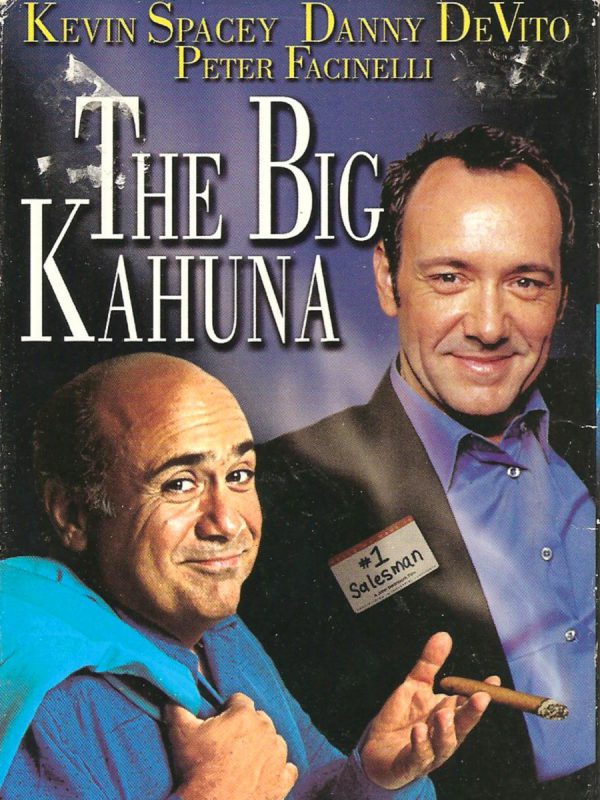
Despite what we now know about the actor, I remain a big fan of The Big Kahuna, a movie I even recommended as one of Hollywood’s better renderings of evangelicalism. (Trigger warning: language is vulgar in places.) Spacey starred in and produced the movie. Am I in danger of my publisher removing all copies of That Old-Time Religion in Modern America because of the way the book opens?

The Big Kahuna may not have been a box office hit, but the 1999 movie starring Kevin Spacey and Danny DeVito offered a surprisingly candid glimpse of the way many Americans have come to regard the subject of this book, twentieth-century evangelicalism in the United States. The film features three men who work for a firm that produces industrial lubricants and are assigned to host a cocktail party at a hotel in Wichita, Kansas, during a convention for industry-related vendors and producers. Two of the characters are from the sales division, experienced salesmen for whom the task of pitching the company’s product has nurtured a degree of cynicism and weariness. The third is a young, bright and somewhat naive evangelical Protestant who works in the research division. Their chief task on this particular evening is to make contact with the owner of Indiana’s largest manufacturing company, the “big Kahuna,” whose contract could salvage the salesmen’s declining careers.

Of course, Kevin Spacey is not the only one vulnerable. But we have no better sign of how Harry Emerson Fosdick lost and fundamentalists won than the way that mainstream institutions are employing standards that would have made my fundamentalist Baptist congregation think they were living in a Christian nation. Back then, as I have remarked before, I was under the impression that anyone I should esteem as a hero should also be a Christian. And with that logic, I turned my favorite athlete, Richie Allen, 3rd-baseman for the Phillies (and rookie of the year in 1964), into a born-again Christian, only to be crushed when a television camera showed him smoking a cigarette during a game.

Has our culture really come to that, the moral calculus of an eight-year-old dispsenationalist Baptist?

Of course, Peter Leithart tries to put a better spin on it:

But is private morality so easily distinguished from public ethics? Can we trust someone who lies, bullies, and manipulates to cover up the embarrassment of private sin? Doesn’t such a person prove himself a liar? Hasn’t he proven that he lacks the basic public virtue of justice?

Leithart is writing with politicians in mind, but the same point applies to artistic expressions? Should I sit with an author, director, or musician for anywhere between 30 minutes and two weeks who may be performing acts in private that would prove distasteful in public?

But here’s the other side that few of the new morality police seem to consider: why are good works whether performed in private or public any sort of guarantee of admirable character? If good works are filthy rags, if people do good works for noble and ignoble reasons, and if someone is unregenerate, how trustworthy are they (especially by our current Wesleyan standards)? According to the Confession of Faith:

Works done by unregenerate men, although for the matter of them they may be things which God commands; and of good use both to themselves and others: yet, because they proceed not from an heart purified by faith; nor are done in a right manner, according to the Word; nor to a right end, the glory of God, they are therefore sinful, and cannot please God, or make a man meet to receive grace from God: and yet, their neglect of them is more sinful and displeasing unto God. (16.7)

I get it that sexual abuse is bad. But let’s not fool ourselves about any actor or politician. The doctrine of total depravity teaches that behind that image of virtue and decency lurks a heart that is desperately wicked. Who can know it? Agents, spouses, interns, anyone who sees the public figure off camera.

If Daniel Could Serve a Pagan King, Why Can’t Old School Presbyterians vote for Bill Clinton?

Kevin DeYoung offers some perspective for Alabama voters (though he never mentions Roy Moore):

9. Am I casting my vote for someone who will damage the reputation of Christ and may harm the cause of Christ in the world? While it is often good to vote for other Christians, we have to consider how someone conducts himself in public as a representative of Christian convictions, ethics, and character.

10. Am I willing to consider that thoughtful Christians may answer some of these questions differently than I would? I certainly have my opinions about how these questions might apply in specific instances, but more than a particular vote, I want to encourage Christians to think critically and strategically about their civic participation. There is more to consider than majorities for our side and defeat for theirs.

I am glad he follows point 9 with point 10 because Daniel, the prophet, would have had a hard time answering the ninth question. Not only could Daniel not vote, but he served a King who worshiped and served false gods. Sure, Daniel resisted the king in some ways, but he also excelled in pagan learning (and so distinguished himself for public service):

17 As for these four youths, God gave them learning and skill in all literature and wisdom, and Daniel had understanding in all visions and dreams. 18 At the end of the time, when the king had commanded that they should be brought in, the chief of the eunuchs brought them in before Nebuchadnezzar. 19 And the king spoke with them, and among all of them none was found like Daniel, Hananiah, Mishael, and Azariah. Therefore they stood before the king. 20 And in every matter of wisdom and understanding about which the king inquired of them, he found them ten times better than all the magicians and enchanters that were in all his kingdom.

If not obeying the first table of the law is a big deal — and we’re not simply talking about images of Christ — how could a faithful believer excel in pagan literature and wisdom (which by Neo-Calvinist standards had to be worse than public schools) and then also serve a king whose cult involved idolatry?

I get it, Daniel did eventually disobey, which is music to the socially righteous warriors ears (thanks to one of our Southern correspondents):

We might hide our motives or blanket them in a veil we call authority or expertise. We will always become like the things we worship. Daniel writes about three men who stood in bold ambivalence to the foolishness of a conqueror king, because he was not their true king. They knew who they worshipped, and the more they lived like Him the closer they came to His presence.

Resist!

But that perspective on Daniel entirely misses the prophet’s assimilation to a regime tainted throughout by blasphemy and idolatry. Again, if 1789 affected all of European society, imagine the intersectionality of Babylonian gods and society. What did Daniel do? He cooperated as much as possible.

Don’t resist!

Honor (even the pagan megalomaniac)!

13 Be subject for the Lord’s sake to every human institution, whether it be to the emperor as supreme, 14 or to governors as sent by him to punish those who do evil and to praise those who do good. 15 For this is the will of God, that by doing good you should put to silence the ignorance of foolish people. 16 Live as people who are free, not using your freedom as a cover-up for evil, but living as servants of God. 17 Honor everyone. Love the brotherhood. Fear God. Honor the emperor.

In which case, the lesson is that as long as a Christian does not worship the senator, create statues of him for worship, pray to the senator, hand out the senator’s voting guide on Sunday, still honors his parents while working or voting for the senator, is not the senator’s hit-man, doesn’t lust after the senator’s wife, doesn’t embezzle for the senator, doesn’t lie to or for the senator, and doesn’t envy the senator, or his wife, or servants, or property, the a Christian can vote for the senator.

But if you want to be a pietist about it and consider primarily what a vote says (all) about you, then chances are you have the makings for being an Anabaptist.