“My Body,” Their Souls

Father Dwight (who seems to write more than Tim Keller) is back with a biblical justification for placing relics under the altar in Roman Catholic churches.

In Revelation 6:9 it is written: And when he had opened the fifth seal, I saw under the altar the souls of them that were slain for the word of God, and for the testimony which they held.

What does it mean “under the altar were the souls of them that were slain for the Word of God and the testimony they held.”?

In the early church, the remains of the martyrs were placed in above ground table tombs. Similar to the one shown here. During the times of persecution the church would gather in the catacombs for worship and the table tombs were used as the altar for Mass. Thus the remains of the martyrs were under the altar.

When they no longer had to worship in secret, the early Christians still wanted the presence of their martyrs to be near them so they opened the tombs, removed the bones and put them into jars which they then placed beneath the altar.

If you visit churches in Rome today you will often seen the jars with relics on display beneath the altar. More than that, you will often see the whole body of the saint on display beneath the altar. Here, for example is the altar beneath which is the relic of Pope St John XXIII.

Call me a literalist, but Rev 6:9 does not say “bodies.” It also says that the author was able to “see” something that is not visible. How do you see a soul?

So notice that when it comes to the body of Christ in the Mass, the bread becomes the very (true) body of Christ. After all, Christ said, “this is my body.” But when it comes to relics, the bones are memorials to the souls under the altar.

I’m confused. Maybe Zwingli can sort it out.

That’s An Awfully Low Threshold

Tim Challies identifies the marks of a false teacher, including this one:

Third, false teachers teach their own wisdom rather than God’s wisdom. False teachers always teach their own foolishness instead of divine wisdom. This means then, that the ultimate source of their teaching is their own minds. It’s their own hearts, it’s their own sinful desires. Listen to what God said through the prophet Jeremiah. He said, “The prophets are prophesying lies in my name. I did not send them, nor did I commend them or speak to them. They are prophesying to you a lying vision, worthless divination, and the deceit of their own minds.” That was true in Jeremiah’s day, it’s just as true in our day.

Imagine what that does for pastors who Tweet (or even elders).

Victims All

Branden Henry thinks that some (many?) Americans are in denial about race relations in the U.S. Take, for instance, the white supremacists who marched last summer in Charlottesville:

Playing the Victim – This, right here, is what we witnessed in Charlottesville. Grown white men marching against Jews and Blacks because the white men believe they are being replaced. These same folks who cry foul when minorities attempt to be treated as equal are the same folks who tend to ignore the genocide of the native people of this continent, as well as ignore the long-lasting effects of slavery, Jim Crow, etc. on black persons. These people remind me of the husbands I work with who get angry at their wives when their mistresses are discovered. It is absurd and downright shameful.

Henry has a point. Thinking that whites have had it anywhere near as bad as descendants of slaves is folly. But has Henry considered what happens if economics (class) trump race? What happens if we experience forces even larger and more powerful than structures that perpetuate racism? Finding critics of capitalism who see it as sufficiently powerful to shape (or even change) human nature is not difficult.

Consider this:

My argument in Desiring the Kingdom is that, in fact, the vast majority of our action and behavior is “driven” by all sorts of unconscious, pre-cognitive “drivers,” so to speak. Those pre-conscious desires are formed in all sorts of ways that are not “intellectual.” And so while I might be fueling my mind with a steady diet of Scripture, what I don’t realize that is that all sorts of other cultural practices are actually forming my desire in affective, unconscious ways. Because of the sorts of creatures we are, those pre-conscious desires often win out. This is why it’s crucial that Christian spiritual formation – and Christian worship – is attentive to a holistic formation of our imagination.

Or this:

Nike seems well aware that the good life can be on display on the living icons that are today’s celebrities.

I’m using Smith’s book in my classes to teach my students about how culture shapes us to be particular kinds of people–people that perhaps we did not know we were before we thought about it in class. We’re learning just how substantially we’ve been shaped by culture, rather than how much we think we’re immune to outside influence. Contrary to how we might imagine ourselves, we’re not autonomous, deliberative, rational, choice-making creatures. Often, we’ve been habituated into certain ways of being and doing in the world, before we’re even aware of it. You were saying the Pledge of Allegiance before you had much of a choice in the matter. And by the time you had a choice, you simply would have chosen to keep doing it because you would have been habituated into the story of why it was good to do so.

Learning about this phenomenon of our cultural formation is a strategy to help us think about how we might participate in the counter-formative efforts of influencing the world in manners that are faithful to the ways of Jesus, rather than damaging and destructive ways of culture. Consumerism–the sort that Nike seems able to foster–is often damaging and destructive. It makes us competitive–we start comparing ourselves with each other and our relationships get bent way out of shape. It messes with our desires to the extent that our sense of satisfaction becomes insatiable and we know no contentment. It even replaces religion, and we end up chasing transcendence by means of consumption.

Or this:

In the late nineteenth century, argues Leach, advances in industrial technology, the availability of electricity, and the newly available means to pool vast amounts of capital made production much cheaper and hence threatened to flood the market with goods. This worried capitalists greatly. Marketing consequently acquired the purpose not merely of informing potential customers how a given product might fulfill their existing needs, but of creating new desires. As one proponent of the new culture, Emily Fogg Mead, wrote, it was imperative that Americans be awakened to “the ability to want and choose.” What was needed was a moral reeducation, the replacement of traditionally religious values with consumer values.

Thus, one of the new breed of merchants, Alexander Turney Stewart, was hailed by Harper’s Bazaar for freeing Americans “from the guilt of having wealth and desiring money.” L. Frank Baum, who was not only the author of The Wizard of Oz but a pioneer in the creation of the display case and show window, counseled hedonism: “To gain all the meat from the nut of life is the essence of wisdom, therefore, ‘eat, drink, and be merry’—for tomorrow you die.” To inculcate the ability to forget the past was a key aspect of the needed moral reeducation. Harry Selfridge, superintendent of Marshall Field’s, exhorted his staff “to forget the past, and deal more and more with the present.” Likewise, Mead “urged businessmen to penetrate the home, break down the resistance of ordinary housewives, and ‘forget the past’ in their pursuit of profits.”

That’s why we need churches that ordain women and podcasts that use the latest audio software to teach us how to resist such cosmic forces.

Or, it could be that people actually have agency and make calculations all the time — based on reality, like, even though I really want the BMW I don’t think I can afford those car payments. Or, as much as I’d like to wear Joseph Abboud suits all the time, that might not be the right look on campus (and may be a tad more expensive than piecing together items from Jos. A. Bank and L. L. Bean).

I do understand that consumerism creates certain desires. But we are not 16-year olds with dad’s credit card. Some people make better decisions than others. Capitalism and big business have not turned us into victims. Even fans of Bojangles sometimes crave a meal at Waffle House.

Morality Divides, Coalitions Unite

That is, as some may tell, an riff on the old line used during the fundamentalist controversy to counter conservatives — “theology divides, ministry unites.”

Our friend, Chortles Weakly explains how officers in NAPARC communions who also hold official positions in The Gospel Coalition — can anyone identify the Allies? — are looking the other way when it comes to the Second Commandment, the bedrock of the Regulative Principle:

As the cultural exegetes must surely agree, an organization’s use of images, technology, and messaging strategies is fair game for critics. What follows is my attempt to critique some of the ways TGC uses images and innovates. The standard will not be something I learned in business school, the standard will be the confessions of the Reformed churches.

My concern here is not really with Reformed churches as such (which cannot actually align with TGC) or with members (who are free to consume as they will). It is with the officers (elders and pastors) of confessionally Reformed churches who participate in TGC leadership, given the fact that TGC’s content so strongly influences the one culture that really matters, the one culture that truly ought to be ordered according to the Bible – the household of faith, the church of God.

My concern is that the officers of confessionally Reformed churches (basically those from denominations affiliated with the North American Presbyterian & Reformed Council – NAPARC) who sit on the TGC council are giving their stamp of approval to some things that are specifically forbidden by the Bible, the Reformed confessions, and the historic practice of the Reformed churches.

The TGC web page over the recent Thanksgiving weekend provided a notable example of TGC-endorsed aberrant practices. The front page of the site used an image of a nativity scene (with the second person of the Trinity supposedly represented) in support of an article on “8 New Resources for Advent”. This is not an isolated instance. Pictures of Jesus and commendations of movies and materials depicting him are nothing new at the TGC web site.

What specifically is wrong with images of Jesus? Well, simple logic tells us that any image of Christ is necessarily a lie – the Bible is not a picture book. No image of Christ can be accurate. Can inaccurate images be a help to those who view them? Some will argue that serve an essential pedagogical use when it comes to children. Some, as were heard at the last General Assembly of the Presbyterian Church in America, will argue that we cannot appreciate the humanity of Jesus without images.

The Westminster Larger Catechism, to which the presbyterian ministers on the TGC council have taken vows of subscription, would seem to speak both to images of Christ and things like Advent in question 109:
Picture

Q. 109. What sins are forbidden in the second commandment?

A. The sins forbidden in the second commandment are, all devising, counseling, commanding, using, and any wise approving, any religious worship not instituted by God himself; the making any representation of God, of all or of any of the three persons, either inwardly in our mind, or outwardly in any kind of image or likeness of any creature whatsoever; all worshiping of it, or God in it or by it; the making of any representation of feigned deities, and all worship of them, or service belonging to them; all superstitious devices, corrupting the worship of God, adding to it, or taking from it, whether invented and taken up of ourselves, or received by tradition from others, though under the title of antiquity, custom, devotion, good intent, or any other pretense whatsoever; simony; sacrilege; all neglect, contempt, hindering, and opposing the worship and ordinances which God hath appointed. (http://opc.org/lc.html)

Now, I am aware that there are officers who take exceptions (where allowed) to portions of this section, especially concerning mental images. I am aware that some presbyterian bodies have in the last few decades allowed loose or “system” subscription to confessional documents. Still the question must be raised: Should a NAPARC church officer sit on a quasi-ecclesial body’s board when that that body condones and promotes violations of the second commandment as defined by the confessional standards of the officers’ own denominations?

At a time when America is leading the crusade for obedience to God’s law, do Gospel Allies really want to be caught on the sidelines?

Which Victims Do You Believe?

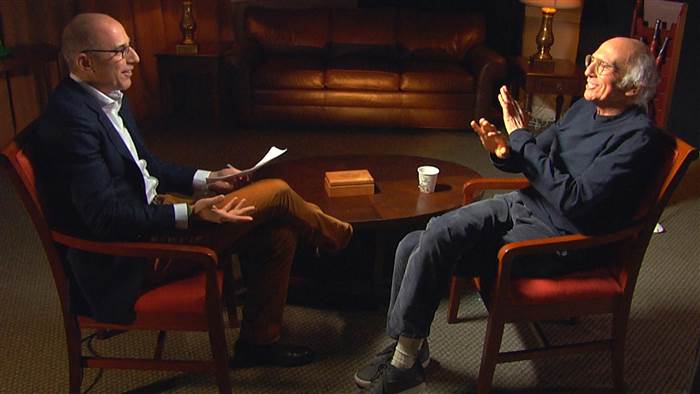
Yet another mainstream figure bites the dust — Matt Lauer of morning news fame whose performance only matter to mmmeeeEEE when he interviewed Larry David; I just can’t figure out any of the appeal of morning network news. Once again, women have come forward to accuse Lauer of inappropriate sexual behavior. NBC executives believed the women. And so Lauer loses his job.

What I can’t understand is the willingness of business, political, and journalistic authorities to believe what is generally one person’s word against another. This is not an opinion based on male privilege. It’s a legal reality hammered home by the Netflix series, The Keepers, in which Baltimore prosecutors and Roman Catholic Archdiocese officials were unwilling to believe the testimony of women who came forward almost 30 years later to accuse a specific priest of molesting them (and setting up meetings for other priests and police). No priest lost his standing (though a trip outside the country swept the controversy under the proverbial rug for a time). The reason as one of Baltimore’s States Attorneys explained was that the testimony of one person — even if memories were credible — was insufficient to start the engine of prosecution. (Of course, what is liable to prosecution in a court of law is not the same as public opinion or the rules of private employers.)

So what happened only six months after The Keepers was gaining some attention from video streamers?

And imagine writing today what one author did about the documentary series when it appeared:

How can anyone believe this?

The central thesis of The Keepers is that an alleged abusive priest, the now-deceased Rev. Joseph Maskell, can be tied to the disappearance and murder of Sr. Cathy. However, some of the central accusers in all of this, who claim that Maskell sexually abused them when they were young girls, have quite a bit of explaining to do.

For example, in 1995, a woman named Jean Wehner – whose claims play a central role in The Keepers – filed a civil lawsuit against Maskell under the name Jane Doe. What was uncovered in the course of her suit can only described as disturbing. It turns out that all of Wehner’s claims of abuse surfaced through the dangerous and discredited practice of “repressed memory therapy.”

It turns out that, according to court documents, Wehner has not just claimed that Rev. Maskell abused her in her life. Wehner has also claimed that she has somehow also been abused by:

four additional priests; three or four religious brothers; three lay teachers; a police officer; a local politician; an uncle; and two nuns.

Good grief. Really, Jean?

For a fuller account of the Archdiocese’s responses, see here.

Is it I or does it seem that Roman Catholics have been a little shy about weighing in on the current spate of revelations if only because of the church’s recent scandal-ridden past? Never to be intimidated, though, is Father Dwight:

What does this new and unexpected social phenomenon mean?

I think it indicates that a new generation of women don’t give two hoots about the old feminist agenda. The main objectives for women have been pretty much obtained-fair pay and fair treatment in the workplace. Now a new generation of women is saying, “We don’t have to put up with the harassment and objectification that still continues.

Hands off!

This is very interesting because, whether they like it or not, the modern women who take this view are echoing a very traditional set of values–ones which their great grandmothers would have recognized.

Its called modesty. In the past women were expected to draw the line, slap the man’s hand away and refuse a kiss until he was worthy.

The woman was the one who was supposed to be pure and unsullied and the keep the horny man at bay.

Father Dwight does realize, doesn’t he, that this “just-say-no” approach did not apparently work for the girls in The Keepers.

Meanwhile, some think the new found disgust with male appetites is not so much a recovery of virtue as an acquisition of power:

…what puzzles many of us is why the definition of deviance varies so dramatically over time. We cannot always predict who will become defined as deviant, and when the definitions will change. We do know that power plays the most important role in identifying who gets to define deviant behavior.

Until recently, allegations of sexual harassment and abuse by powerful men were not taken seriously—they were not viewed as deviant because the acts were perpetrated by powerful men on less powerful women. Now, the power to define sexual deviance has shifted to women—those who have collaborated with the media to bring attention to the issue and reform how such behavior is perceived and dealt with by society.

Until recently indeed — only 4 months ago.

Rod Reading Tim

Rod Dreher doesn’t detect much daylight between the Benedict Option and Tim Keller even though I’ve tried to describe it. Here’s Keller (from Rod) on the West:

The crazy Christian gospel, so sneered at by the cultural elites that day, eventually showed forth its spiritual power to change lives and its cultural power to shape societies. Christianity met the populace’s needs and answered their questions. The dominant culture could not. And so the gospel multiplied.

Do we have Paul’s courage, wisdom, skill, balance, and love to do the same thing today in the face of many sneering cultural leaders? It won’t be the same journey, because we live in a post-Christian Western society that has smuggled in many values gotten from the Bible but now unacknowledged as such. Late modern culture is not nearly as brutal as pagan culture. So the challenges are different, but we must still, I think, plunge into the agora as Paul did.

Here’s Rod’s rendering:

Does it surprise you that I agree with this? I’m still looking for ways in which Tim Keller and I substantively disagree on cultural engagement. If you know of any, please let me know — I’m serious about that. What I emphasize in The Benedict Option is that if we Christians are going to do that in a hostile, post-Christian public square, we have no choice but to take a step back from the public square to deepen our knowledge of the faith, our prayer lives, and our moral and spiritual discipline.

One difference right off the bat is that Keller is not pessimistic about the contemporary world, the way Rod is. That’s why it had to come as a surprise when Princeton Seminary thought Keller was too conservative and should not receive the Kuyper Prize.

Yet, Keller has other readers. Rod quotes one:

I’m somewhat favorably disposed to Tim Keller’s ministry, and even attended his church for a season. But that movement is likely to head off in its own direction. The current alliances that make up evangelicalism were forged in an era before liquid modernity. There is no reason why we should expect those alliances to continue to make sense in the very different social context that we face today. And we have to avoid the trap of conflating Christian orthodoxy with practical Christian wisdom. Families raising kids need something very different from a church community than what I need, as a 30-something professional who travels 50% of the time, usually in Asia….

Liquid modernity poses a certain challenge to Western rules-based cultures. Things change faster than our ability to develop rules to address certain situations. And that places a degree of stress on existing institutions, requiring them to be thicker than they were in the past. But it’s hard for institutions to be both thick and broad. For thickness to work, there has to be a high degree of overlap in people’s life situations. Demographic differences matter more.

I’m actually an advocate of an evangelical break-up. I believe that the Benedict Option is necessary. But the Benedict Option is going to look very different for different people. My fear is that evangelicalism ends up targeting the largest market, middle-class white suburbanites with kids, and castigated everyone else as a sinner. One need not look to hard for criticisms of Tim Keller’s efforts to reach out to people like me. And it disappoints me that Keller is largely silent in the face of those criticisms. If Christianity is to survive in an age of liquid modernity, it’s going to take more than suburban mega-churches.

Another difference then is that Rod thinks modernity is a force that hurts Christianity while Keller, like Pope Francis, tries to come along side moderns.

Still one more reader of Keller that Rod should enter into his Redeemer NYC spreadsheet:

Over the past decade or so, evangelical millennials like myself and my peers (and possibly even you), could be found across the country, repenting of our former fundamentalist ways.

We’ve put away our moralistic understanding of Christianity. We’ve reclaimed what is essential: Jesus, and his gospel. We’ve tossed aside our simplistic, and less than nuanced answers to those who criticize our faith and worldview.

Aided by an Internet-powered, Information Age, we have set out to re-engage culture in a fresh new way, following Tim Keller and Russell Moore on one end of the spectrum, or Rob Bell and Rachel Held Evans on the other.

As those who will soon lead the church, we are convinced that we are called to a new vision of cultural engagement and mission. . . .

Therefore, we’ve raised our sensitivity to xenophobic nationalism, misogyny, gay-bashing, microaggressions, and anti-intellectualism. For us, being uninformed and un-’woke’ is shameful and most harmful to our Christian witness.

Instead, we have taken up the mission to winsomely engage the brightest of thinkers in order that they might believe, and to prophetically rebuke the most narrow-minded of evangelicals in order that they might think.

We see far too little cultural influencers operating out of a biblical framework. And we’ve seen too many of our friends leave the faith due to overly simplistic, unsatisfying, and stale apologetic answers to their genuine contemporary questions.

We want to articulate, in a Keller-esque fashion, an attractive “third way,” between the liberals and the conservatives, between the irreligious and the religious. And in doing so, we hope to find a better place to stand, where we are neither apostates nor anti-intellectuals, neither prodigals nor older brothers.

So we continue to study Scripture and affirm its absolute authority, while still paying close attention to contemporary culture, the media, and the academy, seeking common grace insights from them, and wrestling with how to interpret and make sense of their findings.

We heed Peter’s exhortation that we be prepared to make a defense to all, while reminding ourselves of James’ admonition to be quick to listen, and slow to speak, even when it comes to a secular culture such as ours.

We don’t settle for just being Christians, but we seek to be informed, knowledgeable, and sensitive Christians. And by God’s grace, we sometimes do find a way forward, a third way, in which we actually become “believers who think,” equipped to interact with “thinkers” who don’t believe.

And discovering a “third way” feels good. It’s the rewarding feeling of progress, and confidence — confidence in the fact that we’ve found more thoughtful and persuasive answers than the ones our Sunday School teachers gave us 20 years ago. But it’s also the feeling of transcendence, and if we’re not careful, arrogant superiority.

Thinking Christians engaged with the world. That may not have been Paul’s advice to Timothy but it’s a page right out of Harry Emerson Fosdick:

Already all of us must have heard about the people who call themselves the Fundamentalists. Their apparent intention is to drive out of the evangelical churches men and women of liberal opinions. I speak of them the more freely because there are no two denominations more affected by them than the Baptist and the Presbyterian. We should not identify the Fundamentalists with the conservatives. All Fundamentalists are conservatives, but not all conservatives are Fundamentalists. The best conservatives can often give lessons to the liberals in true liberality of spirit, but the Fundamentalist program is essentially illiberal and intolerant.

The Fundamentalists see, and they see truly, that in this last generation there have been strange new movements in Christian thought. A great mass of new knowledge has come into man’s possession—new knowledge about the physical universe, its origin, its forces, its laws; new knowledge about human history and in particular about the ways in which the ancient peoples used to think in matters of religion and the methods by which they phrased and explained their spiritual experiences; and new knowledge, also, about other religions and the strangely similar ways in which men’s faiths and religious practices have developed everywhere. . . .

Now, there are multitudes of reverent Christians who have been unable to keep this new knowledge in one compartment of their minds and the Christian faith in another. They have been sure that all truth comes from the one God and is His revelation. Not, therefore, from irreverence or caprice or destructive zeal but for the sake of intellectual and spiritual integrity, that they might really love the Lord their God, not only with all their heart and soul and strength but with all their mind, they have been trying to see this new knowledge in terms of the Christian faith and to see the Christian faith in terms of this new knowledge.

For anyone who detects an example of the genetic fallacy, please write a note to Pastor Tim and ask him to explain how he avoids the errors that modernists like Fosdick committed.

Roman Catholics at Plymouth Rock?

In the department of strange bedfellows comes George Weigel’s praise for the Museum of the Bible:

On September 29, 1952, the publication of the complete Revised Standard Version of the Bible was celebrated at the National Guard Armory in Washington, D.C., and the principal speaker was the U.S. Secretary of State, Dean Acheson. The son of the Episcopal bishop of Connecticut, Acheson movingly described the ways in which the King James Bible, which the new RSV was to supplant, had once shaped American culture and our national life:

In the earliest days in the Northeast, the Book was All. The settlers came here to live their own reading of it. It was the spiritual guide, the moral and legal code, the political system, the sustenance of life, whether that meant endurance of hardship, the endless struggle against nature, battle with enemies, or the inevitable processes of life and death. And it meant to those who cast the mold of this country something very specific and very clear. It meant that the purpose of man’s journey through this life was to learn and identify his life and effort with the purpose and will of God.

That biblical vision helped form the bedrock convictions of the American idea: that government stood under the judgment of divine and natural law; that government was limited in its reach into human affairs, especially the realm of conscience; that national greatness was measured by fidelity to the moral truths taught by revelation and inscribed in the world by a demanding yet merciful God; that only a virtuous people could be truly free.

Of course, the U.S. is a free country and anyone can assemble the past in ways consoling.

But does anyone else feel a certain discomfort with a Roman Catholic recommending the Bible without also mentioning the objections that sometimes Bishops registered against Bible readings in public schools without comment? The United States would not have as many parochial schools as it does if not for Bishops who worried about sending children to public schools where teachers read the Protestant version of the Bible.

Not to be missed is the odd relationship between the Bible and the founding. If the settlers who came to America and launched the tradition of Thanksgiving wanted a society with a biblical vision at its bedrock, don’t you also have to mention that those same Bible-only Christians were a tad jittery about including Roman Catholics in the nation that emerged from their colonial enterprises?

This may be why some Roman Catholic political theorists are uncomfortable with Roman Catholics getting comfortable with the founding.

An Answer to Prayer

At its 81st General Assembly (2014), commissioners of the OPC heard a report from the chaplains’ committee that asked for prayer for the recently released Bowe Bergdahl:

Finally, given the media attention surrounding the return of Sgt. Bowe Bergdahl, and in particular his relationship to the OPC, the following statement was placed in the minutes:

In the wise providence of our Sovereign Lord, we acknowledge thankfully, the 31 May release of Sgt. Bowe Bergdahl USA from Taliban captivity; and that he is in the custody of the United States Army.

Consequently, for those who ask how to pray, we suggest the following, or similar, petitions:

For grace to resist the temptation to rush to judgment, in the absence of sufficient information
Thanks to God for the release of Bowe
For Bowe’s recovery from any and all ill effects arising from his captivity, with healing as well for his family members
That truth will triumph and justice will be done
That, in the months to come, it might please our Lord Jesus to use the events of the past five years to draw Bowe and his family increasingly closer to Himself and give them His peace.

As one of the commissioners, I sensed that the chaplains were playing at the heart strings of those gathered. Reports from chaplains always brings out the God-and-country inner self of Orthodox Presbyterians who are generally spirituality of the church in their deliberations.

And so, I wonder if this is an answer to the prayer request for justice:

Things have changed since 1979, when a Marine named Robert Garwood, who claimed to have been captured by the Viet Cong in 1965, was tried and convicted by court-martial for desertion and sedition. The military court rejected Garwood’s claim that he had been tortured and had collaborated with the enemy only to survive, sentencing him to a dishonorable discharge and forfeiture of all pay and allowances during his alleged captivity. The Supreme Court refused to hear his appeal.

There are many similarities between Garwood’s case and that of Bergdahl, but in fact Bergdahl’s case is weaker than Garwood’s. For one thing, Bergdahl pleaded guilty to the charges. Nonetheless, for unexplained reasons, the military judge in the case refused to impose prison time.

At Powerline, Paul Mingeroff has noted the hubris of General Mark Martins, a highly decorated and celebrated brigadier general in the United States Army JAG Corps, who declared that “law embodies and summarizes human experience about right action in a particular context.” That may be true in a perfect world but it fails in the context of military justice and the goal it is designed to serve.

Some will argue that President Trump’s tweets regarding the case constitute “unlawful command influence” (UCI). That may have influenced the sentence. But if Trump is guilty of UCI, then certainly former President Obama is, too, given the Rose Garden event with Bergdahl’s parents and earlier comments by Obama’s national security adviser, Susan Rice, claiming that Bergdahl had “served with honor and distinction.”

The actions of both Obama and Trump helped to politicize the Bergdahl case, but none of that should have negated the purpose of the military justice system. Bergdahl’s actions were premeditated. They also led to American casualties. Nothing in mitigation justifies a decision that mocks not only the practical goals of good order and discipline in the military but also such military virtues as honor and sacrifice.

How Much Endeavor Is Necessary?

Mark Jones responds to the question of how many good works are necessary for salvation. He thinks the question is a tad misplaced:

Such questions (i.e., “How many?”) may actually reveal a legal spirit, not a gospel spirit, that needs mortifying. From those who should know better, to ask “How many good works?” is not evidence to me that they are trying to guard something special (i.e., justification), but rather that they are trying to ignore something glorious, namely, that God accepts the sincere obedience of his children because they are pure in heart (Matt. 5:8; Ps. 73:1; 24:4), live by faith (Gal. 2:20), and obey in the Spirit (Rom. 8:13-14). God warns, promises, and commands for our good.

Do fear of punishment and hope of rewards cause servile fear in a Christian? John Owen asserts that such a reaction is a “vain” imagination. Only the bondage of our spirits can make what we do servile. Owen says, “a due respect unto God’s promises and threatenings is a principal part of our liberty.” Returning to the Scriptures themselves, Paul says we must put to death the misdeeds of the flesh if we want to live (Rom. 8:13). This we do by the Spirit. But it isn’t an option for the Christian. If you want to ask yourself whether good works are necessary for final salvation (“life”, Rom. 8:13), ask yourself this (via Owen):

What if a professing Christian does not mortify the misdeeds of the flesh? Will he or she live or die? To argue that good works are necessary for final salvation is to answer the previous question by saying, “die”. To ask how many? Well, that, it seems to me, is to ask God a question that his word, quite rightly, does not answer.

I concede theology is above my pay grade, but I do wonder if the catechism is clearer than the conversations the Obedience Boys encourage. Notice, for instance, the two-fold distinction in the catechism:

Q. 39. What is the duty which God requireth of man?
A. The duty which God requireth of man is obedience to his revealed will.

Q. 40. What did God at first reveal to man for the rule of his obedience?
A. The rule which God at first revealed to man for his obedience was the moral law.

Q. 41. Where is the moral law summarily comprehended?
A. The moral law is summarily comprehended in the ten commandments.

So God requires obedience. But the fall happened. Now what?

Q. 85. What doth God require of us that we may escape his wrath and curse due to us for sin?

A. To escape the wrath and curse of God due to us for sin, God requireth of us faith in Jesus Christ, repentance unto life, with the diligent use of all the outward means whereby Christ communicateth to us the benefits of redemption.

Q. 86. What is faith in Jesus Christ?
A. Faith in Jesus Christ is a saving grace, whereby we receive and rest upon him alone for salvation, as he is offered to us in the gospel.

Q. 87. What is repentance unto life?
A. Repentance unto life is a saving grace, whereby a sinner, out of a true sense of his sin, and apprehension of the mercy of God in Christ, doth, with grief and hatred of his sin, turn from it unto God, with full purpose of, and endeavor after, new obedience.

The catechism separates the discussion of the law as a rule for God’s dealing with humans before the fall from teaching about how those fallen escape God’s wrath and curse. It does not say that new obedience is part of the means why which Christians escape damnation. It says, precisely, “endeavor after new obedience.” Part of repentance is seeking to obey.

So then how much endeavor is necessary? That is a different question from how much obedience.

Fundamentalists are Winning

If you had any doubt about the way Trump has turned the advocates of tolerance into fundamentalists, consider David Brooks’ (courtesy of Rod Dreher) assessment of the left and the right:

I’d say the siege mentality explains most of the dysfunctional group behavior these days, on left and right.

You see the siege mentality not just among evangelical Christians but also among the campus social justice warriors and the gun lobbyists, in North Korea and Iran, and in the populist movements across Europe.

The siege mentality starts with a sense of collective victimhood. It’s not just that our group has opponents. The whole “culture” or the whole world is irredeemably hostile.

From this flows a deep sense of pessimism. Things are bad now. Our enemies are growing stronger. And things are about to get worse. The world our children inherit will be horrific. The siege mentality floats on apocalyptic fear.

The odd thing is that the siege mentality feels kind of good to the people who grab on to it. It gives its proponents a straightforward way to interpret the world — the noble us versus the powerful them. It gives them a clear sense of group membership and a clear social identity. It offers a ready explanation for the bad things that happen in life.

Most of all, it gives people a narrative to express their own superiority: We may be losing, but at least we are the holy remnant. We have the innocence of victimhood. We are martyrs in a spiteful world.

This is precisely how I as a fundamentalist youth thought about the world. I can’t imagine graduating from Harvard and thinking like Jack Van Impe (I wonder if he grew up in the CRC). But apparently, the state of America is so bad that the nation’s elites have taken a page out of my ancestor’s playbook.

Word of advice: the only improvement that fundamentalists would make to Ridley Scott’s decision to erase Kevin Spacey from All the Money in the World would have been to use Kirk Cameron instead of Christopher Plummer.