David French is to Conservatism what Tim Keller is to Presbyterianism

This is a follow up and updates this in the light of even more chatter.

Sohrab’s Ahmari’s critique of French-ism, the outlook of the evangelical attorney and Iraq War veteran, David French (not to be confused with Moby), who writes for National Review was over the top. But it did capture a problem in French’s above-it-all-I-just-follow-the-Declaration-and-Constitution self-fashioning. That is one of putting convictions into practice and forming institutions to maintain them.

French says his outlook consists of:

“Frenchism” (is that a thing now?) contains two main components: zealous defense of the classical-liberal order (with a special emphasis on civil liberties) and zealous advocacy of fundamentally Christian and Burkean conservative principles. It’s not one or the other. It’s both. It’s the formulation that renders the government primarily responsible for safeguarding liberty, and the people primarily responsible for exercising that liberty for virtuous purposes. As John Adams said, “Our Constitution was made only for a moral and religious people. It is wholly inadequate to the government of any other.”

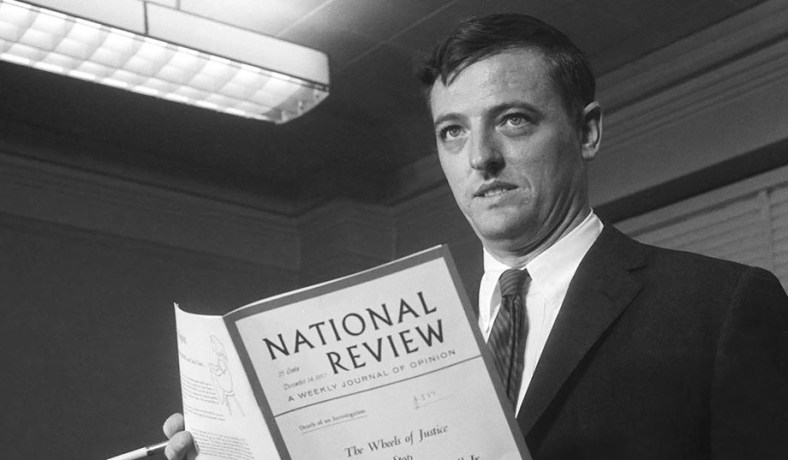
The problem is, as William F. Buckley saw when he founded National Review, that holding up the ideals of classical liberalism requires taking sides. You nominate candidates, vote in elections, and decide on laws and policy. You may believe in the Bible, by analogy, but you need to interpret it, write a creed, institute a polity, and decide who may be ordained to ecclesiastical office. Simply saying that you believe in the founding or in the Bible without taking a side politically or denominationally is to fly in a hot air balloon above the fray — except that you’re receiving a pay check from either a magazine that has for over fifty years been taking the movement conservative side of interpreting the founding or a denomination that has identified for forty years with a American conservative Presbyterian rendering of the Bible.

Both French and Keller don’t want to be partisan or extreme which is why they reach for the high-minded origins of either the U.S. or Christianity. They don’t want to fight alongside others. They may employ their own arguments either in court or as a public theologian but having the backs of others in a particular group is not the way they seem to carry it.

No Machen’s Warrior Children here.

This is why Rod Dreher sees Ahmari’s point, namely, that French positions himself above the clamor of division or controversy:

I concede that I’m more of a classical liberal than I thought I was, in that I resist a coercive political order. I am willing to tolerate certain things that I think of as morally harmful, for the greater good of maintaining liberty. Not all sins should be against the law. Again, though, there’s no clear way to know where and how to draw the line. Sohrab Ahmari uses Drag Queen Story Hour as a condensed symbol of the degrading things that contemporary liberalism forces on the public.

I am a thousand percent behind Ahmari in despising this stuff, and I am constantly mystified by how supine most American Christians are in the face of the aggressiveness of the LGBT movement and its allies, especially in Woke Capitalism. I am also a thousand percent with Ahmari in his general critique of how establishment conservatism tends to capitulate to cultural liberalism.

But French has the virtue of being virtuous, which is why Alan Jacobs sees the National Review correspondent as merely being a good Christian:

I disagree with David French about a lot of things — especially what I believe to be his sometimes uncritical support for American military action — but I admire him because he’s trying. He’s trying to “take every thought captive to Christ.” I believe that if you could demonstrate to David French that positions he holds are inconsistent with the Christian Gospel, he would change those positions accordingly. Among Christians invested in the political arena, that kind of integrity is dismayingly rare.

Hey, Dr. Jacobs! I try too. But the day I see you come alongside confessional Presbyterians and say, “they are simply trying to live out the Christian gospel” I’ll book a flight to Waco and buy you a drink.

But Jacob’s reaction is precisely the problem. To regard French’s politics as simply trying to be consistent with Christianity — aside from being a violation of two-kingdom theology — is to ignore that politics requires getting dirty and making compromises. It is not a place to pursue holiness and righteousness — though it is an occupation worthy of a vocation.

So, while David French takes his stand with Burke, Washington, Jefferson, Madison, and Jesus (as if those add up to anything coherent), French-ism is nowhere in Matthew Continetti’s breakdown of contemporary conservatism — trigger warning for #woke and Neo-Calvinist Christians who want their politics to come from either the prophets or the apostles:

The Jacksonians, Mead said, are individualist, suspicious of federal power, distrustful of foreign entanglement, opposed to taxation but supportive of government spending on the middle class, devoted to the Second Amendment, desire recognition, valorize military service, and believe in the hero who shapes his own destiny. Jacksonians are anti-monopolistic. They oppose special privileges and offices. “There are no necessary evils in government,” Jackson wrote in his veto message in 1832. “Its evils exist only in its abuses.”

…Reform conservatism began toward the end of George W. Bush’s presidency, with the publication of Yuval Levin’s “Putting Parents First” in The Weekly Standard in 2006 and of Ross Douthat and Reihan Salam’s Grand New Party in 2008. In 2009, Levin founded National Affairs, a quarterly devoted to serious examinations of public policy and political philosophy. Its aim is to nudge the Republican Party to adapt to changing social and economic conditions.

…Where the paleoconservatives distinguish themselves from the other camps is foreign policy. The paleos are noninterventionists who, all things being equal, would prefer that America radically reduce her overseas commitments. Though it’s probably not how he’d describe himself, the foremost paleo is Tucker Carlson, who offers a mix of traditional social values, suspicion of globalization, and noninterventionism every weekday on cable television.

…The Trump era has coincided with the formation of a coterie of writers who say that liberal modernity has become (or perhaps always was) inimical to human flourishing. One way to tell if you are reading a post-liberal is to see what they say about John Locke. If Locke is treated as an important and positive influence on the American founding, then you are dealing with just another American conservative. If Locke is identified as the font of the trans movement and same-sex marriage, then you may have encountered a post-liberal.

The post-liberals say that freedom has become a destructive end-in-itself. Economic freedom has brought about a global system of trade and finance that has outsourced jobs, shifted resources to the metropolitan coasts, and obscured its self-seeking under the veneer of social justice. Personal freedom has ended up in the mainstreaming of pornography, alcohol, drug, and gambling addiction, abortion, single-parent families, and the repression of orthodox religious practice and conscience.

For those keeping score at home, that’s Jacksonians, Reformocons, Paleocons, and Post-Liberal conservatives. None of them are “classical liberals.” History moves on and requires people to choose.
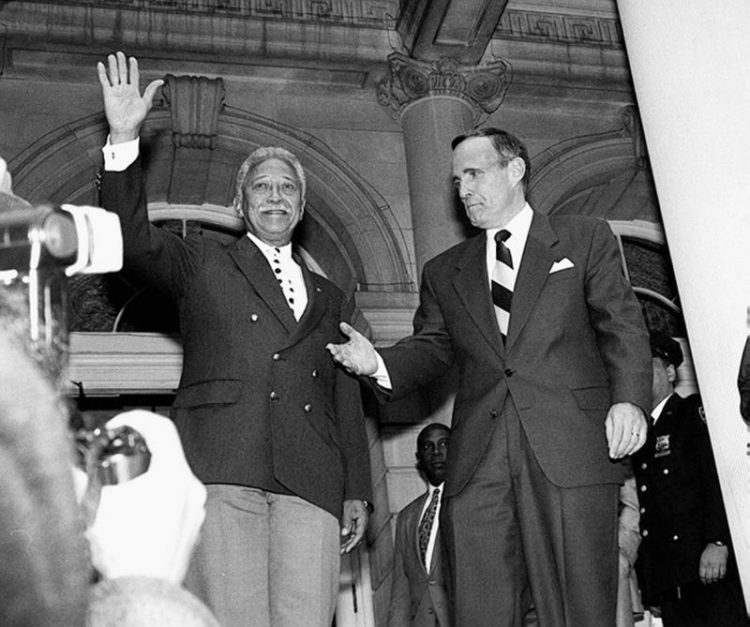

Back in the Day When Some Were Planting PCA Congregations in NYC (and others were joining the PCA)

It was not an innocent time. Robert Hughes, art critic for Time magazine, wrote a book about cultural antagonisms in the United States, The Culture of Complaint. David Denby, a movie critic for New York magazine, reviewed it for the New Republic. It doesn’t sound like much has changed (except that sensitivities have escalated):

For years liberal intellectuals in this country have sounded sickly and confused. half convinced that their privileged position has disqualified them from criticizing any less powerful group, afraid of asserting what might be seen as an advantage. Something like academic Afrocentrism may be largely nonsense, but how many have the stomach to attack it? How many have the courage to say that gay artists whose lives have become nightmarish from the fear of AIDS are not necessarily better painters or sculptors? Putting it in pragmatic terms: Is making such points worth the risk of sounding like Hilton Kramer? Even if you can avoid such a ghastly outcome, the task requires a relish for combat and a willingness to hit an open target—a sort of herculean insensitivity.

Enter the bull in the shopping mall. Hughes was born in Australia but has lived in America and written art criticism for Time since 1970. He combines the curiosity and the ambitious learning of a scholar (he has written distinguished books on Australia and Barcelona) and the ready indignation and sense of timing of a great journalist. He is a controversialist, a public intellectual. The book, written in 1992, as the political tide was turning, is implicitly addressed to liberals: You are the conscience of a great country. Why be so frightened? Hughes offers a guide for the perplexed, a moral and intellectual compass for those who want to remain liberals in this culture without giving up their standards, their education, their sense of what matters. Brandishing bis sword, be charges in, laying about on all sides. He ridicules the American touchiness, the querulous tone of grievance. He talks tough to self-pitying artists, to academics, to black intellectuals and ideologues, to politicians.

So even when today it might seem like times were better just as Bill Clinton was coming into the White House, America was divided and Americans were sensitive. In New York City, Rudy Giuliani defeated David Dinkins.

More Denby:

The widespread and unstoppable confusion of formal equality (which is obtainable through law) with equality of power and gifts (which is unobtainable) has led to a kind of Tocquevillian nightmare, a culture of self-pity and envious accusation. In the art world, for instance, the overproduction of artists caused by the runaway art market of the ’80s and the general lowering of standards leads anyone not actually celebrated by the media to designate himself an aggrieved party. “What are your ‘standards’ but further oppression?” the victim demands. The “you” that figures in so much paranoid-accusatory rhetoric is, of course, the white heterosexual male, whose “standards,” a mere construction, are assumed to be inherently corrupted by power. Second, the exacerbation of the differences among us, and the cynically calculated omission of what is held in common, leads to a grim spirit of intolerance—declarations of “cultural war” on the right and calls for separatism on the African-American left. Ideology annihilates the compromises necessary to keep the country going. . . .

Hughes fears no man or woman, but most liberals shrink from hurting anyone’s feelings. That is why James Wolcott was being disingenuous when, in the course of defending Rush Limbaugh recently in The New Yorker, he called on liberals to stop whining and “lean into the microphone.” In other words, get your own demagogues, bullies and wits. But as Wolcott surely knows. American liberals have committed themselves to abandoning the narcissism of the tribe; they are committed to respecting every group in the country. If conservatives have been making most of the jokes in recent years, that’s because it’s so much easier for them. For the liberal, everyone matters. That is the American glory and the American horror.

The point of this trip down memory lane is not to try to explain Trump, though with cultural conditions like this in the early 1990s, only a few years after Ronald Reagan helped a lot of Americans to see morning in America again, it is hard not to think that little emerged in the nation’s cultural, political, and religious institutions to offer some check on what Denby himself recognized as nonsense. The gatekeepers — universities, media, journalism — only seemed to guard the gates against those who thought it was impossible not to hurt someone’s feelings. Even Jesus did that.

Denby even received confirmation of Hughes’ observations when he returned to his alma mater, Columbia University:

The queasiness and prissy-mouthed grayness are often produced by the highest motives. During a year spent at Columbia attending classes with first- and second-year students, I saw many a promising discussion of social issues dry up at the border of genuine disagreement. As soon as a student actually said anything, he or she would be greeted with the comment (from another student), “That may be true from your point of view …,” the implication being that a point of view is not a strength but a weakness. Students quickly learn to stay away from anything that might betray a social judgment. The conservative students retreat into a grouchy silence and probably listen to Limbaugh in the dorms. The liberals take up a right-minded droning politeness; they learn that the only safe thing to do is to attack “power.”

They were, of course, only imitating their betters. The post-structuralist jargon, it turns out, serves all too well to reinforce liberal squeamishness. According to the recent academic orthodoxy (and Columbia is far less orthodox in these matters than many other schools), as soon as you write or speak you are in danger of allowing language, which encodes the structures of power, to do your thinking for you. In practice, any kind of vivid or concrete speech—any-thing personal, physical, evocative, active — “privileges” one point of view or another. (A graduate student in English upbraided me tor saying that a female student with long hair had long hair. Even though I was describing a specific student, the description was “a limiting stereotype.”)

Denby and Hughes also noticed that race-consciousness was pronounced, though an Afrocentrism that celebrated the continent seems to have found an outlet in affirmations of black pride:

After acknowledging the racism inherent in many nineteenth- and twentieth-century studies of Africa, Hughes goes through the claims of Afrocentrism and dismisses them. And so with the Afrocentrist version of slavery. After insisting that no history of slavery written before about 1960 can be quite trusted to tell the truth about black cultural history, he shreds the Afrocentrist insistence that Europe was solely responsible for the slave trade, filling in the large role played before and after the European dominated slave trade by Muslim slave traders and by African tribes themselves. And he dispels the notion of an African Eden, either of the past or the present, to which African Americans can return.

What he doesn’t acknowledge is that Afrocentrism may strive without being fully believed. At Columbia, in the wake of a rampaging, nonsensical lecture by Professor Leonard Jeffries of City College, I noticed that even some of the brightest African-American students to whom I talked were unwilling to dismiss the stuff out of hand. They half-believed in it, perhaps as a way of maintaining self-respect. They may have been heading, most of them, into mainstream academic and professional careers, but by talking Afrocentrism they were not selling out to whitey. (“The Bull in the Shopping Mall,” The New Republic, May 10, 1993)

These discussions of cultural markers, race, and history were not present in NAPARC churches in 1993. But in ways that seem to contradict the logic of cultural transformation, the church is often downstream from universities and journalists.

No Comment Is an Option

Among several public remarks that pastors made to the press last week after the tragedy in Poway, PCA pastor, Duke Kwon’s to the Washington Post stand out for a failure of imagination. Here are some of the quotations:

In the manifesto, “you actually hear a frighteningly clear articulation of Christian theology in certain sentences and paragraphs. He has, in some ways, been well taught in the church,” said the Rev. Duke Kwon, a Washington pastor in the Presbyterian Church in America, another evangelical denomination which shares many of its beliefs with the Orthodox Presbyterian Church.

Kwon said he does not think most people should read the manifesto, which calls for its readers to also go out and attack Jews and tries to convince them they can do so without getting caught. But he found the letter darkly instructive for pastors. He tweeted snippets of it, and before Twitter removed those tweets, they prompted intense debate among evangelicals. Some castigated Kwon for casting blame on the church in any way. Some argued Earnest must be mentally ill; many sought to make clear that anti-Semitism is incompatible with biblical belief.

Kwon disagreed. He pointed to the evidence that the writer shares the Reformed theology of evangelical Presbyterians: that only God can offer salvation to those he preselects. “Obviously something went wrong. I think it’s important for Christians, both those in the pews as well as those in the pulpit, to take a moment for some self-reflection and to ask hard questions,” Kwon said.

Kwon said he already exercises caution when he gets to some of the very same verses of the New Testament that are quoted, verses that have long been popular among anti-Semites because they seem to cast blame on the Jewish people for the death of Jesus.

“For any of us who are preaching who are aware of the history of how these passages have been misused . . . there’s a learned sensitivity that you apply to the way you teach these passages,” Kwon said. He said the shooting should lead other pastors to greater awareness that they need to explain to their congregations what the Bible means when it says Jews killed Jesus. To Kwon, it means some specific Jews alive 2,000 years ago were involved, alongside Roman officials, in Jesus’ death — not that Jewish people today bear any guilt for the crucifixion.

But that nuance often gets lost, Kwon said. “There’s a deep and ugly history of anti-Semitism that’s crept into the Christian church, that needs to be continuously addressed, condemned and corrected,” he said.

Imagine if you were the pastor under whose ministry the shooter sat. How would you read those quotes?

The gunman “shares Reformed theology.”

“Obviously something went wrong.”

Pastors need to “take a moment for self-reflection and to ask hard questions.”

“There’s a learned sensitivity that you apply to the way you teach these passages,” which apparent the shooter’s pastor did not seem to have had.

Anti-Semitism in the church needs to “continuously addressed, condemned and corrected.”

The penultimate paragraph in the story belonged to Kwon:

“It’s possible to teach people in the church about personal individual salvation in Jesus Christ and still fail to instruct them regarding the ethical implications of that faith,” he said. Going forward, Kwon called for “a vision of the gospel that includes implications for the love of neighbor and those that are different from ourselves, to teach it as an essential feature of the gospel of grace and not just an add-on or an appendage to more important matters.”

Imagine this: thinking you understand and present the gospel in ways that show how Christians should love neighbors who are different and not considering that you yourself may have church members who are capable of sin and don’t apply your teaching to all aspects of their lives. An event like this may not be the time to instruct conservative Presbyterians about the social implications of the gospel or to promote your own theology.

You may have a point and you may want to instruct the rest of the church and America about a fuller explanation of the gospel. But why not let the dust settle, the tears dry, even the courts work? Why use this moment to display your own sensitivity to the gospel’s breadth? Why not imagine what it must be like for pastors and sessions (not to mention parents and Sunday school teachers) to see one of their own go so wildly astray?

Does not a better understanding of the gospel go with a wider moral imagination? What is so hard about “there go I but for the grace of God”?

What Jemar Ignored

Details from Presbyterian church history about race relations in the United States are not pretty. Tenth Presbyterian Church in Philadelphia, for instance, saw members and officers leave when Mariano Di Gangi, predecessor to James Montgomery Boice, preached about racial prejudice, opened the church and session to African Americans, and served on the mayor’s commission on civil rights. At the time, Tenth Church was still part of the Presbyterian Church USA and did not join the Presbyterian Church in America until 1982; but that denomination had hurdles of its own to overcome. Sean Michael Lucas’s history of the PCA’s founding, For a Continuing Church (2015), includes stories of Southern Presbyterian conservatives who defended racial segregation on biblical grounds and sought ways to guard the church from important figures regarded as having erroneous understandings of racial equality.

The OPC herself debated the merits of civil rights during the 1960s in the pages of The Presbyterian Guardian that showed opposition to political reforms designed to end segregation. A black pastor in the church, Herbert Oliver, wrote an article about the positive contribution the Christian church had made to social reforms in the past and that supporting Civil Rights for African-Americans was another instance when Christians could be instruments of social change. Letters to the editor indicated that Oliver had failed to persuade some Orthodox Presbyterians. E. J. Young, for instance, wrote a letter to the editors in which he objected to both a view of egalitarianism that was clearly unbiblical and an understanding of the church’s role in society that failed to highlight the ministry of the gospel. If these instances seem inconsequential, perhaps J. Gresham Machen’s 1913 letter to his mother, strongly objecting to the integration of Princeton Seminary, will show how much ideas of white supremacy afflicted conservative Presbyterians who contemporary Orthodox Presbyterians esteem. If a black man were to take up residence in Alexander Hall, Machen wrote, he would consider moving out, which would have been “a great sacrifice to me.”

The rest of the review of The Color of Compromise.

Church Planting the Keller (not the PCA) Way

This sounds like a separate denomination. Actually, it sounds a lot like the kind of start-up featured in Gimlet Media’s series on church planting (as the spiritual equivalent of tech start ups). Would you ever hear something about the PCA, the denomination that gave Redeemer its support at the beginning? And which presbyters or bishops are overseeing this work of planting churches?

Philanthropy: How has Redeemer Presbyterian Church raised the funds necessary for its operations?

Keller: For our first three years of establishing the church from scratch, it was outside gifts that kept us afloat. I could name at least 100 people over the last 30 years who gave large gifts ranging from $20,000 to $2 million and above at crucial turning points in the life of our church.

Once the church was established, we primarily raised funds from inside the congregation through regular giving. We’ve always encouraged the tithe as a good rule of thumb for where to start in Christian generosity. I encourage giving in a planned and incremental way, stretching to give a bit more and then a bit more, not in an impulsive way.

Redeemer is almost two thirds single people, and most are young and don’t have deep pockets. So disciplined, sacrificial, small gifts have been our lifeblood. On the basis of that giving, we’ve made ends meet.

The problem is that as a church gets bigger there is a higher percentage of people who don’t give. In smaller churches people give all the way down. In bigger churches there’s a tendency to think, “This is their church, not my church, I just come.”

Two or three years ago we had a campaign to divide Redeemer into three churches. The plan was for me to step down as senior pastor and each of the three churches would get their own senior pastor. That has happened.

Over the next ten years we want each of the three churches to plant three daughter churches, making nine churches total. Redeemer City to City, the nonprofit where I am stationed now, has partnered with Redeemer Presbyterian on a strategy called the New York Project to come alongside many denominations to help plant churches all over the city. The goal is a total of 250 churches planted here in the next ten years.

We had a campaign inside Redeemer to raise money for this new strategy. And since we are also going to support churches of other denominations we felt we could make a call to the wider world. So, we went outside the congregation and asked for money.

The ten-year project is broken down into three phases, and right now we are raising funds for the first phase. So far we’ve raised about $70 million in pledges. About $33 million of that came from the three Redeemer congregations. About $37 million has come from outside. Our goal is to raise a total of $80 million for this first phase (2016 to 2019).

Philanthropy: How is the church planting going so far?

Keller: Since 2001, Redeemer City to City has helped plant nearly 400 churches in over 50 cities around the globe. For the New York Project, we’re two years into phase one and hoping that it accumulates like an investment. In the first phase we’re hoping to help plant more than 80 new churches of various denominations. We’re trying to create enough leadership that the number of churches explodes. We are trying to get a lot of young people out of grinding professional jobs and into ministry training and then starting churches, with our encouragement and aid.

We have partnerships with 16 outside networks that are focused on church planting. We go to those networks, and other potential allies, and ask, “What do you need? Do you need money? What’s your plan for the next three years?” A leader might say, “I’m aiming to do a church a year.” And we might answer, “Is there any way you could make that two churches if we help?”

It’s not easy. Sometimes we hear, “You’re Presbyterian, and I’m charismatic—you’ll probably squash my charismatic side.” We’re working to overcome that. Because we’ve learned a lot over the last couple decades, and a leader’s chances of failure are much higher if he or she doesn’t take advantage of the training and assistance we offer through Redeemer City to City.

But if you are a successful pastor in North American, you are a free agent and can set up a separate communion network.

When the PCA Might actually Want to Follow Southern Baptists

I do not pretend to know the Byzantine world of Southern Baptist life but I do follow one SBC website, SBC Today, to keep tabs on the opposition to Calvinism in the Convention. Some of the staunchest voices against the so-called Calvinist takeover appear at SBC Today.

Another arresting wrinkle to these anti-Calvinists is first their defenses of Paige Patterson and their current opposition to Social Justice Warriorism. Here is an excerpt from a resolution the editors posted today:

Whereas social justice is showing it’s true colors at George Washington University and other campuses in 2018 where they are holding classes and seminars seeking to combat “Christian Privilege,” and attacking Christianity for it’s prominence in society using the social justice ethic, wherein the seminar at GWU students are taught “American Christians receive things they don’t deserve and are not worthy of getting,” and

Whereas Southern Baptists ought to furthermore be warned by the example of the Methodist and Episcopal denominations that have already embraced the social justice movement, and instead of growing in number, these same denominations continue to lose membership at an alarmingly fast rate, and

Whereas we have a present crisis point in the Southern Baptist Convention, in that the same social justice has been recently defended and promoted by Russell Moore of the ERLC within the Southern Baptist Convention, with Dr. Moore writing multiple articles and hosting events promoting social justice, and

Whereas the social justice agenda in the Southern Baptist Convention has become pervasive in some seminaries and state conventions, even to the point that it is apparently an unwritten rule not to speak against the social justice movement, or one’s job or position will be in jeopardy, and

Whereas we are repeatedly warned in Scripture concerning such error and being deceived, with Ephesians 5:6, Hebrews 13:9, Colossians 2:8, and 1 Timothy 4:1 being just a few of these warnings, and

. . .Whereas true Christian theology builds people up to be resilient in the face of trials, but social justice seeks to stoke discontentment (1 Corinthians 10:10; Hebrews 13:5), and

Whereas our own denomination must reject this harmful social justice philosophy in it’s entirety, and

Whereas biblical doctrine and the Christian ethic must be chosen over social justice, then be it

RESOLVED, That the messengers to the Southern Baptist Convention, meeting in Dallas, Texas, June 13–14, 2018, decry and reject the terms and framework of social justice as insufficient to adequately reflect the Gospel of Jesus Christ and the Christian worldview; and be it further

RESOLVED That the entities of the Southern Baptist Convention be encouraged to avoid the terms “social justice” and social justice warrior” when referring to Christian ethics or activism, and that the Holy Scriptures be used as a guide without mimicking the verbiage of the Anti-Christian social justice movement, and be it

RESOLVED That all SBC Colleges and Universities be encouraged to review their teaching programs with special attention given to Humanities Departments to ensure that Marxist based social justice is not being taught in our colleges, universities, and seminaries, and be it

RESOLVED, That we encourage churches in preaching, teaching, and in discipleship to address the issues of racial reconciliation, poverty, the environment, sexual and gender issues, immigration, and education from a Christian worldview and reject the ideological underpinnings and verbiage of the social justice movement.

So here’s another wrinkle. Why are Calvinists in the PCA and SBC more prone to heed the calls for social justice while the opponents of Calvinism in the SBC find it easier to spot the errors implicit in certain efforts to use the gospel to underwrite politics? Just today, another Protestant declaration went live and invoked the legacy of Martin Luther King, Jr. to support a set of policy ideals that target the Trump administration’s errors. Will the recent defenders of King in the PCA and SBC worlds sign this new resolution? I doubt it if only because the worlds of Red Letter Christians and The Gospel Coalition are so far apart, and such support could be toxic in PCA and TGC networks.

But of late, they have been tracking in remarkably similar trajectories. And when that happens, when those who affirm total depravity, limited atonement, and perseverance of the saints wind up in gospelly poses with Protestants for whom Calvinism is bizarre, Reformed Protestants want to know what’s in the New Calvinist water.

How Orthodox Presbyterians became PCA

Another way to supplement Chris Gordon’s post about the demise of confessionalism in the CRC and lessons for the PCA is to consider what happened to the OPC after the failure of union between the CRC and the OPC.

The merger that the OPC and CRC contemplated between 1956 and 1972 never took place but at roughly the same time that those negotiations died, the PCA was born and for the next twenty years became the chief player in ecclesiastical mergers-and-acquisitions. First the PCA acquired in 1982 the Reformed Presbyterian Church, Evangelical Synod (an earlier merger of revival-friendly Covenanters and dissident – read agreeable – Bible Presbyterians of the McIntire variety) and then the PCA almost in 1986 absorbed the OPC (a majority of Orthodox Presbyterians voted in favor but not by the two-thirds majority required for sending the plan to presbyteries for ratification). In the aftermath of that failed plan for Joining & Receiving, congregations in the OPC and PCA had the liberty to re-align if they chose. This was opening for a number of New Life churches (among them the Glenside congregation where Tim Keller learned the ways of New Life Presbyterianism) to join the PCA during the late 1980s.

Again, a piece of OPC history (self-promotion alert) that fills out Gordon’s observations:

In 1988 the effects of the OPC’s change of direction were still visible but not altogether clear. Again the church experienced a growth numerically, rising to 19,422 members but it also lost two more congregations to the PCA, one (New Life) in Philadelphia and one in Southern California. Only in 1989 did the OPC’s statistician start to notice these numerical changes as part of a “step backward.” That year was the peak of membership and congregational loss. The church’s total membership decreased by 3.5 percent to 18,689. [ed. no snickering] Meanwhile, five congregations transferred to the PCA, among them New Life in Escondido, California. This was the same year that the Assembly’s decisions about Bethel church took their toll. A majority of the Wheaton congregation (162 out of 301) left the OPC to form an independent congregation, which eventually affiliated with the Evangelical Presbyterian Church. In 1990 the “step backward” statistically lengthened. The OPC lost another 546 members and three congregations; among them New Life, Glenside, joined the PCA. Only by 1991 did the hemorrhaging stop and membership begin to rise again. In 1992 the OPC added 525 members and total membership increased to 18,767.

The movement of OPC congregations into the PCA was the occasion for a exchange between John M. Frame and Richard B. Gaffin, Jr. in New Horizons on realignment at the same time that statistics were revealing the consequences of congregational transfers. It was a telling exchange because it revealed an important aspect of Orthodox Presbyterianism that after the semi-centennial was beginning to reassert itself within the life of the communion and causing sufficient discomfort for others to look for another denominational home. That characteristic of Orthodox Presbyterianism was the Reformed doctrine of the church in which membership in particular communion was not a supplement to Christian identity but its embodiment. As Gaffin explained in this exchange, the OPC was not merely a denomination; “it is a church, a church that exists by divine warrant.” As such, he added, “Biblical presbyterianism has no place for loyalties torn between the denomination and the local congregation, or for greater loyalty to either one.” In contrast, Frame, who was then an associate pastor of the New Life congregation in Escondido that had realigned with the PCA, explained that the reason for transferring was to partner more effectively with other church planting efforts in southern California. Denominational affiliations for him were at best accidental, at worst sinful. Either way, he hoped that denominational “barriers” would become less important and that Orthodox Presbyterians would understand that transferring to the PCA was not a sign of disloyalty or contempt. The move was simply practical.

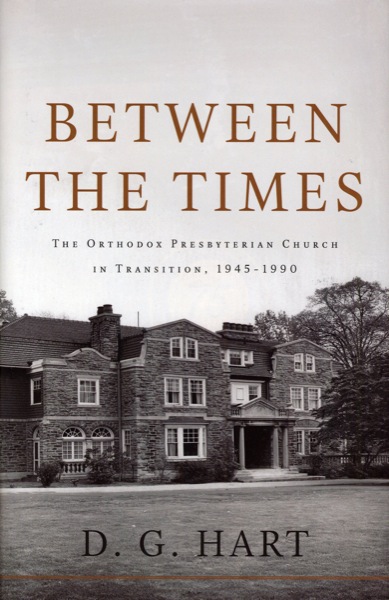
Clearly, Frame did not see the switch to the PCA as the serious risk that Gaffin said it was. Gaffin believed such transfers were dangerous because they nurtured a mind set that increased divisions in the church, not along lines of biblical witness, but according to personal preferences or styles of ministry. As such, Gaffin was expressing a doctrine of the church that had deep roots in American Presbyterianism reaching back to Old School Presbyterianism and even to the Old Side Presbyterians of the colonial era. Frame, in contrast, was more typical of a view of the church characteristic of New School and New Side Presbyterians, where the formal work of ministry was supplemental to the religious endeavors of all believers. In other words, whether Frame or Gaffin acknowledged the history of American Presbyterianism in their reflections, they spoke volumes about Orthodox Presbyterianism and how it emerged and developed in relation to its Presbyterian past. Among the many convictions for which the OPC had stood historically, the doctrine of the church as part of biblical teaching and necessary for faithful witness was one of the hallmarks of Orthodox Presbyterianism. During the 1970s and 1980s that ecclesial conviction had begun to wane if only because it was not producing the size and influence that some Orthodox Presbyterians desired. But as the OPC began to take stock of its past, it also recovered one of its most noticeable features. Furthermore, just as that commitment to biblical Presbyterianism had been a source of frustration to Bible Presbyterians in the 1930s, neo-evangelicals in the 1940s, and more generally to Orthodox Presbyterians like Edwin H. Rian who had hoped the OPC would turn out to be a conservative version of culturally established and respectable Presbyterianism, so in the late 1980s as the OPC recovered its doctrine of the church some felt compelled to look for better, friendlier, or less restrictive expressions of American Presbyterianism than the OPC. (Between the Times, 316-18)

In other words, the consequences of Reformed ecumenism from the 1970s and 1980s were having consequences for all of the players — the CRC, OPC, and PCA. Where Presbyterians went, their forms of association, and their understand of the church were factors in the witness they embraced.

How the OPC Avoided becoming the CRC

Chris Gordon’s piece on how the CRC lost its Reformed bearings has wisdom not only for noticing similarities between the CRC and New Calvinists but also contains a warning about developments in the PCA:

NAPARC churches should not forget their older brother, the CRC. Unless these concerns are taken seriously, I foresee the PCA and other Reformed denominations following this trajectory heading for fights, splits, and empty pews. They will be on a fast track to becoming just another mainline liberal denomination scratching its head at General Assembly meetings as they desperately try to find answers. I pray that my dear brothers and sisters in NAPARC will hear this humble plea from a brother in Christ who learned how true it is that those who forget their (church) history, are most certainly doomed to repeat it.

One difference between the CRC and PCA is the former’s ethnic outsider self-identity compared to the latter’s effort to become the Presbyterian insider. In other words, the CRC wanted to leave the ghetto and enter the mainstream; one way to do that was to embrace some forms of evangelicalism. For a time the CRC even considered merging with the OPC (as explained in Between the Times — self-promotion alert!):

Decreasing familiarity with the OPC was one of the factors to which Henry Zwaanstra pointed in this study of the CRC’s ecumenical relations. In fact, his narrative highlights developments in 1967 as decisive for sinking the project. The previous year, according to Zwaanstra, the OPC’s committee was requesting “their general assembly to declare that the joint committee should work toward the definite goal of organic union.” But the following year, the OPC’s Assembly “retired its representatives from the joint committee and appointed new members.” The reason for the new appointments, according to Zwaanstra, was “mandate to investigate trends toward Liberalism in the CRC.” . . .

Indeed, the overwhelming factor that prompted the OPC to worry about liberal theological trends in the CRC was a re-ignition of anti-liberal polemics during the mid-1960s over the PCUSA’s adoption of The Confession of 1967. During the 1960s leadership within the OPC spent considerable time disputing the mainline Presbyterian Church’s revision of its confessional standards and faulting the denomination for embracing a Barthian doctrine of the Word of God. This view, exhibited in the Confession of 1967, distinguished in effect between the sort of encounter with divine revelation that came through Scripture rather than regarding Scripture itself, its words, paragraphs, and books, as the Word of God. One Orthodox Presbyterian who was particularly vocal in defending the Reformed doctrine of Scripture and in criticizing was E. J. Young, newly appointed to the OPC’s committee to confer with the CRC. The Old Testament professor was by no means insensitive to the assistance the CRC had given to the OPC since Young had served with the likes of Van Til, Stonehouse, and Kuiper, and as a renowned scholar had trafficked in Christian Reformed circles at conferences and lectures. And yet, Young was adamant in his diagnosis of Barthian developments in the PCUSA and was likely sensitive to similar trends in the CRC even if evident in much less noticeable ways.

Thanks to arguments by Young and Van Til, for instance, by the second half of the 1960s the OPC’s sensitivity to defective expressions of the doctrine of Scripture was at an all time high and undoubtedly many pastors and teachers detected echoes of a Barthian view in Dutch Calvinist circles. Whether members of the CRC themselves actually resembled Barth or were simply guilty of not condemning Barth’s influence upon the GKN is a debatable point. Either way, the controverted status of Barthianism for Orthodox Presbyterians was certainly a factor in the growing distance between the OPC and the CRC. (161-62)

The OPC did not have a front-row seat to changes in the CRC, but it had more familiarity than most Presbyterian churches. In which case, reading about OPC-CRC relations between 1956 and 1970 is a supplement to Gordon’s post (read: buy the book).

Is the PCA Big Enough?

The death of R. C. Sproul and the occasion of The New Yorker publishing Tim Keller provide the opportunity for further reflections on ecclesiology and parachurch agencies. For instance, Keller’s article in The New Yorker includes this byline:

Timothy Keller is the founder and Pastor Emeritus of the Redeemer Presbyterian Churches of New York City.

And here is how Christianity Today began its death notice for Sproul:

Late PCA leader influenced generations of Christians by filling the gap “between Sunday school and seminary.”

Both men belong/belonged to the PCA. But no one identified either man in his professional life with the PCA. Keller is his own church-planting guru with Redeemer City-to-City as the vehicle for funding church start ups in big cities around the world. Sproul made Ligonier Ministries his brand. Both are hugely successful authors who are/were known more for books than denominational affiliation. Neither man found it possible to work within the confines of denominational mechanisms. Could Keller have somehow made his church planting operation part of the PCA’s Mission to the World? (And what if Keller decided to put Crossway Publishing on his back and allow them to publish his New York Times bestsellers? Or, what if Keller became the face of the Gospel Coalition and transferred his energies from Redeemer’s many operations into the Gospel Coalition’s many operations?) Imagine what that might do for the PCA’s name recognition. Or could Sproul have operated Ligonier as an arm of the PCA’s Discipleship Ministries (the equivalent of the OPC’s Committee on Christian Education)? The answer is yes. But that affirmative would have changed significantly the shape of what Keller and Sproul accomplished as expositors of God’s word and teachers of doctrine.

This is not meant as a criticism of either man. The intention here is simply to note the real limitations of denominations. Everyone faces them. Denominations are clunky, procedural, deliberative, slow. Presbyterian denominations even more so. So to take a non-profit and move it under the umbrella of another non-profit is a dicey institutional maneuver. At the same time, becoming the head of a denomination’s church planting operations or its Christian education agency is to give up space for personal initiative and take a back seat to supervising committees and denominational procedures.

And yet, not everyone conducts work that duplicates that of a denominational agency or committee. In the case of a church historian, for instance, a denominational committee may publish books that cover institutional or theological history but they don’t produce books on the arts and sciences. In which case, an academic historian needs to find other publishing outlets for non-denominational writing. At the same time, writers and authors constantly face the temptation to create their own media company. Think Rush Limbaugh. Then imagine Rush having to cooperate and even submit to the guidance of the Republican Party. Not gonna happen. But when Rush wants to achieve a higher profile, does he work with his own website and editorial services or does he seek a trade press that knows the ropes of getting books into bookstores and handles distribution and invoices?

Which comes around then to a question bigger than celebrity, namely, entrepreneurialism. To what degree should pastors and theologians be in the business not only of creating ideas and arguments that encourage the faithful but also the start of organizations for promoting their own initiatives? The related question is whether denominations or church government is compatible with entrepreneurial pastors. Communions like the PCA, from the outside, look fairly capacious. If the OPC has the reputation for helicopter Presbyterianism — which is so far from reality — then the PCA is a Presbyterian version of a confederation of congregations like the URC or the SBC. It would seem to be a perfect place to allow for energetic and industrious pastors to work out their gifts and callings.

But the examples of Sproul and Ligonier, and Keller and Redeemer suggest otherwise. Not even as vigorous, missional, and hands-off a denomination as the PCA is capable of employing the talents of men like Sproul and Keller.

So either denominations have run their course of usefulness, or gifted ministers need to turn down their talents to settings conducive to a communion’s normal operations.

Selah.

See What Keller Did Now?

Tim Keller has made the history of Presbyterianism obsolete. Look at the way Jake Meador describes the challenges facing young pastors in the PCA:

… young Presbyterian pastors, many of whom are on university campuses with RUF or working in gentrifying urban neighborhoods, face enormous class-based pressure to conform to certain progressive cultural norms. These pressures make themselves felt in a variety of ways.

First, there is a strong and classic American pull toward being dismissive of the past, toward what is established, and to embrace what is new. This temptation exerts an even stronger pull than normal on many young PCA pastors because many younger pastors and RUF guys have strong entrepreneurial tendencies. While this is often a very good thing—indeed, it’s what makes it possible for them to succeed as church planters and RUF pastors—this same trait can make them naturally inclined to be dismissive toward established norms, policies, and beliefs, especially when they are surrounded by other young people with the same entrepreneurial sensibilities. It is probably not a coincidence, in other words, that the most famous “Kellerite” to go progressive is pastoring in San Francisco, the capital of Silicon Valley.

In addition to the disregard for things that are older, established, etc. there is also strong cultural pressure to embrace a kind of bourgeois bohemian lifestyle—buy a cute house in the gentrifying neighborhood, embrace the careerism, food and exercise regimen, lifestyle trends, and broadly progressive ethos of your neighbors. You can even say you’re just being outreach-focused as you do it. While none of these things are bad in isolation, taken together they’re all steps that involve embracing the norms of a younger bobo sub-culture. And if you’re embracing those norms out of a desire to be liked rather than a pure desire to make the Gospel sensible, it will be disastrous.

But, of course, it is all very complicated: Essentially, these are young pastors being handed different cultural scripts and asked to choose which ones to follow. But these clashing scripts cannot be simplistically labeled “good” and “bad” such that we can tell young pastors to follow the “good” script and avoid the “bad.” It is more complicated than that.

This is similar to the point that Ron Belgau made in his response to Rod Dreher earlier this week: It’s not that we have a legacy PCA script that is unambiguously good that we need to cling to. That script has problems—it’s awful on race issues, for starters. So figuring out the cultural scripts question in the PCA is challenging: The young white bobo script you’re pushed toward culturally and according to class is bad, but then you don’t necessarily have a good alternative script, particularly if you’re trying to plant a church or RUF in a more hostile environment. There simply aren’t good evangelical templates for how to do that because we have for the most part been really bad at it.

In such a situation, the draw toward Keller and the ham-handed attempts to mimic him are quite understandable. What other models do these pastors have? Driscollism? Straight-up progressive Episcopalianism?

Certainly, you can argue that there actually are other models out there—Calvin basically turned Geneva into a booming intellectual hub. Someone like Richard Sibbes was a very successful preacher in Cambridge at the university in the 17th century. Richard Baxter could be helpful in that we know more about his routines as a pastor than any other minister of his era. Bucer and his colleagues in Strasbourg did good and faithful work in a major intellectual, cultural, and scholastic hub. But these examples are all either from radically different cultural contexts, much more obscure, or both.

It isn’t unreasonable that these pastors would look to Keller and, being young and failing to understand their context, fail to mimic him well. But that isn’t Keller’s fault and it isn’t entirely the young pastor’s fault either. It’s a predictable outcome given all the factors I have mentioned already.

Whatever happened to vanilla Presbyterianism? A pastor ministers the word, administers the sacraments, catechizes the youth, shepherds the flock, and goes to presbytery. What does all this worry about culture have to do with it? Meador doesn’t think Keller is responsible for leading the PCA down a misguided path of Kellerism. That is mostly true. What happened it seems to meeeeEEEE, is that Keller fulfilled the aspirations of some PCA leaders who wanted to “engage” the culture — marriage is still up for grabs.

What is happening in the PCA is what always happens to denominations that Americanize and try to adapt to the culture. The Presbyterian version of this is not whether to be Baptist or Episcopalian — though why don’t the boho’s seem to notice that Keller’s urban ways draw him to Baptists at TGC and other urban pastors like John Piper and Mark Dever? The Presbyterian version of assimilation is New School and New Life. In the 19th century, those who wanted to Christianize the culture were the New Schoolers (Lyman Beecher and Charles Finney), and their opponents were Old School Presbyterians who tried to maintain creedal theology and presbyterian governance. In the twentieth century (let’s leave aside the modernists for now), the assimilationists were New Lifers (in the OPC mind you) who wanted Orthodox Presbyterians to join with the wider evangelical world and also reach the young people with long hair. In case no one noticed, Tim Keller’s origins are in the New Life wing of the OPC, with Harvie Conn supplying a theology of the city, and Jack Miller providing a relaxed Presbyterianism that could adjust to the culture (Miller’s tastes ran less to ballet and more to Jesus people. Keller went to New Life Glenside while he taught at WTS, if I am not mistaken.) Not to mention that the Reformed Presbyterian Church, Evangelical Synod (which goes back to the Bible Presbyterians) side of the PCA that gave it Covenant College and Covenant Seminary, is not the same slice southern Presbyterianism that produced Reformed Seminary and the original PCA.

In other words, the history is thick behind Keller and simply looking at the PCA from the perspective of Baptists and Episcopalians doesn’t take you very far into the weeds.

Yet, when you apply the categories of Baptist and Episcopalian, you wind up rendering Old School (or vanilla) Presbyterianism as a couple clicks away from strange:

During times when progressivism is ascendant, as it certainly is in our day, there is a natural temptation amongst conservatives to want to double down on their most strident rhetoric, add purity tests to protect their institutions, and to begin attacking people not only for holding wrong ideas, but for holding ideas which they suspect could lead to wrong ideas (even if they won’t inevitably lead to them).

Is this a plea for Erdmanesque tranquility so that the boat won’t rock? Ministry unites, doctrine divides?

Whether Keller is responsible or no, he has not helped to prepare the PCA for the predicament that Meador thinks the denomination faces:

You’re in this weird denomination that aspires to being the church that can reach secular bobo-types in upwardly mobile neighborhoods but that also aspires to be faithful to theological orthodoxy and even to be theologically evangelical, all the way down to not ordaining women. That is an awkward position to be in from the beginning.

If Keller had left the impression that working through presbyterian channels was not weird but normal, and had achieved his fame not as a pastor with one foot in presbyterianism and another in networked Protestantism but as a regular Presbyterian minister, he might have communicated an important lesson to young pastors, namely, that it’s okay to be simply a pastor. But that is not what he did. And his fellow Presbyterian Church in Americans are sorting out what the Age of Keller means.