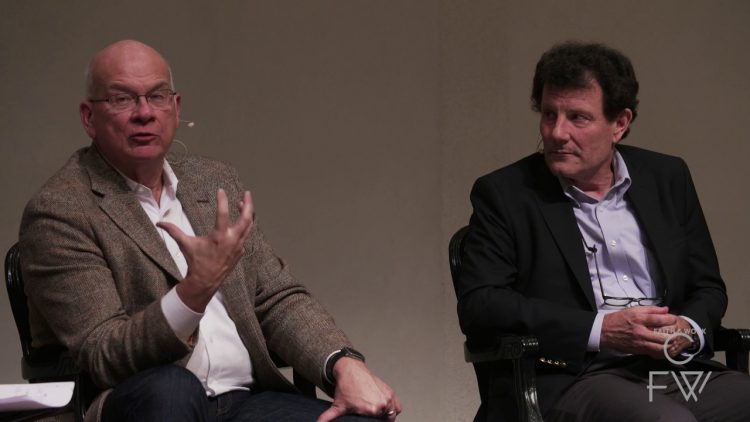
If Tim Keller is A Great Apologist, Why Does He Sound Like A Sociologist?

Tim Keller explained to people who write about charities and philanthropy the contribution that churches make to “human flourishing”:

Philanthropy: How does a healthy church benefit the community at large beyond its own members? On the flip side, when a neighborhood doesn’t have a flourishing church, what is it missing out on?

Keller: Churches promote cooperation between individuals and the kind of associational life that is necessary for human happiness and social success. Without informal shared trust, things are more litigious and combative. Life is much better when neighbors pull for each other, help each other, collaborate together. But this kind of “social capital” is very difficult to generate through public policy. Governments cannot duplicate the effect of religion as a source of shared values.

Family ties and religious ties are the two biggest sources of social capital. And religion can be fed and bolstered as a source of valuable shared experience. I, as an older white American man, can connect quite sincerely to a single poor African woman in Soweto because we are both evangelical Christians. There’s a powerful bond because we’ve had the same experience of spiritual rebirth. There’s a trust I have that would not exist if I was a non-Christian white man.

Anywhere you’ve got a church, social capital is being created. Especially when the church is attended by people from the surrounding neighborhood. And it’s a big benefit to the community.

Also, church buildings in big cities are a kind of public utility. We bought a parking garage in upper Manhattan and converted it into a church and all the homeowners on the block who were not believers said, “Thank you, you’re improving the whole block.” The city council asked if various local groups could use the building, saying, “We’re starved for space.” Our building became a community center. Organizations can meet there, people can have weddings and other celebrations there. On a Sunday, urban churches create the foot traffic all the restaurant owners and shop owners want. So in all kinds of ways an urban church has huge benefits, as long as it doesn’t have a fortress mentality.

For a fellow with the reputation of presenting the gospel to secular Americans in ways that make it accessible and also clear, Keller comes up short and resorts to language that would actually wind up supporting Roman Catholic parishes, synagogues, and mosques as religious places that increase social capital.

The Spirituality of Social Justice

Here’s what it feels like to be pro-social justice without actually risking anything:

Christians cannot pretend they can transcend politics and simply “preach the Gospel.” Those who avoid all political discussions and engagement are essentially casting a vote for the social status quo. American churches in the early 19th century that did not speak out against slavery because that was what we would now call “getting political” were actually supporting slavery by doing so. To not be political is to be political.

The Bible shows believers as holding important posts in pagan governments — think of Joseph and Daniel in the Old Testament. Christians should be involved politically as a way of loving our neighbors, whether they believe as we do or not. To work for better public schools or for a justice system not weighted against the poor or to end racial segregation requires political engagement. Christians have done these things in the past and should continue to do so.

Nevertheless, while believers can register under a party affiliation and be active in politics, they should not identify the Christian church or faith with a political party as the only Christian one. There are a number of reasons to insist on this.

One is that it gives those considering the Christian faith the strong impression that to be converted, they need not only to believe in Jesus but also to become members of the (fill in the blank) Party. It confirms what many skeptics want to believe about religion — that it is merely one more voting bloc aiming for power.

Another reason not to align the Christian faith with one party is that most political positions are not matters of biblical command but of practical wisdom. This does not mean that the church can never speak on social, economic and political realities, because the Bible often does. Racism is a sin, violating the second of the two great commandments of Jesus, to “love your neighbor.” The biblical commands to lift up the poor and to defend the rights of the oppressed are moral imperatives for believers. For individual Christians to speak out against egregious violations of these moral requirements is not optional.

However, there are many possible ways to help the poor. Should we shrink government and let private capital markets allocate resources, or should we expand the government and give the state more of the power to redistribute wealth? Or is the right path one of the many possibilities in between? The Bible does not give exact answers to these questions for every time, place and culture.

Christians should be involved in government, but most preachers telling you that won’t be involved. Why? It violates the spirituality of the church and confuses the two kingdoms, if church officers to serve in government or testify before legislative bodies.

Churches should encourage political engagement but they won’t take a side between the parties because that would be partisan. And which policies and legislation allow for bi-partisan moderation? If you want police or prison reform you are going to have to work with real politicians who belong to real political parties.

And Christians, including ministers, should speak to matters of injustice even though the Bible doesn’t address social or political realities. “Lift up the poor” and “defend the rights of the oppressed” but don’t ask me how to do it (or also ask why I’m stressing this right now when I wasn’t preaching about this twenty-five years ago).

“Christians cannot pretend.”

Keller’s editorial is part of a pose. He can present himself as one on the side of social justice without ever having to dirty his hands with support for a specific policy or legislator. At least the PCUSA actually passed resolutions in favor of the Eighteenth Amendment and Volstead Act. They didn’t do what J. Gresham Machen recommended, which was saying, “yes, drunkenness is a sin, but the church doesn’t have the biblical warrant for declaring federal or state policy.” Keller apparently agrees with Machen about that. He doesn’t agree with Machen’s reluctance to line up behind the crowd.

And speaking of policy, while many are sizing up (some in installments!!!) the MacArthur inspired statement on social justice, practically all the #woke evangelicals have forgotten about the Justice Declaration. That was a 2017 statement about prison reform, co-sponsored by Prison Fellowship and the SBC’s Ethics and Religious Liberty Commission. (By the way, the Justice Declaration attracted about 3,300 signatures, MacArthur’s about 9,500.)

If you want to pursue social justice, maybe you identify one issue, like prison reform, promote it, stick with it, and keep at it.

Or if you want to look like you are on the right side of social justice, you affirm it but leave the details to practically everyone else who already knows, thanks to the media, politicians, news networks, ESPN, that social justice is a problem.

What value have you added?

Machen, Golden State, and Social Justice

What binds these three items together? Warrior, as in Machen’s Warrior Children, Golden State Warriors, and Social Justice Warriors.

The average American (unless you are LeBron James) thinks positively of the NBA franchise. If that American is under 30, she likely adds Social Justice to Golden State since both are very popular.

Your average Presbyterian in one of the NAPARC communions, you might think, would add Machen happily to the Golden State Warriors since J. Gresham Machen was arguably the greatest defender of historic Presbyterianism during the twentieth century. And if you are a conservative Presbyterian under 30 you might also want to add Social Justice to Machen and the Golden State team because Social Justice and Golden State are very popular.

But what does the PCA do? It embraces Social Justice and disdains Machen — Golden State is probably agreeable.

Consider that two of the more prominent figures in the PCA during the last twenty years are John Frame, who coined the phrase, “Machen’s Warrior Children,” and Tim Keller. Almost everyone knows Frame’s opposition to Machen’s spiritual offspring. Keller less so. Here is part of his take on twentieth-century conservative Presbyterianism:

A more normal result of church splits is the pruning off of branches in a way that both wounds and yet, ironically, does not last. Something of this pattern, I think, can be seen in the history of the Orthodox Presbyterian Church. Early in its history, after the death of J. Gresham Machen, the OPC went through a split in which its New Side/New School branch left, led by J.Oliver Buswell of Wheaton College and Carl T. McIntire. But, no surprise, by the 1970s the OPC had grown a new ‘pietist/revivalist’ wing under the influence of Jack Miller. The New Life Churches and their Sonship course was classic revivalism, and it did not fit well with the more doctrinalist cast of the OPC. While not a formal split, like that of 1937, the New Life churches were made to feel unwelcome and nearly all left in the early 90s to swell the pietist ranks of the PCA.

Whenever a Reformed church purifies itself by purging itself of one of its impulses, it finds that within a generation or two, its younger leaders are starting to at look in a friendly way toward the lost parts.

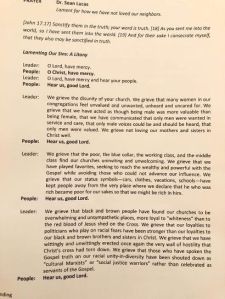
With that kind of suspicion about Machen’s Warriors, the liturgy at the PCA’s General Assembly this week was notable:

Notice that last line, the contrast between social justice warriors and servants of the gospel.  The idea that social justice is an extension of critical race theory was one that the curmudgeon, Bill Smith, proposed. Curiously enough, Sean Lucas accused Bill Smith of the genetic fallacy.

And that raises a question of whether Pastor Lucas himself has committed the liturgical fallacy. Does simply praying that Social Justice Warriors need to be celebrated as “servants of the gospel” measure up to the rigors of logic? Simply praying it doesn’t make it so.

But it does seem safe to say that Bill Smith is in Sean Lucas’ head.

Maybe This is what b, sd Had in Mind (trigger warning for Keller aficionados)

)And for contributors to Sasse 2020.)

Rod Dreher re-posted parts of an Aaron Renn post about urban/hipster Protestantism.

First, Renn’s categories:

Ben Sasse is a conservative exemplar of what I term “neutral world” Christianity. In my framework, there are three worlds we’ve seen in my lifetime related to the status of Christianity and traditional Christian norms in society.

1 Positive World (Pre-1994). To be seen as a religious person and one who exemplifies traditional Christian norms is a social positive. Christianity is a status enhancer. In some cases failure to embrace those norms hurt you.
2 Neutral World (1994-2014). Christianity is seen as a socially neutral attribute. It no longer had dominant status in society, but to be seen as a religious person is not a knock either. It’s more like a personal affectation or hobby. Traditional norms of behavior retain residual force.
3 Negative World (2014-). In this world, being a Christian is a social negative, especially in high status positions. Christianity in many ways as seen as undermining the social good. Traditional norms are expressly repudiated.

To illustrate the differences, consider these three incidents:

1 Positive World: In 1987 the Miami Herald reported that Sen. Gary Hart had been having an affair, and cavorting with the woman in question on his yacht. He was forced to drop out of the presidential race as a result.
2 Neutral World: In 1998 the Drudge Report broke the story that Bill Clinton had been having an affair with intern Monica Lewinksy, including sex acts in the Oval Office. Bill Clinton was badly damaged by the scandal but survived it as the Democratic Party rallied around him and public decided his private behavior was not relevant to the job.
3 Negative World: In 2016 Donald Trump, a many whose entire persona (sexual antics, excess consumption, boastfulness, etc.) is antithetical to traditional Christianity, is elected president. The Access Hollywood tape, for example, had no effect on voter decisions about him.

Even for those who hate Christianity, the rise of Trump, something only possible in a post-Christian world, should give them pause to consider.

Tim Keller’s ministry is the consummate neutral world Christianity:

The neutral world church is very different in a number of ways. It has traditionally been much more apolitical (though many of its practitioners lean left). It’s also much more heavily urban and global city focused. It tries to avoid highlighting areas where Christianity is in conflict with the world. Instead of being antagonistic towards the culture, it is explicitly positive towards culture. In fact, you could sum up much of the model under the heading “cultural engagement.” They want to meet the culture on its own terms, and reach people as participants in a pluralistic public square. They want to be in the mainstream media, not just Christian media or their own platforms. Many of their ministries have been backed by big money donors. These are many of the people who denounced Trump to no effect during the election. In effect, they represent a version of Christianity taking its cues from the secular elite consensus.

Which means that some political topics are okay, some aren’t:

The average neutral world Christian leader – and that’s a lot of the high profile ones other than the remaining religious righters, ones who have a more dominant role than ever thanks to the internet – talks obsessively about two topics today: refugees (immigrants) and racism. They combine that with angry, militant anti-Trump politics. These are not just expounded as internal to the church (e.g., helping the actual refugee family on your block), but explicitly in a social reform register (changing legacy culture and government policy).

I’m not going to argue that they are wrong are those points. But it’s notable how selective these folks were in picking topics to talk about. They seem to have landed on causes where they are 100% in agreement with the elite secular consensus. . . .

I won’t speculate on their motives, but it’s very clear that neutral world leaders have a lot to lose. Unlike Jerry Falwell, who never had secular cachet and lived in the sticks, these guys enjoy artisanal cheese, microbrews, and pour over coffees in Brooklyn. They’ve had bylines in the New York Times and Washington Post. They get prime speaking gigs at the Q conference and elsewhere. A number of them have big donors to worry about. And if all of a sudden they lost the ability to engage with the culture they explicitly affirmed as valuable, it would a painful blow. For example, to accept Dreher’s Benedict Option argument they’d have to admit that the entire foundation of their current way of doing business no longer works. Not many people are interested in hearing that.

The neutral world Christians – and again that seems to be much of Evangelical leadership today – are in a tough spot when it comes to adjusting to the negative world. The move from positive to neutral world brought an increase in mainstream social status (think Tim Keller vs. Pat Robertson), but the move to a negative world will involve a loss of status. Let’s be honest, that’s not palatable to most. Hence we see a shift hard to the left and into very public synchronization with secular pieties. That’s not everybody in Evangelical leadership, but it’s a lot of them. Many of those who haven’t are older and long time political conservatives without a next generation of followers who think like them. (Political conservatism is also dying, incidentally).

And lo and behold, The Gospel Coalition is smack dab in Neutral World Christianity:

I was speaking with one pastor who is a national council member of the Gospel Coalition. He’s a classic neutral worlder who strongly disapproves of Trump. But he notes that the Millennials in his congregation are in effect Biblically illiterate and have a definition of God’s justice that is taken from secular leftist politics. They did not, for example, see anything at all problematic about Hillary Clinton and her views. A generation or so from now when these people are the leaders, they won’t be people keeping unpopular positions to themselves. They won’t have any unpopular positions to hide. They will be completely assimilated to the world. Only their ethics will no longer be Hillary’s, but the new fashion du jour.

Renn’s recommendation is not necessarily the Benedict Option but the Fighting-the-Good-Fight Option:

The template is Paul, who was one tough hombre. Paul was a Jewish blueblood on the fast track to high council membership who threw it all way to endure beatings, imprisonment, etc. (One of the underappreciated virtues of Paul is just how physically and mentally tough that guy was). He said he counted it all as loss for the surpassing worth of knowing Christ. He also someone who could say, “I have not shunned to declare unto you the whole counsel of God.”

Even the author of the Benedict Option, Dreher, sees merit in Paul as the model for ministry:

Paul did not focus his struggle on the world, but within the church itself. Aside from seeking converts, he doesn’t advise his followers to engage the culture, get politically active, or anything like that. Nor did he instruct his followers to run away from the world. Rather, he focused on building up the church in holiness, and exhorting believers in the new faith to overcome the world in themselves.

That seems a lot like the confessional Reformed Protestant model. It’s very personal, familial, congregational, and local, perhaps even too local for the advocates of localism.

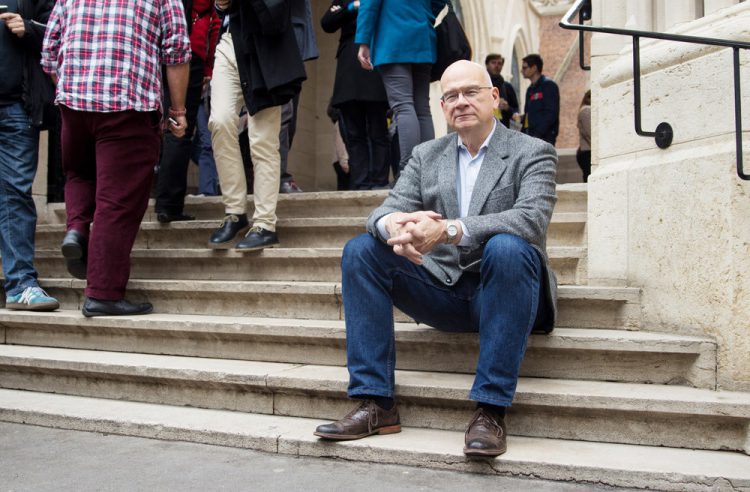
b, sd on Evangelicalism’s Car Salesman Psyche (from Rod Dreher)

Or, why the Benedict Option makes no sense to believers addicted to outreach and tranformationalism:

Post-WW2, a group of Christians with theological sympathies with the fundamentalists thought they needed to be open to society and be willing work with anyone who will help them save souls. Additionally, they believed that redirecting culture meant influencing culture makers. Rather than eschew rock music as being worldly (as the fundamentalists did), they wanted to save the rock star so he could make Christian rock songs and lead people to Christ (think the conversion of Bob Dylan). This meant taking on the trappings of mainstream society and baptizing them in order to evangelize. At some level it worked. It moved the Overton window as it were. If Billy Graham was meeting with presidents, then evangelicalism by definition is mainstream. The Jesus Music, the amphitheater style worship centers, the faith and culture types name dropping Nietzsche, Wittgenstein, and Camus (i.e., Francis Schaeffer) were taking back the stage while the mainline was declining. It was the year of the evangelical and God wasn’t dead any more.

And now after 50 yrs of progress, it all seems to be slipping away. Evangelicalism is fractured. People within aren’t so sure being relevant is…well…all that relevant. There are major internal tensions over the role of women in ministry, race relations, biblical inerrancy, the pope of evangelicalism (Billy Graham) is dead and two of its three theological architects have died (Henry and Stott). More concerning, there is no one on the horizon to replace these guys – people who command the respect of the larger evangelical world. And now one of the most important books on religion is telling us to turn inward and do a better job of discipleship. But that’s what we are doing with the podcasts, publishing houses, bible studies, retreats, Sunday Schools, small groups (lots and lots of small groups), etc… They are thinking, “to drop our outward focus is to lose the thing that makes us what we are.” It’s like telling a Catholic not to pray the rosary or an Eastern Orthodox not to fast so much. Spreading the word, telling others the good news is their third sacrament so to speak.

What the evangelical leaders miss though is that the culture has shifted. But even though evangelicalism is more outward focused than fundamentalism, in its own way it is just as insular. When you see the world through CT eyes, it is hard to really understand what orthodox believers are up against. I think they are starting to see. Unfortunately, I don’t see anyone coming up with good solutions for how to implement the BenOp for those of us who don’t have the option of moving to a planned community.

Which may explain why Tim Keller is really an evangelical (not a Presbyterian) and why hunkering down in the ministry of the PCA is just too withdrawn.

How Orthodox Presbyterians became PCA

Another way to supplement Chris Gordon’s post about the demise of confessionalism in the CRC and lessons for the PCA is to consider what happened to the OPC after the failure of union between the CRC and the OPC.

The merger that the OPC and CRC contemplated between 1956 and 1972 never took place but at roughly the same time that those negotiations died, the PCA was born and for the next twenty years became the chief player in ecclesiastical mergers-and-acquisitions. First the PCA acquired in 1982 the Reformed Presbyterian Church, Evangelical Synod (an earlier merger of revival-friendly Covenanters and dissident – read agreeable – Bible Presbyterians of the McIntire variety) and then the PCA almost in 1986 absorbed the OPC (a majority of Orthodox Presbyterians voted in favor but not by the two-thirds majority required for sending the plan to presbyteries for ratification). In the aftermath of that failed plan for Joining & Receiving, congregations in the OPC and PCA had the liberty to re-align if they chose. This was opening for a number of New Life churches (among them the Glenside congregation where Tim Keller learned the ways of New Life Presbyterianism) to join the PCA during the late 1980s.

Again, a piece of OPC history (self-promotion alert) that fills out Gordon’s observations:

In 1988 the effects of the OPC’s change of direction were still visible but not altogether clear. Again the church experienced a growth numerically, rising to 19,422 members but it also lost two more congregations to the PCA, one (New Life) in Philadelphia and one in Southern California. Only in 1989 did the OPC’s statistician start to notice these numerical changes as part of a “step backward.” That year was the peak of membership and congregational loss. The church’s total membership decreased by 3.5 percent to 18,689. [ed. no snickering] Meanwhile, five congregations transferred to the PCA, among them New Life in Escondido, California. This was the same year that the Assembly’s decisions about Bethel church took their toll. A majority of the Wheaton congregation (162 out of 301) left the OPC to form an independent congregation, which eventually affiliated with the Evangelical Presbyterian Church. In 1990 the “step backward” statistically lengthened. The OPC lost another 546 members and three congregations; among them New Life, Glenside, joined the PCA. Only by 1991 did the hemorrhaging stop and membership begin to rise again. In 1992 the OPC added 525 members and total membership increased to 18,767.

The movement of OPC congregations into the PCA was the occasion for a exchange between John M. Frame and Richard B. Gaffin, Jr. in New Horizons on realignment at the same time that statistics were revealing the consequences of congregational transfers. It was a telling exchange because it revealed an important aspect of Orthodox Presbyterianism that after the semi-centennial was beginning to reassert itself within the life of the communion and causing sufficient discomfort for others to look for another denominational home. That characteristic of Orthodox Presbyterianism was the Reformed doctrine of the church in which membership in particular communion was not a supplement to Christian identity but its embodiment. As Gaffin explained in this exchange, the OPC was not merely a denomination; “it is a church, a church that exists by divine warrant.” As such, he added, “Biblical presbyterianism has no place for loyalties torn between the denomination and the local congregation, or for greater loyalty to either one.” In contrast, Frame, who was then an associate pastor of the New Life congregation in Escondido that had realigned with the PCA, explained that the reason for transferring was to partner more effectively with other church planting efforts in southern California. Denominational affiliations for him were at best accidental, at worst sinful. Either way, he hoped that denominational “barriers” would become less important and that Orthodox Presbyterians would understand that transferring to the PCA was not a sign of disloyalty or contempt. The move was simply practical.

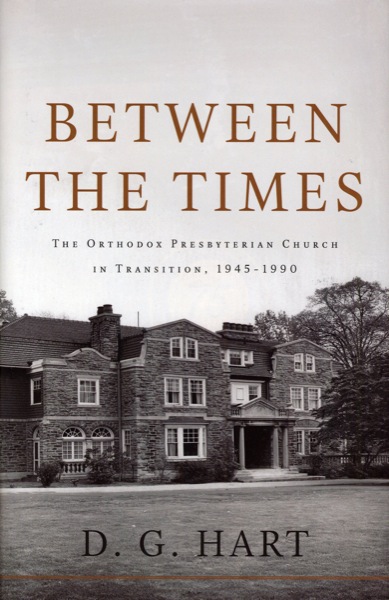
Clearly, Frame did not see the switch to the PCA as the serious risk that Gaffin said it was. Gaffin believed such transfers were dangerous because they nurtured a mind set that increased divisions in the church, not along lines of biblical witness, but according to personal preferences or styles of ministry. As such, Gaffin was expressing a doctrine of the church that had deep roots in American Presbyterianism reaching back to Old School Presbyterianism and even to the Old Side Presbyterians of the colonial era. Frame, in contrast, was more typical of a view of the church characteristic of New School and New Side Presbyterians, where the formal work of ministry was supplemental to the religious endeavors of all believers. In other words, whether Frame or Gaffin acknowledged the history of American Presbyterianism in their reflections, they spoke volumes about Orthodox Presbyterianism and how it emerged and developed in relation to its Presbyterian past. Among the many convictions for which the OPC had stood historically, the doctrine of the church as part of biblical teaching and necessary for faithful witness was one of the hallmarks of Orthodox Presbyterianism. During the 1970s and 1980s that ecclesial conviction had begun to wane if only because it was not producing the size and influence that some Orthodox Presbyterians desired. But as the OPC began to take stock of its past, it also recovered one of its most noticeable features. Furthermore, just as that commitment to biblical Presbyterianism had been a source of frustration to Bible Presbyterians in the 1930s, neo-evangelicals in the 1940s, and more generally to Orthodox Presbyterians like Edwin H. Rian who had hoped the OPC would turn out to be a conservative version of culturally established and respectable Presbyterianism, so in the late 1980s as the OPC recovered its doctrine of the church some felt compelled to look for better, friendlier, or less restrictive expressions of American Presbyterianism than the OPC. (Between the Times, 316-18)

In other words, the consequences of Reformed ecumenism from the 1970s and 1980s were having consequences for all of the players — the CRC, OPC, and PCA. Where Presbyterians went, their forms of association, and their understand of the church were factors in the witness they embraced.

Bigger is Bigger

The appeal of Roman Catholicism is size. It has 1.2 BILLION members. It has 2000 years of history. It has oh so many paintings, galleries, cathedrals, yada yada. Size matters.

Redeemer Big Apple’s appeal is also to size — but it is the big city, and being connected to churches in other big cities, in following a pastor who has enough celebrity even for New York City editors. It’s size has almost nothing to do with the past, at least if Kathy Keller is to be believed:

I’ve saved my most important value for last: carefully screening our language is the most critical thing we can do.

I can’t find enough words to stress how important this is. We must have a care for how we choose our words, our images, and our ideas when we communicate, no matter what we’re communicating — whether it’s donor updates, lectures, or emails about events that are coming up. You absolutely must comb out all of the Christian subcultural phrases that clutter up so much of the Christian church. This is vitally important, and perhaps it’s even more important today than it was 30 years ago, because the cultural moment that we’re in now loathes evangelical Christians, and we don’t need to give them any more reasons to disrespect and dislike us.

Redeemer has been pretty good at this, partly because it was actually one of the major parts of my job description to search and destroy any piousbabble. That’s the word I coined to describe the-language-that-must-not-be-spoken. You’ve heard of psychobabble? That’s pop psychology drawn from catchphrases, media, podcast pontification and other non-academic sources.

Piousbabble are those phrases and those words that creep into your prayers and into your language.. Lord, we just, we just, Lord … We want traveling mercies, we want to bathe it in prayer, and we need prayer warriors, and we need a hedge of protection. All that sounds kind of normal-ish to most Christians. But it’s like Swahili to the nonbelievers and the seekers who are coming.

Does pious babble extend to words like Presbyterian, justification, Holy Spirit (Ghost is even more alarming, I guess), eschatology, ministry, or vocation?

That may explain why Tim Keller thought he needed a catechism other than the one his own communion uses.

But isn’t this piousbabble?

Sixth, that we do not hurt, or hate, or be hostile to our neighbor, but be patient and peaceful, pursuing even our enemies with love. Seventh, that we abstain from sexual immorality and live purely and faithfully, whether in marriage or in single life, avoiding all impure actions, looks, words, thoughts, or desires, and whatever might lead to them. Eighth, that we do not take without permission that which belongs to someone else, nor withhold any good from someone we might benefit.

Even so, if I can count on Kathy Keller to renounce the use of such pious phrases as “dead orthodoxy,” I’m on board.

Why Reformed Protestantism is Safe

You have ways to avoid the excesses of Jonanthan Edwards (which you never learn about from the New Calvinists), John Wesley, and Jim and Tammy Bakker:

From Edwards and Wesley, we receive a fixation on the will, a desire to create enclaves of piety, and a belief in the possibility of the individual’s direct experience of God. In the work of their successors, such as Charles Grandison Finney, we find latent belief in the sinlessness of the true self and an approach to revival characterized by the appearance of improvisation and spontaneity. These preachers cultivated the spirits of the multitude through results-focused experimentalism in the context of camp meetings around the country, sowing in the American character the seeds of enthusiasm that would yield strange harvests in every decade thereafter. The later 19th century saw the development of quasi- and post-Christian reform movements, fads, and pop-philosophies that would call individuals to embrace their higher selves—such as “New Thought,” which centered the will in a larger project of spiritual self-advancement through the unleashing of “the creative power of constructive thinking.”

The 20th century inherited from these enthusiastic forebears an epochal optimism. Even in times of anxiety and despair, there is a hopefulness in the American self, and this hopefulness is built upon that self’s utter reality in a world of mere appearances; though circumstances change, the self remains a firm foundation. The literary critic Harold Bloom captured something of the strangeness of this in his provocative and infuriating book The American Religion. “The soul stands apart,” he writes, “and something deeper than the soul, the Real Me or self or spark, thus is made free to be utterly alone with a God who is also quite separate and solitary, that is, a free God or God of freedom.” In essence, Bloom describes a post-Protestant Gnostic cult of the self: “The American finds God in herself or himself, but only after finding the freedom to know God by experiencing a total inward solitude.”

Bloom’s analysis hinges on a metaphysical intuition: that the self is uncreated, and it knows, rather than believes in, its own innocence and divinity. “Awareness, centered on the self, is faith for the American religion,” Bloom wrote, and this religion of the self “consistently leads to a denial of communal concern.” Christ is internalized to a point of blurred identity with the “real me.” Such are the fruits of what Bloom calls the “doctrine of experience”—an outgrowth from the taproot of religious enthusiasm. Christianity, Bloom suggests, was too cramped for the young, unbounded nation. Abandoning doctrinal encumbrances such as belief in original sin (or sometimes, belief in sin at all), an intuitive and endlessly innovative spirituality grew to meet this need.

* * *
Wild spirits prepared the way for the coming of the Bakkers. Distinct from mainline, fundamentalist, and evangelical varieties of Protestantism—but eventually influential in all three—Pentecostalism grew out of late-19th-century Methodist holiness movements, dramatically emerging through a revival in Los Angeles that began in 1906 and lasted for a decade. With a mandate to seek out the signs and wonders attributed to Christ’s apostles in the book of Acts, Pentecostals trembled, shouted, spoke in tongues, and did much else to startle and shock the sensibilities of average Americans. Promises of dramatic spiritual and physical healing found great purchase among those in poverty, and the new enthusiasm became disreputable both for its excesses and its hard-up—and racially diverse—demographics.

If Tim Keller wants to join that company of enthusiasts, have at it.

At Least It’s Not a Conference about Lent

Redeemer Big Apple is sponsoring a conference during this Lenten reason not about repentance and abstinence but about work:

When we see that work is created to glorify God, our work doesn’t necessarily get easier, but it does become more meaningful. The pain in our work is faced with greater honesty, where the brokenness can finally be named and seen. The unseen potential of our work is faced with greater imagination, where an innovative spirit can unleash what yearns to be resurrected. In short, when we discover that we’re formed to work for God’s glory, we find that our small tasks aren’t so small, and our big tasks are in better hands. Work becomes desirable. Rest becomes possible. Faith becomes essential.

Join us for a two-day experience where we’ll investigate how we are formed to work for the glory of God. Artists and educators, designers and technicians, homemakers, engineers, managers, entrepreneurs, doctors, and everyone in between are welcome.

Plumbers? Janitors? Bakers? The only non-professionals included in that list are homemakers.

But the oddest part of the conference is its “Glimpses,” or “exciting opportunities throughout the city to participate in diverse experiences centered around work, culture and sabbath.” These include:

GREAT GOTHAM CHALLENGE

In this thrilling urban scavenger hunt, you’ll experience New York City as you never have before. Within teams, you’ll work through city-centric challenges and puzzles and learn new things about the Big Apple along the way.

COMEDY SHOW

Join us for a stand-up comedy performance followed by an in-depth look into how the gospel intersects with the entertainment sector.

ALPHABET SCOOP

Have some ice cream and see this newly opened and highly lauded East Village shop that blends a great product with a powerful mission.

TOWN REAL ESTATE WORKSITE VISIT

Come visit one of the largest real estate firms in New York City, where we’ll see how urban homes are found and made, and hear from a broker about the inner workings of the vast and complex NYC market.

FLOWER ARRANGING

Learn a simple and practical method for bringing God’s beauty into your personal space. Together we’ll learn a new restful hobby and the spiritual importance of fostering beauty in your daily life.

RUNNING TOUR OF CENTRAL PARK

How can running be a form of practicing rest? Come find out and run through a guided path with a group.

GOLDMAN SACHS TRADING FLOOR VISIT

Get an inside look at the excitement and energy of a trading floor. We’ll also hear from a panel of finance industry employees to hear about the shifts, values, and complexities of the financial sphere.

TOUR OF LOWER MANHATTAN/REVOLUTIONARY NEW YORK

With more than 400 years of history, come see the Lower Manhattan neighborhood where what once were cow paths and trading posts are now skyscraper lined streets.

MOVING MEDITATION: YOGA SESSION

Knowing His great care for our bodies, how can we invite God into our physical workouts? Through meditation and prayer, we’ll discover how to connect God to breathing and movement in this meditation that will also include an hour long yoga class and journaling.

Aside from blessing Goldman Sachs at a time when I would have thought progressive-leaning, Ta Nehisi Coates-reading evangelicals were woke about neo-liberalism (not to mention the 2008 financial collapse and the federals’ bailout), could this list of consumption, tourism, and entertainment be any more of a cliche? It would be like the OPC selling shirts that can’t be tucked in, pocket protectors, and slide rules at one of its pre-General Assembly conferences?

Or could it be that when you are this cool, you don’t worry about optics?

What would He Think of Machen?

This is about the reporter who has had many fruitful interactions with Tim Keller:

The late writer Christopher Hitchens had what you might call an intellectual jumper cable routine: he would wake up in the morning, open the New York Times, read its front page motto “All the News Fit to Print,” and allow that hackneyed boast to enrage him into carrying out his polemical duties. Lately I’ve found myself accidentally mimicking Hitchens, but with the Washington Post, which since Trump’s election has been running with the slogan “Democracy Dies in Darkness.” So long as that shamelessly self-aggrandizing, wokeness-overdosed, low-rent Dashboard Confessional refrain-cum-greasy fortune cookie slip remains the ethos of my local paper, it’ll only take one cup of coffee to wake me up, thanks.

This week, though, it’s the Times that’s got my goat, probably because, unlike the Post, I read as much of it as possible every morning (for its excellent foreign coverage, not its masthead). Last week the Gray Lady published a column by op-ed page fixture Nicholas Kristof, the Tom Bergeron of liberal internationalism, titled “Trump’s Threat to Democracy.” Kristof cites two political science academics at Harvard who list four omens as to whether a “political leader is a dangerous authoritarian”: he “shows only a weak commitment to democratic rules,” “denies the legitimacy of opponents,” “tolerates violence,” and “shows some willingness to curb civil liberties or the media.” “Donald Trump,” the profs ruefully announce, “met them all.” And then the clincher: “With the exception of Richard Nixon, no major-party presidential candidate met even one of these four criteria over the last century.”

Come again?

That timespan easily covers Franklin Delano Roosevelt’s presidency, during which the mildly anti-civil liberty policy of rounding up 120,000 Japanese Americans and interning them in camps was implemented. But you don’t even need to go back that far to refute Kristof’s professors: events still in the public memory can provide. The George W. Bush administration instituted a surveillance regime that stretched the Fourth Amendment into cellophane, and then tried to browbeat a hospitalized (and possibly addled) John Ashcroft into granting it his approval; it allowed prisoners to be indefinitely detained and tortured, and even mulled using the military against terrorism suspects on U.S. soil. Barack Obama assassinated American citizens with drones, invoked the Espionage Act to spy on reporter James Rosen, launched a war against Libya’s Moammar Gaddafi without congressional authorization, and set a record for the most Freedom of Information Act requests denied in American history. Bush and Obama didn’t just “show some willingness to curb civil liberties or the media,” to use the academics’ soupy words; they rammed right through them with the brunt power of the federal government.

With friends like these. . .